

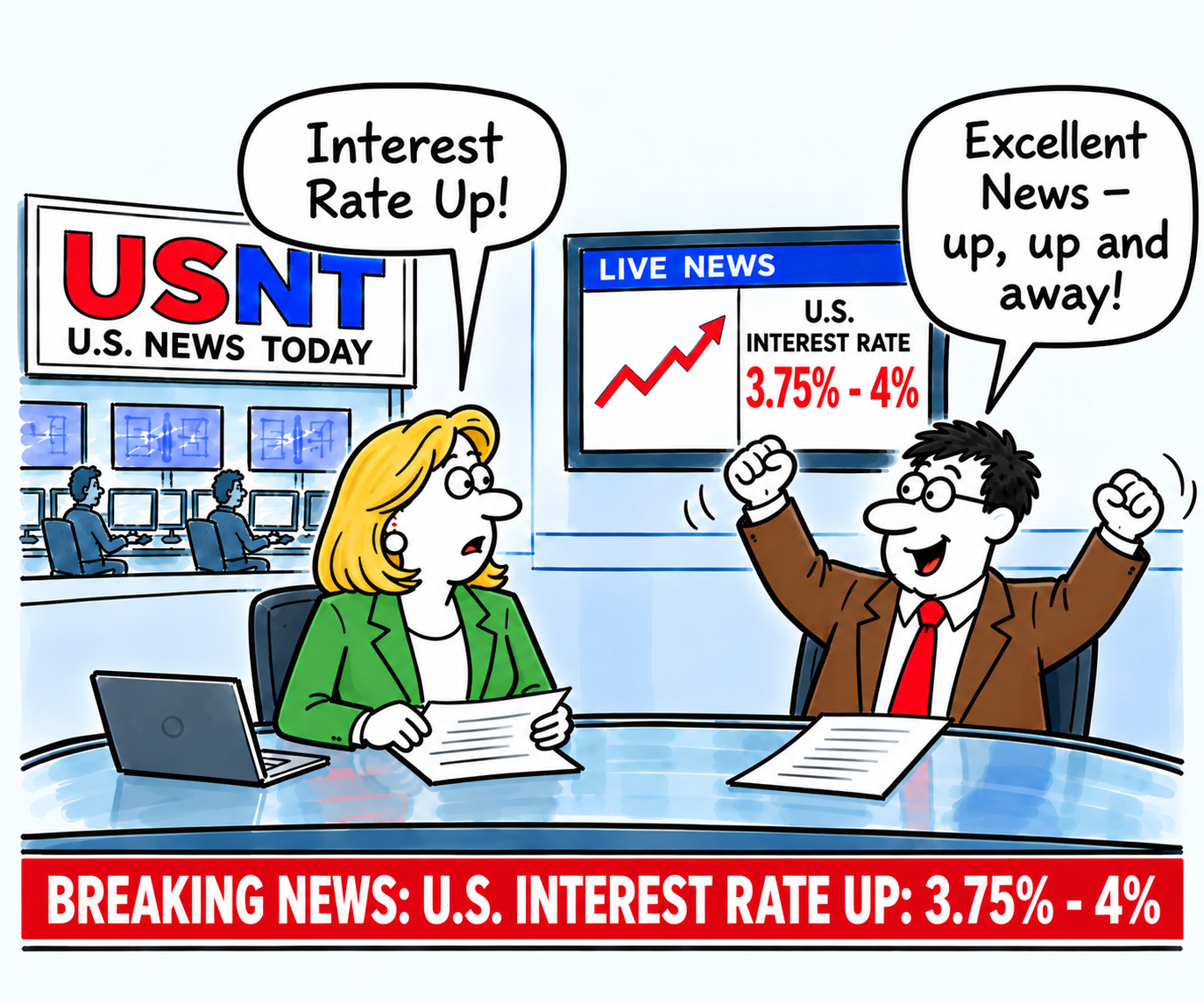
The Federal Reserve raised US interest rates by 25 basis points yesterday, taking its benchmark rate to 3.75%-4% and delivering the first increase since 2023.
The move puts U.S. inflation firmly back at the centre of the market conversation. Despite months of speculation about the direction of monetary policy, the Fed has signalled that persistent price pressures remain enough of a concern to warrant tighter financial conditions.
For investors, however, yesterday’s increase may be less important than what comes next
Markets must now decide whether the move represents a relatively modest adjustment to policy or the beginning of another tightening phase.
Any suggestion that further increases are coming could push U.S. Treasury yields and the dollar higher while placing renewed pressure on highly valued equities.
That matters particularly for a U.S. stock market already trading at elevated levels, with enthusiasm surrounding artificial intelligence continuing to support many of its largest companies.
Balancing act
The Fed therefore faces a difficult balancing act. It wants to bring U.S. inflation under control without unnecessarily damaging economic growth or employment.
For Wall Street, the question has changed.
It is no longer simply when will rates fall?
It is now how high might they have to go?