

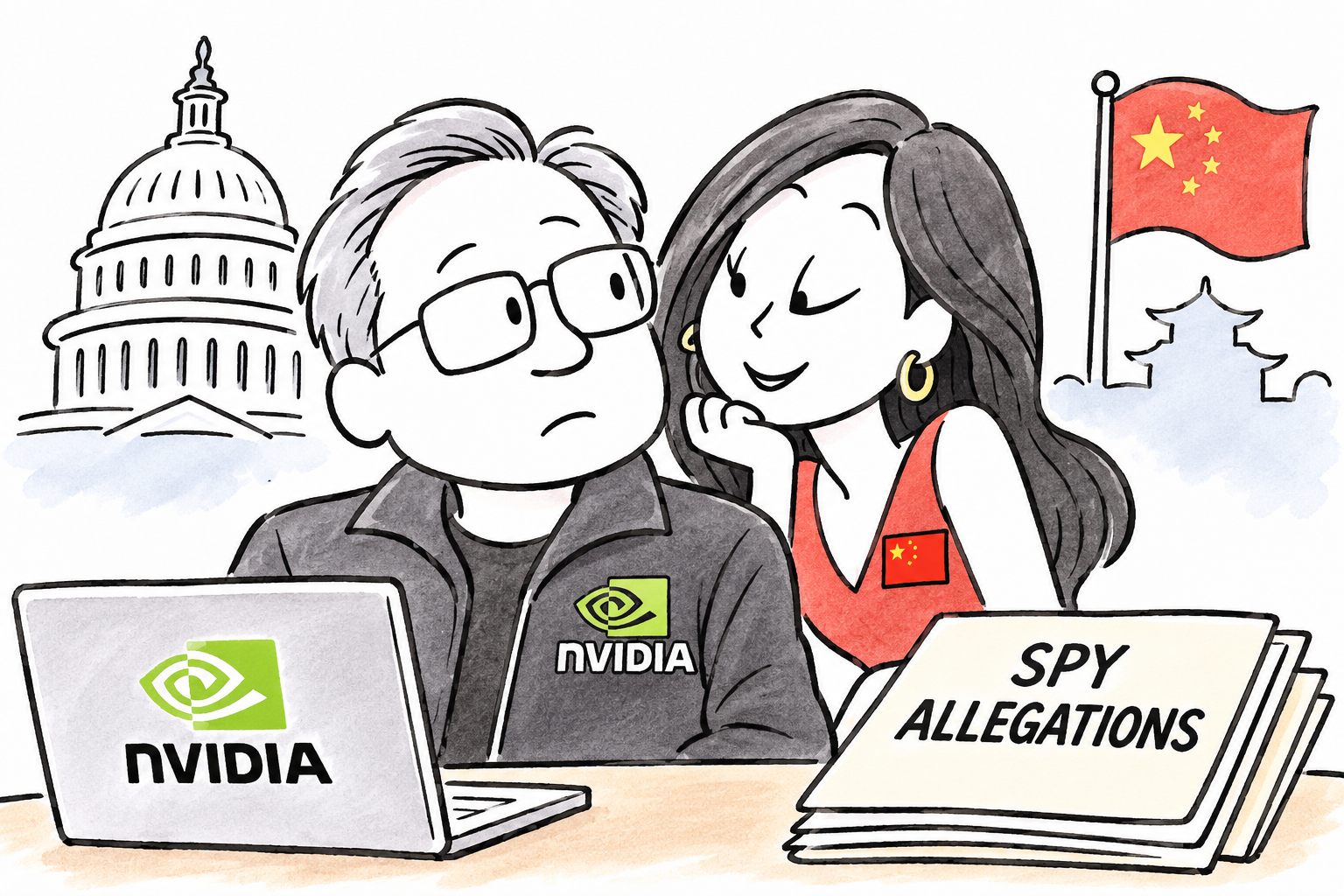
Jensen Huang, Nvidia’s charismatic chief executive and a leading figure in the artificial intelligence boom, is facing an unwelcome spotlight, and intense scrutiny from Washington to global markets.
Allegations – Innocent till proven guilty
At the centre is Alice Huang, a former executive at Megaspeed International, a Singapore-based company that buys Nvidia chips.
U.S. intelligence agencies reportedly concluded she was working as an asset for China, passing commercial information to Beijing. But this is unproven at this stage.
Megaspeed had already faced scrutiny over suspicions it helped restricted Nvidia chips reach China.
The New York Times and other media have reported that Alice Huang developed a close, reportedly romantic, relationship with Jensen Huang.
The allegation is that Chinese intelligence reportedly sought access to Nvidia’s chief to gather information and potentially influence his position on U.S. restrictions on chip exports to China.
This is an allegation and and as such is NOT a publicly proven known fact.
These claims have not been established publicly in court, and what information may have been exchanged (if any) remains unclear.
Family
Huang has acknowledged being unfaithful to his wife and apologised to his family and colleagues. That admission is separate from the espionage allegations and does not demonstrate that he knowingly assisted a foreign power.
Nvidia says his contact with customer executives was routine, customers received ordinary business information rather than sensitive trade secrets, and it has no reason to believe national security or company secrets were compromised.
Nvidia’s board has launched an independent investigation into whether Huang was targeted by foreign intelligence. U.S. lawmakers have also sought a briefing on his contacts and the company’s safeguards against espionage.
Beijing has reportedly rejected the accusations outright, while Chinese state media have dismissed the reports as speculation.
Implications
The implications extend beyond one executive’s private life. Nvidia sits at the centre of the global AI race, supplying processors that power data centres and underpin enormous industry investment.
Its chief executive is also a prominent advocate for the company’s interests in Washington and internationally.
For investors, the immediate concern is uncertainty: whether the investigation uncovers a security breach, whether export policy tightens, and whether Huang’s position is affected.
Nvidia’s extraordinary success has been closely associated with its founder’s leadership and public profile.
For now, allegations must remain allegations. But when the world’s most influential AI chipmaker is involved, even the possibility of an intelligence operation raises uncomfortable questions about corporate security, political influence and the vulnerability of technology shaping the future.
Note
Allegations, judgment and embarrassment
The article reflects the position as of 9th November 2026. The central distinction is that being allegedly targeted by espionage is not the same as knowingly participating in it.
Too big to fall?
A long way down?
Nvidia is pivotal to the AI industry buildout – is too big to be affected?