

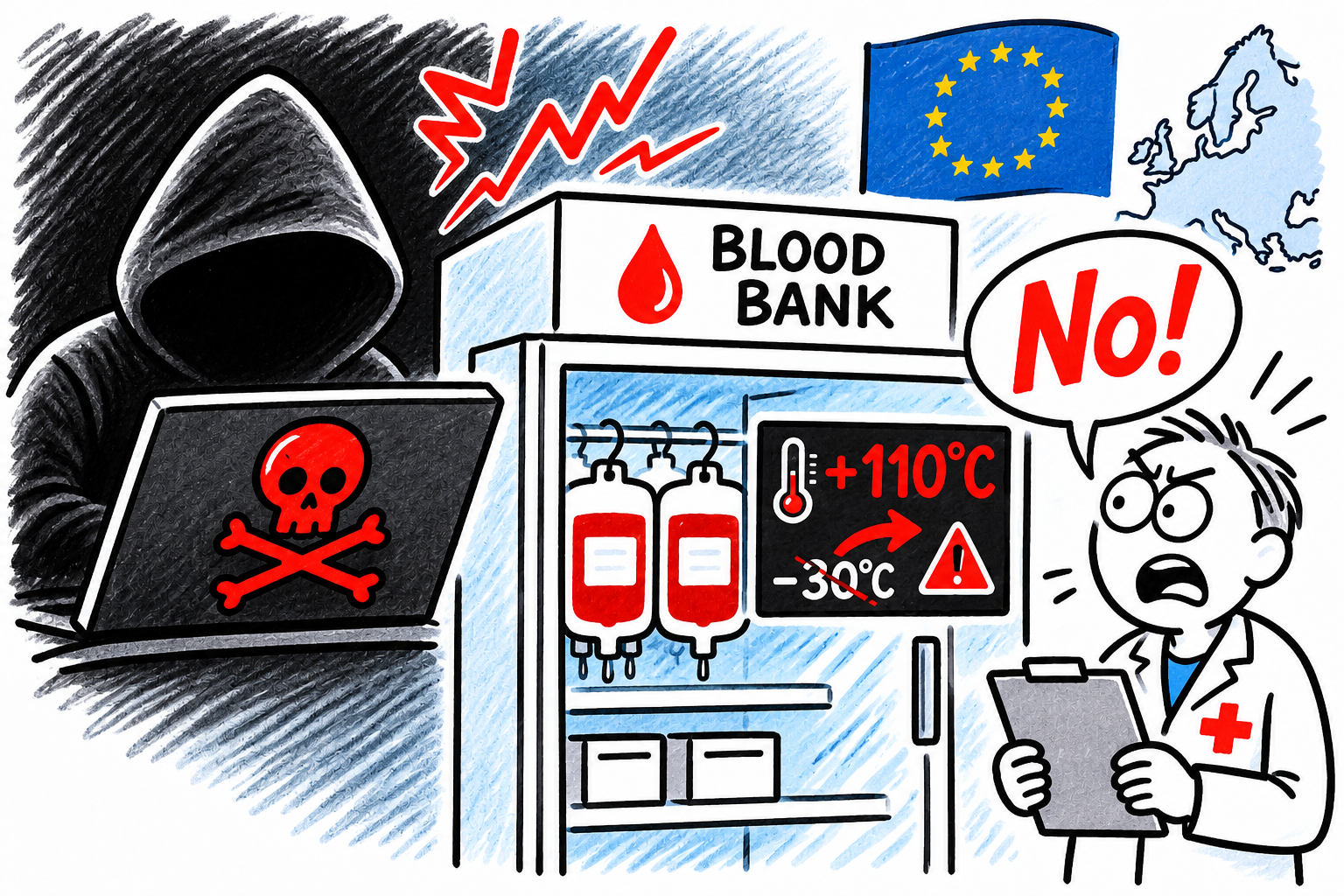
A cyberattack on refrigeration systems at French blood-storage facilities has raised concerns about the vulnerability of essential services to digital sabotage.
The incident formed part of a wave of attacks targeting supermarket fridges and freezers across Europe.
France’s national blood service, the Établissement Français du Sang (EFS), said hackers interfered with monitoring and control systems at three cold-storage sites.
Temperature and defrost settings were altered to dangerously high levels, threatening plasma and other biological materials. Reports said attackers attempted to raise temperatures from around minus 30°C to as high as 110°C.
Alarm systems detected the abnormal settings and staff acted quickly. Products were secured or transferred to unaffected storage facilities.
No damage this time
The EFS reportedly said no blood products or samples were lost, no health consequences had been identified, and collection and distribution to hospitals continued uninterrupted. Remote access to the affected equipment was disabled as investigations began.
The attack appears to have reached the blood service through a refrigeration equipment provider, rather than directly targeting the EFS. The supplier referred to a vulnerability in a third-party component.
Investigators have not identified those responsible or established whether the blood-bank incident and supermarket attacks involved the same group.
Wider concern
The wider campaign has affected refrigeration equipment in several European countries, including France, Belgium, the Netherlands, Sweden and Ireland. In supermarkets, remotely altered settings caused food to spoil and led to substantial financial losses.
The episode exposes a weakness in infrastructure. Internet-connected systems make it easier to monitor temperatures and manage energy use, but poorly secured remote access, outdated software and vulnerable components can turn equipment into a target.
The immediate threat to France’s blood supplies was contained. However, the incident is a warning that cybersecurity is no longer just an IT concern: it is also a matter of public health, food security and national resilience.