

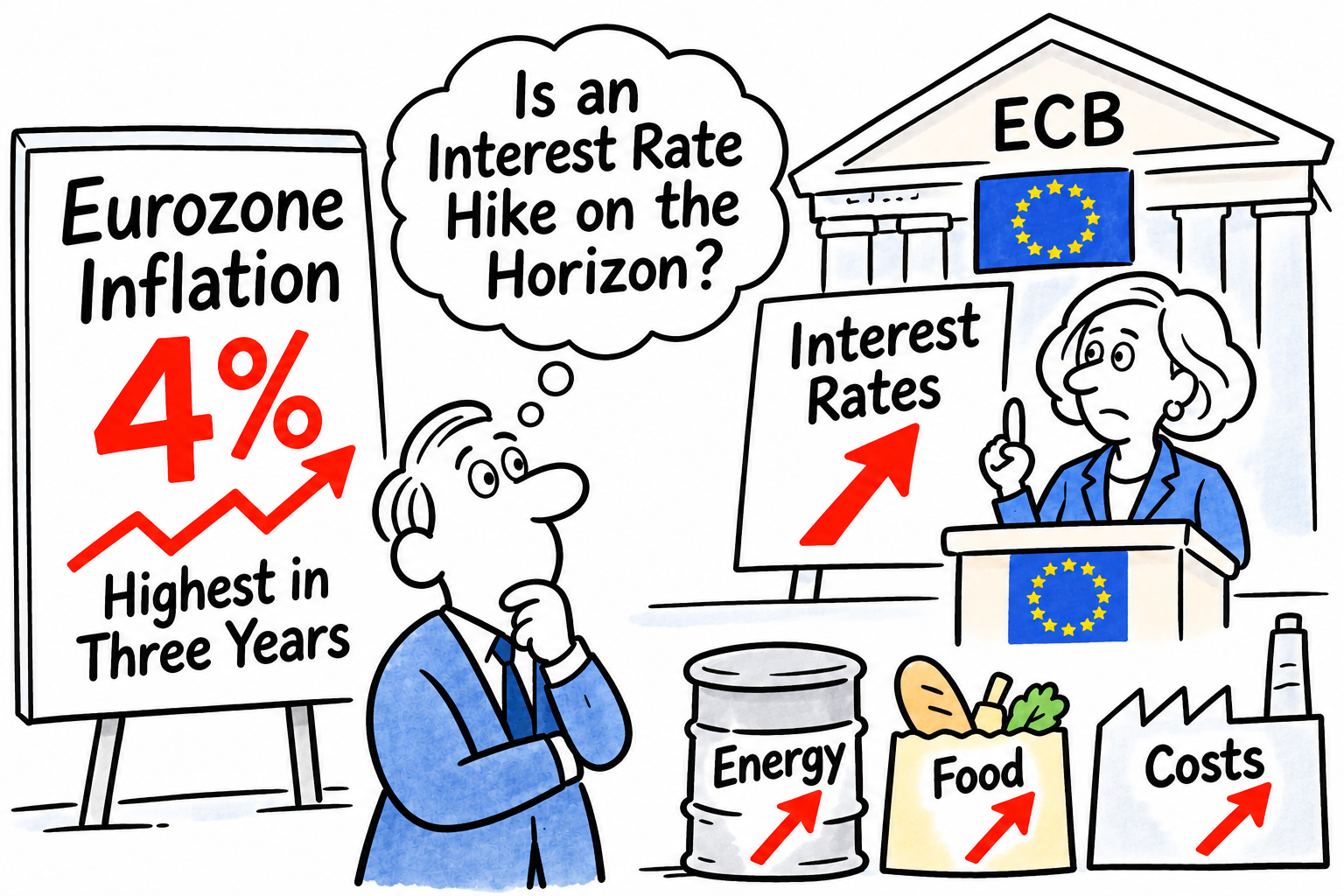
Eurozone inflation has climbed to 4% for the first time in three years, raising expectations that the European Central Bank (ECB) could deliver another interest rate increase before the end of the year.
October’s inflation figure rose from 3.8% in September 2026, putting further pressure on policymakers as energy prices continue to surge.
Energy Inflation
Energy inflation has accelerated to more than 20%, largely reflecting the impact of the ongoing conflict in the Middle East and disruption to global energy markets.
Although core inflation, which excludes food and energy, remained unchanged at 2.5%, rising food and services costs suggest the inflationary pressure could become more widespread.
The ECB has already raised interest rates during 2026, but policymakers now face an increasingly difficult balancing act.
Higher borrowing costs could help contain inflation, but would also put additional pressure on businesses, households and an already fragile European economy.
Rate increase?
Markets are increasingly anticipating another 0.25 percentage point increase in December 2026, with expectations of further tightening into 2027.
The central question is whether this latest inflation surge proves temporary or becomes embedded in the wider economy. If energy costs continue rising and feed through to wages and consumer prices, the ECB may have little choice but to act.
For Europe, the prospect of higher interest rates alongside rising energy costs presents an uncomfortable economic outlook.