

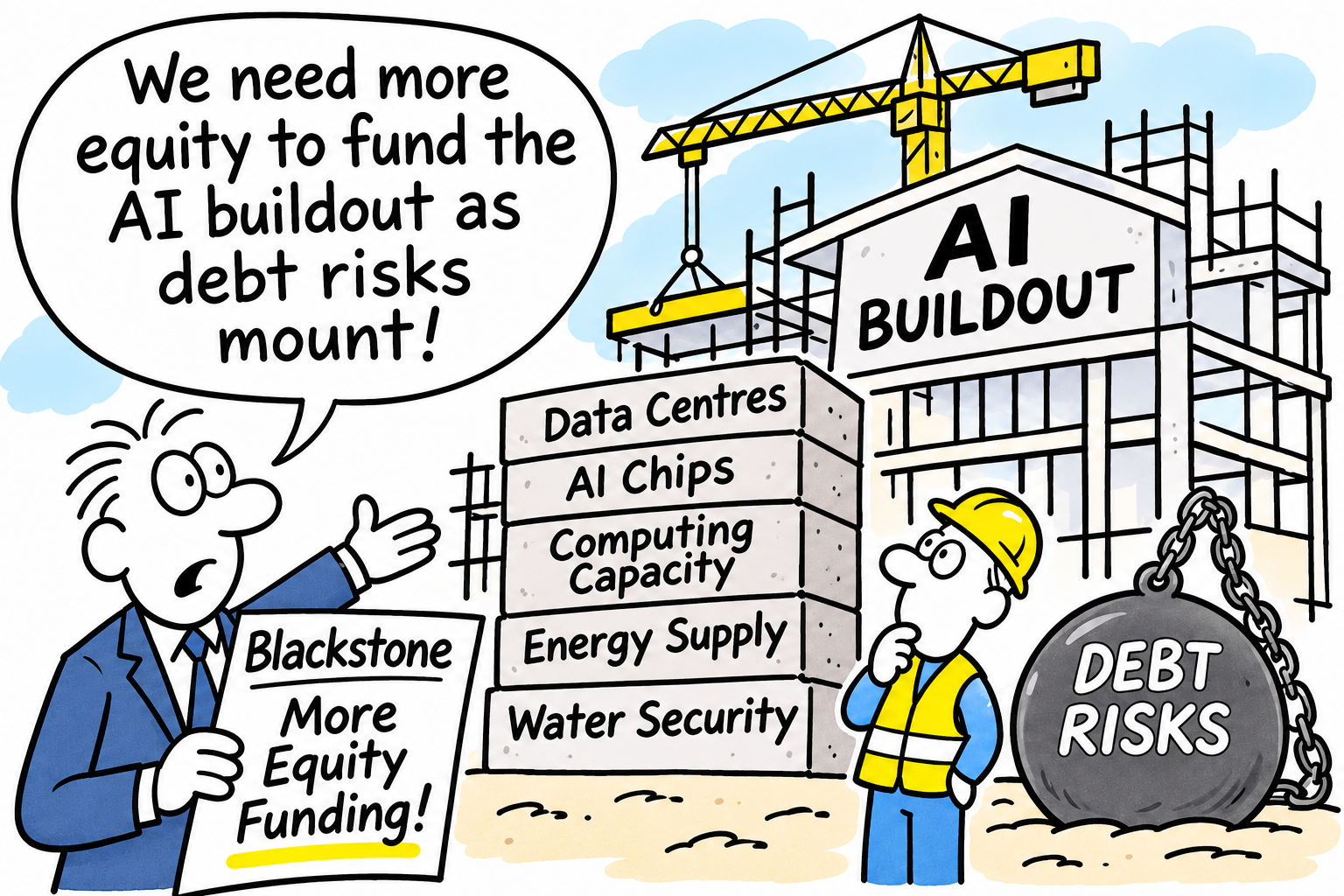
The artificial intelligence investment surge is driving unprecedented capital demand, with Blackstone cautioning that the sector will require significantly more equity funding to sustain its growth amid rising concerns over debt exposure.
Caution
Blackstone President and Chief Operating Officer Jon Gray reportedly says the scale of investment required to build the infrastructure behind AI is becoming increasingly difficult to finance through borrowing alone.
At the Hong Kong Monetary Authority’s Global Financial Leaders’ Investment Summit, Gray reportedly cautioned that debt investors are increasingly exposed to concentration risks as capital continues to funnel into a limited number of technology firms and infrastructure projects.
Equity and not debt
His argument is straightforward. Lenders receive interest payments and repayment of their capital, but shareholders benefit from potentially unlimited gains if the businesses succeed.
With so much money being committed to data centres, specialist chips, computing capacity and electricity generation, a greater proportion of the funding needs to come from equity rather than debt.
Extraordinary expenditure
The scale is extraordinary. Estimates suggest that AI-related infrastructure investment could run into trillions of dollars over the coming years.
Meanwhile, technology companies are increasingly turning to banks, private credit providers and bond markets to finance their ambitions.
The concern is that borrowing could become excessive before the industry has demonstrated that its enormous investment will generate sufficient commercial returns.
If demand disappoints, technology changes or AI revenues fail to meet expectations, heavily indebted companies could find themselves struggling to service their obligations.
Wider implications
There are also wider financial stability implications. The Bank of England has already highlighted the growing reliance on debt to finance AI infrastructure, warning that problems within the sector could eventually affect broader financial markets.
Nobody is suggesting the AI revolution is ending. However, the financing model deserves closer scrutiny.
The technology may ultimately transform the global economy, but investors must remember that even the most promising industrial revolutions can produce expensive financial mistakes.