

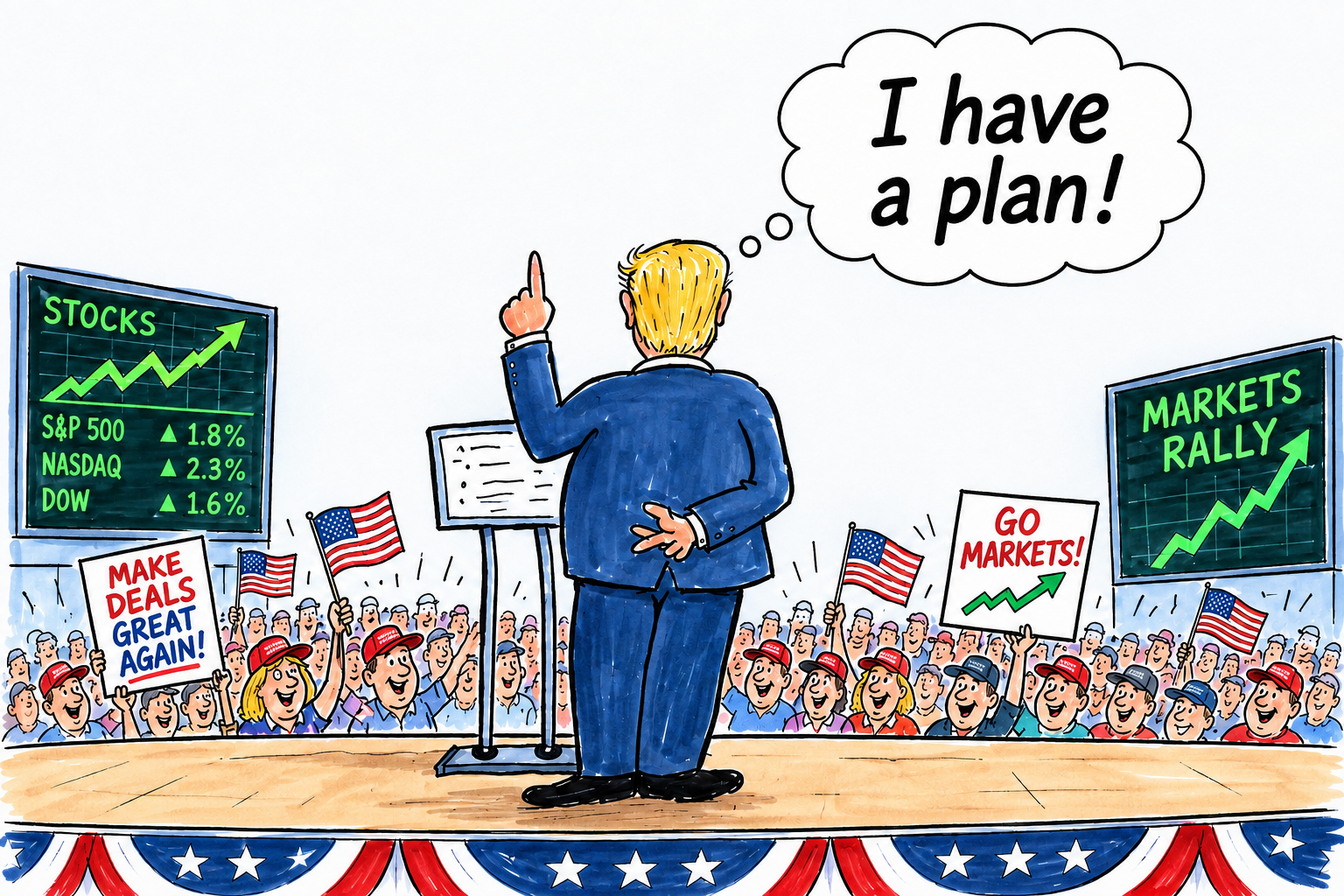
It has become an increasingly familiar pattern: Donald Trump hints that an agreement with Iran is close, investors breathe a sigh of relief, oil prices fall and stock markets jump — only for the promised breakthrough to fail to materialise. Why?
Deal or no deal
This week (early-August 2026) was another example. Trump and members of his administration suggested that progress towards an agreement involving Iran and the Strait of Hormuz could come within days.
Markets responded enthusiastically, betting that a deal would reduce the risk of prolonged conflict and ease pressure on global energy supplies.
Yet no comprehensive agreement appeared. Iran subsequently said direct talks with Washington would not take place while it considered the existing interim arrangement to be breached.
So why does it keep working?
Because financial markets trade expectations, not facts. The possibility of peace is enormously valuable when war threatens oil supplies, inflation and global growth.
Algorithms and traders react within seconds to headlines containing words such as “deal”, “ceasefire” or “agreement”.
Oil falls, equities rise and the economic relief can be priced in long before diplomats have actually agreed anything.
Loop of distrust
There is also a dangerous feedback loop. If markets repeatedly reward optimistic statements, there is little immediate financial incentive for politicians to stop making them.
Reports have previously documented dozens of occasions on which Trump suggested an Iran agreement was imminent without a final deal emerging.
Unhealthy relationship
That does not prove deliberate market manipulation. But it does expose a deeply unhealthy relationship between political rhetoric and financial markets.
Peace should be based on verified agreements, not carefully timed hints.
When a presidential statement can erase billions of dollars of perceived risk from markets before a single binding document exists, investors are effectively trading political promises.
And when those promises repeatedly fail to arrive, the credibility of both the politician and the market reaction suffers.
Shouldn’t markets price reality?
Not headlines. And certainly not hype.
Can U.S. markets ever fail… I wonder?