China’s Industrial Profits Surge as AI and Chipmakers Power a High‑Tech Rebound

China manufacturers excel

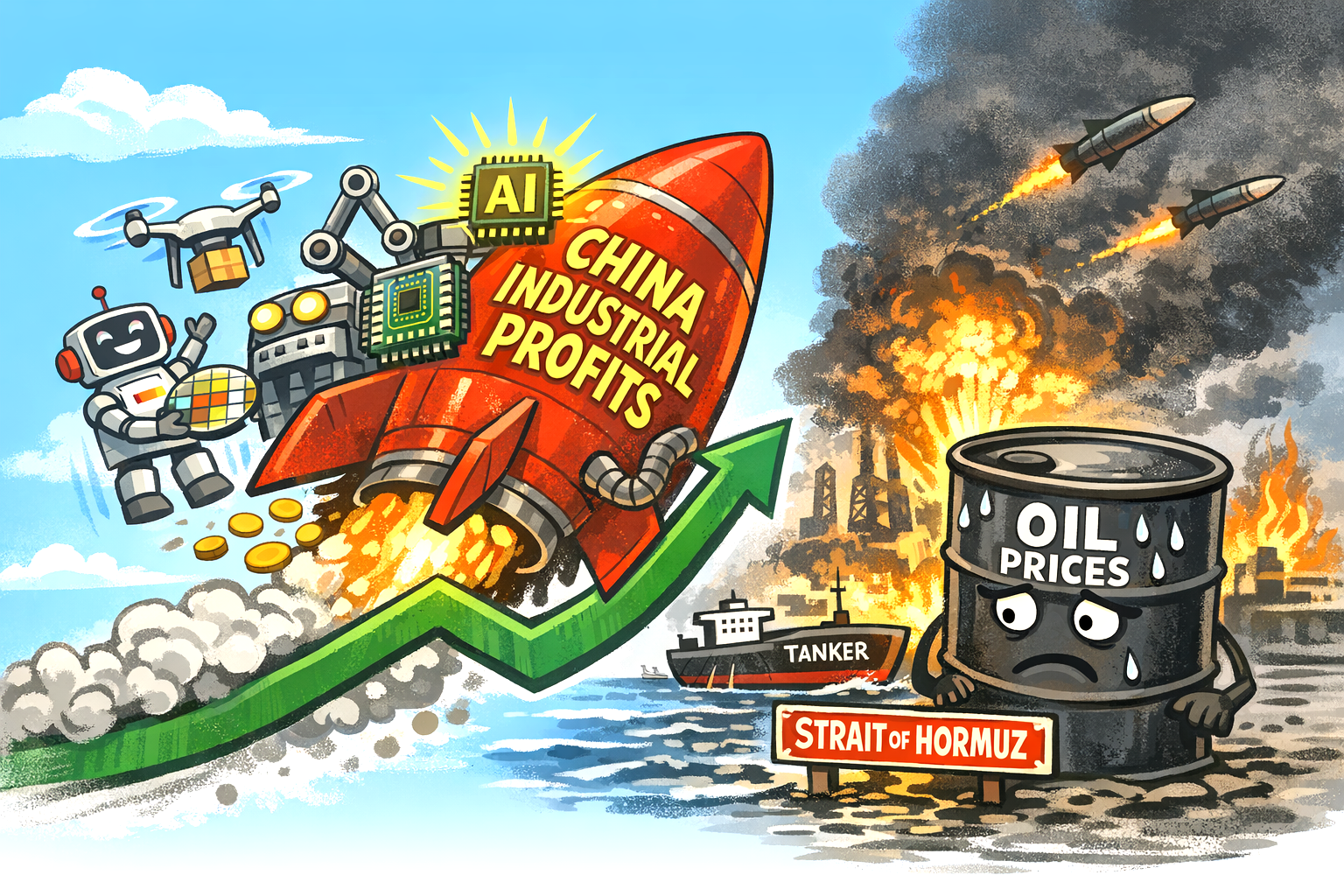
China’s industrial sector delivered its strongest performance in more than half a decade in March 2026, with profits jumping 15.8% year‑on‑year, signalling a decisive shift in the country’s growth engine towards advanced manufacturing and AI‑related hardware.

The latest figures from the National Bureau of Statistics show first‑quarter profits rising 15.5%, marking the best opening to a year since 2017 outside the pandemic distortions.

The surge is highly concentrated. Traditional heavy industry remains subdued, but China’s high‑tech and equipment manufacturers are now carrying the industrial economy.

Tech manufacturing

Profits in high‑tech manufacturing soared 47.4%, while equipment makers posted a 21% rise. Beneath those aggregates lie extraordinary gains: optical fibre producers saw profits climb more than 300%, with optoelectronics and display‑device manufacturers also recording double‑digit increases.

These sectors sit at the heart of China’s AI infrastructure build‑out, from data‑centre components to semiconductor‑adjacent hardware.

Demand for “intelligent products” is also reshaping the landscape. Drone manufacturers reported profit growth above 50%, reflecting both civilian and dual‑use demand as China accelerates its push into autonomous systems and robotics.

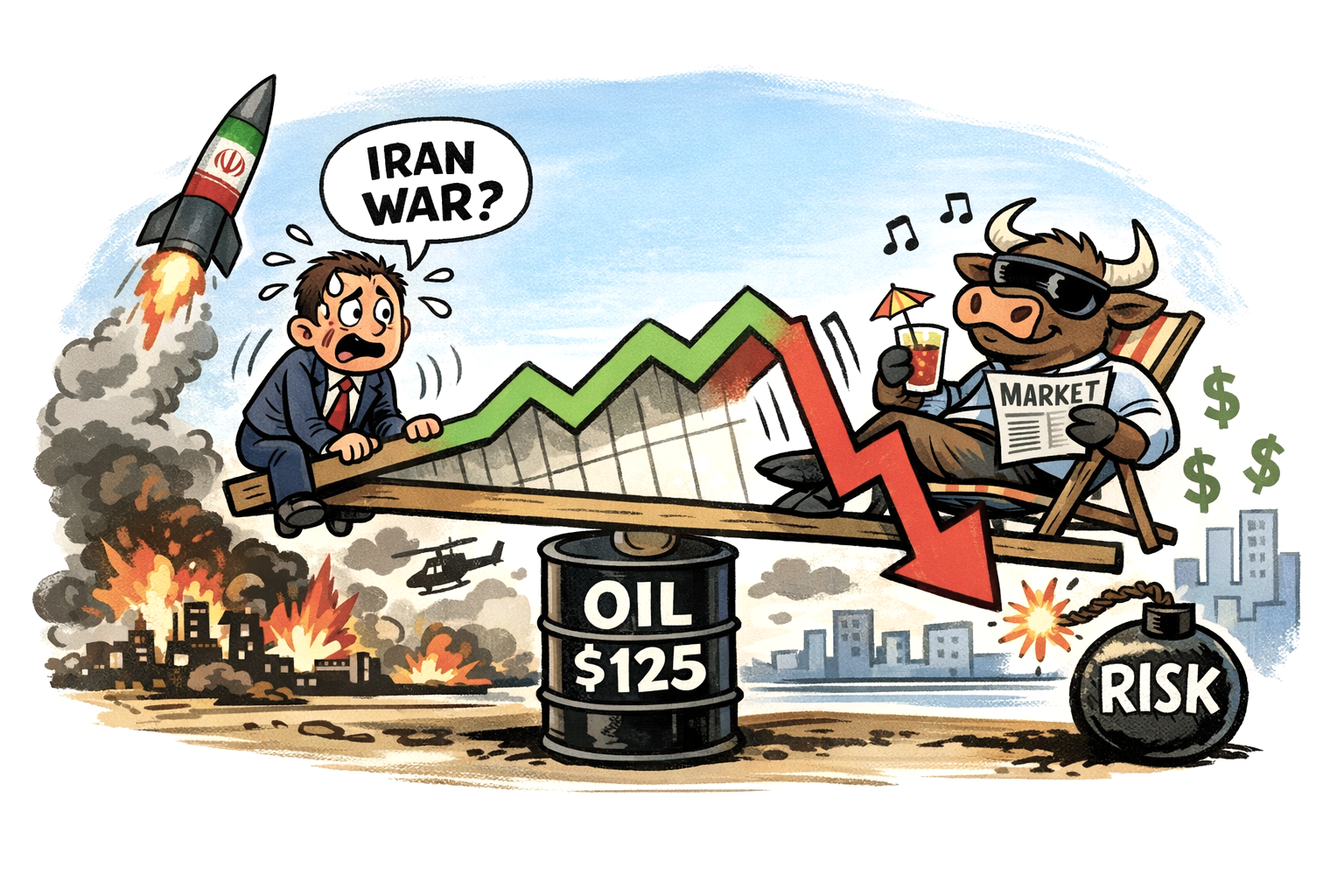
This momentum comes despite a sharp rise in global oil prices following renewed tensions in the Middle East. Brent crude briefly topped $108 a barrel, raising concerns about margin pressure.

Partially insulated

Yet China appears partially insulated: a coal‑heavy energy mix, access to discounted Iranian crude and sizeable onshore inventories have softened the immediate impact.

Even so, analysts warn that a prolonged oil shock, tighter sanctions enforcement or disruption around the Strait of Hormuz could still weigh on costs later in the year.

China’s industrial profits are no longer being driven by property‑linked sectors or commodity cycles, but by the country’s accelerating investment in chips, AI hardware and advanced manufacturing — a structural shift that is beginning to reshape the contours of its economic recovery.

UK Borrowing Falls, Offering Treasury Some Relief – March 2026

UK borrowing falls

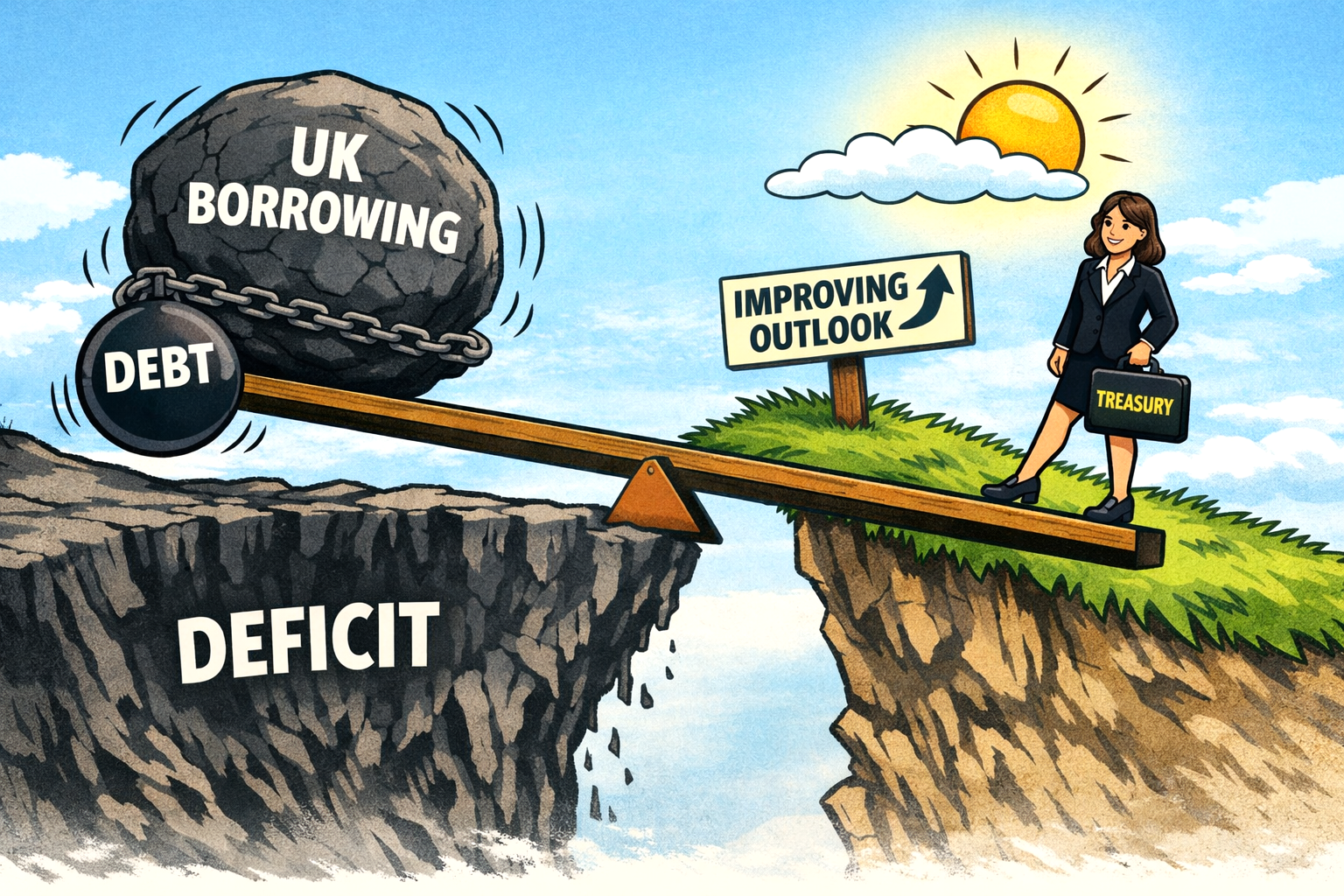
The latest public finance figures show that government borrowing has dropped to a lower‑than‑forecast level, helped by stronger tax receipts and easing inflationary pressures.

While the precise numbers will be scrutinised in the coming days, the headline outcome marks a modest but meaningful improvement in the UK’s fiscal position.

Softer inflation and lower interest rates

Analysts note that softer inflation has reduced the government’s debt‑interest bill, particularly on index‑linked gilts, which had surged during the inflation spike of the past two years.

The fall in borrowing also reflects a stabilising labour market and firmer wage growth, which have supported income‑tax and National Insurance receipts.

At the same time, lower market interest rates — driven by expectations of further Bank of England cuts after recent reductions to 3.75% — have eased short‑term financing costs for the Treasury.

High debt level

However, economists caution that the improvement should not be overstated. UK debt remains historically high, and pressures on public services, welfare spending, and capital investment persist.

Moreover, with growth still subdued and geopolitical risks keeping energy markets volatile, the fiscal outlook remains vulnerable to external shocks.

Even so, today’s figures provide the Chancellor with a welcome narrative shift: after years of deteriorating public finances, the government can point to early signs of stabilisation — albeit from a challenging starting point.

What the real data shows (ONS, published 23rd April 2026)

The latest ONS release confirms that UK government borrowing has indeed come in lower than expected, and the scale of the improvement is now clear:

  • Annual borrowing: £132.0 billion in the year to March 2026 — £19.8 billion lower than the previous year — £0.7 billion below the OBR forecast — Lowest level since 2022–23
  • March borrowing: £12.6 billion — £1.4 billion lower than March 2025 — Lowest March figure since 2022
  • Borrowing as % of GDP:4.3%, the lowest since 2019–20

The U.S./ Iran / Israel conflict with undoubtably hold the economy back as the effect has yet to fully filter through.

Suspicious Market Timing Raises Fresh Questions Over Alleged Potential Insider Trading During the U.S.–Iran Crisis

Alleged Potential Insider trading storm erupts

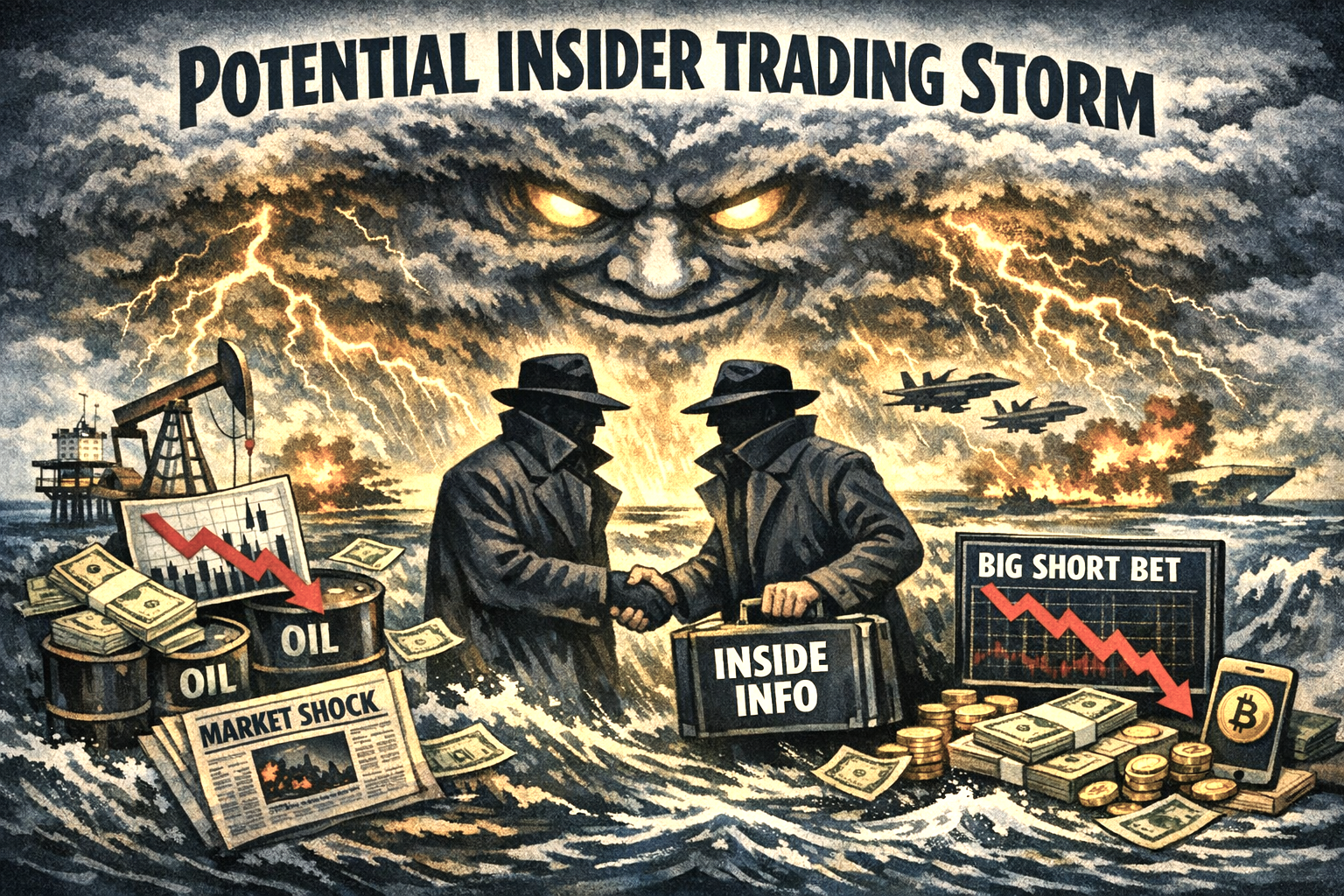
Allegations of suspiciously timed trades have intensified in recent weeks as analysts, journalists, and regulators examine a series of market moves that coincided—sometimes to the minute—with major announcements about the U.S.–Iran conflict.

While no wrongdoing has been proven, the pattern has become difficult for commentators to ignore and calls for formal investigation are growing louder. Can these trades and market movement be explained as coincidence?

Potential ‘speculative’ trading?

Many media outlets are also highlighting anomalies. For instance, it has been reported that Wealth manager Rachel Winter indicated traders appeared to take out contracts positioned to profit from falling oil prices just minutes before a presidential post claiming “productive” talks with Iran—timing she described as “speculation about insider trading” and worthy of investigation.

This episode was not isolated. Multiple outlets have documented at least two major bursts of unusually large oil futures trades placed shortly before conflict‑related announcements.

On 17th April 2026, it was reported that roughly $760 million in Brent crude short positions were executed around 20 minutes before Iran’s foreign minister declared the Strait of Hormuz “completely open” following a ceasefire—an announcement that sent oil prices sharply lower.

Analysts at the London Stock Exchange Group reportedly described the volume as “completely atypical,” nearly nine times normal levels.

Earlier in March 2026, it has been reported that traders placed around $500 million in positions shortly before the White House delayed planned strikes on Iran’s energy sector.

A similar pattern emerged on 7th April 2026, when roughly $950 million was positioned for falling oil prices hours before another ceasefire announcement.

These repeated bursts—each ahead of market‑moving news—have fuelled concerns that some traders ‘may’ have had access to information not yet public. Or was it a good guess – a coincidence even?

Reports of ‘unusual’ trading patterns

These reports align with broader commentary. The Independent noted that at least 6 million barrels’ worth of Brent and WTI contracts were suddenly sold in the two minutes before a presidential post about “productive” talks—again raising questions about advance knowledge.

Meanwhile, The London Economic reported that around $580 million in oil bets were placed 15 minutes before the same announcement, with market strategists calling the timing “really abnormal” for a day with no scheduled events.

Even outside traditional markets, anomalies have surfaced. Blockchain analysts identified six newly funded crypto wallets that made nearly £780,000 by betting—hours before explosions were reported—that the U.S. would strike Iran on 28th February 2026.

Across all these cases, commentators stop short of asserting intent. But the clustering of high‑stakes trades immediately before geopolitical announcements has created a clear narrative: the market signals are too sharp, too well‑timed, and too frequent to dismiss without scrutiny.

No intent is suggested – it could just be coincidence?

UK inflation rose to 3.3% in March 2026 as fuel prices spiked due to the ongoing U.S. Iran war

UK March inflation up to 3.3%

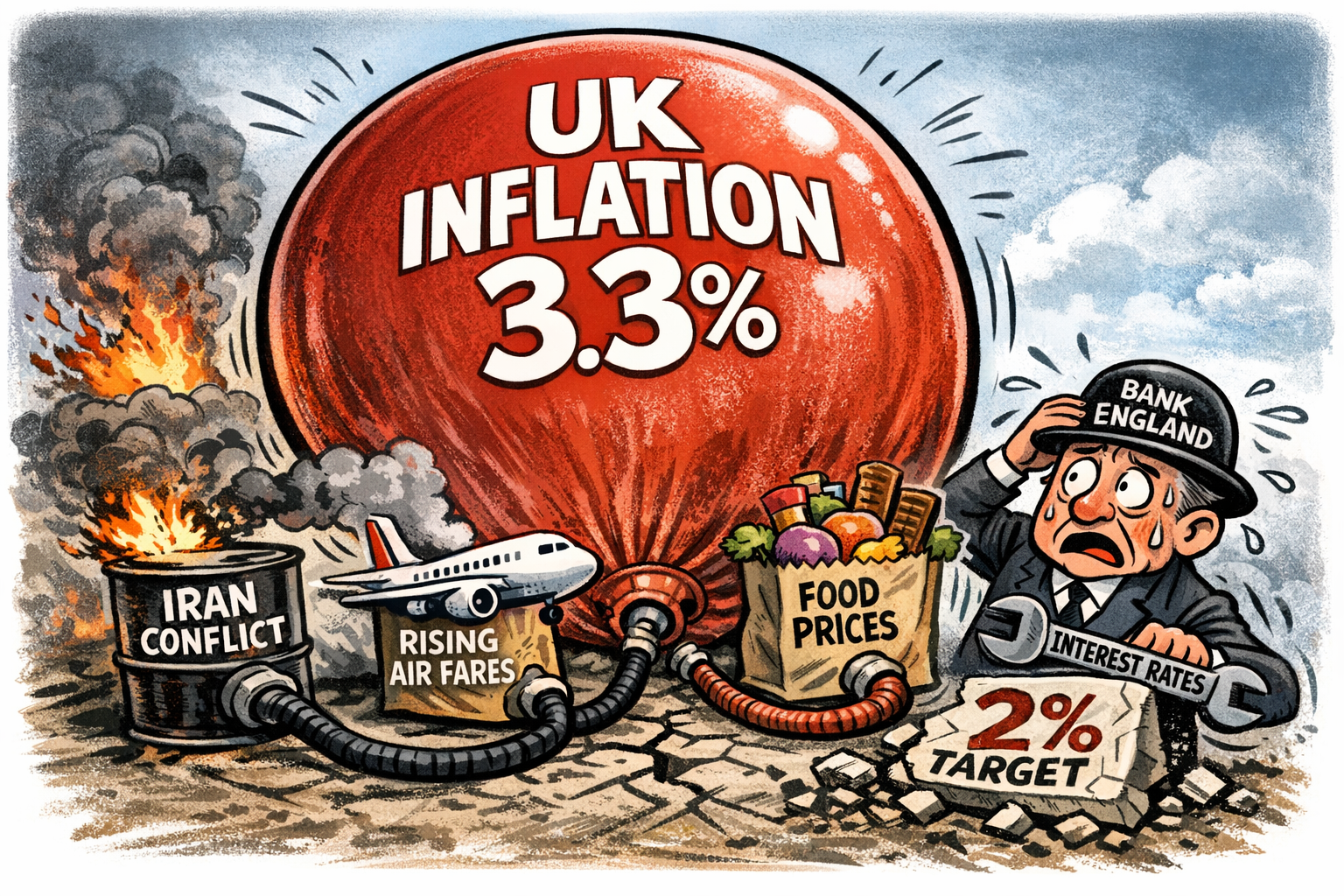
UK inflation jumped to 3.3% in March 2026, driven primarily by a sharp surge in fuel prices linked to the Iran conflict.

UK inflation accelerated to 3.3% in March 2026, up from 3% in February 2026, marking the first clear evidence of the Iran‑U.S. conflict feeding through to consumer prices.

Fuel costs

Official ONS data shows that motor fuel costs were the dominant driver, with petrol and diesel prices rising at their fastest pace in more than three years as global energy markets reacted to the disruption in the Strait of Hormuz.

Air fares

Air fares also rose sharply, partly due to the early Easter holidays, while food inflation picked up again, including notable increases in sweets and chocolate.

Clothing discounted

Clothing provided the only meaningful offset, with retailers discounting more heavily than last year.

The rise pushes inflation further from the Bank of England’s 2% target and complicates the policy outlook.

While economists expect UK inflation to ease slightly in April 2026, the broader risk is that sustained energy pressures could keep price growth elevated for longer.

Why Global Stocks Are Hitting Records Despite an Uncertain Middle East Backdrop

Global stock hit record highs!

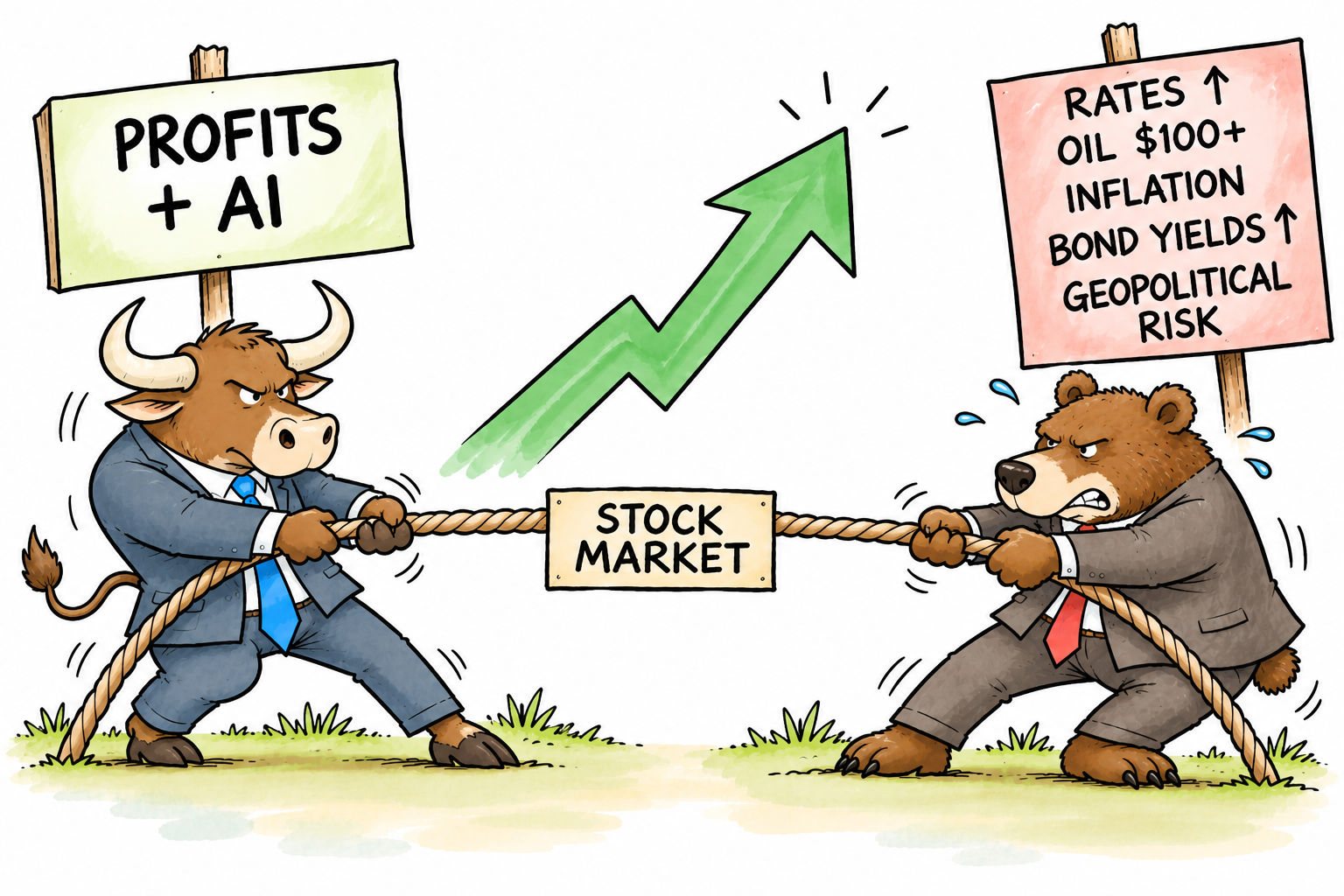
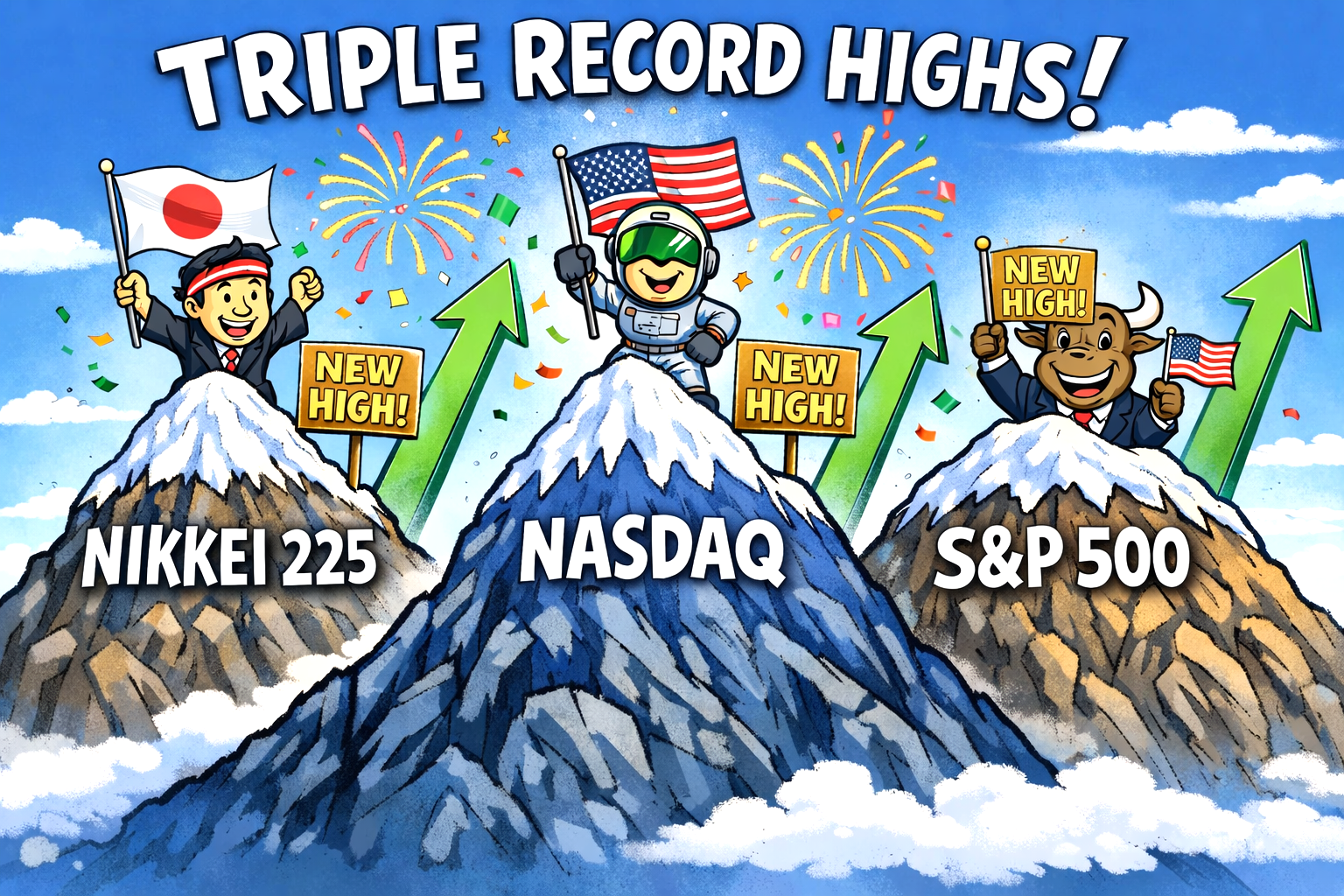
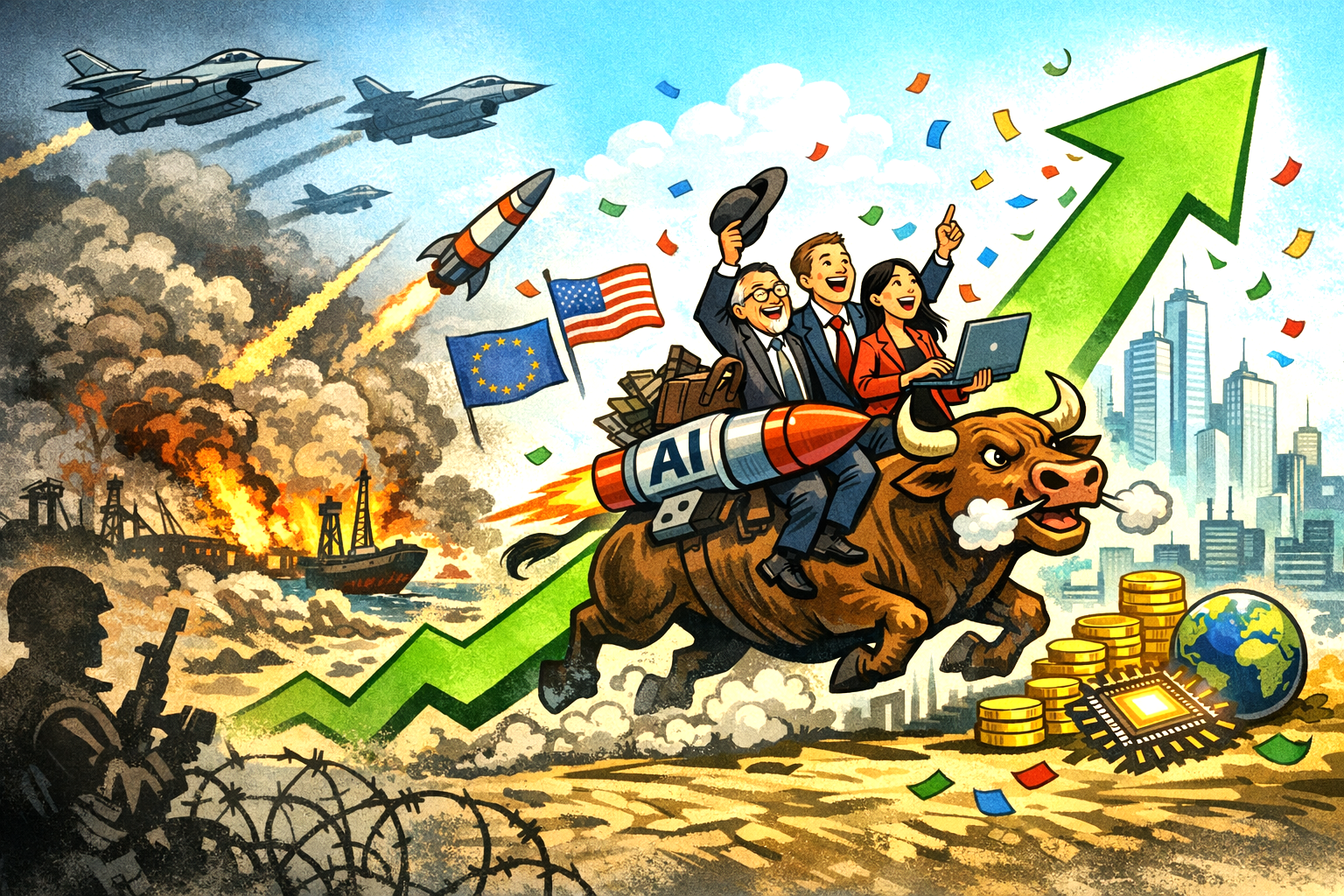
Global equities have staged a striking recovery, erasing the losses triggered by the U.S.–Israel–Iran conflict and pushing into fresh record territory.

On the surface, this looks counter‑intuitive: the ceasefire remains fragile, diplomatic progress is uneven, and the threat of renewed escalation still hangs over the Strait of Hormuz. Yet markets have not only stabilised — they have surged.

It’s the AI boom stupid

The explanation lies less in geopolitics and more in positioning, psychology, and the gravitational pull of the AI boom.

The first phase of the conflict saw investors pile into defensive trades: higher oil, a stronger dollar, and a broad de‑risking across equities.

That created a sizeable war‑risk premium. Once even the possibility of a ceasefire emerged, that premium unwound at speed.

Analysts note that the rebound has been driven primarily by the rapid reversal of hedges rather than any fundamental improvement in the geopolitical outlook.

In other words, markets had priced in a worst‑case scenario — and when that scenario didn’t immediately materialise, the snap‑back was violent.

Short covering

This shift in sentiment was amplified by short‑covering, particularly among hedge funds that had positioned for prolonged disruption to energy flows.

As soon as investors judged the conflict likely to remain contained, the earlier sell‑off looked excessive. That alone was enough to propel global indices back above pre‑war levels. But it wasn’t the only force at work.

The macro backdrop has also proved more resilient than feared. U.S. labour market data has held up, and expectations for Federal Reserve rate cuts later in the year remain intact.

AI investment

Crucially, the AI‑driven investment cycle continues to dominate equity performance. Surging demand for compute, improving funding conditions, and strong earnings momentum in technology have provided a powerful counterweight to geopolitical anxiety.

For many investors, the structural growth story in AI simply outweighs the cyclical risks emanating from the Middle East.

Some caution

Still, the rally is not unqualified. Bond markets remain more cautious, with real yields and inflation expectations signalling that the risk of an energy‑driven slowdown has not disappeared.

And as peace talks wobble, equities have already begun to give back some gains — a reminder that this is a conditional rally, not a complacent one.

Markets may be hitting records, but they are doing so with one eye firmly on the horizon. The shadow of the conflict hasn’t lifted; investors have simply decided, for now, that it is not the dominant story.

U.S. Markets Hit New Highs Friday 17th April 2026 Amid Confusion Over the Strait of Hormuz and Presidential Chatter

U.S. markets hit new highs as announcements are clouded in smoke

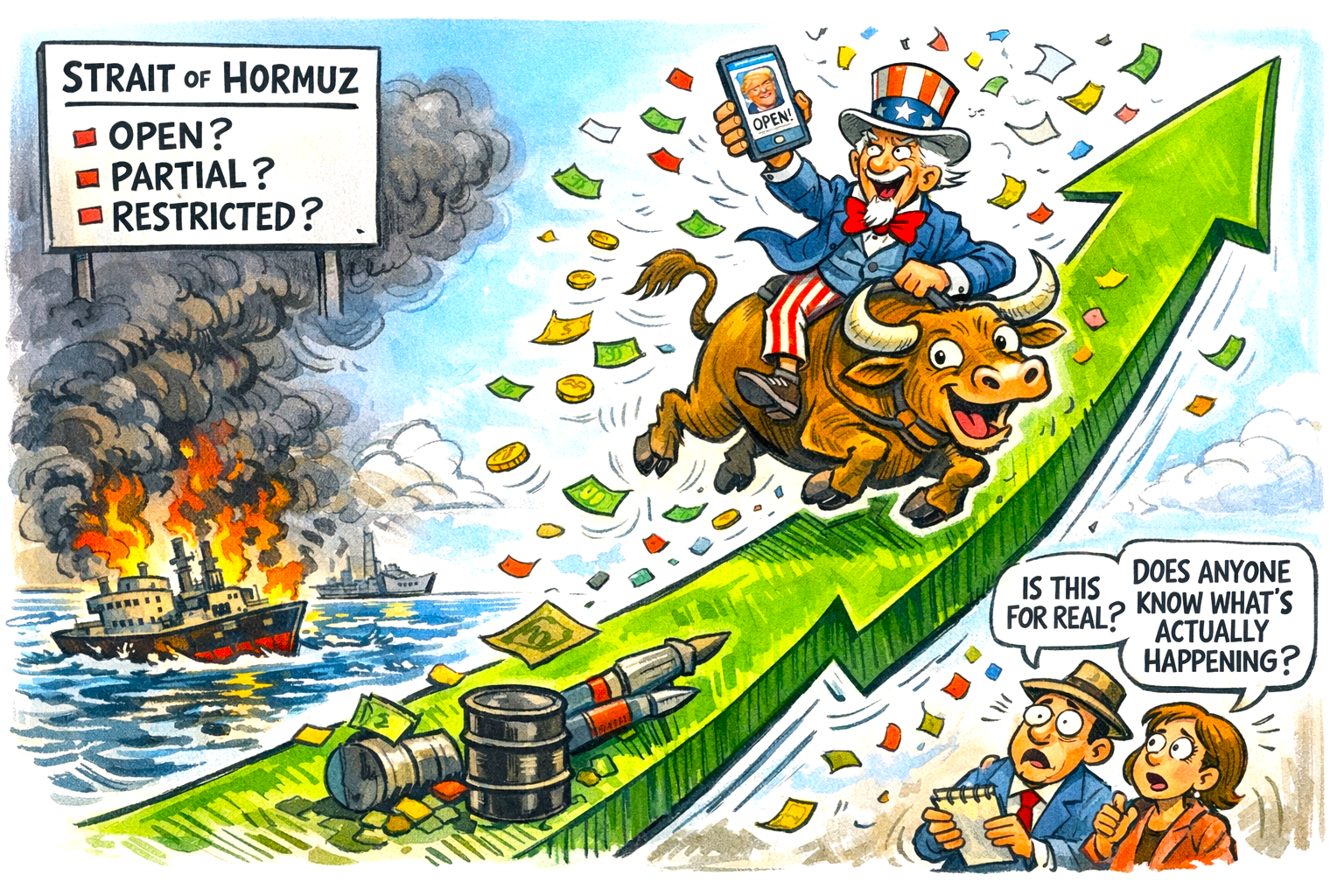
U.S. equity markets surged to fresh record highs on Friday 17th April 2026, propelled less by economic fundamentals and more by a swirl of contradictory geopolitical signals and a single, highly visible social media post from the President of the United States.

The result was a rally that looked exuberant on the surface yet rested on information that remained unverified, disputed, or only partially understood.

Market makers, investors and traders can’t possibly verify that this information is safe to trade – it’s a bet – and this isn’t good for the stock market.

The world deserves better – this is not investing!

Catalyst

The catalyst was a presidential declaration that the Strait of Hormuz — a critical artery for global oil shipments — was “open”. The statement landed with the force of breaking news, despite the absence of confirmation from defence officials, maritime authorities, or international partners.

It was also reported that the U.S. would maintain its blockade of the Strait of Hormuz?

Reports circulating throughout the day suggested a more complicated reality: some sources described partial reopening, others spoke of restricted passage, and several indicated that conditions remained unstable.

In short, the facts were not settled.

Markets, however, behaved as though they were.

Melt-up driven by social media posts

Within minutes of the President’s post, U.S. index futures spiked sharply. By the closing bell, the S&P 500, Nasdaq, and Dow had all notched new highs.

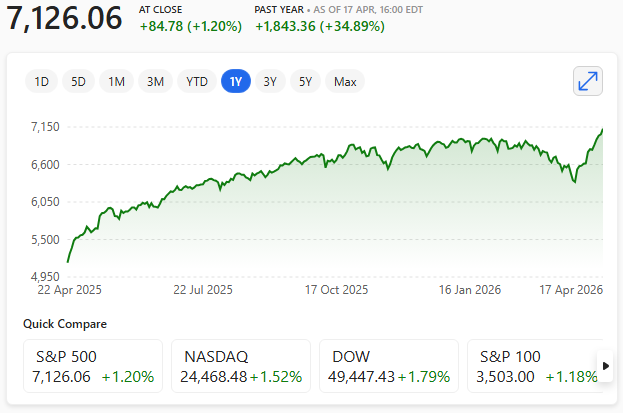
S&P 500 closes a record high 17th April 2026

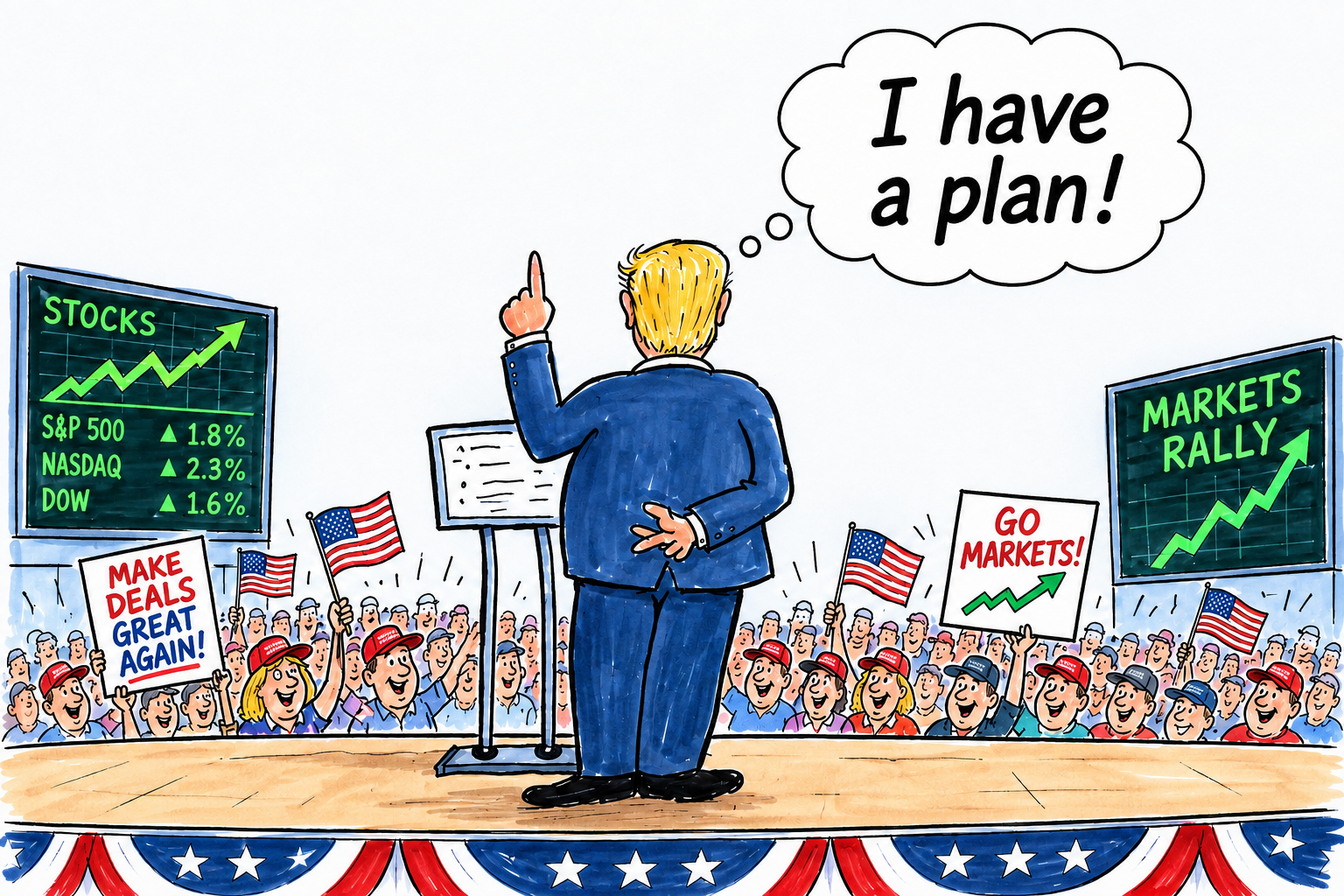
Traders reportedly described the move as a “headline‑driven melt‑up”, a familiar pattern in recent months/years in which presidential commentary — rather than institutional communication — becomes the primary driver of intraday sentiment.

The sensitivity is not new. Analysts have repeatedly noted that markets respond quickly to presidential statements on energy, security, and trade, even when the underlying information remains contested.

What made Friday’s rally notable was the scale of the reaction relative to the uncertainty surrounding the Strait itself. Oil prices fell, risk appetite surged, and equity markets behaved as though a major geopolitical bottleneck had been definitively resolved.

Structural vulnerability

Critics argued that this dynamic reflects a structural vulnerability: when markets move first and verify later, volatility becomes a feature rather than a flaw. Supporters countered that traders simply price information as it arrives, regardless of its source.

What is clear is that the rally was driven not by data releases, earnings results, or policy announcements, through the ‘accepted and usual channels’ but by social media messages amplified across global financial systems.

Whether the Strait of Hormuz is fully open, partially open, or operating under constraints remains to be clarified.

The markets, however, have already made up their mind — at least for now.

The ‘news’ is good or ‘bad’ enough to make money!

U.S. stock market credibility is being eroded daily – bit by bit.

This has to stop!

No intent is suggested

Update

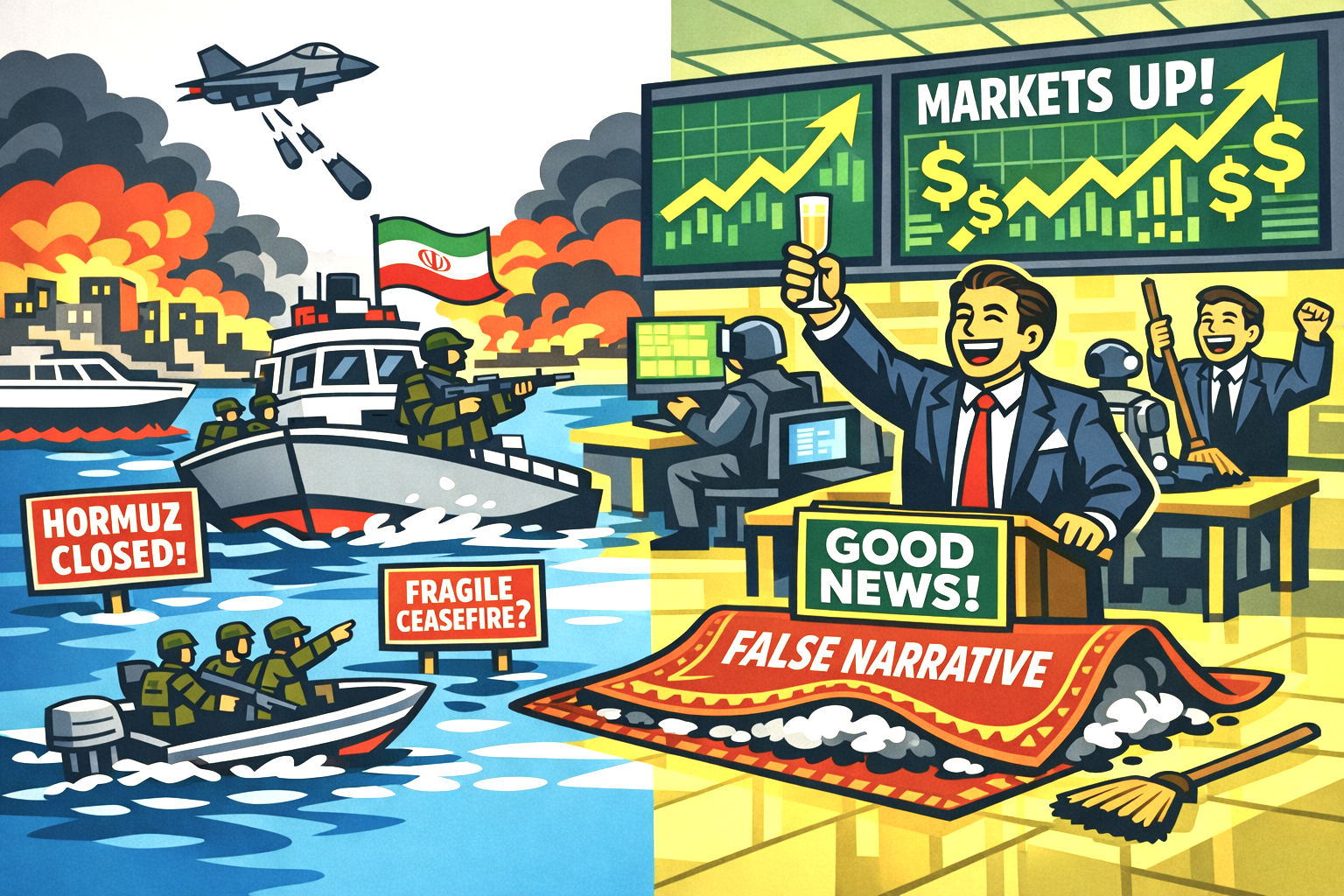
Iran fired shots at vessels trying to exit the Strait of Hormuz over the weekend. And now the U.S. has attacked a vessel under the Iranian flag casting doubt on renewed talks. The fragile ceasefire expires Wednesday 22nd April 2026 – unless Trump extends this and does a TACO!

There has also reportedly been talk of a 60-day extension – but that was before these latest problems.

No intent is suggested.

Wall Street Roars to Record Highs Friday 17th April 2026 as Major Indices Break New Ground

S&P 500 hits new record high!

U.S. equity benchmarks surged to fresh record highs on Friday, 17th April 2026, as geopolitical tensions eased and investors responded to confirmation that the Strait of Hormuz had been declared “completely open” during the ongoing ceasefire period.

Record high for S&P 500 above 7100 for the first time

The S&P 500 closed at 7,126.06, up 1.2% and above the 7,100 mark for the first time. The Nasdaq Composite extended its remarkable winning streak to 13 consecutive sessions, finishing at 24,468.48, a 1.52% gain and its longest run since 1992.

The Dow Jones Industrial Average also rallied sharply, jumping 868.71 points (1.79%) to end at 49,447.43. The Russell 2000 hit new highs too.

The rally followed Iran’s announcement that commercial passage through the Strait of Hormuz was fully open under ‘coordinated’ routes, easing fears of supply disruption.

Oil prices tumbled in response: WTI crude oil fell nearly 12% to $83.85, while Brent dropped 9% to $90.38.

Sector‑level moves reflected a broad risk‑on shift. Travel‑exposed stocks such as airlines and cruise operators rebounded, while major technology names also advanced.

Market strategists suggested investors were “moving beyond this conflict” as worst‑case scenarios were reassessed.

Assuming the ‘news’ is to be believed. No intent is suggested.

With all major indices setting new highs, Friday’s session underscored how quickly sentiment can pivot when geopolitical uncertainty recedes — even temporarily.

This market move was ultimately led by a social media post by President Trump on Truth Social.

Why does the UK have a serious issue with jet fuel supply

UK jet fuel low

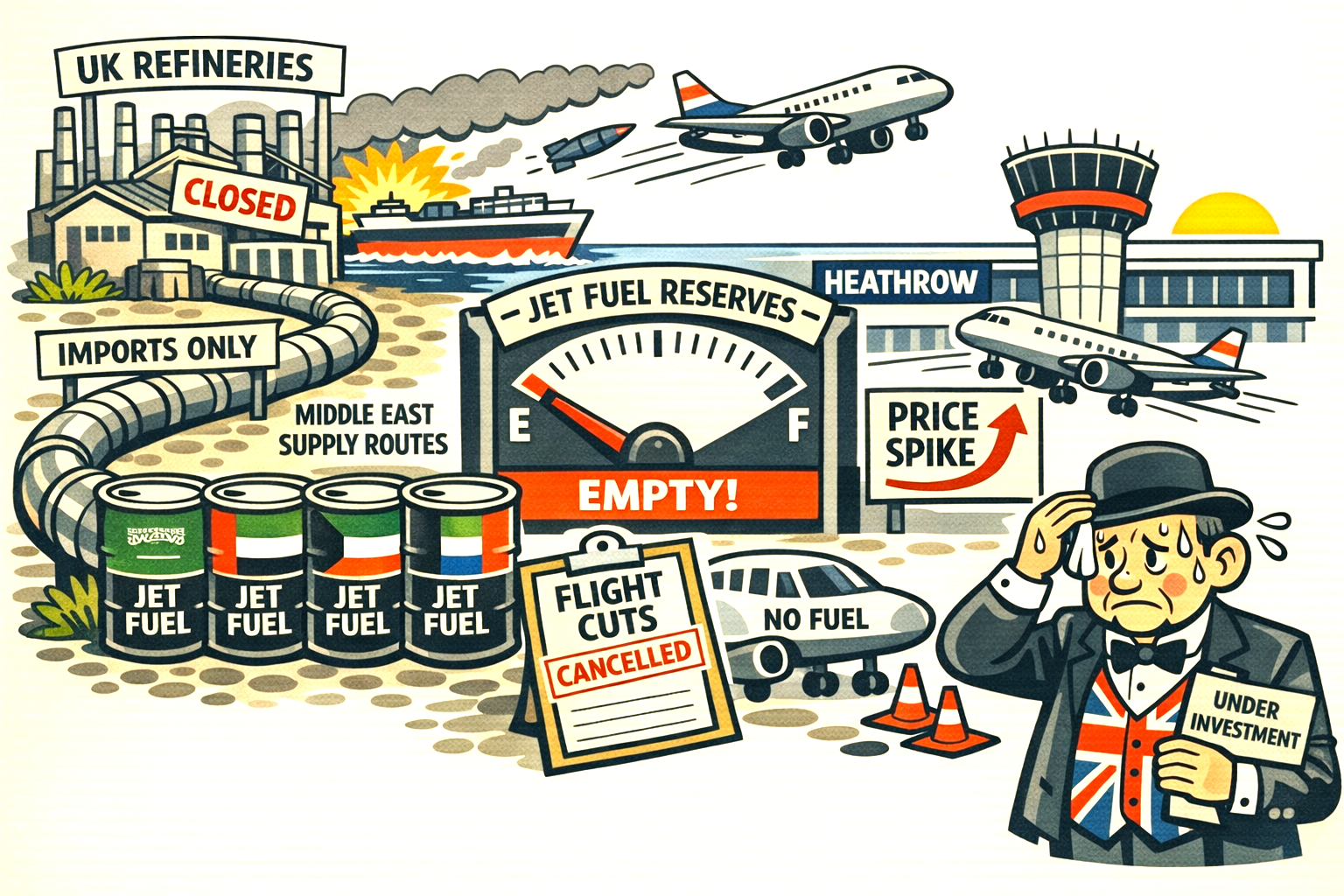
Britain’s jet fuel problem is the predictable result of a long, quiet erosion of refining capacity colliding with a geopolitical shock and decades of under investment.

The country now imports three times more kerosene than it produces, and the Middle East crisis has exposed just how thin those supply lines have become.

A system built on shrinking refineries

The UK once had 18 refineries; today it has just four. Closures at Lindsey and Grangemouth last year removed two critical plants, including Scotland’s only kerosene supplier.

The remaining refineries — Fawley, Humber, Pembroke and Stanlow — supply most domestic needs but cannot meet jet fuel demand.

Output has fallen 41% since 2000, driven by poor investment returns, high carbon costs, and the government’s push toward electrification reducing demand for other fuels.

This leaves Britain structurally dependent on imports for diesel and, crucially, kerosene.

The kerosene dependency

Jet fuel demand is unusually high because of Heathrow’s role as a global hub. In 2024, the UK was the second‑largest jet fuel consumer in the OECD, behind only the U.S.

Yet domestic production covers only a fraction of that. Britain reportedly imported around 3.1 times more kerosene than it produced in 2024.

And the sources of those imports are concentrated: 60% come from Saudi Arabia, the UAE and Kuwait, making the UK acutely exposed to any disruption in the Strait of Hormuz.

The real vulnerability: almost no stockpiles

Britain holds just one month’s worth of jet fuel reserves, far lower than most advanced economies. When Middle Eastern supply is threatened, the UK has no buffer.

European alternatives exist — notably the Netherlands and Antwerp — but prices have already doubled, and airlines are preparing to cut capacity.

The bigger picture

This is not a sudden crisis but the culmination of two decades of under‑investment, policy drift and over‑reliance on global markets.

Jet fuel is simply the first commodity where the structural weakness has become impossible to ignore.

The UK needs to get a grip!

A ‘systemic’ jet fuel shortage is brewing in Europe if the U.S. led Iran war crisis isn’t resolved soon.

The Market That No Longer Cares About the Truth

Markets make the money and remain devoid of morality

There’s a growing sense that financial markets have drifted into a parallel reality. Not the usual detachment that comes with speculation, but something deeper — a structural break between what is happening in the world and what markets choose to see.

This is how the stock market feels at the moment. I might be wrong, but the overwhelming sense of despair feels so real. I believe the markets are broken at their core, and nobody seems to care. Markets make money and remain devoid of morality.

The system is morally bankrupt.

You can watch a crisis unfold in real time, with footage, statements, explosions and diplomatic failures, and yet the markets behave as though they’re responding to a completely different script.

A ceasefire that barely exists is treated as a turning point. A strategic waterway that is “open” only in the loosest, most cosmetic sense is priced as fully restored. The disconnect isn’t subtle. It’s brazen.

And yes — it feels deceptive

Not because traders are conspiring to mislead anyone, but because the modern market has evolved into something that no longer requires truth to function.

It only needs a narrative.

A headline. A phrase that can be interpreted as “less bad than yesterday”. That’s enough to ignite a rally, even if the underlying situation is deteriorating by the hour.

This wasn’t always the case. There was a time when markets, for all their volatility and irrationality, still behaved like instruments tethered to reality.

When a major shipping lane was threatened, prices moved accordingly. When a ceasefire collapsed, markets reflected the renewed danger. There was at least a rough correlation between events and valuations — imperfect, but recognisable.

Today, that correlation has snapped. The market trades on sentiment, not substance. On the idea of stability, not the presence of it.

Appearance

On the appearance of progress, even when the facts on the ground contradict every optimistic headline. A ceasefire announcement is enough to send equities higher, even if the ceasefire is violated before the ink dries.

A promise to reopen a strait is enough to calm oil prices, even if only a handful of ships actually move.

The deception is structural. It’s the product of algorithmic trading that reacts to keywords rather than conditions.

It’s the result of a decade of central bank intervention that has taught investors to treat every crisis as temporary and every dip as a buying opportunity. It’s reinforced by political communication that prioritises market stability over factual clarity.

The system rewards optimism, even when it’s unjustified. It punishes realism when it’s inconvenient.

Surreal

This is why the current moment feels so surreal. You can see the footage of strikes in Lebanon while reading headlines about “regional de‑escalation”. You can watch tankers stalled while analysts talk about “normalising flows”.

The market shrugs, because the narrative — however flimsy — is enough to sustain the illusion.

If markets don’t need truth, then they are, in effect, trading a deception. Not a deliberate deception, but a functional one.

Economic Truth

A deception that keeps prices elevated, volatility suppressed, and investors soothed.

A deception that allows the charts to climb even as the world beneath them fractures.

A deception that has become the operating principle of a system that no longer reflects reality, only the stories it finds convenient to believe.

This isn’t investing – this is pure manipulative gameplay and benefits only those who know how to play the game.

And ‘they’ set the rules.

Markets make the money but remain devoid of morality.

I feel like I am playing a video game without the controller or at least with a rule book.

Update:

U.S. announces it will blockade of the Strait of Hormuz, or rather Iranian ‘linked’ ships. And not in the Strait but further out in international waters. This is designed to reduce the risk of conflict.

China, I assume, will not be happy.

Be careful – nothing is as it seems.

Iran’s 2026 Energy Crises: Echoes of the 1970s in a New Era of Risk

U.S. Israel Iran War 2026

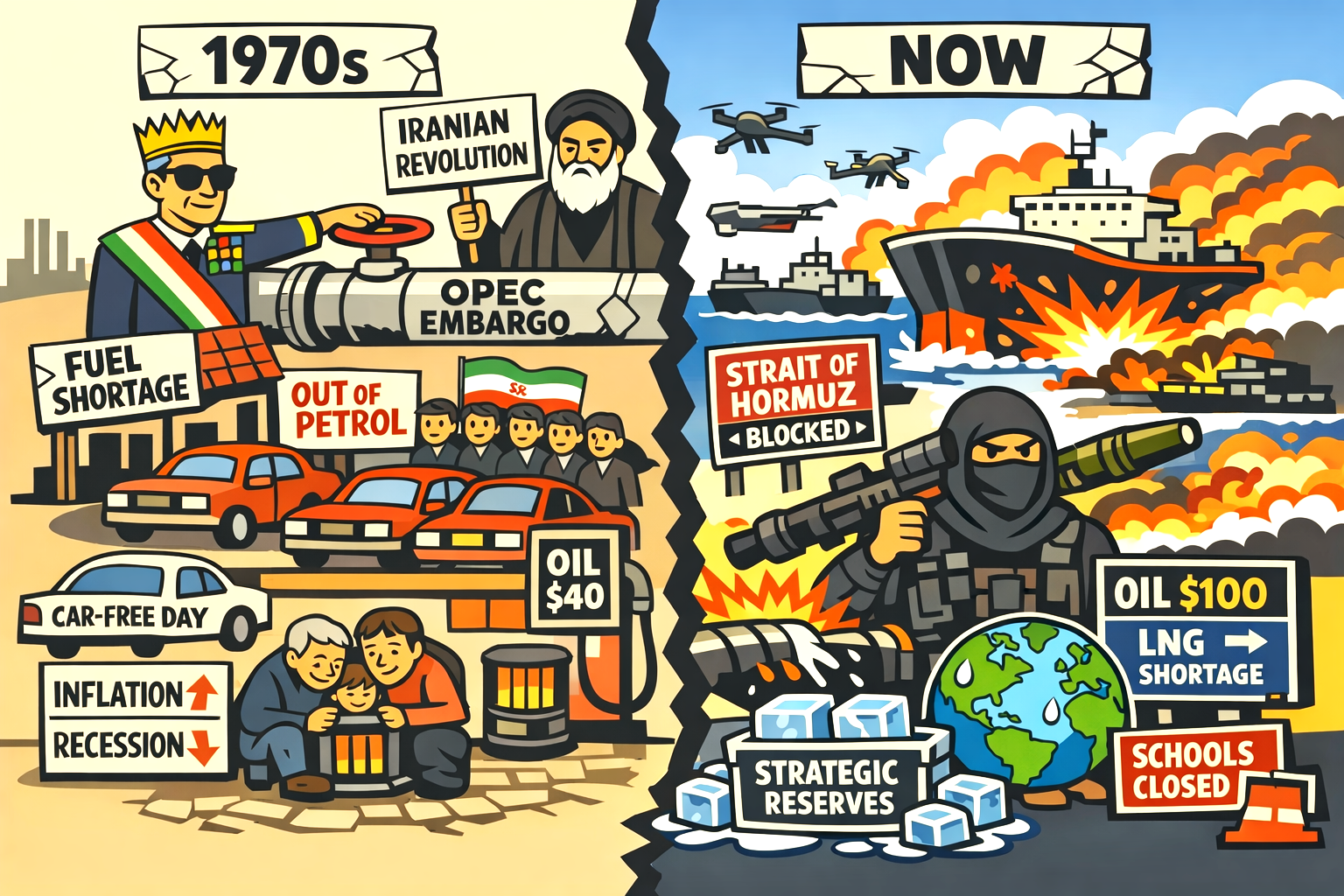
The 1970s crises were triggered by political embargoes and revolution, causing sharp but smaller supply cuts and extreme price spikes.

Today’s crisis is driven by war, infrastructure attacks, and the near‑closure of the Strait of Hormuz, producing a larger supply disruption, though price rises so far have been less extreme.

Energy shock

The energy shocks of the 1970s remain some of the most disruptive economic events of the modern age. Triggered first by an embargo and later by revolution, they exposed how deeply the global economy depended on Middle Eastern oil.

Half a century later, Iran still sits at the centre of global energy anxiety — but the nature of the threat has shifted.

The world is no longer facing an outright supply collapse, yet the structural vulnerabilities that defined the 1970s have not disappeared. They have simply evolved.

Yom Kippur War

The first major shock came in 1973, when Arab oil producers cut exports to countries supporting Israel during the Yom Kippur War.

The result was a sudden loss of roughly seven per cent of global supply. Prices quadrupled, queues formed at petrol stations, and governments imposed rationing, car‑free days, and speed‑limit reductions.

The economic fallout was severe: inflation surged while growth stalled, creating the era‑defining condition of stagflation.

A second blow followed in 1979, when the Iranian Revolution removed millions of barrels per day from the market. Prices tripled once again, and the world was forced to confront the fragility of its energy systems.

IEA

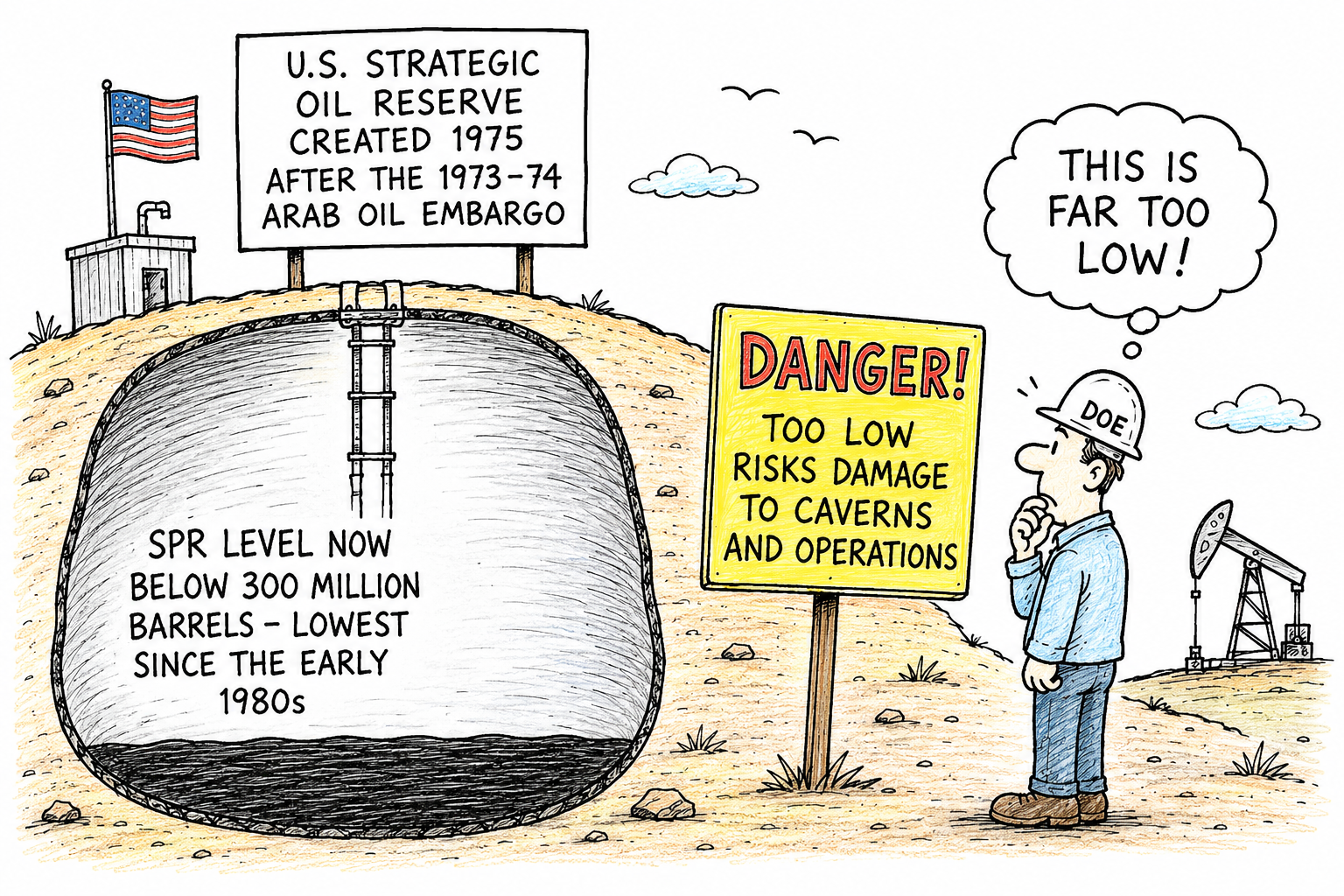
The International Energy Agency was created in direct response, tasked with coordinating emergency measures and strategic reserves.

These two crises set the benchmark for what an energy shock looks like — sudden, sharp, and globally destabilising.

Today’s risks are different. The world is not experiencing a supply loss on the scale of the 1970s, but the potential for disruption remains high.

Strait of Hormuz

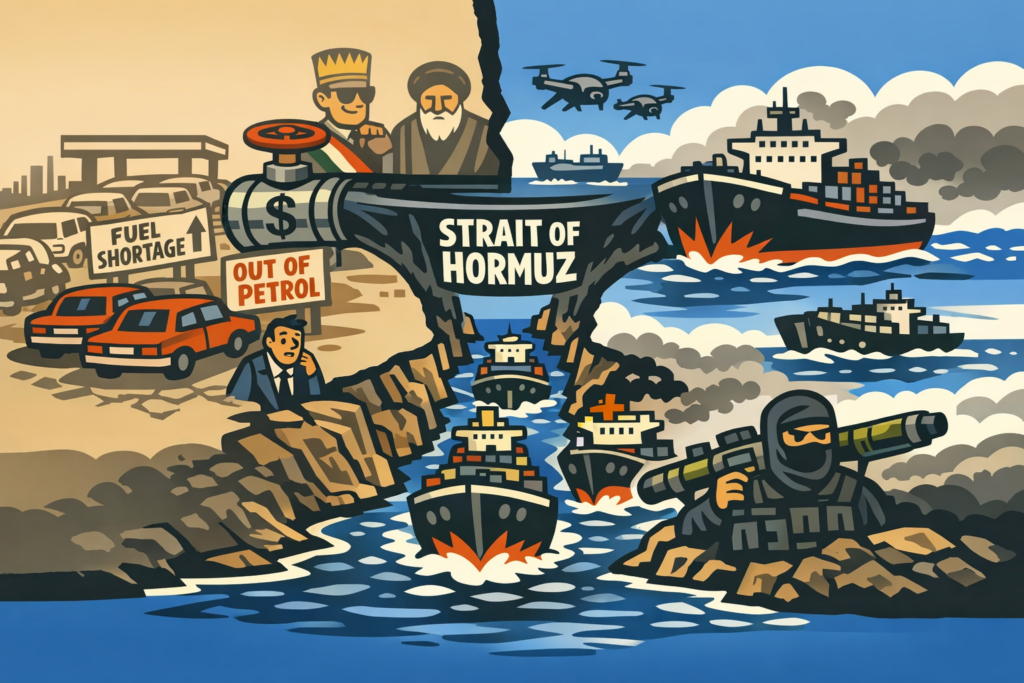
The Strait of Hormuz, through which around a fifth of global oil flows, is a strategic chokepoint vulnerable to conflict, tanker seizures, and infrastructure attacks.

Iran has repeatedly threatened to close or disrupt the strait during periods of tension, and even limited incidents in recent years have pushed prices higher.

Markets remain acutely sensitive to any sign that the corridor could be compromised.

Diverse energy

Unlike the 1970s, modern economies have more diversified energy systems, larger strategic reserves, and a growing share of renewables.

Yet these advantages do not eliminate risk; they merely soften it. A serious disruption in the Gulf would still send shockwaves through global markets.

The comparison between then and now is not one of scale but of structure. The 1970s showed how quickly energy can become a lever of geopolitical power.

Today’s world is more resilient, but no less exposed. The lesson endures: when a single region holds the key to global supply, the world remains only one crisis away from another shock.

We also need to ask – how and why this happened again!

What’s your answer?

How the crises affected the UK in the 1970s

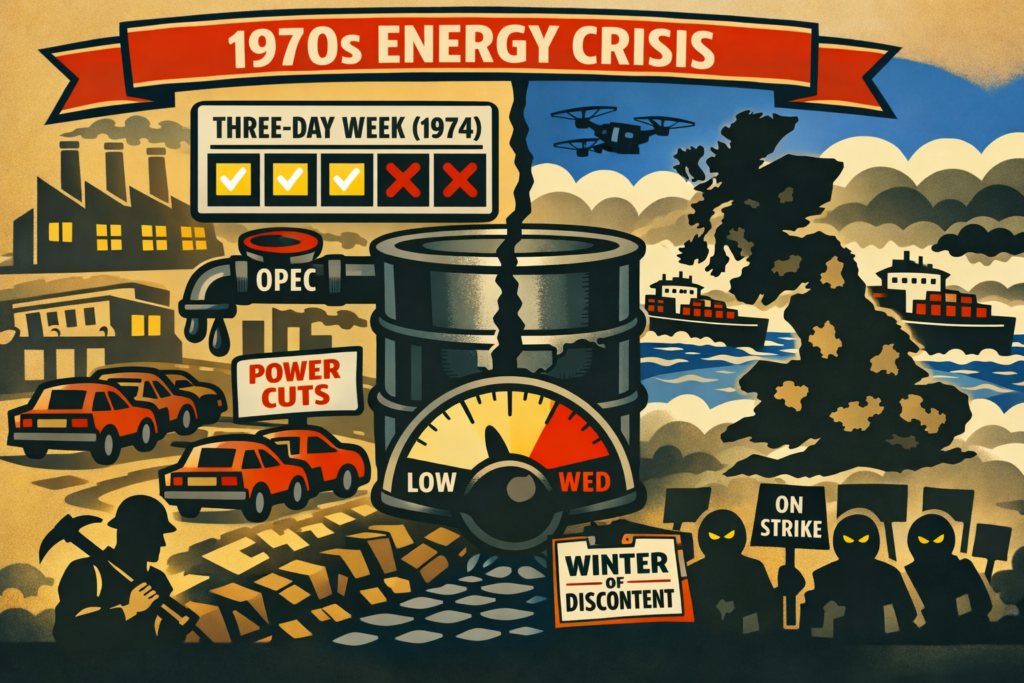
The 1970s energy crisis had a profound and lasting impact on the United Kingdom, reshaping its economy, politics, and industrial relations.

When global oil prices quadrupled after the 1973 OPEC embargo, Britain was already struggling with domestic energy tensions.

Coal remained the backbone of electricity generation, and the miners’ dispute with Edward Heath’s government over pay and working conditions collided with the global fuel shock.

As coal output fell and oil costs soared, the government-imposed emergency measures — most famously the Three‑Day Week in early 1974, limiting commercial electricity use to conserve power. It led to the Winter of Discontent.

Power Cuts

Factories shut down, television broadcasts ended early, and households faced rolling power cuts. Inflation surged, unemployment rose, and the economy slowed sharply.

The crisis deepened public frustration with the Conservative government, contributing to Heath’s defeat in the February 1974 general election.

Trade Union Turmoil

The turmoil also strengthened trade unions, whose strikes became a defining feature of the decade.

By the late 1970s, another oil shock — triggered by the Iranian Revolution — compounded Britain’s economic malaise, leading to the “Winter of Discontent” and paving the way for Margaret Thatcher’s election in 1979.

In short, the 1970s energy crisis exposed Britain’s dependence on imported fuel and unstable domestic supply, ushering in years of inflation, industrial unrest, and political upheaval that reshaped the country’s economic direction for decades.