

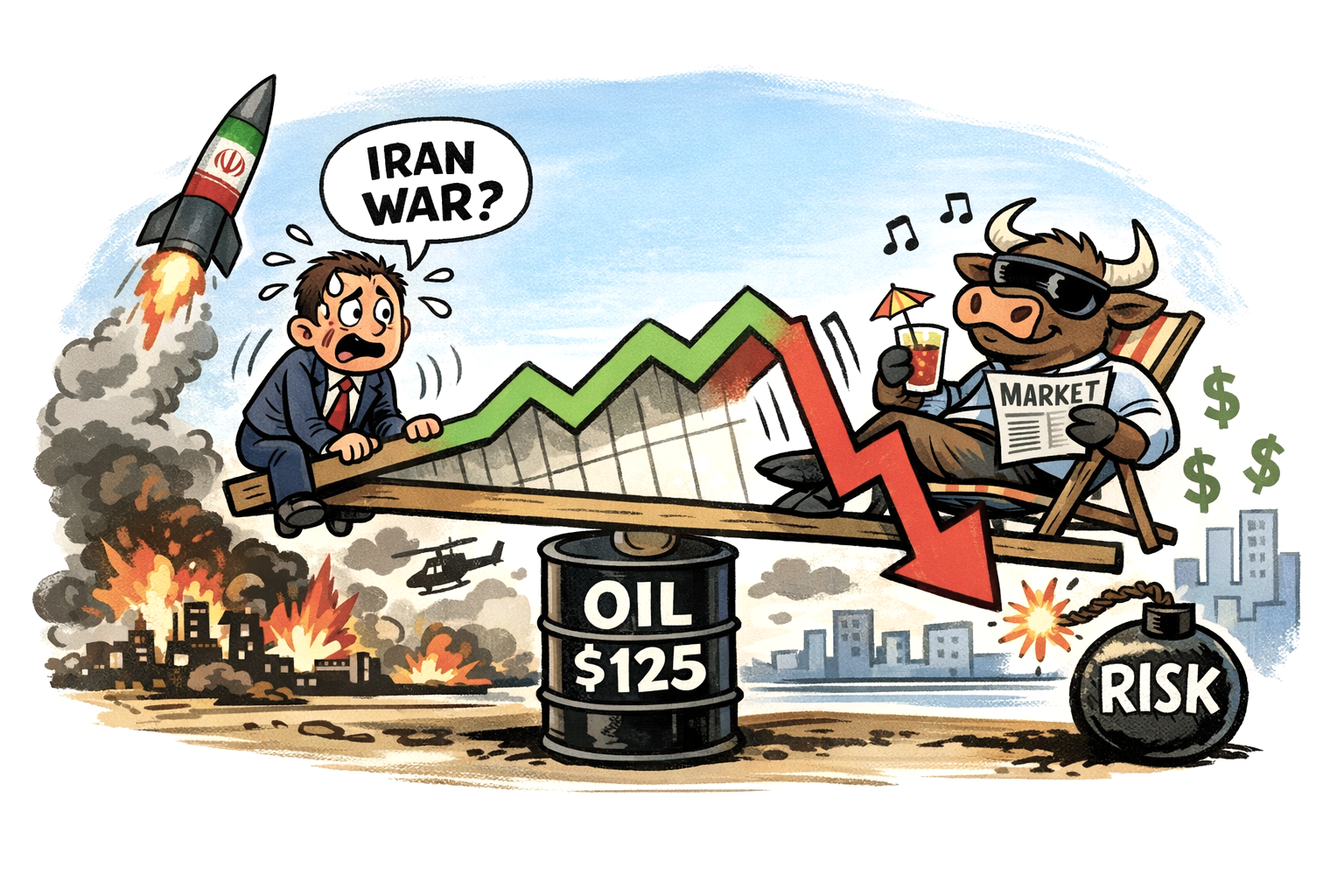
Markets are flashing warning signs that too many investors are still treating the U.S.-Iran war as a temporary disturbance rather than a structural shock.
Brent crude’s brief surge to around $125 a barrel — its highest level in four years — has reignited fears that the conflict’s economic fallout is being dangerously underpriced.
Complacency
Analysts argue that markets are behaving as though a clean resolution is imminent, even as evidence points in the opposite direction.
The core concern is complacency. Oil’s extreme pricing — where near‑term contracts trade at a steep premium to longer‑dated ones — shows traders are still assuming the Strait of Hormuz will reopen soon and that supply chains will normalise.
Yet millions of barrels per day remain blocked, inventories of refined products like diesel and jet fuel are sliding toward crisis levels, and the White House is reportedly weighing further military action.
None of that aligns with the market’s pricing of a quick return to stability.
The disconnect
This disconnect matters because the real economic damage has not yet fully surfaced. As one investment chief notes, the macro impact will “come back into stark focus” if oil stays elevated.
Higher energy costs feed directly into inflation, squeeze corporate margins, and erode consumer spending power. Equity markets have so far shown resilience, but that resilience is built on the assumption that the shock is temporary.
If the conflict drags into far into May 2026 — as several analysts expect — the stagflationary risk becomes harder to ignore.
Stress
The refined products market is already behaving like a stress test. Diesel prices have nearly doubled, and traders warn that refineries will soon be able to “charge whatever they want”.
Even a peace deal would not deliver instant relief: shipping logistics, sanctions decisions, and depleted reserves would take weeks to unwind.
The fear among seasoned investors is simple: markets are pricing for peace while the fundamentals are still pricing for war. Before long, that gap may close — abruptly and painfully.