Are markets becoming complacent about the U.S. Iran war?

U.S. Iran war effect underestimated?

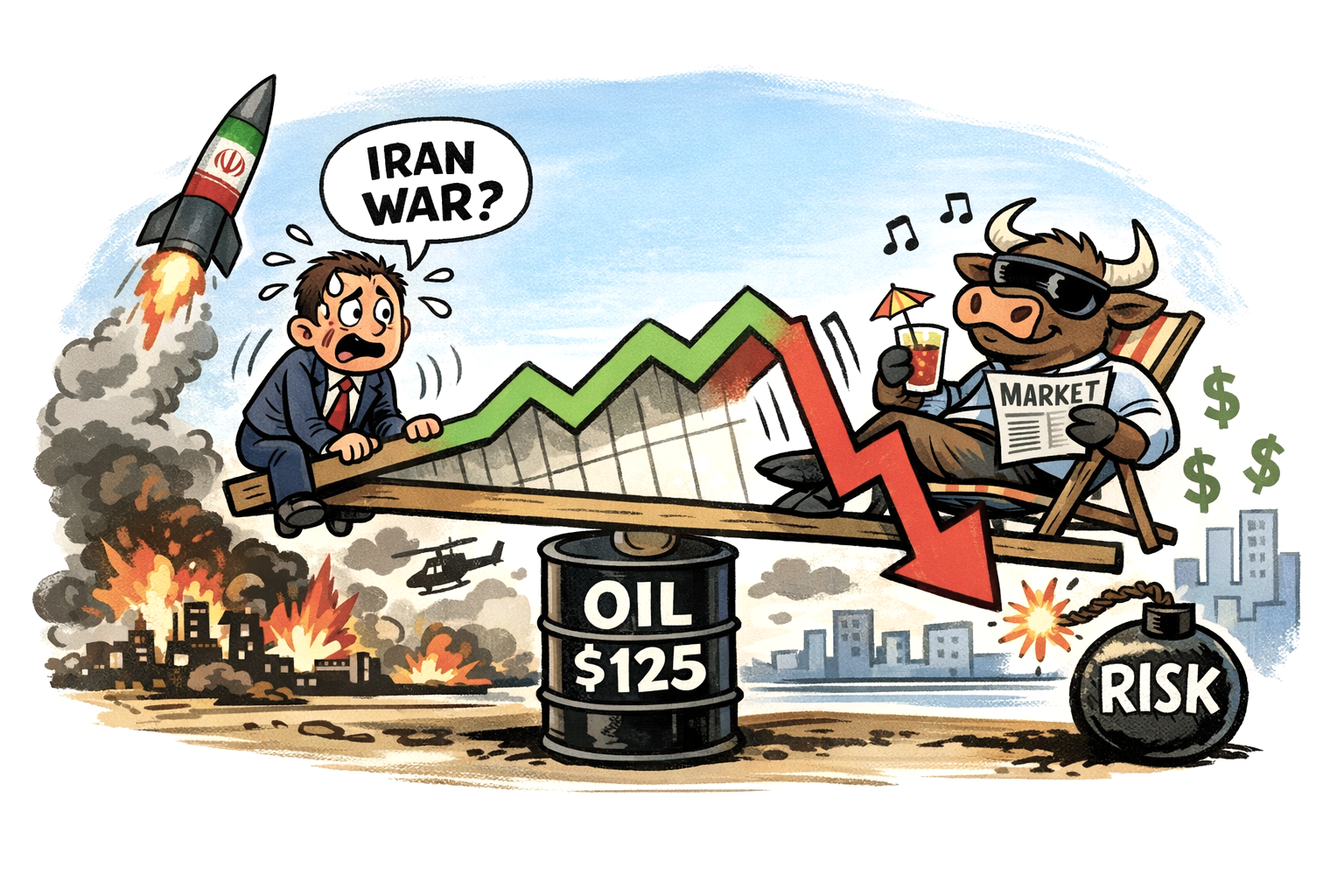
Markets are flashing warning signs that too many investors are still treating the U.S.-Iran war as a temporary disturbance rather than a structural shock.

Brent crude’s brief surge to around $125 a barrel — its highest level in four years — has reignited fears that the conflict’s economic fallout is being dangerously underpriced.

Complacency

Analysts argue that markets are behaving as though a clean resolution is imminent, even as evidence points in the opposite direction.

The core concern is complacency. Oil’s extreme pricing — where near‑term contracts trade at a steep premium to longer‑dated ones — shows traders are still assuming the Strait of Hormuz will reopen soon and that supply chains will normalise.

Yet millions of barrels per day remain blocked, inventories of refined products like diesel and jet fuel are sliding toward crisis levels, and the White House is reportedly weighing further military action.

None of that aligns with the market’s pricing of a quick return to stability.

The disconnect

This disconnect matters because the real economic damage has not yet fully surfaced. As one investment chief notes, the macro impact will “come back into stark focus” if oil stays elevated.

Higher energy costs feed directly into inflation, squeeze corporate margins, and erode consumer spending power. Equity markets have so far shown resilience, but that resilience is built on the assumption that the shock is temporary.

If the conflict drags into far into May 2026 — as several analysts expect — the stagflationary risk becomes harder to ignore.

Stress

The refined products market is already behaving like a stress test. Diesel prices have nearly doubled, and traders warn that refineries will soon be able to “charge whatever they want”.

Even a peace deal would not deliver instant relief: shipping logistics, sanctions decisions, and depleted reserves would take weeks to unwind.

The fear among seasoned investors is simple: markets are pricing for peace while the fundamentals are still pricing for war. Before long, that gap may close — abruptly and painfully.

Suspicious Market Timing Raises Fresh Questions Over Alleged Potential Insider Trading During the U.S.–Iran Crisis

Alleged Potential Insider trading storm erupts

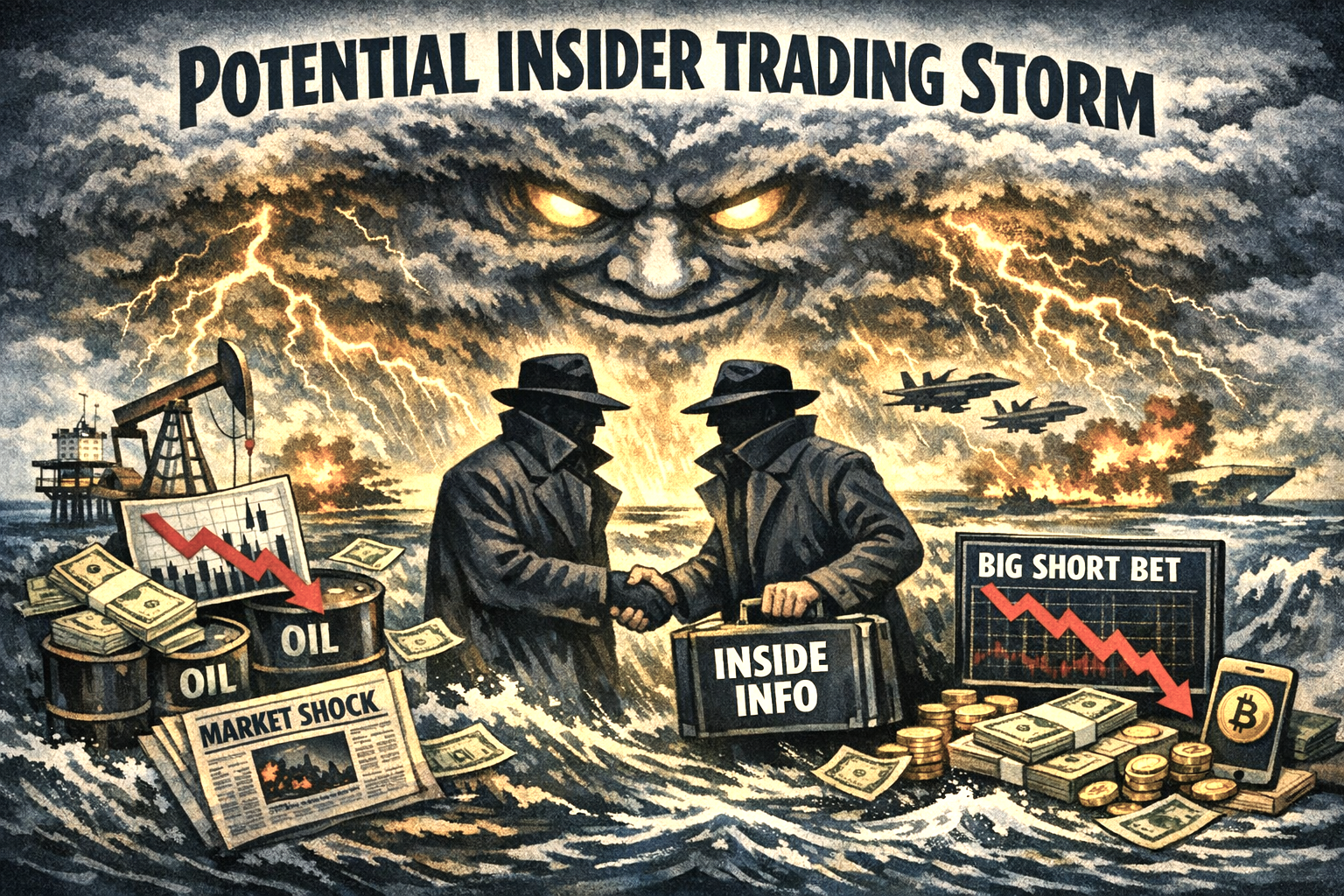
Allegations of suspiciously timed trades have intensified in recent weeks as analysts, journalists, and regulators examine a series of market moves that coincided—sometimes to the minute—with major announcements about the U.S.–Iran conflict.

While no wrongdoing has been proven, the pattern has become difficult for commentators to ignore and calls for formal investigation are growing louder. Can these trades and market movement be explained as coincidence?

Potential ‘speculative’ trading?

Many media outlets are also highlighting anomalies. For instance, it has been reported that Wealth manager Rachel Winter indicated traders appeared to take out contracts positioned to profit from falling oil prices just minutes before a presidential post claiming “productive” talks with Iran—timing she described as “speculation about insider trading” and worthy of investigation.

This episode was not isolated. Multiple outlets have documented at least two major bursts of unusually large oil futures trades placed shortly before conflict‑related announcements.

On 17th April 2026, it was reported that roughly $760 million in Brent crude short positions were executed around 20 minutes before Iran’s foreign minister declared the Strait of Hormuz “completely open” following a ceasefire—an announcement that sent oil prices sharply lower.

Analysts at the London Stock Exchange Group reportedly described the volume as “completely atypical,” nearly nine times normal levels.

Earlier in March 2026, it has been reported that traders placed around $500 million in positions shortly before the White House delayed planned strikes on Iran’s energy sector.

A similar pattern emerged on 7th April 2026, when roughly $950 million was positioned for falling oil prices hours before another ceasefire announcement.

These repeated bursts—each ahead of market‑moving news—have fuelled concerns that some traders ‘may’ have had access to information not yet public. Or was it a good guess – a coincidence even?

Reports of ‘unusual’ trading patterns

These reports align with broader commentary. The Independent noted that at least 6 million barrels’ worth of Brent and WTI contracts were suddenly sold in the two minutes before a presidential post about “productive” talks—again raising questions about advance knowledge.

Meanwhile, The London Economic reported that around $580 million in oil bets were placed 15 minutes before the same announcement, with market strategists calling the timing “really abnormal” for a day with no scheduled events.

Even outside traditional markets, anomalies have surfaced. Blockchain analysts identified six newly funded crypto wallets that made nearly £780,000 by betting—hours before explosions were reported—that the U.S. would strike Iran on 28th February 2026.

Across all these cases, commentators stop short of asserting intent. But the clustering of high‑stakes trades immediately before geopolitical announcements has created a clear narrative: the market signals are too sharp, too well‑timed, and too frequent to dismiss without scrutiny.

No intent is suggested – it could just be coincidence?

Why Global Stocks Are Hitting Records Despite an Uncertain Middle East Backdrop

Global stock hit record highs!

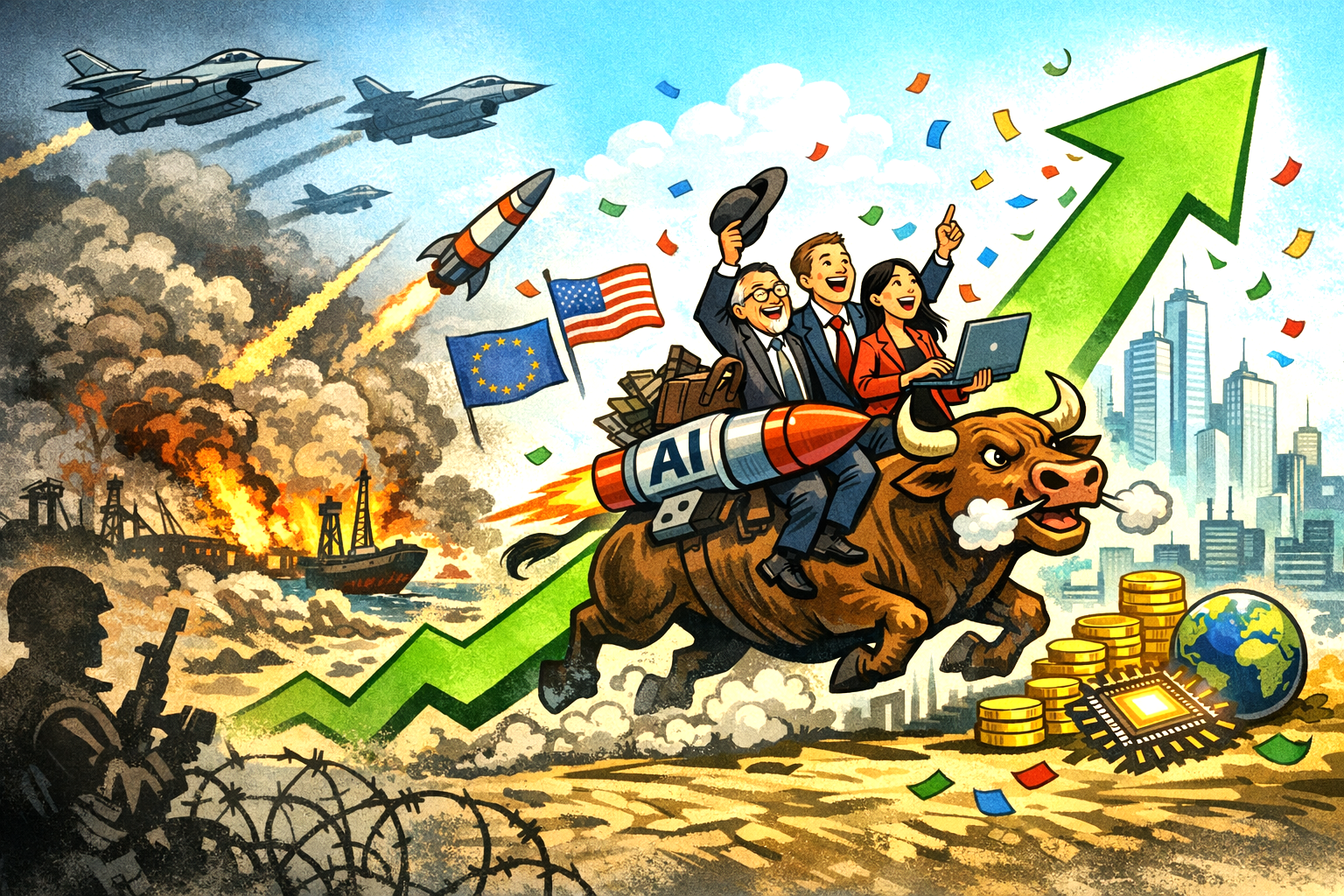
Global equities have staged a striking recovery, erasing the losses triggered by the U.S.–Israel–Iran conflict and pushing into fresh record territory.

On the surface, this looks counter‑intuitive: the ceasefire remains fragile, diplomatic progress is uneven, and the threat of renewed escalation still hangs over the Strait of Hormuz. Yet markets have not only stabilised — they have surged.

It’s the AI boom stupid

The explanation lies less in geopolitics and more in positioning, psychology, and the gravitational pull of the AI boom.

The first phase of the conflict saw investors pile into defensive trades: higher oil, a stronger dollar, and a broad de‑risking across equities.

That created a sizeable war‑risk premium. Once even the possibility of a ceasefire emerged, that premium unwound at speed.

Analysts note that the rebound has been driven primarily by the rapid reversal of hedges rather than any fundamental improvement in the geopolitical outlook.

In other words, markets had priced in a worst‑case scenario — and when that scenario didn’t immediately materialise, the snap‑back was violent.

Short covering

This shift in sentiment was amplified by short‑covering, particularly among hedge funds that had positioned for prolonged disruption to energy flows.

As soon as investors judged the conflict likely to remain contained, the earlier sell‑off looked excessive. That alone was enough to propel global indices back above pre‑war levels. But it wasn’t the only force at work.

The macro backdrop has also proved more resilient than feared. U.S. labour market data has held up, and expectations for Federal Reserve rate cuts later in the year remain intact.

AI investment

Crucially, the AI‑driven investment cycle continues to dominate equity performance. Surging demand for compute, improving funding conditions, and strong earnings momentum in technology have provided a powerful counterweight to geopolitical anxiety.

For many investors, the structural growth story in AI simply outweighs the cyclical risks emanating from the Middle East.

Some caution

Still, the rally is not unqualified. Bond markets remain more cautious, with real yields and inflation expectations signalling that the risk of an energy‑driven slowdown has not disappeared.

And as peace talks wobble, equities have already begun to give back some gains — a reminder that this is a conditional rally, not a complacent one.

Markets may be hitting records, but they are doing so with one eye firmly on the horizon. The shadow of the conflict hasn’t lifted; investors have simply decided, for now, that it is not the dominant story.

The UK economy experienced faster-than-expected growth in the period leading up to the Iran war – February 2026

UK Growth of 0.5% in February 2026

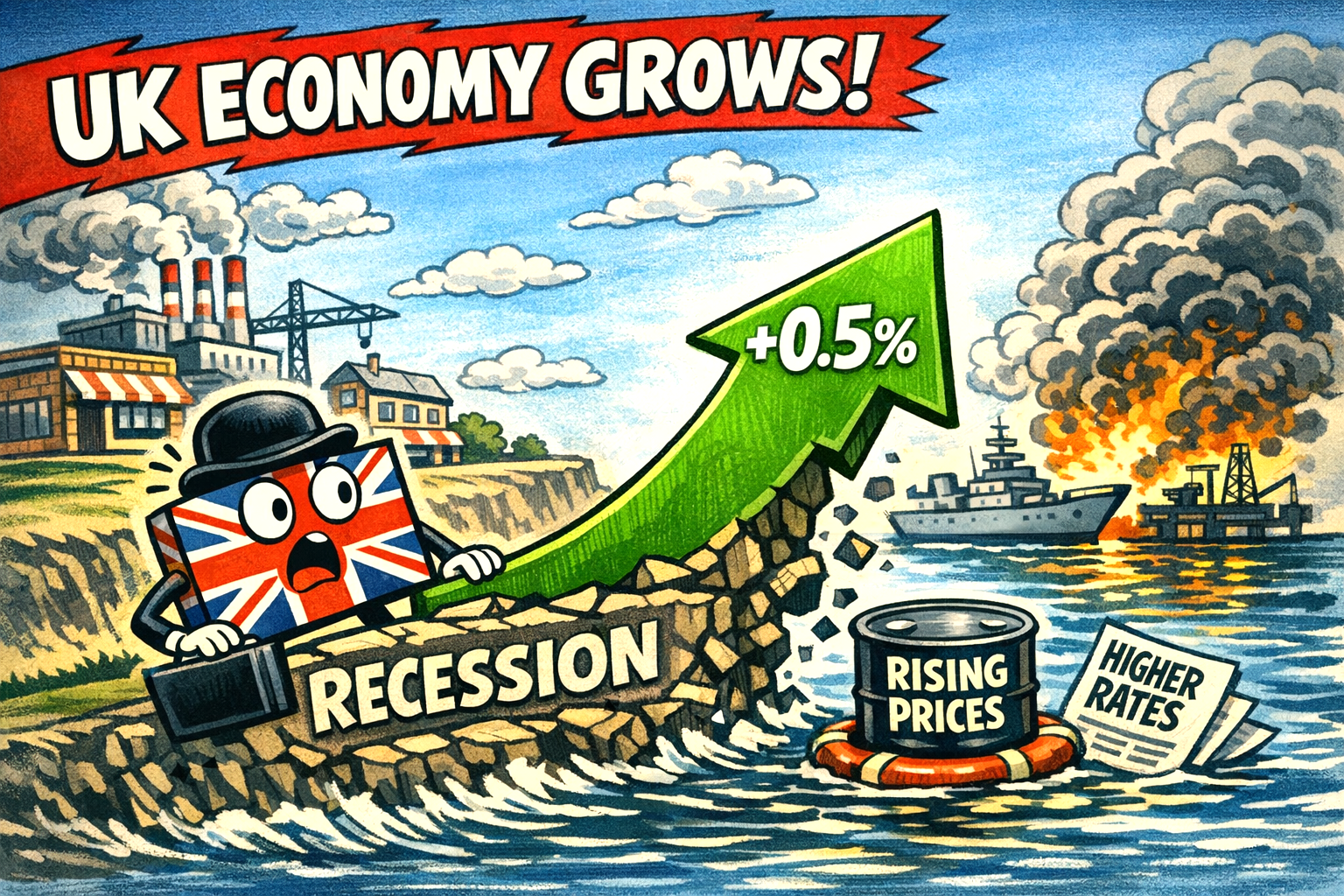
The ONS’s February 2026 figures delivered a rare upside surprise: UK GDP rose 0.5% month‑on‑month, the strongest expansion in more than two years and five times the consensus forecast of 0.1%.

How can forecasts be so wrong?

January2026 was also revised up to 0.1%, overturning the earlier flat reading. On the surface, this looks like the economy finally pulling out of its shallow recession.

In reality, it is a snapshot of momentum that has already been overtaken by events.

Services mani

The growth was broad‑based. Services, which make up over three‑quarters of the economy, expanded 0.5%, marking a fourth consecutive monthly rise.

Production also grew 0.5%, and construction jumped 1.0%. Even the three‑month measure—less noisy than monthly data—showed UK GDP up 0.5%, compared with 0.3% previously. This is the kind of balanced improvement policymakers have been waiting for.

But the timing matters. These numbers capture the economy before the U.S.-Israel-Iran conflict triggered a fresh energy shock at the end of February.

IMF downgrade

Since then, petrol, diesel and heating oil prices have surged, mortgage rates have ticked higher as markets price out rate cuts, and the IMF has downgraded the UK’s 2026 growth outlook to 0.8%.

So February’s strength is real—but it is also backward‑looking. The challenge now is whether any of that momentum survives the shock hitting households and firms this spring.

Why does the UK have a serious issue with jet fuel supply

UK jet fuel low

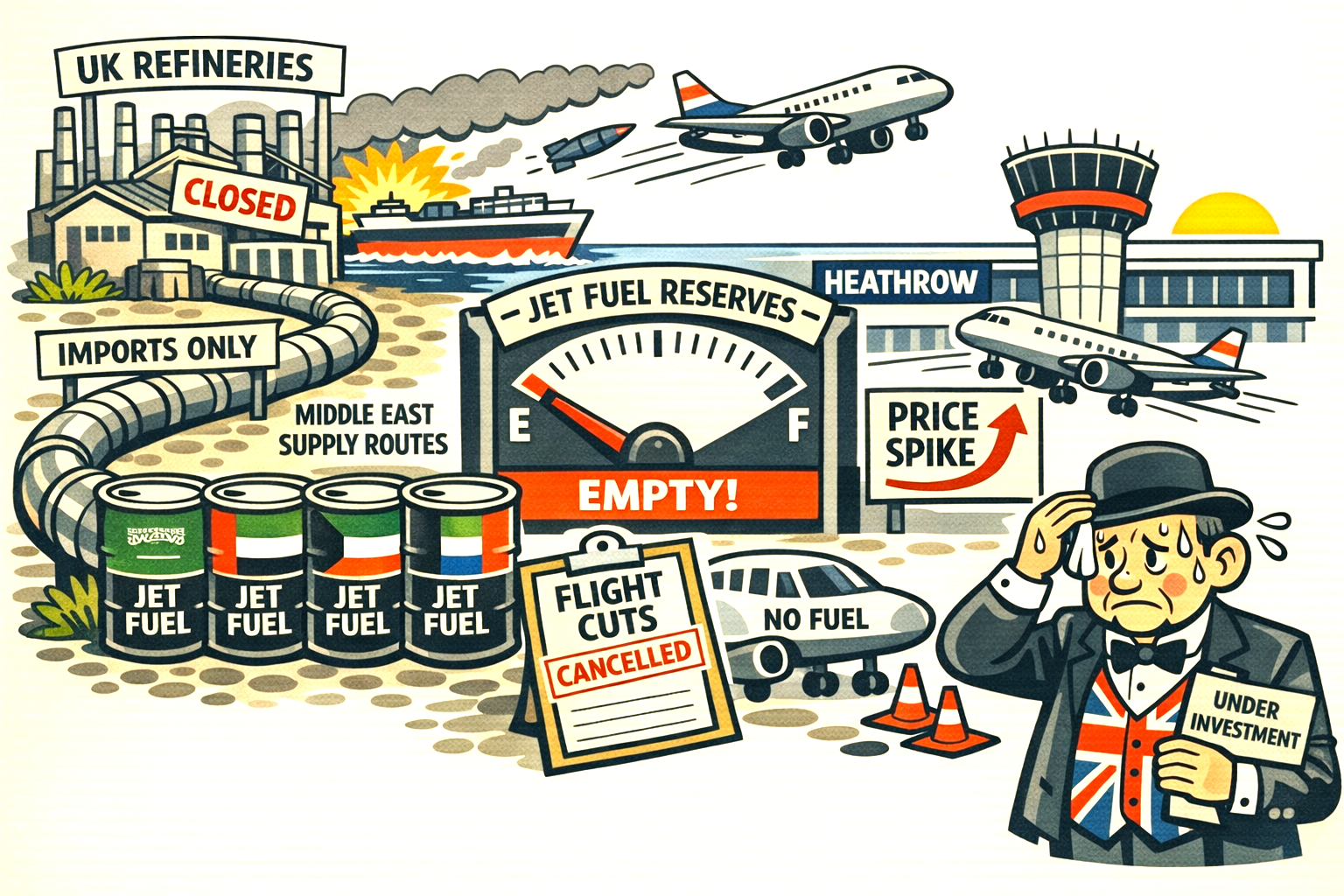
Britain’s jet fuel problem is the predictable result of a long, quiet erosion of refining capacity colliding with a geopolitical shock and decades of under investment.

The country now imports three times more kerosene than it produces, and the Middle East crisis has exposed just how thin those supply lines have become.

A system built on shrinking refineries

The UK once had 18 refineries; today it has just four. Closures at Lindsey and Grangemouth last year removed two critical plants, including Scotland’s only kerosene supplier.

The remaining refineries — Fawley, Humber, Pembroke and Stanlow — supply most domestic needs but cannot meet jet fuel demand.

Output has fallen 41% since 2000, driven by poor investment returns, high carbon costs, and the government’s push toward electrification reducing demand for other fuels.

This leaves Britain structurally dependent on imports for diesel and, crucially, kerosene.

The kerosene dependency

Jet fuel demand is unusually high because of Heathrow’s role as a global hub. In 2024, the UK was the second‑largest jet fuel consumer in the OECD, behind only the U.S.

Yet domestic production covers only a fraction of that. Britain reportedly imported around 3.1 times more kerosene than it produced in 2024.

And the sources of those imports are concentrated: 60% come from Saudi Arabia, the UAE and Kuwait, making the UK acutely exposed to any disruption in the Strait of Hormuz.

The real vulnerability: almost no stockpiles

Britain holds just one month’s worth of jet fuel reserves, far lower than most advanced economies. When Middle Eastern supply is threatened, the UK has no buffer.

European alternatives exist — notably the Netherlands and Antwerp — but prices have already doubled, and airlines are preparing to cut capacity.

The bigger picture

This is not a sudden crisis but the culmination of two decades of under‑investment, policy drift and over‑reliance on global markets.

Jet fuel is simply the first commodity where the structural weakness has become impossible to ignore.

The UK needs to get a grip!

A ‘systemic’ jet fuel shortage is brewing in Europe if the U.S. led Iran war crisis isn’t resolved soon.

The Market That No Longer Cares About the Truth

Markets make the money and remain devoid of morality

There’s a growing sense that financial markets have drifted into a parallel reality. Not the usual detachment that comes with speculation, but something deeper — a structural break between what is happening in the world and what markets choose to see.

This is how the stock market feels at the moment. I might be wrong, but the overwhelming sense of despair feels so real. I believe the markets are broken at their core, and nobody seems to care. Markets make money and remain devoid of morality.

The system is morally bankrupt.

You can watch a crisis unfold in real time, with footage, statements, explosions and diplomatic failures, and yet the markets behave as though they’re responding to a completely different script.

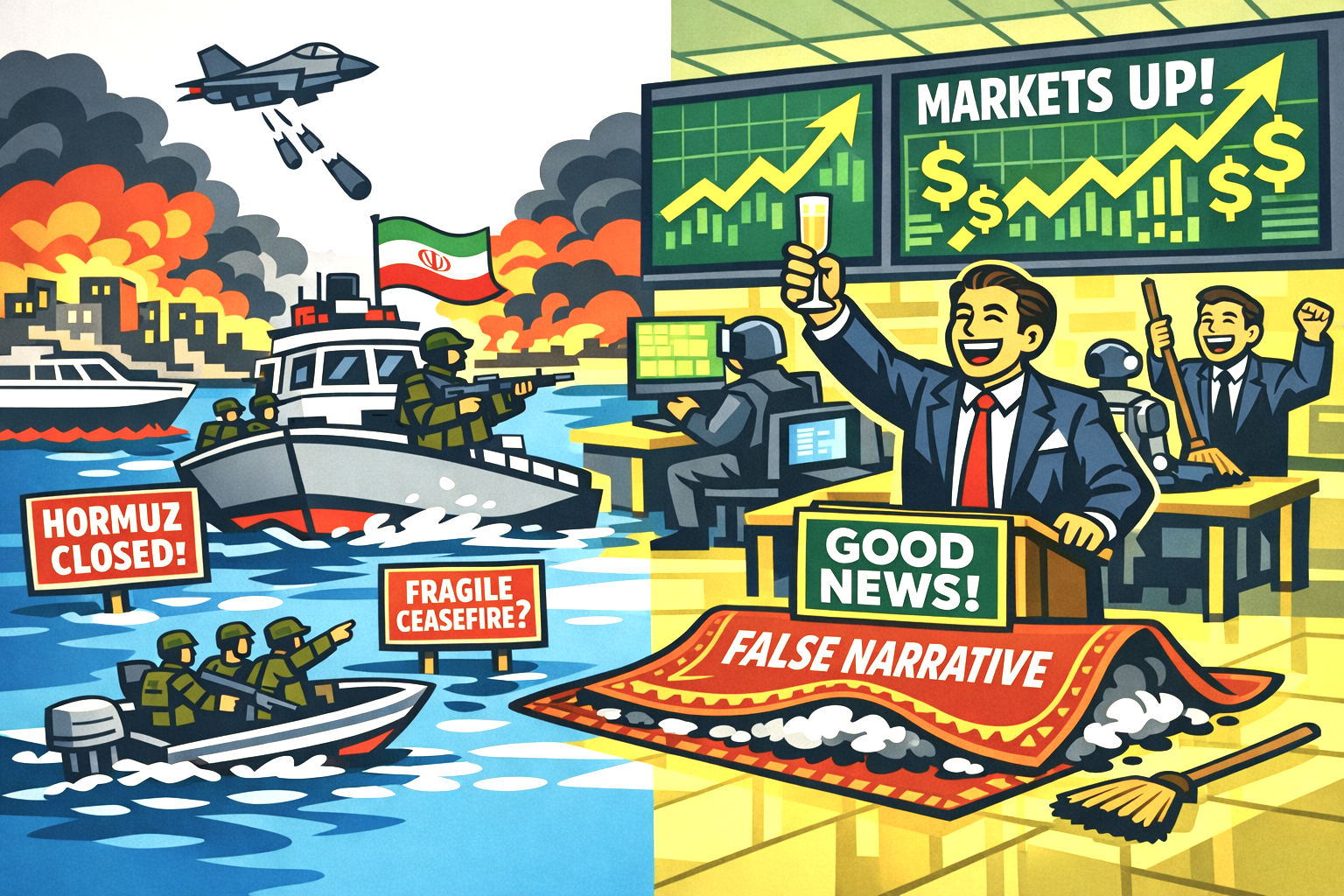
A ceasefire that barely exists is treated as a turning point. A strategic waterway that is “open” only in the loosest, most cosmetic sense is priced as fully restored. The disconnect isn’t subtle. It’s brazen.

And yes — it feels deceptive

Not because traders are conspiring to mislead anyone, but because the modern market has evolved into something that no longer requires truth to function.

It only needs a narrative.

A headline. A phrase that can be interpreted as “less bad than yesterday”. That’s enough to ignite a rally, even if the underlying situation is deteriorating by the hour.

This wasn’t always the case. There was a time when markets, for all their volatility and irrationality, still behaved like instruments tethered to reality.

When a major shipping lane was threatened, prices moved accordingly. When a ceasefire collapsed, markets reflected the renewed danger. There was at least a rough correlation between events and valuations — imperfect, but recognisable.

Today, that correlation has snapped. The market trades on sentiment, not substance. On the idea of stability, not the presence of it.

Appearance

On the appearance of progress, even when the facts on the ground contradict every optimistic headline. A ceasefire announcement is enough to send equities higher, even if the ceasefire is violated before the ink dries.

A promise to reopen a strait is enough to calm oil prices, even if only a handful of ships actually move.

The deception is structural. It’s the product of algorithmic trading that reacts to keywords rather than conditions.

It’s the result of a decade of central bank intervention that has taught investors to treat every crisis as temporary and every dip as a buying opportunity. It’s reinforced by political communication that prioritises market stability over factual clarity.

The system rewards optimism, even when it’s unjustified. It punishes realism when it’s inconvenient.

Surreal

This is why the current moment feels so surreal. You can see the footage of strikes in Lebanon while reading headlines about “regional de‑escalation”. You can watch tankers stalled while analysts talk about “normalising flows”.

The market shrugs, because the narrative — however flimsy — is enough to sustain the illusion.

If markets don’t need truth, then they are, in effect, trading a deception. Not a deliberate deception, but a functional one.

Economic Truth

A deception that keeps prices elevated, volatility suppressed, and investors soothed.

A deception that allows the charts to climb even as the world beneath them fractures.

A deception that has become the operating principle of a system that no longer reflects reality, only the stories it finds convenient to believe.

This isn’t investing – this is pure manipulative gameplay and benefits only those who know how to play the game.

And ‘they’ set the rules.

Markets make the money but remain devoid of morality.

I feel like I am playing a video game without the controller or at least with a rule book.

Update:

U.S. announces it will blockade of the Strait of Hormuz, or rather Iranian ‘linked’ ships. And not in the Strait but further out in international waters. This is designed to reduce the risk of conflict.

China, I assume, will not be happy.

Be careful – nothing is as it seems.

Steady February 2026 UK Inflation Masks Rising Risks from Iran Conflict

UK inflation before war shock filters through

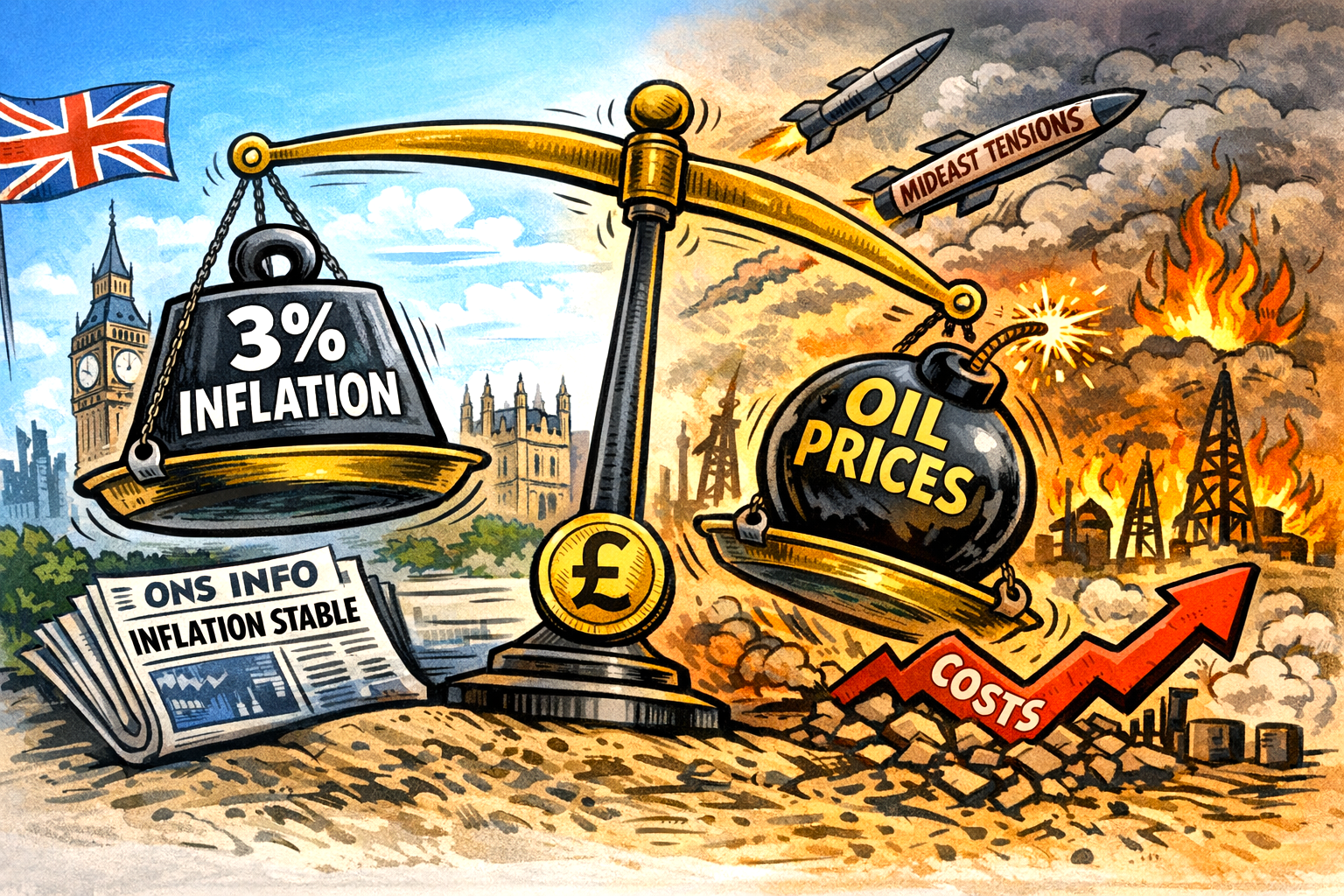
The UK’s inflation rate remained unchanged at 3% in February, according to the latest figures from the Office for National Statistics.

After months of gradual easing, the pause reflects a delicate moment for the UK economy, with price pressures beginning to shift beneath the surface.

Clothing was the biggest upward driver, with prices rising this year after falling during the same period in 2025.

This was offset by cheaper petrol, though those figures were captured before the recent surge in global oil prices triggered by the outbreak of war involving Iran.

While inflation is far below the peaks seen a few years ago, households are still contending with the reality that prices continue to rise—just more slowly.

ONS data

The ONS also introduced supermarket scanner data for the first time, offering a more accurate picture of food costs.

Economists warn that the conflict‑driven spike in oil and gas prices could push inflation higher again later in the year, with some forecasts suggesting a potential rise towards 4.6%.

Businesses already reliant on fuel, such as regional bus operators, report steep cost increases that may soon feed through to consumers.

The government insists it is working to ease cost‑of‑living pressures, though global events may limit its room for manoeuvre.

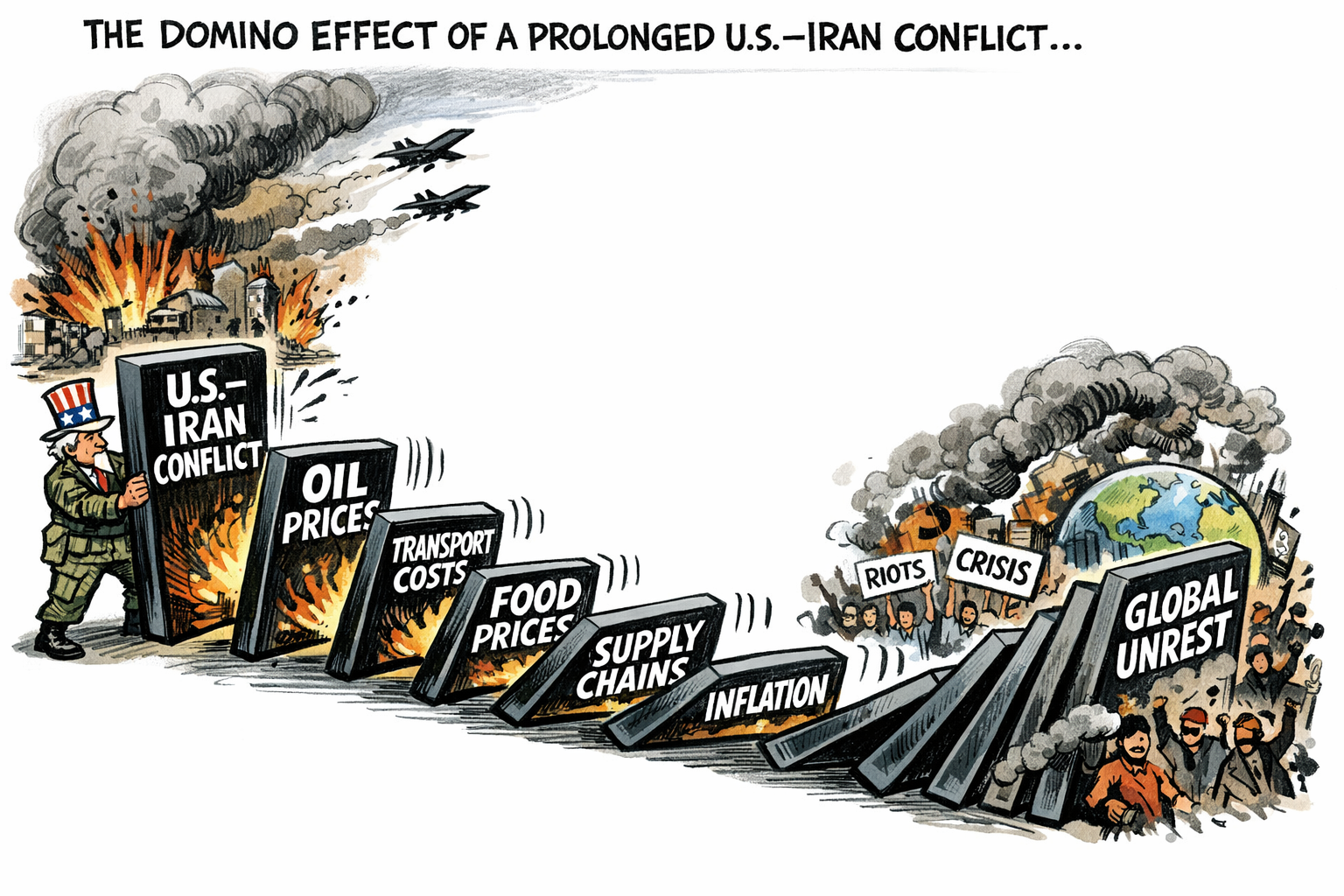
THE WIDER FALLOUT: How a Prolonged U.S.–Iran War Radiates Through the Global Economy

War in Iran Global Fallout Effects

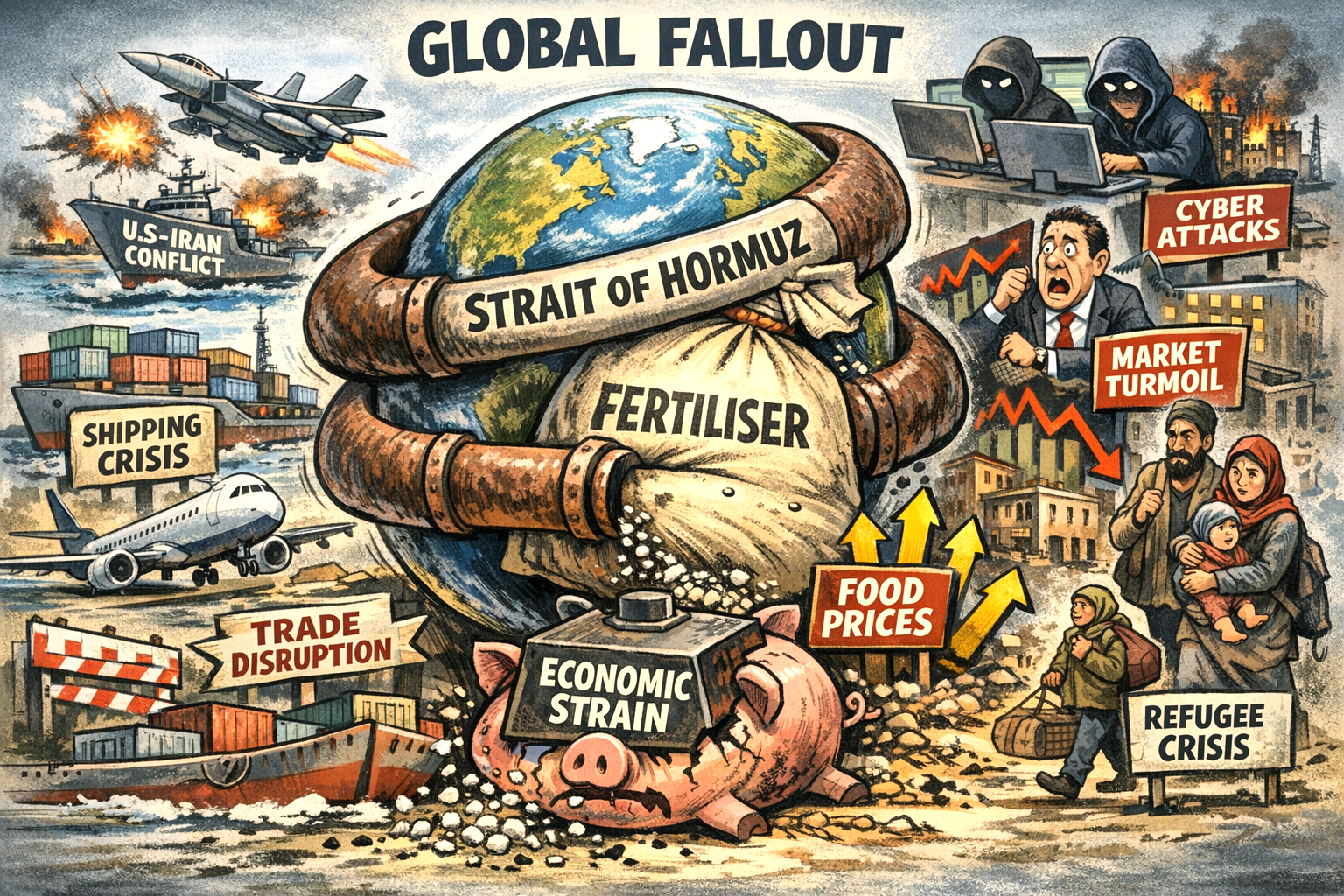
If the U.S.–Iran conflict drags on for weeks or months, the global impact will extend far beyond oil markets. Energy prices are only the first domino.

The deeper, more destabilising effects emerge through shipping disruption, fertiliser shortages, food‑price inflation, financial volatility, cyber escalation, and regional political instability.

For the UK — already wrestling with structural food‑system fragility — the conflict becomes a real‑world stress test.

This report outlines 15 potential major knock‑on effects that would shape the global economy if the conflict becomes protracted.

1. Global Shipping Disruption

The Strait of Hormuz is not just an oil artery; it is a global shipping chokepoint. As vessels reroute or halt operations:

  • Container shipping delays spread across Asia, Europe and the Gulf.
  • War‑risk insurance premiums spike for all vessels.
  • Freight costs rise, feeding into non‑energy inflation.

This is the mechanism by which a regional conflict becomes a global economic event.

2. Aviation and Travel Disruption

Iranian retaliation has already included strikes on Gulf airports and hotels. If this continues:

  • Airlines reroute or cancel flights across the Gulf, South Asia and East Africa.
  • Longer flight paths increase fuel burn and fares.
  • Tourism in the UAE, Oman, Bahrain and potentially Turkey contracts sharply.

Aviation is one of the fastest channels through which geopolitical instability hits consumers.

3. Financial Market Volatility

Markets dislike uncertainty, and this conflict delivers it in abundance.

  • Investors flee to gold, the dollar and U.S. Treasuries.
  • Emerging markets face capital outflows.
  • Equity volatility rises in shipping, aviation and manufacturing sectors.

The longer the conflict persists, the more entrenched this volatility becomes.

4. Fertiliser Disruption: The Hidden Trigger

Over one‑third of global fertiliser trade moves through the Strait of Hormuz. With shipments stranded:

  • Urea, ammonia, phosphates and sulphur prices surge.
  • Farmers worldwide face higher input costs.
  • Lower fertiliser availability leads to reduced crop yields.

This is the beginning of a food‑system shock that unfolds over months, not days.

5. Global Food‑Price Inflation

As fertiliser shortages ripple through agriculture:

  • Wheat, rice, maize and oilseed yields fall.
  • Livestock feed becomes more expensive, pushing up meat, dairy and egg prices.
  • Food‑importing regions face acute pressure.
  • Grain futures markets become more volatile.

This is how a conflict becomes a global cost‑of‑living crisis.

UK Exposure

The UK is particularly vulnerable because:

  • It imports a large share of its fertiliser and food.
  • Its agricultural sector is energy‑intensive.
  • Supermarket supply chains are sensitive to freight and insurance costs.

Bread, cereals, dairy and meat are the first categories to feel the squeeze.

6. Supply Chain Strain Beyond Food and Energy

A prolonged conflict disrupts:

  • Petrochemicals
  • Plastics
  • Fertilisers
  • Industrial metals
  • Gulf‑based manufacturing and logistics

This feeds into higher costs for everything from packaging to electronics.

7. Corporate Investment Freezes

Businesses hate uncertainty. Expect:

  • Delays or cancellations of Gulf megaprojects.
  • Slower investment in petrochemicals, logistics and tech hubs.
  • Reduced appetite for Gulf‑exposed assets.

This undermines diversification efforts like Saudi Vision 2030.

8. Cyber Escalation

Iran has a long history of cyber retaliation. Likely developments include:

  • Attacks on Western banks, utilities and government systems.
  • Disruptions to Gulf infrastructure, including airports and desalination plants.
  • Rising cybersecurity costs for businesses globally.

Cyber conflict is asymmetric, deniable and cheap — making it a likely pressure valve.

9. Regional Political Destabilisation

The killing of senior Iranian leadership has already shaken the region.

Possible outcomes include:

  • Internal instability within Iran.
  • Escalation involving Hezbollah, Iraqi militias, Syrian factions and the Houthis.
  • Pressure on Gulf monarchies if civilian infrastructure continues to be targeted.

This is where the conflict risks widening beyond its initial theatre.

10. Migration and Humanitarian Pressures

If the conflict intensifies:

  • Refugee flows from Iran, Iraq and Syria could rise.
  • Europe — especially Greece, Turkey and the Balkans — faces renewed border pressure.
  • Humanitarian budgets shrink as Western states divert funds to defence.

This adds a political dimension to the economic fallout.

11. Insurance Market Stress

War‑risk insurance is already spiking.

Expect:

  • Higher premiums for shipping, aviation and energy infrastructure.
  • Reduced insurer appetite for Gulf‑exposed assets.
  • Knock‑on effects on global trade costs and consumer prices.

Insurance is a silent amplifier of geopolitical risk.

12. Higher Global Borrowing Costs

Sustained conflict spending creates:

  • Budgetary strain for the U.S., UK, EU and Gulf states.
  • Reduced fiscal space for domestic programmes.
  • Higher global borrowing costs as markets price in sustained uncertainty.

This tightens financial conditions worldwide.

13. Pressure on Emerging Markets

Countries heavily reliant on imported energy or food face:

  • Worsening trade balances
  • Currency depreciation
  • Higher inflation
  • Greater risk of sovereign stress

This is especially acute in South Asia, North Africa and parts of Latin America.

14. Strain on Multilateral Institutions

A prolonged conflict diverts attention and resources from:

  • Climate finance
  • Development aid
  • Humanitarian relief
  • Global health programmes

Institutions already stretched by Ukraine, Gaza and climate disasters face further overload.

15. The Strategic Reordering of Alliances

A drawn‑out conflict may accelerate geopolitical realignment:

  • Gulf states hedge between Washington and Beijing.
  • India and Turkey pursue more independent foreign policies.
  • Europe faces renewed pressure to define its own security posture.
  • Russia benefits from higher energy prices and Western distraction.

This is the long‑term consequence: a shift in the global balance of power.

Conclusion: A Conflict That Radiates Far Beyond Oil

If the U.S.–Iran war limps on, the world will feel it in supermarket aisles, shipping lanes, financial markets and political systems.

The most consequential knock‑on effect is not oil — it is fertiliser. That is the hinge on which global food security turns.

For the UK, the conflict exposes the fragility of a food system dependent on imports, long supply chains and energy‑intensive agriculture.

This is not just a Middle Eastern conflict. It is a global economic event in slow motion.

And who says we don’t need oil still!

From Missiles to Tariffs: A desensitised stock market faces Trump’s new world

Markets desensitised to U.S. policy making

In years past, the mere hint of U.S. airstrikes or heightened geopolitical tension would send global stock markets into panic mode.

Yet, following President Trump’s re-election and his increasingly aggressive foreign policy stance, investor reactions have become notably muted.

From missile strikes on Iranian nuclear sites to an orchestrated ceasefire between Iran and Israel, markets have barely flinched. The question arises: are investors becoming desensitised to Trump’s geopolitical theatre?

Take the latest skirmish between Iran and Israel. After nearly two weeks of missile exchanges, Trump’s announcement of a ‘complete and total ceasefire’ barely nudged the S&P 500.

That calm came despite the U.S. launching pre-emptive strikes on Iranian facilities and absorbing retaliatory attacks on its military base in Qatar.

In another era, or under a different administration even, such developments might have triggered a broad risk-off sentiment. Instead, Wall Street just shrugged.

One reason may be fatigue. Trump’s approach – rife with tariffs, sanctions, and sudden reversals – has bred a kind of market immunity.

Investors, well-versed in the rhythm of Trump’s provocations, have begun treating them as background noise. His revived tariff agenda, particularly the threats aimed once again at China and EU auto imports, has likewise failed to prompt major selloffs.

Similarly, the ongoing Russia-Ukraine conflict, once a source of intense volatility, now registers as a strategic stalemate in the market’s eyes.

While Trump’s rhetoric surrounding Ukraine has shifted unpredictably, investors appear more focused on earnings, inflation data, and central bank signals than on diplomatic fallout and war!

This is not to suggest markets are indifferent to geopolitical risk, but rather that they’ve adapted. Algorithmic trading models may be increasingly geared to discount Trump’s headline-grabbing tactics, while institutional investors hedge through gold, volatility indices, or energy plays without dumping equities outright.

Critics argue this detachment is dangerous. Should a flashpoint spiral out of control, be it over Hormuz, Ukraine, or Taiwan, the slow-boiling complacency could leave portfolios badly exposed.

Still, for now, Trump’s policies are being priced in not with panic, but with complacency maybe.

The real story may not be what Trump does next, but how long the markets can continue to look away.

Trump announces he had brokered ceasefire between Israel and Iran?

Tensions between Israel and Iran reached a boiling point after 12 days of cross-border missile and drone strikes.

The situation escalated further when U.S. forces under President Trump launched targeted airstrikes on key Iranian nuclear sites, Fordow, Natanz, and Isfahan, prompting a direct Iranian missile response on a U.S. base in Qatar.

In a dramatic turn, President Trump announced what he called a ‘Complete and Total CEASEFIRE‘ – announced on Truth Social. According to Trump’s plan, Iran would begin the ceasefire immediately, with Israel to follow 12 hours later.

The truce would reportedly be considered complete after 24 hours if all attacks stopped.

While Trump touted the ceasefire as a triumph of ‘peace through strength’, analysts questioned the ceasefire’s enforceability – especially since missile exchanges reportedly continued despite the announcement.

Nonetheless, Trump claimed credit for halting the region’s slide into all-out war without committing to prolonged U.S. military involvement.

Critics argue Trump’s strategy relies more on military pressure and media theatrics than diplomatic engagement.

Supporters counter that his boldness forced both sides to the table. Either way, the world is watching to see whether this fragile peace endures – or erupts again in fire.

If this turns out to be a masterstroke in political brinkmanship – hats off to Trump, I guess. Whichever way you look at it, the precision U.S. strike on Iran was exactly that – precision. And, you have to take note.

Iran has been weakened, and this may even influence Russia’s war on Ukraine. Hopefully Israel with Palestine too – regardless of stock market reaction.

And that has to be a good thing!

But has Israel finished their war?

Despite all the noise regarding stock market reaction, one thing is for certain – the anxiety and worry for the people of the Middle East is unquestionable.

It’s not a happy time.

Economist says escalating Israel-Hamas conflict increases risk of global contagion

Stocks drop

If the Israel-Hamas conflict further intensifies, the risks to the global economy are growing, economist Mohamed el-Erian reportedly said Monday 30th October 2023.

The impact on global markets was initially limited, as investors viewed the conflict as contained. However, the prospect of a regional spillover has added to a sense of unease.

‘The longer this conflict goes on, the more likely it will escalate. The higher the risk of escalation, the higher the risk of contagion to the rest of the world in terms of economics and finance’, el-Erian said.