

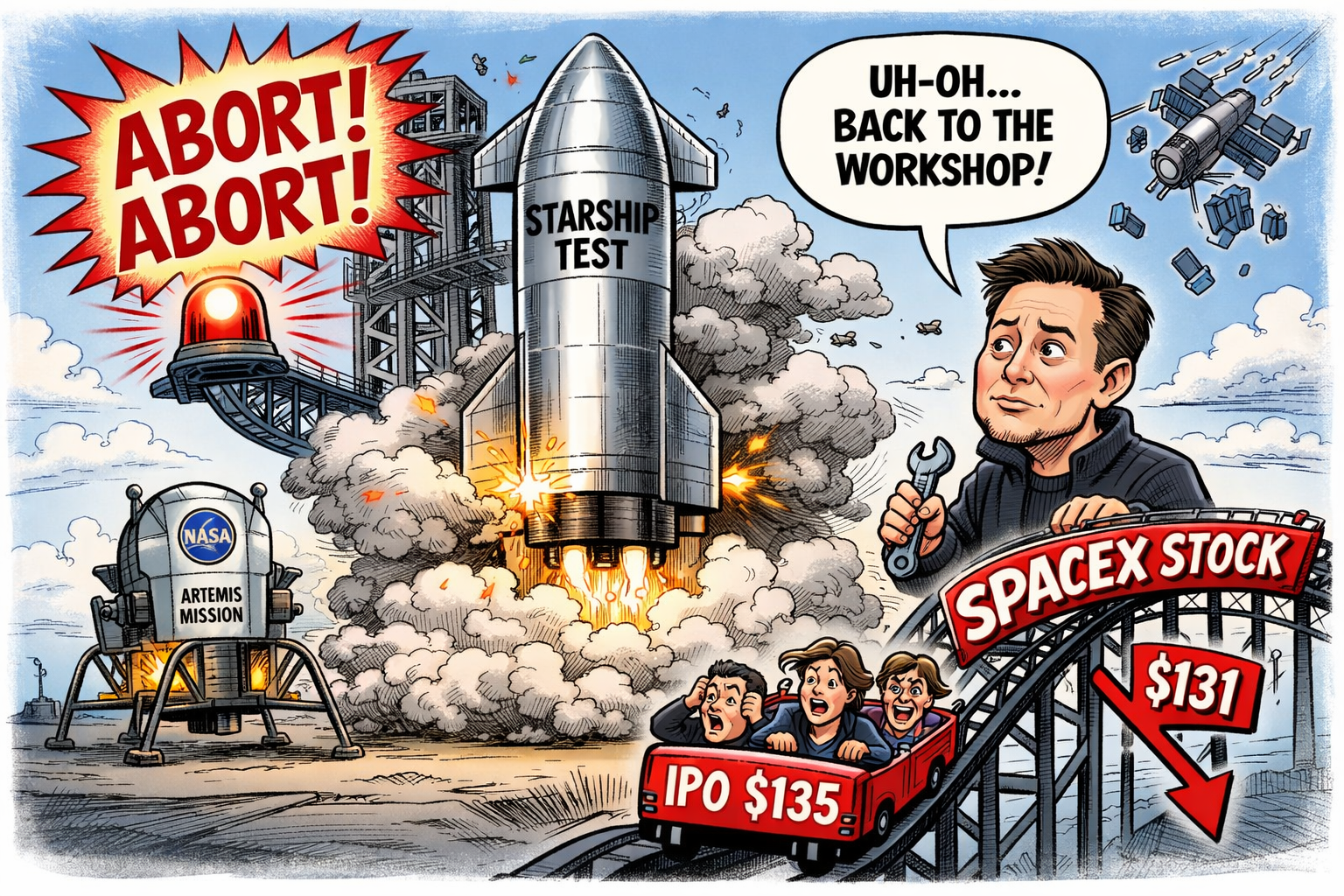
SpaceX’s latest attempt to fly its upgraded Starship V3 rocket ended abruptly on Thursday 17th July 2026 after the company aborted the launch seconds into engine ignition.
The test, scheduled from its Starbase site in South Texas, was expected to mark the second flight of the V3 variant following May’s imperfect debut.
Auto abort safety
Instead, an automatic abort was triggered when several Raptor engines failed to start, prompting CEO Elon Musk to confirm that two engines would be removed and replaced before the next attempt, likely early next week.
The timing of the setback is significant. SpaceX only completed its record‑breaking IPO in June 2026, raising $85.7 billion and debuting at $135 per share.
After an initial surge, the stock has been on a steady decline, slipping below its offering price for the first time this week.
Thursday’s (17th July 20260) aborted launch accelerated that slide: shares fell more than 3% in extended trading, closing at $131.11 and extending a five‑day losing streak.
Investors on close watch
Investors are watching Starship closely, not just as a flagship engineering milestone but as a linchpin for SpaceX’s broader commercial ambitions.
The vehicle is central to scaling the Starlink satellite network and to fulfilling NASA’s Artemis test‑flight commitments.
Thursday’s mission was due to carry 20 next‑generation Starlink satellites, underscoring the operational importance of a successful flight.
While the Federal Aviation Administration has cleared Starship to fly again after investigating May’s booster failure, the latest abort highlights the technical fragility still inherent in the programme — and markets are responding accordingly.