

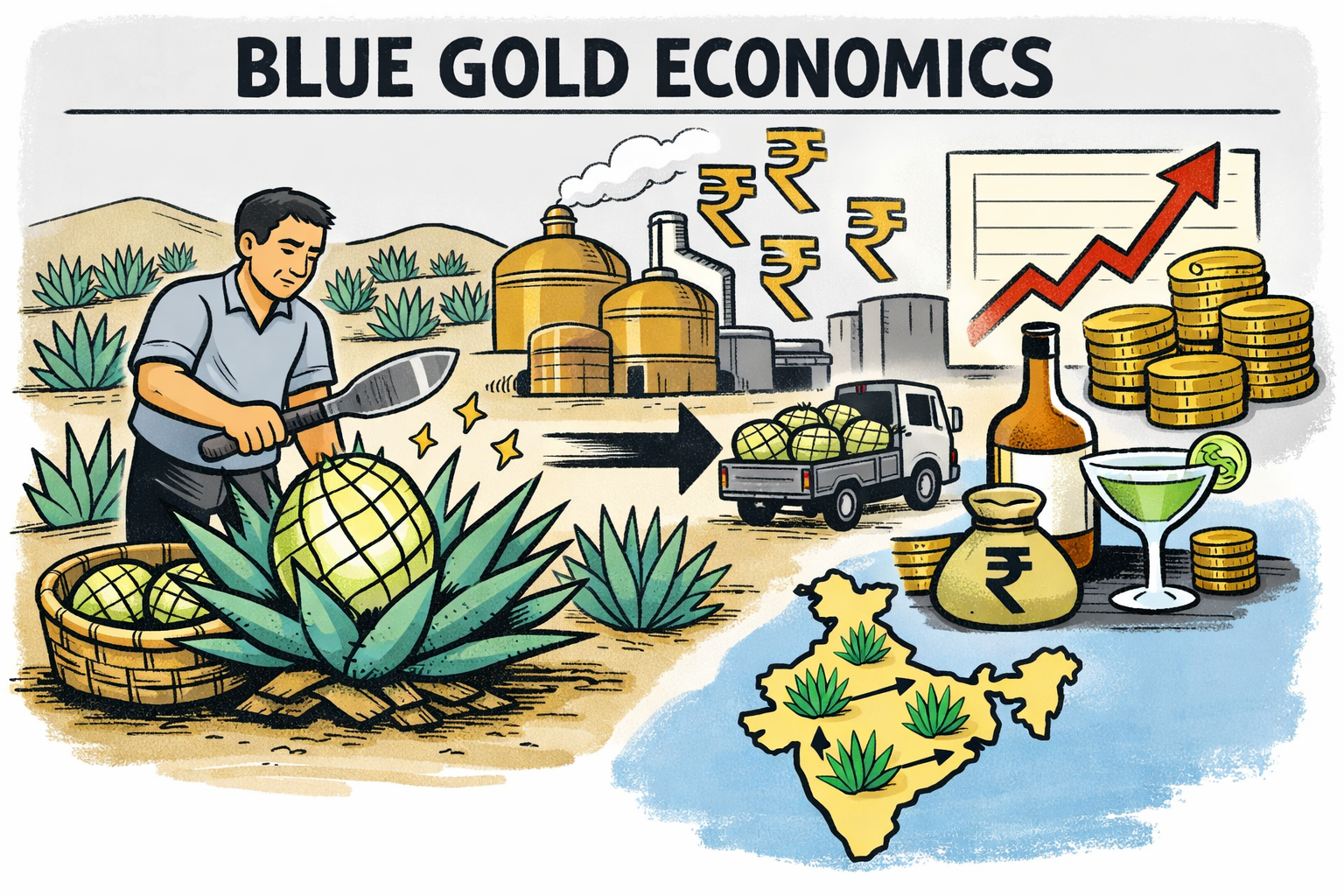
From Fence to Fortune: The Rise of India’s Agave Revolution

India’s farmers are discovering unexpected prosperity in a plant long dismissed as a nuisance.

The hardy agave, once used mainly as boundary fencing across the Deccan Plateau, is now being reappraised as “blue gold” – a crop capable of transforming rural incomes and fuelling a new domestic spirits industry.

Thrives

Agave thrives where other crops fail: on rocky, arid land with minimal water and little maintenance. For farmers working marginal plots, this resilience is proving economically liberating.

What was once a valueless weed is now a sought‑after raw material for India’s emerging agave‑based spirits sector, which is expanding rapidly as consumers embrace tequila‑style drinks.

Small Farms

Smallholders are banding together to supply distillers with the plant’s sugar‑rich heart, the piña. Harvesting requires precision, but the rewards are significant.

By pooling yields across villages, farmers can guarantee steady volumes and command premium prices.

The plant’s natural ability to propagate itself also reduces upfront investment, allowing growers to scale without costly inputs.

Business

Entrepreneurs and distillers are now mapping suitable terrain, experimenting with processing techniques, and building supply chains across several states.

While India’s agave industry remains young, its momentum is unmistakable. For many rural families, blue gold is becoming a symbol of resilience, innovation, and long‑awaited economic opportunity.
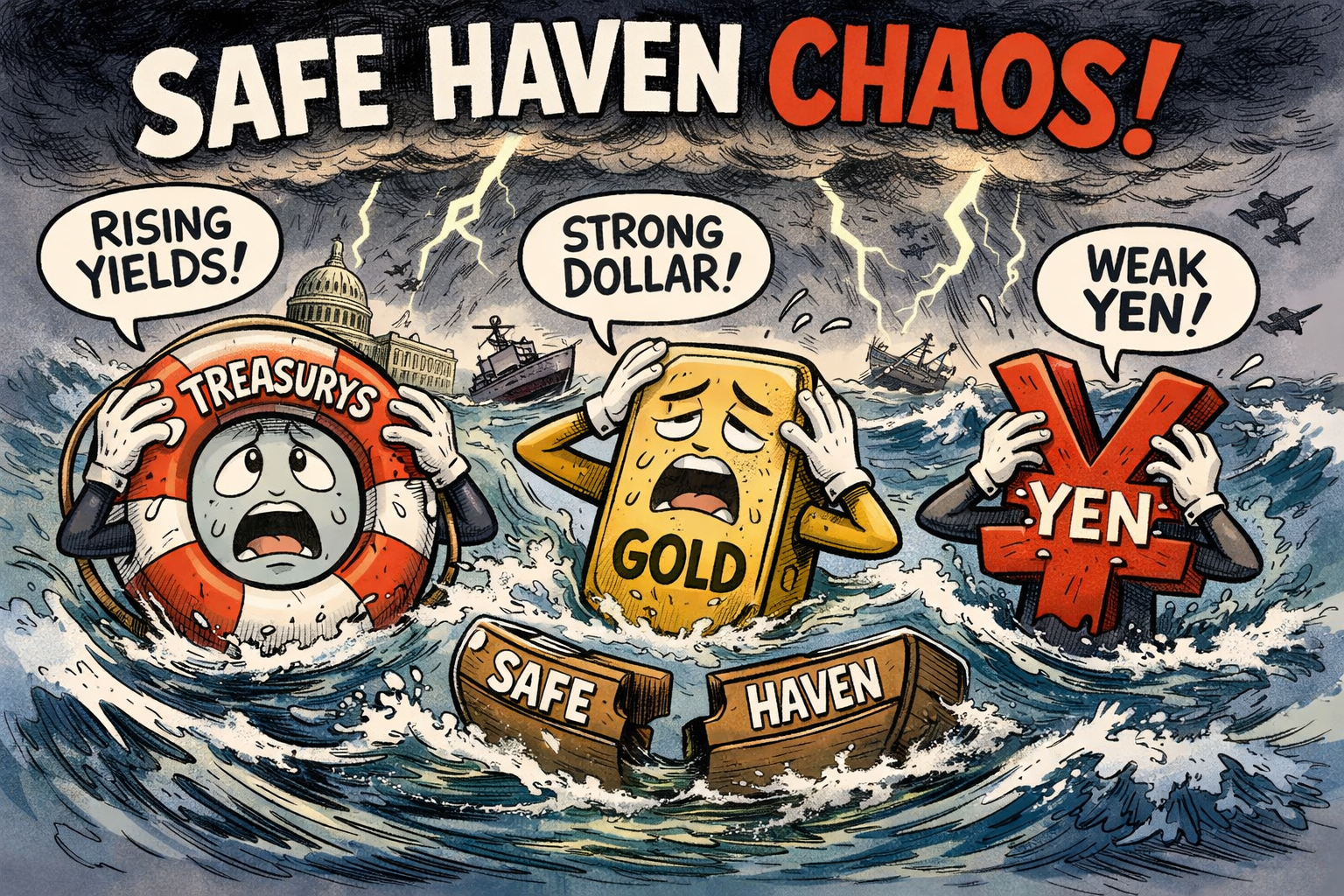
How Safe are Safe Havens?

Are Safe Havens Safe?

Safe havens are still called safe havens, but their behaviour in 2026 shows they’re no longer the automatic bolt‑holes investors once relied on.

The old crisis playbook — buy Treasurys, buy yen, buy gold — has been scrambled by a very different macro environment, where inflation, fiscal strain and policy divergence overpower fear.

Treasuries?

U.S. Treasuries, historically the world’s default refuge, have been moving the “wrong” way. Instead of yields falling during geopolitical shocks, they’ve risen — a direct consequence of higher real yields and persistent inflation expectations.

When oil doubled after the Iran conflict closed the Strait of Hormuz, markets didn’t panic into bonds; they repriced inflation.

Add the United States’ swollen deficit, and Treasuries suddenly look less like a sanctuary and more like an asset with its own vulnerabilities.

Gold?

Gold, the ancient crisis hedge, has also lost its shine. Despite war and volatility, prices have sagged from their January 2026 peak.

A stronger dollar and elevated real yields have dominated its behaviour, while last year’s retail-driven surge left the market more exposed to “fast money” unwinding than to traditional safe-haven flows.

Structurally, gold still works — but tactically, it’s been unreliable.

Yen?

The yen, once the quintessential risk-off currency, has arguably suffered the biggest reputational hit. Even with the Bank of Japan hiking rates to 30‑year highs and intervening heavily, the currency has slid to multi‑decade lows.

Japan’s towering debt load and stark policy divergence from other major central banks have made yield differentials overpower fear.

Fundamentals

Safe havens haven’t disappeared — they’ve fragmented. Instead of rising together when markets wobble, each now responds to its own fundamentals.

In a world where investors chase AI equities even during war, resilience requires a broader mix of assets, not blind faith in yesterday’s refuges.