U.S. Inflation Stays Stubborn at 3% as Geopolitical Tensions Rise

U.S. February Inflation 2026

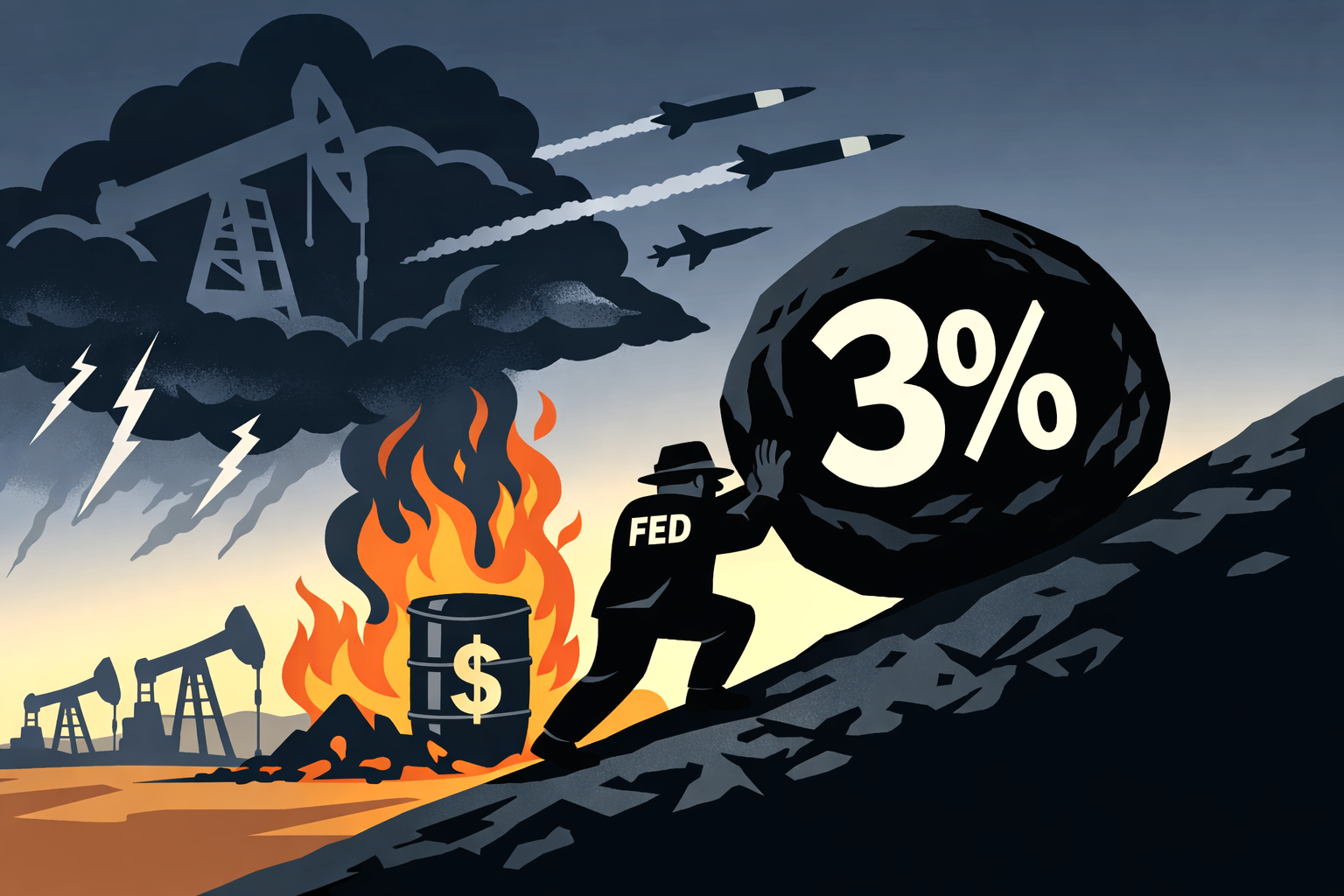
America’s latest inflation figures show price pressures proving far stickier than the Federal Reserve would like, with the core PCE index — the Fed’s preferred gauge — holding at 3% in February 2026.

Headline inflation came in slightly lower at 2.8%, but both measures remain well above the central bank’s 2% target.

What makes this reading particularly significant is its timing. The data captures the state of the economy just before the U.S. and Israel launched military action against Iran.

Energy chaos

A conflict that has since sent global energy markets into turmoil. Oil briefly surged past $100 a barrel, and U.S. petrol prices jumped by more than a dollar, none of which is reflected in February’s figures.

Beneath the surface, the numbers paint a mixed picture. Consumer spending rose 0.5%, suggesting households were still willing to open their wallets, yet personal income unexpectedly slipped 0.1%.

Stagflation?

Fourth‑quarter GDP for 2025 was revised down to a sluggish 0.5% annualised, reinforcing concerns that the U.S. may be drifting into a mild stagflationary phase — slow growth paired with persistent inflation.

Fed officials have been cautious in recent weeks, signalling openness to rate cuts later in the year but unwilling to commit while geopolitical risks and energy‑driven price spikes cloud the outlook.

With March’s CPI due imminently — and expected to show a sharp jump — policymakers face a narrowing path between supporting a cooling labour market and preventing inflation from becoming entrenched.

For now, the message is clear: underlying inflation was already proving stubborn before the shock of war.

The next few months will reveal whether the Fed can still engineer the soft landing it has been aiming for, or whether the global energy shock forces a rethink.

Iran’s 2026 Energy Crises: Echoes of the 1970s in a New Era of Risk

U.S. Israel Iran War 2026

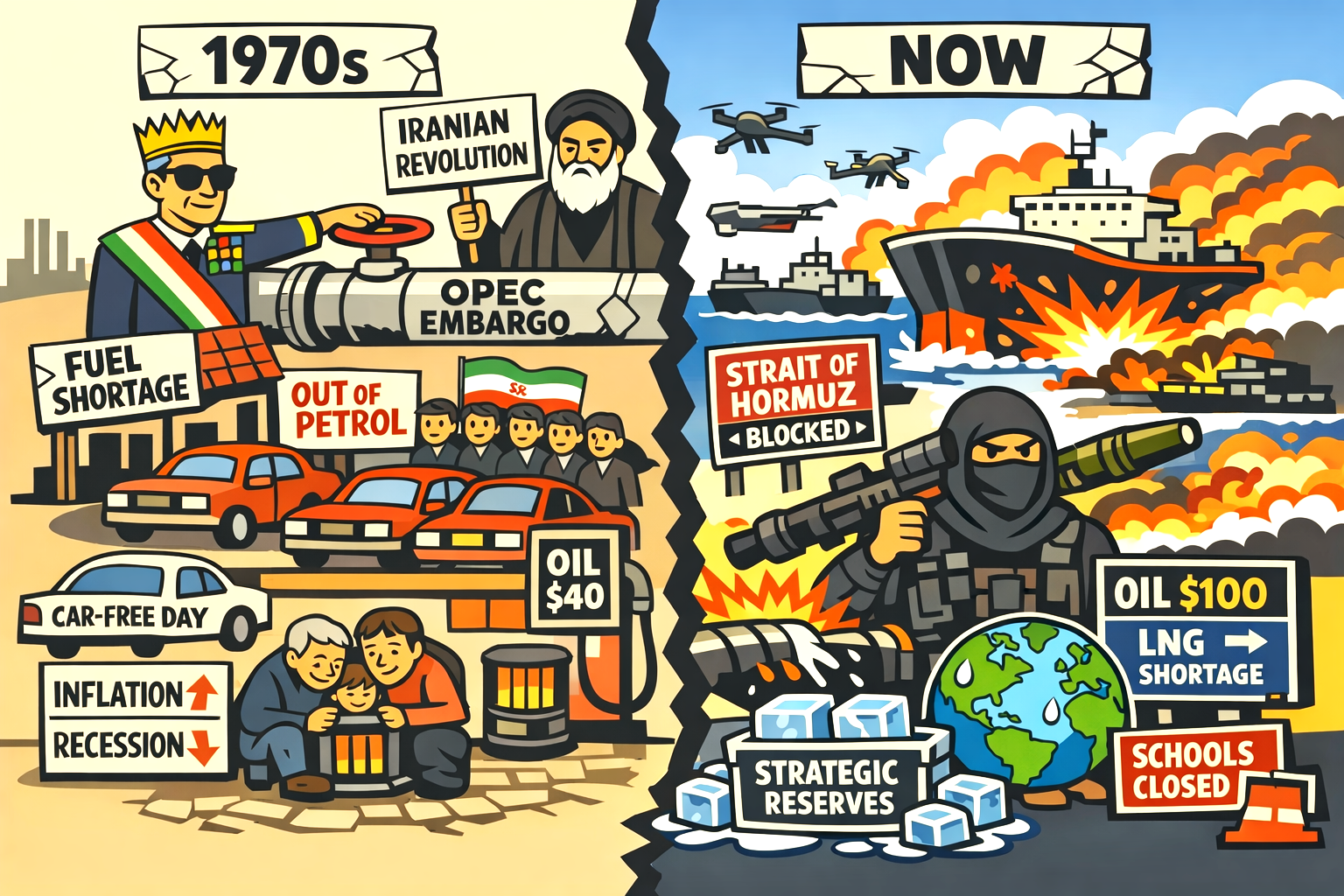
The 1970s crises were triggered by political embargoes and revolution, causing sharp but smaller supply cuts and extreme price spikes.

Today’s crisis is driven by war, infrastructure attacks, and the near‑closure of the Strait of Hormuz, producing a larger supply disruption, though price rises so far have been less extreme.

Energy shock

The energy shocks of the 1970s remain some of the most disruptive economic events of the modern age. Triggered first by an embargo and later by revolution, they exposed how deeply the global economy depended on Middle Eastern oil.

Half a century later, Iran still sits at the centre of global energy anxiety — but the nature of the threat has shifted.

The world is no longer facing an outright supply collapse, yet the structural vulnerabilities that defined the 1970s have not disappeared. They have simply evolved.

Yom Kippur War

The first major shock came in 1973, when Arab oil producers cut exports to countries supporting Israel during the Yom Kippur War.

The result was a sudden loss of roughly seven per cent of global supply. Prices quadrupled, queues formed at petrol stations, and governments imposed rationing, car‑free days, and speed‑limit reductions.

The economic fallout was severe: inflation surged while growth stalled, creating the era‑defining condition of stagflation.

A second blow followed in 1979, when the Iranian Revolution removed millions of barrels per day from the market. Prices tripled once again, and the world was forced to confront the fragility of its energy systems.

IEA

The International Energy Agency was created in direct response, tasked with coordinating emergency measures and strategic reserves.

These two crises set the benchmark for what an energy shock looks like — sudden, sharp, and globally destabilising.

Today’s risks are different. The world is not experiencing a supply loss on the scale of the 1970s, but the potential for disruption remains high.

Strait of Hormuz

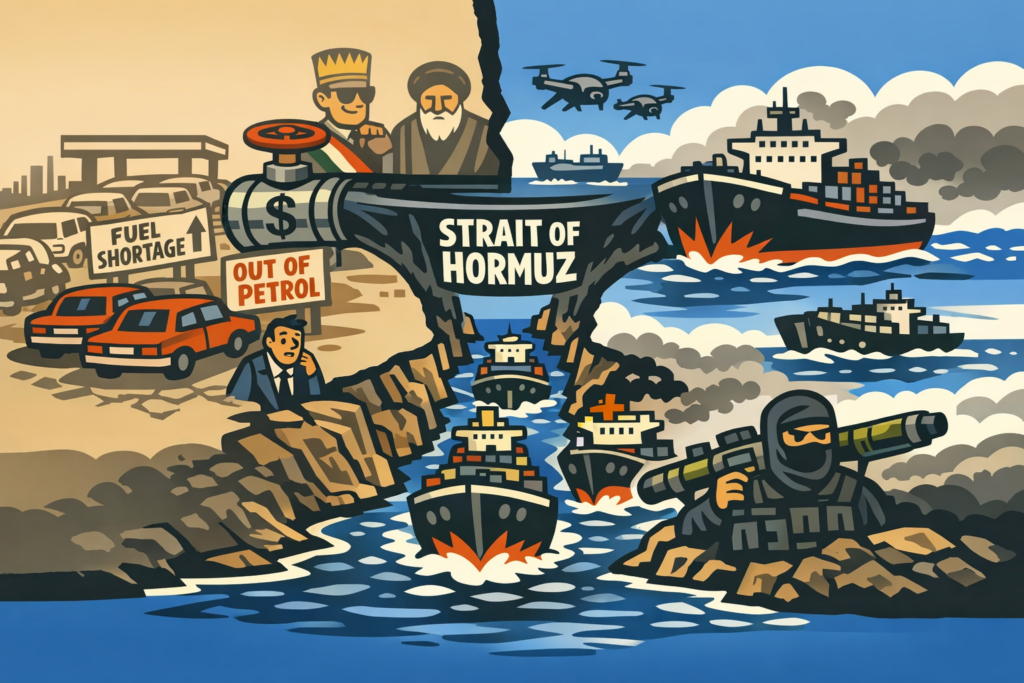
The Strait of Hormuz, through which around a fifth of global oil flows, is a strategic chokepoint vulnerable to conflict, tanker seizures, and infrastructure attacks.

Iran has repeatedly threatened to close or disrupt the strait during periods of tension, and even limited incidents in recent years have pushed prices higher.

Markets remain acutely sensitive to any sign that the corridor could be compromised.

Diverse energy

Unlike the 1970s, modern economies have more diversified energy systems, larger strategic reserves, and a growing share of renewables.

Yet these advantages do not eliminate risk; they merely soften it. A serious disruption in the Gulf would still send shockwaves through global markets.

The comparison between then and now is not one of scale but of structure. The 1970s showed how quickly energy can become a lever of geopolitical power.

Today’s world is more resilient, but no less exposed. The lesson endures: when a single region holds the key to global supply, the world remains only one crisis away from another shock.

We also need to ask – how and why this happened again!

What’s your answer?

How the crises affected the UK in the 1970s

The 1970s energy crisis had a profound and lasting impact on the United Kingdom, reshaping its economy, politics, and industrial relations.

When global oil prices quadrupled after the 1973 OPEC embargo, Britain was already struggling with domestic energy tensions.

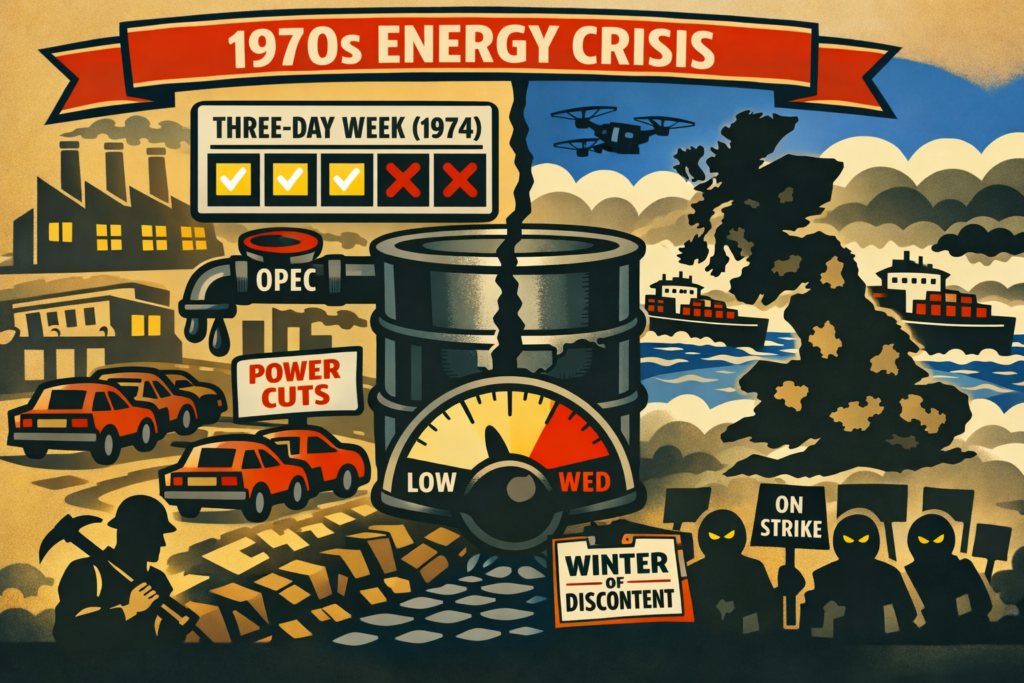
Coal remained the backbone of electricity generation, and the miners’ dispute with Edward Heath’s government over pay and working conditions collided with the global fuel shock.

As coal output fell and oil costs soared, the government-imposed emergency measures — most famously the Three‑Day Week in early 1974, limiting commercial electricity use to conserve power. It led to the Winter of Discontent.

Power Cuts

Factories shut down, television broadcasts ended early, and households faced rolling power cuts. Inflation surged, unemployment rose, and the economy slowed sharply.

The crisis deepened public frustration with the Conservative government, contributing to Heath’s defeat in the February 1974 general election.

Trade Union Turmoil

The turmoil also strengthened trade unions, whose strikes became a defining feature of the decade.

By the late 1970s, another oil shock — triggered by the Iranian Revolution — compounded Britain’s economic malaise, leading to the “Winter of Discontent” and paving the way for Margaret Thatcher’s election in 1979.

In short, the 1970s energy crisis exposed Britain’s dependence on imported fuel and unstable domestic supply, ushering in years of inflation, industrial unrest, and political upheaval that reshaped the country’s economic direction for decades.


How Wall Street Turned Trump’s Geopolitical Brinkmanship into the ‘TACO’ Trade

TACO Trade

For seasoned traders, geopolitical brinkmanship rarely arrives as a surprise. Over the past decade, markets have developed a reflexive understanding of how political theatre interacts with asset prices.

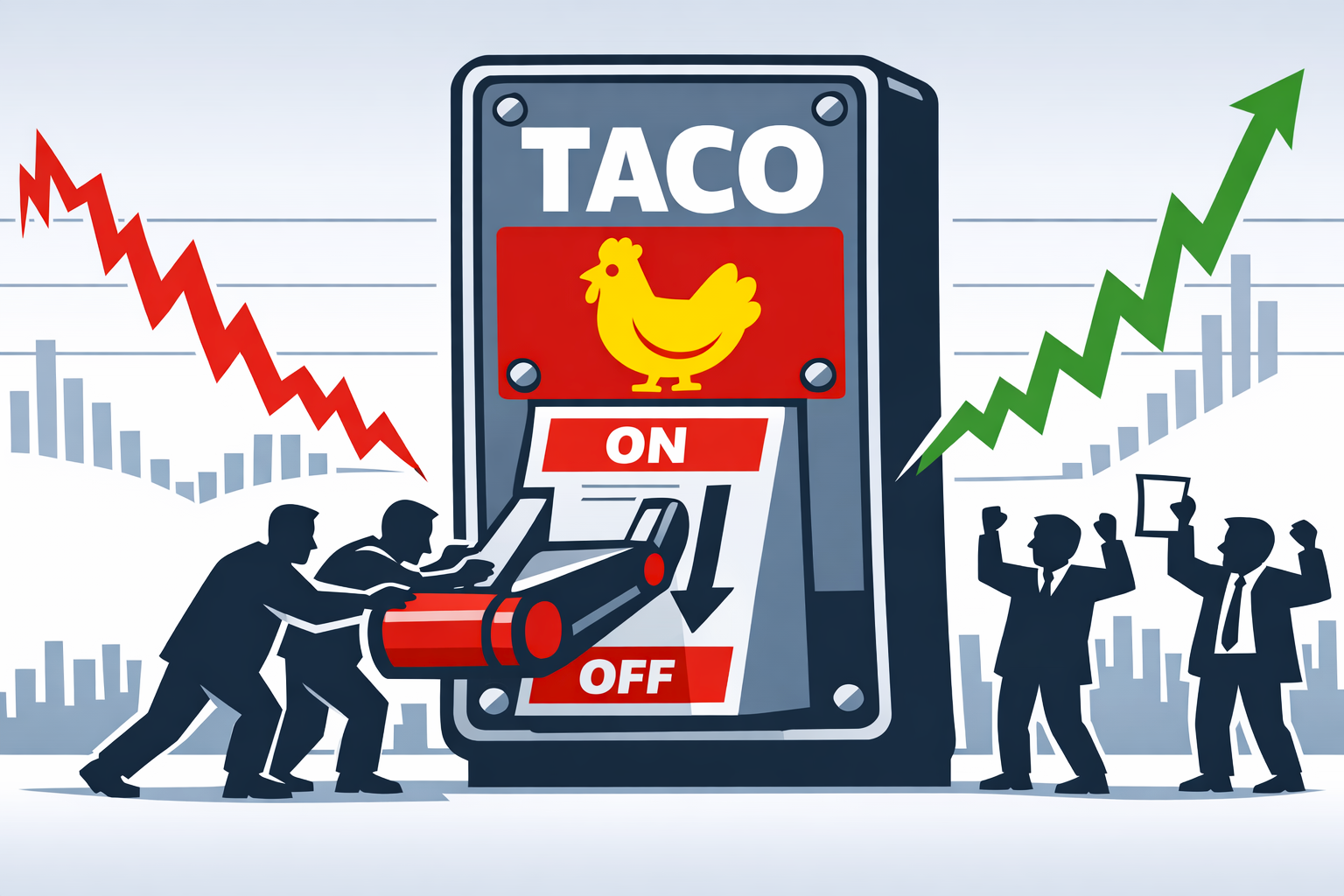
Nowhere is this more evident than in the so‑called TACO trade — shorthand on Wall Street for “Trump Always Chickens Out.”

Pattern

It is not a political judgement, but a market pattern: a repeated cycle in which aggressive rhetoric triggers short‑term volatility before ultimately giving way to de‑escalation.

The latest Iran crisis has revived this playbook. As President Trump reaffirmed his deadline for Iran to reopen the Strait of Hormuz and threatened strikes on power plants and bridges, global markets initially reacted in predictable fashion.

Oil prices swung sharply, Treasury yields dipped, and investors sought safety as the deadline approached.

Positioning

Headlines on various news outlets captured the tension: warnings of higher energy prices, unsettled European markets, and futures trading nervously ahead of each new statement.

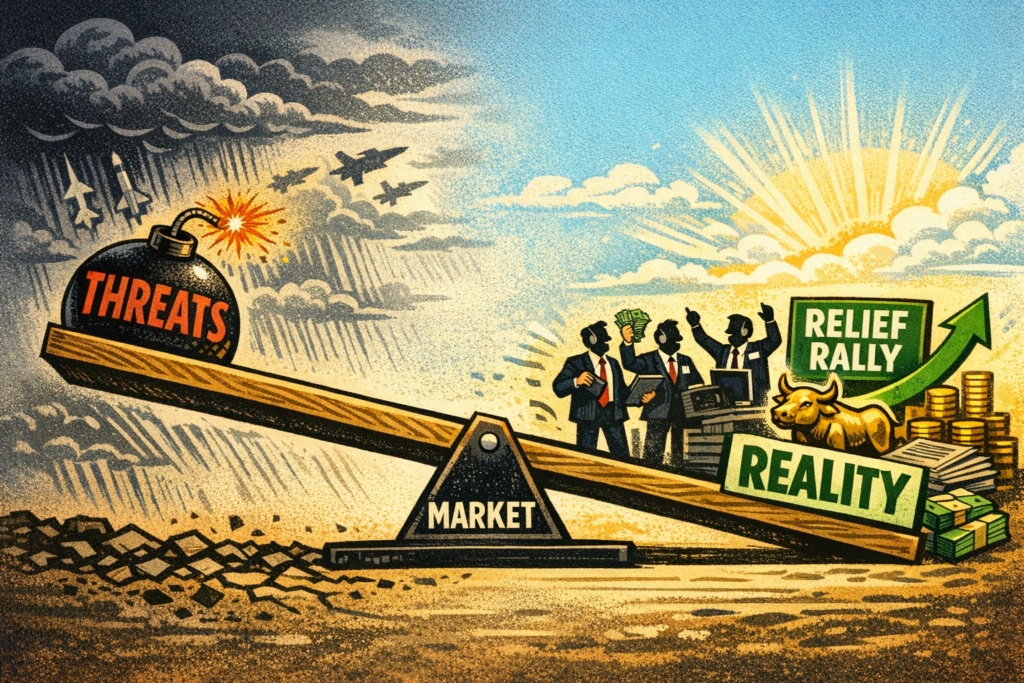
Yet beneath the surface, traders were already positioning for the familiar TACO outcome. The pattern is simple: price in the threat early, then fade it.

Hedge funds bought oil and volatility on the initial sabre‑rattling, but quietly prepared to unwind those positions as soon as signs of negotiation emerged.

When reports surfaced that Iran had submitted a ceasefire proposal — dismissed publicly as “not good enough” but nonetheless signalling movement — markets began to relax.

Oil turned mixed, futures rose, and Treasury yields reversed higher as safe‑haven demand faded.

Behaviour

This behaviour reflects a deeper truth about modern markets: headline risk decays quickly when investors believe the political actor prefers brinkmanship to actual escalation.

Trump’s negotiating style, built on maximalist threats followed by last‑minute recalibration, has become sufficiently familiar that traders now model it. The TACO trade is simply the codification of that expectation.

What makes this episode notable is how efficiently markets anticipated the pivot. Even as rhetoric hardened, the S&P 500 futures market edged higher, suggesting investors were already discounting the likelihood of military action.

Analysts warned that markets might be “completely wrong” about the risk of war, yet price action told a different story: traders were betting on de‑escalation before it arrived.

Whether the TACO trade remains reliable is another question. Markets adapt, and geopolitical actors can surprise.

But in this latest Iran standoff, Wall Street’s instincts proved consistent: fade the fear, wait for the climb‑down, and trade the relief rally when it comes.

Is it “playing with the markets”?

From a trader’s perspective, what you’re seeing isn’t so much deliberate market manipulation as a predictable feedback loop between political communication and investor psychology.

Markets react to signals, not intentions

When a political leader issues threats, deadlines or ultimatums, markets price the risk of escalation. When those threats repeatedly end in de‑escalation, markets begin to price the pattern instead of the words.

That’s how the TACO trade emerged: investors noticed the pattern and traded accordingly.

The pattern becomes self‑reinforcing

If traders expect a climb‑down, they position for it. If enough traders position for it, the market moves in that direction. This makes the pattern appear even stronger.

It’s not “playing with the markets” in the sense of intentional manipulation — it’s more that political brinkmanship creates volatility, and markets learn to anticipate the likely outcome.

Markets hate uncertainty but love repetition

If a leader consistently escalates rhetorically but de‑escalates in practice, markets adapt. They stop reacting to the drama and start trading the expected resolution.

That’s what happened around the Iran ceasefire discussions:

  • Oil spiked on the threats
  • Traders anticipated a softening
  • Oil fell sharply when negotiations appeared
  • Equity futures rose as the risk premium evaporated

This is classic pattern‑recognition, not evidence of someone intentionally moving markets.

Why it feels like market‑playing

Because the cycle is dramatic:

  1. Threat → volatility
  2. Deadline → fear trades
  3. Climb‑down → relief rally

To an outside observer, it can look like the political actor is pulling the market up and down. But from a market‑structure perspective, it’s simply headline‑driven trading meeting predictable political choreography.

The real issue is transparency, not intent

Markets can handle tough talk. What they struggle with is ambiguity — when the gap between rhetoric and action becomes wide enough that traders start pricing the gap rather than the policy.

That’s why the TACO trade exists: it’s a market response to inconsistency, not a claim of manipulation.

Is it a form of manipulation or planned market reaction.

You decide…

Thieves in the night.

Meta unveils new AI model in AI catchup

Meta's Muse Spark Agentic AI

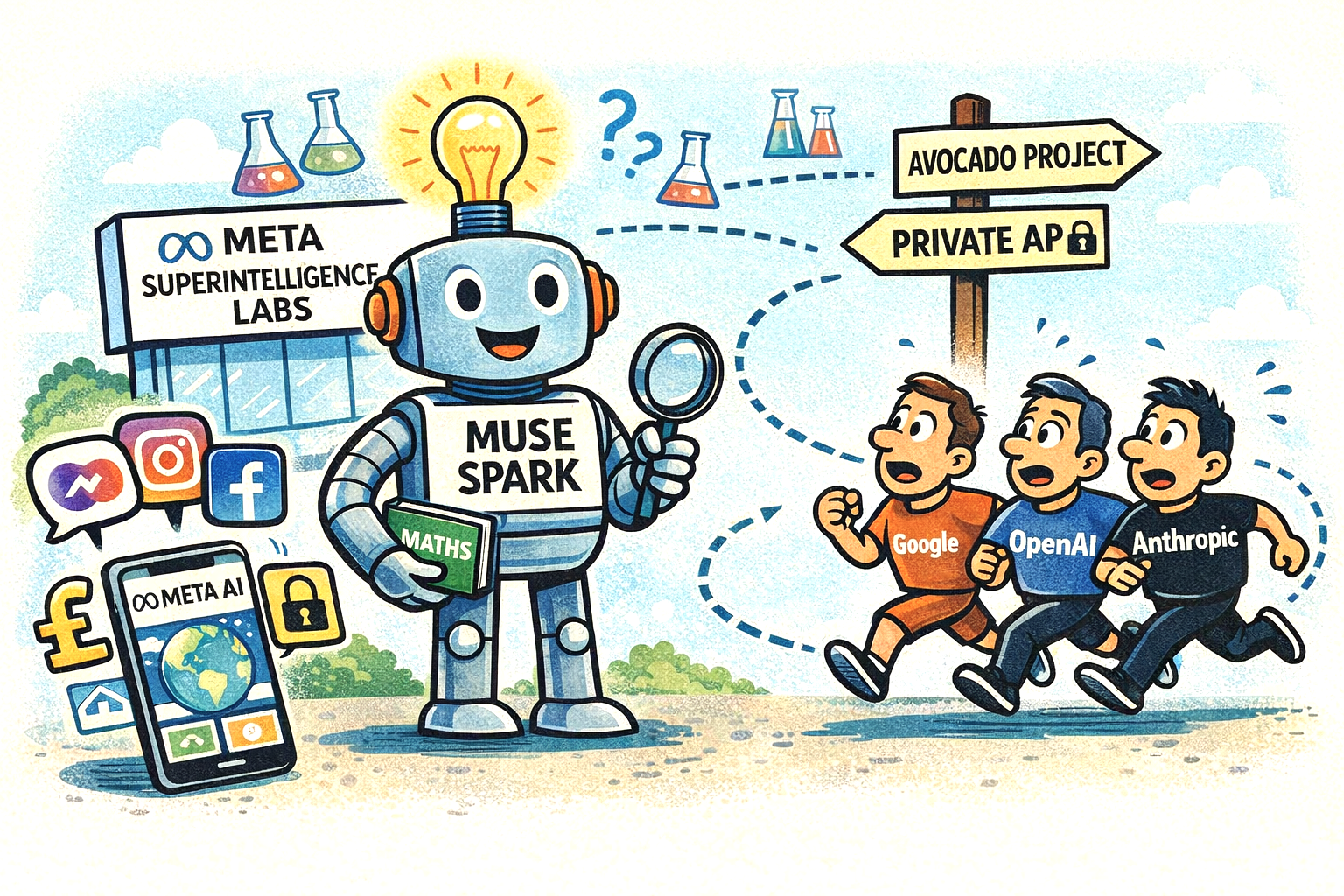
Meta has unveiled Muse Spark, its first major artificial intelligence model since the company overhauled its AI strategy in response to the underwhelming reception of its previous Llama 4 models.

Developed by the newly formed Meta Superintelligence Labs under the leadership of Alexandr Wang, Muse Spark represents a deliberate shift towards smaller, faster, and more capable systems designed to compete directly with Google, OpenAI, and Anthropic.

Foundation

Muse Spark is positioned as the foundation of a new family of models internally known as Avocado. Meta reportedly describes it as “small and fast by design”, yet able to reason through complex questions in science, maths, and health — a notable claim given the company’s recent struggles to keep pace with rivals.

Early evaluations suggest the model performs competitively in language and visual understanding, though it still trails in coding and abstract reasoning.

Crucially, Muse Spark is deeply integrated into Meta’s ecosystem. It already powers the Meta AI app and website and will soon replace Llama across WhatsApp, Instagram, Facebook, Messenger, and Meta’s smart glasses.

Integrated

This rollout signals Meta’s intention to embed AI more tightly into everyday user interactions, from search and recommendations to multimodal tasks such as analysing photos or comparing products.

The company is also experimenting with new revenue streams by offering a private API preview to select partners — a departure from its previous open‑source approach.

Whether this shift will alienate developers who embraced the openness of Llama remains to be seen.

Meta frames Muse Spark as an early step toward “personal superintelligence”, an assistant that can understand the world alongside the user rather than waiting for typed instructions.

It’s an ambitious vision — and one that will be tested as the model expands globally and faces scrutiny over privacy, safety, and real‑world performance.

SpaceX’s Trillion‑Dollar IPO: A New Era in Market History

SpaceX IPO valued at $1 trillion

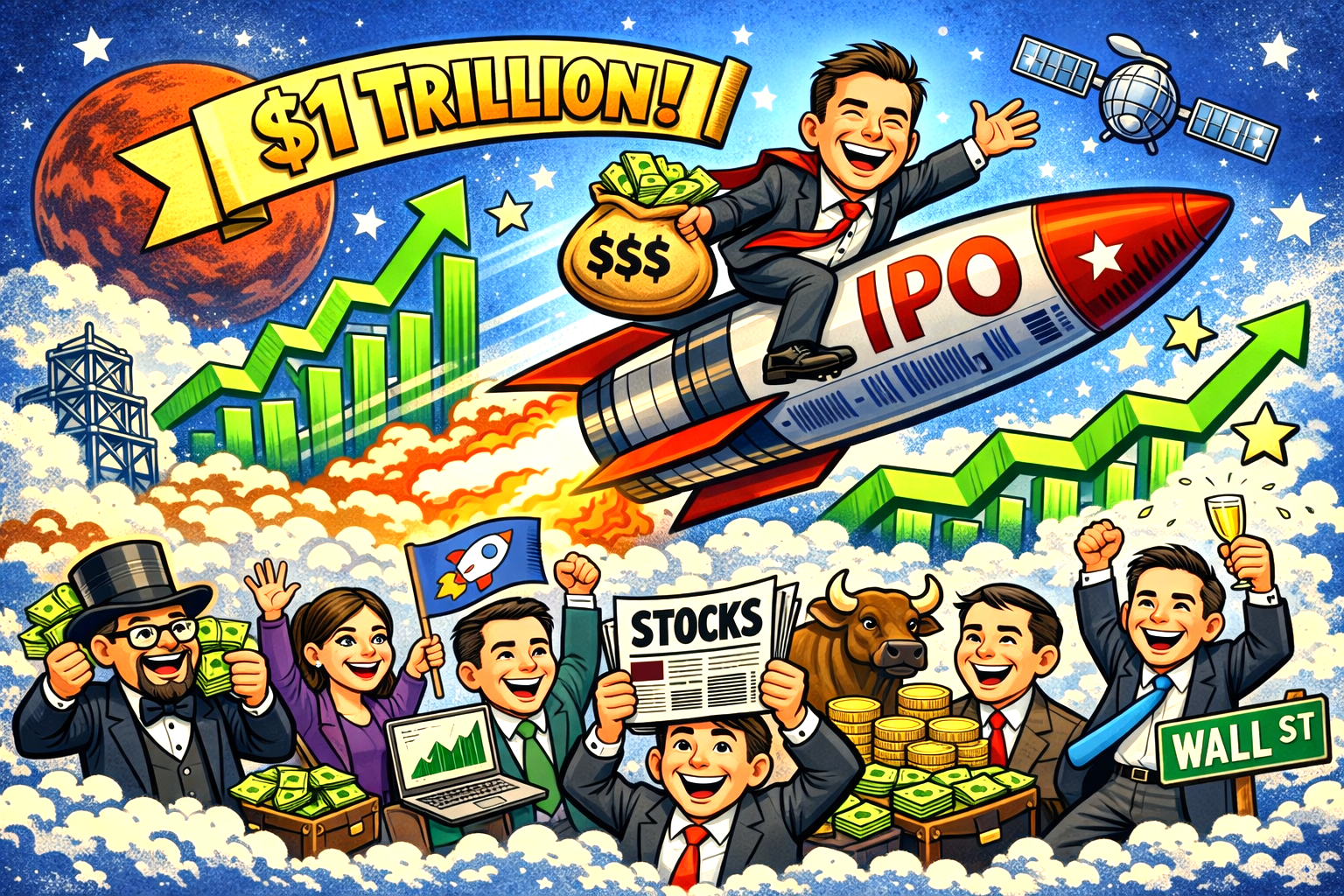
SpaceX is edging towards what could become the most significant stock market debut in modern history, with expectations that its initial public offering may surpass a valuation of $1 trillion.

A confidential filing with U.S. regulators marks a pivotal moment for the company, signalling its readiness to transition from a privately held aerospace leader to one of the world’s most valuable publicly traded firms.

Record breaking valuation

The anticipated valuation reflects SpaceX’s dominance in commercial spaceflight, satellite deployment and global broadband through its rapidly expanding Starlink network.

Its reusable rocket technology has already reshaped launch economics, and the company’s growing influence across defence, communications and space infrastructure has strengthened investor confidence.

Analysts suggest the timing of the IPO is driven by the escalating cost of SpaceX’s long‑term ambitions, including deep‑space exploration and large‑scale satellite expansion.

Company integration

The recent integration of Elon Musk’s AI venture, xAI, into SpaceX has further broadened the company’s technological footprint, reinforcing expectations that substantial new capital will be required to sustain its momentum.

If market appetite matches current projections, SpaceX’s listing could set a new benchmark for tech‑driven valuations — and potentially position Musk as the first individual to see their net worth approach the trillion‑dollar threshold.

Artemis II Lifts Off: A New Era in Crewed Lunar Exploration

Artemi II launch 1st April 2026

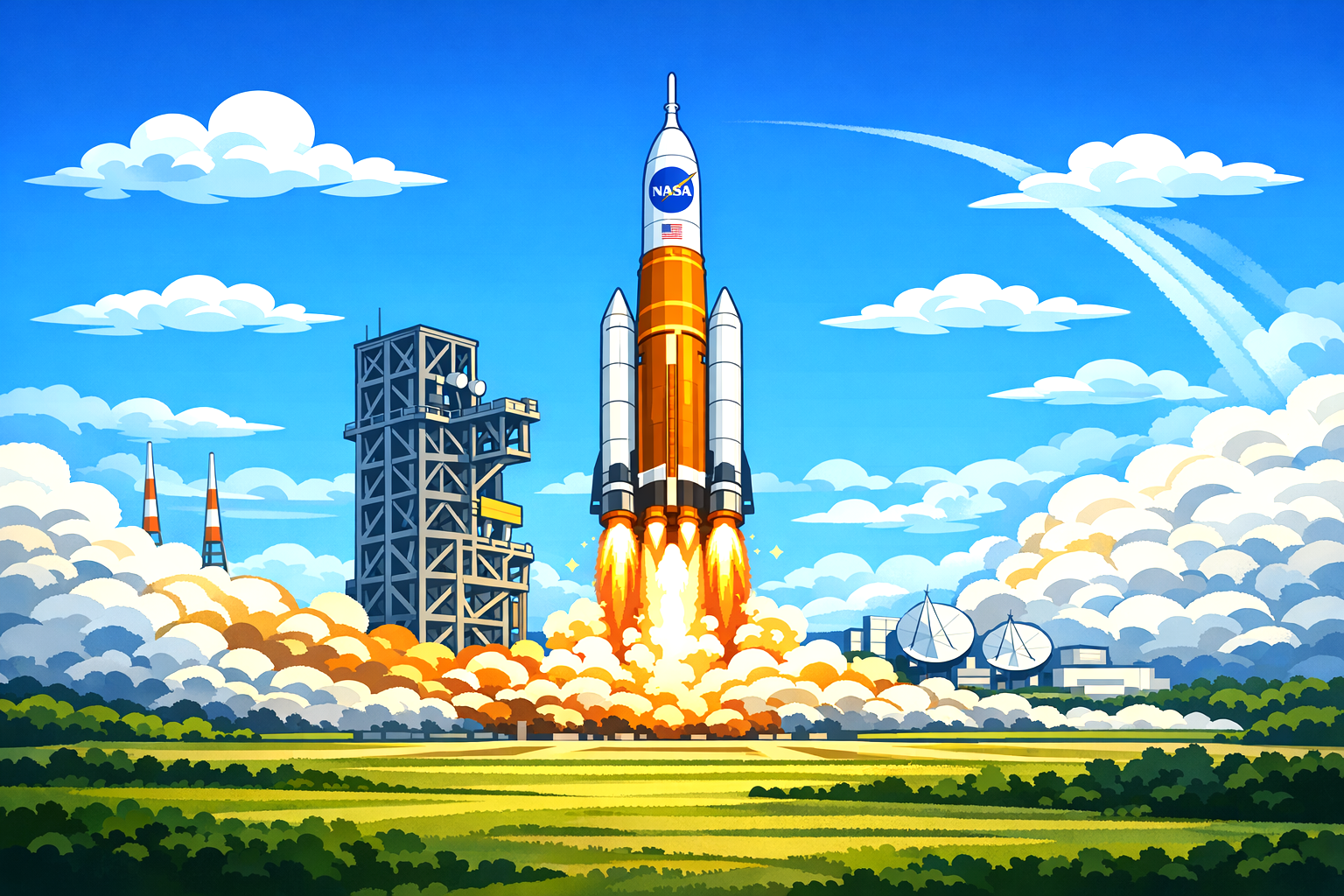
NASA’s Artemis II mission roared into the sky on 1st April 2026, marking the first crewed journey toward the Moon in more than half a century and signalling a decisive shift in humanity’s return to deep‑space exploration.

The launch, conducted from Kennedy Space Center’s historic Pad 39B, sent the four‑person crew on a sweeping lunar flyby designed to test every system required for future landings.

The Space Launch System (SLS), now the world’s most powerful operational rocket, delivered a controlled, thunderous ascent that placed the Orion spacecraft precisely on its translunar trajectory. For NASA, this mission is far more than a symbolic milestone.

It is the critical proving ground for life‑support systems, navigation, communications, and the human factors that will underpin Artemis IV’s planned lunar landing.

Crew

The crew — Reid Wiseman, Victor Glover, Christina Koch, and Canadian astronaut Jeremy Hansen — represent a deliberately international and diverse team, reflecting NASA’s intent to build a long‑term, collaborative presence beyond Earth orbit.

Over the coming days, they will conduct a series of manoeuvres around the Moon, pushing Orion to operational limits while maintaining constant evaluation of onboard systems.

Although Artemis II will not touch the lunar surface, its significance is unmistakable. The mission bridges the gap between decades of conceptual planning and the practical reality of returning humans to the Moon.

It also serves as a reminder that deep‑space exploration remains a complex, high‑risk endeavour requiring meticulous engineering and political commitment.

Future missions

If successful, Artemis II will validate the architecture for a sustained lunar programme — including the Lunar Gateway, surface habitats, and commercial landers — and re‑establish the Moon as a stepping stone for future missions to Mars.

For now, the world watches as the crew embarks on the most ambitious human spaceflight in a generation, carrying with them the renewed ambition of a species determined to explore.

Oracle Cuts Deep as AI Pivot Forces a Reckoning

Oracle's AI Axe

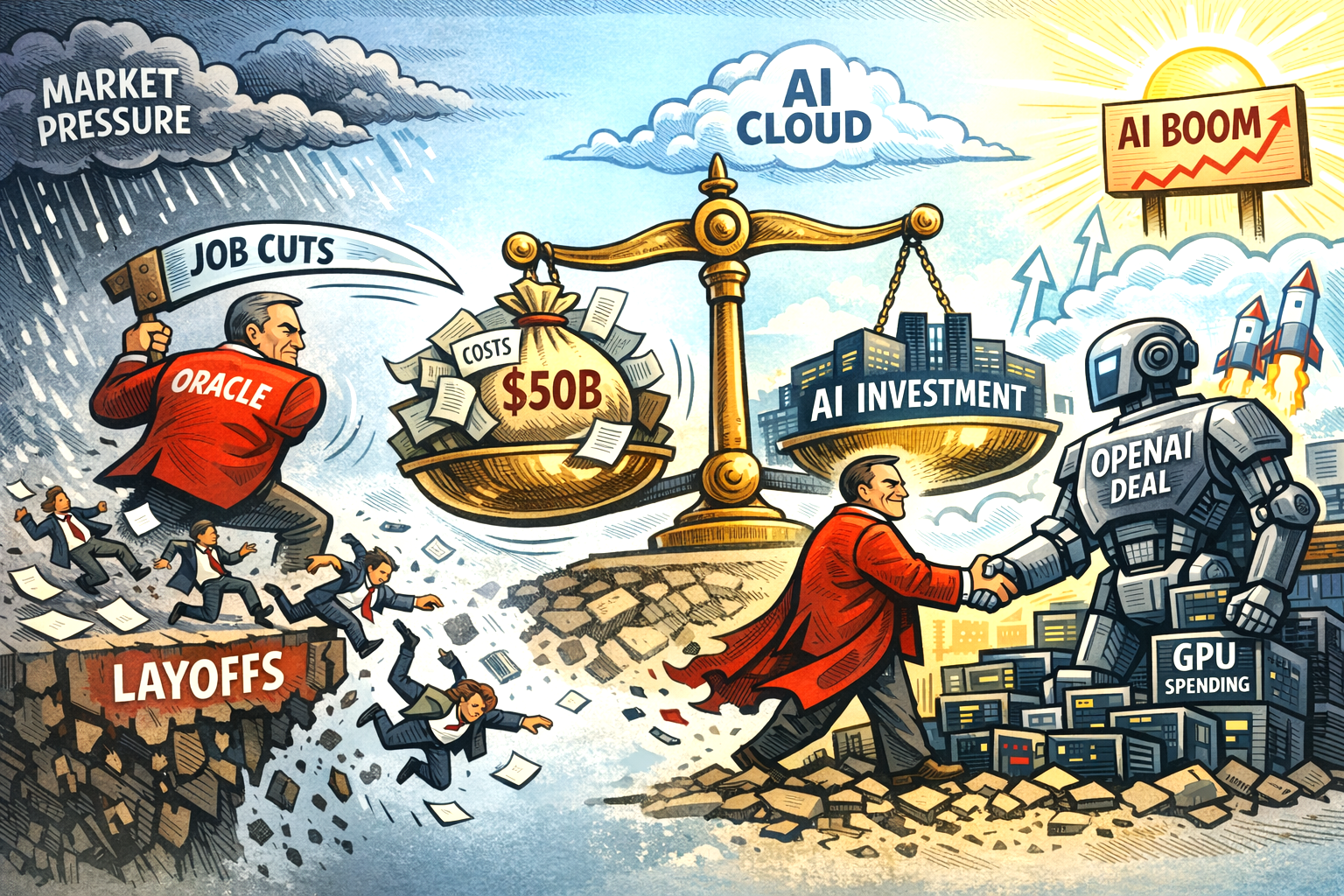
Oracle is swinging hard at its own workforce as the company races to reposition itself as an AI‑infrastructure contender.

Thousands of roles are being eliminated, a drastic move that reflects the sheer financial pressure of trying to keep up with hyperscale rivals in the most capital‑intensive tech shift in decades.

The company’s share price has slumped 25% this year, with investors increasingly uneasy about soaring data‑centre spending and the heavy debt required to fund it.

Oracle has already raised $50 billion to bankroll new GPU‑ready facilities, but unlike Amazon or Microsoft, it lacks the cushion of vast cloud scale.

The result: a balance sheet under strain and a leadership team forced into tough decisions.

Future

Oracle’s remaining performance obligations have ballooned to more than half a trillion dollars, fuelled by major AI partnerships including a huge deal with OpenAI.

But those future revenues don’t solve today’s cash‑flow squeeze. Analysts estimate that cutting 20,000 to 30,000 jobs could free up as much as $10 billion — enough to keep the AI build‑out moving without further rattling the markets.

Oracle is betting that a leaner organisation now will buy it the runway to compete later. The question is whether the cuts arrive in time to match the speed of the AI race.

Stock rises.