
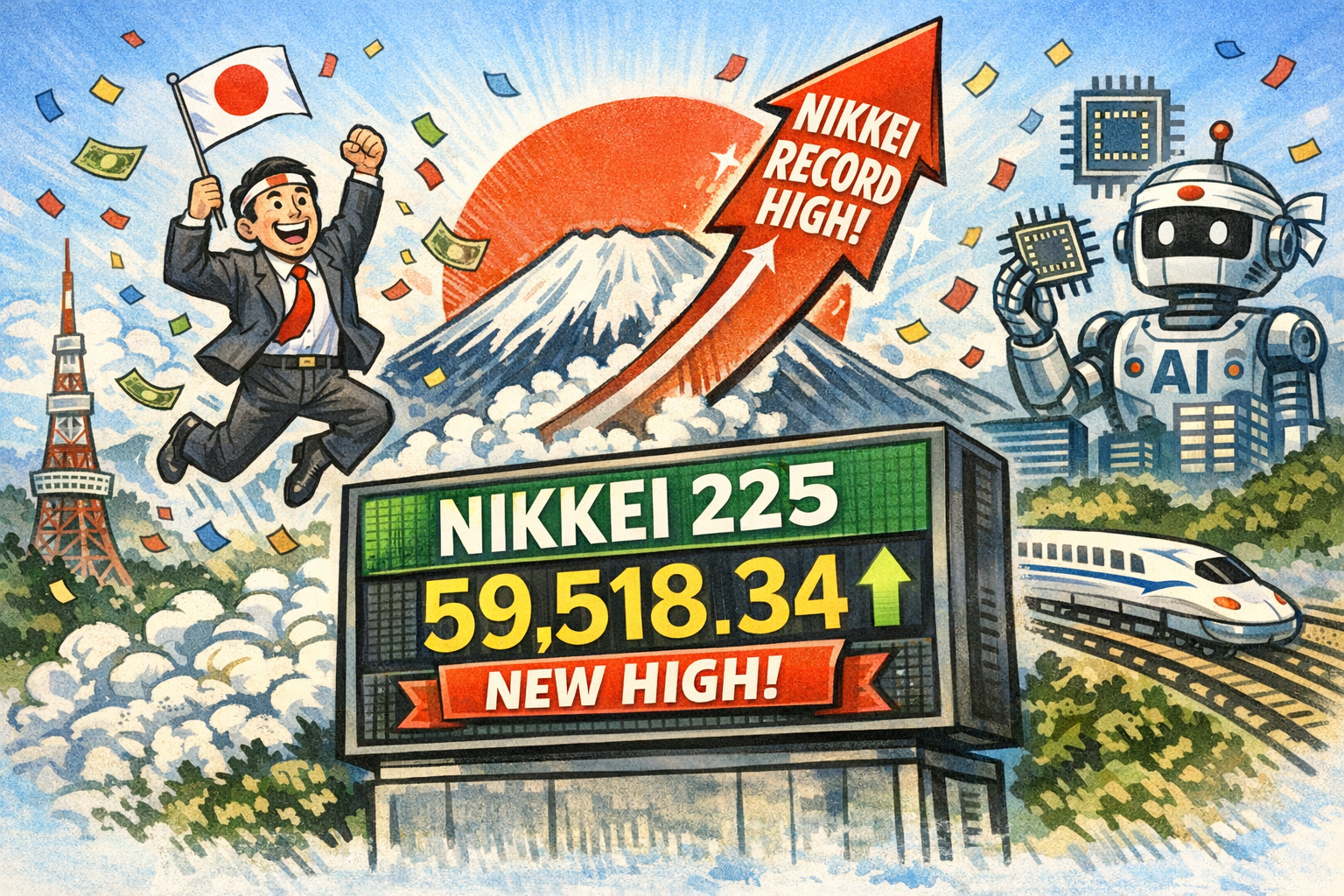
The Nikkei 225 has surged to a fresh all‑time high, closing at 59,518.34, driven by a powerful combination of temporary easing of geopolitical tension, a booming technology sector, and renewed investor confidence.
Japan’s benchmark index pushed decisively beyond its previous record of 58,850.27, set in late February 2026, marking a symbolic milestone as it fully erased losses sustained during the early stages of the US–Iran conflict.
Rally
The rally was broad but powered most strongly by semiconductor and AI‑linked stocks, which have been the backbone of the Nikkei’s remarkable 12‑month performance.
Companies such as Lasertec, Advantest and SoftBank Group saw outsized gains as global enthusiasm for AI investment continued to spill over from Wall Street.
A key catalyst behind the breakout was growing optimism over a durable ceasefire between the United States and Iran, which helped unwind the “war‑risk premium” that had weighed on Japanese equities since late February 2026.
Diplomatic signals
As diplomatic signals seem to improve, investors rotated back into risk assets, lifting export‑heavy sectors and reinforcing Japan’s position as one of the strongest major markets globally this year.
The index’s climb also reflects Japan’s structural momentum: a weaker yen supporting exporters, resilient corporate earnings, and sustained foreign inflows.
With the Nikkei now trading in uncharted territory, market participants are watching closely to see whether this rally consolidates — or whether the next psychological test at 60,000 comes into view sooner than expected.