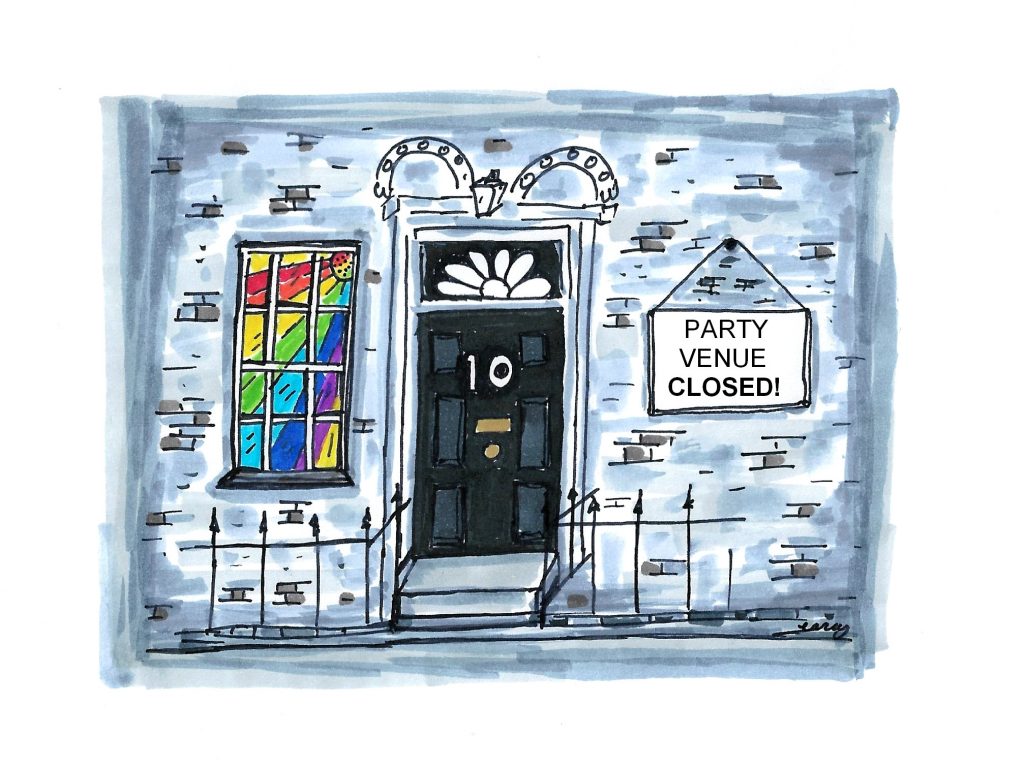

Why is UK Politics in such a Shambles?

UK Political Shambles

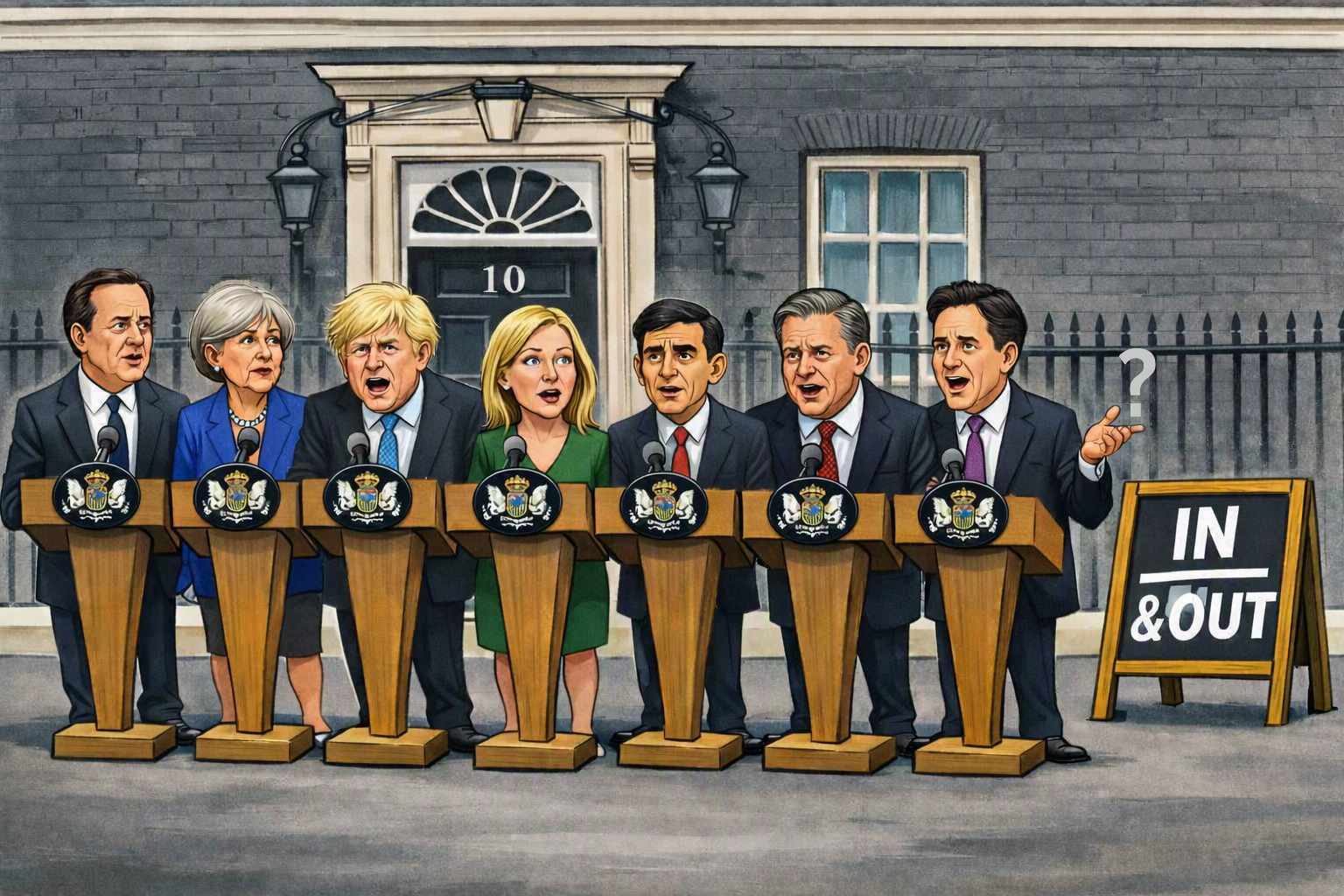
Britain has ripped through five prime ministers in just over five years — Theresa May, Boris Johnson, Liz Truss, Rishi Sunak, and now the prospect of yet another change.

It is not simply bad luck or a run of flawed leaders. It is the visible symptom of a political system that has lost focus and direction.

Conservative infighting to Labour back biting!

The core problem is structural volatility. The UK’s unwritten constitution relies heavily on norms, restraint and party discipline. Over the past decade, those stabilising forces have collapsed.

Brexit

Brexit detonated the old Conservative coalition, splitting MPs into factions that no longer share a common project. Once a party becomes a collection of tribes, leadership becomes temporary management rather than authority.

Prime ministers are installed not to govern but to contain internal warfare — and they are removed the moment they fail to do so.

Exhaustion

The second driver is institutional exhaustion. Westminster has been running in crisis mode since 2016: Brexit negotiations, minority government, pandemic, inflation shock, energy crisis, geopolitical instability.

The machinery of state has been asked to deliver transformation while simultaneously firefighting. That combination breeds short-termism. Policies are launched for headlines, not outcomes.

Leaders are judged by weekly polling, not national strategy. The result is a political class that behaves like a boardroom under siege — reactive, brittle, and constantly reshuffling the chief executive.

Disillusioned

A third factor is public disillusionment. Trust in politics has fallen to historic lows. Voters now punish governments faster and more aggressively than at any point in modern British history.

The electoral cycle has shortened psychologically: every scandal becomes existential, every by‑election a referendum on the prime minister’s survival.

This creates a feedback loop where MPs panic, parties fracture, and leaders lose authority long before the public formally removes them.

Gap

Finally, the UK faces a governance gap. The country has major structural problems — weak productivity, regional inequality, an overstretched NHS, fragile public finances — but no long-term political consensus on how to fix them.

Without a shared national direction, governments drift, parties implode, and leadership churn becomes inevitable.

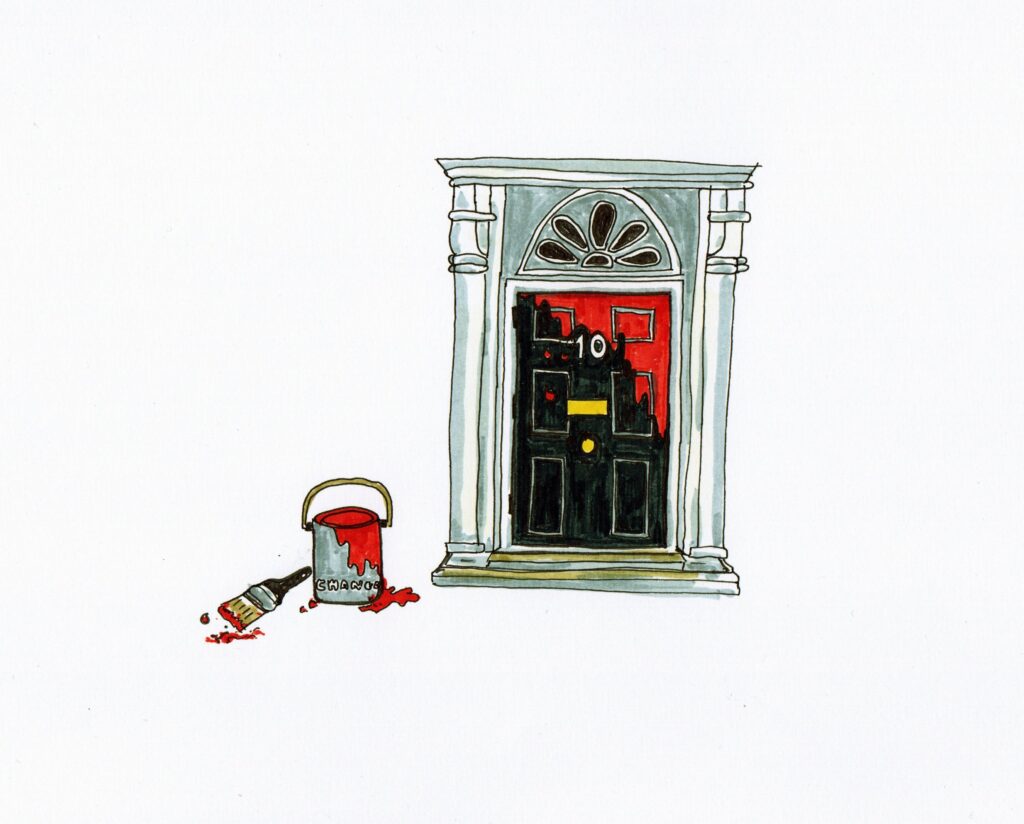
Britain’s political chaos is not random. It is the predictable outcome of a system that has lost coherence, a governing party that has lost unity, and a public that has lost patience. Until those three forces stabilise, the revolving door at No. 10 will keep spinning.

Just look at the calibre of politicians in the UK – or lack thereof.

I rest my case.

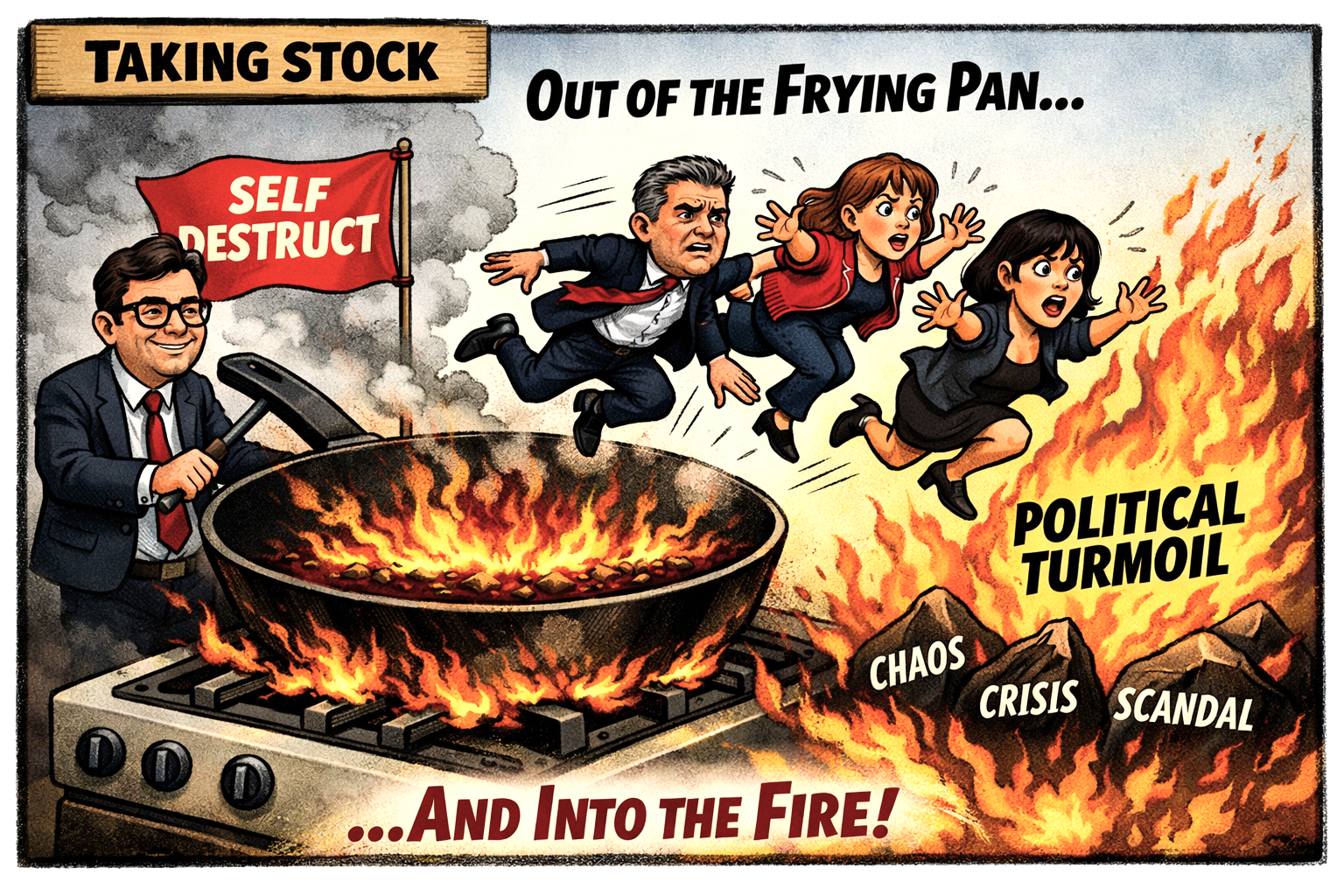
The self-destruct button is being pressed yet again…

UK politicians – it’s time to grow-up.

Definition of politician

A person who is professionally involved in politics, especially someone who holds or seeks public office in government.

More broadly, it refers to anyone who participates in governing, policy‑making, or political leadership at local, national, or international level.

Three words immediately jump out at me: professional, govern and leadership.

I see very little of any of these right now in our political ‘elite’.

Labour tries to attract new business investment to the UK

Union Jack Flag UK

The UK Labour government aimed to attract foreign investment on Monday 14th October by hosting its first International Investment Summit in London

Prime Minister Keir Starmer, Chancellor Rachel Reeves, and Business Minister Jonathan Reynolds headed the one-day event at London’s Guildhall, with an attendance of approximately 200 executives from both the UK and abroad.

Notable attendees were former Google Chairman Eric Schmidt, Goldman Sachs CEO David Solomon, BlackRock CEO Larry Fink, and GSK CEO Emma Walmsley. Poppy Gustafsson, the newly appointed Investment Minister and co-founder of the British cybersecurity company Darktrace, were also present to advocate for the UK as a favourable business environment.

The UK government unveiled a relaxation of regulations and announced investment deals worth billions of pounds in sectors such as artificial intelligence, life sciences, and infrastructure, while Starmer proclaimed it’s ‘a great moment to back Britain.’

‘We will rip out the bureaucracy that blocks investment and we will make sure that every regulator in this country take growth as seriously as this room does,‘ Starmer reportedly told delegates.

UK Prime Minister Keir Starmer on Monday 14th October 2024 vowed to slash regulatory red tape to boost investment in the country.

“We’ve got to look at regulation across the piece, and where it is needlessly holding back investment … mark my words, we will get rid of it,” he reportedly told delegates at the UK’s International Investment Summit.

The government on Sunday 13th October 2024 announced the launch of a new industrial strategy, designed to focus on eight “growth-driving sectors.”

The prime minister reportedly restated that growth was the “No. 1 test of this government,” and reiterated plans for the U.K. to become the fastest-growing G7 economy.

Starmer also outlined stability, strategy, regulation and improving Britain’s global standing as “four crucial areas” in his pitch for Britain.

“Private sector investment is the way we rebuild our country and pay our way in the world,” Starmer said

In a panel discussion with Starmer, Google’s ex-CEO Eric Schmidt expressed his surprise upon learning that the Labour party had shifted to ‘strongly’ support growth.

Schmidt is eager to see the execution of this approach and encouraged the government to increase investment in artificial intelligence to fulfill broader growth objectives.

UK Prime Minister announces snap general election for 4th July 2024

UK election

On 22nd May 2024, UK Prime Minister Rishi Sunak announced a snap general election for 4th July 2024 This decision caught many by surprise, as the election was called more than around six months earlier than legally required.

Election Date: 4th July 2024let the fireworks begin

The Conservative Party, led by Rishi Sunak, is facing significant challenges in opinion polls, trailing behind the opposition Labour Party.

The economy, immigration, health services, and cost of living have been identified as key issues for voters.

Labour, led by Sir Keir Starmer, is considered the clear frontrunner, with a substantial lead in recent polls.

Since 2010, the Conservatives have seen five prime ministers: David Cameron, Theresa May, Boris Johnson, Liz Truss, and now Rishi Sunak.

Sir Keir described the past 14 years as “Tory chaos” and emphasised that it’s time for change.

So, the UK is gearing up for an early election, and the outcome will be closely watched both domestically and internationally