

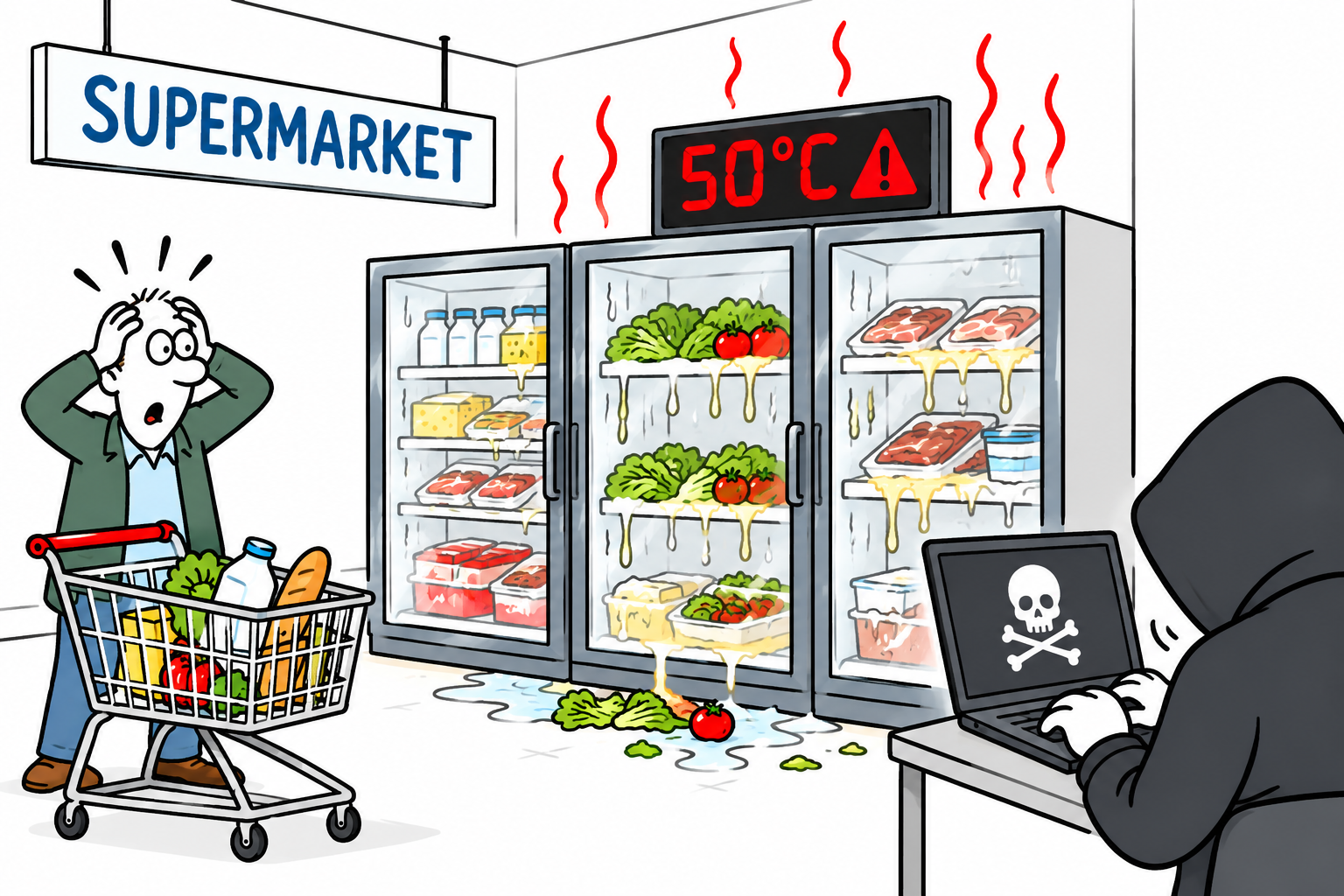
A major cyberattack on French supermarkets has exposed the surprising vulnerability of everyday technology, after hackers remotely manipulated refrigeration systems, causing food to spoil and fires to break out.
The attack, which came to light on 12th October 2026, affected hundreds of stores belonging to major retailers, including Intermarché, Carrefour, Monoprix and Coopérative U.
Heat
Reports indicate that refrigeration units were forced to heat up to 50°C, rather than maintain the low temperatures required to preserve fresh and frozen food.
In some cases, temperatures reportedly climbed even higher. The resulting damage forced supermarkets to discard large quantities of stock.
Investigators believe the attackers exploited vulnerabilities in software used to control refrigeration equipment.
Legacy software
Many of the affected systems were older models running outdated software, leaving them exposed to potential cyber intrusions.
The consequences were both financial and practical. Individual stores faced substantial losses, while the total cost across France could reach tens of millions of euros.
Some premises also reported fires or equipment damage, highlighting how a digital attack can have serious physical consequences.
Investigation
French authorities have launched an investigation, with the country’s national cybersecurity agency working to establish the extent of the incident and assess whether similar systems elsewhere could be at risk. The identity and motives of the attackers remain unclear.
The incident raises wider questions about the security of increasingly connected businesses. Refrigeration systems, once largely isolated from computer networks, can now be monitored and controlled remotely.
While this technology offers greater efficiency, it also creates potential entry points for criminals if systems are poorly secured or left unpatched.
Cybersecurity
For supermarkets, the lesson is clear: cybersecurity is no longer simply an IT issue. It is directly linked to food safety, supply chains and business continuity.
As retailers embrace connected technology, maintaining software updates, restricting remote access and monitoring unusual activity will become increasingly important.
The French incident is a stark reminder that a supermarket’s most basic equipment can become a target in the digital age.