

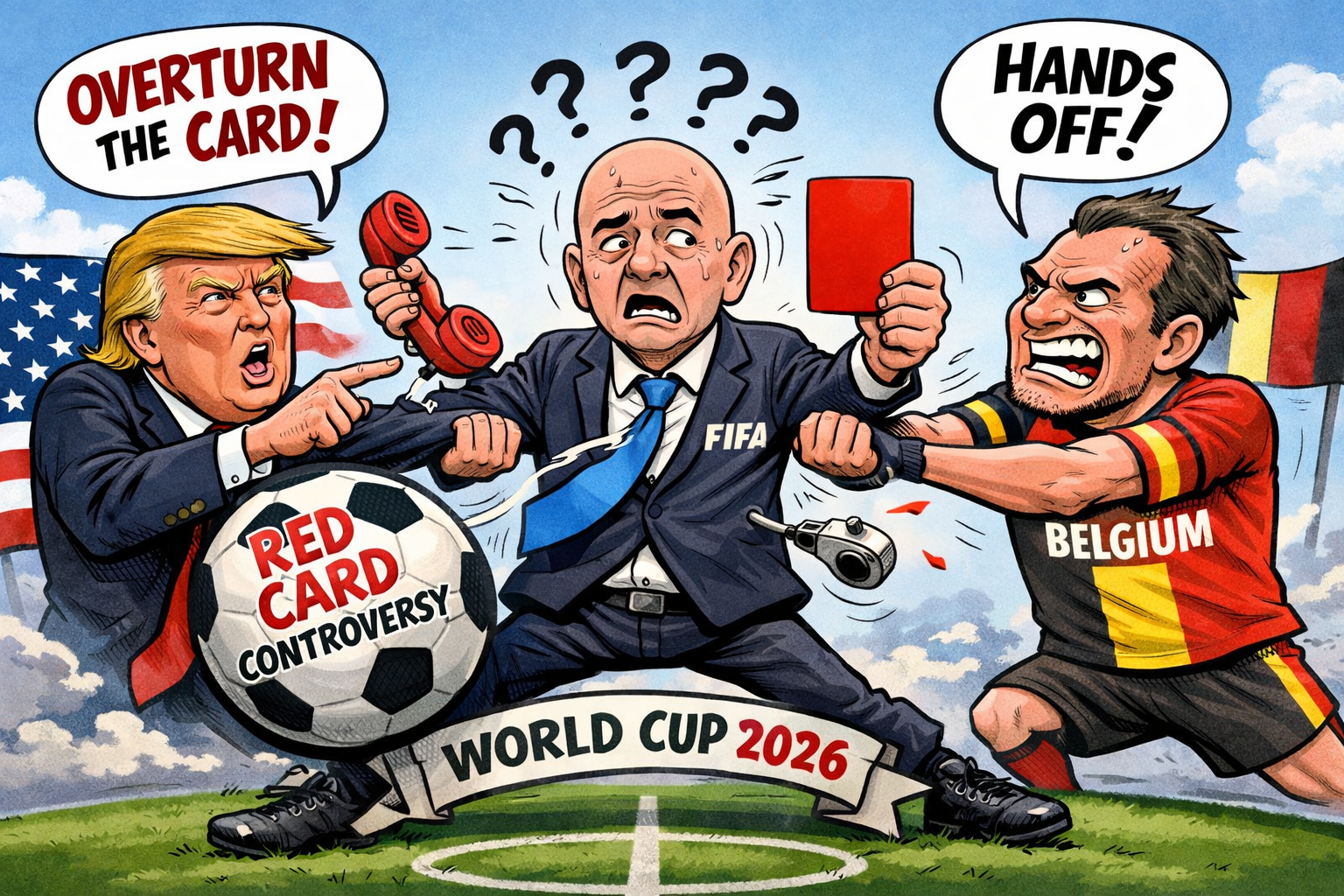
FIFA’s decision to suspend Folarin Balogun’s automatic one‑match ban has already become one of the most contentious moments of this World Cup.
The governing body is reported to have invoked Article 27 — a rarely used discretionary clause — to overturn a red‑card suspension for the first time in more than six decades.
Intervention?
Yet the real flashpoint is not the ruling itself, but the reported intervention of President Donald Trump, who personally phoned FIFA President Gianni Infantino to request a review of the incident.
Whether that intervention was justified depends on how one views the boundaries of presidential influence. On one hand, Trump’s defenders argue that he simply sought clarity on a decision that appeared harsh, especially given concerns about the referee’s reliance on slow‑motion replay.
They frame it as a leader advocating for a citizen — and a national team — during a tournament the United States is co‑hosting. From that perspective, the call was an assertive but legitimate act of representation.
Negotiable?
On the other hand, critics see something far more troubling: a head of state leaning on an international sporting body to alter a disciplinary outcome that should rest solely on the laws of the game.
Belgium’s astonishment, and its immediate move to appeal, reflects a wider unease about political pressure intruding into the supposedly neutral domain of officiating.
Once presidents start phoning refereeing authorities, the integrity of sport begins to look negotiable.
Ultimately, the question is not whether Balogun should play — reasonable people can disagree on the red card itself — but whether the process should ever bend to presidential intervention.
For many, this episode feels less like rightful advocacy and more like an overreach that risks eroding trust in global sport.