Anthropic’s ‘connected’ AI deal and others too

Anthropic's AI valuation

Anthropic has reportedly struck major deals with Microsoft and Nvidia. On Tuesday 18th November 2025, Microsoft announced plans to invest up to $5 billion in the startup, while Nvidia will contribute as much as $10 billion. According to a reports, this brings Anthropic’s valuation to around $350 billion. Wow!

Google has unveiled its newest AI model, Gemini 3. According to Alphabet CEO Sundar Pichai, it will deliver desired answers with less prompting.

This update comes just eight months after the launch of Gemini 2.5 and is reported to be available in the coming weeks.

Money keeps flowing

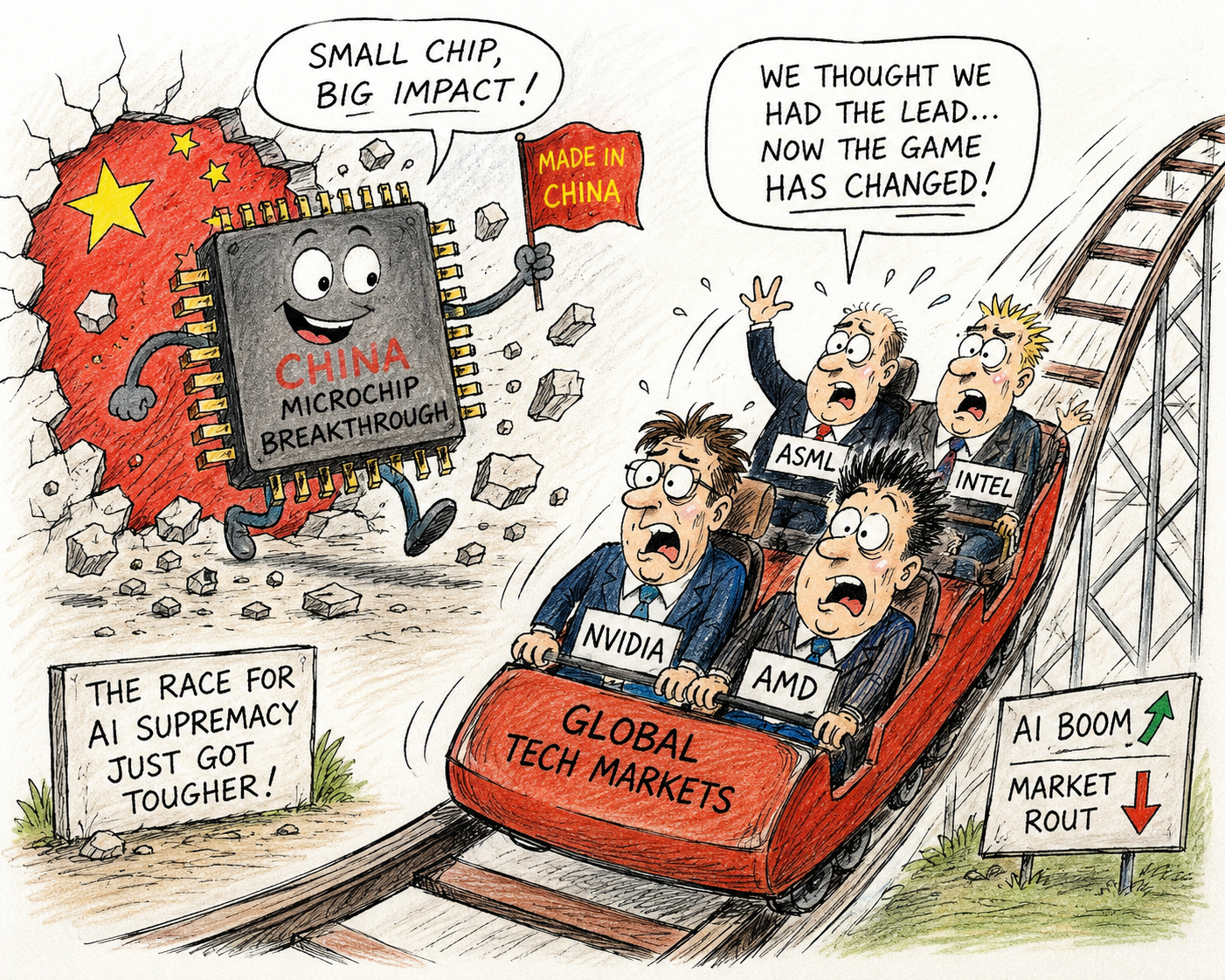
Money keeps flowing into artificial intelligence companies but out of AI stocks

In what seems like yet another case of mutual ‘back-scratching’, Microsoft and Nvidia are set to invest a combined $15 billion in Anthropic, with the OpenAI rival agreeing to purchase computing power from its two newest backers.

Lately, a large chunk of AI news feels like it boils down to: ‘Company X invests in Company Y, and Company Y turns around and buys from Company X’.

That’s not entirely correct or fair. There are plenty of advancements in the AI world that focus on actual development rather than investments. Google recently introduced the third version of Gemini, its AI model.

Anthropic’s valuation has surged to around $350 billion, propelled by a landmark $15 billion investment from Microsoft and Nvidia.

Anthropic, the AI start-up founded in 2021 by former OpenAI employees, has rapidly ascended into the ranks of the world’s most valuable companies, more than doubling its worth from $183 billion just a few months earlier.

A valuation of $350 billion for a company only 4 years old is astounding!

The deal reportedly sees Microsoft commit up to $5 billion and Nvidia up to $10 billion. Anthropic has agreed to purchase an extraordinary $30 billion in Azure compute capacity and additional infrastructure from Nvidia.

This strategic alliance is not merely financial; it signals a deliberate diversification of Microsoft’s AI ecosystem beyond its reliance on OpenAI. And Nvidia strengthens its dominance in AI hardware.

Anthropic’s valuation has reached $350 billion, following the massive $15 billion investment from Microsoft and Nvidia, which positions the company among the most valuable in the world.

This astronomical figure reflects both the scale of its partnerships — including $30 billion in Azure compute commitments and Nvidia’s cutting-edge hardware.

The valuation underscores both the intensity of the global AI race and the confidence investors place in Anthropic’s safety-conscious approach to artificial intelligence.

Yet, it also raises questions about whether such astronomical figures reflect genuine long-term value. Or is it the froth of an overheated market.

Hyperscalers keep pumping the money into AI but are they getting the justified returns yet? Probably not yet – but it will come in the future.

But by then, it will be time to upgrade the system as it develops and so more money will be pumped in

Pichai Warns of AI Bubble: Google Not Immune to Market Correction

AI Bubble caution

Google CEO Sundar Pichai has warned that no company, including his own, will be immune if the current AI bubble bursts.

He described the boom as both extraordinary and irrational, urging caution amid soaring valuations and investment hype

In a recent interview, Google’s chief executive Sundar Pichai offered a sobering perspective on the rapid expansion of artificial intelligence.

Profound Tech Creation

While he reportedly reaffirmed his belief that AI is ‘the most profound technology humanity has developed‘, he acknowledged growing concerns that the sector may be overheating.

According to Pichai, the surge in investment and valuations has created an atmosphere of exuberance that risks tipping into irrationality.

Pichai stressed that if the so-called AI bubble were to collapse, no company would escape unscathed. Even Google, one of the world’s most powerful technology firms, would feel the impact.

Remember Dot-Com?

He likened the current moment to past speculative cycles, such as the dot-com boom, where innovation was genuine, but market expectations outpaced reality.

Despite these warnings, Pichai emphasised that the long-term potential of AI remains intact.

He argued that professions across the board—from teaching to medicine—will continue to exist, but success will depend on how well individuals adapt to using AI tools.

In his view, the technology will reshape industries, but the hype surrounding short-term gains could distort investment flows and create instability.

His comments arrive at a time when Silicon Valley is grappling with questions about sustainability. Tech stocks have surged on AI optimism, yet analysts caution that inflated valuations may not reflect the true pace of adoption.

Pichai’s intervention serves as both a reality check and a reminder: AI is transformative, but it is not immune to market corrections.

For investors and innovators alike, the message is clear—embrace AI’s promise but prepare for turbulence if the bubble bursts.

Even AI Firms Voice Concern Over Bubble Fears

AI bubble

For some time now, talk of an ‘AI bubble‘ has largely come from investors and financial analysts. Now, strikingly, some of the loudest warnings are coming from inside the industry itself.

At the Web Summit in Lisbon, senior executives from companies such as DeepL and Picsart reportedly admitted they were uneasy about the soaring valuations attached to artificial intelligence ventures. Sam Altman of OpenAI has also sounded warnings of AI overvaluation.

DeepL’s chief executive Jarek Kutylowski reportedly described current market conditions as ‘pretty exaggerated’ and suggested that signs of a bubble are already visible.

Picsart’s Hovhannes Avoyan reportedly echoed the sentiment, criticising the way start‑ups are being valued despite having little or no revenue. He reportedly coined the phrase ‘vibe revenue’ to describe firms being backed on hype rather than substance.

These remarks highlight a paradox. On one hand, demand for AI services remains strong, with enterprises expected to increase adoption in 2026.

On the other, the financial side of the sector looks overheated. Investors such as Michael Burry have accused major cloud providers of overstating profits, while banks including Goldman Sachs and Morgan Stanley have warned of potential corrections.

The tension reflects a broader question: can the industry sustain its rapid expansion without a painful reset?

Venture capital forecasts suggest trillions will be poured into AI data centres over the next five years, yet some insiders argue that the scale of spending is unnecessary.

Even optimists concede that businesses are struggling to integrate AI effectively, meaning the promised returns may take longer to materialise.

For now, the AI sector stands at a crossroads. The technology’s transformative potential is undeniable, but the financial exuberance surrounding it may prove unsustainable.

If the warnings from within the industry are correct, the next chapter of the AI story could be less about innovation and more about value correction.

Private equity is increasingly burdened by ‘zombie companies’

Zombie Companies

Private equity is increasingly burdened by ‘zombie companies‘ – firms that neither grow nor collapse, but linger in portfolios, draining resources and blocking exits.

In recent years, private equity has faced a troubling phenomenon: the rise of the zombie company.

These are businesses that generate just enough cash to service their debt but fail to deliver meaningful growth or attract buyers, even at discounted valuations.

They remain trapped on balance sheets long after the intended investment horizon, creating a drag on both investors and the wider economy.

The roots of this problem lie in shifting market conditions. Rising interest rates have made debt-heavy buyouts harder to sustain, while a slowdown in dealmaking has reduced opportunities for profitable exits.

Offloading?

In the past, firms could rely on buoyant markets to offload underperforming assets, but today’s cautious buyers are unwilling to take on companies with weak fundamentals.

As noted by a financial educationalist, Oliver GOTTSCHALG – ‘the machine is stuck’ – private equity firms cannot recycle capital efficiently.

For investors, the implications are stark. Capital is locked in funds that cannot distribute returns, potentially undermining confidence in the asset class.

Some firms have resorted to continuation vehicles or fee-generating strategies to keep operations afloat, but these are stopgaps rather than solutions.

The longer companies remain in this half-alive state, the more they consume scarce managerial attention and financial resources.

The persistence of zombie companies also raises broader concerns. They tie up capital that could otherwise support innovation and growth, while their stagnation risks eroding trust in private equity’s promise of dynamic value creation.

Unless market conditions improve or restructuring strategies succeed, the industry may face a decade defined not by bold exits, but by portfolios haunted by the undead.

In short, zombie companies symbolise private equity’s struggle to adapt, neither thriving nor dying but stubbornly refusing to leave

Zombie companies in private equity trap capital, reducing liquidity and investor confidence, which indirectly pressures public markets—especially high‑valuation sectors like AI.

When private equity funds are clogged with underperforming assets, institutional investors face tighter cash flows and may rebalance away from riskier equities.

This creates capital shortages and amplifies volatility in growth stocks. AI firms, already under scrutiny for sky‑high valuations, are particularly vulnerable: investors pull back when liquidity is constrained, leading to sharper corrections.

Recent sell‑offs saw AI stocks lose over $820 billion in value as confidence faltered, reflecting how private equity stagnation can ripple into tech markets.

Beware the Zombie!

SoftBank exits Nvidia with $5.83 billion stake sale to fund AI ambitions

Softbank sells Nvidia stock

SoftBank Group has reportedly sold its entire holding of Nvidia shares, cashing in approximately $5.83 billion to fuel its expanding investments in artificial intelligence

The Japanese tech conglomerate offloaded 32.1 million shares in October 2025, marking a strategic pivot away from the chipmaker that once anchored its Vision Fund portfolio.

The sale coincided with SoftBank’s announcement of a ¥2.5 trillion net profit for the July–September 2025 quarter, buoyed by gains from both Nvidia and a partial divestment of its T-Mobile stake.

AI ventures

Founder, Masayoshi Son is now redirecting capital towards ambitious AI ventures, including the Stargate data centre project and robotics manufacturing in the U.S.

While SoftBank remains entangled with Nvidia’s ecosystem through its AI-linked ventures, this exit signals a broader monetisation strategy amid growing scrutiny over tech sector valuations.

The move underscores Son’s intent to reshape SoftBank as a dominant force in next-generation AI infrastructure.

Tesla’s $1 Trillion Bet on Elon Musk

$1 trillion Elon pay deal

In a move that has stunned financial analysts, corporate governance experts, and the broader public alike, Tesla Inc. has approved a record-breaking $1 trillion (£761 billion) compensation package for its CEO, Elon Musk.

In a landmark decision, Tesla shareholders have approved a staggering $1 trillion (£761 billion) compensation package for CEO Elon Musk, marking the largest executive pay deal in corporate history.

The vote, held at Tesla’s annual meeting in Austin, Texas, reportedly saw over 75% of investors back the plan, reaffirming their confidence in Musk’s leadership and long-term vision.

Share deal

The deal is entirely performance-based, with Musk eligible to receive up to 423 million Tesla shares if the company meets a series of ambitious milestones.

These include producing 20 million vehicles annually, deploying one million robotaxis and humanoid robots, and reaching a market valuation of $8.5 trillion.

Reportedly there is no salary or cash bonus—Musk’s payout depends solely on Tesla’s success.

Supporters argue the package aligns Musk’s incentives with shareholder interests, encouraging innovation and growth.

Critics, however, warn of governance risks and the unprecedented concentration of wealth and power.

Musk, already the world’s richest person, could become the first trillionaire if Tesla achieves its targets.

The vote signals Tesla’s intent to evolve beyond electric vehicles into a broader tech powerhouse, betting on AI, robotics, and autonomy—with Musk at the helm.

AI hype collides with economic reality, and signs suggest the mania may be slowing

AI momentum slowing

Artificial Intelligence: The Hype, The Hangover, and What Comes Next

For the past two years, artificial intelligence has dominated headlines, boardrooms, and investor portfolios.

From generative models that write poetry to chips that promise to revolutionise data processing, AI has been hailed as the engine of a new industrial age. But as 2025 unfolds, the sheen is beginning to dull.

Beneath the surface of record-breaking valuations and breathless media coverage, a more sobering narrative is taking shape: the AI boom may be running out of steam.

Slowing down

Recent market activity paints a cautionary tale. Despite strong earnings from AI stalwarts like Palantir and AMD, stock prices have faltered a little.

Palantir plunged nearly 8% after a blowout quarter, and even Nvidia—long considered the crown jewel of AI hardware—has seen pullbacks.

Analysts warn that Wall Street’s tunnel vision on AI is creating distortions, with capital flooding into a narrow set of companies while broader market fundamentals weaken.

One major concern is overcapacity in data centres. Billions have been poured into infrastructure to support AI workloads, but growth in consumer-facing applications—particularly chatbots and virtual assistants—appears to be plateauing.

Businesses are also grappling with the reality that integrating AI into operations is far more complex than anticipated. From regulatory hurdles to ethical dilemmas, the promise of seamless automation is proving elusive.

Bubble?

The spectre of an ‘AI bubble‘ looms large. Comparisons to the dot-com crash are no longer whispered—they’re openly debated by investors and tech executives alike.

While AI is undoubtedly transformative, the pace of investment may be outstripping the technology’s current utility. As OpenAI’s CEO Sam Altman noted, ‘When bubbles happen, smart people get overexcited about a kernel of truth’.

That kernel remains potent. AI will continue to reshape industries, but the narrative is shifting from euphoric disruption to measured integration. The mania is not over—but it’s maturing.

Investors, developers, and policymakers must now navigate a more nuanced landscape, where realism replaces hype, and long-term value trumps short-term spectacle.

In short, the AI revolution isn’t collapsing—it’s sobering up. And that may be the best thing for its future.

AI optimism fuels October’s stock surge, with tech leading the charge

AI driven stock market

October 2025 saw a notable upswing in global equity markets, with artificial intelligence (AI) emerging as a key driver of investor enthusiasm.

In the United States, major indices closed the month firmly in the green, buoyed by strong third-quarter earnings and renewed confidence in AI’s transformative potential.

Tech giants such as Nvidia, Amazon, and Palantir posted robust results, reinforcing the narrative that AI is not just hype—it’s reshaping business fundamentals.

Nvidia’s leadership in AI chips and Amazon’s expanding AI-driven logistics were particularly well received, while Palantir’s government contracts underscored AI’s strategic reach.

The Federal Reserve’s decision to cut interest rates by 0.25% added further momentum, making growth stocks more attractive and amplifying the rally in AI-heavy portfolios.

Analysts noted that investor sentiment was bolstered by easing trade tensions and a cooling inflation outlook, but it was AI’s ‘secular tailwind of extreme innovation’ that truly captured market imagination.

While some caution that valuations may be running hot, the October 2025 rally suggests that AI is now central to market dynamics. A pullback is likely soon.

As 2025 draws to a close, investors are watching closely to see whether the optimism translates into durable gains—or signals the start of an AI bubble.

Google Goes Nuclear: Part 1 Powering the AI Revolution with Atomic Energy

Google nuclear power ambitions

In a bold move that signals the escalating energy demands of artificial intelligence, Google has announced plans to invest heavily in nuclear power to fuel its data centres.

As AI models grow more complex and compute-intensive, the tech giant is turning to atomic energy as a stable, carbon-free solution to meet its insatiable appetite for electricity.

The shift comes amid mounting scrutiny over the environmental impact of AI. Training large language models and running real-time inference across billions of queries requires vast amounts of energy—often sourced from fossil fuels.

Google’s pivot to nuclear is both a strategic and symbolic gesture: a commitment to sustainability, but also a recognition that the AI era demands a fundamentally different energy paradigm.

SMR’s

At the heart of this initiative is Google’s partnership with advanced nuclear startups exploring small modular reactors (SMRs) and next-generation fission technologies.

Unlike traditional nuclear plants, SMRs are designed to be safer, more scalable, and quicker to deploy—making them ideal for powering decentralised data infrastructure.

Google’s goal is to integrate these reactors directly into its cloud and AI campuses, creating a closed-loop ecosystem where clean energy powers the very machines shaping the future.

Critics, however, warn of the risks. Nuclear waste, regulatory hurdles, and public perception remain significant barriers.

Some environmentalists argue that the urgency of the climate crisis demands faster, more proven solutions like solar and wind. Yet others see nuclear as a necessary complement—especially as AI accelerates demand beyond what renewables alone can supply.

This isn’t Google’s first foray into atomic ambition. In 2022, it backed nuclear fusion research through its DeepMind subsidiary, applying AI to optimise plasma control.

Now, with fission in focus, the company appears determined to lead not just in AI innovation, but in the infrastructure that sustains it.

The implications are profound. If successful, Google’s nuclear strategy could set a precedent for the entire tech industry, reshaping how data is powered in the 21st century.

It also raises deeper questions: Can the tools of the future be truly sustainable? And what does it mean when the intelligence we build begins to reshape the energy systems that built us?

One thing is clear—AI isn’t just changing how we think. It’s changing what we power, and how we power it.

Which of the AI bubble indicators are we already seeing? Should we be concerned?

Bubble in AI

We’re already seeing multiple classic bubble indicators: extreme valuations (Buffett Indicator, Shiller CAPE), record retail participation, AI-driven hype, and surging margin debt—all pointing to elevated risk.

Key Bubble Indicators Already Present

📈 Buffett Indicator (Market Cap to GDP) This ratio is at historically high levels, suggesting stocks are significantly overvalued relative to the economy. Warren Buffett himself has warned investors may be “playing with fire”.

📊 Shiller CAPE Ratio Another respected valuation metric, the cyclically adjusted price-to-earnings ratio, is also elevated—indicating unsustainable earnings multiples and potential for correction.

🧠 AI-driven speculation The rally is heavily concentrated in AI and tech stocks, with some analysts calling it a “toxic calm” before a crash. Search volume for ‘AI bubble‘ is at record highs, and billionaire Paul Tudor Jones has issued warnings.

📉 Retail investor frenzy A record 62% of Americans now own stocks, with $51 trillion at stake. This surge in retail participation is reminiscent of past bubbles, where optimism outpaces caution.

📌 New market highs The Nasdaq, S&P 500, and Dow have hit dozens of new highs in recent months. While bullish on the surface, this pace of gains often precedes sharp reversals.

💸 Margin debt and risk appetite Risk-taking is accelerating, with margin debt climbing and speculative behavior increasing. Analysts note this as a historically bad sign when paired with euphoric sentiment.

What’s Not Yet Peaking (But Worth Watching)

IPO and SPAC volume: While not at 2021 levels, any surge here could signal speculative excess.

Corporate earnings vs. valuations: Some firms still show strong earnings, but the disconnect is widening.

Narrative dominance: AI optimism is strong, but hasn’t fully eclipsed fundamentals—yet.

How far away are we from the AI bubble popping?

Will it deflate slowly or burst?

Cathie Wood Warns of AI Market Top-Heavy Risks Amid Strategic Portfolio Shifts

AI stock warning

Cathie Wood, CEO of ARK Invest, has once again stirred debate in financial circles by cautioning that the artificial intelligence (AI) sector may be growing top-heavy.

While she remains bullish on the long-term potential of AI technologies, Wood has signalled concern over the concentration of capital in a handful of dominant players—particularly those driving the S&P 500’s recent surge.

Speaking during a recent investor forum in Saudi Arabia, Wood dismissed fears of an outright AI bubble but acknowledged the risk of valuation corrections as interest rates climb and market exuberance outpaces fundamentals.

Her remarks come as ARK Invest continues to rebalance its portfolio, trimming exposure to overvalued tech giants while increasing stakes in emerging AI innovators such as Baidu and Robinhood.

Wood’s flagship ARK Innovation ETF (ARKK) has rebounded sharply in 2025, up over 87% year-on-year, largely fuelled by AI-related holdings.

Yet she reportedly remains wary of the ‘Mag 7’ effect—where a small cluster of mega-cap stocks like Nvidia, Microsoft, and Alphabet dominate investor attention and index weightings.

Strategy

This concentration, she argues, distorts broader market signals and risks sidelining promising mid-cap disruptors.

In response, ARK has shed positions in AMD and Shopify while doubling down on Baidu, a move that reflects Wood’s belief in underappreciated AI plays beyond Silicon Valley.

Her strategy underscores a broader thesis: that the next wave of AI growth will come from decentralised platforms, edge computing, and global innovators—not just the usual suspects.

While critics remain divided on her timing and tactics, Wood’s portfolio adjustments suggest a nuanced approach—one that embraces AI’s transformative power while resisting the gravitational pull of overhyped valuations.

For investors watching the sector’s evolution, her message is clear: beware the weight of giants.

Amazon’s AI Pivot Triggers Historic Layoffs Amid AI Productivity Drive

Amazon cutting workers to introduce more AI

Amazon has reportedly announced its largest corporate restructuring to date, with plans to lay off up to 30,000 white-collar employees.

This represents nearly 10% of its global office workforce—as it accelerates its transition toward artificial intelligence and automation-led operations.

The move, confirmed on 28th October 2025, marks a dramatic shift in the tech giant’s internal priorities.

CEO Andy Jassy has framed the layoffs as part of a broader effort to streamline management. The company appears to want to eliminate bureaucratic inefficiencies and reallocate resources toward AI infrastructure.

‘We will need fewer people doing some of the jobs that are being done today, and more people doing other types of jobs’, Jassy is reported as saying.

Affected departments span human resources, logistics, customer service, and Amazon Web Services (AWS). Many roles are deemed redundant due to AI integration.

Heavy investment

The company has been investing heavily in machine learning systems. These are capable of handling tasks ranging from inventory forecasting to customer support. This approach has prompted the reevaluation of traditional staffing models.

While Amazon employs over 1.5 million people globally, the layoffs target its 350,000 corporate staff, signalling a significant recalibration of its white-collar operations.

It was reported that the job cuts were delivered via email, underscoring the impersonal nature of the transition.

The timing of the announcement—just ahead of the holiday season—has raised eyebrows across the industry.

Analysts suggest Amazon is betting on AI to offset seasonal labour demands and long-term cost pressures. However, this risks reputational fallout and internal morale issues.

Structural challenges

Critics argue that the scale of the layoffs reflects deeper structural challenges, including overhiring during the pandemic and a growing reliance on technology to solve human-centred problems.

Others see it as a bellwether for the wider tech sector, where AI is increasingly viewed as both a productivity boon and a disruptive force.

As Amazon reshapes its workforce for an AI-driven future, questions remain about the social and ethical implications of such rapid automation.

For now, the company appears resolute: leaner, faster, and more algorithmically efficient—even if it means leaving tens of thousands behind in the process.

But, AI is also creating job opportunities in other areas.

Stock market roundup of latest all-time highs! October 2025

Stocks hit all-time high

Scaling the Summit: Markets Hit Record Highs Amid Global Uncertainty led by the Nasdaq and S&P 500 reflecting the AI race

Global stock hit new highs October 2025

🌍 Country📈 Index Name🗓️ Date🔝 Closing Value
🇺🇸 United StatesS&P 500Oct 276,875.16
🇺🇸 United StatesDow JonesOct 2747,544.59
🇺🇸 United StatesNasdaq CompositeOct 2723,637.46
🇬🇧 United KingdomFTSE 100Oct 249,662.00
🇳🇱 NetherlandsAEX IndexOct 28966.82
🇮🇳 IndiaNifty 50Oct 2825,966
🇮🇳 IndiaSensexOct 2884,778.84
🇯🇵 JapanNikkei 225Oct 2850,342.25
🇯🇵 JapanTOPIXOct 283,285.87

These rallies were largely fueled by optimism over a potential U.S.–China trade deal, cooler inflation data, and expectations of interest rate cuts from the Fed.

Is there a market crash, correction or a pullback coming to a stock market near you soon?

Nikkei 225 Breaks 50,000: A Milestone Fueled by Tech Trade and Policy Optimism

Nikkei at new all-time high!

Japan’s benchmark Nikkei 225 index surged past the 50,000 mark for the first time in history, marking a symbolic milestone for Asia’s second-largest economy.

The rally reflects a potent mix of domestic resilience, global investor appetite, and strategic policy shifts that have redefined Japan’s market narrative.

The breakthrough comes amid renewed optimism surrounding U.S.-China trade negotiations, with President Trump signalling progress ahead of a key meeting with Japan’s Sanae Takaichi.

Investors are betting on a thaw in geopolitical tensions, which could unlock export growth for Japan’s tech-heavy industrial base.

Driving the rally are heavyweight stocks in semiconductors, robotics, and AI infrastructure—sectors buoyed by global demand and Japan’s push to become a regional data hub.

Nikkei 225 Index at new history high above 50,000

Companies like Tokyo Electron and SoftBank have seen double-digit gains, fuelled by bullish earnings and strategic pivots toward AI and automation.

Domestically, the Bank of Japan’s continued accommodative stance has kept borrowing costs low, while corporate governance reforms have attracted foreign capital.

The weaker yen has also boosted exporters, making Japanese goods more competitive abroad.

Symbolically, the 50,000 threshold represents more than just market exuberance—it’s a vote of confidence in Japan’s ability to adapt, innovate, and lead in a shifting global landscape.

While risks remain—from demographic headwinds to geopolitical flashpoints—the Nikkei’s ascent signals a new era of investor engagement with Japan’s evolving economic story.

Has the S&P 500 Become an AI Index?

S&P 500 becoming an AI index

In recent months, the S&P 500 has shown signs of evolving from a broad economic barometer into something far more concentrated: a proxy for artificial intelligence optimism.

While traditionally viewed as a diversified snapshot of American corporate health, the index’s current composition and market behaviour suggest it’s increasingly tethered to the fortunes of a handful of AI-driven giants.

At the heart of this transformation is the dominance of mega-cap tech firms. Microsoft, Nvidia, Alphabet, Amazon, Meta, and Apple now account for a disproportionate share of the index’s total market capitalisation.

As of late 2025 that heady combination of AI led tech represents just over 30% of the S&P 500.

AI in S&P 500
Six AI related companies represent 30% of the S&P 500

These companies aren’t merely adjacent to AI—they’re building its infrastructure, shaping its software ecosystems, and embedding it into consumer and enterprise products.

Nvidia, for instance, has become synonymous with AI hardware, its valuation soaring on the back of demand for high-performance chips powering generative models and data centres.

Recent analysis reveals that roughly 8% of the S&P 500’s weight is directly tied to AI-related revenue.

An additional 25 companies within the index are actively developing AI technologies, even if those efforts haven’t yet translated into standalone revenue streams. This includes sectors as varied as autonomous vehicles, quantum computing, and predictive analytics.

Investor behaviour has only amplified this shift. The index’s recent rally has been fuelled largely by enthusiasm for AI breakthroughs, with capital flowing into stocks perceived as future beneficiaries of machine learning and automation.

This momentum has led some analysts to warn of valuation bubbles, urging diversification away from AI-heavy names in case of a sector-wide correction.

Narrower narrative

Symbolically, the S&P 500’s identity is shifting. Once a mirror of industrial and consumer strength, it now reflects a narrower narrative—one of technological acceleration and speculative belief in artificial intelligence.

This raises philosophical questions about what the index truly represents: is it still a measure of economic breadth, or has it become a momentum gauge for a single transformative theme?

For editorial observers, this evolution offers fertile ground. The index’s transformation can be read not just as a financial trend, but as a cultural signal—suggesting that AI is no longer a niche innovation, but the dominant lens through which investors, executives, and policymakers interpret the future.

Whether this concentration proves visionary or vulnerable remains to be seen.

But one thing is clear: the S&P 500 is no longer just a mirror of the American economy—it’s increasingly a reflection of our collective bet on intelligent machines.

30% of S&P 500

As of 2025, Microsoft, Nvidia, Alphabet, Amazon, Meta, and Apple—often grouped as part of the ‘Magnificent Seven’—collectively represent approximately 30% of the S&P 500’s total market capitalisation.

That’s a staggering concentration for just six companies in an index meant to reflect the broader U.S. economy.

For context, their combined performance was responsible for roughly two-thirds of the S&P 500’s total gains in 2024—a clear signal that the index’s movement is increasingly tethered to the fortunes of a few dominant tech giants.

Nick Clegg’s AI Correction Prophecy: The Return of the Technocratic Tourist

AI commentator?

After years in Silicon Valley’s policy sanctum, Nick Clegg has re-emerged on British soil with a warning: the AI sector is overheating.

The man who once fronted a coalition government, then pivoted to Meta’s global affairs desk, now cautions that the ‘absolute spasm’ of AI deal-making may be headed for a correction.

Is this his opinion or just borrowed from other commentators. I, for one, am not interested in what he has to say. I did once, but not anymore.

It’s a curious homecoming. Clegg left UK politics after his party was electorally eviscerated, only to rebrand himself as a transatlantic tech ‘diplomat’ or tech tourist.

Now, with the AI hype cycle in full swing, he returns not as a policymaker, but as a prophet of moderation—urging restraint in a sector he arguably helped legitimise from within.

His critique isn’t wrong. Valuations are frothy. Infrastructure costs are staggering. And the promise of artificial superintelligence remains more theological than technical. But Clegg’s timing invites scrutiny.

Is this a genuine call for realism, or a reputational hedge from someone who’s seen the inside of the machine?

There’s a deeper irony here: the same political class that once championed deregulation and digital optimism now warns of runaway tech. The same voices that embraced disruption now plead for caution.

It’s less a reversal than a ritual—an elite rite of return, where credibility is reasserted through critique.

Clegg’s message may be sound. But in a landscape saturated with recycled authority, the messenger matters.

And for many, his reappearance feels less like a reckoning and more like déjà vu in a different suit.

Please don’t open your case.

TSMC’s Profit Soars 39% Amid AI Chip Boom!

Chip factory

Taiwan Semiconductor Manufacturing Company (TSMC) has posted a record-breaking 39% surge in third-quarter profit, underscoring its pivotal role in the global AI revolution.

The world’s largest contract chipmaker reported net income of NT$452.3 billion (£11.4 billion), far exceeding analyst expectations and marking a new high for the company.

Revenue climbed 30.3% year-on-year to NT$989.92 billion, driven by insatiable demand for high-performance chips powering artificial intelligence applications.

Tech giants including Nvidia, OpenAI, and Oracle have ramped up orders for TSMC’s cutting-edge processors, fuelling the company’s meteoric rise.

TSMC’s CEO, C.C. Wei, reportedly attributed the growth to ‘unprecedented investment in AI infrastructure’, noting that the company’s advanced nodes are now central to training large language models and deploying generative AI tools.

Despite global economic headwinds and ongoing trade tensions, TSMC’s strategic expansion—including a $165 billion global buildout across Arizona, Europe, and Japan—is positioning it as the backbone of next-gen computing.

The results also reflect a broader shift in the semiconductor landscape. As traditional consumer electronics plateau, AI-driven demand is reshaping supply chains and investment priorities.

Analysts suggest that AI chip spending could surpass $1 trillion in the coming years, with TSMC poised to capture a significant share.

For investors and industry observers, the message is clear: AI isn’t just a trend—it’s a fundamental shift. And TSMC, with its unparalleled fabrication expertise and global influence, is quietly shaping the future.

As the AI arms race accelerates, TSMC’s performance offers a glimpse into the future of tech: one where silicon, not software, defines the frontier.

The company’s latest earnings are not just a financial milestone—they’re a signal of where innovation is headed next.

Oracle Cloud reportedly to deploy 50,000 AMD AI chips, signalling direct competition with Nvidia

Oracle Cloud AI

Oracle Bets Big on AMD AI Chips, Challenging Nvidia’s Dominance

Oracle Cloud Infrastructure has announced plans to deploy 50,000 AMD Instinct MI450 graphics processors starting in the second half of 2026, marking a bold strategic shift in the AI hardware landscape.

The move signals a direct challenge to Nvidia’s long-standing dominance in the data centre GPU market, where it currently commands over 90% market share.

AMD’s MI450 chips, unveiled earlier this year, are designed for high-performance AI workloads and can be assembled into rack-sized systems that allow 72 chips to function as a unified engine.

This architecture is tailored for inferencing tasks—an area Oracle believes AMD will excel in. ‘We feel like customers are going to take up AMD very, very well’, reportedly said Karan Batta, Oracle Cloud’s senior vice president.

The announcement comes amid a broader realignment in the AI ecosystem. OpenAI, historically reliant on Nvidia hardware, has recently inked a multi-year deal with AMD involving processors requiring up to 6 gigawatts of power.

If successful, OpenAI could acquire up to 10% of AMD’s shares, further cementing the chipmaker’s role in next-generation AI infrastructure.

Oracle’s pivot also reflects its ambition to compete with cloud giants like Microsoft, Amazon, and Google. With a reported five-year cloud deal with OpenAI potentially worth $300 billion, Oracle is positioning itself not just as a capacity provider but as a strategic AI enabler.

While Nvidia remains a formidable force, Oracle’s investment in AMD chips underscores a growing appetite for alternatives.

As AI demands scale, diversity in chip supply could become a competitive advantage—especially for enterprises seeking flexibility, cost efficiency, and innovation beyond the Nvidia ecosystem.

The AI arms race is far from over, but Oracle’s latest move suggests it’s no longer content to play catch-up. It’s aiming to redefine the rules.

Markets on a Hair Trigger: Trump’s Tariff Whiplash and the AI Bubble That Won’t Pop

Markets move as Trump tweets

U.S. stock markets are behaving like a mood ring in a thunderstorm—volatile, reactive, and oddly sentimental.

One moment, President Trump threatens a ‘massive increase’ in tariffs on Chinese imports, and nearly $2 trillion in market value evaporates.

The next, he posts that: ‘all will be fine‘, and futures rebound overnight. It’s not just policy—it’s theatre, and Wall Street is watching every act with bated breath.

This hypersensitivity isn’t new, but it’s been amplified by the precarious state of global trade and the towering expectations placed on artificial intelligence.

Trump’s recent comments about China’s rare earth export controls triggered a sell-off that saw the Nasdaq drop 3.6% and the S&P 500 fall 2.7%—the worst single-day performance since April.

Tech stocks, especially those reliant on semiconductors and AI infrastructure, were hit hardest. Nvidia alone lost nearly 5%.

Why so fickle? Because the market’s current rally is built on a foundation of hope and hype. AI has been the engine driving valuations to record highs, with companies like OpenAI and Anthropic reaching eye-watering valuations despite uncertain profitability.

The IMF and Bank of England have both warned that we may be in stage three of a classic bubble cycle6. Circular investment deals—where AI startups use funding to buy chips from their investors—have raised eyebrows and comparisons to the dot-com era.

Yet, the bubble hasn’t burst. Not yet. The ‘Buffett Indicator‘ sits at a historic 220%, and the S&P 500 trades at 188% of U.S. GDP. These are not numbers grounded in sober fundamentals—they’re fuelled by speculative fervour and a fear of missing out (FOMO).

But unlike the dot-com crash, today’s AI surge is backed by real infrastructure: data centres, chip fabrication, and enterprise adoption. Whether that’s enough to justify the valuations remains to be seen.

In the meantime, markets remain twitchy. Trump’s tariff threats are more than political posturing—they’re economic tremors that ripple through supply chains and investor sentiment.

And with AI valuations stretched to breaking point, even a modest correction could trigger a cascade.

So yes, the market is fickle. But it’s not irrational—it’s just balancing on a knife’s edge between technological optimism and geopolitical anxiety.

One tweet can tip the scales.

Fickle!

China’s rare Earth clampdown continues to send shockwaves through global markets

Rare Earth Materials

China’s latest tightening of rare earth exports has reignited global concerns over supply chain fragility and strategic resource dependence.

With Beijing now requiring special permits for the export of key rare earth elements—used in everything from electric vehicles to missile guidance systems—the move is widely seen as a geopolitical lever in an increasingly fractured global trade landscape.

Rare earths, despite their name, are not scarce—but China controls over 60% of global production and an even larger share of refining capacity. The new restrictions, framed as national security measures, have already begun to ripple through equity markets.

Shares of Western mining firms such as Albemarle and MP Materials surged on the news, as investors bet on alternative sources gaining traction. Meanwhile, defence and tech stocks in Europe dipped, reflecting fears of supply bottlenecks and rising input costs1.

This isn’t China’s first foray into rare earth brinkmanship. Similar curbs in 2010 triggered a scramble for diversification, but progress has been slow.

The current squeeze coincides with rising tensions over semiconductor access and military technology, suggesting a broader strategy of resource weaponisation.

For investors, the message is clear: rare earths are no longer just a niche commodity—they’re a geopolitical flashpoint. Expect increased volatility in sectors reliant on high-performance magnets, batteries, and advanced optics.

Countries like the US, Australia, and Canada are accelerating domestic mining initiatives, but scaling up remains a long-term play.

In the short term, China’s grip on rare earths is tightening—and markets are reacting accordingly.

As the global economy pivots toward electrification and AI-driven infrastructure, the battle over these elemental building blocks is only just beginning. The stocks may rise and fall, but the strategic stakes are climbing ever higher.

China’s sweeping export restrictions on rare earths have triggered a sharp rally in related stocks, especially among U.S.-based producers and processors.

The market is interpreting Beijing’s move as both a supply threat and a strategic opportunity for non-Chinese firms to gain ground.

📈 Some companies in the spotlight

  • USA Rare Earth surged nearly 15% in a single day and is up 94% over the past five weeks, buoyed by speculation of a potential U.S. government investment and its vertically integrated magnet production pipeline.
  • NioCorp Developments, Ramaco Resources, and Energy Fuels all posted gains of approximately between 9–12%.
  • MP Materials, the largest U.S. rare earth miner, rose over 6% following news of tighter Chinese controls. The company recently secured a strategic equity deal with the U.S. Department of Defence.
  • Albemarle, Lithium Americas, and Trilogy Metals also saw modest gains, reflecting broader investor interest in critical mineral plays.
Company / SectorStock MovementStrategic Note
MP Materials (US)↑ +6%DoD-backed, key US supplier
USA Rare Earth↑ +15%Magnet pipeline, gov’t investment buzz
NioCorp / Ramaco / Energy Fuels↑ +9–12%Domestic mining surge
European Defence Stocks↓ 2–4%Supply chain fears
Chinese Magnet Producers↔ / ↓Export permit uncertainty

China’s new rules, effective December 1st, require export licences for any product containing more than 0.1% rare earths or using Chinese refining or magnet recycling tech. This has intensified scrutiny on global supply chains and elevated the strategic value of domestic alternatives.

🧭 Investor sentiment is shifting toward companies that can offer secure, non-Chinese sources of rare earths—especially those with downstream capabilities like magnet manufacturing. The rally suggests markets are pricing in long-term geopolitical risk and potential government backing.

Weekend update

Is President Trump in control of the stock market? A comment on TruthSocial suggesting that more China tariffs might be introduced in response to China’s restrictions on rare earth materials reportedly wipes out around $2 trillion from U.S. stocks.

Then it reverses as Trump says, ‘All will be fine’. Stocks climb back up. What’s going on?

It’s just a game.

But who is the game master?

AI Crash! Correction or pullback? Something is coming…

AI Bubble concerns

Influential figures and institutions are sounding the AI alarm—or at least raising eyebrows—about the frothy valuations and speculative fervour surrounding artificial intelligence.

Who’s Warning About the AI Bubble?

🏛️ Bank of England – Financial Policy Committee

  • View: Stark warning.
  • Quote: “The risk of a sharp market correction has increased.”
  • Why it matters: The BoE compares current AI stock valuations to the dotcom bubble, noting that the top five S&P 500 firms now command nearly 30% of market cap—the highest concentration in 50 years.

🏦 Jerome Powell – Chair, U.S. Federal Reserve

  • View: Cautiously sceptical.
  • Quote: Assets are “fairly highly valued.”
  • Why it matters: While not naming AI directly, Powell’s remarks echo broader concerns about tech valuations and investor exuberance.

🧮 Lisa Shalett – Chief Investment Officer, Morgan Stanley Wealth Management

  • View: Deeply concerned.
  • Quote: “This is not going to be pretty” if AI capital expenditure disappoints.
  • Why it matters: Shalett warns that 75% of S&P 500 returns are tied to AI hype, likening the moment to the “Cisco cliff” of the early 2000s.

🌍 Kristalina Georgieva – Managing Director, IMF

  • View: Watchful.
  • Quote: Financial conditions could “turn abruptly.”
  • Why it matters: Georgieva highlights the fragility of markets despite AI’s productivity promise, warning of sudden sentiment shifts.

🧨 Sam Altman – CEO, OpenAI

  • View: Self-aware caution.
  • Quote: “People will overinvest and lose money.”
  • Why it matters: Altman’s admission from inside the AI gold rush adds credibility to bubble concerns—even as his company fuels the hype.

📦 Jeff Bezos – Founder, Amazon

  • View: Bubble-aware.
  • Quote: Described the current environment as “kind of an industrial bubble.”
  • Why it matters: Bezos sees parallels with past tech manias, suggesting that infrastructure spending may be overextended.

🧠 Adam Slater – Lead Economist, Oxford Economics

  • View: Analytical.
  • Quote: “There are a few potential symptoms of a bubble.”
  • Why it matters: Slater points to stretched valuations and extreme optimism, noting that productivity projections vary wildly.

🏛️ Goldman Sachs – Investment Strategy Division

  • View: Cautiously optimistic.
  • Quote: “A bubble has not yet formed,” but investors should “diversify.”
  • Why it matters: Goldman acknowledges the risks while maintaining that fundamentals may still justify valuations—though they advise caution.
AI Bubble voices infographic October 2025

🧠 Julius Černiauskas and the Oxylabs AI/ML Advisory Board

🔍 View: The AI hype is nearing its peak—and may soon deflate.

  • Černiauskas warns that AI development is straining environmental resources and public trust. He’s pushing for responsible and sustainable AI practices, noting that transparency is lacking in how many models operate.
  • Ali Chaudhry, research fellow at UCL and founder of ResearchPal, adds that scaling laws are showing their limits. He predicts diminishing returns from simply making models bigger, and expects tightened regulations around generative AI in 2025.
  • Adi Andrei, cofounder of Technosophics, goes further: he believes the Gen AI bubble is on the verge of bursting, citing overinvestment and unmet expectations

🧠 Jamie Dimon on the AI Bubble

🔥 View: Sharply concerned—more than most as widely reported

  • Quote: “I’m far more worried than others about the prospects of a downturn.”
  • Context: Dimon believes AI stock valuations are “stretched” and compares the current surge to the dotcom bubble of the late 1990s.

📉 Key Warnings from Dimon

  • “Sharp correction” risk: He sees a real danger of a sudden market pullback, especially given how AI-related stocks have surged disproportionately—like AMD jumping 24% in a single day after an OpenAI deal.
  • “Most people involved won’t do well”: Dimon told the BBC that while AI will ultimately pay off—like cars and TVs did—many investors will lose money along the way.
  • “Governments are distracted”: He criticised policymakers for focusing on crypto and ignoring real security threats, saying: “We should be stockpiling bullets, guns and bombs”.
  • AI will disrupt jobs and companies”: At a trade event in Dublin, he warned that AI’s ubiquity will shake up industries and employment across the board.

And so…

The AI boom of 2025 has ignited a speculative frenzy across global markets, with tech stocks soaring and investors piling into anything labelled “AI-adjacent.”

But beneath the euphoria, a chorus of high-profile warnings is growing louder. From the Bank of England and IMF to JPMorgan’s Jamie Dimon and OpenAI’s Sam Altman, concerns are mounting that valuations are dangerously stretched, capital is overconcentrated, and the narrative is outpacing reality.

Dimon likens the moment to the dotcom bubble, while Altman admits many will “lose money” chasing the hype. Analysts point to classic bubble signals: retail mania, corporate FOMO, and earnings divorced from fundamentals.

Even as AI’s long-term utility remains promising, the short-term exuberance may be setting the stage for a sharp correction.

Whether it’s a pullback or a full-blown crash, the mood is shifting—from uncritical optimism to wary anticipation.

The question now is not whether AI will change the world, but whether markets have priced in too much, too soon.

We have been warned!

The AI bubble will pop – it’s just a matter of when and not if.

Go lock up your investments!

Nikkei hit another new all-time high!

Nikkei 225 hits new high!

Japan’s Nikkei 225 hit another record high on October 7th 2025 for the second consecutive session. Intraday trading saw the Nikkei rip through 40,500.

The rally was driven by a tech-fueled surge, especially after a landmark deal between OpenAI and AMD sent shockwaves through global markets.

Nikkei 225 one-day chart 7th October 2025

AMD’s stock soared nearly 24%, challenging Nvidia’s dominance and lifting chip-related stocks in Tokyo like Advantest, Tokyo Electron, and Renesas Electronics.

The backdrop’s fascinating too: this optimism comes amid political upheaval in Japan, with Sanae Takaichi’s recent rise to LDP leadership sparking hopes of fresh fiscal stimulus.

However, on a cautionary note: Japan’s bond market is flashing warning signs—yields are spiking to levels not seen since 2008

Is the resilient stock market keeping the U.S. economy out of a recession and if so – is that a bad thing?

U.S. recession looming?

The Resilient Stock Market: A Double-Edged Shield Against Recession

In a year marked by political volatility, Trumps tariff war, soft labour data, and persistent inflation anxieties, one pillar of the economy has stood tall: the stock market.

Defying expectations, major indices like the Nasdaq, Dow Jones and S&P 500 have surged, buoyed by AI-driven optimism and industrial strength. This resilience has helped stave off a technical recession—but not without raising deeper concerns about economic fragility and inequality.

At the heart of this phenomenon lies the ‘wealth effect’. As equity portfolios swell, high-net-worth households feel richer and spend more freely.

This consumer activity props up GDP figures and masks underlying weaknesses in wage growth, job creation, and productivity.

August’s economic data showed surprising strength in consumer spending and housing, despite lacklustre employment figures and fading stimulus support.

But here’s the rub: this buoyancy is not broadly shared. According to the University of Michigan’s sentiment index, confidence has declined sharply since January, especially among those without significant stock holdings.

Balance

The U.S. economy, in effect, is being held aloft by a narrow slice of the population—those with the means to benefit from rising asset prices. For everyone else, the recovery feels distant, even illusory.

This divergence creates a dangerous illusion of stability. Policymakers may hesitate to intervene—whether through fiscal support or monetary easing—because headline indicators look healthy. Yet beneath the surface, vulnerabilities abound.

If the market were to correct sharply, the spending it fuels could evaporate overnight, exposing the economy’s dependence on asset inflation.

Moreover, the market’s resilience may be distorting capital allocation. Companies flush with investor cash are prioritising stock buybacks and speculative ventures over wage growth or long-term investment. This can exacerbate inequality and erode the foundations of sustainable growth.

In short, while the stock market’s strength has delayed a recession, it has also deepened the disconnect between Wall Street and Main Street.

The danger lies not in the market’s success, but in mistaking it for economic health. A resilient market may be a shield—but it’s not a cure. And if that shield cracks, the consequences could be swift and severe.

The challenge now is to look beyond the indices and ask harder questions: Who is benefitting? What are we neglecting?

And how do we build an economy that’s resilient not just in numbers, but in substance, regardless of nation.

Claude Sonnet 4.5: Anthropic’s Leap Toward Autonomous Intelligence

Anthropic AI Claude

Anthropic has unveiled Claude Sonnet 4.5, its most advanced AI model to date—described by the company as ‘the best coding model in the world’.

Released in September 2025, Sonnet 4.5 marks a significant evolution in agentic capability, safety alignment, and real-world task execution.

Designed to power Claude Code and enterprise-grade AI agents, Sonnet 4.5 excels in long-context coding, autonomous software development, and complex business workflows.

Benchmark

In benchmark trials, the model reportedly sustained 30+ hours of uninterrupted coding, outperforming its predecessor Opus 4.1 and rival systems like GPT-5 and Gemini 2.52.

Anthropic’s emphasis on safety is equally notable. Sonnet 4.5 underwent extensive alignment training to reduce sycophancy, deception, and prompt injection vulnerabilities.

It now operates under Anthropic’s AI Safety Level 3 framework, with filters guarding against misuse in sensitive domains such as chemical or biological research.

New features include ‘checkpoints’ for code rollback, file creation within chat (spreadsheets, slides, documents), and a refreshed terminal interface.

Developers can now build custom agents using the Claude Agent SDK, extending the model’s reach into autonomous task orchestration4.

Anthropic’s positioning is clear: Claude Sonnet 4.5 is not merely a chatbot—it’s a colleague. With pricing held at $3 per million input tokens and $15 per million output tokens, the model is accessible yet formidable.

As AI enters its ‘super cycle’, Claude Sonnet 4.5 signals a shift from conversational novelty to operational necessity.

Whether this heralds a renaissance or a reckoning remains to be seen—but for now, Anthropic’s latest release sets a new benchmark for intelligent autonomy.

When will it be time to worry about the AI bubble?

AI bubble inflating

Key Signals of an AI Bubble

Valuations detached from fundamentals When companies with minimal revenue or unclear business models are trading at sky-high valuations purely because they’re ‘AI-adjacent’, surely it’s time to take note.

Overconcentration in a few stocks If market gains are disproportionately driven by a handful of AI giants (think Nvidia, Microsoft and Amazon etc.), it suggests fragility. A stumble by one could ripple across the sector.

Narrative dominance over substance When investor excitement is driven more by buzzwords (‘transformational’, ‘disruptive’, ‘AGI’) than by actual product performance or adoption metrics, the hype may be outpacing reality. But there is real utility in AI if managed carefully.

Corporate FOMO and rushed adoption Companies scrambling to integrate AI without clear ROI or strategic fit—especially when they start cutting staff to “reskill for AI”—can signal unsustainable pressure.

Retail investor mania If you start seeing AI-themed ETFs, TikTok stock tips, and speculative day trading around obscure AI startups, it’s reminiscent of past bubbles like dot-com or crypto.

What to watch for next

  • Earnings vs. expectations: If AI leaders start missing earnings or issuing cautious guidance, sentiment could shift fast.
  • Regulatory headwinds: New rules around data, privacy, or model transparency could reshape the landscape.

Labour market impact: If AI adoption leads to widespread job displacement without productivity gains, the backlash could be swift.

Are We in an AI ‘Super Cycle’? Some investors say Yes—and it could last two decades?

AI

The term ‘AI super cycle’ is gaining traction among top investors, and for good reason.

According to recent commentary from leading venture capitalists, we may be entering a prolonged period of exponential growth in artificial intelligence—one that could reshape industries, economies, and even the nature of work itself.

Unlike previous tech booms, this cycle isn’t driven by a single breakthrough. Instead, it’s the convergence of multiple forces: unprecedented computing power, vast datasets, and increasingly sophisticated models.

From generative AI tools that write code and craft marketing copy, to autonomous systems revolutionising logistics and healthcare, the pace of innovation is staggering.

What makes this cycle ‘super’ isn’t just the technology—it’s the scale of adoption. AI is no longer confined to Silicon Valley labs or niche enterprise solutions.

It’s being embedded into everyday workflows, consumer apps, and national infrastructure. Governments are racing to regulate it, while companies scramble to integrate it before competitors do.

Some analysts believe this cycle could last 20 years, echoing the longevity of the internet era. But unlike the dot-com bubble, AI’s utility is already tangible.

Productivity gains, cost reductions, and creative augmentation are being realised across sectors—from finance and pharmaceuticals to education and entertainment.

Still, the super cycle isn’t without risk. Ethical concerns, data privacy, and algorithmic bias remain unresolved. And as AI systems become more autonomous, questions of accountability and control grow sharper.

Some also suggest the market is ‘frothy’ (including the Fed) and is due a correction or at the very least a pullback.

Yet for now, the momentum is undeniable. Investors are pouring billions into AI startups, chipmakers are scaling up production, and global markets are recalibrating around this new frontier.

If this truly is a super cycle, it’s not just a moment—it’s a movement.

And we’re only at the beginning of the curve