

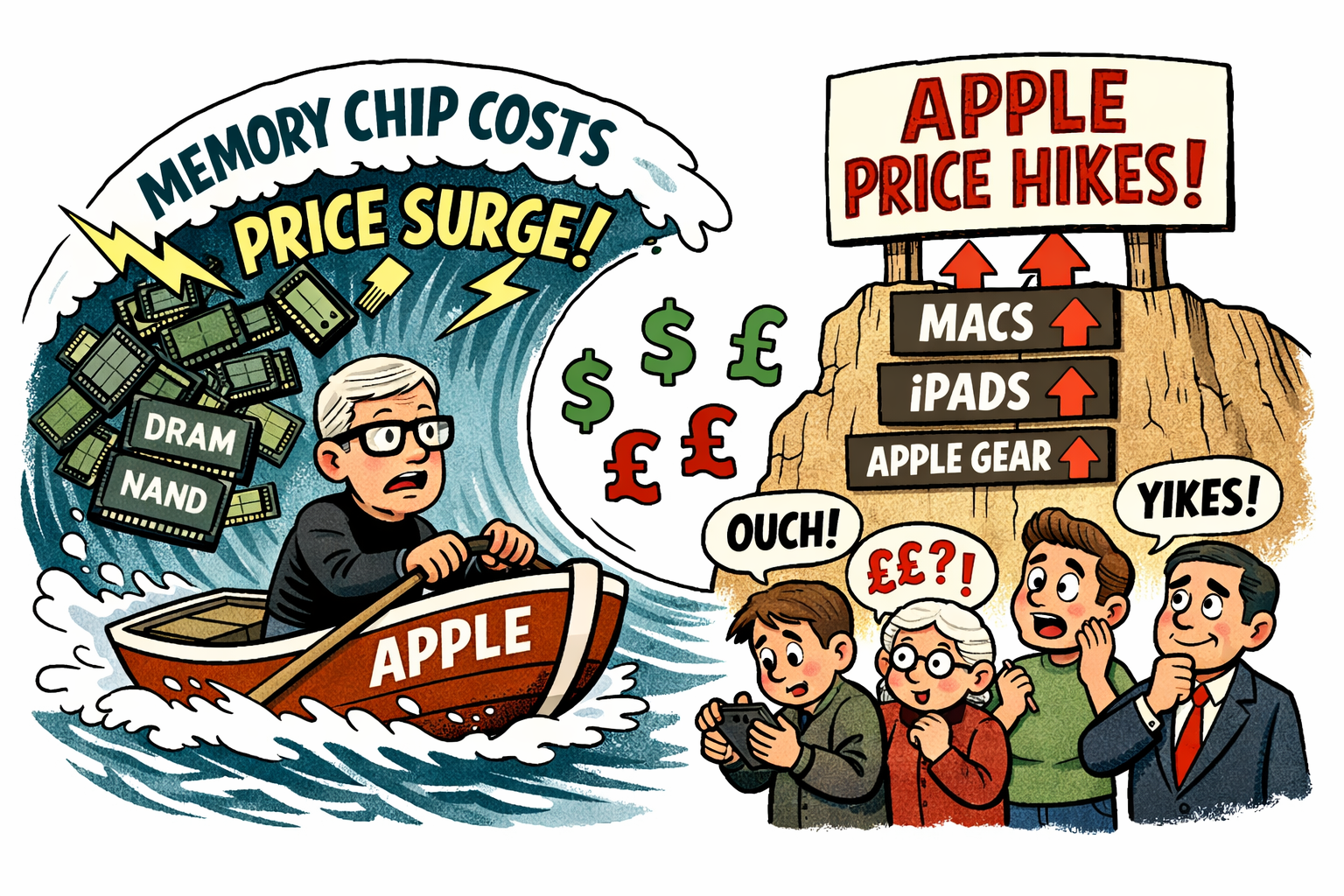
Apple’s sharp share-price drop recently (June 2026) wasn’t the result of a single misstep, but a sudden collision between global supply‑chain pressure and investor expectations.
The company’s stock slid roughly 6% in one session – its steepest fall in more than a year – after Apple pushed through sweeping price increases across Macs, iPads, HomePods, Apple TV and even Vision Pro.
For a company that normally adjusts pricing with surgical caution, the breadth and scale of these rises jolted the market.
Unprecedented price surge
The trigger sits outside Cupertino. Memory‑chip prices have surged at a pace industry veterans describe as unprecedented, driven by AI data‑centre expansion that is consuming vast quantities of DRAM and NAND.
Apple’s suppliers have passed on extraordinary cost increases, and Apple, unusually, has chosen not to absorb them.
Some Mac configurations rose by hundreds of pounds; certain high‑end models jumped by more than a thousand. Investors interpreted this as a sign that Apple’s margins – already under scrutiny given its premium valuation – are being squeezed harder than expected.
Concerning
The concern is not simply higher prices, but what they imply. If Apple is forced to raise hardware prices now, analysts fear the same pressure could extend to the iPhone later this year.
That would test the limits of consumer tolerance at a time when upgrade cycles are already lengthening. The market’s reaction reflects a deeper anxiety: Apple’s pricing power is formidable, but not infinite.
A modest rebound followed the initial sell‑off, suggesting the drop may have been an overreaction. But prices for Apple products have increased whatever the markets tell us.
Even so, the episode underscores how sensitive Apple’s valuation is to any hint of margin compression in its hardware business.