UK Unemployment Rate Falls to 4.9% in Latest ONS Release

UK unemployment data

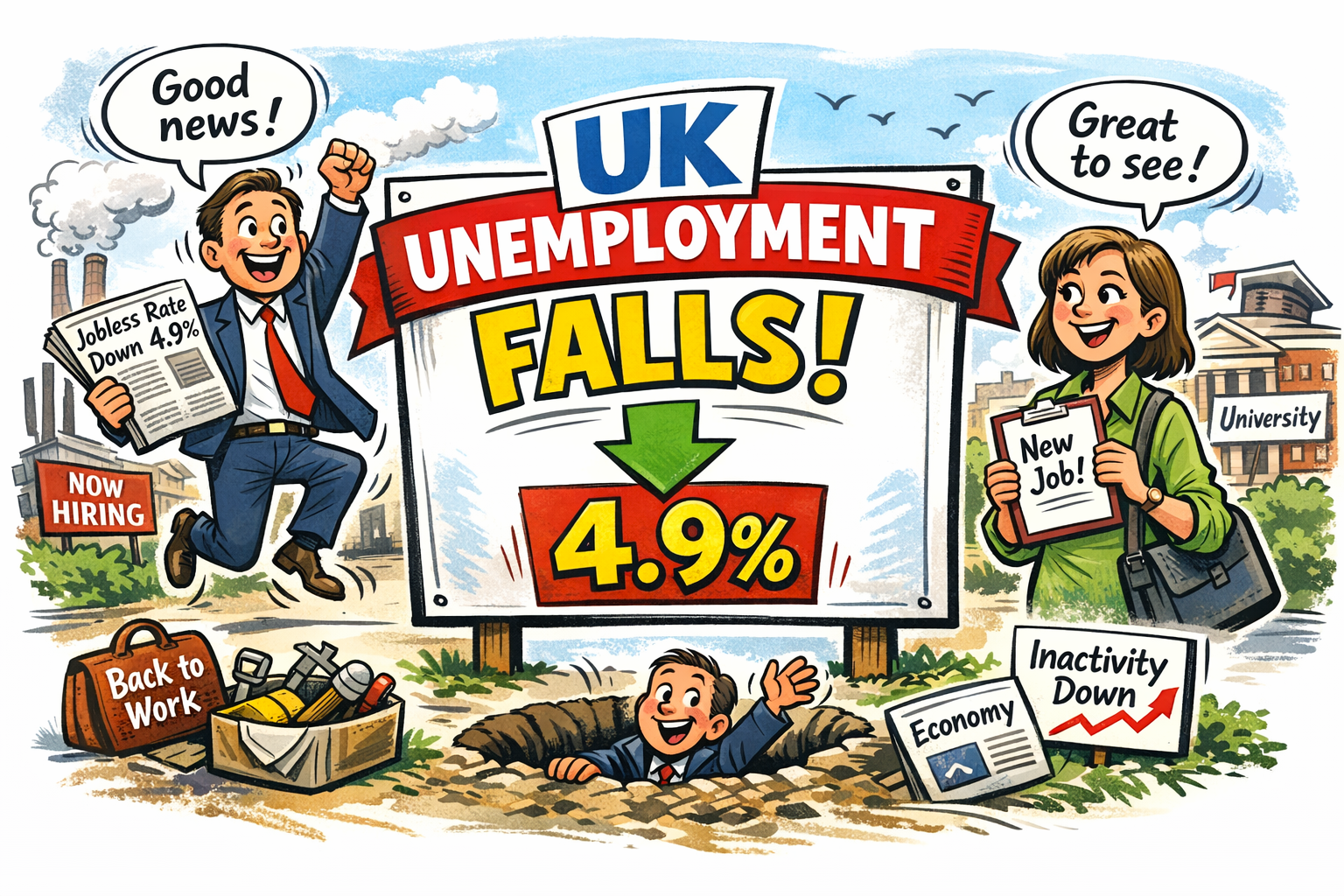
The UK unemployment rate has fallen to 4.9%, according to the latest figures from the Office for National Statistics (ONS), offering a rare moment of optimism in an otherwise unsettled economic landscape.

The data, covering the period from December 2025 to February 2026, shows a drop from 5.2% in the previous rolling quarter, marking the lowest level since mid‑2025.

Steady

Economists had broadly expected the rate to hold steady, making the improvement a mild but welcome surprise. The fall reflects a combination of rising employment in several service‑sector industries and a shift in the composition of the labour force.

Part of the decline, however, stems from an increase in economic inactivity, particularly among students and those temporarily stepping away from the workforce.

This means the headline figure flatters the underlying picture slightly, even if the direction of travel remains encouraging.

Easing wag growth

Wage growth continues to ease, and vacancies remain well below their post‑pandemic peak, suggesting the labour market is still cooling overall.

Yet the drop in unemployment provides the government with a positive data point to cling to at a time when households are grappling with high living costs and businesses are navigating weak demand.

For now, the labour market appears to be stabilising rather than sliding.

Note: this data was produced pre the U.S./Israel/Iran conflict.

U.S. private payrolls grew by just 150,000 in June 2024, below expectations

Workers

In June 2024, private companies created 150,000 jobs, falling short of the revised figure of 157,000 in May 2024 and the estimate of 160,000.

The leisure and hospitality sector led the way with 63,000 new jobs, marking the largest increase among the categories tracked by the payroll processing firm ADP.

U.S. age growth slowed to 4.9% year-on-year, the smallest rise since August 2021.

Markets generally shrugged off the lacklustre figures as Tech and AI driven indices continued their march to achieve ever higher positions.

UK pay outstrips inflation by highest amount for two years

UK pay up

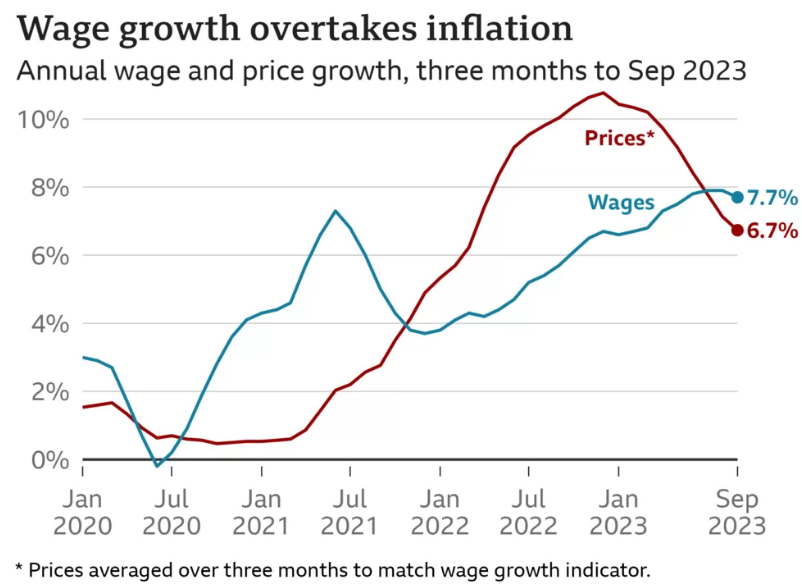
Pay growth has outstripped inflation by the most since 2021, in a further sign that the pressure on living costs may be starting to ease.

Regular pay rose at an annual rate of 7.7% between July and September 2023, official figures show; higher than average inflation over the same three months.

But job vacancies fell for the 16th month in row, in a worrying sign that the jobs market is weakening. Between August and October 2023, the estimated number of vacancies in the UK fell to 957000, down 58000 – although the Office for National Statistics (ONS) said the total remains well above pre-pandemic levels.

Data Source: Office for National Statistics Data

UK pay outstrips inflation by highest amount for two years

The UK’s unemployment rate was largely unchanged between July to September 2023 at 4.2%, according to ONS data.