
Suspicious Market Timing Raises Fresh Questions Over Alleged Potential Insider Trading During the U.S.–Iran Crisis

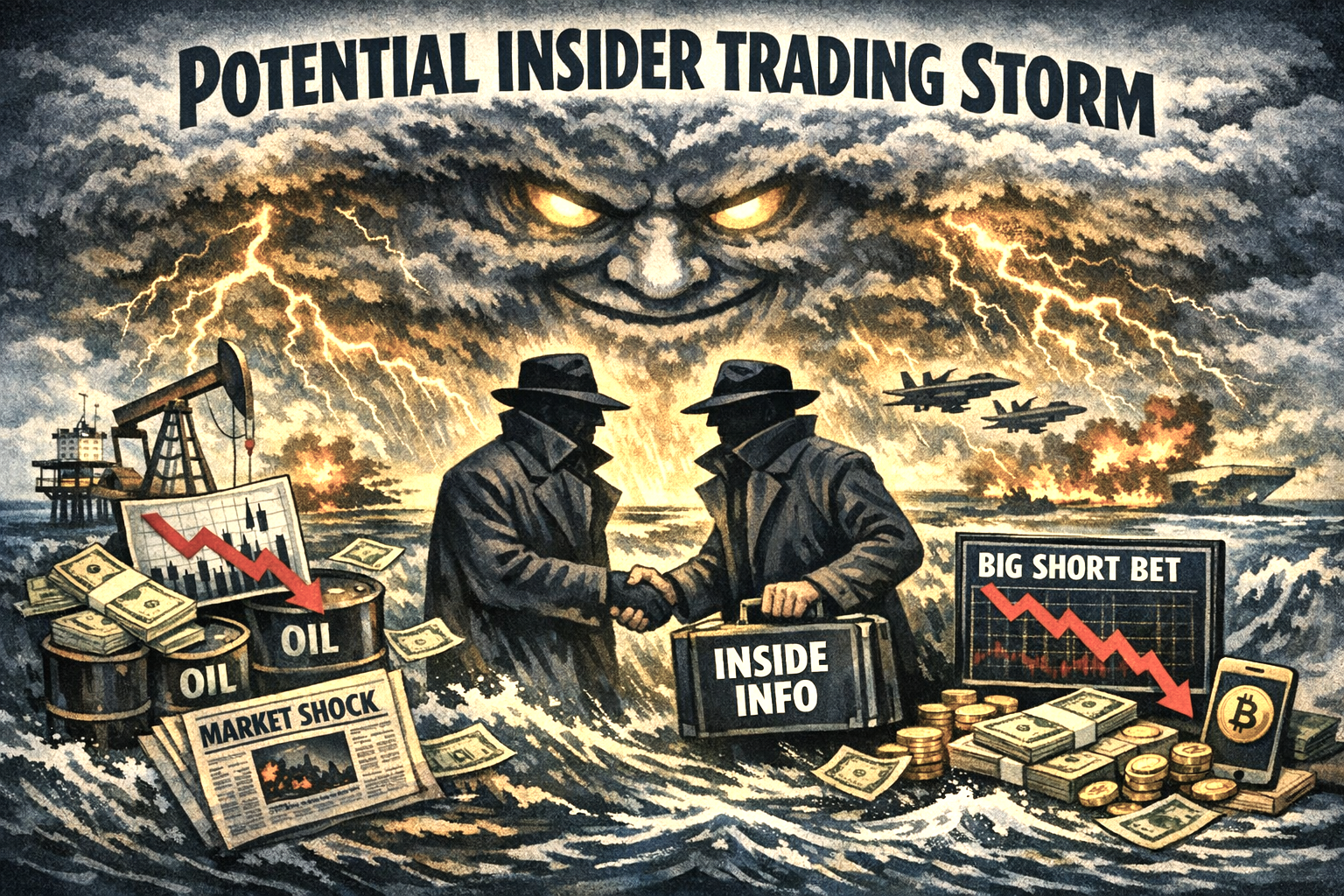
Alleged Potential Insider trading storm erupts

Allegations of suspiciously timed trades have intensified in recent weeks as analysts, journalists, and regulators examine a series of market moves that coincided—sometimes to the minute—with major announcements about the U.S.–Iran conflict.

While no wrongdoing has been proven, the pattern has become difficult for commentators to ignore and calls for formal investigation are growing louder. Can these trades and market movement be explained as coincidence?

Potential ‘speculative’ trading?

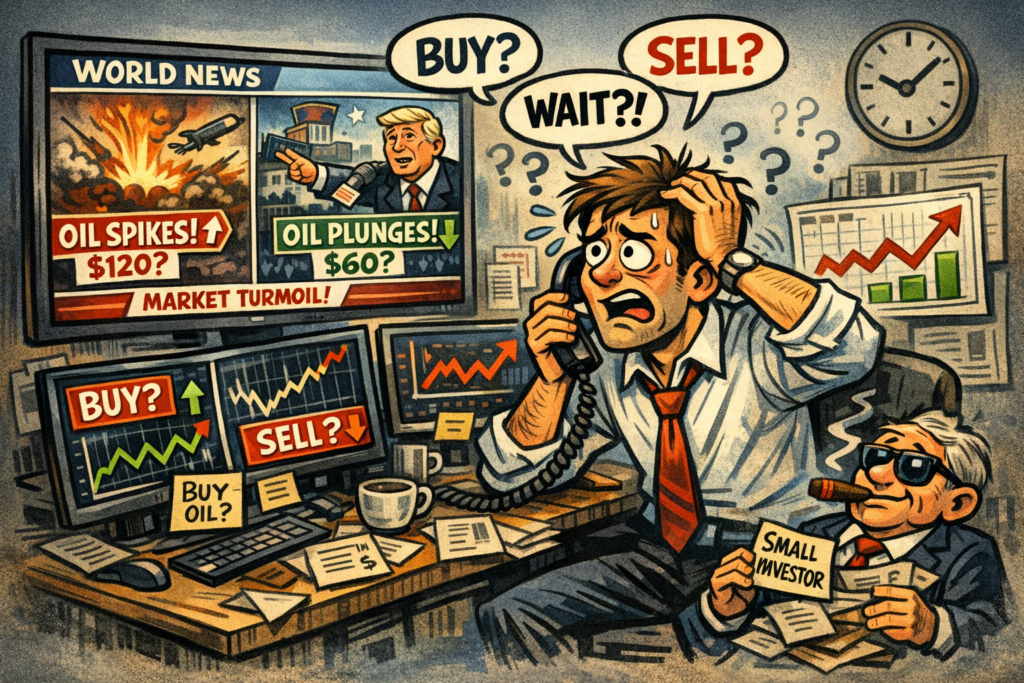
Many media outlets are also highlighting anomalies. For instance, it has been reported that Wealth manager Rachel Winter indicated traders appeared to take out contracts positioned to profit from falling oil prices just minutes before a presidential post claiming “productive” talks with Iran—timing she described as “speculation about insider trading” and worthy of investigation.

This episode was not isolated. Multiple outlets have documented at least two major bursts of unusually large oil futures trades placed shortly before conflict‑related announcements.

On 17th April 2026, it was reported that roughly $760 million in Brent crude short positions were executed around 20 minutes before Iran’s foreign minister declared the Strait of Hormuz “completely open” following a ceasefire—an announcement that sent oil prices sharply lower.

Analysts at the London Stock Exchange Group reportedly described the volume as “completely atypical,” nearly nine times normal levels.

Earlier in March 2026, it has been reported that traders placed around $500 million in positions shortly before the White House delayed planned strikes on Iran’s energy sector.

A similar pattern emerged on 7th April 2026, when roughly $950 million was positioned for falling oil prices hours before another ceasefire announcement.

These repeated bursts—each ahead of market‑moving news—have fuelled concerns that some traders ‘may’ have had access to information not yet public. Or was it a good guess – a coincidence even?

Reports of ‘unusual’ trading patterns

These reports align with broader commentary. The Independent noted that at least 6 million barrels’ worth of Brent and WTI contracts were suddenly sold in the two minutes before a presidential post about “productive” talks—again raising questions about advance knowledge.

Meanwhile, The London Economic reported that around $580 million in oil bets were placed 15 minutes before the same announcement, with market strategists calling the timing “really abnormal” for a day with no scheduled events.

Even outside traditional markets, anomalies have surfaced. Blockchain analysts identified six newly funded crypto wallets that made nearly £780,000 by betting—hours before explosions were reported—that the U.S. would strike Iran on 28th February 2026.

Across all these cases, commentators stop short of asserting intent. But the clustering of high‑stakes trades immediately before geopolitical announcements has created a clear narrative: the market signals are too sharp, too well‑timed, and too frequent to dismiss without scrutiny.

No intent is suggested – it could just be coincidence?
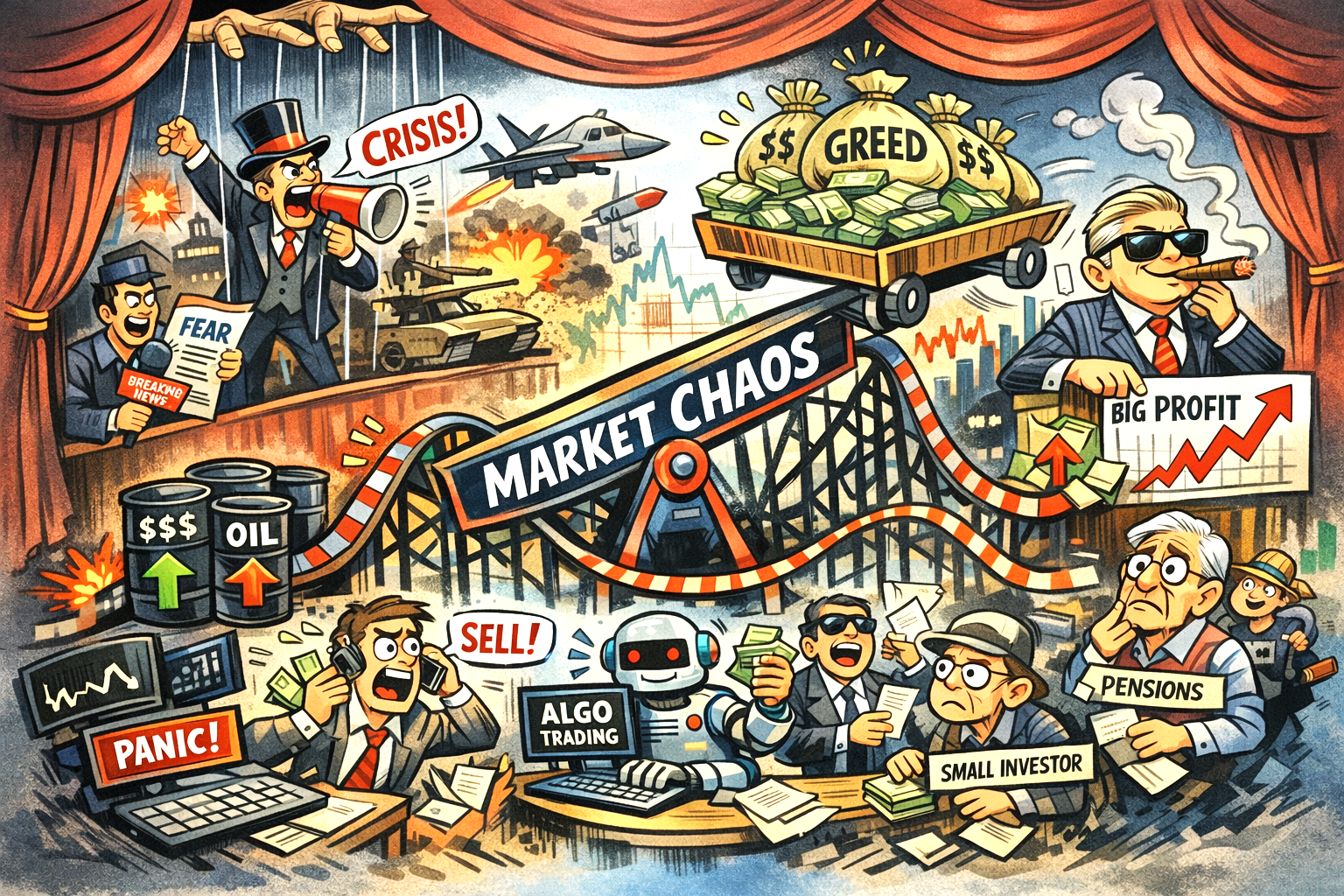
Why Markets No Longer Behave Sensibly — And How We Let Them Become a Theatre of Drama

Chaotic stock market

For years we’ve clung to the comforting fiction that financial markets are rational machines. Prices rise and fall based on fundamentals, investors weigh risks carefully, and governments act as steady hands guiding the system through uncertainty.

It’s a pleasant story — and almost entirely untrue. Modern markets no longer behave sensibly because the people and structures shaping them no longer behave sensibly either.

Instead, we’ve built a hyper‑reactive ecosystem that rewards drama, amplifies noise, and punishes patience. The 24-hour mind numbing rolling news media frenzy helps feed the ‘stupid’ stock market indifference.

The result is a marketplace that convulses on command. A single line in a political speech can send oil and equities plunging, equities soaring, and futures whipsawing before most people have even digested the words.

This isn’t forward‑looking behaviour. It’s a system addicted to the ‘dollar’ adrenaline.

A Market Built on Complexity, Not Clarity

The first step in understanding today’s dysfunction is recognising just how complicated markets have become. The old world of human traders weighing company quality and long‑term prospects has been replaced by a tangled web of:

  • algorithmic trading systems scanning headlines for emotional triggers
  • derivatives hedging flows that move the underlying market
  • passive investment vehicles pushing money in and out mechanically
  • central bank signalling that distorts risk pricing
  • geopolitical noise that algorithms treat as gospel

Each layer adds speed, leverage, and opacity. None of it adds stability.

When markets were simpler, they could afford to be sensible. Today, they are too complex to behave rationally even if they wanted to.

The Incentives Are All Wrong

If you want to understand why markets behave badly, follow the incentives.

Traders are rewarded for short‑term performance, not long‑term judgement. Fund managers fear underperforming their peers more than they fear being wrong.

Algorithms are rewarded for speed, not context. Politicians are rewarded for drama, not restraint. News outlets are rewarded for shock and sensation, not nuance.

A comment or speech fed through central banker infiltrates opinion and moves the markets. It’s irrational behaviour – because it is now ingrained and expected!

In such an environment, knee‑jerk reactions aren’t a flaw — they’re the logical outcome of the system’s design.

A calm, measured response to geopolitical tension doesn’t generate clicks, flows, or political capital. A dramatic statement, however, can move billions in minutes. And some actors know this.

Drama Has Become a Stock Market Feature

And we have blindly accepted this. One of the most uncomfortable truths about modern markets is that drama is profitable for certain players.

Volatility traders thrive on big swings. High‑frequency firms thrive on rapid order flow. Media outlets thrive on sensational headlines. Political figures thrive on attention. Algorithms thrive on sharp, binary signals. Not a constructive mix.

A calm market is good for society. A dramatic market is good for business.

So we’ve normalised the abnormal. Markets now move on:

  • rumours
  • tone
  • misinterpreted headlines
  • algorithmic overreactions
  • political theatre
  • hedging flows
  • central bank adjectives

This isn’t price discovery. It’s noise discovery.

We Could Have Chosen a Different Path

Here’s the part that stings: none of this was inevitable.

If governments communicated with clarity and restraint, markets would be calmer. If market makers prioritised liquidity and stability over speed, volatility would fall.

If traders were rewarded for long‑term thinking, the system would breathe more slowly. If algorithms were designed to interpret context rather than react to keywords, markets would behave more like markets and less like mindless sheep following a lost leader.

But we didn’t choose that path. We chose complexity, speed, and drama — and now we live with the consequences.

A System Too Complicated to Behave Sensibly

The modern market is not a rational judge of value. It is a behavioural ecosystem shaped by incentives, emotion, and structural institutional distortions.

It reacts to tone. It can price uncertainty, not fundamentals. It amplifies drama, not discipline.

When a single political sentence can move global markets, the problem isn’t the sentence. It’s the system that reacts to it.

Markets haven’t lost their minds. We’ve simply built a marketplace too complicated — and too dramatic — to act as if it still has one.

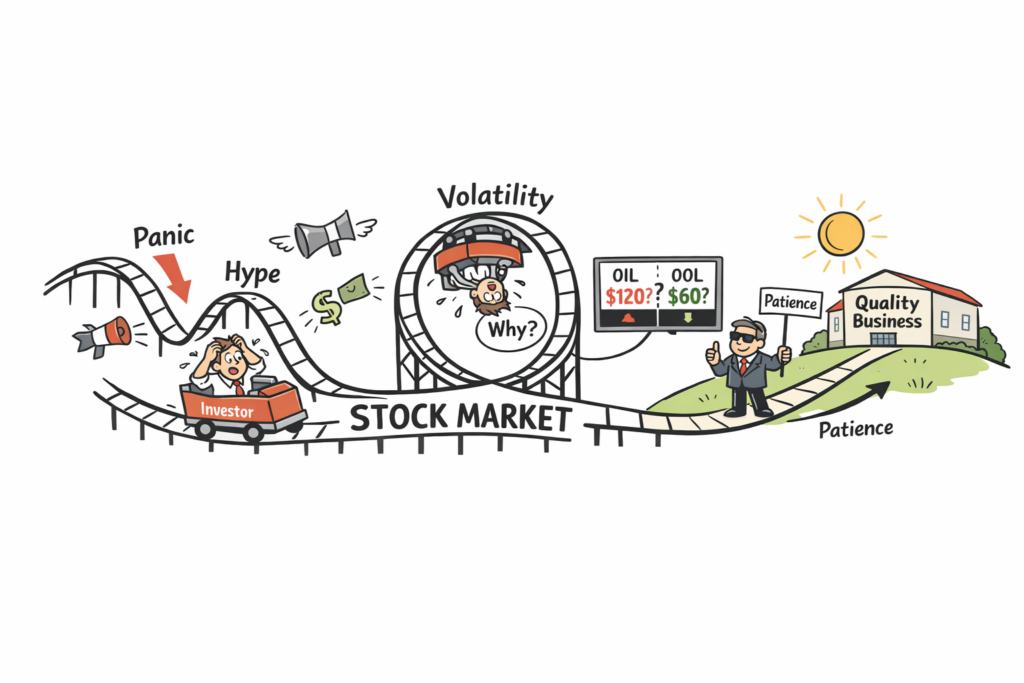
Fortunately, at least a good quality business can still provide a good quality return – but we all have to ride the stupid stock market roller-coaster to get there!