
The Market That No Longer Cares About the Truth

Markets make the money and remain devoid of morality

There’s a growing sense that financial markets have drifted into a parallel reality. Not the usual detachment that comes with speculation, but something deeper — a structural break between what is happening in the world and what markets choose to see.

This is how the stock market feels at the moment. I might be wrong, but the overwhelming sense of despair feels so real. I believe the markets are broken at their core, and nobody seems to care. Markets make money and remain devoid of morality.

The system is morally bankrupt.

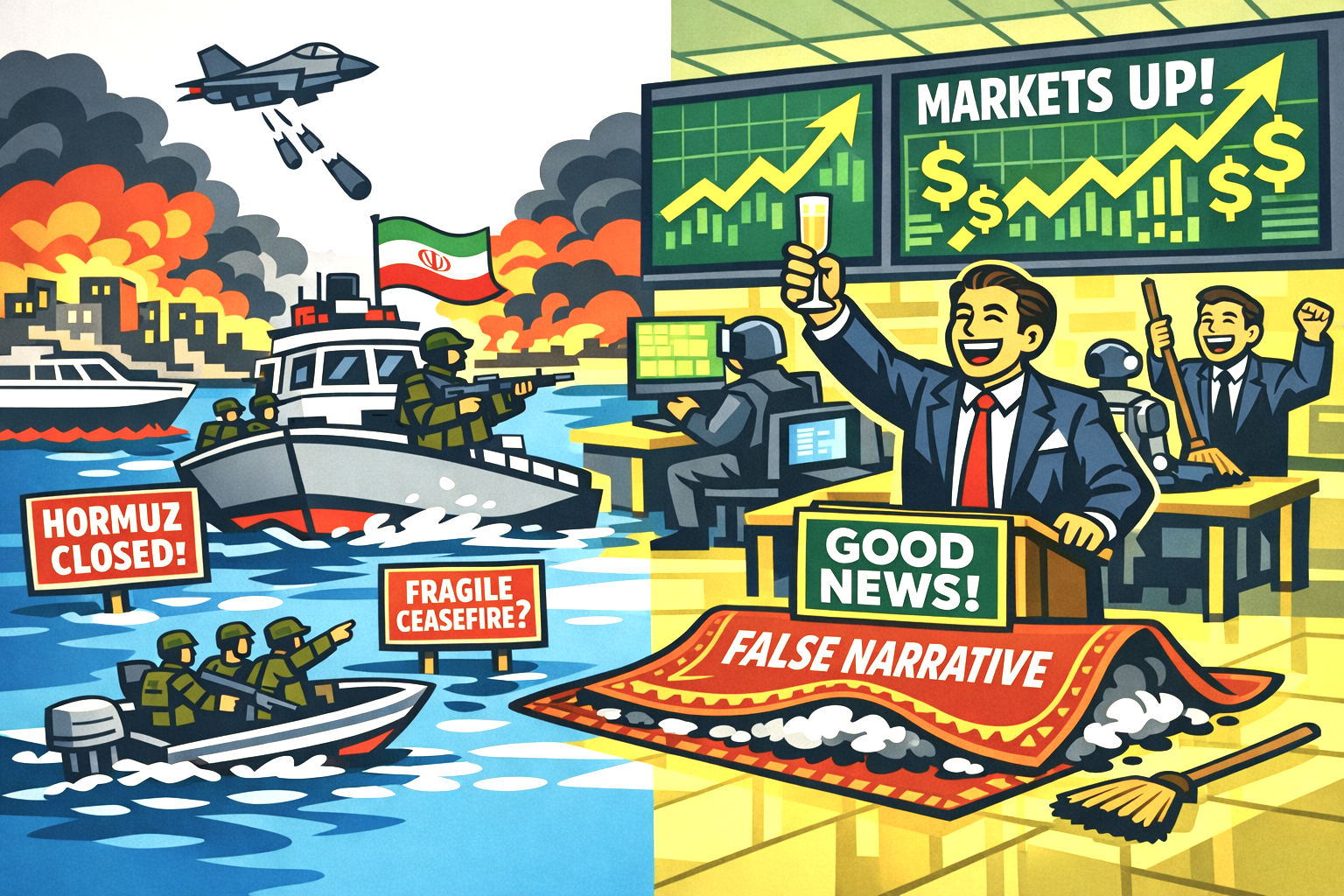
You can watch a crisis unfold in real time, with footage, statements, explosions and diplomatic failures, and yet the markets behave as though they’re responding to a completely different script.

A ceasefire that barely exists is treated as a turning point. A strategic waterway that is “open” only in the loosest, most cosmetic sense is priced as fully restored. The disconnect isn’t subtle. It’s brazen.

And yes — it feels deceptive

Not because traders are conspiring to mislead anyone, but because the modern market has evolved into something that no longer requires truth to function.

It only needs a narrative.

A headline. A phrase that can be interpreted as “less bad than yesterday”. That’s enough to ignite a rally, even if the underlying situation is deteriorating by the hour.

This wasn’t always the case. There was a time when markets, for all their volatility and irrationality, still behaved like instruments tethered to reality.

When a major shipping lane was threatened, prices moved accordingly. When a ceasefire collapsed, markets reflected the renewed danger. There was at least a rough correlation between events and valuations — imperfect, but recognisable.

Today, that correlation has snapped. The market trades on sentiment, not substance. On the idea of stability, not the presence of it.

Appearance

On the appearance of progress, even when the facts on the ground contradict every optimistic headline. A ceasefire announcement is enough to send equities higher, even if the ceasefire is violated before the ink dries.

A promise to reopen a strait is enough to calm oil prices, even if only a handful of ships actually move.

The deception is structural. It’s the product of algorithmic trading that reacts to keywords rather than conditions.

It’s the result of a decade of central bank intervention that has taught investors to treat every crisis as temporary and every dip as a buying opportunity. It’s reinforced by political communication that prioritises market stability over factual clarity.

The system rewards optimism, even when it’s unjustified. It punishes realism when it’s inconvenient.

Surreal

This is why the current moment feels so surreal. You can see the footage of strikes in Lebanon while reading headlines about “regional de‑escalation”. You can watch tankers stalled while analysts talk about “normalising flows”.

The market shrugs, because the narrative — however flimsy — is enough to sustain the illusion.

If markets don’t need truth, then they are, in effect, trading a deception. Not a deliberate deception, but a functional one.

Economic Truth

A deception that keeps prices elevated, volatility suppressed, and investors soothed.

A deception that allows the charts to climb even as the world beneath them fractures.

A deception that has become the operating principle of a system that no longer reflects reality, only the stories it finds convenient to believe.

This isn’t investing – this is pure manipulative gameplay and benefits only those who know how to play the game.

And ‘they’ set the rules.

Markets make the money but remain devoid of morality.

I feel like I am playing a video game without the controller or at least with a rule book.

Update:

U.S. announces it will blockade of the Strait of Hormuz, or rather Iranian ‘linked’ ships. And not in the Strait but further out in international waters. This is designed to reduce the risk of conflict.

China, I assume, will not be happy.

Be careful – nothing is as it seems.
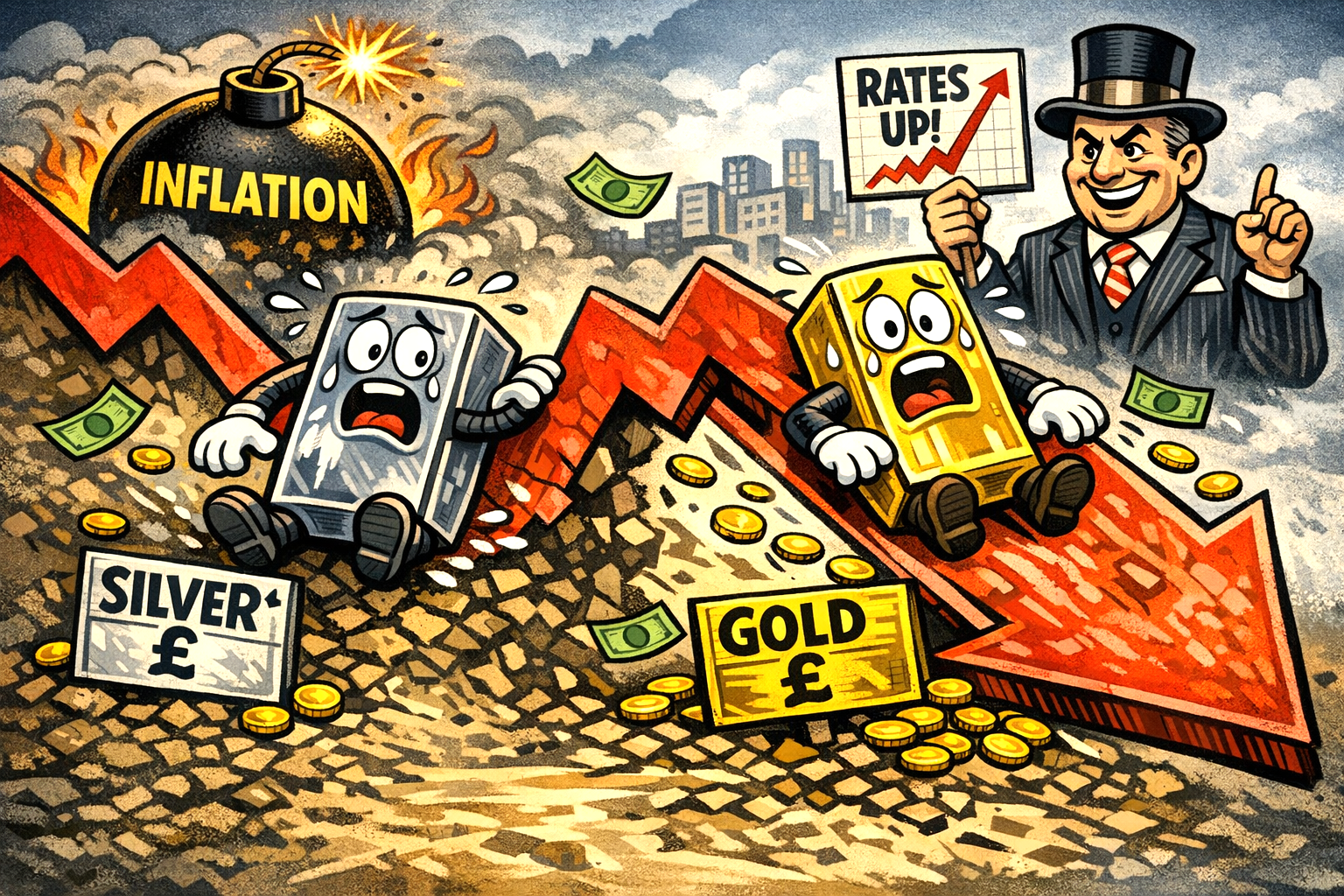
Gold and Silver prices slide as inflation fears jolt markets

Gold and Silver prices fall!

Gold and silver prices have come under renewed pressure this week as a broad commodities sell‑off gathers pace, driven by a resurgence in global inflation concerns.

After months of steady gains, both metals have slipped sharply, catching out investors who had positioned for a more defensive environment.

The trigger has been a run of hotter‑than‑expected inflation readings across major economies, prompting traders to reassess the likelihood of interest rate cuts this year.

With central banks now signalling caution, yields have pushed higher, undermining the appeal of non‑yielding assets such as gold and silver.

The shift has been swift: spot gold has retreated from recent highs, while silver — typically more volatile — has fallen even harder as speculative positions unwind.

Market strategists note that the sell‑off is less about fundamentals and more about positioning.

Hedge

Gold’s long‑standing role as an inflation hedge remains intact, but in the short term, rising real yields tend to dominate sentiment.

Silver, meanwhile, sits awkwardly between its status as a precious metal and its industrial uses, leaving it exposed when growth expectations wobble.

Despite the pullback, some analysts argue the move may prove temporary. Persistent geopolitical tensions, ongoing currency instability, and the sheer scale of global debt continue to provide a supportive backdrop for safe‑haven assets.

But for now, traders appear focused on the near‑term path of inflation and interest rates — and that means precious metals remain vulnerable to further swings.

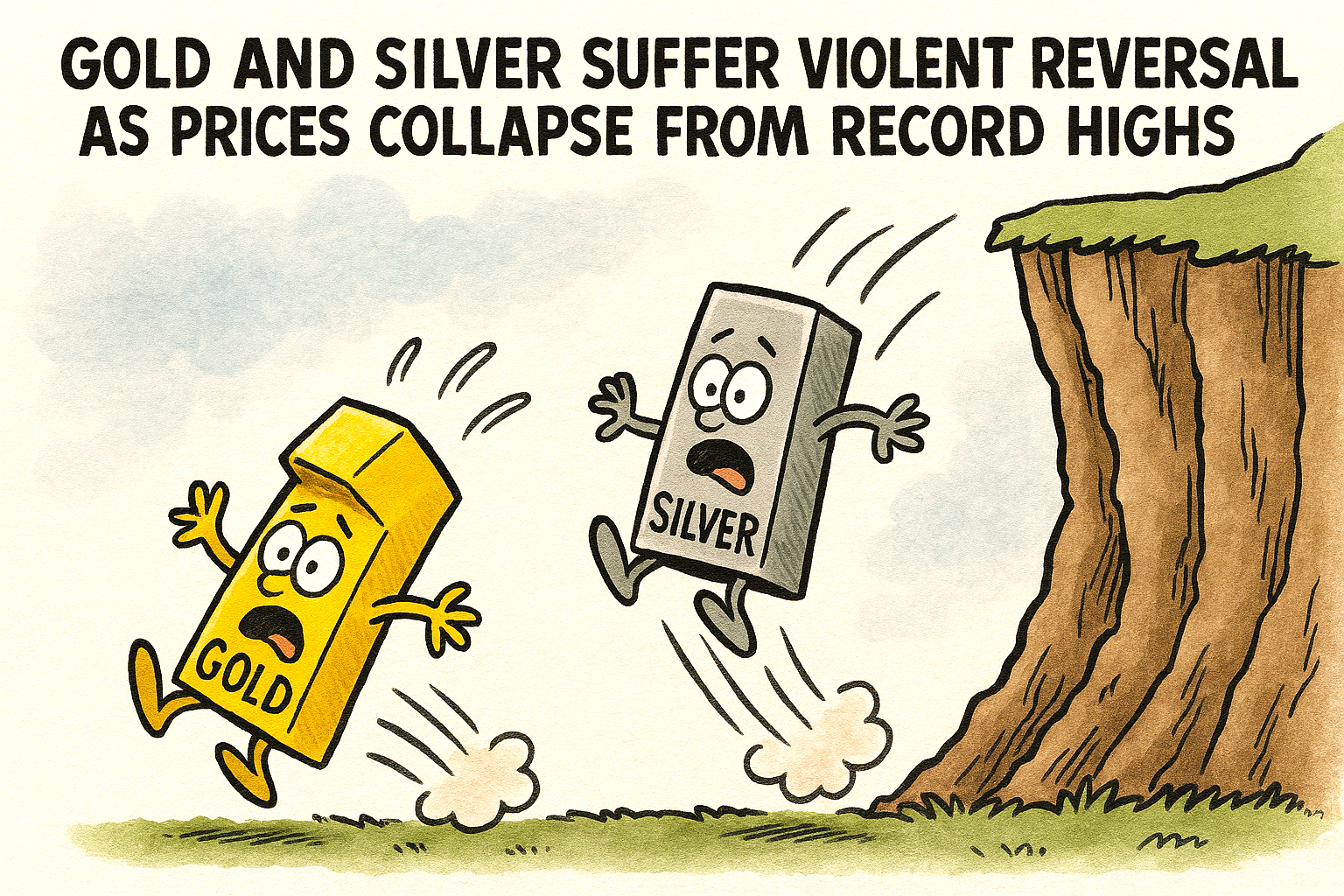
The ups and downs of Gold and Silver as prices collapse from record highs

Gold and silver - the ups and downs!

The precious metals market has endured one of its most dramatic reversals in modern trading history, with gold and silver plunging from last week’s extraordinary peaks to deep intraday lows.

Gold, which surged to an unprecedented $5,600 per ounce, fell back to around $4,500, while silver has retreated from highs near $120 per ounce to roughly $74 in intraday trading.

The scale and speed of the correction have rattled traders and forced a reassessment of what drove the rally — and what comes next.

Why the collapse happened

The initial surge in both metals was fuelled by a potent mix of safe‑haven demand, speculation, and expectations of looser U.S. monetary policy and new Federal Reserve chair.

As gold broke above $4,500 for the first time in late December, speculative interest intensified, pushing prices into what now looks like a classic blow‑off top.

But the reversal began when sentiment shifted abruptly. A stronger U.S. dollar, firmer Treasury yields, and a wave of profit‑taking created the first cracks.

Once prices started to slip, leveraged positions in futures markets were forced to unwind. This triggered cascading sell orders, accelerating the decline.

Silver, which had risen even more aggressively than gold, suffered one of its steepest percentage drops since 1980.

How the sell‑off unfolded

The correction was not a slow bleed but a violent, liquidity‑draining plunge. Gold fell more than $1,000 per ounce from peak to trough, while silver shed $40–$45.

These moves were amplified by algorithmic trading systems that flipped from buying momentum to selling weakness as volatility spiked.

The fact that gold briefly and recently traded below $4,800 and silver below $100 before extending losses to their intraday lows shows how thin market depth became during the heaviest selling.

Even long‑term holders, typically slow to react, contributed to the pressure as stop‑loss levels were triggered.

What happens next

Despite the severity of the drop, the fundamental drivers that supported the earlier rally have not disappeared.

Concerns over global debt levels, geopolitical instability, and central bank diversification into gold remain intact. However, the market must now digest the excesses of the speculative surge.

In the short term, volatility is likely to remain elevated. A stabilisation phase — potentially lasting weeks — may be needed before a clearer trend emerges.

If the dollar strengthens further or yields continue rising, metals could retest their recent lows. Conversely, any signs of economic softening or renewed policy easing could attract dip‑buyers back into the market.

For now, the message is clear: even in a bull market, precious metals can still deliver brutal corrections — and timing remains everything.

Note: Friday to Monday (30th January to 2nd February 2026)

And… watch for the rebound.

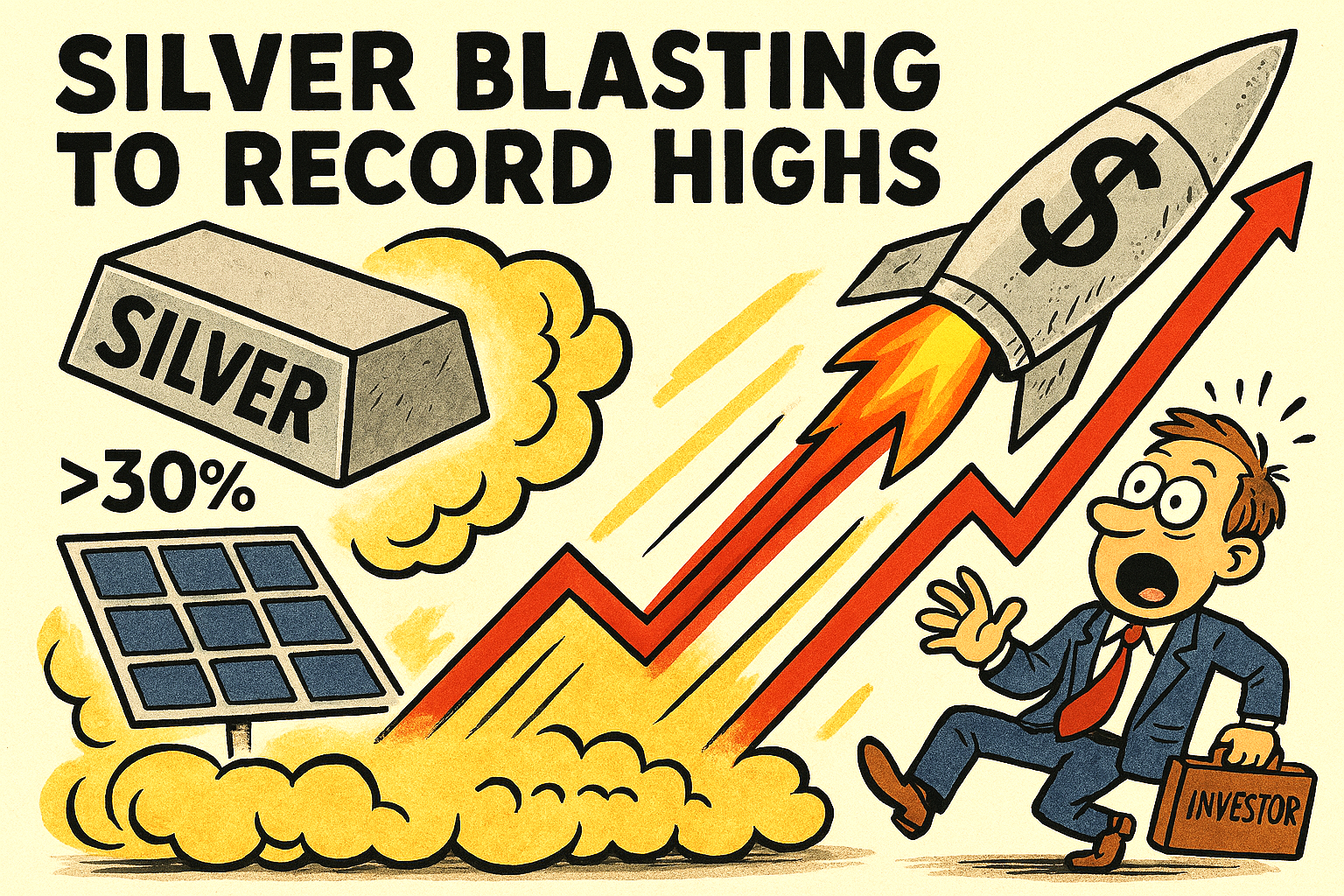
Silver skyrockets to new record high!

Silver hits record high

Silver has surged with remarkable force, blasting to fresh record highs and reshaping market sentiment in the process.

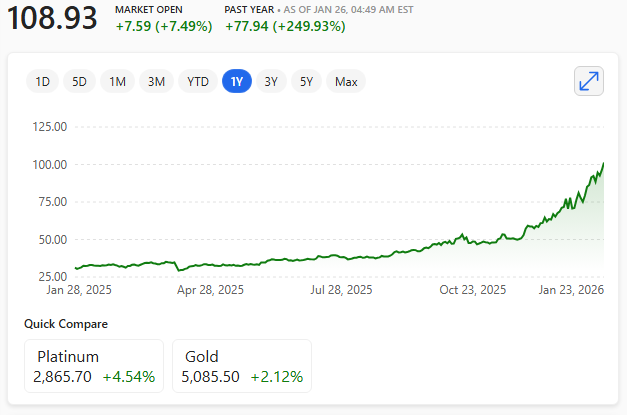
Recent trading sessions have seen prices vault past previous milestones, climbing above $108 per ounce and even approaching the $109 mark as safe‑haven demand intensifies amid global uncertainty.

This dramatic meteoric ascent follows weeks of accelerating momentum, with technical indicators showing a firmly bullish structure and widening gaps between key moving averages.

Analysts note that silver’s rally has outpaced many other commodities, fuelled by its dual role as both a precious metal and an essential industrial input.

Silver one-year chart 26th January 2026

Industrial sectors—from photovoltaics to electric vehicles—are feeling the pressure as soaring prices push material costs sharply higher.

In some cases, silver now represents more than 30% of total solar module expenses, underscoring the far‑reaching impact of this surge.

With supply constraints tightening and investor appetite growing, silver’s explosive rise shows little sign of slowing down.

Do falling commodity prices indicate there is trouble brewing with the U.S. economy?

Commodities

Falling commodity prices can be a signal of economic trouble ahead

When commodity prices drop, it often reflects a decrease in demand for raw materials, which can be a sign of slowing economic activity. For instance, the recent decline in copper prices is seen as a potential indicator of economic slowdown.

Sugar, cotton, soybean, oil and iron ore are some examples where demand has fallen during this year.

However, it’s important to consider other factors as well. The global economic slowdown has reduced demand for energy, minerals, and agricultural products. While this trend is evident in many countries, the U.S. economy has shown some resilience.

So, while falling commodity prices can be a warning sign, they are just one piece of the puzzle. It’s essential to look at a broader range of economic indicators to get a complete picture.

Commodity price charts as of: 13th August 2024

Copper one year chart

Iron ore one year chart

Cotton price one year chart

Sugar one year price chart

Soybeans one year price chart

U.S. oil one year price chart

Does the recent precious metal rally in gold, silver and platinum have further to go? Some analysts think so

Precious metal rally

Precious metal prices received a significant uplift on Thursday 16th May 2024 following the release of better-than-expected U.S. inflation data, which increased the likelihood of rate cuts by the Federal Reserve, again.

Gold prices reached their highest point in over three weeks on Thursday too, while silver achieved its highest price in over three years, and platinum ascended to a peak close to its one-year high.

According to strategists in a recent comment, gold prices might soon approach the $2,400 again, silver could rise to as much as $30 per ounce, and platinum has the potential to hit $1,130 per ounce.

Silver price per ounce 16th May 2024 – chart snapshot

Gold price per ounce 17th May 2024 – chart snapshot