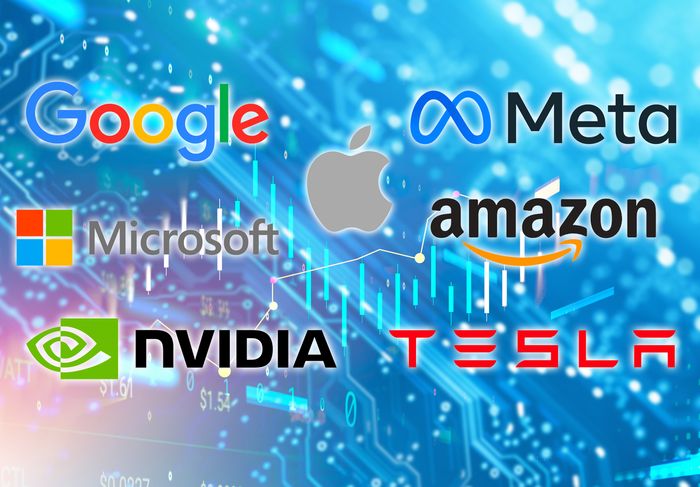
The Magnificent Seven is a term coined to describe the seven most valuable and popularly owned tech companies in the U.S. stock market.
It was also a 1960’s movie…
The Seven
Apple (AAPL)
The world’s largest software company, known for its iPhone, iPad, Mac, Apple Watch, AirPods, and other devices, as well as its services such as iCloud, Apple Music, Apple TV+, and App Store.
Microsoft (MSFT)
The world’s largest software company, known for its Windows operating system, Azure cloud services, LinkedIn social media platform, Office professional software suite, and Xbox gaming brand.
Alphabet (GOOGL)
The parent company of Google, the world’s leading search engine, as well as other businesses such as YouTube, Google Cloud, Google Maps, Google Ads, and Waymo.
Amazon (AMZN)
The world’s largest online retailer, as well as a leading provider of cloud computing services through Amazon Web Services (AWS), and a major player in digital entertainment through Amazon Prime Video, Amazon Music, and Kindle.
Meta Platforms (META)
The former Facebook, the world’s largest social media network, as well as the owner of other popular platforms such as Instagram, WhatsApp, Messenger, and Oculus.
Nvidia (NVDA)
The world’s leading manufacturer of graphics processing units (GPUs), which are used for gaming, artificial intelligence, cloud computing, and cryptocurrency mining, as well as other products such as Nvidia Shield, GeForce Now, and Omniverse.
Tesla (TSLA)
The world’s most valuable automaker, known for its electric vehicles, battery products, solar panels, and self-driving technology, as well as its visionary founder and CEO, Elon Musk.
Market dominance
These seven companies are not only dominant in their respective fields, but also at the forefront of innovation and growth in the tech sector. They collectively make up some 30% of the S&P 500 index and more than half of the Nasdaq 100 index.
They have also delivered impressive returns for investors over the past five years, with Nvidia and Tesla leading the pack with more than 800% gains. The Magnificent Seven are often compared to the FAANG stocks, which include four of the seven companies, but exclude Microsoft, Nvidia, and Tesla, and include Netflix instead.
Some analysts suggest that the Magnificent Seven capture the current state and future potential of the tech industry. But is it now time to rotate out of tech into other areas that have been neglected. I wouldn’t be surprised to see the bull market charge on but with other ‘less’ loved companies leading the way.
It has been calculated that the combined market cap value of these seven companies is some $9 trillion.
The metaverse is a hypothetical concept that has not yet been fully realized, but many experts and companies are working on developing it. Mark Zuckerberg is one of these ‘believers’.
Future challenge
The metaverse is quite likely to happen in the future, as technology advances and demand for immersive and interactive online experiences grows. Ai will help develop the metaverse at a greater speed.
However, there are also many challenges and uncertainties that could affect the development and adoption of the metaverse, such as interoperability, privacy, regulation, social issues, and user safety. Therefore, it is hard to predict when and how the metaverse will become a mainstream platform. Some estimates suggest that it could take another 10 to 15 years for the metaverse to reach its full potential.
What does Meta have to say about the Metaverse?
Meta and Mark Zuckerberg think that the metaverse is the next evolution of social technology and the successor to the mobile internet. They believe that the metaverse will enable people to feel present and connected with others in immersive and interactive digital spaces, where they can socialize, learn, work, play, and create. They also think that the metaverse will be a collaborative and open platform, where different companies and creators can build and interoperate with each other.
Product investment
Meta is investing heavily in developing the technologies and tools that will power the metaverse, such as virtual and augmented reality devices, software, and content.
Mark Zuckerberg has shared his vision and enthusiasm for the metaverse in various interviews and events, such as the Protocol interview, Connect 2021 keynote and the Lex Fridman podcast.
He has also demonstrated some of the impressive features and capabilities of the metaverse, such as photorealistic avatars, mixed reality experiences, and NFTs. He has said that he wants Meta to be a social technology company that helps bring the metaverse to life together with the community.
Time will tell if the Metaverse really is the future. So far it has failed to fully establish the following as Facebook enjoyed in its early days.
Mark Zuckerberg and Meta will not give up and will likely make his version of the Metaverse a success, one way or another.
‘Jimi, don’t forget to take the headset off if you go out again!’
Mark Zuckerberg, the CEO and cofounder of Meta Platforms Inc., sold some $190 million worth of Meta shares in November 2023, and another $238 million in December 2023.
These were his first stock sales since 2021, when he sold $2.9 billion worth of shares.
Meta Platforms is one of the leading social media and technology companies in the world with its flagship platform Facebook.
Its stock price has surged by 166% in 2023, making it one of the best-performing stocks among the so-called ‘Magnificent Seven’ group of tech giants. Meta has also rebranded itself as a metaverse company, aiming to create a virtual reality platform that connects people across its various apps and devices.
Philanthropic – The Giving Pledge
Zuckerberg and his wife, Priscilla Chan, have pledged to donate 99% of their Meta shares to charitable causes during their lifetimes, as part of the Giving Pledge initiative started by Warren Buffett and Bill Gates.
They have also established the Chan Zuckerberg Initiative, a philanthropic organization that focuses on education, health, science, and justice.
Intel’s new chip will go head-to-head with Nvidia and AMD
Intel unveiled new computer microchips on Thursday 14th December 2023, including Gaudi3, a chip for generative AI software.
Intel also announced Core Ultra chips, designed for Windows laptops and PCs, and new fifth-generation Xeon server chips. Intel’s server and PC processors include specialized AI parts called NPUs that can be used to run AI programs faster.
AI race
AI models, like OpenAI’s ChatGPT, run on Nvidia GPUs in the cloud. It’s one reason Nvidia stock has been up nearly 230% year to date while Intel shares have risen 68%. And it’s why companies like AMD and, now Intel, have announced chips that they hope will attract AI companies away from Nvidia’s dominant position in the market.
Gaudi3 will compete with Nvidia’s H100, the main choice among companies that build huge factories of the chips to power AI applications, and AMD’s forthcoming MI300X, when it starts shipping to customers in 2024.
CEO Gelsinger
‘We’ve been seeing the excitement with generative AI, the star of the show for 2023,’ Intel CEO Pat Gelsinger reportedly said at a launch event in New York where he announced Gaudi3 along other chips focused on AI applications.
Intel upping the anti with its Gaudi AI chip. The AI PC to become the new AI start of 2024 and beyond!
‘We think the AI PC will be the star of the show for the upcoming year,’ Gelsinger added. And that’s where Intel’s new Core Ultra processors, also announced on Thursday, will come into play.
Meta, OpenAI, and Microsoft said they will use AMD’s newest AI chip, the Instinct MI300X.
An indication that tech companies want alternatives to the expensive Nvidia graphics processors that have been essential for artificial intelligence (AI).
If the MI300X is good enough and inexpensive enough when it starts shipping early next year, it will likely lower costs for developing AI models.
AMD CEO Lisa Su projected the market for AI chips will amount to $400 billion or more in 2027, and she said she hopes AMD has a sizable part of that market.
Wall Street rallies on AMD and Google AI news
Wall Street resumed its rally after a short break as technology giants intensified their AI race, pushing up tech stocks.
When you witness Google launching a new AI model (Gemini) and AMD chasing a slice of the hot AI chip market, you know a pre-Christmas cheer will wash over investors.
To think, just a handful of years ago, other than in Science Fiction novels, the term ‘artificial intelligence’ didn’t exist in our vocabulary and now it is becoming more and more integrated with our day-to-day lives.
Stockmarkets love it. AI is fast becoming a business necessity and not just an option.
Wall Streets love affair with AI – how long will it last?
These are the seven largest U.S. listed companies in the technology sector.
Apple, Microsoft, Amazon, Alphabet, Nvidia, Tesla and Meta Platforms.
According to a report released Monday 2nd October 2023, these tech’ stocks have seen their valuation drop relative to the median stock in the S&P 500, making them more attractive for investors. The report says that the Magnificent 7 trade at 1.3 times their PEG ratio (price-to-earnings-to-long-term growth), versus 1.9 for the median S&P 500 stock.
This is the cheapest valuation in over six years – time to buy yet?
The report also highlights some positive drivers for these stocks, such as their strong sales growth, their ability to beat expectations, and their resilience to rising interest rates.
However, some analysts also warn that the dominance of these stocks could pose a risk for the broader market if something bad happens to tech’.
Meta has announced a series of new chatbots to be used in its Messenger service.
Charming
The chatbots will have ‘personality’ and specialise in certain subjects, like holidays, and cooking. Let’s hope they haven’t been modelled on the company boss then.
It is the latest attempt in a chatbot ‘chat’ race between tech’ companies desperate to produce more accurate and personalised artificial intelligence. The chatbots are still a work in progress with ‘limitations’, said boss Mark Zuckerberg.
During Meta’s first in-person event since before the pandemic, Mr Zuckerberg said that it had been an ‘amazing year for AI’. The company is calling its main chatbot ‘Meta AI’ and can be used in messaging. For example, users can ask Meta AI questions in chat ‘to settle arguments’ or ask other questions.
It’s been touted as fun entertainment and not just question answering.
I wonder if these AI chatbots will be as good as the Metaverse rollout has been so far?
Zuckerberg’s ‘personality’ chatbots
Zuckerberg’s ‘personality’ chatbots are a new feature of Meta, the company formerly known as Facebook. They are artificial intelligence agents that can chat with users on Messenger, using the faces and voices of celebrities like Snoop Dogg, Kendall Jenner, and Tom Brady.
Chatbots with personality. God help us!
They are supposed to have different personalities and interests, such as sports, cooking, or music. Meta claims that they are for entertainment purposes only, and that they have limitations on what they can answer.
Critical
However, some critics have raised ethical and social concerns about these chatbots. They argue that they are creating “counterfeit people” that could deceive or manipulate users, especially young ones. They also question the consent and privacy of the celebrities whose identities are used by the chatbots. They warn that these chatbots could pose dangers to the authenticity and trustworthiness of online communication.
If you are curious about these chatbots, you can try them out on Messenger by searching for their names. But be aware that they are not real people, and that they may not give you accurate or reliable information. They are just products of Meta’s artificial intelligence technology, which is still a work in progress – a bit like the Metaverse.
Chatbot with creepy personality
All this wonderful AI tech and what do we do? Play games with it!
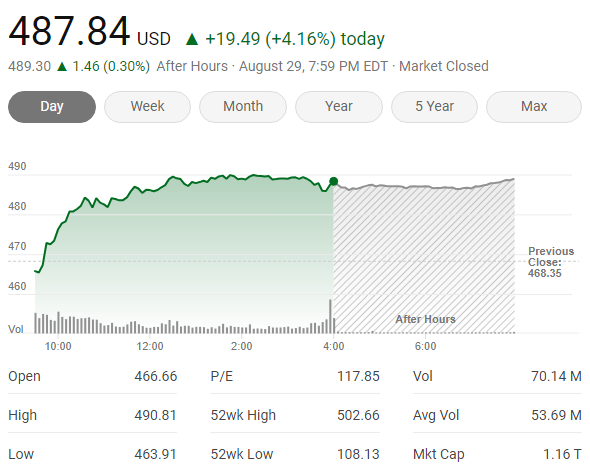
Nvidia shares rose 4.2% Tuesday 29th August 2023 to close at a record high, after the company announced a partnership with Google that could expand distribution of its artificial intelligence technology (AI).
The stock’s bountiful run continued, now up 234% in 2023, making it by far the best performer in the S&P 500. Facebook parent Meta is second in the index, up 148% so far this year.
The record close comes less than a week after the company said quarterly revenue doubled from a year earlier and gave a forecast indicating that sales this period could rise 170% on an annual basis. The day after the better-than-expected earnings report, the stock climbed to a record intraday high of $502.66 before declining later in the afternoon.
Nvidia’s business is booming because its graphics processing (GPU’s) are being gobbled up by cloud companies, government agencies and startups to train and deploy generative AI models like the technology deployed in OpenAI’s ChatGPT as fasta as Nvidia can make them.
NVIDIA stock chart
Nvidia announcment
On Tuesday 29th August 2023, Nvidia CEO Jensen Huang appeared at a Google conference to announce an AI agreement between the two companies.
Through the partnership, Google’s cloud customers will have greater access to technology powered by Nvidia’s powerful H100 GPUs.
‘Our expanded collaboration with Google Cloud will help developers accelerate their work with infrastructure, software and services that supercharge energy efficiency and reduce costs’, the Nvidia CEO reportedly said in a blog post.
Nvidia’s GPUs are also available on competing cloud platforms from Amazon and Microsoft.
Arm is a British semiconductor and software design company that is known for its Arm processors, which are widely used in smartphones, tablets, laptops, and other devices. Arm was founded in 1990 as a joint venture between Acorn Computers, Apple Computer, and VLSI Technology. The company was originally called Advanced RISC Machines, but later changed its name to Arm Ltd in 1998.
In 1985, the first Arm silicon chip was created by Acorn engineers Sophie Wilson and Steve Furber, who designed a 32-bit processor with a simple and elegant instruction set.
In 1990, Arm was spun off from Acorn as a separate company, with Apple as a major investor. Arm’s first product was the ARM6 processor, which was used in Apple’s Newton personal digital assistant.
Impression of the Apple Newton PDA device
In 1993, Arm introduced the ARM7 processor, which became one of the most successful embedded processors in history. It was used in devices such as the Nokia 6110 mobile phone, the Nintendo Game Boy Advance, and the Lego Mindstorms robotics kit.
In 1994, Arm launched the ARM9 processor family, which offered higher performance and lower power consumption than previous generations. The ARM9 was used in devices such as the Sony PlayStation Portable, the Palm Treo smartphone, and the Amazon Kindle e-reader.
In 1997, Arm introduced the ARM10 processor family, which featured a superscalar architecture and a floating-point unit. The ARM10 was used in devices such as the Apple iPod, the Samsung Galaxy S smartphone, and the Raspberry Pi computer.
In 1998, Arm changed its name from Advanced RISC Machines to Arm Ltd, reflecting its global expansion and recognition.
In 1999, Arm launched the ARM11 processor family, which featured a vector floating-point unit and a TrustZone security extension. The ARM11 was used in devices such as the iPhone 3G, the Nintendo DS, and the Raspberry Pi Zero.
In 2000, Arm became a public company, listing on the London Stock Exchange and the Nasdaq. The company raised £213 million in its initial public offering.
In 2001, Arm introduced the Cortex processor family, which offered a range of performance, power, and cost options for different applications. The Cortex processors are used in devices such as the Samsung Galaxy S10, the Apple Watch, and the Tesla Model 3.
In 2005, Arm acquired Artisan Components, a provider of physical intellectual property (IP) for chip design. This enabled Arm to offer a complete solution for system-on-chip (SoC) development.
In 2006, Arm announced the Mali graphics processing unit (GPU) family, which complemented its CPU offerings with high-performance graphics capabilities. The Mali GPUs are used in devices such as the Huawei Mate 20 Pro, the Oculus Quest, and the Samsung Smart TV.
Artistic image of ARM chip
In 2009, Arm partnered with IBM, Samsung, Texas Instruments, and others to form the Linaro consortium, which aimed to improve the Linux software ecosystem for Arm-based devices.
In 2010, Arm unveiled the Cortex-A15 processor, which was the first Arm processor to support virtualization and big.LITTLE technology. The Cortex-A15 was used in devices such as the Google Nexus 10, the LG G3, and the Nintendo Switch.
In 2011, Arm announced the Cortex-M0+ processor, which was the world’s most energy-efficient microcontroller. The Cortex-M0+ was used in devices such as the Arduino Nano 33 IoT, the Fitbit Flex 2, and the Nest Thermostat.
In 2012, Arm launched the Cortex-A53 and Cortex-A57 processors, which were the first Arm processors to support the 64-bit ARMv8 architecture. The Cortex-A53 and Cortex-A57 were used in devices such as the iPhone 6s, the Samsung Galaxy S6 Edge+, and the Microsoft Surface Pro X.
In 2013, Arm acquired Geomerics, a developer of real-time lighting technology for video games. This enhanced Arm’s graphics portfolio with dynamic illumination and global illumination effects.
In 2014, Arm introduced the Cortex-A72 processor, which delivered a 50% performance improvement over the previous generation. The Cortex-A72 was used in devices such as the Huawei P9, the Xiaomi Mi 5s Plus, and the Amazon Fire HD 10.
In 2015, Arm announced the Cortex-A35 processor, which was the most efficient Arm processor for smartphones and tablets. The Cortex-A35 was used in devices such as the Nokia 2.1, the Samsung Galaxy J2 Core, and the Lenovo Tab M7.
In 2016, Arm was acquired by SoftBank Group for £24.3 billion, becoming a subsidiary of the Japanese conglomerate. The deal was motivated by SoftBank’s vision of investing in technologies that would drive the future of artificial intelligence (AI), internet of things (IoT), and smart cities.
In 2017, Arm launched Project Trillium, a suite of machine learning (ML) solutions that included an ML processor , an object detection processor , and an open-source software framework. The Project Trillium products aimed to enable low-power and high-performance ML applications on edge devices.
In 2018, Arm unveiled the Cortex-A76 processor , which offered a 35% performance boost over its predecessor. The Cortex-A76 was used in devices such as the OnePlus 7T, the Huawei MateBook D14, and the Acer Chromebook Spin 13.
In 2019, Arm announced the Cortex-A77 processor , which improved on its predecessor with a higher clock speed, a larger cache, and better branch prediction . The Cortex-A77 was used in devices such as the Samsung Galaxy S20, the Asus ROG Phone II, and the Lenovo Yoga C940.
In 2020, Arm introduced the Cortex-X1 processor , which was its most powerful CPU design to date. The Cortex-X1 was designed to deliver peak performance for premium device , such as flagship smartphones, laptops and gaming consoles. The Cortex-X1 was used in devices such as the Samsung Galaxy S21 Ultra, the Xiaomi Mi 11, and the Google Pixel 6.
In 2021, Arm launched the Cortex-A78C processor , which was optimized for high-performance computing (HPC) applications. The Cortex-A78C featured up to eight CPU cores , a larger L3 cache, and support for ECC memory. The Cortex-A78C was used in devices such as the Samsung Galaxy Book Pro, the HP Elite Folio , and the Acer Chromebook Spin 513.
Microchip
In 2022, Arm unveiled the Cortex-A710 processor, which was its first big core to support the Armv9 architecture. The Cortex-A710 offered a 30% energy efficiency improvement over its predecessor, as well as enhanced security and ML features. The Cortex-A710 was used in devices such as the OnePlus 10 Pro, the Huawei MatePad Pro 2, and the Microsoft Surface Laptop Studio.
In 2023, Arm announced the Immortalis GPU family , which was its next-generation graphics solution that included hardware-based ray-tracing and variable rate shading capabilities . The Immortalis GPUs aimed to deliver realistic and immersive graphics for gaming, VR and AR applications on mobile devices . The Immortalis GPUs were used in devices such as the Samsung Galaxy S22 Ultra , the Sony Xperia 1 IV, and the Oculus Quest 3.
Powerful world presence
Arm is a leading semiconductor and software design company that has revolutionized the computing industry with its innovative and efficient processor architectures. Arm’s processors power billions of devices across various domains, such as mobile, IoT, AI, HPC, and gaming. Arm has been at the forefront of technological advancements for over three decades, delivering performance, energy efficiency, and security to its customers and partners.
Arm is a subsidiary of SoftBank Group and has a massive global presence.
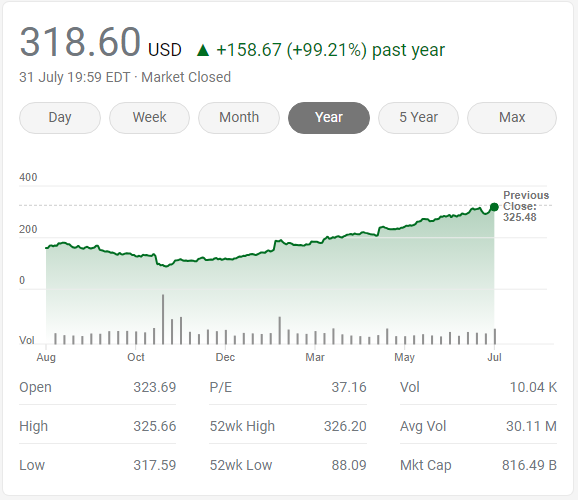
British microchip designing giant Arm has announced that it has filed paperwork to sell its shares in the U.S.
The Cambridge-based company, which designs chips for devices from smartphones to game consoles, plans to list on New York’s Nasdaq in September. The highly anticipated IPO in the U.S. comes after UK Prime Minister, failed to convince Arm to float in London or pursue a dual UK-U.S. listing.
Arm’s decision to list in New York rather than London has fuelled fears that the City is losing its competitiveness to Wall Street, where valuations are typically higher. SoftBank-owned chip designer Arm on 21st August 2023 disclosed a modest 1% fall in annual revenue as it made public the paperwork for a U.S. listing that is expected to be the year’s biggest initial public offering. The company is reportedly looking for a valuation of between $60bn (£47bn) to $70bn.
Arm was bought in 2016 by Japanese conglomerate Softbank in a deal worth £23.4bn. Prior to the takeover, it was listed in both London and New York for 18 years.
Companies that use ARM processors in their products
Some of the companies that use ARM processors include Apple, Qualcomm, Samsung, Broadcom, and Fujitsu. ARM technology is used in a wide range of devices, from smartphones to game consoles to supercomputers.
ARM
Arm is a British semiconductor and software design company that is known for its Arm processors, which are widely used in smartphones, tablets, laptops, and other devices. Arm was founded in 1990 as a joint venture between Acorn Computers, Apple Computer, and VLSI Technology. The company was originally called Advanced RISC Machines, but later changed its name to Arm Ltd in 1998.
Meta Platforms, Inc. (Nasdaq: META), formerly known as Facebook, has seen its stock price soar in 2023, a straight nine month gain in a massive turnaround after a dismal performance in 2022.
Meta is the parent company of social media apps such as Facebook, Instagram, WhatsApp and Messenger, as well as the Oculus VR headset and other ventures.
Year of efficiency
Meta’s founder and CEO Mark Zuckerberg has declared 2023 as the ‘Year of Efficiency‘ for the company, as it tries to cut costs and streamline its operations. The company has also announced layoffs of about 10% of its workforce in 2022 and 2023, as part of its restructuring efforts.
Meta’s stock has almost doubled since January, making it among the top performers on the S&P 500. The company has also seen a boost in the number of daily active users on Facebook, reaching two billion as of the end of December 2022. Meta’s net worth is currently at $89.9 billion, making Zuckerberg the 12th wealthiest person on the planet, according to Bloomberg’s Billionaire Index.
Surge
Meta’s stock surge comes after a sharp decline in 2022, when the company faced regulatory scrutiny, public backlash and technical glitches over its plans to expand into the metaverse, a virtual reality world where people can interact with each other and through digital content.
Meta’s stock plummeted by over 60% last year, as Zuckerberg struggled to sell Wall Street on his vision for the future of social media.
Future
Meta is still betting on the metaverse as its long-term goal, and has been investing heavily in AI, VR and AR technologies. The company is reportedly working on a new social media app called ‘Instagram for your thoughts‘, which would allow users to share their thoughts and emotions using brain-computer interfaces.
The app could launch as soon as next month, according to latest reports.
Threads is a new app, owned by Meta (Facebook), and built by theInstagram team, for sharing public conversations akin to Twitter. You log in using your Instagram account and posts can be up to 500 characters long and include links, photos, and videos with a 5 minute limit. Threads is Meta’s first app envisioned to be compatible with an open social networking protocol
Threads is seen by many as a direct competitor toTwitter, the social media platform owned by billionaire Elon Musk. Threads has been setting records for user growth since its launch on July 5, 2023, with politicians, celebrities, news creators and users joining the platform. Threads surpassed 100 million user ‘sign-ups’ within five days of launch according to information from Meta.
Projected to create revenue of $8 billion by 2025
Threads is projected to contribute a staggering$8 billion to Meta’s annual revenue by 2025. The report further highlights that Threads has already garnered 1 million sign-ups and is on track to reach an impressive milestone of 1 billion users in the near future.
User drop-off to be expected?
However, some recent news reports suggest that Threads has encountered challenges in retaining its users and competing with Twitter. Threads ‘daily active users’ is reporteded to have fallen from 49 million two days after its launch, to 23.6 million users about three weeks later in July 2023, according to reports. The app’s average usage time also fell from 21 minutes to 6 minutes over the same timeframe.