
EU cuts interest rates again down to 2.5%

ECB interest rate cut

The European Central Bank (ECB) on 6th March 2025 reduced its interest rates to 2.5%, marking the sixth reduction since June 2024

The bank stuck to its plan in the face of economic challenges, including threats of U.S. tariffs and plans to boost European military spending.

This move reflects a shift in focus from combating inflation to supporting economic growth in the Eurozone.

Inflation has eased to 2.4% in February, and the ECB expects it to stabilise around its 2% target.

Economic growth forecasts for 2025 and 2026 have been lowered to 0.9% and 1.2%, respectively.

Trump’s U.S. Bitcoin reserve plan falls short of expectations

National U.S. crypto reserve

The cryptocurrency market faced a significant downturn following the announcement of President Donald Trump’s U.S. Bitcoin reserve plan

The initiative aimed to position the United States as a global digital asset leader fell short of market expectations, triggering a wave of selloffs.

Bitcoin, the flagship cryptocurrency, experienced a 3% drop, trading at $87,586.86 before dipping further to $84,688.13. Other major cryptocurrencies, including Ethereum, XRP, and Solana, also saw declines, with Cardano’s ADA token suffering a sharp 13% drop.

The market’s reaction underscores the gap between investor hopes and the plan’s immediate implications.

The executive order established a strategic bitcoin reserve funded exclusively by assets seized in criminal and civil proceedings. While this approach ensures no taxpayer burden, it disappointed investors who anticipated direct government purchases to bolster Bitcoin’s value.

White House Crypto and AI Czar David Sacks emphasised the reserve’s role as a ‘digital Fort Knox’, but the lack of immediate buy pressure dampened market sentiment.

The broader economic context also played a role. Weakness in equities and ongoing tariff concerns added to the uncertainty, compounding the market’s reaction.

Analysts noted that while the reserve plan is a step toward legitimising cryptocurrencies, its short-term impact on prices was underwhelming.

Despite the initial disappointment, the strategic reserve could have long-term benefits. By centralising and securing digital assets, the U.S. government aims to strengthen its position in the global financial system.

However, for now, the market remains volatile, reflecting the challenges of balancing innovation with investor expectations.

As the crypto landscape evolves, the success of such initiatives will depend on their ability to deliver tangible value to both the market and the broader economy.

Will the U.S. government create a strategic crypto reserve by directly buying the digital asset and holding it as a national reserve?

At this moment in time, only Trump has that ‘key’.

China announces 7.2% increase in defence spending and targets around 5% growth for 2025

China has unveiled plans for 2025, announcing a 7.2% increase in defence spending alongside a GDP growth target of around 5%

These decisions, revealed during the annual National People’s Congress in Beijing, reflect the nation’s strategic priorities amid a challenging and fast changing global landscape.

The 7.2% rise in defence spending mirrors last year’s increase, underscoring China’s commitment to modernizing its military capabilities. With a defence budget of approximately 1.78 trillion yuan ($245.7 billion), China maintains the world’s second-largest military budget, though it remains significantly smaller than that of the United States.

The funds are expected to support advancements in high-tech military technologies, including stealth fighters, aircraft carriers, and nuclear capabilities. This move comes as China navigates heightened tensions with the U.S., territorial disputes in the South China Sea, and concerns over Taiwan.

On the economic front, the target of around 5% GDP growth signals a cautious yet determined approach to sustaining economic momentum.

This figure aligns with last year’s target and reflects the government’s focus on addressing domestic challenges, such as a sluggish property market and subdued consumer spending, while countering external pressures like trade tensions with the U.S.

Premier Li Qiang emphasized the importance of boosting domestic consumption and fostering innovation to achieve this goal.

China’s dual focus on defence and economic growth highlights its efforts to balance national security with economic stability.

However, the path forward is fraught with uncertainties, including geopolitical tensions and the need for structural economic reforms.

As the world watches, China’s ability to navigate these challenges will shape its trajectory in the years to come.
China says

‘Tariff war, a trade war or any other type of war’ – China says it’s ready to fight U.S. until the end.

Ominous!

Global markets slide into chaos as Trump pushes his ‘America First Agenda’

U.S. tariffs

Global markets have been thrown into turmoil following the announcement of sweeping tariffs by U.S. President Donald Trump

U.S. tariffs, which include a 25% levy on imports from Canada and Mexico and a 10% increase on Chinese goods, have sparked fears of a global trade war. Retaliatory measures from Canada and China have only added to the uncertainty, sending shockwaves through financial markets worldwide.

The FTSE 100, London’s blue-chip index, fell by 1.3%, marking its steepest decline since October last year. Across the Atlantic, Wall Street saw significant losses, with the S&P 500 dropping 1.6% and the Dow Jones Industrial Average falling 1.7%. European markets were not spared, as Germany’s DAX and France’s CAC 40 plunged by 3.5% and 2.1%.

Investors are increasingly concerned about the long-term implications of these tariffs. The measures threaten to disrupt global supply chains, inflate costs, and dampen economic growth. Analysts warn that prolonged trade tensions could push the global economy closer to a recession.

The tariffs have also had a notable impact on currency markets. The U.S. dollar weakened against major currencies, with the pound rising to a six-week high of $1.27. Meanwhile, safe-haven assets like gold saw a surge in demand, with prices climbing above $2,900 per ounce.

Oil markets were not immune to the fallout, as Brent crude futures dropped to a three-month low of $70.65 per barrel. The decline reflects growing concerns over reduced demand amid escalating trade tensions.

As the world braces for further economic uncertainty, the focus now shifts to how global leaders will navigate these turbulent waters.

The stakes are high, and the path forward remains uncertain.

Trump’s tariffs tumble markets!

Stocks go red!

Trump’s tariffs have created fresh concern and new volatility in the markets forcing a stock market reversal.

The tariffs, which include a 25% duty on imports from Mexico and Canada, as well as a 10% levy on Chinese goods, have led to significant market volatility.

Investors remain cautious as they assess the long-term implications of these trade restrictions. The tariffs are expected to raise inflation in the U.S. and could potentially lead to a severe market correction.

It’s a complex situation with far-reaching consequences for global trade and the economy.

The S&P 500 retreated on Monday, extending February’s rout and turning red for the year after President Donald Trump’s confirmation of forthcoming tariffs.

The S&P 500 index fell to end at 5849, marking its worst day since December 2024 and bringing its year-to-date performance to a loss of about 0.5%.

The Dow Jones Industrial Average dropped 649 points to finish at 43191. The Nasdaq Composite slid to close at 18350, weighed down by Nvidia’s decline of more than 8%.

Stocks took a notable leg down in the afternoon following President Trump’s reiteration that 25% levies on imports from Mexico and Canada would go into effect on Tuesday 5th March 2025, dashing investors’ hopes of a last-minute deal to avert the full tariffs on the two U.S. allies.

All three indexes traded in positive territory earlier in the day, with the Dow rising nearly 200 points at session highs.

China retaliated with reciprocal tariffs of 15% on some U.S. goods due to take effect 10th. March 2025.

Is the world order being dramatically upended?

Trump announces strategic crypto reserve to including Bitcoin – Solana – XRP – Cardano and Ethereum

Crypto reserve

President Donald Trump has announced the creation of a ‘strategic crypto reserve’ that will include Bitcoin, Ethereum, XRP, Solana, and Cardano.

This move aims to position the United States as the ‘crypto capital of the world’ and has already led to significant price increases for these cryptocurrencies.

The announcement was made on Truth Social, where Trump emphasised the importance of elevating the crypto industry after what he described as years of corrupt attacks by the previous administration.

This is the first time Trump has specified his support for a crypto ‘reserve’ versus a ‘stockpile’.

Many crypto investors feel strongly that a crypto reserve should hold only Bitcoin, while some reject the idea of a reserve holding digital assets altogether.

Cryptocurrencies instantly rallied after President Donald Trump announced the creation of a strategic crypto reserve.

Crypto coins have since lost some of those initial gains.

Rolls-Royce shares jump 15% on impressive earnings report

Rolls-Royce accouts

Rolls-Royce’s share price surged by 15% following the announcement of its impressive full-year earnings and positive outlook.

The British aerospace giant reported a 57% increase in operating profit, reaching £2.46 billion for 2024. This exceeded analyst expectations and was driven by strong performance in its jet engine and power systems divisions.

In addition to the robust earnings, Rolls-Royce reinstated its dividend, proposing a 6 pence per share payout, and launched a £1 billion share buyback program.

The company also upgraded its mid-term guidance, projecting operating profit to rise to between £3.6 billion and £3.9 billion.

The market reacted positively to these developments, with Rolls-Royce’s stock hitting a new 52-week high.

Rolls-Royce one-year chart (as of 28th February 2025 09:50 GMT)

Rolls-Royce one-year chart (as of 28th February 2025 09:50 GMT)

The company’s CFO, Helen McCabe, highlighted the significant progress made in their multi-year transformation journey, emphasising the expanding earnings potential and improving balance sheet.

Bitcoin hits reverse after Trump election pump!

Bitcoin

This week has seen a decline in Bitcoin with the digital asset hitting a 3-month low, reversing gains that followed the election of U.S. President Donald Trump.

Bitcoin was trading at about $78,700 in trading in Asia, down 5.5% on the day and about 25% lower than an all-time high from December 2024.

Bitcoin 3-month chart as of 28th February 2025 (08:45 GMT)

Bitcoin 3-month chart as of 28th February 2025 (08:45 GMT)

Bitcoin slips

Bitcoin had enjoyed a surge in prices following Trump’s election victory in November 2024, with Trump having posed himself as a pro-crypto candidate during his campaign.

However, prices have slipped as investors turn-away from assets perceived to be too risky given the weakness in global equity markets and amid uncertainty surrounding the new President’s tariff policy and resolutions to the Russia-Ukraine and Israel-Gaza wars.

Investor sentiment was also soured by news that Bybit, a major cryptocurrency exchange, suffered a $1.5 billion hack in what’s estimated to be the largest crypto heist in history.

Bitcoin ETF activity is still prominent.

Federal Reserve’s preferred recession indicator is flashing red again!

U.S. inverted yield curve

The Federal Reserve’s favourite recession indicator, the inverted yield curve, is flashing a danger sign once again.

This occurs when the U.S. yield on the 10-year Treasury note falls below that of the 3-month note. Historically, this has been a reliable predictor of economic downturns, with a strong track record over a 12-18-month timeframe.
The New York Fed closely monitors this indicator and provides monthly updates on the probability of a recession occurring within the next 12 months.

As of January 2025, the probability was just 23%, but this is expected to change significantly due to the recent inversion in the coming months.

The inversion suggests that investors are becoming more risk-averse and are anticipating a slowdown in economic activity.

While the yield curve inversion has a strong forecasting history, it is not perfect, and there is no certainty that growth will turn negative this time around

Nvidia sales grow 78% on AI demand – gives strong guidance

AI

Nvidia recently reported its Q4 results, showcasing impressive growth driven by strong demand for AI technology.

The company achieved a record quarterly revenue of $39.3 billion, marking a 78% increase from the previous year.

This growth was primarily fuelled by the success of Nvidia’s Blackwell AI supercomputers, which saw billions of dollars in sales in their first quarter.

The data centre segment, which constitutes the bulk of Nvidia’s revenue, also performed exceptionally well, generating $35.60 billion, up 16% from the previous quarter. Nvidia’s adjusted earnings per share for Q4 were $0.89, surpassing analysts’ expectations of $0.84.

Looking ahead, Nvidia provided strong guidance for Q1, forecasting revenue of $43 billion, which exceeds market expectations of $42.05 billion. The company also projected a gross margin of 70.60% for the upcoming quarter.

The first-quarter forecast indicates a year-over-year growth of approximately 65%, a deceleration from the 262% annual growth recorded in the same period the previous year.

Nvidia’s CEO, Jensen Huang reportedly highlighted the rapid advancements in AI technology and the company’s successful ramp-up of Blackwell AI supercomputers as key drivers of this growth.

Despite facing competition from Chinese AI firms like DeepSeek, Nvidia remains optimistic about the demand for its AI chips.

The company’s robust performance and positive outlook signal continued growth and innovation in the AI sector.

Tesla’s market cap falls below $1 trillion

Tesla

Tesla shares sank 8% on Tuesday 25th February 2025 and have now lost most of their gains that followed President Donald Trump’s election victory in November 2024.

The stock has plunged 25% this year, while the Nasdaq is down 1.5%.

It was also reported on that the company’s long-awaited upgrade of its partially automated driving system in China left owners unimpressed.

Tesla 3-month chart as of 25th February 2025

Tesla 3-month chart as of 25th February 2025

Bump to slump?

The ‘Trump Bump’ – a term referring to the surge in stocks and other assets, such as cryptocurrency, following Donald Trump’s election and inauguration seems to have plateaued.

This is most evident in Tesla shares, which plummeted Tuesday 25th February 2025, wiping out most of the post-election gains linked to CEO Elon Musk’s association with Trump.

Concerns about Tesla pertain to the company’s and Musk’s significant amount of time spent in Washington, D.C.

Investors are increasingly worried about impact of Trump’s tariffs on the economy. A U.S. Conference Board survey indicated pessimism regarding job availability, business conditions, and future income, along with heightened expectations for inflation in 2025.

The 10-year Treasury yield, considered an indicator of growth expectations, declined on this news. Stocks continued to fall. If this trend does not reverse soon, we could be facing a ‘Trump Slump.’

Hackers steal $1.5 billion from Bybit exchange

Crpto theft

Bybit, one of the world’s largest cryptocurrency exchanges, has fallen victim to the biggest crypto heist in history

Hackers managed to steal a staggering $1.5 billion in digital assets, primarily in Ethereum, from Bybit’s cold wallet, an offline storage system designed for ‘security’.

This breach has sent shockwaves through the cryptocurrency community, raising concerns about the security of digital assets.

The attack, which occurred on 21st February 2025, was reportedly traced back to the notorious North Korean hacking group, Lazarus. Known for their sophisticated cyber-attacks, the Lazarus Group exploited vulnerabilities in Bybit’s security infrastructure to gain access to the cold wallet.

Once inside, they swiftly transferred the stolen funds across multiple wallets and liquidated them through various platforms.

Bybit’s CEO, Ben Zhou, reassured users that all other cold wallets remained secure and that withdrawals were operating normally. However, the breach triggered a rush of withdrawals as users feared potential insolvency.

To mitigate the impact, Bybit secured a bridge loan from undisclosed partners to cover any unrecoverable losses and maintain operations.

Blockchain analysis firms, including Elliptic and Arkham Intelligence, have been working tirelessly to trace the stolen assets.

They have labelled the thief’s addresses in their software to prevent the funds from being cashed out through other exchanges. Despite these efforts, the stolen funds are being systematically moved through anonymous exchanges, making it challenging to recover the assets.

This incident highlights the ongoing risks associated with cryptocurrency exchanges and the need for robust security measures. As the industry grapples with the aftermath of this unprecedented heist, experts warn that large-scale thefts remain a fundamental risk in the digital asset space.
Bybit’s response and the collaborative efforts of the crypto community will be crucial in restoring trust and preventing future breaches.
China’s AI vs U.S. AI – competition heats up – and that’s good for business – isn’t it?

DeepSeek AI

The escalating AI competition between the U.S. and China has taken a new turn with the emergence of DeepSeek, a Chinese AI startup that has introduced a low-cost AI model capable of rivaling the performance of OpenAI’s models.

This development has significant implications for data centres and the broader technology sector.

The rise of DeepSeek

DeepSeek’s recent breakthrough involves the development of two AI models, V3 and R1, which have been created at a fraction of the cost compared to their Western counterparts.

The total training cost for these models is estimated at around $6 million, significantly lower than the billions spent by major U.S. tech firms. This has challenged the prevailing assumption that developing large AI models requires massive financial investments and access to cutting-edge hardware.

Impact on data centres

The introduction of cost-effective AI models like those developed by DeepSeek could lead to a shift in how data centers operate.

Traditional AI models require substantial computational power and energy, leading to high operational costs for data centers. DeepSeek’s models, which are less energy-intensive, could reduce these costs and make AI technology more accessible to a wider range of businesses and organizations.

Technological advancements

DeepSeek’s success also highlights the potential for innovation in AI without relying on the most advanced hardware.

This could encourage other companies to explore alternative approaches to AI development, fostering a more diverse and competitive landscape. Additionally, the open-source nature of DeepSeek’s models promotes collaborative innovation, allowing developers worldwide to customise and improve upon these models2.

Competitive dynamics

The competition between DeepSeek and OpenAI underscores the broader U.S.-China rivalry in the AI space. While DeepSeek’s models pose a limited immediate threat to well-funded U.S. AI labs, they demonstrate China’s growing capabilities in AI innovation.

This competition could drive both countries to invest more in AI research and development, leading to faster technological advancements and more robust AI applications.

Broader implications

The rise of DeepSeek and similar Chinese and other AI startups could have far-reaching implications for the global technology sector.

As AI becomes increasingly integrated into various industries, the ability to develop and deploy AI models efficiently will be crucial.

Data centres will need to adapt to these changes, potentially investing in more energy-efficient infrastructure and exploring new ways to support AI workloads.

Where from here?

DeepSeek’s emergence as a significant player in the AI race highlights the dynamic nature of technological competition between the U.S. and China.

While the immediate impact on data centres and technology may be limited, the long-term implications could be profound.

As AI continues to evolve, the ability to innovate cost-effectively and collaborate across borders will be key to driving progress and maintaining competitiveness in the global technology landscape.

UK Government finances in surplus but…

UK finances

The UK government has announced a significant budget surplus for January 2025, marking a notable achievement in its fiscal management

The surplus, which is the difference between what the government spends and the tax it takes in, amounted to £15.4 billion. This figure represents the highest level for the month of January since records began over three decades ago.

However, despite this impressive surplus, the figure fell short of the Office for Budget Responsibility’s (OBR) forecast of £20.5 billion. The shortfall has increased pressure on Chancellor Rachel Reeves to meet her self-imposed fiscal rules.

The OBR, which monitors the government’s spending plans and performance, will release its latest outlook for the UK economy and public finances on 26 March 2025.

The surplus was driven by a surge in tax receipts, particularly from self-assessed taxes, which are typically higher in January compared to other months. However, the lower-than-expected tax receipts suggest underlying weaknesses in the UK economy.

The Office for National Statistics (ONS) reported that borrowing in the financial year to January 2025 was £118.2 billion, which is £11.6 billion more than at the same point last year.

The government now faces the challenge of balancing its fiscal rules with the need to support economic growth. Weak economic growth and higher borrowing costs have reduced the headroom available to the Chancellor, making it more difficult to meet her fiscal targets.

Economists have suggested that Reeves may need to consider raising taxes or cutting public spending to stay within her fiscal rules.

As the UK economy continues to navigate these challenges, the government’s ability to manage its finances effectively will be crucial in maintaining credibility with financial markets and ensuring long-term economic stability.

The upcoming Spring Forecast will be a critical moment for the UK Chancellor to outline her plans and address the fiscal challenges ahead

Microsoft’s Quantum Leap: The Majorana 1 Chip

Quantum Physics

Microsoft has unveiled a new chip called Majorana 1 that it says will enable the creation of quantum computers able to solve ‘meaningful, industrial-scale problems in years, not decades’.

What is Microsoft’s Majorana 1?

It is the latest development in quantum computing – tech which uses principles of particle physics to create a new type of computer able to solve problems ordinary computers cannot.

Microsoft has announced a game-changing development in the world of quantum computing: the Majorana 1 chip. This revolutionary chip integrates eight topological quantum bits (qubits), setting a new standard for stability and resistance to environmental interference.

Microsoft. The new Majorana 1 chip

The Majorana 1 chip is built on a unique combination of indium arsenide, a semiconductor, and aluminum, a superconductor. This cutting-edge design enables the chip to create a topological state, a new form of matter that encodes information in a way that is inherently noise-resistant. This means that the Majorana 1 chip can maintain its quantum state longer, making it more reliable for complex computations.

What sets the Majorana 1 chip apart is its use of topoconductors, a new class of materials developed by Microsoft’s researchers over nearly two decades. These materials provide a high level of error protection, which is essential for practical quantum computing applications. The Majorana 1 chip is a significant step toward the ultimate goal of creating quantum computers with millions of qubits, capable of solving complex industrial and societal problems.

While the Majorana 1 chip is still in the research phase and not yet available for commercial use, it represents a monumental leap forward in quantum technology. Microsoft’s commitment to advancing quantum computing is evident in the substantial investment of time and resources required to develop this groundbreaking chip.

In summary, the Majorana 1 chip is poised to transform the landscape of quantum computing, offering a more stable and reliable platform for future innovations. This development marks a pivotal moment in the quest for practical and scalable quantum computing solutions.

What is Quantum computing?

Quantum computing is a revolutionary technology that uses the principles of quantum mechanics to process information in a fundamentally different way than classical computers, allowing for exponentially faster calculations in certain tasks.

It leverages qubits, which can represent multiple states simultaneously, enabling complex problem-solving and data analysis beyond the capabilities of traditional computing.

Microsoft says powerful quantum computers will be a reality in years not decades.

Musk’s xAI releases new Grok 3 AI

xAI Grok AI

Elon Musk’s AI company, xAI, has recently released its latest AI model, Grok 3.

This new AI model is designed to be significantly more powerful and capable than its predecessor, Grok 2.
  • Enhanced Capabilities: Grok 3 boasts 10 times more computing power than Grok 2 and has been trained on an expanded dataset, including court case filings.
  • Reasoning Models: Grok 3 includes reasoning models that can carefully analyze and fact-check information before providing responses. This helps in avoiding common pitfalls of AI models.
  • Benchmark Performance: Grok 3 has outperformed other leading AI models, including OpenAI’s GPT-4o and DeepSeek’s R1, on various benchmarks such as AIME (math questions) and GPQA (physics, biology, chemistry problems).
  • New Features: The Grok app now includes a ‘DeepSearch’ feature that scans the internet and xAI’s social network, X, to provide summarised responses to user queries.
  • Subscription Plans: xAI has introduced a new subscription plan called SuperGrok, which offers additional reasoning capabilities and unlimited image generation.

Grok 3 is being hailed as the ‘smartest AI on Earth’ by Musk, and it’s expected to have a significant impact on various industries.

Definition

Grok is a neologism (a newly coined word or expression), referenced by Robert A. Heinlein for his 1961 science fiction novel Stranger in a Strange Land. It means to understand something so deeply that you become one with it.

Grok is a term used in computer programming to mean to ‘profoundly understand something‘, such as a system, a language, or an algorithm.

Less woke

Grok, the company previously reportedly said, is modelled on ‘The Hitchhiker’s Guide to the Galaxy’. 

It is supposed to have ‘a bit of wit, a rebellious streak’ and it should answer the ‘spicy questions’ that other AI might dodge, according to a statement from xAI.

I wonder if it has been modelled on Elon Musk?

UK inflation higher-than-expected at 3% in January 2025

UK Inflation up

UK inflation rose sharply in January 2025 after airfares failed to fall by as much as usual and private school fees jumped.

The higher-than-expected inflation increase to 3% in the year to January 2025, from 2.5% in December 2024, means that consumer prices rose at the fastest rate for 10 months.

Why?

The U.K.’s inflation rate rose sharply to 3% in January, coming in above analyst expectations of a 2.8% reading, according to data released by the Office for National Statistics (ONS) on Wednesday 19th February 2025.

Core inflation, which excludes more volatile items such as energy, food, alcohol and tobacco prices, rose by 3.7% in the 12 months to January 2025, which was up from 3.2% in the previous month.

The ONS reported Wednesday 19th February 2025 that the largest upward contribution to the monthly change in the CPI came from transport and food and non-alcoholic beverages.

Interest rate reductions will likely pause on this news.

I wonder what spin the UK chancellor add.

Not good!

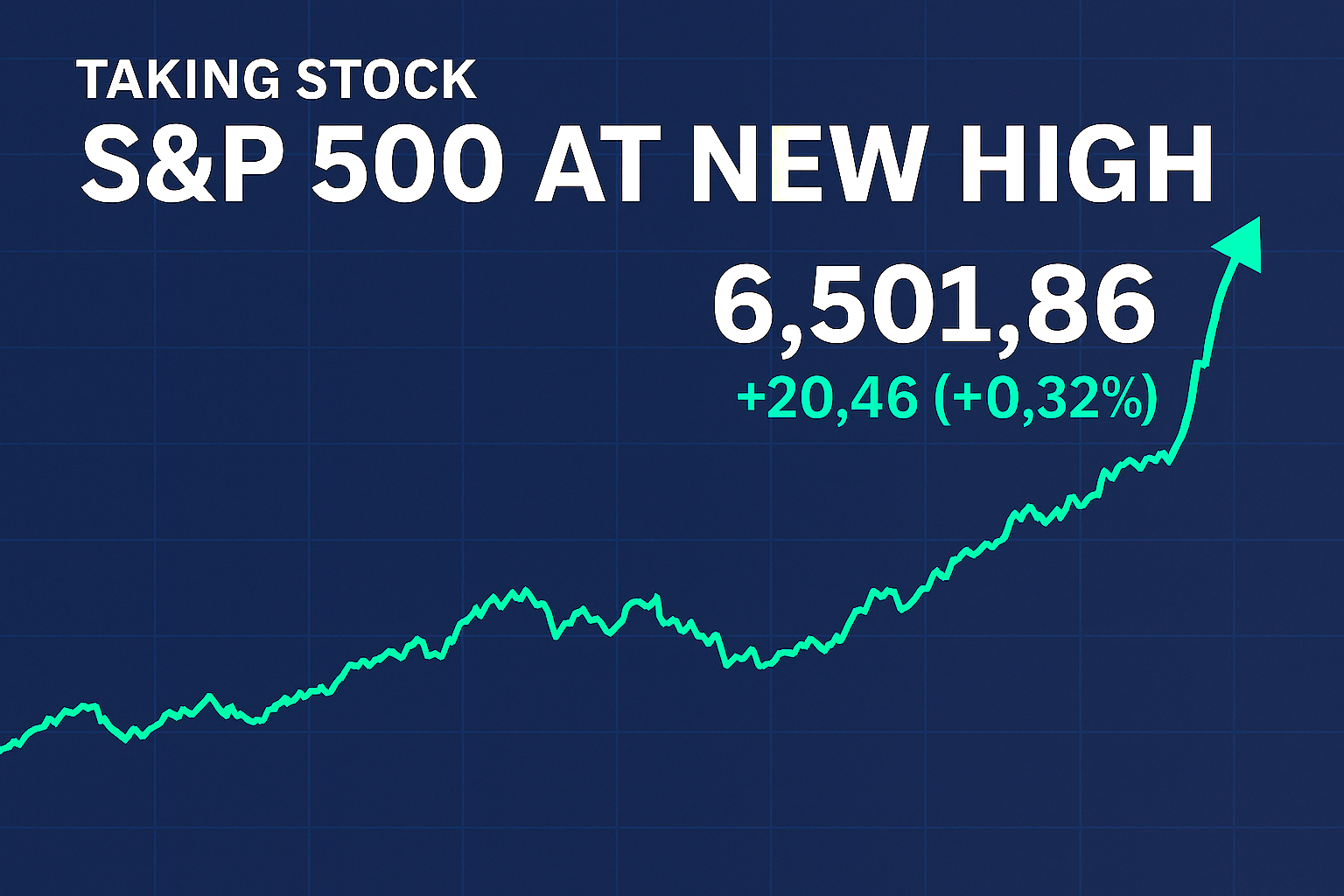
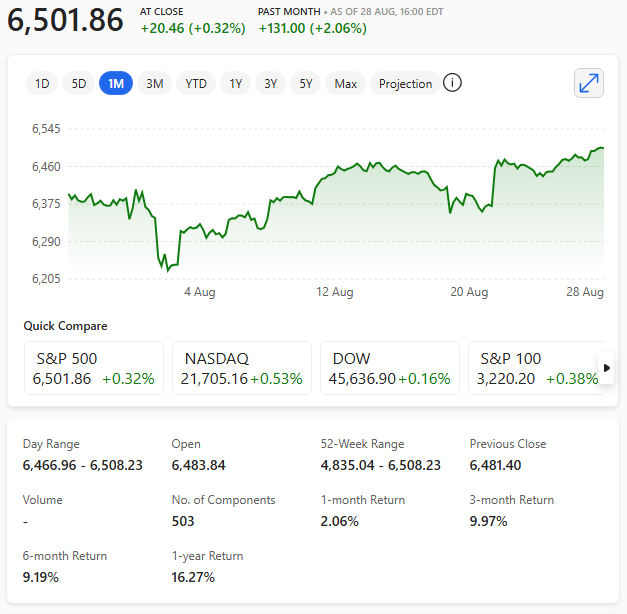
S&P 500 hits new record high

S&P 500 record

The S&P 500 closed at a record high Tuesday 18th February 2025 after investors shook off headwinds on the global trade and inflation

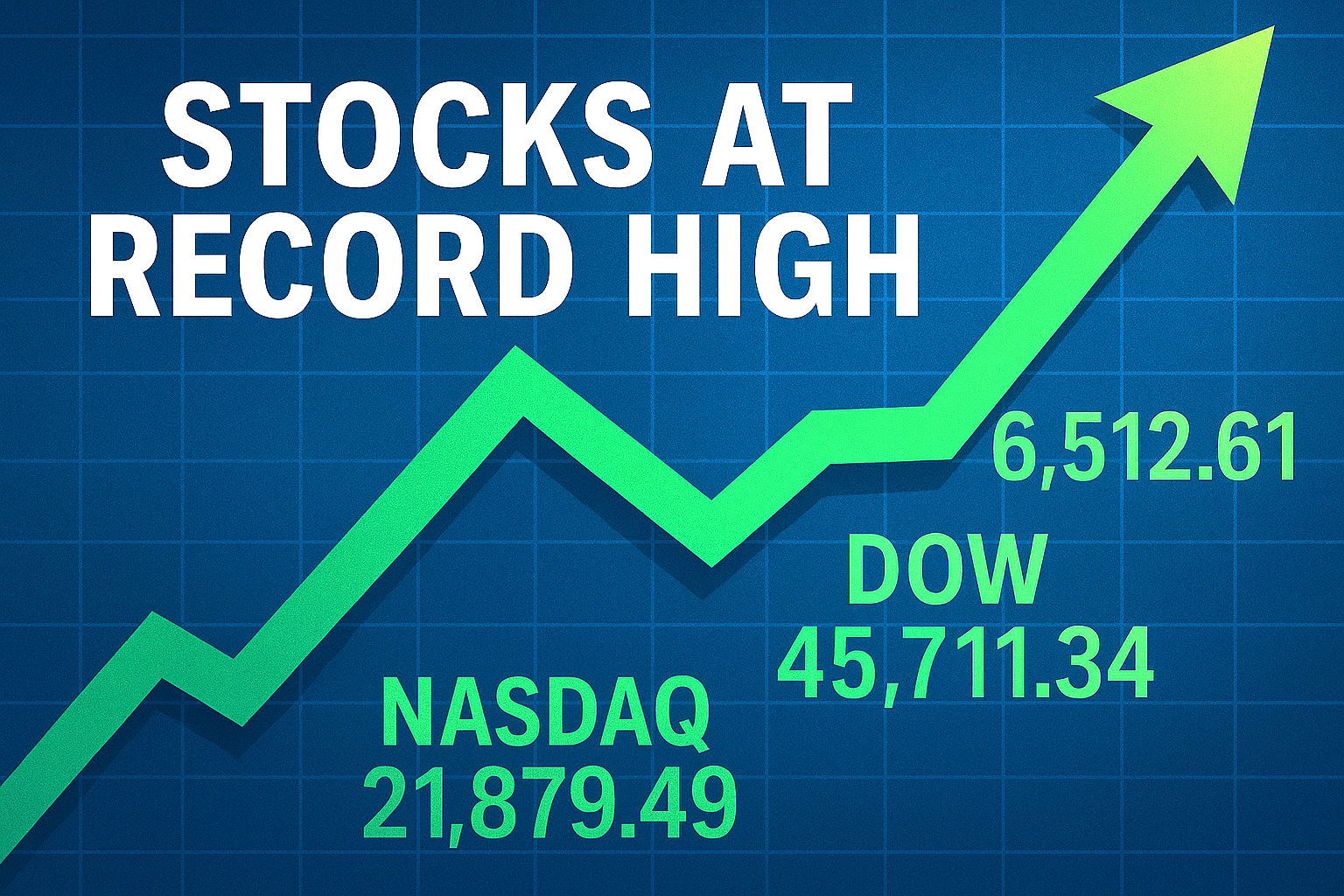
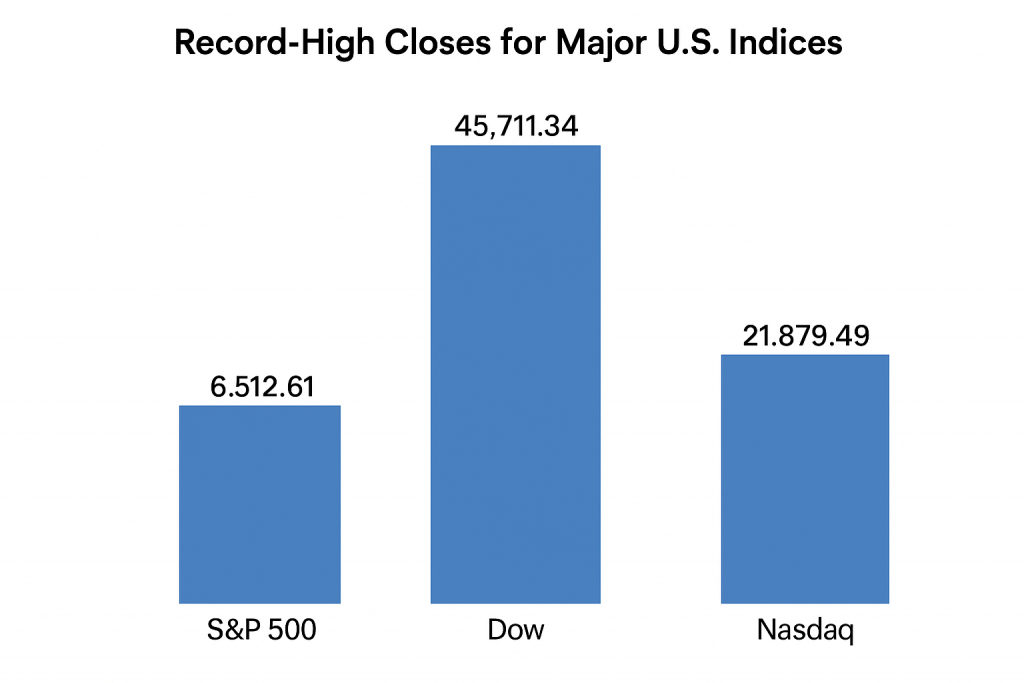
The S&P 500 index gained 0.24% to close at a record of 6129 on 18th February 2025. The Nasdaq Composite closed up at 20041 while the Dow Jones Industrial Average added finished the day at 44556.

S&P 500 hits new record high to close at 6129 as of 18th February 2025

The energy sector was the top performer in the S&P 500, increasing by 1.9%. Halliburton and Valero Energy spearheaded the gains. Technology stocks also gained.

The general consensus is that the market is still trying to break out of the consolidation it’s been in since early December. This week we see retail earnings, but news on Trumps tariffs could continue to be a wild card for the markets.

Wall Street is coming off a winning week. The Dow Jones gained around 0.6% last week, while the S&P 500 advanced 1.5%. The Nasdaq rose 2.6%.

Much of last week’s gains occurred later in the week after President Donald Trump’s proposal for reciprocal tariffs on countries that impose levies on U.S. goods reassured investors who were concerned that the tariffs would be more severe.

Gold or Bitcoin?

Gold or Bitcoin

Gold or Bitcoin: Which Is a Better Investment?

When it comes to investing, two assets often come to mind: gold and Bitcoin.

Both have their unique advantages and disadvantages, and choosing between them depends on your investment goals, risk tolerance, and market outlook.

Historical performance

Gold has been a reliable store of value for thousands of years. Its price has seen steady growth, with a notable increase of 60% from 2010 to 20241.

During the 1970s inflation crisis, gold rose by 2,300%, showcasing its ability to hedge against inflation. Gold ETFs have grown to around $270 billion in assets under management (AUM) by 2024.

Impressive growth some would say but wait… there’s a new kid on the block.

Bitcoin, on the other hand, is a relatively new asset, introduced in 2009. Despite its short history, Bitcoin has seen explosive growth, surging from $4 in 2011 to over $106,000 in 2024 – a growth of more than 2 million percent.

During the 2020-2024 inflationary cycle, Bitcoin increased by 1,185%, highlighting its potential as an inflation hedge.

Volatility and risk

Gold is known for its stability and long-term value preservation. Its volatility index (VIX) is relatively low, making it a safe haven during economic downturns. Investors with long-term goals often prefer gold for its consistent performance and lower risk.

Bitcoin, however, is highly volatile. Its price can fluctuate dramatically within short periods, making it a riskier investment. While Bitcoin offers the potential for high returns, it also comes with the possibility of significant losses. Investors must be prepared for the market’s ups and downs and have a higher risk tolerance.

Inflation hedging

Both gold and Bitcoin are considered effective hedges against inflation. Gold has a long history of maintaining its value during inflationary periods, making it a trusted asset for wealth preservation.

Bitcoin, as a digital asset, has gained recognition as ‘digital gold’ and is increasingly seen as a viable alternative for hedging against inflation.

Regulatory environment

Gold is a well-established asset with a clear regulatory framework. Central banks worldwide hold significant gold reserves, underscoring its role in financial stability. Bitcoin, however, operates in a relatively new and evolving regulatory landscape.

While some countries have embraced Bitcoin, others have imposed restrictions or bans, adding an element of uncertainty to its future.

Accessibility and liquidity

Gold is a tangible asset that can be easily bought and sold. It is widely accessible and has a liquid market, allowing investors to enter and exit positions with ease.

Bitcoin, while also highly liquid, requires a digital wallet and an understanding of cryptocurrency exchanges. Its accessibility can be limited by regulatory and technological barriers.

Is there a conclusion?

Choosing between gold and Bitcoin depends on your investment goals and risk tolerance. Gold offers stability, long-term value preservation, and a lower risk profile, making it suitable for conservative investors.

Bitcoin, with its potential for high returns and inflation hedging, appeals to those with a higher risk tolerance and a belief in the future of digital assets.

Ultimately, diversifying your portfolio with both assets can provide a balanced approach, combining the stability of gold with the growth potential of Bitcoin.

Japan ekes out economic growth of 0.7% in 2024

Japan growth

Japan’s economy showed modest growth in 2024

The economy expanded by 0.7% in the fourth quarter, which was higher than market expectations of 0.3%. However, for the full year, Japan’s GDP growth was just 0.1%, a significant slowdown from the 1.5% growth seen in 2023.

Exports played a key role in boosting economic growth during the fourth quarter, while domestic demand remained relatively weak.

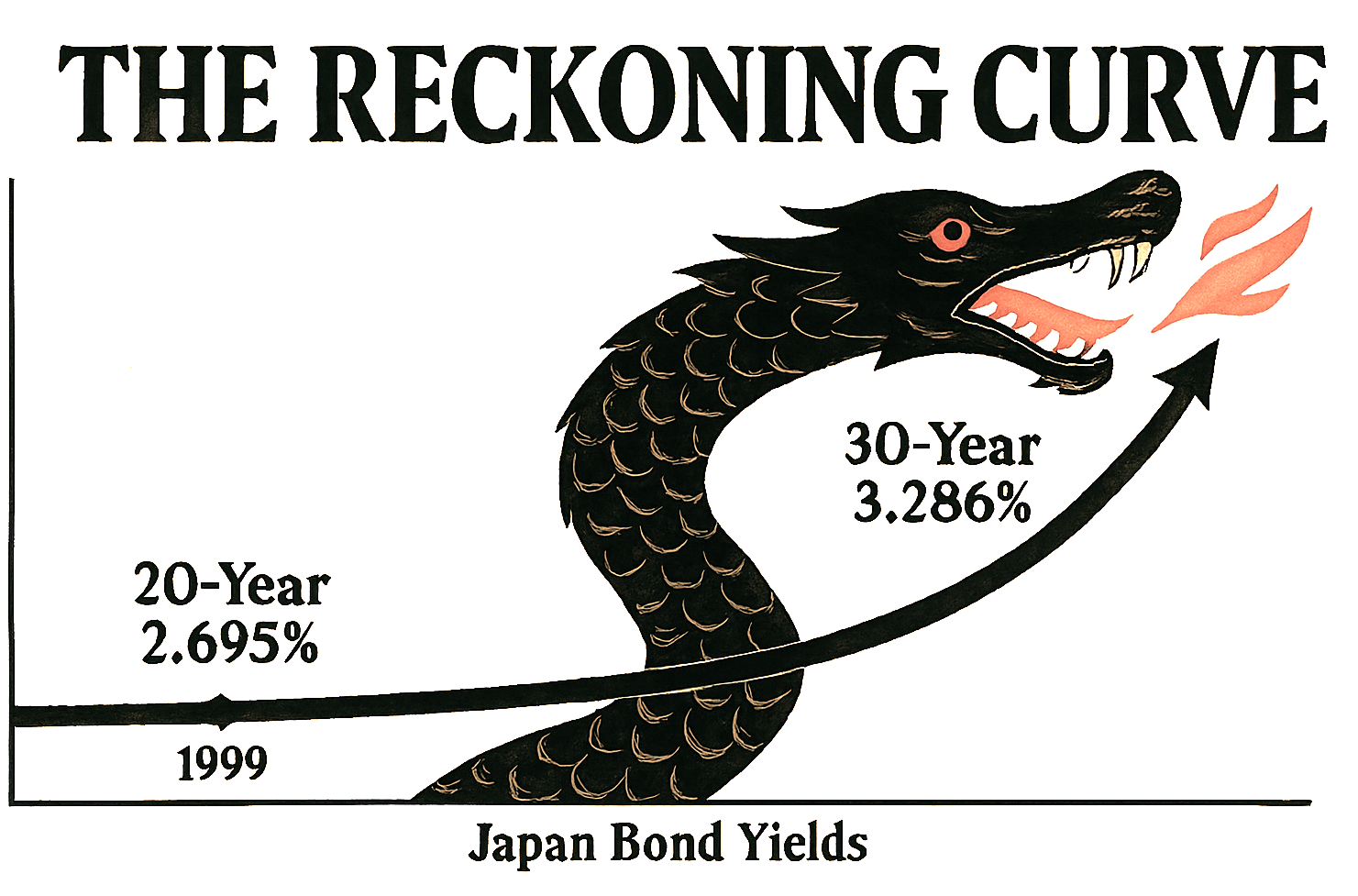
The Bank of Japan has been gradually raising interest rates, signalling a move away from the long-standing policies aimed at combating deflation.

It’s a mixed picture, but there are some positive signs, especially with the increase in business spending and a rebound in inbound consumption

‘Unimaginable’ billionaire wealth surged in 2024 as Oxfam predicts the emergence of five trillionaires within the next 10 years

Wealthiest and poorest

In 2024, billionaire wealth surged to unprecedented levels, with a staggering $2 trillion increase in just one year, according to an Oxfam report.

This rapid growth has led to predictions that the world could see at least five trillionaires within the next decade.

To place this in some context it is has been calculated that there are approximately 150 countries with a GDP of less than $1 trillion. This includes many smaller economies and developing nations.

So, 5 single human beings will likely hold more wealth ‘individually’ than approximately 150 separate countries. One person will be worth more than an entire country!

Oxfam report

The Oxfam report highlights the stark contrast between the wealth of the world’s richest individuals and the persistent poverty faced by millions.

The report reveals that the wealth of billionaires grew three times faster in 2024 compared to the previous year.

This surge in wealth has been attributed to various factors, including booming stock markets, lucrative investments, and favorable economic policies.

However, this concentration of wealth in the hands of a few has raised concerns about growing inequality and its impact on society.

Oxfam‘s findings emphasize the urgent need for bold economic reforms to address this disparity. The report calls for higher taxes on the super-rich and the abolition of tax havens to ensure a fairer distribution of wealth.

It also highlights the importance of investing in public services, such as healthcare and education, to improve the quality of life for all citizens.

Out of whack wealth

The growing concentration of wealth among billionaires has significant implications for global inequality. While the number of people living in poverty has remained largely unchanged since 1990, the wealth of the richest individuals has skyrocketed.

This disparity underscores the need for policies that promote economic fairness and reduce inequality.

The surge in billionaire wealth in 2024 serves as a stark reminder of the growing concentration of wealth and the urgent need for economic reforms.

By implementing policies that promote a fairer distribution of wealth and investing in public services, we can work towards a more equitable society. The emergence of trillionaires within the next decade should be a wake-up call for policymakers to address the root causes of inequality and ensure a better future for all.

World’s most wealthy climbed from $13 trillion to $15 trillion in just 12 months

The combined wealth of the world’s most wealthy rose from $13 trillion to $15 trillion in just 12 months, the global charity said Sunday. It marks the second largest annual increase in billionaire wealth since Oxfam records started.

Meanwhile, the number of people living in poverty has barely changed since 1990, the charity said, citing World Bank Data.

1% of people own nearly 45% of all wealth

The richest 1% of people own nearly 45% of all wealth, while 44% of humanity are living below the World Bank poverty line of $6.85 per day, the data showed.

First trillionaire by 2027 is predicted

Elon Musk, CEO of Tesla and now close ally of Trump, is on track to become the world’s first trillionaire by 2027, according to a report from Informa Connect Academy.

Musk is currently worth about around $440 billion according to the Bloomberg Billionaires Index.

Biden warning

Outgoing U.S. President Joe Biden warned of the rise of an “oligarchy taking shape in America of extreme wealth, power and influence.”

“People should be able to make as much as they can, but pay – play by the same rules, pay their fair share in taxes,” Biden said in his farewell address.

Oxfam

Oxfam is trying to urge governments to commit to ensuring that the incomes of the top 10% are no higher than the bottom 40% worldwide.

Global economic rules should be adjusted to allow for the break-up of monopolies, and more corporate regulation and global tax policies should be adapted to ensure that the rich pay their fair share, according to the charity.

Money that is flowing to the bank accounts of the super-rich instead of much-needed investment in teachers and medicines is “not just bad for the economy — it’s bad for humanity,” said Oxfam’s Behar.

EEK! Only 0.1% growth for the UK

Tepid UK GDP

The U.K. economy grew by just 0.1% in the fourth quarter according to a preliminary estimate from the U.K.’s Office for National Statistics (ONS) released Thursday 13th February 2025.

Economists had expected the country’s GDP to contract by 0.1% over the period.

The services and construction sectors contributed to the better-than-expected performance in the economy, up 0.2% and 0.5% respectively, but production fell by 0.8%, according to the ONS.

Sluggish growth

The UK economy recorded zero growth in the third quarter, accompanied by lacklustre monthly GDP. There was a 0.1% contraction in October 2024 followed by a 0.1% expansion in November 2024.

On Thursday 13th February 2025, the ONS that growth had picked up in December, with an estimated 0.4% month-on-month expansion attributed to growth in and production.

Sluggish and a recent decline in inflation prompted the Bank of England to implement its interest rate cut of the year last week, reducing the benchmark rate to 4.5%.

The central bank indicated that additional rate cuts are anticipated as inflationary pressures diminish. However, it noted that higher energy costs and regulated price changes are projected to increase headline inflation to 3.7% in the third quarter of 2025.

Pressure

The expectation is that UK underlying inflationary pressures will continue to decline. The Bank of England expects the inflation rate to return to its 2% target by 2027.

The bank also halved the U.K.’s economic growth forecast from 1.5% to 0.75% this year.

Poor economic performance will add additional pressure on U.K. Chancellor Rachel Reeves, whose fiscal plans have been criticised for increasing the tax burden on businesses.

Critics say the plans, which increase the amount that employers pay out in National Insurance (NI) contributions as well as a hike to the national minimum wage, could harm investment, jobs and growth. This appears to be coming to fruition.

Chancellor Reeves defended her ‘dire’ Autumn Budget reportedly saying the £40 billion of tax rises were needed to fund public spending and that she is prioritising economic growth.

A poor start – 0.1% is an anaemic growth percentage!

Chinese tech giant Baidu to release next-generation AI model soon as DeepSeek leads Chinese AI tech

AI

China’s Baidu reportedly plans to release the next generation of its artificial intelligence model in the second half of this year, according to information recently reported.

The planned update comes as Chinese companies race to develop innovative AI models to compete with OpenAI and other U.S. based companies.

Baidu was the first major Chinese tech company to roll out a ChatGPT-like chatbot called Ernie in March 2023.

However, despite initial momentum, the product has since been eclipsed by other Chinese chatbots from large tech companies such as Alibaba and ByteDance, as well as startups.

Musk is everywhere!

Elon Musk

Elon Musk is the world’s richest person and the leader of Tesla, SpaceX, X, The Boring Company, x.AI, and Neuralink.

He is also the co-founder of PayPal and Zip2 and now the co-leader of DOGE – of U.S. Department of Government Efficiency and also recently led a group of investors in a bid to acquire OpenAI.

From a business perspective, Musk’s achievements are undeniable and even astonishing. The companies he leads are not only market leaders but also pioneers in their respective fields – consider how Tesla initiated the electric vehicle industry or how SpaceX successfully commercialised spaceflight.

Paradoxically, achieving success on a broad scale can have adverse effects. Investors appear to be increasingly concerned that Musk, despite his business acumen, is becoming distracted.

Tesla shares have declined over the past five trading days, dropping more than 6% on Tuesday 11th February 2025 as Chinese competitor BYD seems to be surpassing the company in AI-enabled autonomous driving.

If hands-free driving becomes a reality at Tesla, it could allow Musk to engage in other ventures without negatively impacting the company’s shares.

What you need to know today

BYD is a Tesla threat – but this is Elon Musk we’re talking about

Tesla shares fell 6.3% Tuesday 11th February 2025 after Chinese EV maker BYD said it will integrate DeepSeek into its autonomous driving technology and offer it in nearly all its vehicles.

There are also concerns over Musk’s distractions, such as his bid for OpenAI and his role at the ‘DOGE’ – Department of Government Efficiency in the White House.

Tesla’s stock price has fallen over 16% in the past five trading days

Tesla’s stock price has fallen over 16% in the past five trading days (5-day chart as of 11th February 2025)

BYD shares hit record as the EV maker rolls out advanced driver tech with DeepSeek’s AI assistance

BYD with DeepSeek AI (fictitious image)

Shares of BYD, the Chinese electric vehicle (EV) giant, surged to a record high on Tuesday 11th February 2025, following the announcement of its new driver assistance technology.

The company revealed its latest ‘DiPilot’ assisted driving system, which integrates artificial intelligence (AI) from Chinese startup DeepSeek.

This move is expected to significantly enhance the driving experience and safety features of BYD’s vehicles.

BYD’s founder and chairman, Wang Chuanfu, announced the launch of the DiPilot system at a livestreamed event, emphasizing that advanced smart driving will become a standard safety feature, akin to seatbelts and airbags (time will tell on that statement).

The system includes features such as remote parking and autonomous highway navigation. These features reportedly are being integrated into over 20 models. Budget-friendly options priced below 70,000 yuan ($9,555) will also have the system.

DeepSeek AI integration

The integration of DeepSeek’s AI technology is a game-changer for BYD. DeepSeek, known for its innovative chatbot that rivals U.S. competitors such as OpenAI and others brings high-quality AI capabilities to BYD’s autonomous driving systems.

This partnership allows BYD to offer advanced intelligent features at a competitive price, putting it ahead of its rivals in the fiercely competitive Chinese EV market.

Analysts have praised BYD’s strategic shift from price-cutting to upgrading vehicle functions and have noted that BYD is now dictating the pace of technological features in the market.

The company’s stock rose by 4.5% to a record high in Hong Kong, reflecting investor optimism about the new technology.

BYD’s move to integrate advanced driver assistance systems into budget models is expected to intensify the EV price war. The company’s aggressive pricing strategy, combined with cutting-edge technology, positions it well to capture a larger market share.

With more than 20 models featuring the new driver assistance tech, BYD is set to lead the way in smart vehicle innovation.

As BYD continues to expand its presence globally, the integration of DeepSeek’s AI technology marks a significant milestone in the company’s journey towards becoming a leader in the EV industry.

The future looks promising for BYD as it continues to innovate and push the boundaries of automotive technology.

One Year BYD charts as of 11th February 2025

One Year BYD charts as of 11th February 2025

Waning enthusiasm around Trump – AI and crypto

Lack of enthusiasm

As we progress through 2025, it’s evident that the initial excitement surrounding Donald Trump’s election win, artificial intelligence (AI), and cryptocurrency has begun to wane – but for how long?

Investors and the general public seem to be growing more cautious, reflecting a shift in sentiment towards these once highly anticipated topics.

Trump’s tariffs

In the realm of politics, Trump’s influence on the stock market has been notably erratic. His tariff threats and new policies have created uncertainty and volatility, leading investors to react negatively. Trump’s riviera suggestion for the Gaza strip, his interest in Canada and fixation for Greenland ownership have all tilted ‘standard’ political logic.

Recent announcements of additional tariffs on steel and aluminum imports have only heightened concerns, causing stock market fluctuations and dampening investor enthusiasm. The initial optimism that Trump’s policies would bolster the economy has been replaced by a more cautious outlook.

AI

Artificial intelligence, once hailed as the technological revolution of the century, is also experiencing a cooling of enthusiasm. While AI continues to make strides in various industries, the initial hype has given way to a more measured perspective.

Investors are now more wary of the long-term potential and the substantial investments required to develop AI technologies. Companies like DeepSeek, which have claimed cost efficiencies, are causing big tech firms to reevaluate their spending on AI projects, leading to a more tempered approach.

Crypto

Cryptocurrency, too, has seen mixed sentiments. Despite ongoing enthusiasm from dedicated supporters, the market’s volatility and regulatory challenges have tempered the initial excitement.

The dramatic price swings and uncertain regulatory landscape have made investors more cautious. While there are still significant investments and innovations in the crypto space, the euphoria that once surrounded it has subdued.

The excitement around Trump, AI, and cryptocurrency is not as fervent as it once was. The reality of market volatility, regulatory challenges, and the substantial investments required has led to a more cautious and measured approach.

As we move forward, it will be interesting to see how these areas evolve and whether they regain the heightened enthusiasm they once enjoyed.