

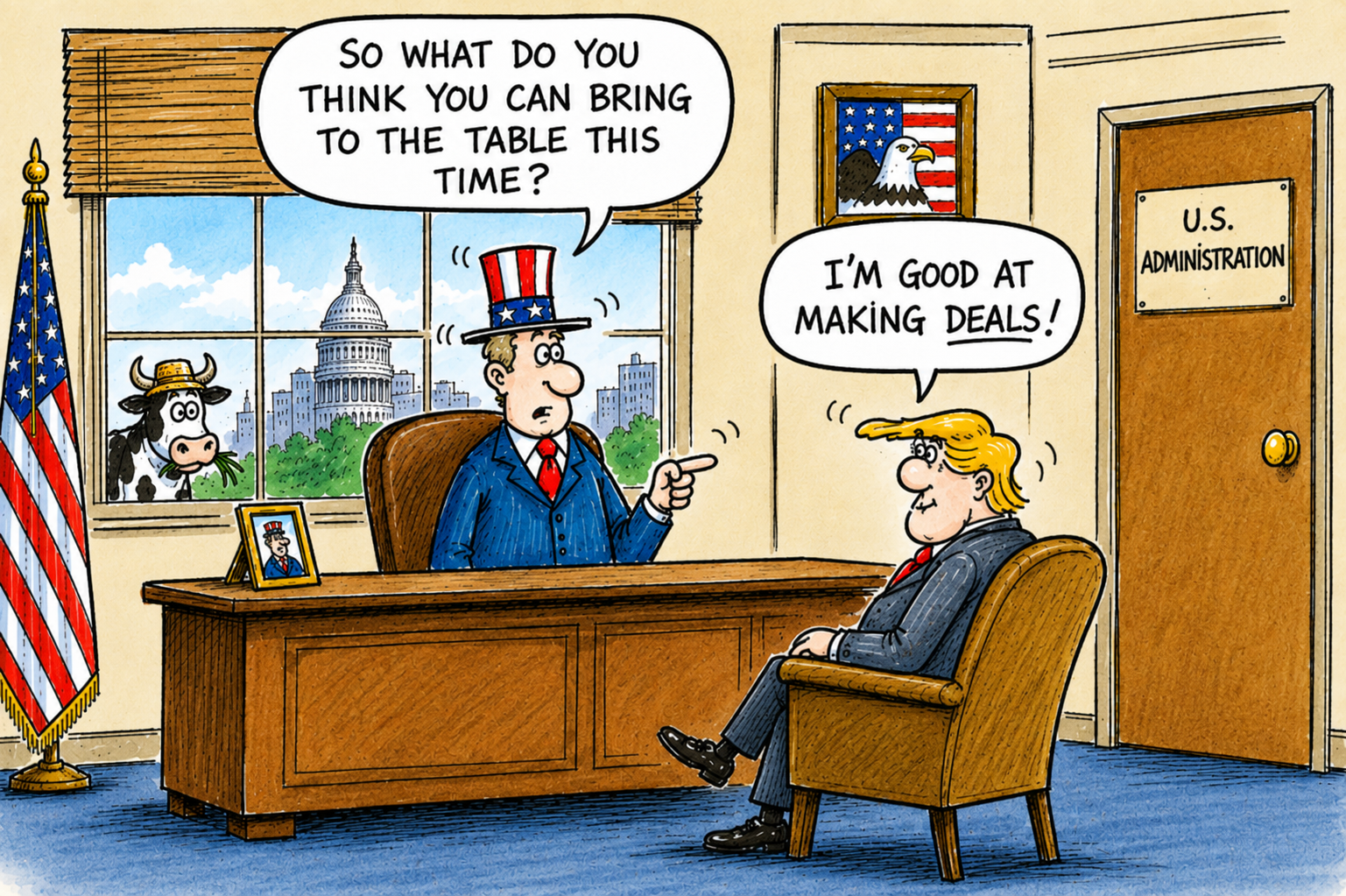
There is an old saying apparently that if you create a problem, you can then claim credit for solving it.
Whether that saying is fair in every circumstance is open to debate, but it raises an uncomfortable question about the way modern politics is increasingly presented to the public.
Every day we hear another announcement that “a deal is close”, “talks are progressing” or “a breakthrough is expected”. These headlines are designed to sound reassuring. They suggest that leaders are successfully navigating a difficult situation.
But what if we are asking the wrong question?
Perhaps we should not be asking whether another deal is close. Perhaps we should be asking why the deal has become necessary in the first place.
That is where the irony begins.
Take the current tensions involving the United States and Iran. The public is repeatedly encouraged to view the next agreement as a diplomatic success.
Yet before the military confrontation, there was already diplomacy. The Strait of Hormuz was open. Oil continued to flow. The world’s attention was focused on preventing escalation rather than recovering from it.
Today, after military action, regional instability and renewed fears over global shipping and energy supplies, we are told that another agreement will represent progress.
But is it progress?
Or is it simply an attempt to restore what already existed?
That distinction is rarely discussed.
Instead, public attention is directed towards the negotiations themselves.
Every meeting becomes news.
Every statement hints at a breakthrough.
Every possible agreement is presented as evidence that events are moving in the right direction.
The irony is that the benchmark has quietly changed.
Yesterday, stability was taken for granted. Today, merely returning to that same level of stability is presented as a diplomatic triumph.
This is how truth manipulation often works.
It does not necessarily rely upon telling outright lies. Instead, it changes the point from which people measure success.
Once the public stops comparing today’s position with where events began, and starts comparing today’s headlines with yesterday’s headlines, perceptions change. Recovery begins to look like achievement.
That is an extraordinarily effective political technique.
It shifts the conversation away from asking whether earlier decisions improved the situation and towards celebrating efforts to repair the consequences.
The public becomes invested in the next deal rather than reflecting upon whether the circumstances requiring that deal could have been avoided.
This is not an argument against diplomacy. Quite the opposite. Negotiation should always be preferred to conflict wherever possible.
Nor is it a claim that every crisis is avoidable. International affairs are rarely that simple.
The real issue is whether governments should be judged by the number of deals they announce or by whether their decisions leave the world in a better position than before.
That is the question often left unasked.
Perhaps the greatest social truth manipulation is persuading people to celebrate returning to yesterday’s starting point while calling it tomorrow’s success.
This pattern is hardly unique to one administration or one country. Governments throughout history have sought to frame events in ways that favour their own decisions.
However, democratic societies rely upon citizens asking a simple but essential question:
Are we genuinely better off than we were before?