

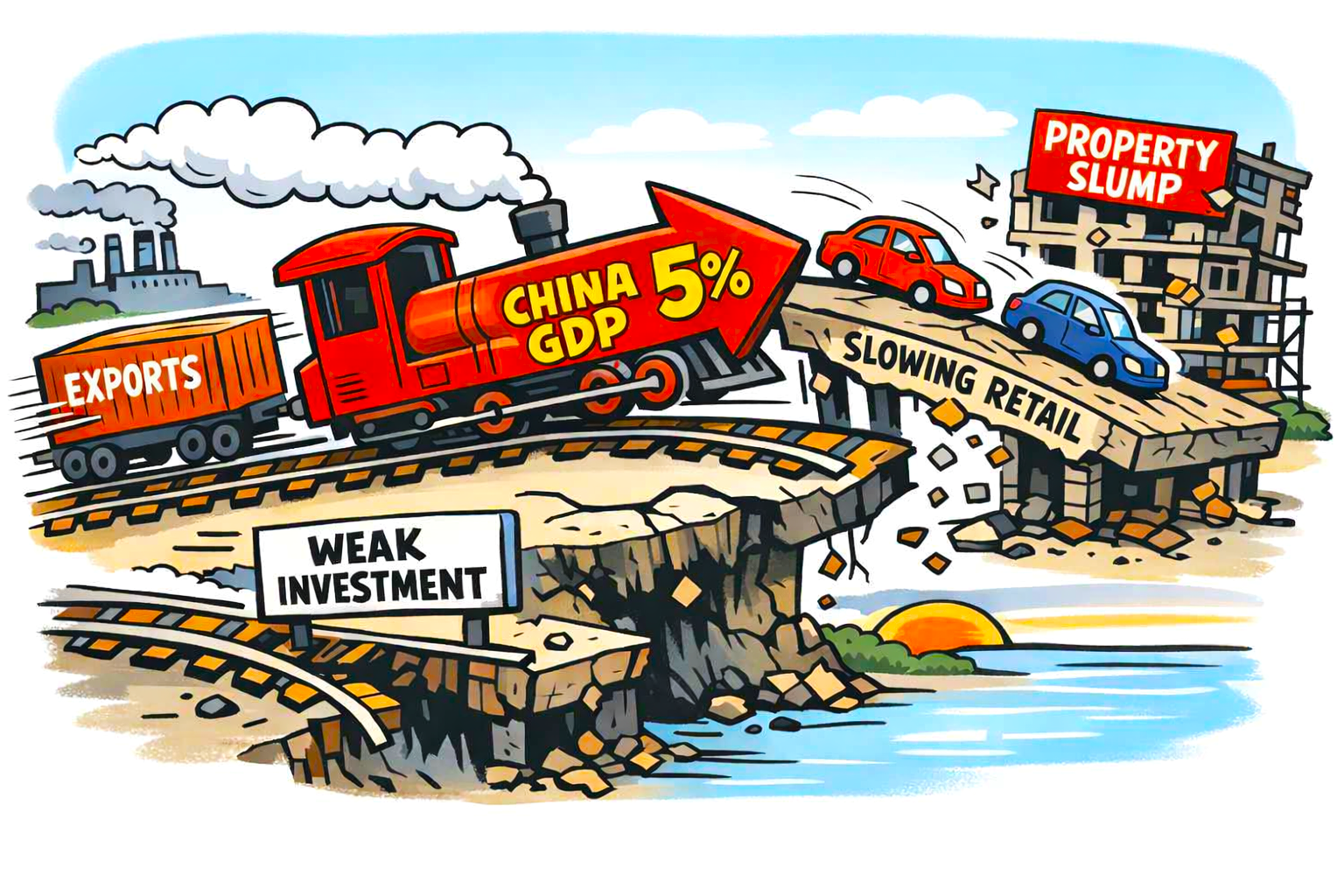
China’s latest GDP figures show the economy expanding by 5% in the first quarter, a rare upside surprise at a time when global demand is wobbling and domestic confidence remains brittle.
The number beats expectations and marks an acceleration from the previous quarter’s 4.5% pace, but the underlying picture is far less tidy.
Export strength
The headline strength came overwhelmingly from exports, which surged early in the quarter before losing steam as the Iran‑related energy shock pushed up logistics and input costs.
Manufacturing output rose a solid 5.7%, underscoring how China continues to lean on its industrial engine while household spending lags behind.
That imbalance is becoming harder to ignore. Retail sales grew just 1.7% in March 2026, a sharp slowdown from February’s holiday‑boosted reading.
Slower consumerism
Big‑ticket purchases, particularly cars, weakened as oil‑price volatility filtered through to consumer sentiment. Even with government subsidies nudging upgrades in electronics and jewellery, the broader consumer recovery remains hesitant.
Investment data tells a similar story. Fixed‑asset investment rose only 1.7%, dragged down by another steep contraction in the property sector, where developers are still struggling to stabilise balance sheets and complete stalled projects. Real estate investment is now down more than 11% year‑to‑date.
Stronger than expected growth
China will welcome the stronger‑than‑expected growth print, but it does not resolve the structural pressures building beneath the surface.
With the Middle East conflict threatening global trade flows and energy prices, China’s export‑led momentum looks vulnerable.
Policymakers may not rush to deploy large‑scale stimulus, yet the economy’s reliance on external demand leaves it exposed to shocks it cannot control.
The 5% figure is impressive on paper but the foundation beneath it is far less secure.