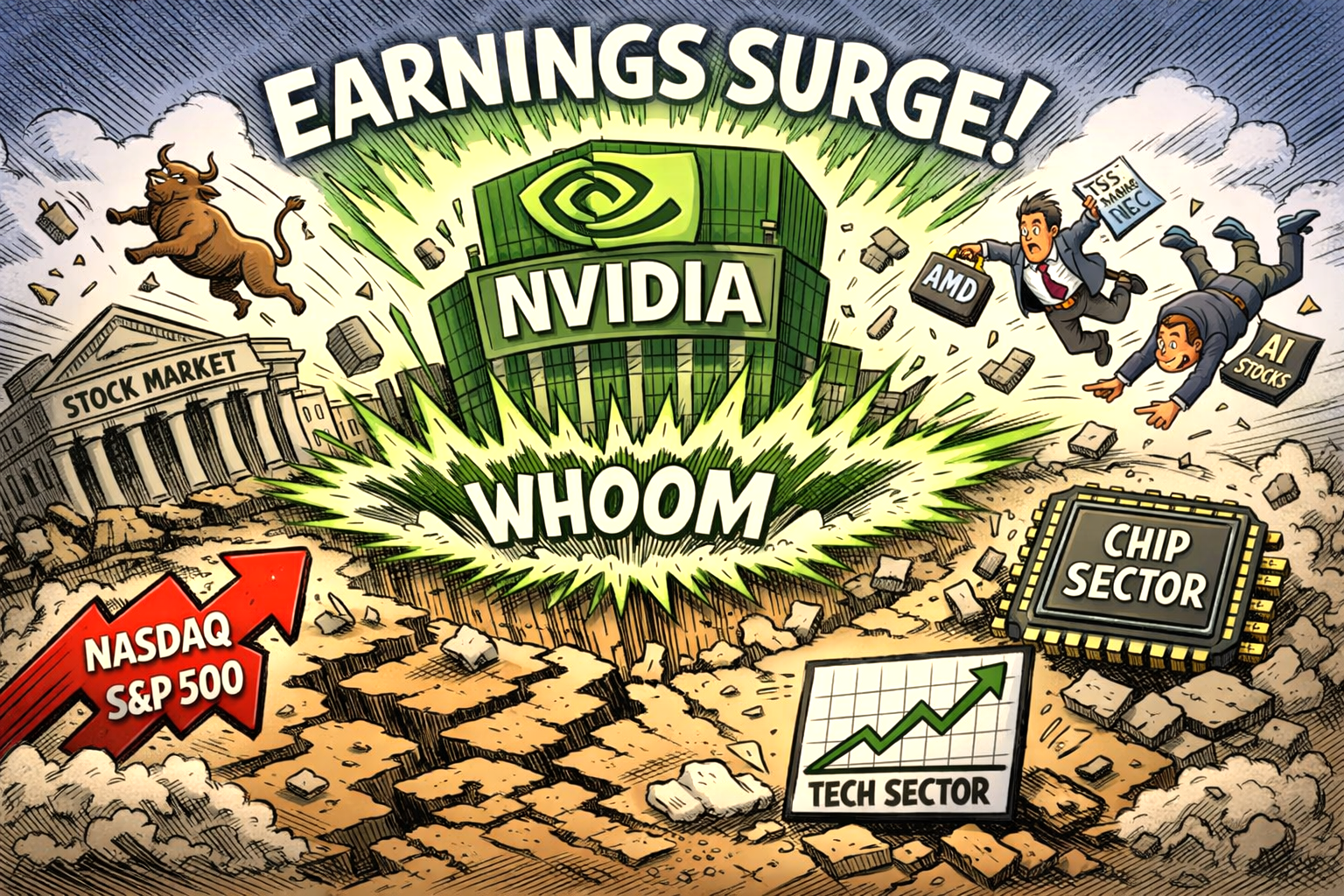
TSMC’s 35% Revenue Surge Signals the New Centre of Gravity in Global Tech

TSMC revenue surges

Taiwan Semiconductor Manufacturing Company (TSMC) has delivered a striking 35% year‑on‑year jump in first‑quarter revenue, reaching a record NT$1.13 trillion.

The result underscores just how dramatically the centre of gravity in global technology has shifted towards advanced semiconductor manufacturing, with artificial intelligence now the defining force behind industry growth.

Relentless AI demand

TSMC’s performance is being powered by relentless demand for cutting‑edge chips from major clients such as Apple and Nvidia.

As AI infrastructure spending accelerates worldwide, the company has become one of the few manufacturers capable of producing the most sophisticated processors required for training and running large‑scale models.

March alone saw revenue climb more than 45%, highlighting the strength and urgency of this demand.

Ambition

Analysts suggest TSMC is on track to exceed its already ambitious 30% annual growth target, helped not only by volume but also by reported price increases for its most advanced nodes.

Even as smartphone and PC markets remain uneven, AI‑related orders are more than compensating.

With more companies—from hyperscalers to AI start‑ups—designing their own chips, TSMC’s strategic position looks increasingly unassailable.

Upcoming earnings and ASML’s results next week will offer further clues about the momentum behind the semiconductor sector’s AI‑driven boom.

Oracle Cuts Deep as AI Pivot Forces a Reckoning

Oracle's AI Axe

Oracle is swinging hard at its own workforce as the company races to reposition itself as an AI‑infrastructure contender.

Thousands of roles are being eliminated, a drastic move that reflects the sheer financial pressure of trying to keep up with hyperscale rivals in the most capital‑intensive tech shift in decades.

The company’s share price has slumped 25% this year, with investors increasingly uneasy about soaring data‑centre spending and the heavy debt required to fund it.

Oracle has already raised $50 billion to bankroll new GPU‑ready facilities, but unlike Amazon or Microsoft, it lacks the cushion of vast cloud scale.

The result: a balance sheet under strain and a leadership team forced into tough decisions.

Future

Oracle’s remaining performance obligations have ballooned to more than half a trillion dollars, fuelled by major AI partnerships including a huge deal with OpenAI.

But those future revenues don’t solve today’s cash‑flow squeeze. Analysts estimate that cutting 20,000 to 30,000 jobs could free up as much as $10 billion — enough to keep the AI build‑out moving without further rattling the markets.

Oracle is betting that a leaner organisation now will buy it the runway to compete later. The question is whether the cuts arrive in time to match the speed of the AI race.

Stock rises.

Meta, Manus and the New Fault Line in the US–China Tech Rivalry

Meta and Manus AI

For years, Chinese AI founders comforted themselves with a simple fiction: that geography could outrun politics.

Move the holding company to Singapore, hire a few local staff, raise money from Silicon Valley, and the gravitational pull of Beijing’s regulatory state would somehow weaken. Manus was the poster child of that belief — until it wasn’t.

Meta’s $2 billion acquisition was supposed to be the triumphant proof that “Singapore washing” worked. Instead, Beijing’s sudden intervention has exposed it as a mirage.

Review

The Chinese government’s review of the deal — and the exit bans placed on Manus’ co‑founders — is more than a bureaucratic hurdle.

It is a declaration that the origin of a technology matters more than the passport of the company that later owns it.

The symbolism is striking. Manus built its early code in China, then attempted to transplant its identity offshore. But Beijing is now signalling that code, data and talent are not so easily detached from their birthplace.

The message to founders is blunt: you cannot simply shed China like an old skin.

Timing

For META, the timing is awkward. More than 100 Manus employees have already been folded into its Singapore office, and the company insists the deal complies with the law.

Yet the spectre of an unwinding hangs over the transaction — a reminder that even the world’s largest tech firms are not insulated from geopolitical weather.

The deeper story, though, is about the shrinking space for neutrality. The U.S.–China tech rivalry has moved beyond chips and compute into the realm of corporate identity itself.

Where a company is born, where its engineers sit, where its early investors come from — all now carry political charge.

Manus is not just a case study. It is a warning flare. In an era where innovation crosses borders but regulation does not, the idea of a clean escape route is fading fast.

Arm’s Bold Pivot: The AGI CPU Signals a New Era for British Chipmaking

ARM Agentic AI CPU

ARM has triggered one of the most dramatic shifts in its 35‑year history with the launch of its first in‑house data‑centre processor, the AGI CPU — a move that sent its shares surging 16% and reshaped expectations for the company’s future.

Long known for licensing energy‑efficient chip designs to the world’s biggest tech firms, ARM is now stepping directly into the silicon market, competing with the very customers that built its empire.

Major Tech Firms Using Arm Designs (AI & Mobile)

CompanyPrimary Use CaseArm-Based Technology
AppleMobile & on‑device AIA‑series (iPhone/iPad) and M‑series (Mac) chips
SamsungMobile, AI, IoTExynos processors
QualcommMobile & automotive AISnapdragon SoCs
GoogleAndroid ecosystem & edge AIPixel phones (Arm cores inside Tensor chips)
Amazon (AWS)Cloud compute & AI inferenceGraviton & Trainium/Inferentia (Arm Neoverse)
MetaAI infrastructureDeploying Arm-based AGI CPU
OpenAIAI inference & orchestrationEarly adopter of Arm AGI CPU
NvidiaAI data‑centre CPUsGrace CPU (Arm architecture)
OPPOMobile AIArm-based SoCs in Find series
vivoMobile AIArm-based SoCs in X‑series

Strong demand

The new AGI CPU is engineered for the rapidly expanding world of AI inference and agentic AI — workloads that demand vast CPU coordination rather than pure GPU horsepower.

Early demand appears strong. Meta has signed on as the first major customer, with OpenAI, Cloudflare and SAP also adopting the chip as they race to expand their AI infrastructure.

The financial implications are striking. ARM expects the AGI CPU alone to generate $15 billion in annual revenue by 2031, a figure that dwarfs the company’s 2025 revenue of $4 billion.

Significant shift

Analysts have described the announcement as the most significant strategic shift ARM has ever undertaken, noting that the revenue projections exceed even the most optimistic market estimates.

By moving into full chip production, ARM is broadening its market to include companies that previously had no interest in its traditional IP‑licensing model.

Executives say the chip will be competitively priced, offering an alternative for firms unable to build their own custom silicon.

For the UK, the launch marks a rare moment of industrial ambition in a sector dominated by American and Asian giants.

If ARM’s forecasts hold, the AGI CPU could become one of the most commercially successful chips ever produced by a British company — and a defining pillar of the AI age.

See more here about the new ARM AGI CPU

The Future of Agentic AI – Tools for Automation

Agentic AI

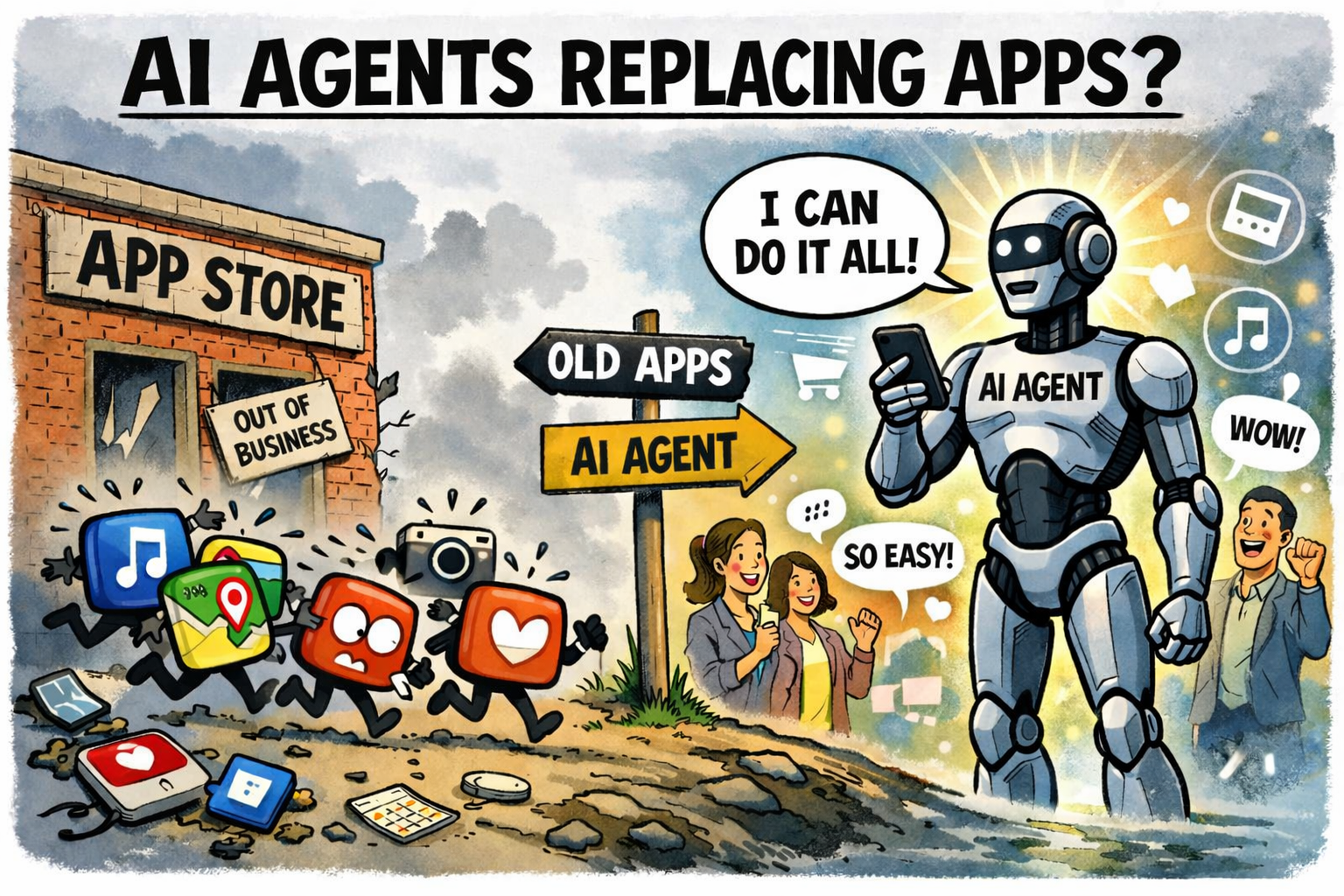
Agentic AI is rapidly shifting from a speculative idea to a practical force reshaping how work gets done.

Unlike traditional AI systems, which wait passively for instructions, agentic AI can plan, act, and adapt within defined boundaries.

It is not simply a smarter chatbot; it is a system capable of taking initiative, coordinating tasks, and pursuing goals on behalf of its user.

This evolution marks a profound turning point in how we think about automation, creativity, and human–machine collaboration.

Agentic AI colleagues

The first major change is the move from reaction to autonomy. Today’s AI assistants excel at answering questions or generating content, but they still rely on constant prompting.

Agentic AI, by contrast, can break down a complex objective into smaller steps, choose the best tools for each stage, and execute them with minimal oversight. This transforms AI from a passive helper into an active collaborator.

For individuals and small teams, it promises a level of operational leverage previously reserved for large organisations with dedicated staff.

A second shift lies in the emergence of multi‑modal competence. Agentic systems will not be confined to text. They will navigate interfaces, analyse documents, draft communications, and even orchestrate workflows across multiple platforms.

In effect, they will behave more like digital colleagues—capable of understanding context, maintaining continuity, and adapting to changing priorities. The result is a new category of labour: cognitive automation that complements rather than replaces human judgement.

However, the rise of agentic AI also raises important questions. Autonomy introduces risk. If an AI can take action, it must do so safely, transparently, and within clear constraints.

On guard

Guardrails will be essential—not only technical safeguards, but also cultural norms around delegation, accountability, and trust. The future will require a balance between empowering AI to act and ensuring humans remain firmly in control of outcomes.

Another challenge is the shifting nature of expertise. As agentic AI handles more administrative and procedural work, human value will increasingly lie in strategic thinking, creativity, and ethical decision‑making.

This is not a loss but a rebalancing. Freed from routine tasks, people can focus on higher‑order work that genuinely benefits from human insight.

The organisations that thrive will be those that treat AI not as a shortcut, but as a catalyst for deeper, more meaningful contribution.

Future use of agents

Looking ahead, the most exciting aspect of agentic AI is its potential to democratise capability. A single individual could run a publication, a business, or a research project with the operational efficiency of a small team.

Barriers to entry will fall. Innovation will accelerate. And the line between “solo creator” and “organisation” will blur.

Agentic AI is not the end of human agency; it is an extension of it. The future belongs to those who learn to work with these systems—setting direction, providing judgement, and letting AI handle some of the heavy lifting.

Far from replacing us, agentic AI may finally give us the space to think, create, and lead with clarity.