
“Can you explain democracy to me again please?”

Observe. Think. Chat. Do. Trade. Repeat…

“Can you explain democracy to me again please?”
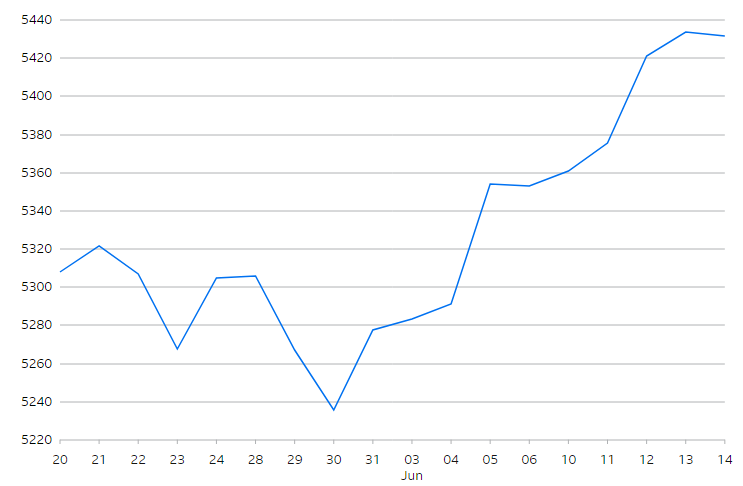
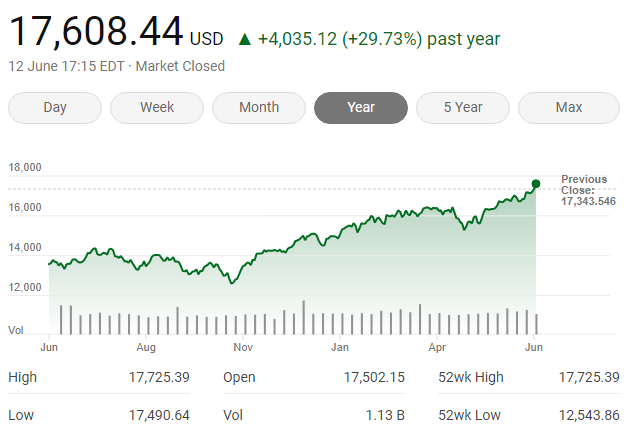
Concurrently, the S&P 500 saw a modest rise, while the Nasdaq Composite closed lower. The rise this week has shifted the three major stock indexes into the green for the second quarter, following a challenging start.
Despite some investors’ concerns about the sustainability of the rally, the mix of economic expansion and slowing inflation continues to act as a positive driver.
It’s an optimistic setup for the near future in 2024
Chinese firms are becoming increasingly optimistic about a rise in trade exports, as there is little evidence of global companies completely decoupling from China, Allianz Trade reports.
More than one in ten Chinese exporters, ranking as the second-largest exporter of goods to the U.S. following Mexico, anticipate an increase in exports.
While a total decoupling of supply chains from China may not occur, the option for diversification remains open.
The global economy is so interlinked it is virtually impossible to decouple China
This was predominately due to a recovery in advertising revenue and a surge in demand for its AI-driven cloud products.
The company announced a revenue of 31.51 billion yuan ($4.37 billion) for the quarter ending 31st March 2024, exceeding the average analyst projection of 31.21 billion yuan, according to a latest dataset.
Shares of Baidu listed in the U.S. saw an approximate 3% increase in premarket trading.
The tech giant has been actively enhancing its sales efforts focused on AI-centric products and services.

Gold prices reached their highest point in over three weeks on Thursday too, while silver achieved its highest price in over three years, and platinum ascended to a peak close to its one-year high.
According to strategists in a recent comment, gold prices might soon approach the $2,400 again, silver could rise to as much as $30 per ounce, and platinum has the potential to hit $1,130 per ounce.


“Do as I say, not as I do!”
The Dow climbed 0.88%, while the S&P 500 gained 1.17%, ending the session above 5,300 for the first time. The tech-related Nasdaq Composite closed higher by 1.40%.


Margaret Atwood – born 1939
“Water does not resist. Water flows. When you plunge your hand into it, all you feel is a caress. Water is not a solid wall, it will not stop you. But water always goes where it wants to go, and nothing in the end can stand against it. Water is patient. Dripping water wears away a stone. Remember that, my child. Remember you are half water. If you can’t go through an obstacle, go around it. Water does.”
― Margaret Atwood, The Penelopiad.

AI data centres require cooling, and substantial amounts of fresh water are utilized for this purpose. Additionally, water is consumed in the mining and production of AI-related hardware.
The production of AI hardware utilizes and contaminates water due to the mining of rare materials like silicon, germanium, gallium, boron, lithium, gold, copper and phosphorus. The extraction of these minerals is resource-intensive and significantly affects the environment, leading to water pollution. AI is hungry for power too – the amount of additional energy required to run an AI data centre is far greater.
The water consumption associated with AI is not limited to its operational phase. AI hardware production requires intensive mining for rare materials such as silicon, germanium, gallium, boron, and phosphorus. The extraction of these minerals has a substantial environmental impact and contributes to water pollution.
Additionally, AI systems’ water use extends to the production of related hardware. The extensive deployment of AI compounds this problem, putting pressure on the drinking water supplies of local communities. With the increasing adoption of AI, there is additional strain on municipalities, agriculture, and various industries that are already facing challenges due to drought and scarce water resources.
Researchers have explored AI’s potential to address water challenges.
AI can optimise water usage in agriculture by automating irrigation systems. Smart machines, robots, and sensors analyse data to enhance efficiency and detect leaks, as demonstrated in smart irrigation systems for crops.
AI-powered biosensors can accurately detect toxic chemicals in drinking water, surpassing current quality monitoring practices.
AI can aid in managing water security and wastewater treatment, contributing to sustainable water use. However, on the practical side, it is the willingness to implement these grand ideas and systems that is quite often the problem.
While there is peer-reviewed analysis on the role of AI in managing water and achieving Sustainable Development Goals (SDGs), the direct and indirect effects of AI on water usage are largely uncharted.
Recent reports indicate that AI systems, such as ChatGPT, may use approximately 500 millilitres of water for every 5 to 50 prompts or questions posed by a user. Given the rapid increase in chatbot usage globally, this could lead to a considerable water footprint, raising concerns among experts and environmentalists.
As technological advancement continues, it is imperative to move forward with caution. Achieving a balance between innovation and the responsible use of resources is essential for a sustainable future where AI contributes positively without jeopardizing our essential water resources.
Unveiled at Google I/O 2024, this latest model enhances sophisticated features with rapid performance and efficiency. The new AI Chatbot was unveiled on 15th May 2024.
The unveiling comes a day after OpenAI announced its newest artificial intelligence (AI) model, GPT-4o.
The Gemini 1.5 Flash is engineered for exceptional speed, processing queries with reduced latency, which makes it perfectly suited for real-time applications.
Similar to its forerunner, Gemini 1.5 Pro, Flash is adept at contextual understanding. It is capable of interpreting user prompts through multiple modalities such as text, images, video, and speech.
Google also introduced a scaled-down version called Gemini 1.5 Nano, which runs locally on devices.
A prominent feature of Gemini 1.5 Flash is the AI Overviews integration. These ‘precis’ summaries deliver rapid responses to intricate inquiries. Users are presented with a topical overview and pertinent links for additional research. The AI Overviews feature is currently being introduced to U.S. users, with worldwide availability anticipated by the end of the year.
Gemini 1.5 Flash is Google’s latest endeavour to improve search experiences. Whether it’s for research, planning, or brainstorming, this AI model simplifies the process. With the advent of generative AI, Google Search is becoming increasingly potent, enabling users to effortlessly access reliable information.

The Producer Price Index (PPI), which tracks the average trajectory of selling prices received by domestic producers for their output, increased by 0.5% in April. It also showed a 2.2% rise on a year-over-year basis, representing the most significant annual gain.
The rise in services prices was a significant contributor to the overall increase in wholesale inflation, with a 0.6% uptick that represented approximately three-quarters of the total headline gain.
The core PPI, excluding volatile food and energy prices, also experienced a 0.5% increase, surpassing the estimate of 0.2%.
Shares of the video game retailer GameStop surged 59% higher in late trade while the movie theatre chain AMC’s shares rose over 64%. Other so-called ‘meme stocks’ were also set to open significantly higher on Tuesday.
GameStop’s shares soared more than 100% and experienced multiple halts due to volatility after Roaring Kitty made a comeback on X. His tweet, a simple image of a man leaning forward in a chair, marked his first post in three years and was enough to spur the ‘wild traders’ into blind action.
Although GME had already begun rallying before, the surge yesterday was extreme and reminiscent of the original meme stock frenzy involving WallStreetBets and Melvin Capital. Ultimately, it closed up 74%. With GME’s short interest at 24% prior to the surge, it’s likely that a significant portion of the movement was due to short-covering, as well as some hedge funds having calls on their shorts.
Trend-following and momentum strategies may have contributed to the rise. Retail investors appear to be growing more bullish and willing to take on greater risks. The surge seems to lack a fundamental basis, as GME’s last earnings report was notably very poor. N
However, not all meme stock involvement is blindly speculative.
But it is just a game to some!
A meme stock refers to the shares of a company that have gained viral popularity due to heightened social following. This social ‘following’ is usually due to activity online, particularly on social media platforms
GPT-4o accepts any combination of text, audio, and image as input and generates corresponding outputs in any of these modalities. It’s a step toward more natural human-computer interaction.
GPT-4o can respond to audio inputs in as little as 232 milliseconds, with an average of 320 milliseconds – similar to human conversation speed.
It matches GPT-4 Turbo performance on English text and code, with significant improvements in non-English languages. Plus, it’s 50% cheaper in the API.
GPT-4o excels in understanding images and audio compared to existing models.
Unlike previous Voice Mode (which used separate models), GPT-4o is trained end-to-end across text, vision, and audio. This means it processes all inputs and outputs using the same neural network.
OpenAI is still exploring what GPT-4o can do and its limitations. It’s a promising step toward more versatile AI interactions.
Claude.ai will be accessible to both individuals and businesses via the web and an iPhone app. While it is already free on both platforms in the U.K., Anthropic states that this marks the product’s inaugural launch for users in the EU and non-EU nations such as, Switzerland, Norway and Iceland.
Anthropic is introducing a paid subscription-based version of its Claude assistant, named Claude Pro, which will provide users with access to all its models, including the highly advanced Claude 3 Opus.
In its announcement about launching Claude in European countries, Anthropic emphasized security and privacy as central aspects.
Earlier this year, the EU enacted the first significant global regulatory framework to govern AI.

NVIDIA’s stock reached an all-time high of $950.02 on 25th March 2024. The 52-week high stands at $974.00, which is 9.7% higher than the current share price. Conversely, the 52-week low was $280.46, which is considerably below the current price.
Annual percentage changes
In 2024, the average stock price reached $763.29, marking a year-to-date rise of 79.30%.
In 2023, NVIDIA’s stock price experienced a remarkable surge of 239.02%.
Conversely, in 2022, the stock price witnessed a decline of 50.27%.
Throughout the past decade, the stock has undergone considerable volatility, exhibiting both notable gains and significant losses.
Focus
NVIDIA began as a pioneer in PC graphics and has since expanded its focus to artificial intelligence (AI) solutions. Its GPUs (graphics processing units) are pivotal in AI, high-performance computing (HPC), gaming, and virtual reality (VR) platforms.
The company’s parallel processing capabilities, powered by thousands of computing cores, are vital for executing deep learning algorithms. Additionally, NVIDIA is active in emerging markets such as robotics and autonomous vehicles.
Market position
NVIDIA holds a dominant position in the Data Centre, professional visualization, and gaming markets. Its success is bolstered by strategic partnerships with leading cloud service providers and server vendors.
Financial performance
NVIDIA’s revenue and profit have seen substantial growth over time. Its emphasis on AI and new technologies suggests a strong potential for further expansion. In summary, despite NVIDIA’s stock achieving impressive gains, it is still influenced by market trends and technological changes.
Its peak status hinges on multiple elements such as industry movements, competitive landscape, and upcoming innovations. Investors are advised to meticulously assess these factors when determining the stock’s future prospects.
Considering a long-term investment yet expecting a downturn, it might be prudent to realise some profits now, given the enormous 20,000% surge in stock value.
Take some profit and buy again after a pull-back.
This initiative is aimed at catching up with the booming AI market, currently dominated by Nvidia.
Arm, alongside competitors such as AMD, Intel, and Qualcomm, is accelerating efforts to gain position in the AI sector.
SoftBank is negotiating with contract manufacturers, including Taiwan’s TSMC, to produce the AI chips. Mass production is expected to commence in autumn 2025.
Arm’s shares have surged by nearly 45% this year, bringing its market capitalization to over $113 billion.
The chip designer based in the U.K., plans to create an AI chip unit to develop a prototype by spring 2025.
Discussions are reportedly ongoing with contract manufacturers like Taiwan’s TSMC for the production of the AI chips. It was reported that production is anticipated to start in fall 2025.
Arm is responsible for designing the core architecture for these chips. The company licences its designs to companies including Qualcomm and Nvidia and earning royalty fees from each sale. The company asserts that 99% of high-end smartphones utilize Arm technology.
Established by Japanese billionaire Masayoshi Son, SoftBank is heavily investing in AI. The company has new plans to allocate $960 million by the following year to enhance its generative AI computing capabilities. In June 2023, Son expressed SoftBank’s ambition to occupy a leading role in the AI revolution.
Reportedly, SoftBank aims to establish AI data centres equipped with proprietary chips throughout the U.S., Europe, Asia, and the Middle East by 2026.
For the fiscal year concluding in March 2024, SoftBank recorded a 7.24 billion Japanese Yen ($4.6 billion) profit in its Vision Fund.
This was the first profitable year for the principal tech investment division since 2021.
Invest for the longer-term, it works!
KIS – Keep It Simple! Keep your investment strategies as simple as possible.
Generate income – For regular payouts, consider focusing on dividend-paying stocks.
Preserve capital – If your primary goal is to keep pace with inflation and safeguard your savings, consider opting for lower-risk investments.
Grow capital – If you’re a young investor aiming for long-term growth, you might consider higher-risk stocks, being cautious with your selections.
Invest for the long-term
Value Investing – Consider purchasing stocks that are undervalued and have been neglected by the market.
Growth Investing – Invest in companies that exhibit signs of success and have the potential for further advancement.
Momentum Investing – Dispose of underperforming assets and invest in successful ones by following market trends. Be ruthless – there is no room for emotion!
Pound-Cost Averaging – Gradually invest money into the market to reduce the impact of volatility. Look into investing in funds or unit trusts.
Before selecting individual stocks, it’s crucial to stay informed about broader economic trends. Consult financial news websites and specialized magazines to gauge the performance of various industries. For example, economic volatility or significant global incidents, such as the emergence of a new virus variant, can affect the stock market.
Pay close attention to economic announcements from central banks, like interest rate changes. Monitor the newswires regularly and track market trends.
Focus on investing in sectors you understand well. For instance, if your expertise lies in technology, look towards tech companies. If renewable energy is your area of interest, consider stocks in that domain. Knowledge of the industry can lead to more informed evaluations of companies.
When evaluating a specific stock, consider the following
Financial Health – Examine the company’s balance sheet, income statement, and cash flow. Scrutinize the levels of company debt. Observe the sales and purchases by directors. Determine if they are financially stable.
Earnings Growth – Verify whether the company has demonstrated consistent growth in its earnings over time.
Valuation – Comparing a stock’s price-to-earnings (P/E) ratio with that of its industry peers is crucial for assessing its market value relative to its earnings.
Competitive Advantage – A company’s competitive edge can stem from a unique product, a strong brand, or other distinctive factors. These elements can set a business apart and enable it to outperform its rivals in the market.
After a general market downturn – there is usually a good opportunity to pick-up good companies at a knock down bargain price.
It’s wise not to concentrate all your resources in a single area. Diversify your investments across various sectors and asset classes. Look into exchange-traded funds (ETFs) or mutual funds to gain wider market exposure. Consider precious metals such as gold maybe and keep cash on the sidelines for those occasional deals that crop up from time to time.
Selecting stocks involves thorough research, patience, and a vision for the long-term. Keep in mind that all investments carry some level of risk – past performance is not indicative of future outcomes. It is advisable to seek guidance from a financial advisor prior to making any investment choices.
Remember, investing involves risk, and it’s essential to do thorough research and consider professional advice before making any investment decisions.
RESEARCH! RESEARCH! RESEARCH!
Good luck with your stock-picking choices.
Researchers have developed an ultra-pure form of silicon, known as silicon-28 (Si-28), which is fundamental for ‘silicon-spin qubits’ in quantum computers. This advancement addresses a major challenge in quantum computing: the ‘fragile quantum coherence.’
Quantum computers tend to accumulate errors quickly due to slight environmental changes, affecting their dependability.
Quantum bits, or qubits, are analogous to classical computer bits but are extremely sensitive to environmental interference.
Current quantum computers, even when cooled to near absolute zero, can only maintain error-free operation for a very short time.
This new technique generates qubits by embedding phosphorus atoms into crystals of pure, stable silicon. A concentrated silicon beam then directs onto a silicon chip, replacing impurities with pure silicon.
As a result, the impurity levels in silicon have been significantly reduced, from 4.5% to a mere 0.0002%.
David Jamieson, a project co-supervisor from the University of Melbourne, mentioned that the team achieved this level of purity using a standard piece of equipment – an ion implanter – that’s typically found in semiconductor fabrication laboratories.
Richard Curry, a professor at The University of Manchester where extensive research took place, believes that this advancement could accelerate the development of operational quantum computers. Processes that might have taken a decade to complete could now be accomplished in potentially half that time or less.

Practical quantum computers have the potential to revolutionize numerous fields
The creation of the world’s purest silicon represents a significant step forward in the development of large-scale quantum computers.
Official figures released on Friday revealed this growth, which exceeded the 0.4% predicted by economists surveyed by Reuters for the previous quarter.
In the latter half of 2023, the U.K. experienced a mild recession due to ongoing inflationary pressures impacting economic performance.
Technically there is no official definition of a recession – however, two straight quarters of negative growth is widely accepted as a technical recession.
The production sector in the U.K. saw an expansion of 0.8% from January to March, whereas the construction sector experienced a decline of 0.9%. The economy witnessed a growth of 0.4% in March on a monthly basis, succeeding a 0.2% increase in February.
According to the Office for National Statistics, the services sector, which is vital to the U.K. economy, grew for the first time since the first quarter of 2023. This growth of 0.7% was primarily propelled by the transport services industry, marking its most significant quarterly growth since 2020.
‘Much Ado About Nothing’ is a comedy by William Shakespeare, written around 1598 – 1599. The play is included in the First Folio, published in 1623, and is set in the Italian city of Messina.
Arm announced a 47% increase in fiscal Q4 revenue to $928 million on Wednesday.
This surge was propelled by its licensing business, which saw a 60% increase to $414 million for the quarter, attributed to several high-value licencing deals for AI chips.
Additionally, Arm’s royalty revenues rose 37% to $514 million year-over-year, thanks to the growing adoption of its new Armv9-based chips, which offer higher margins.
However, Arm’s revenue projection for 2025, estimated between $3.8 billion and $4.1 billion, did not meet investor expectations, with analysts anticipating $3.99 billion for the year.
Contrary to chipmakers like Nvidia, which manufacture and market their own products, Arm creates the ‘architectures’ that form the foundation of chips.
These designs are then licenced to various chip manufacturers, including Qualcomm and Nvidia, with Arm earning royalties on each unit sold.
Originally founded in Cambridge, England, in 1990, Arm was an independent company listed in London until 2016, when it was acquired by Japanese tech investor SoftBank for $32 billion.
In September 2023, SoftBank listed Arm on the Nasdaq. Since its initial public offering, Arm’s share value has more than doubled, driven by the explosive demand for chips that power advanced generative AI applications, such as ChatGPT.
But this recent revenue forecast had a negative effect on its share price


The 2% inflation target set by central banks has been a widely adopted benchmark for monetary policy.
The 2% inflation target became prominent in the 1990s and early 2000s. Central banks, such as the Federal Reserve and the Bank of England, have aimed to maintain inflation at this level.
The Federal Reserve has typically pursued an inflation rate of about 2% since 1996.
In January 2012, then-Fed Chairman Ben Bernanke formally established the 2% target, and subsequent Fed chairs have continued to endorse this rate as the preferred level of inflation.
The 2% inflation target was selected as it provides a balance between preventing problematic inflation and avoiding damaging deflation. Does it work?
Deflation, characterized by falling prices, can hinder economic growth. Central banks target a 2% inflation rate to avert deflation and ensure stability.
The 2% inflation target represents a balance between creditors’ preference for lower inflation and debtors’ inclination towards higher inflation.
In recent years, the global economy has encountered distinct challenges, including sluggish growth, technological upheavals, and demographic changes. Consequently, there is a debate on whether the 2% inflation target requires reassessment.
Despite the efforts of central banks, inflation has persisted below the 2% mark in numerous advanced economies, sparking debates over the potential need to modify the target.
Aiming for a 2% inflation rate can occasionally clash with other policy objectives, like employment or financial stability. It’s crucial for central banks to judiciously manage these competing priorities.
Several central banks are revising their strategies. For example, the European Central Bank (ECB) has adopted a more adaptable inflation target, permitting temporary exceedances to balance out extended periods of below-target inflation.
The Bank of England also considers broader economic factors when setting policy, rather than rigidly adhering to the 2% target.
IIn summary, although the 2% inflation target has been a helpful benchmark, central banks are progressively willing to adjust their strategies in response to evolving economic conditions. The current debate focuses on striking an optimal balance between stability, growth, and adaptability.
Central banks saw this period of inflation as ‘transitory’ – it wasn’t. It could be argued that their lack of action led to a bigger inflation problem overall.
Higher-than-expected inflation figures at this point, have led to increased forecasts for UK interest rates, prompting lenders to raise the cost of new mortgage deals.
Those considering purchasing their first home or relocating have probably been monitoring the recent rise in mortgage rates closely. In the past few weeks, numerous lenders have increased the interest rates on new fixed mortgage deals, thus making borrowing costlier. Existing homeowners planning to remortgage this year might have anticipated falling rates, not an upward trend.
So, what’s driving this trend?
Mortgage rates typically reflect the actions of the Bank of England, especially changes to its benchmark interest rates, commonly referred to as the base rate. An increase in the base rate makes borrowing costlier. Swap rates, which are essentially agreements to exchange interest rates between parties for a specified duration, have a considerable impact on fixed-rate mortgage agreements. Consequently, as lenders face higher borrowing costs, fixed-rate mortgages tend to increase. With several recent rises in the base rate, mortgage rates have escalated accordingly.
Lenders are exercising caution in managing their customer base. The recent increases in rates do not reflect a rapid cycle as observed in the previous two years. Rather, lenders are strategically adjusting their rates. Earlier in the year, a mini price war among lenders led to favorable interest rates for borrowers. Nonetheless, these rates have subsequently increased, with lenders adopting a more conservative approach to pricing. For instance, the average interest rate for a two-year fixed deal rose from 5.55% at the end of January to 5.93% more recently.
Mortgage brokers emphasize that the recent changes do not signify a new cycle of rapidly increasing rates, such as those experienced over the past two years.
Current mortgage rates remain below the peak of last summer and are not escalating as sharply as they did following the mini-budget of 2022. Nevertheless, some borrowers were expecting rates to consistently decrease throughout the year.
Two more key factors have created the current bump in the road.
For home buyers and owners, the financial landscape has shifted slightly; obtaining a mortgage now is somewhat more costly than it was a year ago.
According to Rightmove, the average monthly mortgage payment for a typical first-time buyer’s property, based on a standard five-year fixed, 85% loan-to-value mortgage, has risen to £1,117 from £1,056 the previous year.
Those facing the end of their two-year or, especially, five-year mortgage deals may see their monthly payments increase by hundreds of pounds, as their previous rates could have been below 2%.
Market expectations are crucial. The Bank of England’s Monetary Policy Committee (MPC) affects mortgage rates through its decisions. The MPC recently indicated that rate cuts would not occur as soon or as frequently as once anticipated, due to persistent inflation and other economic considerations. As a result, mortgage rates have been gradually increasing.

To summarize, the escalation in mortgage rates is attributed to several factors, including higher borrowing costs, the conservative tactics of lenders, and the anticipations of the market. It is crucial for prospective homebuyers and current homeowners to keep a vigilant eye on these trends to make well-informed decisions.
Since Ukraine’s invasion, there has been a roughly 12% drop in trade between the blocs, and foreign direct investments have decreased by 20% compared to those within the bloc’s constituents.
If these divisions persist, the IMF forecasts that the economic impact on global GDP could be as high as 7% in the worst-case scenario.
A senior International Monetary Fund official cautioned on Tuesday, 7th May 2024, that the rift between the U.S. led Western and China-aligned economic blocs endangers global trade cooperation and economic growth.
South Korean convenience stores are now the latest attraction for gold enthusiasts. Instead of the typical snacks and beverages, customers can now buy gold bars.
GS Retail, one of South Korea’s largest convenience store chains, introduced gold bars in vending machines at select locations in September 2023. These machines offer five different sizes, ranging from a tiny 0.13-ounce bar to a bigger 1.3-ounce bar.
The most sought-after option is the diminutive 0.13-ounce gold bar, with a price tag of approximately $225. It’s the younger demographic – individuals in their twenty’s and thirty’s – who are eagerly acquiring these lustrous assets. They possibly view gold as a secure refuge in the face of worldwide inflationary pressures and heightened global geopolitical tensions.
GS Retail has reported total sales of gold bars amounting to $19 million in the past nine months, concluding in May. The rising popularity of these bars has led the company to increase the number of stores offering them, aiming to reach 50 locations by the end of the year.
In a competitive move, CU, the nation’s premier convenience store chain, has partnered with the Korea Minting and Security Printing Corporation (KOMSCO) to sell mini gold bars ranging from 0.1 to 1.87 grams. These diminutive bars have been on sale at CU stores since April.
The pricing of these mini gold bars is tied to fluctuating international gold prices, updated daily. Evidently, even these small quantities of gold are attracting keen interest from young consumers.
The soaring popularity of gold bars in South Korea can be attributed to their accessibility. With convenience stores at every corner, purchasing gold has become as simple as walking in and making a selection.
A representative from Inha University reportedly noted that while some may purchase gold bars as a serious investment, others might buy them for the novelty and ease of access. Imagine the allure of picking up a gold bar along with your daily groceries.
To sum up, convenience stores in South Korea have become modern-day treasure chests, where gold bars are sold next to daily necessities. Whether for investment purposes or for a bit of indulgence, these shiny objects are creating a buzz in the country known for K-pop and kimchi.
So, next time you visit a Korean convenience store, don’t miss the chance to check out the shiny vending machine – it could present a golden opportunity.