U.S. Core Wholesale Prices Jump 0.8% in January 2026, Raising Fresh Inflation Concerns

U.S. inflation

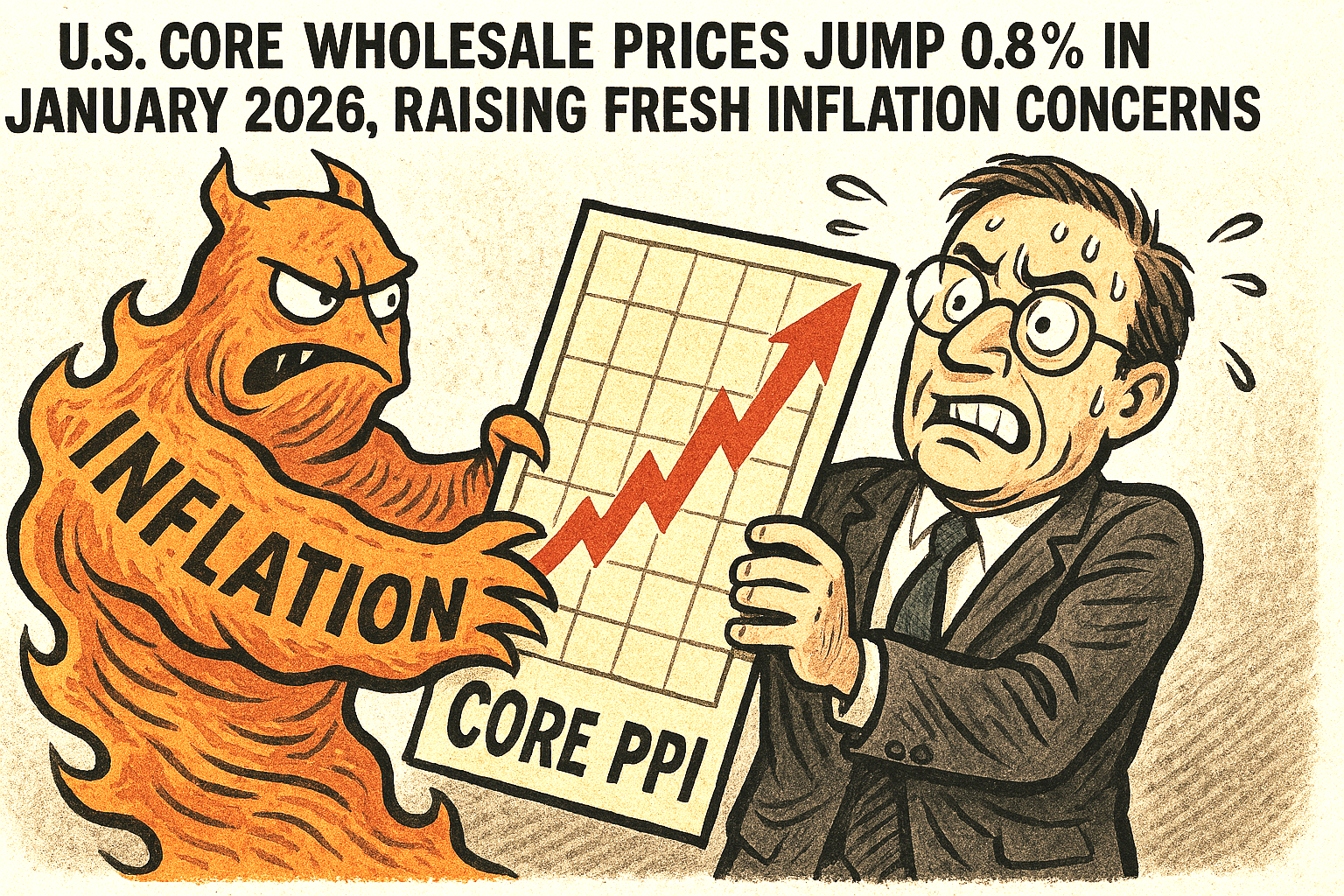
U.S. core wholesale prices rose 0.8% in January 2026, a sharper-than-expected acceleration that has renewed concerns about lingering inflationary pressures across the American economy.

The increase, reported by the Bureau of Labor Statistics, exceeded both December 2025’s 0.6% rise and the consensus expectation of 0.3%, marking one of the strongest monthly gains in recent months.

The core U.S. Producer Price Index (PPI), which strips out volatile food and energy components, is closely watched as an indicator of underlying cost pressures faced by businesses.

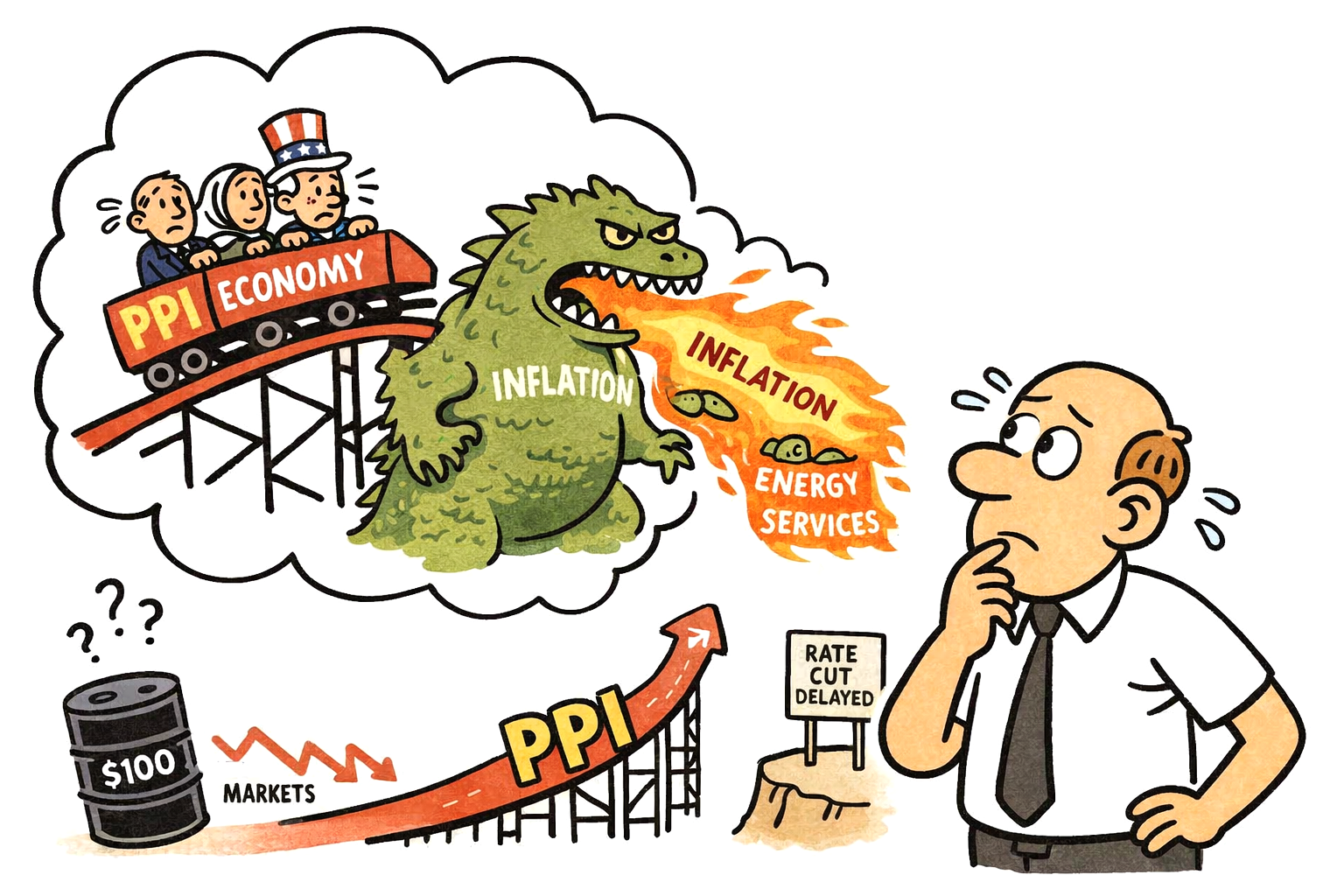
January’s jump suggests that inflationary forces remain embedded in key service sectors, even as goods prices continue to soften.

Indeed, services were the primary driver of the month’s overall wholesale inflation, with final demand services advancing 0.8%, while goods prices fell by 0.3% amid notable declines in gasoline and several food categories.

Divergence

This divergence between services and goods highlights a structural shift in inflation dynamics. Goods inflation has eased significantly as supply chains normalise and commodity prices stabilise.

By contrast, service-sector inflation—often tied to labour costs, logistics, and profit margins—has proven more persistent.

January 2026’s data underscores this trend, with strong increases in areas such as professional and commercial equipment wholesaling, telecommunications access services, and health and beauty retailing.

Complicates Inflation Outlook

For policymakers, the report complicates the inflation outlook. While headline PPI rose a more modest 0.5%, the strength of the core measure suggests that underlying pressures may not be cooling as quickly as hoped.

Markets had been anticipating a gradual easing that would give the Federal Reserve more confidence to consider rate cuts later in the year.

Instead, the January 2026 figures may reinforce a more cautious stance, particularly if upcoming consumer inflation data echoes the same pattern.

Businesses and consumers alike will be watching February 2026’s data closely to determine whether January represents a temporary spike or the beginning of a more stubborn inflation trend.

U.S. wholesale inflation rose 0.1% in July 2024 by less than expected

U.S. economic inflation PPI data

In July 2024, a principal indicator of U.S. wholesale inflation climbed less than anticipated, potentially paving the way for the Federal Reserve to begin reducing interest rates.

The Producer Price Index (PPI), which is a gauge of wholesale inflation, saw a modest increase of 0.1% for the month of July, falling short of the 0.2% prediction. Excluding food and energy, the PPI remained unchanged.

Year-on-year, the headline U.S. PPI ascended by 2.2%, marking a significant decline from June’s 2.7% figure.

Should the Federal Reserve not proceed now with a rate cut VERY soon, it is probable that a ‘frenzy’ of ‘catch-up’ rate cuts will ensue to counteract a struggling economy.

U.S. wholesale prices rose 0.5% in April 2024 – exceeding expectations

U.S. PPI up

Wholesale prices surged unexpectedly in April, presenting another potential obstacle to any imminent cuts in interest rates.

The Producer Price Index (PPI), which tracks the average trajectory of selling prices received by domestic producers for their output, increased by 0.5% in April. It also showed a 2.2% rise on a year-over-year basis, representing the most significant annual gain.

The rise in services prices was a significant contributor to the overall increase in wholesale inflation, with a 0.6% uptick that represented approximately three-quarters of the total headline gain.

The core PPI, excluding volatile food and energy prices, also experienced a 0.5% increase, surpassing the estimate of 0.2%.

U.S. Wholesale inflation climbed 0.5% in September 2023, more than expected

U.S. PPI up

Wholesale U.S. prices rose more than expected in September 2023, according to latest data released indicating that inflation remains a problem for the U.S. economy.

The producer price index (PPI), which measures costs for finished goods that producers pay, increased 0.5% for the month, higher than estimated for a 0.3% rise, the U.S. Labor Department reported Wednesday 11th October 2023.

Excluding food and energy, core PPI was up 0.3%, versus the forecast for 0.2%.