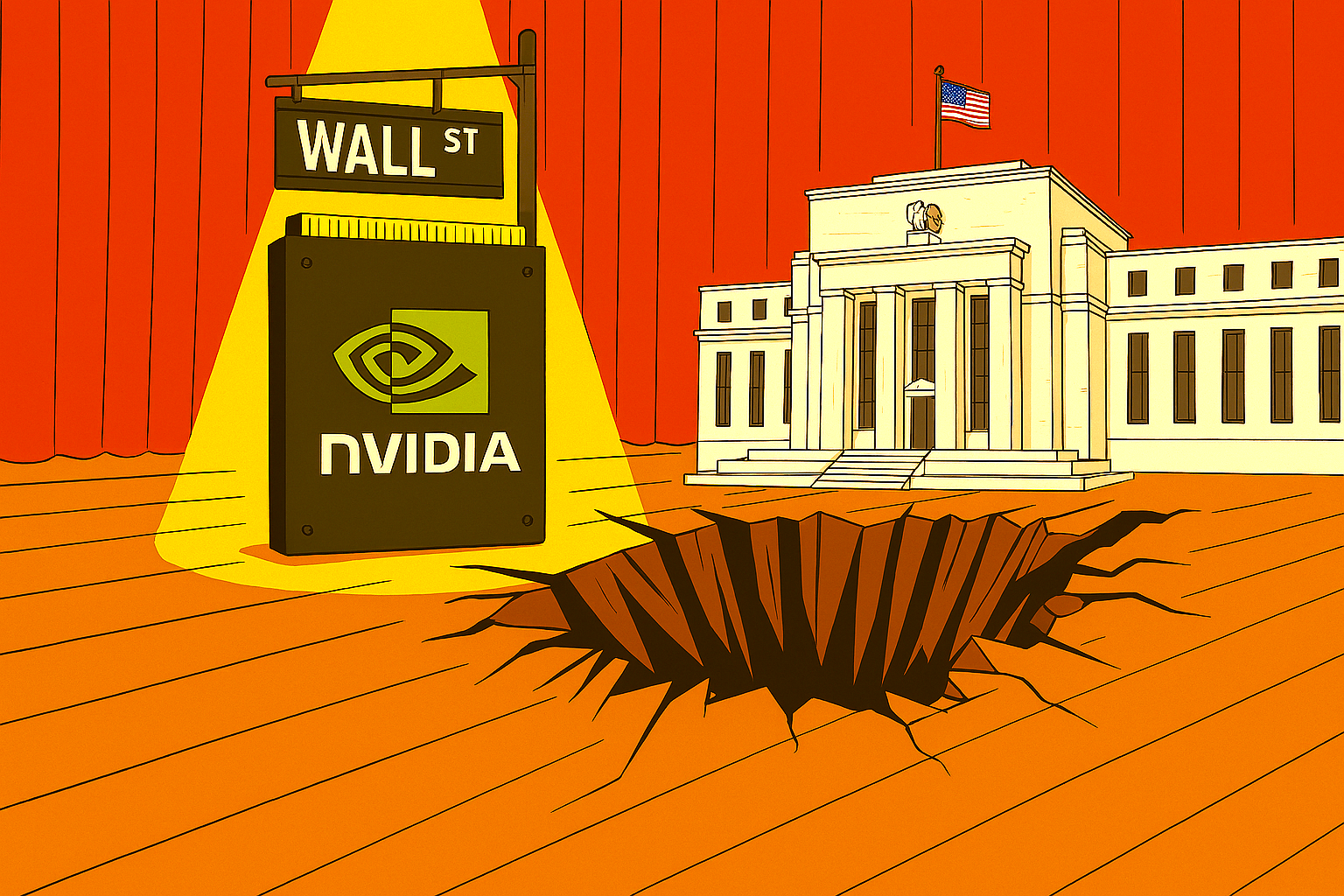
Nvidia Q3 results were very strong – but does the AI bubble reside elsewhere – such as with the debt driven AI data centre roll out – and crossover company deals?

AI debt

Nvidia’s Q3 results show strength, but the real risk of an AI bubble may lie in the debt-fuelled data centre boom and the circular crossover deals between tech giants.

Nvidia’s latest quarterly earnings were nothing short of spectacular. Revenue surged to $57 billion, up 62% year-on-year, with net income climbing to nearly $32 billion. The company’s data centre division alone contributed $51.2 billion, underscoring how central AI infrastructure has become to its growth.

These figures have reassured investors that Nvidia itself is not the weak link in the AI story. Yet, the question remains: if not Nvidia, where might the bubble be forming?

Data centre roll-out

The answer may lie in the debt-driven expansion of AI data centres. Building hyperscale facilities requires enormous capital outlays, not only for GPUs but also for power, cooling, and connectivity.

Many operators are financing this expansion through debt, betting that demand for AI services will continue to accelerate. While Nvidia’s chips are sold out and cloud providers are racing to secure supply, the sustainability of this debt-fuelled growth is less certain.

If AI adoption slows or monetisation lags, these projects could become overextended, leaving balance sheets strained.

Crossover deals

Another area of concern is the crossover deals between major technology companies. Nvidia’s Q3 was buoyed by agreements with Intel, OpenAI, Google Cloud, Microsoft, Meta, Oracle, and xAI.

These arrangements exemplify a circular investment pattern: companies simultaneously act as customers, suppliers, and investors in each other’s AI ventures.

While such deals create momentum and headline growth, they risk masking the true underlying demand.
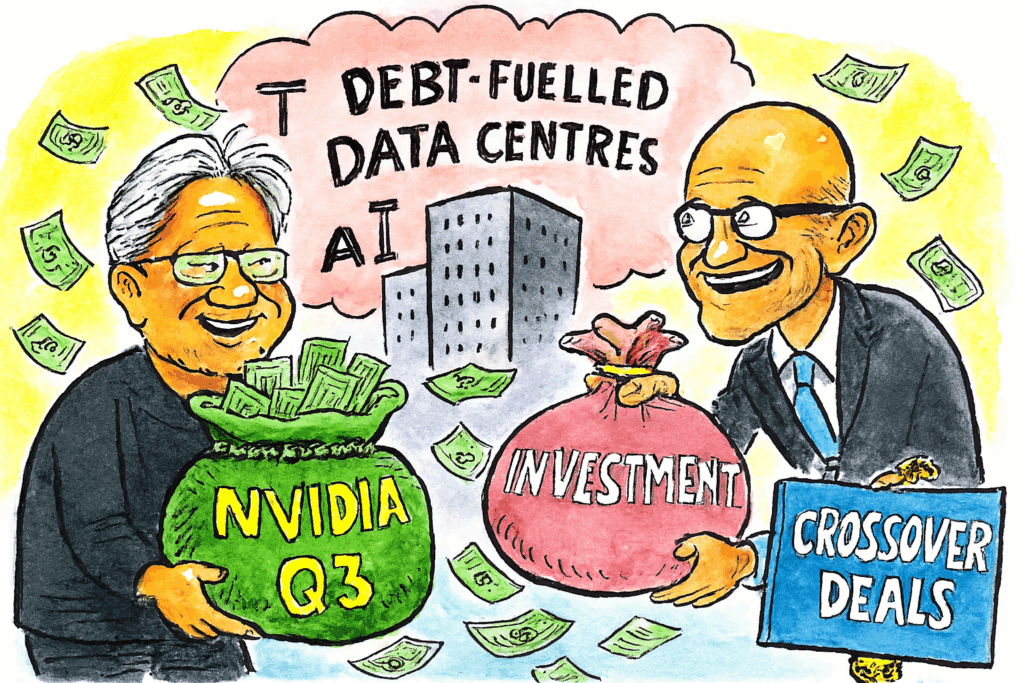
If much of the revenue is generated by companies trading capacity and investment back and forth, the market could be inflating itself rather than reflecting genuine end-user adoption.

Bubble or not to bubble?

This dynamic is reminiscent of past bubbles, where infrastructure spending raced ahead of proven returns. The dot-com era saw fibre optic networks built faster than internet businesses could monetise them.

Today, AI data centres may be expanding faster than practical applications can justify. Nvidia’s results prove that demand for compute is real and immediate, but the broader ecosystem may be vulnerable if debt levels rise and crossover deals obscure the true picture of profitability.

In short, Nvidia’s strength does not eliminate bubble risk—it merely shifts the spotlight elsewhere. Investors and policymakers should scrutinise the sustainability of AI infrastructure financing and the circular nature of tech partnerships.

The AI revolution is undoubtedly transformative, but its foundations must rest on genuine demand rather than speculative debt and self-reinforcing deals.
Nvidia’s Latest Financial Results – Q3 2025

Nvidia AI chips dominate

Nvidia has once again (unsurprisingly) defied expectations, reporting record-breaking third-quarter results that underscore its dominance in the artificial intelligence chip market.

Nvidia’s Latest Financial Results

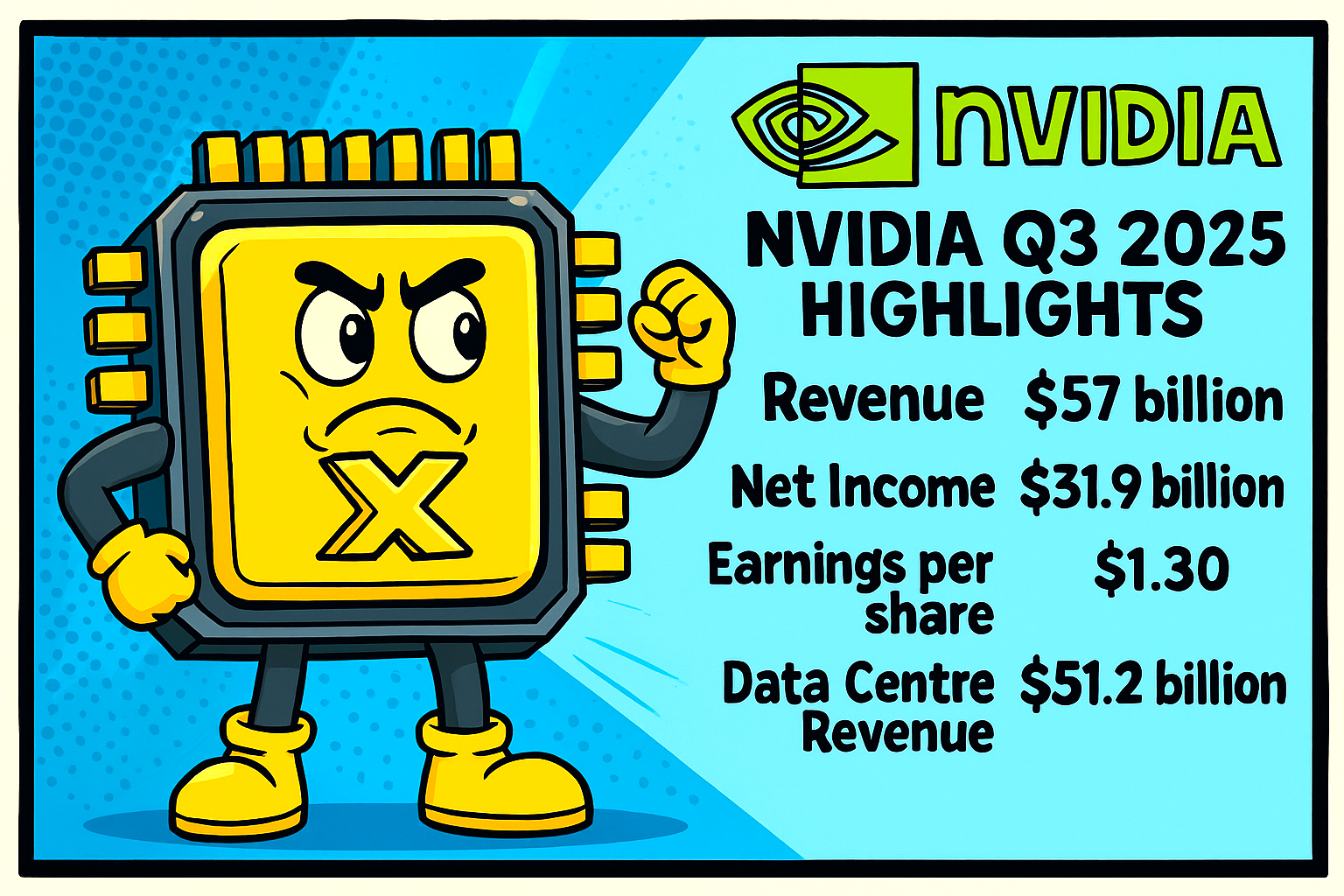
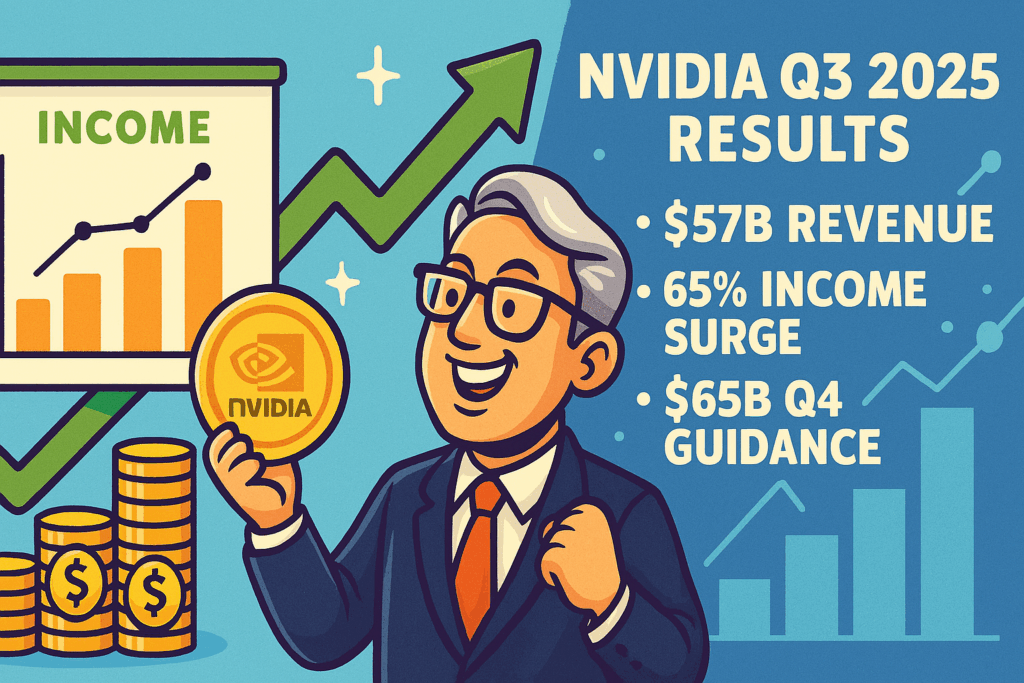
Nvidia announced revenue of $57 billion for the quarter ending 26th October 2025, a 62% increase year-on-year and up 22% from the previous quarter.

Net income surged to $31.9 billion, a remarkable 65% rise compared with last year. Earnings per share came in at $1.30, comfortably ahead of analyst forecasts of $1.26.

The company’s data centre division was the star performer, generating $51.2 billion in revenue, up 25% from the previous quarter and 66% year-on-year.

This reflects the insatiable demand for Nvidia’s Blackwell AI chips, which CEO Jensen Huang reportedly described it as ‘off the charts‘ with cloud GPUs effectively sold out.

Market Impact and Outlook

Shares of Nvidia rose sharply following the announcement, adding to a 39% gain in 2025 so far. Analysts had anticipated strong results, but the scale of growth exceeded even bullish expectations.

Options markets had priced in a potential 7% swing in Nvidia’s stock after earnings, highlighting investor sensitivity to its performance.

Looking ahead, Nvidia has issued guidance of $65 billion in revenue for the fourth quarter, signalling continued momentum.

Huang reportedly emphasised that AI demand is compounding across both training and inference, creating what he called a ‘virtuous cycle’ for the industry.

Strategic Significance

Nvidia’s results reinforce its position at the centre of the global AI boom. Its chips power everything from large language models to robotics, and the company is benefiting from widespread adoption across industries.

With margins above 73%, Nvidia is not only growing rapidly but also maintaining enviable profitability.

The figures highlight how Nvidia has become more than a semiconductor company—it is now a cornerstone of the digital economy.

As AI applications proliferate, Nvidia’s ability to scale production and meet demand will be critical in shaping the next phase of technological transformation.

In short: Nvidia’s Q3 results show explosive growth, record revenues, and a confident outlook, cementing its role as the leading force in AI hardware.

Nvidia CEO reportedly remarked

‘There’s been a lot of talk about an AI bubble‘, Nvidia CEO Jensen Huang reportedly told investors. ‘From our vantage point, we see something very different’.

As to what that means exactly is up to you to decipher. Regardless of what the AI industry has to offer in the future, from an investor’s point of view, Nvidia’s earnings are clearly something to celebrate.

Is AI in a bubble, or not?

Is Wall Street more fixated on Nvidia’s success than the potential failure of the Fed – the Fed needs to maintain independence?

Nvidia, Wall Street and the Fed

As Nvidia prepares to unveil another round of blockbuster earnings, Wall Street’s gaze remains firmly fixed on the AI darling’s ascent.

The company has become a proxy for the entire tech sector’s hopes, its valuation ballooning on the back of generative AI hype and data centre demand. Traders, analysts, and even pension funds are treating Nvidia’s quarterly results as a bellwether for market sentiment.

But while the Street pops champagne over GPU margins, a quieter and arguably more consequential drama is unfolding in Washington: The Federal Reserve’s independence is under threat.

Recent political manoeuvres—including calls to fire Fed Governor Lisa Cook and reshape the Board’s composition—have raised alarm bells among economists and institutional investors.

The Fed’s ability to set interest rates free from partisan pressure is a cornerstone of global financial stability. Undermining that autonomy could rattle bond markets, distort inflation expectations, and erode trust in the dollar itself.

Yet, the disparity in attention is striking. Nvidia’s earnings dominate headlines, while the Fed’s institutional integrity is relegated to op-eds and academic panels.

Why? In part, it’s the immediacy of Nvidia’s impact—its share price moves billions in minutes.

The Fed’s erosion, by contrast, is a slow burn, harder to quantify and easier to ignore until it’s too late.

Wall Street may be betting that the Fed will weather the political storm. But if central bank independence falters, even Nvidia’s stellar performance won’t shield markets from the fallout.

The real risk isn’t missing an earnings beat—it’s losing the referee in the game of monetary policy.

In the end, Nvidia may be the star of the show, but the Fed is the stage. And if the stage collapses, the spotlight won’t save anyone.