FTSE 100 breaks 9000 barrier in historic rally – hitting new all-time intraday high!

FTSE 100 ascent above 9,000

The FTSE 100 surged past the 9,000-point mark on 15th July 2025, setting a new all-time high and signalling renewed investor confidence in the UK’s economic outlook.

Driven by strong performances in energy, banking, and AI-adjacent tech firms, the benchmark index shattered psychological resistance with broad-based gains.

Much of the momentum came from robust earnings reports and upbeat forecasts from major constituents such as Shell and HSBC.

Analysts also pointed to growing international interest in UK equities, especially as sterling remains relatively stable amid global currency fluctuations.

The breakthrough follows months of resilience in the face of inflationary pressures and geopolitical uncertainty.

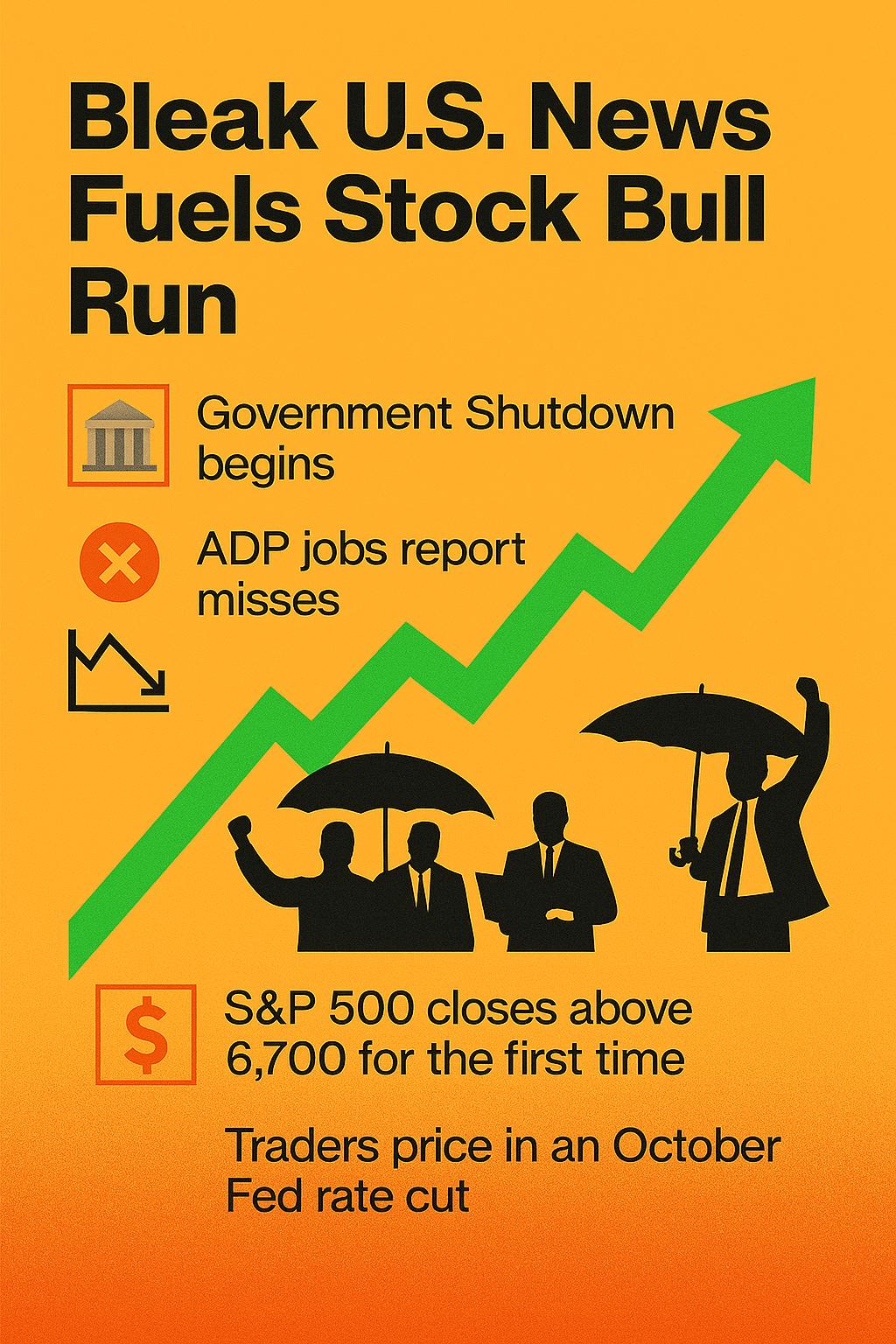
Investors appear to be rewarding UK equities as a steady alternative option against the backdrop of U.S. market turmoil – maybe the U.S.is running out of steam?

While traders welcomed the milestone, some caution against irrational exuberance. Crossing 9,000 is significant, but sustainability depends on whether earnings growth can be maintained

Nonetheless, market watchers view the rally as a strong signal of the FTSE 100’s ability to compete globally.

With fresh liquidity and stabilising rates, the index might not just pause at 9,000 — it may soon look to test even higher ground.

Bitcoin surges to record high as investors pause for breath to take profits

Bitcoin hits new high!

Bitcoin hit a new milestone on 14th July 2025, reaching an unprecedented $123,091.61.

This marks the digital currency’s highest level to date, building on months of momentum driven by institutional buying, regulatory optimism, and a flood of capital from exchange-traded funds.

The rally comes amid growing confidence in cryptocurrencies as lawmakers in Washington debate the GENIUS Act, a pivotal piece of legislation that could cement Bitcoin’s role in mainstream finance. Market sentiment has been overwhelmingly bullish, with analysts citing a ‘flight to digital safety’ as global uncertainties mount.

However, since the peak, Bitcoin’s ascent has shown signs of levelling off. Profit-taking among investors appears to have introduced temporary friction, prompting a modest dip in trading volumes.

Several large wallets moved substantial holdings to exchanges, hinting at short-term sell-offs. Yet the decline has been measured, and there’s little indication of widespread panic.

Some traders interpret this plateau not as weakness, but consolidation.

With volatility baked into its DNA, Bitcoin continues to command attention from both seasoned investors and curious newcomers.

Whether it resumes its march toward $125,000 or cools off remains to be seen—but for now, the market is watching, waiting, and calculating its next move.

Five-day Bitcoin ascent

DateOpening PriceClosing PriceDaily HighDaily Low
11 July$115,909.08$117,579.19$117,901.00$115,909.08
12 July$117,579.19$117,460.30$118,672.53$117,460.30
13 July$117,460.30$118,908.51$118,908.51$117,460.30
14 July$118,908.51$122,584.00$123,091.61$118,908.51
15 July$122,584.00$121,902.00$122,493.00$121,902.00
Five-day Bitcoin ascent

Markets appear to dismiss Trump’s tariff threats – but will this prove to be unwise?

Super Chicken

Despite President Donald Trump’s renewed push for sweeping tariffs, global markets appear unfazed.

Trump issued letters to 14 countries – including Japan, South Korea, and Malaysia—outlining new import levies ranging from 25% to 40%, set to take effect on 1st August 2025. More letters then followed.

Yet, major indices like the FTSE 100 and Nikkei 225 barely flinched, with some even posting modest gains.

So, who’s right—the president or the markets?

Trump insists tariffs are essential to redress trade imbalances and bring manufacturing back to the U.S. The EU also faces higher tariffs.

He’s floated extreme measures, including a 200% tariff on pharmaceuticals and a 50% levy on copper.

His administration argues these moves will strengthen domestic industry and reduce reliance on foreign supply chains.

However, investors seem to be betting on a familiar pattern: Trump talks tough but ultimately softens under pressure. Analysts have dubbed this the ‘TACO’ trade—Trump Always Chickens Out.

His own comments have added to the ambiguity, calling the August deadline ‘firm, but not 100% firm’.

The economic logic behind the tariffs is being questioned. Tariffs are paid by importers—often U.S. businesses and consumers—not foreign governments.

This could lead to higher prices and inflation, especially in sectors like healthcare and electronics. Some economists warn of recessionary risks for countries like Japan and South Korea.

In short, markets may be right to remain calm—for now. But if Trump follows through, the impact could be far-reaching.

With trade negotiations still in flux and only two deals (UK and Vietnam) finalised, the next few weeks will be critical. Investors may be wise not to ignore the warning signs entirely.

Whether this is brinkmanship or a genuine shift in trade policy, the stakes are high—and the clock is ticking.

UK economy contracts in May 2025 amid global tariff trade turmoil

UK GDP squeezed

Britain’s economy shrank by 0.1% in May 2025, marking its second consecutive monthly decline and casting fresh doubt over the strength of the post-pandemic recovery.

The latest figures from the Office for National Statistics defied analyst expectations of modest growth, underlining deepening concerns within the Treasury and among business groups.

The drop was largely driven by a sharp 0.9% fall in production output, particularly in oil and car manufacturing, alongside a 0.6% decline in construction activity.

These weaknesses come despite a slight uptick in services, which rose by 0.1%, buoyed by gains in legal services and software development.

Summary

🏭 Production output fell by 0.9%, led by declines inl oil and gas extraction and car manufacturing.

🏗️ Construction dropped 0.6%, reversing April’s gains.

🛍️ Services eked out a 0.1% rise, with legal services and computer programming offsetting a sharp fall in retail.

Finance Minister Rachel Reeves faces increasing pressure as her economic reboot agenda collides with rising domestic costs and global headwinds.

April’s national insurance hikes and Trump’s aggressive tariff policy have created economic drag, despite the UK having brokered a swift bilateral trade agreement with the U.S.

The three-month growth rate stands at 0.5%, but economists now predict a meagre 0.1% expansion for the second quarter.

With inflation edging back above 3% and interest rate cuts looming, the government must navigate a delicate balance between stimulus and stability.

The first official Q2 GDP estimate will be released on 14th August 2025, with markets braced for further volatility.

UK GDP figures February through May 2025

Month% Change in GDPKey Drivers/Comments
February+0.5%Strong services and frontloaded activity pre-tariffs
March+0.2%Moderate growth, tax rise concerns begin
April–0.3%Domestic tax hikes, Trump tariff shock
May–0.1%Production –0.9%, construction –0.6%; weak manufacturing
UK GDP figures February through May 2025

NVIDIA Hits $4 trillion market cap as AI dominance drives market surge

AI ?

In a historic moment for global markets, NVIDIA has become the first publicly traded company to reach a staggering $4 trillion market capitalisation, underscoring its pivotal role in the artificial intelligence revolution.
The chipmaker’s shares climbed to an all-time high of $164 this week, fuelled by relentless investor enthusiasm for AI technologies.

Originally known for its graphics processing units (GPUs) tailored to gaming, NVIDIA has transformed into the backbone of the AI boom.

Its high-performance chips now power everything from large language models to autonomous systems, making it indispensable to tech giants like Microsoft, Meta, and Alphabet.

Since the debut of ChatGPT in late 2022, NVIDIA’s stock has surged nearly 900%, outpacing both the broader market and its semiconductor peers.

The company’s meteoric rise is backed by explosive financials. In the first quarter of 2025 alone, NVIDIA reported $44.1 billion in revenue, with its data centre division contributing over 88% of that figure.

Analysts attribute this growth to the insatiable demand for AI infrastructure, with firms investing tens of billions in data centres and cloud computing.

Despite geopolitical headwinds, including export restrictions to China and tariff uncertainties, NVIDIA has demonstrated remarkable resilience.

Its valuation now exceeds the combined worth of the Canadian and Mexican stock markets and is just shy of India’s GDP. It is also larger than the UK’s GDP. Is this valuation sustainable?

As AI continues to reshape industries, from healthcare to finance, NVIDIA stands at the forefront, not just as a chipmaker, but as a symbol of technological ascendancy. Whether this dominance is sustainable remains to be seen, but for now, Wall Street has crowned its new titan.

And with AI showing no signs of slowing, NVIDIA’s ascent may be just the beginning of a new era in market leadership.

But what really is NVIDIA’s true value – is it overpriced?

Many analysts argue that NVIDIA is currently overvalued, at least by traditional metrics. For example, AlphaSpread estimates its intrinsic value at around $112.25, while its market price hovers near $158, suggesting it’s overvalued by roughly 29%.

Nvidia one-year share price chart at new high as of 9th July 2025

Nvidia one-year share price chart at new high as of 9th July 2025

Similarly, a discounted cash flow (DCF) analysis from TheStreet indicates the stock may be worth 8% less than its current price.

But here’s the twist: NVIDIA isn’t just any stock. It’s the dominant force in AI hardware, with over 80% market share in data centre accelerators.

That kind of monopoly in a rapidly expanding sector makes traditional valuation models look a bit… well, quaint.

Some investors argue that its growth trajectory and pricing power justify the premium, especially with AI demand scaling across industries.

Still, others caution that the hype may be outpacing fundamentals. To justify its current valuation, NVIDIA would need to generate over $1.2 trillion in cash flow over the next 20 years—an ambitious target even for a tech titan.

So is it overpriced?

If you’re a value investor, probably yes. If you’re betting on AI transforming the world and NVIDIA staying at the centre of it, maybe not.

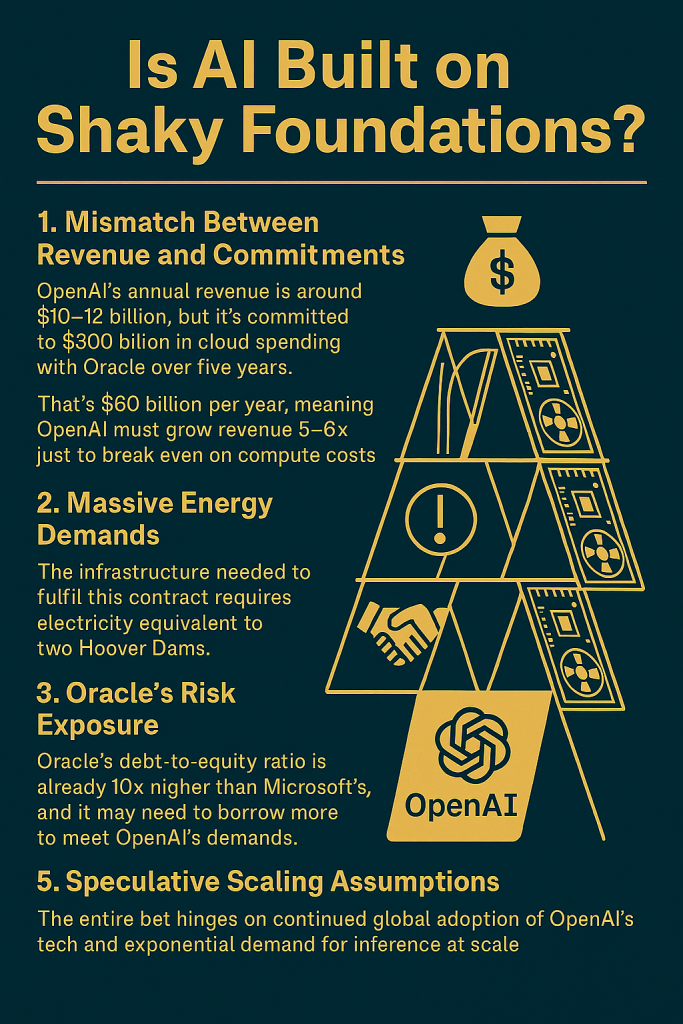
When will the companies investing in AI see the returns on their investment?

And NVIDIA isn’t the only AI show in town.

Elon Musk launches ‘America Party’ amid ongoing feud with Trump

America Party

In a dramatic twist to the U.S. political landscape, Elon Musk has announced the formation of a new political party, the America Party, following a bitter fallout with President Donald Trump over his controversial tax and spending legislation – the ‘Big Beautiful Bill‘.

Musk, once a key ally of Trump and head of the Department of Government Efficiency (DOGE), broke ranks after the passage of the so-called ‘Big Beautiful Bill‘, which Musk labelled a “disgusting abomination” that would balloon the national debt by trillions.

On U.S. Independence Day, Musk polled his followers on X, asking whether a new party should be formed. With a 2-to-1 majority voting ‘yes’, Musk declared, ‘Today, the America Party is formed to give you back your freedom’.

The party aims to challenge the entrenched two-party system by targeting a handful of swing Senate and House seats, potentially becoming a decisive force in future legislation.
Musk has pledged to support primary challengers against Republicans who backed the bill, accusing them of betraying fiscal responsibility.

Trump, clearly irked, dismissed Musk’s move as ‘ridiculous’, reportedly stating, ‘It’s always been a two-party system… third parties have never worked’.

He added on Truth Social, ‘Elon Musk has gone completely off the rails… becoming a train wreck over the past five weeks’.

The feud has escalated rapidly, with Trump threatening to revoke federal subsidies for Musk’s companies and even suggesting deportation, despite Musk’s U.S. citizenship.

While Musk’s America Party faces steep legal and logistical hurdles, his immense wealth and online influence could make it a disruptive force.

Whether it gains traction or fizzles out remains to be seen but it’s clear the ‘love’ between Musk and Trump is officially over.

U.S. debt surges close to $37 trillion after ‘Big Beautiful Bill’ -Elon Musk sounds alarm

High U.S. debt levels

Following the passage of President Donald Trump’s sweeping tax and spending legislation, dubbed the One Big Beautiful Bill, the U.S. national debt has officially soared to nearly $37 trillion, with projections suggesting it could hit $40 trillion by year’s end.

The bill, which extends 2017 tax cuts and introduces expansive spending on defence, border security, and domestic manufacturing, has sparked fierce debate across Washington and Wall Street.

Critics argue the legislation lacks meaningful offsets, with no new taxes or spending cuts to balance its provisions.

Interest payments alone reached $1.1 trillion in 2024, surpassing the defence budget. The Congressional Budget Office estimates the bill could add $3.3 trillion to the deficit over the next decade.

Among the most vocal opponents is tech billionaire Elon Musk, who previously served as head of the Department of Government Efficiency (DOGE).

Musk has labelled the bill a ‘disgusting abominatio’ and warned it undermines fiscal responsibility.

He has reportedly pledged to fund primary challengers against Republicans who supported the measure, accusing them of betraying their promises to reduce spending.

Musk’s concerns go beyond economics. He argues the bill reflects a broken political system dominated by self-interest, calling for the creation of a new political movement, the America Party, to restore accountability.

While the White House insists the bill will spur economic growth and eventually reduce the debt-to-GDP ratio, sceptics remain unconvinced.

With the debt ceiling raised by a record $5 trillion, the long-term implications for America’s financial stability are now front and centre.

As the dust settles, the clash between Trump’s fiscal vision and Musk’s warnings sets the stage for a turbulent political and economic period ahead.

Trump shifts tariff ‘goal posts’ again and targets BRICS with extra 10% levy

Goal posts moved

In a fresh escalation of trade tensions, President Donald Trump has once again moved the goalposts on tariff policy, pushing the deadline for new trade deals to 1st August 2025.

This marks the second extension since the original April 2025 ‘Liberation Day’ announcement, which had already stirred global markets.

The latest twist includes a new 10% tariff targeting countries aligned with the BRICS bloc—Brazil, Russia, India, China, and South Africa – along with newer members such as Iran and the UAE.

Trump declared on Truth Social that ‘any country aligning themselves with the Anti-American policies of BRICS will be charged an ADDITIONAL 10% tariff. There will be no exceptions’.

The move has drawn sharp criticism from BRICS leaders, who condemned the tariffs as ‘indiscriminate’ and warned of rising protectionism. Industrial metals, including copper and aluminium, saw immediate price drops amid fears of disrupted supply chains.

While the White House insists the new deadline allows more time for negotiation, analysts warn the uncertainty could dampen global trade and investor confidence.

With letters outlining tariff terms expected to be sent this week, investors and market makers watch closely as Trump’s trade strategy continues to evolve or unravel.

S&P 500 and Nasdaq 100 hit new all-time high!

New All-time highs!

The U.S. stock market surged into July 2025 with a wave of optimism, as the S&P 500 and Nasdaq 100 both hit fresh all-time highs, while the Dow Jones Industrial Average continued its upward climb.

The S&P 500 closed at 6279, marking its fourth record close in five sessions, and the Nasdaq 100 soared to 22867, fueled by strength in AI and semiconductor stocks.

S&P 500 YTD chart

Nasdaq 100 YTD chart

Driving the rally was a stronger-than-expected June 2025 jobs report, which revealed 147,000 new positions added and an unemployment rate dipping to 4.1%.

This labour market resilience tempered expectations for a near-term Federal Reserve rate cut, but bolstered investor confidence in the economy’s momentum.

Tech giants like Nvidia and Microsoft led the charge, with Nvidia nearing a $4 trillion market cap amid surging demand for AI infrastructure.

Datadog spiked after being added to the S&P 500, and financials like JPMorgan Chase and Goldman Sachs hit lifetime highs.

The Dow, while slightly trailing its tech-heavy peers, posted steady gains and now hovers near its own record territory.

With trade optimism rising and President Trump’s tax-and-spending bill passed, Wall Street enters the holiday weekend riding a wave of bullish sentiment.

Tesla’s 14% decline in vehicle deliveries reported

14% EV sales decline

Tesla reported just 384,122 vehicle deliveries in Q2 2025 – a noticeable 14% slide year-on-year, and its steepest decline on record.

While some anticipated turbulence, the results managed to slightly exceed analyst expectations, prompting a surprising 5% climb in the stock.

Tesla YTD chart

Tesla YTD chart (July 2025)

So, what’s driving this cooldown in momentum?

🇨🇳 China’s EV powerhouses: BYD alone reportedly registered over 1 million battery-electric sales, outpacing Tesla with fresher and more affordable options.

Delayed evolution: The promised $25K ‘Model Q’ has yet to appear, leaving Tesla’s aging lineup vulnerable.

⚖️ Demand vs. production imbalance: Tesla built 410,244 cars – more than it sold – indicating inventory build-up.

🗺️ Regional whiplash: European and Chinese demand wavered, though China showed signs of late-quarter recovery.

🧨 CEO controversies: Elon Musk’s high-profile political entanglements, including his stint with the DOGE department and ties to Trump – stirred public backlash and dented brand sentiment.

Still, Wall Street is keeping one eye on Tesla’s future bets: autonomous driving and robotaxis.

Despite the rough quarter, some analysts argue that the dip could mark a cyclical bottom before a strategic pivot.

RSI signals flash: U.S. stocks enter overbought territory

U.S. Companies RSI

As U.S. equity markets continue their relentless climb, a growing number of stocks are flashing warning signs through one of the most widely followed technical indicators: the Relative Strength Index (RSI).

Designed to measure momentum, RSI values above 70 typically indicate that a stock is overbought and may be due for a pullback.

As of early July 2025, several high-profile U.S. companies have RSI readings well above this threshold, suggesting that investor enthusiasm may be outpacing fundamentals.

🔍 What Is RSI?

The RSI is a momentum oscillator that ranges from 0 to 100. Readings above 70 suggest a stock is overbought, while readings below 30 indicate it may be oversold. While not a crystal ball, RSI is a useful tool for identifying potential reversals or pauses in price trends.

🚨 Top 5 Overbought U.S. Stocks (as of 1st July 2025)

CompanyTickerRSIYTD Performance
NvidiaNVDA84.3+92.5%
Super Micro ComputerSMCI82.7+108.4%
Advanced Micro DevicesAMD80.1+74.2%
Alnylam PharmaceuticalsALNY78.9+66.0%
Circle Internet GroupCIRC77.5+62.9%

These companies have benefited from the ongoing AI and biotech booms, with Nvidia and AMD riding the wave of demand for next-gen chips, while Alnylam and Circle Internet Group have surged on strong earnings and innovation in their respective sectors.

📊 RSI Snapshot: Top 10 U.S. Stocks by RSI

RankCompanyTickerRSISector
1NvidiaNVDA84.3Semiconductors
2Super Micro ComputerSMCI82.7Hardware
3AMDAMD80.1Semiconductors
4Alnylam PharmaceuticalsALNY78.9Biotech
5Circle Internet GroupCIRC77.5Internet Services
6Mereo BioPharma GroupMPH76.4Biotech
7AVITA MedicalAVH75.2Healthcare
8MicrosoftMSFT74.8Software
9Lumentum HoldingsLITE73.6Optical Tech
10WorkivaWK72.9Cloud Software

📌 What This Means for Investors

While high RSI doesn’t guarantee a drop, it does suggest caution. Stocks like Nvidia and Super Micro may continue to rise in the short term, but their elevated RSI levels imply that momentum could stall or reverse if sentiment shifts or earnings disappoint.
Investors should consider pairing RSI with other indicators – such as MACD, volume trends, and earnings outlooks – before making decisions.

For long-term holders, these signals may simply be noise. But for traders, they’re a flashing yellow light.

See: WallStreetNumbers: Advanced Stock Screener & Interactive Charts

Eurozone inflation hits ECB target in June 2025

ECB hits EU Inflation target

Eurozone inflation edged up to 2.0% in June, aligning precisely with the European Central Bank’s (ECB) target and marking a slight increase from 1.9% in May 2025.

The small rise was largely driven by persistent services inflation, which climbed to 3.3%, and steady increases in food, alcohol, and tobacco prices at 3.1%.

Core inflation, which excludes volatile items like energy and food, held firm at 2.3%, suggesting underlying price pressures remain stable. Energy prices, however, continued to decline, easing some of the broader inflationary strain.
The ECB, having already cut interest rates earlier this year, now faces a delicate balancing act. While inflation appears under control, economic growth remains sluggish, and ongoing trade tensions – particularly with the U.S. – could complicate the outlook.

With inflation now at target, attention shifts to whether the ECB will pause further rate cuts or act again to support the eurozone’s fragile recovery.

U.S. markets surge as S&P 500 and Nasdaq hit new highs

New highs U.S. markets

In a remarkable show of investor confidence, the S&P 500 and Nasdaq Composite both reached new all-time highs on 30th June 2025.

The markets were buoyed by optimism around easing inflation, resilient corporate earnings, and renewed enthusiasm for the tech sector, especially AI.

The S&P 500 climbed to a record close of 6205, while the Nasdaq soared 1.2% to finish at 22679 marking its fourth consecutive record-breaking session.

S&P 3-month chart

S&P 3 month chart

Traders pointed to stronger-than-expected economic data and dovish commentary from the Federal Reserve as catalysts that reignited appetite for risk.

Tech giants led the charge, with chipmakers and AI-related firms once again at the forefront.

Nvidia, now the world’s most valuable publicly traded company, gained over 2%, while Apple, Microsoft, and Alphabet also notched solid gains.

The technology-heavy Nasdaq has been particularly responsive to momentum in artificial intelligence and next-generation computing, driving its meteoric rise in recent months.

Nasdaq 100 3-month chart

Nasdaq 100 3-month chart

From April 2025 Trump tariff melt-down to new highs in June 2025

Beyond tech, sectors such as consumer discretionary and industrials also saw modest gains, suggesting a broadening of the rally.

Analysts now debate whether this marks the beginning of a sustainable expansion or a potential overheating of equities.

Meanwhile, Treasury yields held steady, and oil prices ticked higher, signalling confidence in continued global demand.

With earnings season on the horizon, market watchers are closely monitoring corporate guidance to gauge whether valuations can justify further upside.

For now, though, the bulls are clearly in control – and Wall Street is basking in green.

Nvidia regains top spot by market cap

Nvidia top value company again

Nvidia has once again claimed the title of the world’s most valuable publicly traded company, overtaking Microsoft with a staggering market capitalisation of $3.76 trillion.

This milestone follows a 4% surge in Nvidia’s share price, closing at an all-time high of $154.10.

The rally was fuelled by renewed investor enthusiasm for artificial intelligence. Analysts citing it as a ‘Golden Wave’ of generative AI adoption driving demand for Nvidia’s high-performance chips.

The company’s meteoric rise has been underpinned by its dominance in AI hardware, particularly its GPUs, which power everything from ChatGPT to enterprise-scale AI models.

Since bottoming out in early April 2025, Nvidia’s stock has soared more than 60%, far outpacing the broader tech market.

Founded in 1993 to produce graphics chips for gaming, Nvidia has transformed into the backbone of the AI revolution. Its accelerators are now essential infrastructure for companies like Microsoft, Meta, and Google.

Nvidia share price as of 25th June 2025 – a 3 month snapshot

Nvidia share price as of 25th June 2025 – a 3 month snapshot

Despite its rapid ascent, Nvidia’s valuation remains relatively modest compared to historical norms, trading at around 30 times projected earnings.

As the AI arms race intensifies, Nvidia’s position at the summit of global markets underscores the growing importance of its power in shaping the digital future.

China’s restriction of rare earth materials hurts

Chinas rare earth material dominance

China’s recent export restrictions on rare earth elements are sending shockwaves through multiple industries worldwide.

As the curbs continue to take effect, sectors reliant on these critical minerals—including automotive, defence, and clean energy—are beginning to feel the strain.

China controls about 60–70% of global rare earth production and nearly 90% of the refining capacity.

Even when rare earths are mined elsewhere, they’re often sent to China for processing, since few countries have the infrastructure or environmental tolerance to handle the complex and polluting refining process.

In April 2025, China introduced export controls on seven key rare earth elements and permanent magnets, citing national interests and responding to rising trade tensions—particularly with the U.S.

Automotive industry in crisis

The auto sector is among the hardest hit. Rare earth elements are essential for both combustion engines and electric vehicles, particularly in the production of magnets used in motors and batteries.

European auto suppliers have already reported production shutdowns due to dwindling inventories.

Germany’s car industry, a global powerhouse, has reportedly warned that further disruptions could bring manufacturing to a standstill.

Japan’s Nissan and Suzuki have also expressed concerns, with Suzuki reportedly halting production of its Swift model due to shortages.

Defence and technology sectors at risk

China’s dominance in rare earth refining, controlling nearly 90% of global capacity, poses a strategic challenge for defense industries.

The U.S. military relies heavily on these materials for missile guidance systems, radar technology, and advanced electronics.

With nearly 78% of defence platforms dependent on Chinese-processed rare earths, the restrictions expose vulnerabilities in national security.

Clean energy ambitions under threat

The clean energy transition depends on rare earths for wind turbines, solar panels, and electric vehicle batteries.

China’s curbs threaten global efforts to reduce carbon emissions, forcing countries to scramble for alternative sources. India’s electric vehicle sector, for instance, faces potential setbacks as manufacturers struggle to secure supplies.

As industries grapple with these disruptions, governments and corporations are urgently seeking solutions. Whether through diplomatic negotiations or investment in domestic rare earth production, the race is on to mitigate the fallout from China’s tightening grip on these critical resources.

Several countries have significant rare earth reserves and can supply these materials in high quantities.

Top rare earth materials suppliers

China – The dominant player, with 44 million metric tons of reserves.

Brazil – Holds 21 million metric tons of rare earth reserves.

Vietnam – Has 22 million metric tons, making it a rising supplier.

India – Contains 6.9 million metric tons.

Australia – A key producer with 5.7 million metric tons.

Russia – Holds 10 million metric tons.

United States – While not a leading producer, it has 1.8 million metric tons.

Greenland – An emerging supplier with 1.5 million metric tons.

China remains the largest supplier, but countries like Brazil, Vietnam, and Australia are working to expand their production to reduce reliance on Chinese exports.

Ukraine?

Ukraine reportedly has significant reserves of rare earth elements, including titanium, lithium, graphite, and uranium. These minerals are crucial for industries such as defence, aerospace, and green energy.

However, the ongoing conflict with Russia has disrupted access to many of these deposits, with some now under Russian control.

Despite these challenges, Ukraine is being considered for strategic raw material projects by the European Union, aiming to strengthen supply chains and reduce reliance on China. The country’s mineral wealth could play a key role in post-war recovery and global supply diversification

Greenland?

Greenland is emerging as a key player in the global rare earth supply chain. The European Union has recently selected Greenland for new raw material projects aimed at securing critical minerals.

The island holds significant deposits of rare earth elements, including graphite, which is essential for battery production.

However, Greenland faces challenges in developing its rare earth industry, including harsh terrain, environmental concerns, and geopolitical tensions.

The U.S. and EU are keen to reduce reliance on China, which dominates rare earth processing, and Greenland’s resources could play a crucial role in this effort.

Greenland has indicated it has little desire to be transformed into a mining territory. It could have little choice.

Canada?

Canada is emerging as a significant player in the rare earth supply chain. The country has over 15.2 million tonnes of rare earth oxide reserves, making it one of the largest known sources globally.

Recently, Canada opened its first commercial rare earth elements refinery, marking a major step toward reducing reliance on Chinese processing.

The facility, located in Saskatchewan, aims to produce 400 tonnes of neodymium-praseodymium (NdPr) metals per year, enough for 500,000 electric vehicles annually.

Additionally, Canada is investing in critical minerals infrastructure to unlock rare earth development in Northern Quebec and Labrador.

The government has allocated $10 million to support mining projects, including the Strange Lake Rare Earth Project, which contains globally significant quantities of dysprosium, neodymium, praseodymium, and terbium.

Rare earth materials are a necessity for our modern technological lives – big tech tells us this. The hunger for these products needs to be fed, and China, right now, does the feeding.

And the beast needs to be fed.

From Missiles to Tariffs: A desensitised stock market faces Trump’s new world

Markets desensitised to U.S. policy making

In years past, the mere hint of U.S. airstrikes or heightened geopolitical tension would send global stock markets into panic mode.

Yet, following President Trump’s re-election and his increasingly aggressive foreign policy stance, investor reactions have become notably muted.

From missile strikes on Iranian nuclear sites to an orchestrated ceasefire between Iran and Israel, markets have barely flinched. The question arises: are investors becoming desensitised to Trump’s geopolitical theatre?

Take the latest skirmish between Iran and Israel. After nearly two weeks of missile exchanges, Trump’s announcement of a ‘complete and total ceasefire’ barely nudged the S&P 500.

That calm came despite the U.S. launching pre-emptive strikes on Iranian facilities and absorbing retaliatory attacks on its military base in Qatar.

In another era, or under a different administration even, such developments might have triggered a broad risk-off sentiment. Instead, Wall Street just shrugged.

One reason may be fatigue. Trump’s approach – rife with tariffs, sanctions, and sudden reversals – has bred a kind of market immunity.

Investors, well-versed in the rhythm of Trump’s provocations, have begun treating them as background noise. His revived tariff agenda, particularly the threats aimed once again at China and EU auto imports, has likewise failed to prompt major selloffs.

Similarly, the ongoing Russia-Ukraine conflict, once a source of intense volatility, now registers as a strategic stalemate in the market’s eyes.

While Trump’s rhetoric surrounding Ukraine has shifted unpredictably, investors appear more focused on earnings, inflation data, and central bank signals than on diplomatic fallout and war!

This is not to suggest markets are indifferent to geopolitical risk, but rather that they’ve adapted. Algorithmic trading models may be increasingly geared to discount Trump’s headline-grabbing tactics, while institutional investors hedge through gold, volatility indices, or energy plays without dumping equities outright.

Critics argue this detachment is dangerous. Should a flashpoint spiral out of control, be it over Hormuz, Ukraine, or Taiwan, the slow-boiling complacency could leave portfolios badly exposed.

Still, for now, Trump’s policies are being priced in not with panic, but with complacency maybe.

The real story may not be what Trump does next, but how long the markets can continue to look away.

Trump announces he had brokered ceasefire between Israel and Iran?

Tensions between Israel and Iran reached a boiling point after 12 days of cross-border missile and drone strikes.

The situation escalated further when U.S. forces under President Trump launched targeted airstrikes on key Iranian nuclear sites, Fordow, Natanz, and Isfahan, prompting a direct Iranian missile response on a U.S. base in Qatar.

In a dramatic turn, President Trump announced what he called a ‘Complete and Total CEASEFIRE‘ – announced on Truth Social. According to Trump’s plan, Iran would begin the ceasefire immediately, with Israel to follow 12 hours later.

The truce would reportedly be considered complete after 24 hours if all attacks stopped.

While Trump touted the ceasefire as a triumph of ‘peace through strength’, analysts questioned the ceasefire’s enforceability – especially since missile exchanges reportedly continued despite the announcement.

Nonetheless, Trump claimed credit for halting the region’s slide into all-out war without committing to prolonged U.S. military involvement.

Critics argue Trump’s strategy relies more on military pressure and media theatrics than diplomatic engagement.

Supporters counter that his boldness forced both sides to the table. Either way, the world is watching to see whether this fragile peace endures – or erupts again in fire.

If this turns out to be a masterstroke in political brinkmanship – hats off to Trump, I guess. Whichever way you look at it, the precision U.S. strike on Iran was exactly that – precision. And, you have to take note.

Iran has been weakened, and this may even influence Russia’s war on Ukraine. Hopefully Israel with Palestine too – regardless of stock market reaction.

And that has to be a good thing!

But has Israel finished their war?

Despite all the noise regarding stock market reaction, one thing is for certain – the anxiety and worry for the people of the Middle East is unquestionable.

It’s not a happy time.

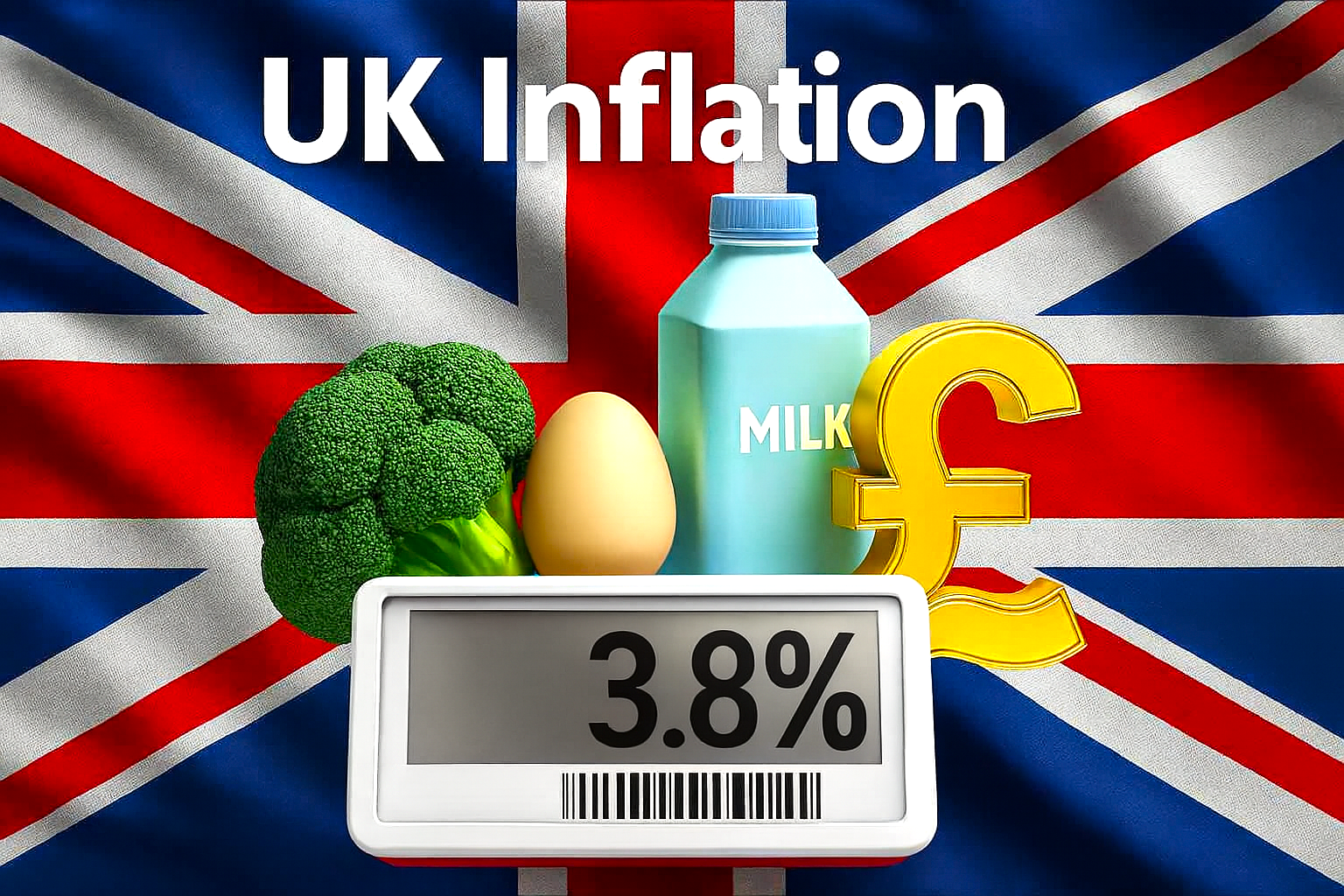
Japan rice price spikes by 101% – highest in 50 years and inflation jumps to highest level since 2023

Japan Rice up highest for 50 years

Japan has been jolted by a dramatic spike in rice prices, which surged by 101.7% year-on-year in May 2025 – the most significant increase in over fifty years.

This sharp rise in the cost of the country’s staple food has contributed heavily to Japan’s inflation, which jumped to 3.7%, marking its highest point since January 2023.

The Bank of Japan (BOJ) now faces mounting pressure, as this marks the 38th consecutive month inflation has surpassed the Bank’s 2% target.

Notably, the ‘core-core’ inflation rate, excluding fresh food and energy rose to 3.30%, an indication that broader cost pressures are sticking.

The government has begun releasing emergency rice stockpiles in an attempt to dampen prices, but analysts remain cautious.

With rice accounting for nearly half of Japan’s core inflation, its influence stretches well beyond supermarket aisles. A continued rise could affect everything from packaged goods to restaurant prices.

Despite calls for tightening policy, the BOJ has opted to keep interest rates at 0.5%, citing expectations of inflation easing in the coming months.

However, with geopolitical tensions and supply chain factors still looming, the outlook remains uncertain.

Switzerland enters era of zero interest rates

0% Switzerland Interest Rate

Switzerland has officially re-entered an era of zero interest rates, following a 0.25% cut by the Swiss National Bank (SNB) on 19th June 2025.

The move, though widely expected, marks a significant shift in monetary policy as the nation grapples not with inflation – but deflation.

Consumer prices in May dipped 0.1% year-on-year, driven largely by the enduring strength of the Swiss franc.

The SNB cited diminished inflationary pressure as the rationale behind the cut and indicated it remains focused on long-term price stability.

Chairman Martin Schlegel emphasised that short-term negative inflation readings weren’t the primary motivator. Instead, the Bank revised its inflation forecast down to 0.2% for 2025 and 0.5% for 2026.

Switzerland’s strong currency continues to weigh heavily on imported goods prices – an especially potent factor in a small, open economy.

Analysts suggest the SNB may go lower if inflation fails to rise, sparking speculation about a return to negative rates.

This development sets Switzerland apart from other major economies still battling inflation, underscoring the unique challenge of managing deflation in a world accustomed to rate hikes.

The next SNB policy decision is due in September 2025. Until then, all eyes remain on the franc – and the fallout.

Bank of England holds UK interest rate at 4.25%

UK interest Rate

The Bank of England held its base interest rate steady at 4.25% on Thursday 19th June 2025, with a 6–3 vote from the Monetary Policy Committee (MPC).

Three members pushed for a 0.25% cut, but the majority opted for caution amid persistent inflation and global uncertainty.

Inflation ticked up slightly to 3.4% in May, driven by regulated prices and earlier energy cost increases.

While wage growth is easing and the labour market is loosening, the Bank signalled it’s not ready to ease policy further just yet

U.S. holds interest rates steady – Trump isn’t happy!

U.S. Interest Rate

U.S. Federal Reserve has kept its benchmark interest rate steady at 4.25% to 4.50% for the fourth consecutive meeting.

This decision reflects a cautious stance amid ongoing uncertainty surrounding President Trump’s tariff policies and their potential impact on inflation and economic growth.

The Fed still anticipates two rate cuts later in 2025, but officials are split – some expect none or just one cut.

Inflation projections have been revised upward to 3.0% for 2025, while economic growth expectations have been trimmed to 1.4%.

U.S. President Donald Trump has been sharply critical of Federal Reserve Chair Jerome Powell, especially following the Fed’s decision on June 18, 2025, to keep interest rates steady.

He’s called Powell ‘a stupid person’, ‘destructive’, and ‘Too Late Powell’. accusing him of being politically motivated and slow to act on rate cuts.

And the Federal Reserve is supposed to act independently of political influence.

AMD Unveils Instinct MI400: is it time for AMD to challenge NVIDIA dominance?

AMD & NVIDIA chip go head-to-head

AMD has officially lifted the curtain on its next-generation AI chip, the Instinct MI400, marking a significant escalation in the battle for data centre dominance.

Set to launch in 2026, the MI400 is designed to power hyperscale AI workloads with unprecedented efficiency and performance.

Sam Altman and OpenAI have played a surprisingly hands-on role in AMD’s development of the Instinct MI400 series.

Altman appeared on stage with AMD CEO Lisa Su at the company’s ‘Advancing AI’ event, where he revealed that OpenAI had provided direct feedback during the chip’s design process.

Altman described his initial reaction to the MI400 specs as ‘totally crazy’ but expressed excitement at how close AMD has come to delivering on its ambitious goals.

He praised the MI400’s architecture – particularly its memory design – as being well-suited for both inference and training tasks.

OpenAI has already been using AMD’s MI300X chips for some workloads and is expected to adopt the MI400 series when it launches in 2026.

This collaboration is part of a broader trend: OpenAI, traditionally reliant on Nvidia GPUs via Microsoft Azure, is now diversifying its compute stack.

AMD’s open standards and cost-effective performance are clearly appealing, especially as OpenAI also explores its own chip development efforts with Broadcom.

AMD’s one-year chart snap-shot

One-year AMD chart snap-shot

So, while OpenAI isn’t ditching Nvidia entirely, its involvement with AMD signals a strategic shift—and a vote of confidence in AMD’s growing role in the AI hardware ecosystem.

At the heart of AMD’s strategy is the Helios rack-scale system, a unified architecture that allows thousands of MI400 chips to function as a single, massive compute engine.

This approach is tailored for the growing demands of large language models and generative AI, where inference speed and energy efficiency are paramount.

AMD technical power

The MI400 boasts a staggering 432GB of next-generation HBM4 memory and a bandwidth of 19.6TB/sec—more than double that of its predecessor.

With up to four Accelerated Compute Dies (XCDs) and enhanced interconnects, the chip delivers 40 PFLOPs of FP4 performance, positioning it as a formidable rival to Nvidia’s Rubin R100 GPU.

AMD’s open-source networking technology, UALink, replaces Nvidia’s proprietary NVLink, reinforcing the company’s commitment to open standards. This, combined with aggressive pricing and lower power consumption, gives AMD a compelling value proposition.

The company claims its chips can deliver 40% more AI tokens per dollar than Nvidia’s offerings.

Big tech follows AMD

OpenAI, Meta, Microsoft, and Oracle are among the major players already integrating AMD’s Instinct chips into their infrastructure. OpenAI CEO Sam Altman, speaking at the launch event reportedly praised the MI400’s capabilities, calling it ‘an amazing thing‘.

With the AI chip market projected to exceed $500 billion by 2028, AMD’s MI400 is more than just a product—it’s a statement of intent. As the race for AI supremacy intensifies, AMD is betting big on performance, openness, and affordability to carve out a larger share of the future.

It certainly looks like AMD is positioning the Instinct MI400 as a serious contender in the AI accelerator space – and Nvidia will be watching closely.

The MI400 doesn’t just aim to catch up; it’s designed to challenge Nvidia head-on with bold architectural shifts and aggressive performance-per-dollar metrics.

Nvidia has long held the upper hand with its CUDA software ecosystem and dominant market share, especially with the popularity of its H100 and the upcoming Rubin GPU. But AMD is playing the long game.

Nvidia 0ne-year chart snapshot

Nvidia 0ne-year chart snapshot

By offering open standards like UALink and boasting impressive specs like 432GB of HBM4 memory and 40 PFLOPs of FP4 performance, the MI400 is pushing into territory that was once Nvidia’s alone.

Whether it truly rivals Nvidia will depend on a few key factors: industry adoption, software compatibility, real-world performance under AI workloads, and AMD’s ability to scale production and support.

But with major players like OpenAI, Microsoft, and Meta already lining up to adopt the MI400.

Is now a good time to invest in AMD?

India’s Rare Earths Future: A growing contender in a strategic market

Rare Earth Elements

As the world transitions toward cleaner technologies and digital connectivity, rare earth elements (REEs) have emerged as vital components in everything from electric vehicles and wind turbines to smartphones and defence systems and of course AI.

Currently, China dominates the global supply chain, accounting for over 60% of global rare earth production and an even greater share of refining capacity.

But India, rich in untapped reserves and increasingly assertive in its industrial strategy, is positioning itself to become a major player in this crucial sector.

India possesses the world’s fifth-largest reserves of rare earths, largely located in coastal monazite sands.

For decades, however, its output has remained modest, constrained by limited infrastructure, outdated regulations, and a lack of downstream processing capabilities. That is changing.

In recent years, the Indian government has taken clear steps to ramp up domestic production and attract investment.

One significant move was allowing private and foreign players into the exploration and processing of REEs -previously controlled by a single government-run firm.

Coupled with India’s broader push to diversify supply chains away from China, this signals a shift in ambition.

India is also pursuing strategic partnerships. Collaborations with countries such as Australia and Japan – both of which have rare earth expertise and a shared desire to counterbalance Chinese dominance – are paving the way for technology transfers and joint ventures.

Moreover, India’s participation in the Quad (with the U.S., Australia, and Japan) adds a geopolitical dimension to these efforts.

Challenges remain. India still lacks the sophisticated separation and refining technologies that make rare earths commercially viable. Environmental concerns around mining also demand a careful, sustainable approach.

Rare Earth Elements table – top 10 producers

Total global reserves are estimated at approximately 131 million metric tons. See worlpopulationreview.

Yet, with incentives under the Production-Linked Incentive (PLI) schemes, and growing demand for localised electronics and green tech manufacturing, momentum is building.

So, is India likely to become a major competitor? Not overnight. But ‘possible’ is rapidly morphing into ‘plausible.’ As the global rare earths map continues to shift—fueled by geopolitics, technological change, and strategic realignment – India is no longer on the sidelines.

Whether it becomes a global leader or a key alternative supplier, its role is poised to expand.

The world should watch closely—not just for the metals it may mine, but for the strategic leverage they may bring.

And we have Greenland and Ukraine reserves yet to be discovered?

UK economy shrank in April 2025

UK flag on a squeezed bottle

The UK economy contracted by 0.3% in April 2025, a sharper decline than the 0.1% forecast by economists, according to the Office for National Statistics (ONS).

The unexpected downturn has raised fresh concerns about the country’s economic resilience amid rising costs and global trade tensions.

April’s contraction was driven by a combination of domestic and international pressures. A significant rise in employers’ National Insurance contributions, coupled with increases in water, energy, and council tax bills, placed added pressure on businesses and households.

Simultaneously, newly imposed U.S. tariffs, introduced by President Trump, led to the steepest monthly drop in UK exports to the United States on record.

Services and manufacturing, which together form the backbone of the UK economy, both saw declines.

Legal and real estate sectors were particularly affected, following a surge in house sales in March 2025 ahead of stamp duty changes. Car manufacturing also faltered after a strong first quarter.

Despite the monthly setback, UK GDP still grew by 0.7% over the three months to April 2025, suggesting some economic activity may have been pulled forward earlier in the year.

Chancellor Rachel Reeves reportedly acknowledged the figures were ‘clearly disappointing’ but reaffirmed her commitment to long-term growth through strategic investments in infrastructure, housing, and energy.

While April’s figures may not signal an immediate crisis, they underscore the fragility of the UK’s recovery.

With UK inflation still above target and interest rates elevated, the UK government faces a delicate balancing act to sustain momentum without stifling growth.

U.S. inflation up 0.1% in May – but less than expected

U.S. inflation

In May 2025, U.S. inflation rose by 0.1% from the previous month, bringing the annual inflation rate to 2.4%, slightly below economists’ predictions of 2.5%.

Core U.S. inflation, which excludes food and energy, increased by 0.1% month-on-month, with a year-on-year rate of 2.8%.

The modest rise was largely offset by falling energy prices, particularly a 2.6% drop in petrol, which helped keep overall inflation in check.

Prices for new and used vehicles, as well as apparel, also declined. Meanwhile, food and housing (shelter) costs each rose by 0.3%, with housing (shelter) being the primary contributor to the monthly increase.

Despite President Trump’s sweeping tariffs introduced in April 2025, their inflationary impact has yet to fully materialise. Analysts suggest that many companies are still working through pre-tariff inventories, delaying price hikes for consumers.

However, economists caution that the effects may become more pronounced in the coming months.

The Federal Reserve is expected to hold interest rates steady for now, as U.S. policymakers monitor whether inflation remains contained or begins to accelerate due to trade-related pressures.

Markets responded positively to the data, with stock futures rising and Treasury yields falling.

So, while inflation remains above the Fed’s 2% target, May’s figures suggest a temporary reprieve.

The summer could yet tell a different story.

Asia’s shift away from the U.S. Dollar gains momentum

De-dollar

The global financial landscape is undergoing a significant transformation as Asian economies accelerate their move away from the U.S. dollar.

This trend, known as de-dollarisation, is driven by a combination of geopolitical uncertainties, monetary policy shifts, and efforts to reduce reliance on the greenback in trade and investment.

The forces behind de-dollarisation

For decades, the U.S. dollar has dominated global trade and foreign exchange reserves. However, its share in global reserves has steadily declined from over 70% in 2000 to 57.8% in 2024.

This shift is particularly pronounced in Asia, where nations are actively promoting the use of local currencies to mitigate exchange rate risks and strengthen regional financial stability.

The Association of Southeast Asian Nations (ASEAN) has committed to increasing local currency settlements in trade and investment as part of its Economic Community Strategic Plan for 2026-2030.

Additionally, major economies like China and India are developing alternative payment systems to bypass traditional dollar-based transactions, further reducing dependency on the greenback.

Implications for the U.S. Dollar

The dollar has faced increased volatility, with a sharp 8% decline in the dollar index since the start of 2025. Investors and policymakers are recognising that the dollar can be leveraged in trade negotiations, prompting a reassessment of portfolios overweight in U.S. assets.

While the dollar remains the world’s primary reserve currency, its dominance is being challenged. Asian economies, particularly Singapore, South Korea, Taiwan, and China, hold substantial foreign assets, giving them the ability to repatriate earnings into local currencies.

The shift away from the dollar is a slow but steady process, signalling a broader transition towards a multipolar financial system.

Crypto and DeFi are playing a growing role in de-dollarisation.

Many nations, particularly within BRICS, are turning to digital assets to reduce reliance on the U.S. dollar in global trade.

How crypto supports de-dollarisation

Alternative Payment Systems – Cryptocurrencies like Bitcoin and Ethereum allow countries under U.S. sanctions to bypass traditional dollar-based financial systems.

Central Bank Digital Currencies (CBDCs) – Over 130 countries are exploring CBDCs to strengthen local currency transactions and reduce dependence on the dollar.

Stablecoins & Cross-Border Trade – Stablecoins such as USDT and USDC facilitate international payments, with daily transaction volumes exceeding $150 billion.

The bigger picture

The shift away from the dollar is not just about crypto – it’s part of a broader movement toward a multipolar financial system.

While digital assets provide alternatives, traditional financial institutions are also adapting by promoting local currency settlements

AI creates paradigm shift in computing – programming AI is like training a person

Teaching or programing?

At London Tech Week, Nvidia CEO Jensen Huang made a striking statement: “The way you program an AI is like the way you program a person.” (Do we really program people or do we teach)?

This marks a fundamental shift in how we interact with artificial intelligence, moving away from traditional coding languages and towards natural human communication.

Historically, programming required specialised knowledge of languages like C++ or Python. Developers had to meticulously craft instructions for computers to follow.

Huang argues that AI has now evolved to understand and respond to human language, making programming more intuitive and accessible.

This transformation is largely driven by advancements in conversational AI models, such as ChatGPT, Gemini, and Copilot.

These systems allow users to issue commands in plain English – whether asking an AI to generate images, write a poem, or even create software code. Instead of writing complex algorithms, users can simply ask nicely, much like instructing a colleague or student.

Huang’s analogy extends beyond convenience. Just as people learn through feedback and iteration, AI models refine their responses based on user input.

If an AI-generated poem isn’t quite right, users can prompt it to improve, and it will think and adjust accordingly.

This iterative process mirrors human learning, where guidance and refinement lead to better outcomes.

The implications of this shift are profound. AI is no longer just a tool for experts – it is a great equalizer, enabling anyone to harness computing power without technical expertise.

As businesses integrate AI into their workflows, employees will need to adapt, treating AI as a collaborative partner rather than a mere machine.

This evolution in AI programming is not just about efficiency; it represents a new era where technology aligns more closely with human thought and interaction.