NASA has recently released a report on Unidentified Anomalous Phenomena (UAP), which is another term for UFOs. The report is based on a yearlong study of hundreds of UAP sightings by scientists and data experts.
In brief
NASA found no evidence that aliens are behind the UAPs, but it also could not rule out the possibility. The report said that some of the objects must have travelled through our solar system to get here.
NASA said that the study of UAPs will require new scientific techniques, including advanced satellites and artificial intelligence. The agency also announced a new director of UAP research to establish a robust database and analysis process.
NASA said that UAPs are important for national security and air safety, as some of them pose potential threats to aircraft and military operations. The agency also said that it will share data and findings with more transparency and collaboration.
NASA said that many UAP sightings can be explained by natural phenomena, human-made objects, or sensor errors, but some remain unexplained and anomalous. The report estimated that only about 2% to 5% of the total database are thought to be truly anomalous.
Investors gobbled up UK microchip designer Arm Holdings at its U.S. debut on the Nasdaq on 14th September 2023, sending its market value soaring to $60 billion (£48.3 billion).
The shares ended the day worth more than $63 each, after climbing by almost 25% from the high end start of $51 per share set by Arm.
The sale was the biggest initial public offering of the year, raising $4.87 billion for owner Softbank Group.
Despite some concerns surrounding the company’s exposure to risks in China and a potential AI slowdown – the shares soared.
British tech
A star of the British technology industry, Arm designs microchips for devices including smartphones and game consoles. It estimates that some 70% of the world’s population uses products that rely on its chips, including nearly all of the world’s smartphones. And with AI nestling in on the horizon, the future potential for Arm is massive.
Arm stock chart 14th September 2023
Arm said it expects the total market for its chip designs to be worth about $250 billion by 2025, including new growth areas such as data centres and cars.
Legacy
Many of Arm’s royalties come from products released decades ago. About half of the company’s royalty revenue of $1.68 billion in 2022, came from products released between 1990 and 2012.
Bright Future
The future looks bright for Arm but the company is trading at more than 25 times its most recent full year of revenue, and at more than 100 times profit.
And that could be where things get tricky for Arm in the not too distant future. Projections for future profits will be interesting, esecially if it’s to keep up with Nvidia for instance.
The upcoming IPO of Arm Holdings, the British chip designer that is owned by SoftBank Group is already oversubscribed by more than 10 times. Bankers plan to stop taking orders by the afternoon of 12th Deptember 2023.
This means that there is a massive demand for the shares and the company may raise more money than expected. The IPO could end up as much as 15 times oversubscribed by Wednesday 13th September 2023, which would indicate a very high valuation for Arm.
High end valuation $55 billion
Arm filed for its IPO at $47 to $51 a share, which could value the company at $54.5 billion at the high end of the range. However, Arm is still reportedly considering raising the price range of its IPO. This could easily make Arm one of the most valuable tech companies in the world.
ARM IPO over subscribed September 2023
Arm is a key part of the chip supply chain, designing semiconductors found in most of the world’s smartphones, as well as other devices and applications.
Arm is poised to become a bigger and more profitable business, as it shifts to high-margin chips and benefits from the boom in cloud computing and artificial intelligence (AI).
Arm’s CEO Rene Haas has been pitching investors on this pivot and the growth prospects of the company.
The Magnificent Seven is a term to describe seven tech’ stocks that have been surging in 2023.
Meta Platforms (formerly Facebook), the social media giant that also owns Instagram, WhatsApp, and Oculus.
Apple, the maker of the iPhone, iPad, Mac, Apple Watch, AirPods, and other popular devices and services including cloud and Apple TV streaming service.
Amazon, the e-commerce leader that also operates AWS, Prime Video, Alexa, and Whole Foods.
Alphabet, the parent company of Google, YouTube, Gmail, Google Cloud, and Waymo.
Microsoft, the software company that owns Windows, Office, Azure, LinkedIn, Xbox, and Teams.
Nvidia, the semiconductor company that produces graphics cards, gaming devices, data center solutions, and AI platforms.
Tesla, the electric vehicle maker that also develops solar panels, batteries, and autonomous driving technology.
Dominant
These seven stocks are considered to be dominant in their respective fields and have strong growth prospects driven by innovation and artificial intelligence (AI).
They have outperformed the broader market and attracted many investors who are looking for exposure to the tech’ sector. Some analysts believe that these stocks will continue to lead the market in the future, while others caution that they may face regulatory challenges, competition, or valuation issues.
Approximate combined market cap of the Magnificent Seven tech stocks
The approximate combined market cap value of the Magnificent Seven as of September 2023 is approximately $11.8 trillion.
Apple: $2.5 trillion
Microsoft: $2.3 trillion
Alphabet: $1.9 trillion
Amazon: $1.7 trillion
Nvidia: $0.8 trillion
Meta Platforms: $0.9 trillion
Tesla: $0.7 trillion
Note that these values will change over time as the stock prices fluctuate.
A way to trade the tech sector is through funds
There are many funds that can trade tech stocks, depending on your investment objectives, risk tolerance, and preferences.
Technology mutual funds: These are funds that invest in a diversified portfolio of technology companies across different industries, such as software, hardware, internet, cloud, biotech, and more. Technology mutual funds can offer exposure to the growth potential of the tech sector, as well as reduce the volatility and risk of investing in individual stocks.
Some examples of technology mutual funds are Fidelity Select Technology Portfolio (FSELX), Columbia Global Technology Growth Fund (CGTYX), and Schwab U.S. Large-Cap Growth Index Fund (SCHG).
Which tech fund to invest in?
Technology exchange-traded funds (ETFs): These are funds that track an index of technology stocks and trade on an exchange like a stock. Technology ETFs can offer low-cost and convenient access to the tech sector, as well as allow investors to choose from different themes, such as cybersecurity, artificial intelligence (AI), cloud computing and more.
Some examples of technology ETFs are Invesco QQQ Trust (QQQ), Technology Select Sector SPDR Fund (XLK), and VanEck Vectors Semiconductor ETF (SMH).
Technology index funds: These are funds that replicate the performance of a specific technology index, such as the Nasdaq 100, the S&P 500 Information Technology Index, or the Morningstar U.S. Technology Index. Technology index funds can offer broad and passive exposure to the tech sector, as well as low fees and high tax efficiency.
Some examples of technology index funds are Fidelity NASDAQ Composite Index Fund (FNCMX), Vanguard Information Technology Index Fund Admiral Shares (VITAX), and iShares Morningstar U.S. Technology ETF (IYW).
NOTE: These are not recommendations. Investments may go up or down. Your money is at risk!
According to a report by Henley & Partners, a professional consultancy firm, there are 22 people who have crypto holdings worth at least $1 billion as of September 2023. Six of them hold their investments in Bitcoin, the first and largest cryptocurrency by market capitalization.
Six Bitcoin billionaires reported net worth
Micree Zhan, the co-founder of Bitmain, a leading manufacturer of Bitcoin mining hardware. He has a reported net worth of $3.2 billion as of January 2021.
Chris Larsen, the co-founder and executive chairman of Ripple, a blockchain platform that facilitates cross-border payments. He has a reported net worth of $2.9 billion as of January 2021.
Michael Saylor, the founder and CEO of MicroStrategy, a business intelligence company that has invested over $1 billion in Bitcoin since 2020. He has a reported net worth of $2.3 billion as of January 2021.
Bitcoin billionaire pile
Changpeng Zhao, the founder and CEO of Binance, the world’s largest cryptocurrency exchange by trading volume. He has a reported net worth of $1.9 billion as of January 2021.
Tim Draper, a venture capitalist and early investor in Bitcoin and other cryptocurrencies. He has a reported net worth of $1.5 billion as of January 2021.
Brian Armstrong, the co-founder and CEO of Coinbase, the largest cryptocurrency exchange in the U.S. He has a reported net worth of $1.3 billion as of January 2021.
Satoshi Nakamoto
There are also likely to be some anonymous Bitcoin billionaires who have not disclosed their identities or holdings to the public.
One of them could be Satoshi Nakamoto, the mysterious ‘likely’ creator of Bitcoin, who is estimated to have mined over one million Bitcoins in the early days of the network.
If he still owns them, his fortune would be worth over $40 billion at current prices. However, there is no conclusive evidence that he is still alive or in control of his bitcoins, or even that he was the originator of Bitcoin.
Japan launched a rocket on 7th September 2023 carrying an X-ray telescope that will explore the origins of the universe and a small lunar lander.
The launch of the HII-A rocket from Tanegashima Space Centre in southwestern Japan was shown live by the Japan Aerospace Exploration Agency (JAXA).
Thirteen minutes after the launch, the rocket put into orbit around Earth a satellite called the X-Ray Imaging and Spectroscopy Mission, or XRISM, which will measure the speed and makeup of what lies between galaxies.
That information helps in studying how celestial objects were formed, and hopefully can lead to solving the mystery of how the universe was created, JAXA reports.
In cooperation with NASA, JAXA will look at the strength of light at different wavelengths, the temperature of things in space and their shapes and brightness.
Smart
Also aboard the Japanese rocket is the Smart Lander for Investigating Moon, or SLIM, a lightweight lunar lander. The Smart Lander reportedly won’t make lunar orbit for three or four months after the launch and would likely attempt a landing early 2024, according to the space agency.
Japan launched a rocket on 6th September 2023 carrying an X-ray telescope that will explore the origins of the universe and a small lunar lander.
Going to the moon has fascinated humankind for decades. Under the U.S. Apollo program, astronauts Neil Armstrong and Buzz Aldrin walked on the moon in 1969.
Only four nations have successfully landed on the moon, the U.S., Russia, China and India.
Baidu also announced that more than 6 million users have used an AI powered tool that sits inside its Google drive-like cloud product.
At the 4th September event, Baidu also demonstrated ‘displayed generative’ AI-based products that could assist with traffic management, financial research and coal mine logistics.
ChatGPT, from Microsoft-backed OpenAI, is not officially available in China, where Google and Facebook are blocked.
10 new AI products announced by Baidu
Chinese tech giant Baidu announced more than 10 new AI-based applications on 4th September 2023, just days after its ChatGPT-like Ernie bot was released for public use.
Among the products revealed was a generative AI-integrated word processing app called WPS AI, created by Shanghai-listed Kingsoft Office. It was reported the company built the tool using the AI model on which Baidu’s Ernie bot is based, as well as Baidu’s ‘Qianfan’ cloud platform for AI models.
‘This AI malarchy is progressing at quite a rate’.
Nearly 10,000 businesses are actively using Baidu’s Qianfan cloud platform each month, the company claimed.
AI assistant
Baidu also announced that more than 6 million users have used an AI-powered tool that sits inside its Google drive-like cloud product. The AI assistant can search documents, summarize and translate text and create content, the company claimed.
It wasn’t immediately clear to what extent those products were available for public use.
On 31st August 2023, Baidu released its Ernie bot to the public, signaling government approval of the AI-powered chatbot. Other Chinese companies also released similar AI products around the same time.
Chip design firm Arm on 5th September 2023 submitted an updated filing for its upcoming initial public offering on the New York Stock Exchange, setting a price range between $47 and $51. Only 9.4% of Arm’s shares will be freely traded on the NYSE.
Arm was previously listed in London and New York, before SoftBank acquired it for $32 billion in 2016.
Chip design firm Arm on Tuesday is looking to acquire as much as $4.87 billion in its upcoming initial public offering on the New York Stock Exchange, according to the new filing.
The deal could value the company at as much as $52 billion
As a British company, Arm qualifies as a foreign private issuer in the U.S. and its shares will count as American depositary shares, or ADS’s. It is reported that the company will list some 95.5 million ADS’s at a price range of between $47 and $51. At the upper end of that range it is estimated that Arm will likely raise up to $4.87 billion. At the lower end, the IPO would fetch $4.49 billion of fresh capital for Arm. It could do even better.
Institutional funds
When the company floats in New York, it will look to enjoy a very deep pool of professional institutional funds. Arm seeks to ramp up its investments in research and development, particularly as it pursues growth in the artificial intelligence (AI) space with some of its newer chips. The company recently released new chips specifically targeted at AI and machine learning use cases.
Arm seeks up to $52 billion valuation in U.S. IPO
Upper end
At the upper end of the pricing range, Arm would also touch a total valuation of $52 billion or more. Only 9.4% of Arm’s shares will be freely traded on the New York Stock Exchange, with SoftBank expected to own roughly 90.6% of the company’s outstanding shares after the completion of the IPO.
Arm’s listing is set to be the biggest technology IPO of the year. Investors are hoping that the listing could breathe new life into an IPO market that has been ‘slack’ since 2022.
250 billion chips globally
Arm says its energy-efficient processor designs and software platforms are integrated into more than 250 billion chips globally, into products ranging from sensors and smartphones to supercomputers.
The company estimates it enjoys approximately 48.9% share of the market for semiconductor design. Other players, such as Intel and AMD, have raced to catch up on designing their own chip architectures, but have struggled so far.
U.K. misses out… again
The U.K. government had originally hoped Arm would list on the London Stock Exchange, but the company instead dealt a major blow to Britain’s ambitions to become the leading global tech hub by opting for New York. The U.S. financial center has a deep institutional investor base and analysts who have a close understanding of the technology sector.
BIG interest
Chip design firm Arm said in a Tuesday filing that Apple, Google parent Alphabet, Nvidia and other technology companies are interested in buying up to $735 million in its shares as it seeks to go public on Nasdaq.
The investments might not happen, but the fact that these companies are considering them underlines the importance of Arm, whose designs are used for processors in data center servers, consumer devices and industrial products.
Arm chip – some 250 billion chips globally
Chip makers Intel, Samsung and TSMC are interested in investing alongside the three trillion-dollar technology companies, along with AMD and MediaTek, which make chip designs based on Arm architectures. Cadence Design Systems and Synopsys, which make electronic design automation software for processor development, have also expressed interest, according to a revised prospectus for Arm’s shares sale. This IPO could easily be the biggest of the 2023!
As part of the deal, Arm could wind up with a $52 billion market capitalization and almost $5 billion in new cash.
This is likely to be the biggest IPO of 2023
It is estimated that there will be about 19 billion devices using the Arm processor in the world by the end of 2023.
Arm target
The market share of Arm across different technology markets worldwide, which was 90% for mobile application processors, 34% for embedded computing, and 5% for data center and cloud in 2019.
Arm has a target of increasing its market share to more than 90%, 50%, and 25% respectively by 2028.
I asked the ChatGPT drawing tool Dall-E, to help me come up with a suitable birthday image to celebrate 25 years of Google.
My request was, ‘draw a watercolour image of a birthday cake with Google written on it‘. This was refused as the word ‘Google’ was an infringement of copyright law. So, I then asked, ‘draw a watercolour image of a birthday cake with BIG tech written on it…’
This is what I got…
ChatGPT’s offering of a Birthday cake image and message for Google celebrating 25 years…
Competitors
Now, now, ChatGPT! – I know you are competitors but…
The creator of Photoshop and InDesign launched a generative AI tool called ‘firefly’, which has recently gained traction. It is quite possible that Adobe has one of the best AI generative tools available and it’s worth checking it out as a stock to *invest in.
Firefly enables users to edit through simple typed commands
Adobe Firefly is a generative AI-powered content creation tool from Adobe that allows you to experiment, imagine, and create an infinite range of images with simple ‘text’ prompts.
You can use Firefly to generate images from a detailed text description, apply styles or textures to words and phrases, use a brush to remove objects or paint in new ones, generate color variations of your vector artwork, and more.
Adobe Share Chart as at 5th september 2023
Morgan Stanley thinks Adobe can benefit from artificial intelligence-powered products even more.The bank upgraded Adobe to overweight from equal weight.
Bank of America has also upgraded Adobe to buy with a revised target price of $63000 per share.
Definitely one to watch!
*Please do your own careful research – this is not a recommendation but simply an observation. Remember RESEARCH! RESEARCH! RESEARCH!
David Ferrucci, a prominent artificial intelligence researcher who led the team that created IBM Watson, has reportedly raised nearly $60 million for his AI company called Elemental Cognition.
Headquartered in New York, Elemental says on its website that the company seeks to develop AI that ‘thinks before it talks‘. It offers two enterprise products, Cogent and Cora, which are essentially chatbots designed for different scenarios. They can be used in financial services, interactive travel planning and for automating research discovery in life sciences.
Elemental Cognition
The new startup company is called Elemental Cognition, and it was founded in 2015 by David Ferrucci, who led the team that created IBM Watson.
Elemental Cognition aims to develop AI that ‘thinks before it talks‘ and can understand the meaning and context of human language. It offers two enterprise products, Cogent and Cora, which are chatbots for different scenarios.
Elemental Cognition has raised $60 million in funding from 17 investors, including Jim Breyer, former IBM CEO Sam Palmisano, and Geoff Yang of Redpoint Ventures.
What is IBM Watson?
IBM Watson is used in various areas of AI, such as natural language processing, machine learning, computer vision, speech recognition, and knowledge representation. IBM Watson is a cognitive computing system that can process natural language, analyze large amounts of data, and learn from its interactions with humans and machines.
IBM Watson is a question-answering computer system capable of answering questions posed in natural language, developed in IBM’s DeepQA project by a research team led by principal David Ferrucci. Watson was named after IBM’s founder and first CEO, industrialist Thomas J. Watson.
Watson Assistant: A chatbot platform that allows businesses to create conversational agents that can interact with customers and employees through text or voice. Watson Assistant can understand natural language, provide personalized responses, and integrate with other services and data sources.
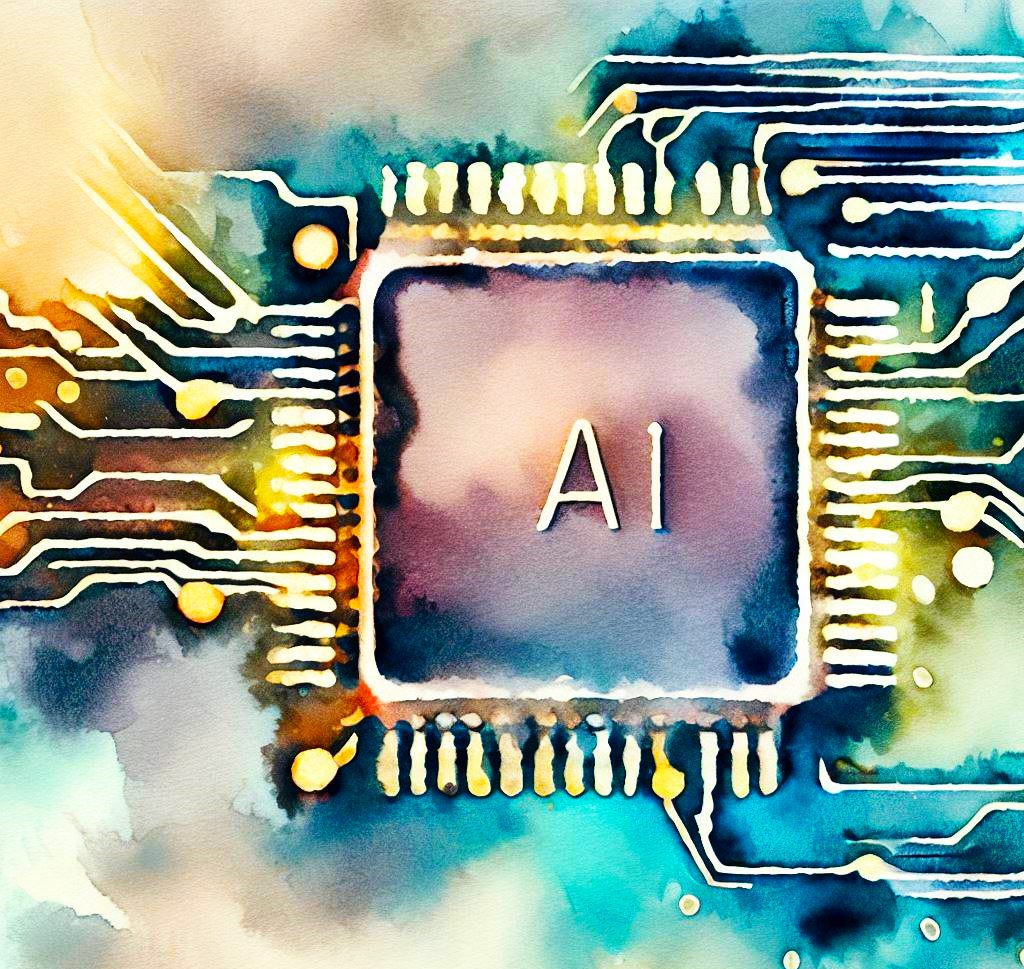
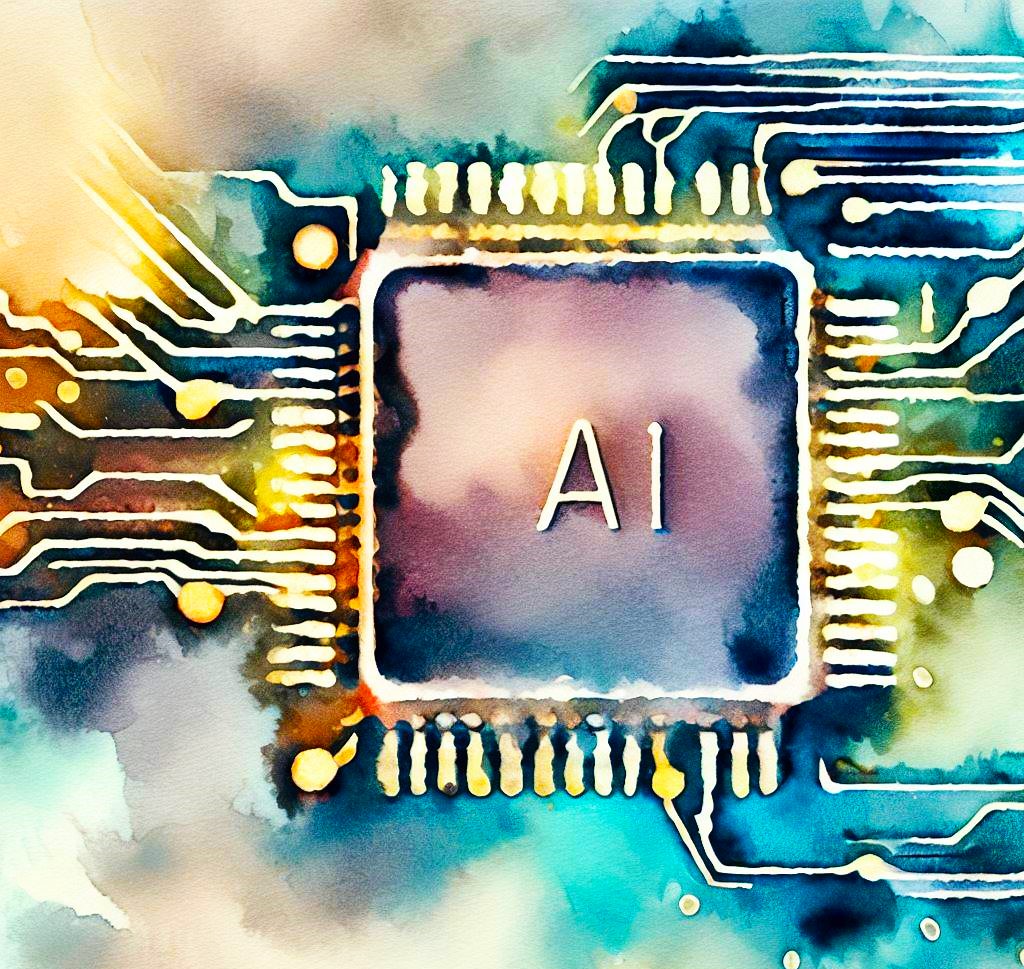
A watercolour image of an AI microchip powering a mainframe supercomputer computer
Watson Discovery: A data analysis tool that can extract insights from structured and unstructured data, such as documents, web pages, social media posts, and images. Watson Discovery can perform natural language understanding, sentiment analysis, entity extraction, and document classification.
Watson Studio: A cloud-based platform that enables data scientists and developers to build, train, and deploy AI and machine learning models. Watson Studio supports various frameworks and languages, such as Python, TensorFlow, PyTorch and R. Watson Studio also provides tools for data visualization, collaboration, and automation.
Watson Visual Recognition: A computer vision service that can analyze images and videos for content, objects, faces, scenes, and emotions.
Power
The IBM Watson computer consists of a cluster of ninety IBM Power 750 servers, each of which uses a 3.5 GHz POWER7 eight-core processor, with four threads per core. The system has 2,880 POWER7 processor threads and 16 terabytes of RAM. It can process 500 gigabytes (the equivalent of a million books) per second.
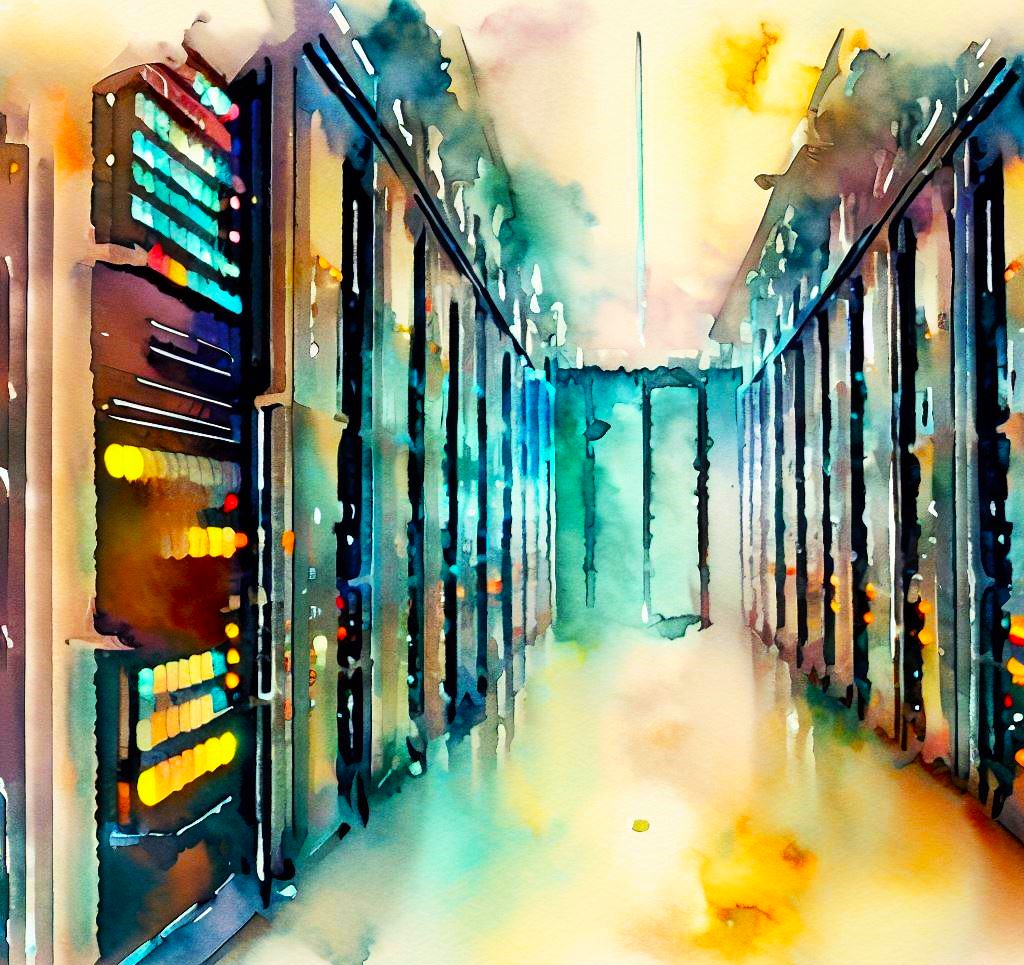
Supercomputer now with AI power
The IBM Watson computer has an avatar that is inspired by the IBM ‘Smarter Planet’ logo. The avatar is a globe with a grid pattern and four glowing stripes that represent the four main aspects of Watson: natural language processing, hypothesis generation and evaluation, dynamic adaptation, and evidence-based learning. The avatar also changes color and brightness depending on Watson’s mood and confidence level.
International Business Machines (IBM)
IBM was founded in 1911 in Endicott, New York, as the Computing-Tabulating-Recording Company (CTR) by Charles Ranlett Flint. The company changed its name to International Business Machines (IBM) in 1924 under the leadership of Thomas J. Watson, Sr. IBM is one of the oldest and most influential technology companies in the world, with a history of innovation and research in various fields of computing.
The International Business Machines Corporation (IBM), nicknamed ‘Big Blue’, is an American multinational technology corporation headquartered in New York and is present in over 175 countries. It specializes in computer hardware, middleware, and software, and provides hosting and consulting services in areas ranging from mainframe computers to nanotechnology. IBM is the largest industrial research organization in the world.
IBM holds the record for most annual U.S. patents generated by a business for 29 consecutive years from 1993 to 2021?
Happy birthday to Google, the world’s most popular search engine!
Google was founded 25 years ago today (4th September 2023) – by Larry Page and Sergey Brin, two Stanford University students who wanted to organise the web in a better way. They named their project after the mathematical term ‘googol’, which means 1 followed by 100 zeros.
Since then, Google has grown into a global tech’ giant that offers not only search, but also email, maps, cloud computing, artificial intelligence (AI), and many other products and services.
Google has also acquired several companies, such as YouTube, Android, and Waze.
Some of the key moments in Google’s history
Launching AdWords in 2000, which allowed advertisers to buy keywords and display ads on the search results page.
Introducing Gmail in 2004, which offered users 1 GB of free storage and a fast and simple interface.
Releasing Google Maps in 2005, which revolutionised the way people navigate and explore the world.
Buying YouTube in 2006, which made Google the owner of the largest video-sharing platform on the web.
Developing Chrome in 2008, which became the most widely used web browser in the world.
Happy Birthday Google – 25 years today
Creating Android in 2010, which became the most popular operating system for smartphones and tablets.
Launching Google+ in 2011, which was an attempt to compete with Facebook in the social networking space.
Reorganising into Alphabet in 2015, which made Google a subsidiary of a larger holding company that oversees other ventures such as Waymo, Verily, and Calico.
Unveiling ChatGPT in 2022, which is a conversational AI system that can generate natural and coherent responses to any text input.
Influential
Google remains one of the most influential and innovative companies in the world. It has changed the way we access information, communicate, entertain ourselves, and solve problems. It has also inspired many people to pursue their dreams and passions.
Google CEO says
As Google CEO Sundar Pichai wrote in his public memo on Google at 25: ‘We started with a simple mission: to organize the world’s information and make it universally accessible and useful. That mission still guides us today. But we’ve also learned that our responsibility goes beyond that. We have a duty to create products that improve the lives of billions of people — not just today or tomorrow but for generations to come’.
Ha Jiang, is a virtual online idol, and only exists online.
Ha Jiang signed a record deal with Whet Records, Warner Music Group’s pan-Asian dance label in China, in 2021. Ha Jiang is the first virtual idol to conduct a record deal with a major label. The virtual idol uses AI technology to create music and has become an online sensation in Asia.
Ha Jiang online music avatar. She is a virtual artist who uses artificial intelligence to create music
Virtual AI artist
Ha Jiang is a virtual artist who uses artificial intelligence to create music. She is the first virtual idol to sign a record deal with a major label, Whet Records, which is Warner Music Group’s pan-Asian dance label in China. My understanding is that the music was composed by humans, so not entirely AI generated then.
Would this also work in west – is it time to be concerned?
She already has more than 100,000 followers in China and is known for her sense of style and fashion. She is also a social influencer who has been hired by the city of Shanghai to promote safe driving. Ha Jiang is not a real person, but a computer-generated avatar who only exists online. She is part of a growing phenomenon of virtual idols in Asia, especially among Gen-Z fans.
Endel,is a sound startup company that uses artificial intelligence to create personalized audio tracks. Endel was the first to sign a record deal with Warner Music Group in 2019 to release 20 albums of ambient music.
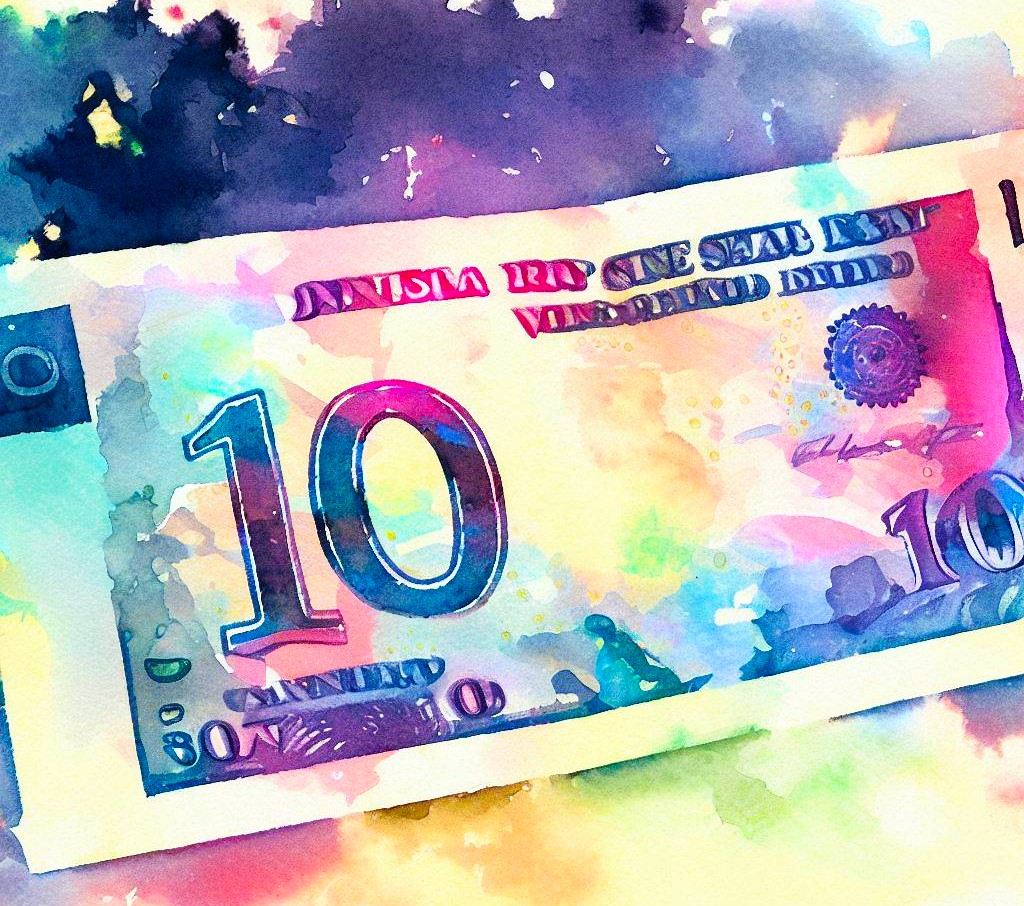
The digital pound is a proposed new form of money that would be issued by the Bank of England and backed by the government. It would be similar to a digital banknote, enabling you to use it in-store or online to make payments.
It would not be intended to replace cash, but complement it. The digital pound is also known as digital sterling or Britcoin.
Bank of England and UK Government
The Bank of England and HM Treasury are looking at the idea of a digital pound because they think it might offer a new way to pay, help businesses, build trust in money, and better protect the UK’s financial system. They have published a Consultation Paper, which explores the need for the digital pound and proposes a set of design choices for it. They are also engaging with businesses and communities to get their views on the digital pound.
The digital pound is not a cryptocurrency or cryptoasset. Unlike cryptocurrencies, which have volatile values, the digital pound would be issued by the Bank of England and have a stable value, just like banknotes.
I promise to pay the bearer on demand the sum of £10.00
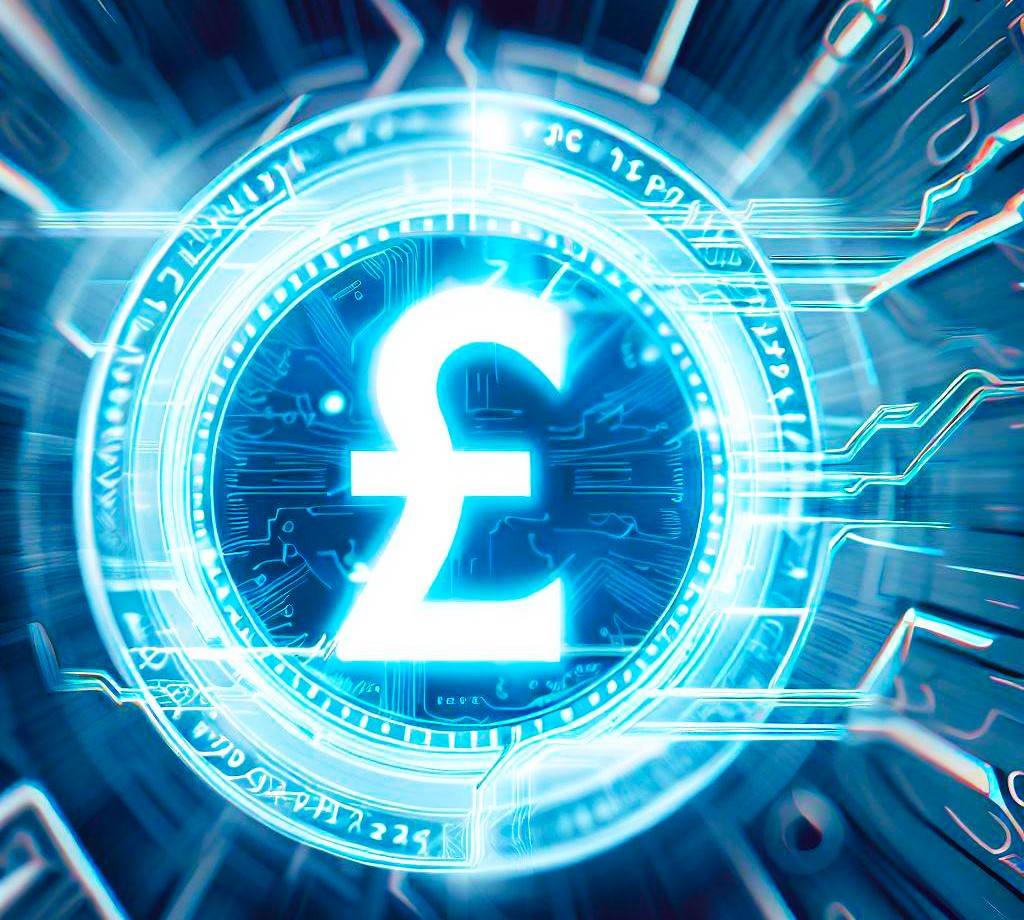
The digital £ is coming to a bank near you or more likely, an app near you
£10 in digital pounds would always have the same value as a £10 banknote.
Days after India’s successful moon mission, the country is now setting its sights on the sun.
According to the Indian Space Research Organization (ISRO), the Aditya-L1 spacecraft will be launched from the Sriharikota Spaceport on 2nd September 2023 in a bid to study the sun and its effect on space weather.
Aditya (sun in Hindi)
Aditya, which refers to the sun in Hindi, is to be placed in a halo orbit around the Lagrangian point 1 of the Sun-Earth system, where the sun can be observed without any obstructions, an ISRO report stated.
Lagrange points are positions in space where gravitational forces of two large masses produce ‘enhanced regions of attraction and repulsion’, according to NASA. The resulting force can be used to remain in position and reduce fuel consumption – and can be likened to ‘parking places’ for spacecraft.
To become India’s first space based observatory
The launch will mark India’s first space-based observatory to study the sun, and would offer a ‘major advantage of continuously viewing the sun without any occultation or eclipses’, the ISRO report stated.
India’s mission to the sun
The mission would also allow for the study of solar wind, which could potentially cause disturbances on Earth, such as disrupting communications, navigation systems and weather patterns.
India’s government had granted a $46 million budget for the mission back in 2019.
While a first attempt for India, other countries have successfully placed orbiters to study the sun. NASA’s Parker Solar Probe in 2021 which was sent to the sun’s corona to sample particles and magnetic fields, as well as the European Space Agency’s Solar Orbiter which was launched the year before.
Think of the biggest market for a physical product you can possibly imagine – are you thinking mobile phones, cars or game devices even? Think again…?
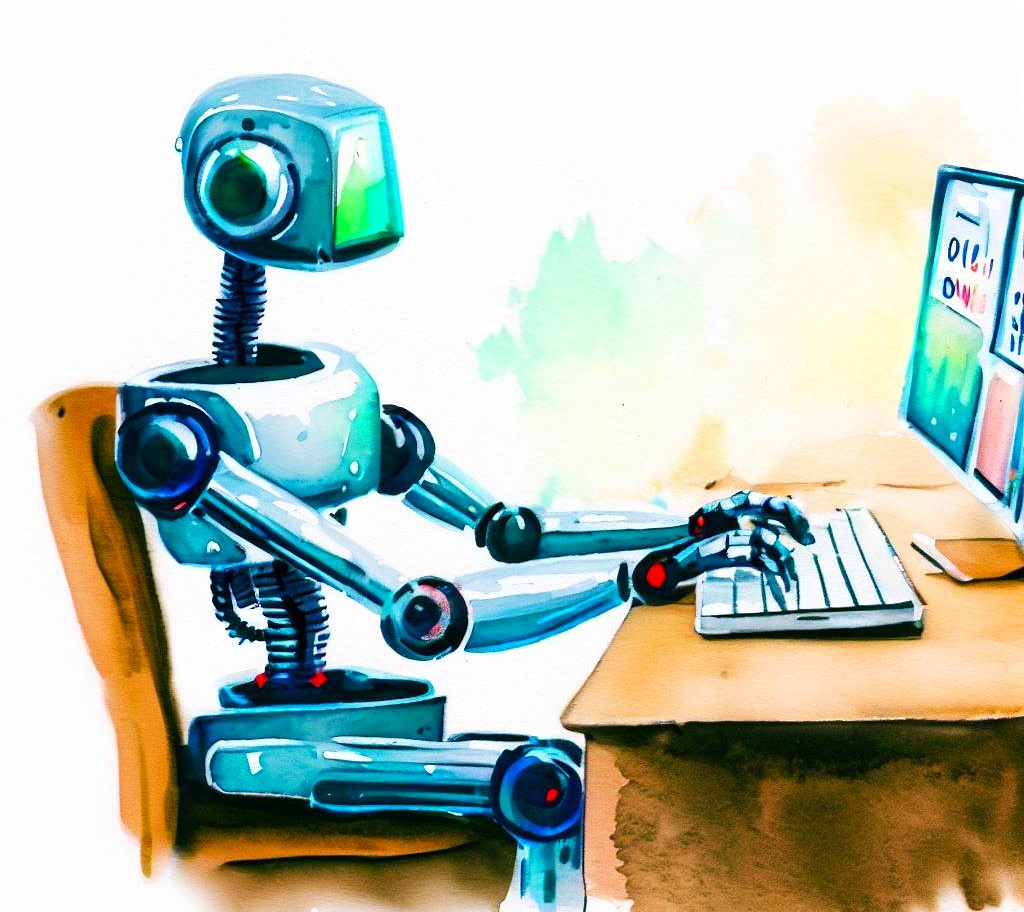
They are all big commercial markets but in the coming decades a new product is coming and it will be so desirable that it will dwarf these giants – it will be… the ‘robot’.
Robots will be able to understand what we want, comprehend the way the world works and looks and have the skills to execute our commands in a safe and controlled manner – at home and in the workplace.
Biggest market
The labour market is the biggest market that has ever existed in the history of business – it’s the market where we want things ‘done’ – where we do things – and it’s forever evolving. It carries massive stock market and investing potential right now and for the future.
Robot AI tech – a market place to explore
Take Nvidia, Microsoft, Google, Meta, Apple and Tesla as prime examples of companies pioneering technological advancements for instance – we can already enjoy and invest in these – and there’s much more to come.
Dozens of firms around the world are working on the technology
One of the highest profile companies in the market is Tesla, Elon Musk’s electric car company. It is working on the Optimus humanoid robot, which Mr Musk intimates could be on sale to the public in a few years’ time.
Massive tecnological advancement in artificial intelligence (AI) and robotics suggest the development of humanoid robots is accelerating… and fast. It’s a race to the become the first to succeed in the biggest practical labour market ever… and it carries huge potential for everyone, including you and me.
20 years from now…? Where were Tesla and Apple 20 years ago?
Twenty years at the pace the technology is developing now is is an eternity – every week, month and year there are new developments in the AI world that have introduced fundamental changes and enhancements to our world.
Mainstream interest in AI exploded late 2022 when a powerful version of ChatGPT was made public. Its ability to generate almost unlimited useful text and images has spawned rivals and a wave of investment in AI technology.
But developing the AI that would allow a robot to complete useful tasks is a different and much more difficult task. Tesla could be the company best placed to be one of the first to achieve this goal – given its advancements in ‘self driving’ technology. But, unlike ChatGPT and its rivals, humanoid robots have to navigate the physical world and need to understand how objects in that world relate to each other.
Tasks that seem easy to humans are major feats for humanoid robots. This is a problem that engages a lot of different complex issues in an AI driven robotics system. Picking up a cup and having a drink is a major undergoing for a robot.
The market place potential is unlimited
The potential market for robots in the future depends on various factors, such as the level of technological innovation, the demand from different industries and sectors, the regulatory and ethical frameworks, and the social and economic impacts of robot adoption. But if recent developments are anything to go by – it promises to be big!
Robot AI – a massive potential future market place
Based on the some indicative web search results, the current market size for robots is estimated to be around $55 billion to $114 billion in 2023, depending on the type and scope of robots included. The projected market size for robots in 2028 or 2029 ranges from $165 billion to $260 billion, with a compound annual growth rate (CAGR) of 11.4% to 17.6%.
The professional services robots, which include medical, agricultural, and personal assistance robots, are expected to dominate the market and account for more than half of the total sales by 2030. The industrial and logistics robots, which include conventional, collaborative, and mobile robots, are also expected to grow steadily and increase their productivity and efficiency in various manufacturing and transportation applications.
However, these projections are based on assumptions – but one thing is for sure the robots are coming and the market will be massive!
I for one will be keeping a watchful eye on where to invest my hard earned cash to take advantage of this potentially high growth market in the coming years (and now).
Baidu’s Ernie bot is a ChatGPT-like chatbot that can generate natural and fluent text based on user input. It is one of the latest artificial intelligence applications from Baidu, a Chinese tech giant that specializes in search engine and AI development.
Ernie bot was released to the public on 31st August 2023, after getting approval from the Chinese regulators under the new AI regulations and quickly became the most popular app on Apple’s app store in China, surpassing other local generative AI models.
ChatBot apps coming to a device near you
Ernie bot can be accessed through an app or a website, and users can chat with it on various topics, such as news, entertainment, sports, and education. Ernie bot is also able to learn from human feedback and improve its foundation models.
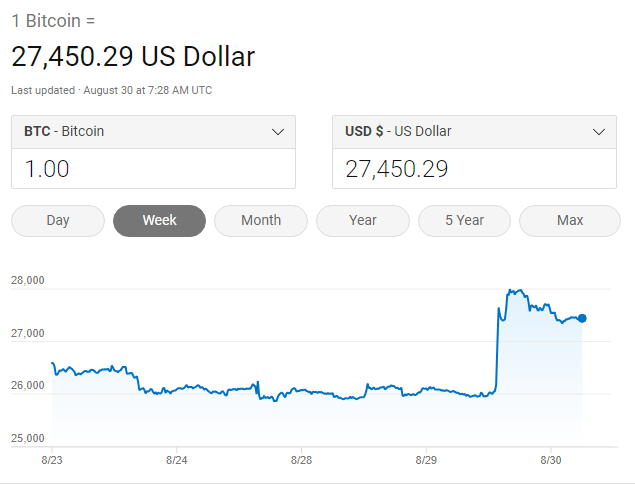
The price of bitcoin surged Tuesday 29th August 2023 after the U.S. Court of Appeals ruled that the Securities and Exchange Commission (SEC) was wrong to deny crypto investment giant Grayscale permission to convert its popular bitcoin trust into an ETF.
Bitcoin jumped around 7% following the ruling to $27,852. The move lifted other cryptocurrencies as well as crypto equities higher.
Grayscale
Grayscale’s lawsuit against the SEC has been closely watched by investors and other industry participants as a key catalyst that would shake up a market governed by low volatility and liquidity.
Earlier this month, bitcoin trading volatility fell to its lowest level in more than four years as investors had been waiting on the sidelines for more regulatory clarity on crypto activity .
Several bitcoin futures ETFs have already been approved in the U.S.
‘Shackles being removed from crypto regulation paving way for easier crypto trading’
Court ruling
‘The denial of Grayscale’s proposal was arbitrary and capricious … The Commission failed to adequately explain why it approved the listing of two bitcoin futures ETPs but not Grayscale’s proposed bitcoin Exchange Trade Product (ETP),‘the court said in the ruling. ‘In the absence of a coherent explanation, this unlike regulatory treatment of like products is unlawful. We therefore grant Grayscale’s petition for review and vacate the Commission’s order‘.
Tuesday’s ruling may increase the chances that the SEC will approve other bitcoin ETF applications, including that of BlackRock, whose filing in late June 2023 drove one of bitcoin’s big rallies this year, as well as Fidelity, Invesco and many others.
A U.S. bitcoin ETF would provide a way to get exposure to bitcoin without having to hold it, which would invite retail and institutional investors as well as wealth managers into the market.
A spokesperson for the SEC said it’s ‘reviewing the court’s decision to determine next steps‘.
‘Today’s decision reaffirms that a bitcoin ETF in the U.S. is a matter of when, not if’, said the global head of asset management at Galaxy, which filed with Invesco for its bitcoin ETF. ‘In order for digital assets to continue to flourish, they must be accessible to all investors. We believe that the ETF structure can enable greater access to and transparency across cryptocurrency investing, and truly help further democratize the asset class‘.
Dark cloud for crypto finally lifting?
The ruling also comes as a relief to many crypto market traders who have been frustrated by the SEC, particularly under Chair Gary Gensler, and its insistence on regulating by enforcement.
The crypto industry has long sought out clarity in rules businesses can apply to establish and build long-lasting, compliant companies. The U.S. regulatory crackdown on crypto in 2023 – which includes SEC enforcements and a lawsuit against the biggest U.S. crypto exchange Coinbase and also its case against XRP Ripple has been a dark cloud over the market.
Lawsuit filed June 2022
Grayscale initiated its lawsuit against the SEC in June 2022 after the agency rejected its application to turn its bitcoin trust, better known by its ticker GBTC, into an ETF. The company decided to pursue the ETF, which would be backed by bitcoin rather than bitcoin derivatives, after the SEC approved ProShares’ futures-based bitcoin ETF in October 2021.
The ruling faced multiple delays but the SEC ultimately rejected the application last summer, citing failure by Grayscale to answer questions related to concerns about market manipulation and investor protections.
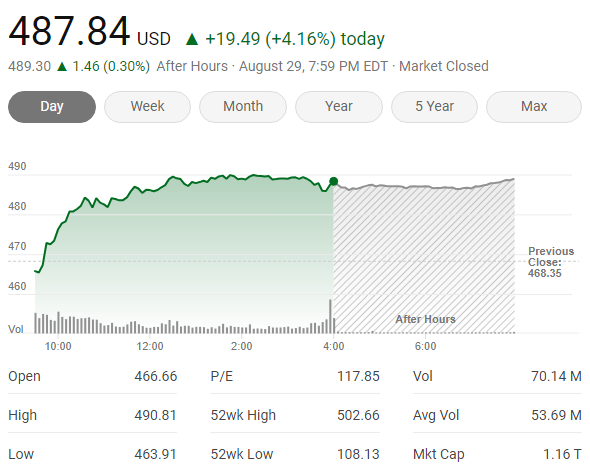
Nvidia shares rose 4.2% Tuesday 29th August 2023 to close at a record high, after the company announced a partnership with Google that could expand distribution of its artificial intelligence technology (AI).
The stock’s bountiful run continued, now up 234% in 2023, making it by far the best performer in the S&P 500. Facebook parent Meta is second in the index, up 148% so far this year.
The record close comes less than a week after the company said quarterly revenue doubled from a year earlier and gave a forecast indicating that sales this period could rise 170% on an annual basis. The day after the better-than-expected earnings report, the stock climbed to a record intraday high of $502.66 before declining later in the afternoon.
Nvidia’s business is booming because its graphics processing (GPU’s) are being gobbled up by cloud companies, government agencies and startups to train and deploy generative AI models like the technology deployed in OpenAI’s ChatGPT as fasta as Nvidia can make them.
NVIDIA stock chart
Nvidia announcment
On Tuesday 29th August 2023, Nvidia CEO Jensen Huang appeared at a Google conference to announce an AI agreement between the two companies.
Through the partnership, Google’s cloud customers will have greater access to technology powered by Nvidia’s powerful H100 GPUs.
‘Our expanded collaboration with Google Cloud will help developers accelerate their work with infrastructure, software and services that supercharge energy efficiency and reduce costs’, the Nvidia CEO reportedly said in a blog post.
Nvidia’s GPUs are also available on competing cloud platforms from Amazon and Microsoft.
Technology giant Nvidia reports its sales have hit a record after more than doubling as demand for its artificial intelligence (AI) chips take off!
It figures
The company says revenue jumped to above $13.5bn (£10.6bn) for the three months to the end of June. Nvidia also expects sales to perform very well in the current quarter and plans to buy back $25bn of its stock. The firm’s shares rose by more than 6.5% in extended trading in New York, adding to their huge gains this year. Nvidia also said it expects revenue of around $16bn for the three months to the end of September 2023.
That is substantially higher than Wall Street expected and would equate to a rise of around 170%, compared to the same time last year.
Even before 23rd August’s figures, Nvidia’s stock price had more than tripled for the year, making it the top performer in the S&P 500. It’s share price jumped to around $500 after hours, a level that would mark a record if it closes there on 24th August 2023. Its prior closing high was $474.94 on 18th July 2023.
‘A new computing era has begun’, Nvidia’s chief executive, Jensen Huang, said in a statement. ‘Companies worldwide are transitioning from general-purpose to accelerated computing and generative AI’, he reportedly added.
Strong performance
The strong performance was driven by Nvidia’s data centre business, which includes AI chips.
The power of Nvidia’s AI microchips
Revenue for that unit came in at more $10.3bn, a rise of more than 170% from year ago, as cloud computing service providers and large consumer internet companies snapped up its next-generation processors.
This year, Nvidia’s stock market value has jumped to more than $1 trillion as its shares more than tripled in value, mking it the fifth publicly traded U.S. company to join the so-called ‘Trillion dollar club’, along with Apple, Amazon, Alphabet and Microsoft.
AI ‘mania’ helps Nvidia
Nvidia have been making micro chips for a long time and it’s only really been in the last couple of years that the market has caught on.
Nvidia was originally known for making the type of computer chips that process graphics, particularly for computer games. They have been making chips for a long time and have now become the leader in AI chip design and manufacture.
Now Nvidia’s hardware is the foundation for most AI applications, with one report suggesting it had cornered 95% of the market for machine learning.
ChatGPT which generates human-like responses to user queries within seconds was trained using 10,000 of Nvidia’s graphics processing units clustered together in a supercomputer belonging to Microsoft.
AI products are expected to dramatically change how we use computers and the role they play in our lives.
Inspirational achievement, as India becomes only the fourth country in the world to successfully land on the moon and the first at the south pole
India became a new national superpower in space on 23rd August 2023, landing its Chandrayaan-3 mission safely on the moon’s unexplored south pole. The Chandrayaan-3 spacecraft launched last month and touch downed on the lunar surface around 13:34 GMT.
The Chandrayaan-3 spacecraft launched last month and touch downed on the lunar surface around 13:34 GMT. The feat makes India the fourth country, after Russia, the U.S. and China – to land on the moon, and the first to land on one of the moon’s lunar poles.
South pole is the place to explore
The lunar south pole has emerged as a place of recent exploration interest thanks to recent discoveries about traces of water ice on the moon. India previously attempted a lunar south pole landing in September 2019, but a software failure caused the Chandrayaan-2 mission to crash into the surface.
The south pole is the place to be right now as it is such a very interesting, historical, scientific and geologic area that a lot of countries are trying to get at that can serve as a base for future exploration.
The discovery of water on the south pole of the moon is important for future exploration, as it could serve as a source of fuel for rockets and spacecraft.
Days prior to Chandrayaan-3′s scheduled landing, Russia attempted to land its first spacecraft on the moon in almost 50 years. But the Luna-25 mission crashed into the lunar surface on Saturday, with Russian space agency Roscosmos confirming the spacecraft spun out of control.
To infinity and beyond
During a June visit from India’s Prime Minister Narendra Modi, he signed agreements alongside President Joe Biden to join the Artemis Accords and further collaborate on missions between Indian Space Research Organisation – ISRO and NASA. Next year, the space agencies are expected to work together to fly Indian astronauts to the International Space Station.
No looking back! India becomes only 4th country in the world to land on the moon’s south pole August 23rd 2023
India has also done more with less than its top global counterparts, with ISRO’s annual budget a fraction of NASA’s. In 2020, ISRO estimated the Chandrayaan-3 mission would cost about $75 million. The Covid pandemic delayed the Chandrayaan-3 mission from launching in 2021.
The lander – called Vikram after Indian Space Research Organisation (ISRO) founder Vikram Sarabhai – carries within its belly the 26kg rover named Pragyaan, the Sanskrit word for wisdom.
One of the mission’s major goals is to hunt for water-based ice, which scientists say could support human habitation on the Moon in future and allow for easier future space exploration.
AI Chatbot ChatGPT reportedly has a political bias
ChatGPT, the popular artificial intelligence chatbot, shows a significant and systemic left-wing bias, UK researchers have found. According to the new study by the University of East Anglia, this includes favouring theLabour Party and President Joe Biden’s Democrats in the U.S.
Concerns about an inbuilt political bias in ChatGPT have been raised before, notably by SpaceX and Tesla tycoon Elon Musk, but the academics said their work was the first large-scale study to find proof of any favouritism.
Lead author o the report reportedly warned that given the increasing use of OpenAI’s platform by the public, the findings could have implications for upcoming elections on both sides of the Atlantic. Any bias in a platform like this is a concern’, he said. If the bias were to the right, we should be equally concerned.
Sometimes people forget these AI models are just machines. They provide very believable, digested summaries of what you are asking, even if they’re completely wrong. And if you ask it ‘are you neutral’, it says ‘oh I am!’ Just as the media, the internet, and social media can influence the public, this could be very harmful. I have personally witnessed incorrect responses from ChatGPT where the AI ‘system’ 100% believed ‘it’ was correct and would not engage in a debate as ‘it’ was right!
How was ChatGPT tested for bias?
The chatbot, which generates responses to prompts typed in by the user, was asked to impersonate people from across the political spectrum while answering dozens of ideological questions. These questions ranged from radical to neutral, with each ‘individual’ asked whether they agreed, strongly agreed, disagreed, or strongly disagreed with a given statement.
UK researchers descovered Chatbot ChatGPT had a political bias
Its replies were compared to the default answers it gave to the same set of queries, allowing the researchers to compare how much they were associated with a particular political stance.
Each of the more than 60 questions was asked 100 times to allow for the potential randomness of the AI, and these multiple responses were analysed further for signs of bias.
Dr Motoki described it as a way of trying to simulate a survey of a real human population, whose answers may also differ depending on when they’re asked.
Isaac Asimov wasan American writer and professor of biochemistry at Boston University. During his lifetime, Asimov was considered one of the ‘Big Three’ science fiction writers, along with Arthur C. Clarke and Robert A. Heinlein.
My favourite book by Isaac Asimov is I, Robot. If you haven’t read it yet, go lift one off the shelf – it’s well worth a read.
Thomas Edison was an American inventor and businessman. He developed many devices in areas such as electric power generation, mass communication, sound recording, and motion pictures. These inventions, which include the phonograph, the ‘motion picture camera’, and early versions of the electric ‘light bulb’.
During his working life he is reported to have held a world-record 1,093 patents
The electric light bulb is one of the most important inventions in human history. It has revolutionized the fields of lighting, communication, entertainment, and industry. The electric light bulb produces light by passing an electric current through a thin wire called a filament, which heats up and glows. The filament is enclosed in a glass bulb that is either vacuumed or filled with an inert gas to prevent it from burning out. The humble bulb has undergone many developments through time including the introduction of energy saving devices using LED’S, Light Emitting Diodes.
Joint invention
The electric light bulb was not invented by any one person, but by many inventors who contributed to its development over the years. Some of the earliest attempts to create electric light were made by Humphry Davy, Warren de la Rue, and Joseph Swan in the 19th century.
However, the most famous and successful individual inventor of the electric light bulb was Thomas Edison, who patented his version in 1879 and 1880. Edison experimented with different materials for the filament, such as carbon, platinum, and even bamboo, until he found one that could last for over 1,000 hours. He also improved the vacuum pump and the socket for the bulb. He demonstrated his invention to the public by lighting up his laboratory and the nearby streets in Menlo Park, New Jersey.
‘The electric light bulb invented over time with many contributors – the best known being Thomas Edison’.
World changing invention
The electric light bulb has changed the world in many ways. It has extended the hours of work and leisure, improved safety and health, enabled new forms of art and entertainment, and stimulated scientific and technological innovation.
The electric light bulb is also a symbol of human creativity, curiosity, and progress.
If you want a good read – go find, ‘The Last Days of Night’ by Graham Moore. It’s brilliant!
A new artificial intelligence (AI) road safety camera system has been deployed on the A30 near Launceston, Cornwall, by Devon and Cornwall Police.
The camera system uses AI to detect potential offences such as using mobile phones or not wearing seatbelts while driving. The camera system can capture ultra clear images of the car’s interior and send them to a human reviewer who can issue a warning letter or a notice of intended prosecution, depending on the severity of the offence.
Hundreds caught
The camera system is the first of its kind to be used in the UK and it has caught almost 300 drivers breaking the law in the first three days of its operation. The camera system is part of the Vision Zero South West project, which aims to reduce road deaths and serious injuries in Devon and Cornwall. The project conducted a 15-day trial of a similar vehicle-based system last year and detected 590 seat belt and 45 mobile phone offences across various roads in the two counties.
The police hope that the new technology will help deter drivers from using their phones or not wearing their seatbelts, which are both dangerous and illegal behaviours that put people’s lives at risk.
The road safety system is from tech’ firm Acusensus.
The police have reportedly said they are ‘disappointed’ by the number of people not wearing seatbelts orand using their mobile ‘phones when drving.