

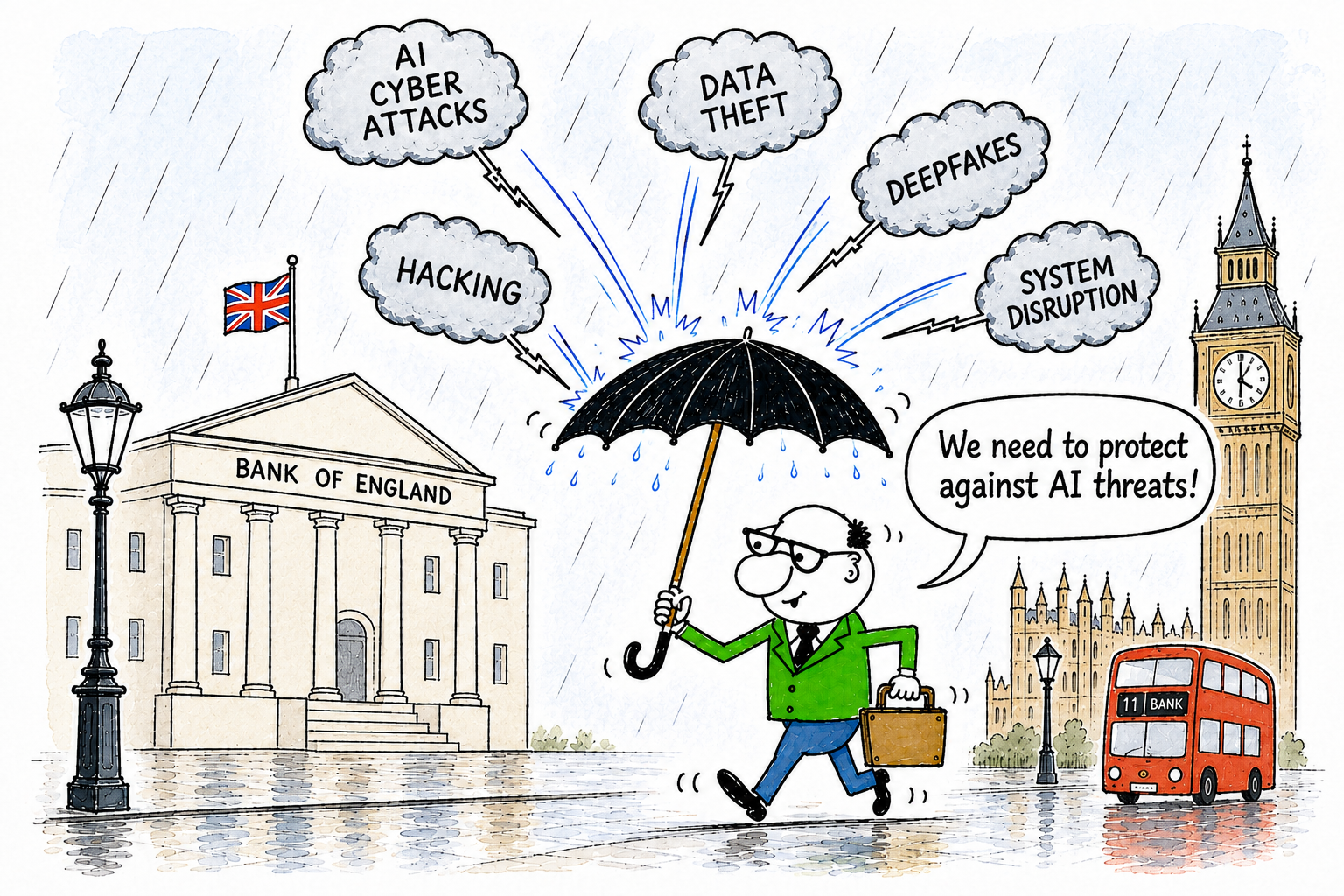
The rapid rise of artificial intelligence could become a serious threat to global financial stability, Bank of England Governor Andrew Bailey has warned, urging G20 policymakers to prepare for the risks posed by increasingly powerful AI systems.
Bailey, writing as chairman of the Financial Stability Board (FSB), reportedly cautioned that a sharp reversal in the huge investment boom surrounding AI could trigger a market correction with consequences far beyond the technology sector.
AI security?
High valuations, rising leverage and increasingly concentrated investment in a relatively small number of AI companies could amplify losses if investor confidence suddenly deteriorates.
However, Bailey’s most immediate concern is cybersecurity. He warned that so-called frontier AI models are becoming increasingly autonomous and capable of sophisticated problem-solving, potentially allowing cyberattacks to be carried out faster, more cheaply and on a much greater scale.
Danger
That poses a particular danger to financial markets because banks, payment systems and other institutions rely heavily on shared technology providers and infrastructure.
A successful attack on one major provider could therefore disrupt several financial institutions simultaneously and spread rapidly across national borders.
Warning
Bailey also warned that many countries lack adequate protocols for managing the development and deployment of advanced AI models.
He reportedly called for international action to ensure that technological progress is matched by stronger cybersecurity, resilience and recovery systems.
The warning comes as enthusiasm for AI continues to fuel enormous investment in chips, data centres and software.
Productivity vs risk
While AI could deliver major productivity gains and economic growth, Bailey’s message is that the financial risks cannot be ignored.
The challenge for policymakers is therefore becoming increasingly clear: how can the world capture AI’s economic benefits without allowing the technology itself to become the catalyst for the next global financial shock or worse?