

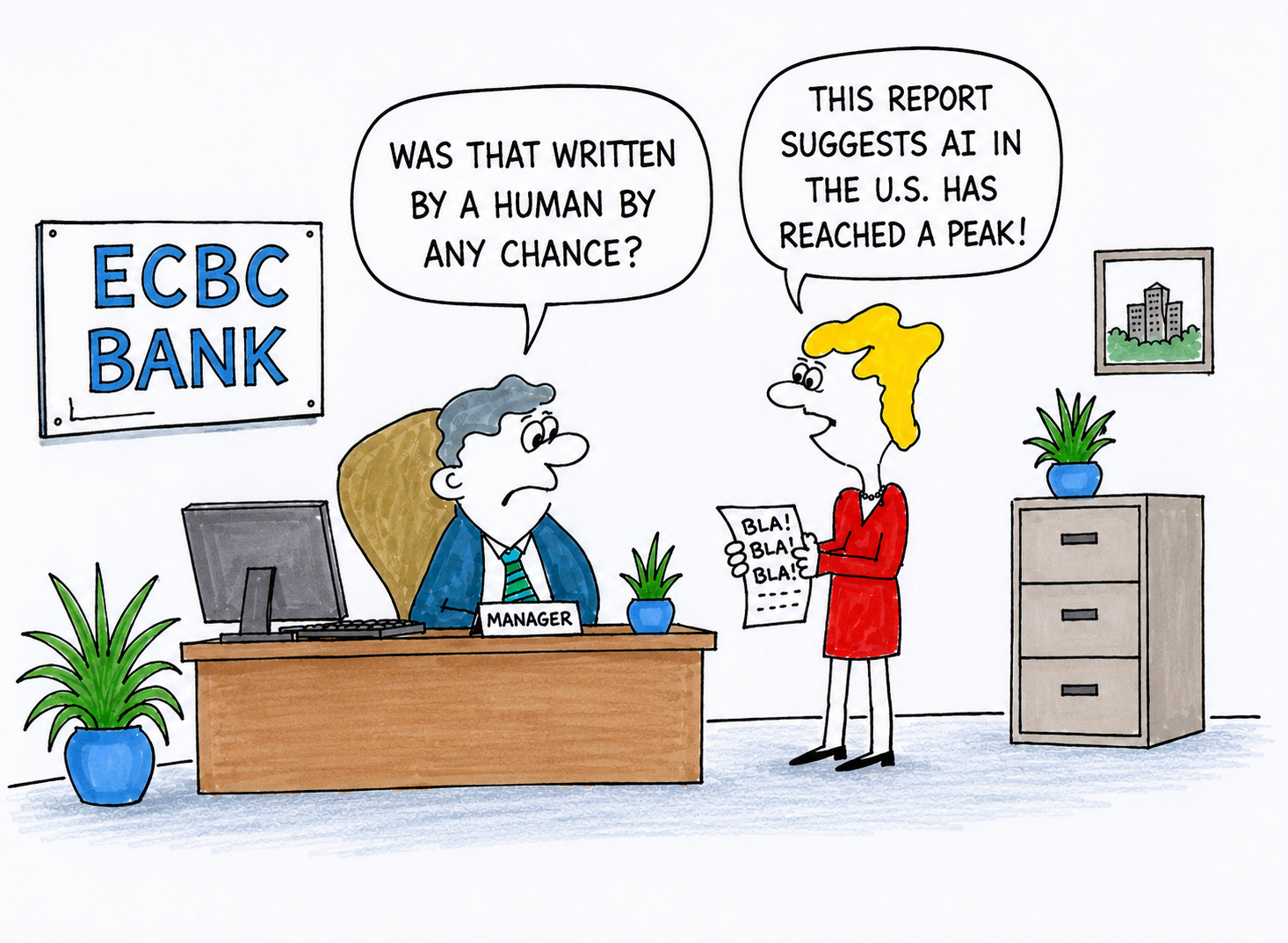
The extraordinary rise of artificial intelligence stocks is beginning to look increasingly uncomfortable, with economists at the European Central Bank warning that current valuations could be heading for a painful correction.
In an analysis published this week, ECB economists said the rally in technology shares had pushed U.S. market valuations towards levels last seen during the dot-com boom.
Correction is likely
Their conclusion is striking: a correction is likely, even if the optimistic assumptions surrounding AI eventually prove correct.
That distinction is important. The warning is not simply that investors have been irrational or that AI is a passing fad.
Boom & bust
Instead, the economists argue that transformative technologies have historically produced enormous investment booms, followed by sharp falls in valuations as expectations become more realistic.
AI could follow the same pattern. Investors are pricing in extraordinary future growth from companies developing chips, cloud infrastructure and AI applications.
But if profits fail to arrive quickly enough, or the cost of building and operating AI systems proves higher than expected, sentiment could change rapidly.
Exposure
Europe has particular reasons to worry. ECB economists estimate that euro-area households and financial institutions each have around €440 billion of exposure to the so-called Magnificent Seven U.S. technology companies.
A major Wall Street correction could therefore spread directly into European portfolios and pension investments.
There is another concern: markets are increasingly concentrated around a small number of giant technology companies. That means a reversal in AI enthusiasm could have a much wider impact than a conventional sector sell-off.
Bubble warning
The ECB is not predicting when the correction will happen. Indeed, the boom could continue for some time. But history offers a warning: genuinely revolutionary technologies can transform economies while simultaneously producing investment bubbles.
The uncomfortable question for investors is therefore not whether AI will change the world. It probably will.
The question is how much of that future success has already been priced into today’s markets.