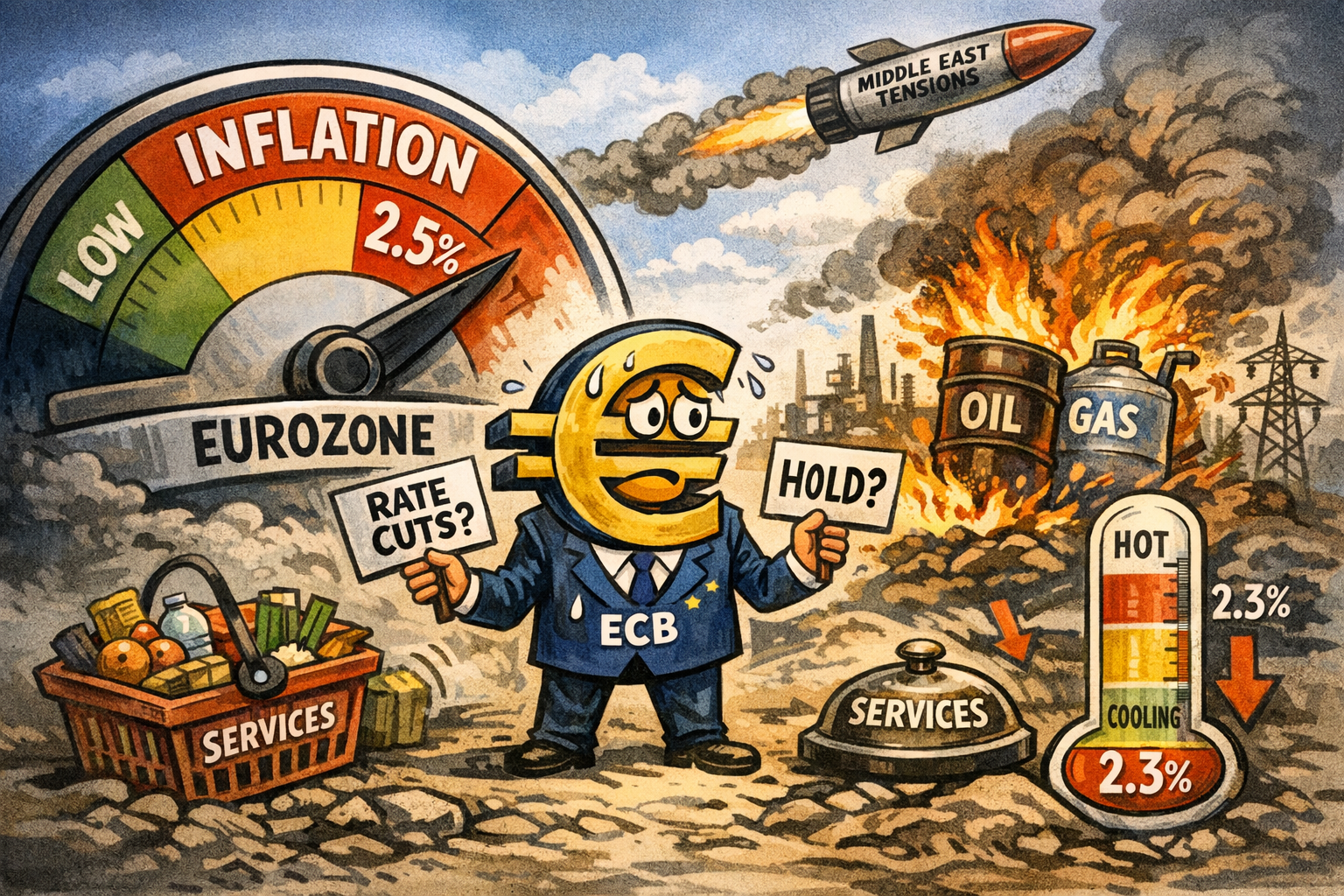
Eurozone inflation has risen for the first time in months, with the March 2026 flash estimate showing headline inflation at 2.5%, up from 1.9% in February.
The jump is driven almost entirely by a renewed surge in energy prices, which climbed 4.9% year‑on‑year.
Core inflation eased to 2.3%, reinforcing the view that underlying domestic pressures continue to cool despite the headline spike. Services inflation also softened slightly.
For the European Central Bank, the data introduce fresh uncertainty. While policymakers have been preparing markets for potential rate cuts later this year, the energy‑led rebound may force a more cautious move in the future.
For years, Chinese AI founders comforted themselves with a simple fiction: that geography could outrun politics.
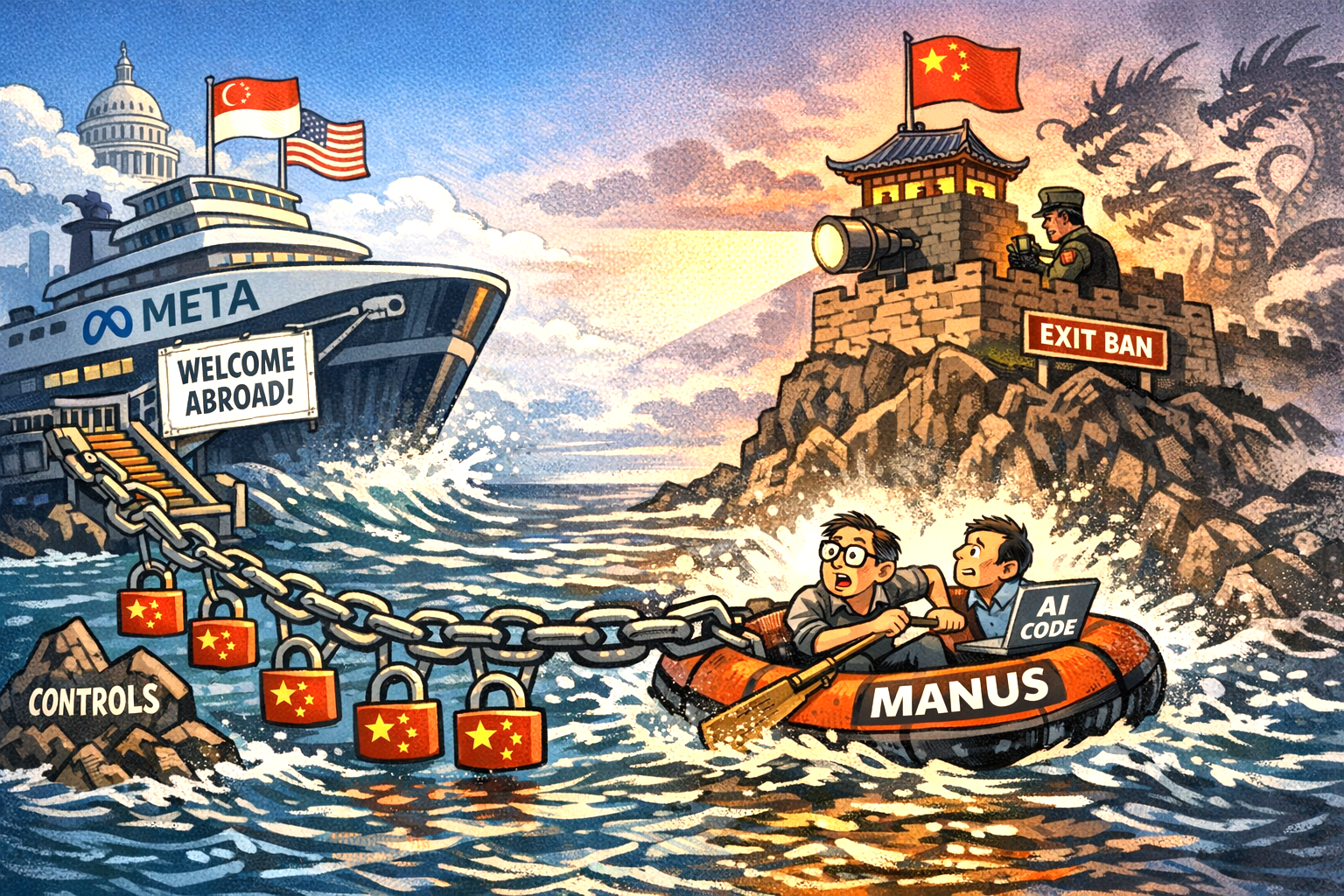
Move the holding company to Singapore, hire a few local staff, raise money from Silicon Valley, and the gravitational pull of Beijing’s regulatory state would somehow weaken. Manus was the poster child of that belief — until it wasn’t.
Meta’s $2 billion acquisition was supposed to be the triumphant proof that “Singapore washing” worked. Instead, Beijing’s sudden intervention has exposed it as a mirage.
Review
The Chinese government’s review of the deal — and the exit bans placed on Manus’ co‑founders — is more than a bureaucratic hurdle.
It is a declaration that the origin of a technology matters more than the passport of the company that later owns it.
The symbolism is striking. Manus built its early code in China, then attempted to transplant its identity offshore. But Beijing is now signalling that code, data and talent are not so easily detached from their birthplace.
The message to founders is blunt: you cannot simply shed China like an old skin.
Timing
For META, the timing is awkward. More than 100 Manus employees have already been folded into its Singapore office, and the company insists the deal complies with the law.
Yet the spectre of an unwinding hangs over the transaction — a reminder that even the world’s largest tech firms are not insulated from geopolitical weather.
The deeper story, though, is about the shrinking space for neutrality. The U.S.–China tech rivalry has moved beyond chips and compute into the realm of corporate identity itself.
Where a company is born, where its engineers sit, where its early investors come from — all now carry political charge.
Manus is not just a case study. It is a warning flare. In an era where innovation crosses borders but regulation does not, the idea of a clean escape route is fading fast.
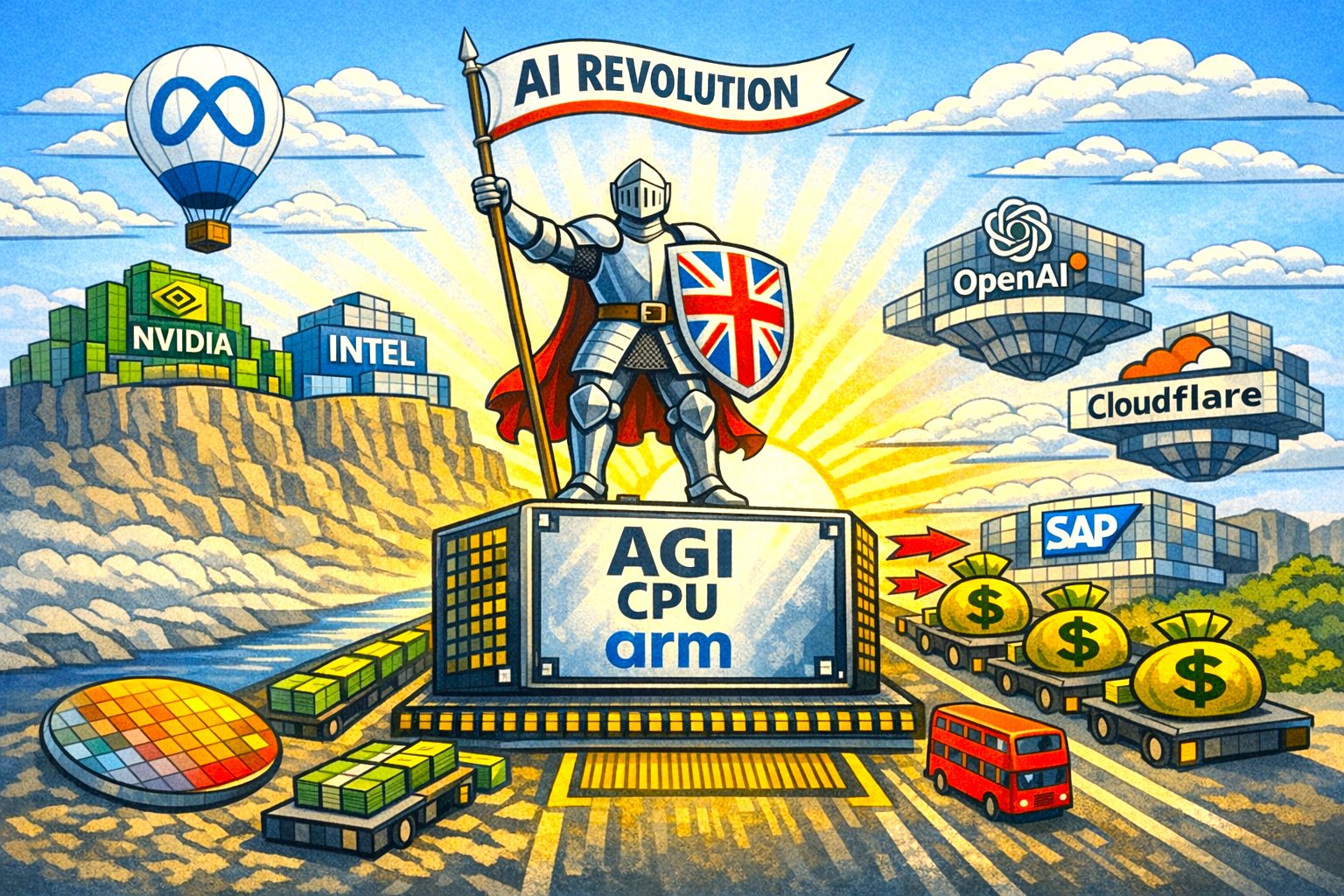
ARM has triggered one of the most dramatic shifts in its 35‑year history with the launch of its first in‑house data‑centre processor, the AGI CPU — a move that sent its shares surging 16% and reshaped expectations for the company’s future.
Long known for licensing energy‑efficient chip designs to the world’s biggest tech firms, ARM is now stepping directly into the silicon market, competing with the very customers that built its empire.
Major Tech Firms Using Arm Designs (AI & Mobile)
Company
Primary Use Case
Arm-Based Technology
Apple
Mobile & on‑device AI
A‑series (iPhone/iPad) and M‑series (Mac) chips
Samsung
Mobile, AI, IoT
Exynos processors
Qualcomm
Mobile & automotive AI
Snapdragon SoCs
Google
Android ecosystem & edge AI
Pixel phones (Arm cores inside Tensor chips)
Amazon (AWS)
Cloud compute & AI inference
Graviton & Trainium/Inferentia (Arm Neoverse)
Meta
AI infrastructure
Deploying Arm-based AGI CPU
OpenAI
AI inference & orchestration
Early adopter of Arm AGI CPU
Nvidia
AI data‑centre CPUs
Grace CPU (Arm architecture)
OPPO
Mobile AI
Arm-based SoCs in Find series
vivo
Mobile AI
Arm-based SoCs in X‑series
Strong demand
The new AGI CPU is engineered for the rapidly expanding world of AI inference and agentic AI — workloads that demand vast CPU coordination rather than pure GPU horsepower.
Early demand appears strong. Meta has signed on as the first major customer, with OpenAI, Cloudflare and SAP also adopting the chip as they race to expand their AI infrastructure.
The financial implications are striking. ARM expects the AGI CPU alone to generate $15 billion in annual revenue by 2031, a figure that dwarfs the company’s 2025 revenue of $4 billion.
Significant shift
Analysts have described the announcement as the most significant strategic shift ARM has ever undertaken, noting that the revenue projections exceed even the most optimistic market estimates.
By moving into full chip production, ARM is broadening its market to include companies that previously had no interest in its traditional IP‑licensing model.
Executives say the chip will be competitively priced, offering an alternative for firms unable to build their own custom silicon.
For the UK, the launch marks a rare moment of industrial ambition in a sector dominated by American and Asian giants.
If ARM’s forecasts hold, the AGI CPU could become one of the most commercially successful chips ever produced by a British company — and a defining pillar of the AI age.
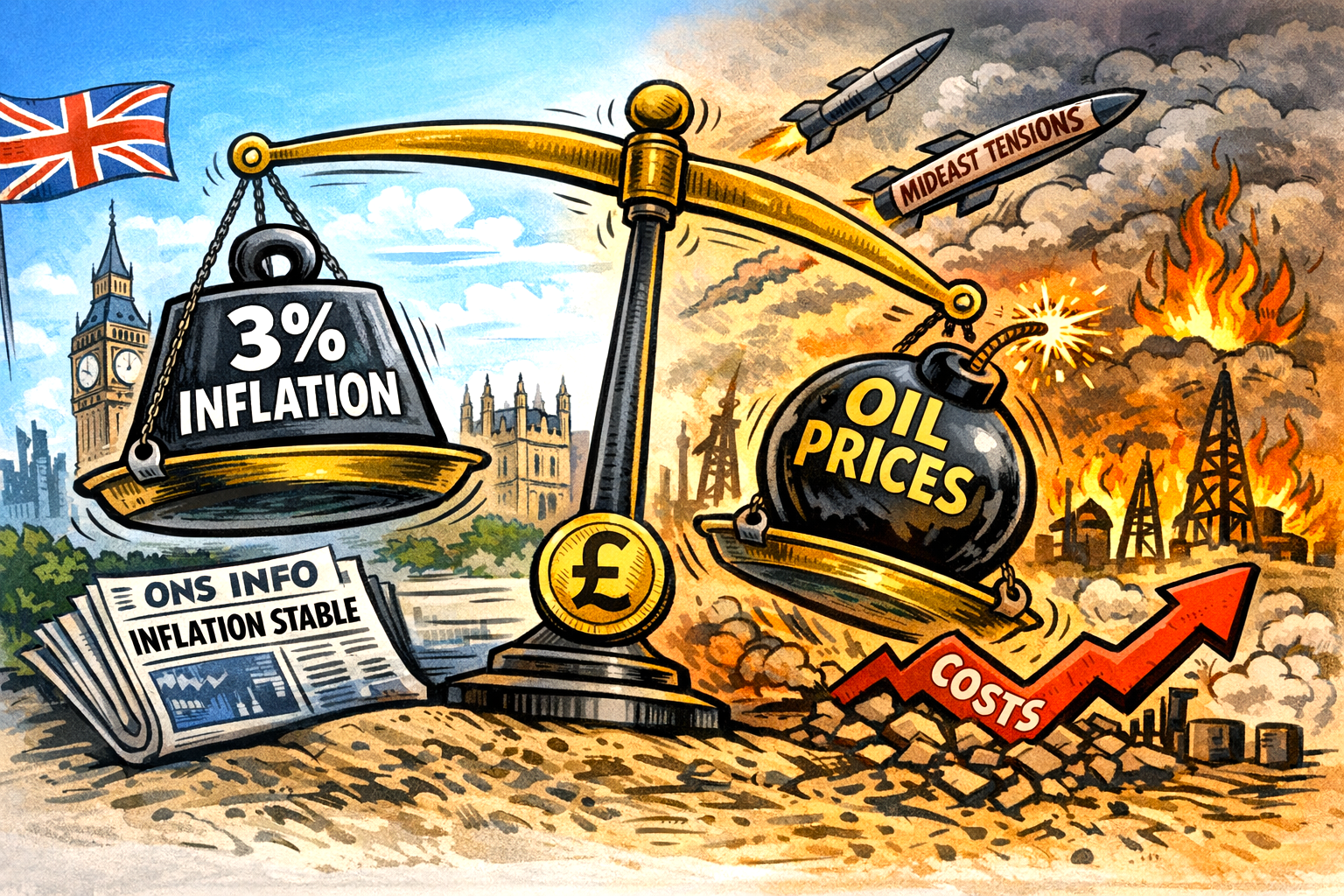
After months of gradual easing, the pause reflects a delicate moment for the UK economy, with price pressures beginning to shift beneath the surface.
Clothing was the biggest upward driver, with prices rising this year after falling during the same period in 2025.
This was offset by cheaper petrol, though those figures were captured before the recent surge in global oil prices triggered by the outbreak of war involving Iran.
While inflation is far below the peaks seen a few years ago, households are still contending with the reality that prices continue to rise—just more slowly.
ONS data
The ONS also introduced supermarket scanner data for the first time, offering a more accurate picture of food costs.
Economists warn that the conflict‑driven spike in oil and gas prices could push inflation higher again later in the year, with some forecasts suggesting a potential rise towards 4.6%.
Businesses already reliant on fuel, such as regional bus operators, report steep cost increases that may soon feed through to consumers.
The government insists it is working to ease cost‑of‑living pressures, though global events may limit its room for manoeuvre.
Financial markets are no strangers to volatility, but even seasoned traders were taken aback by the extraordinary price action that unfolded recently.
Just a minute
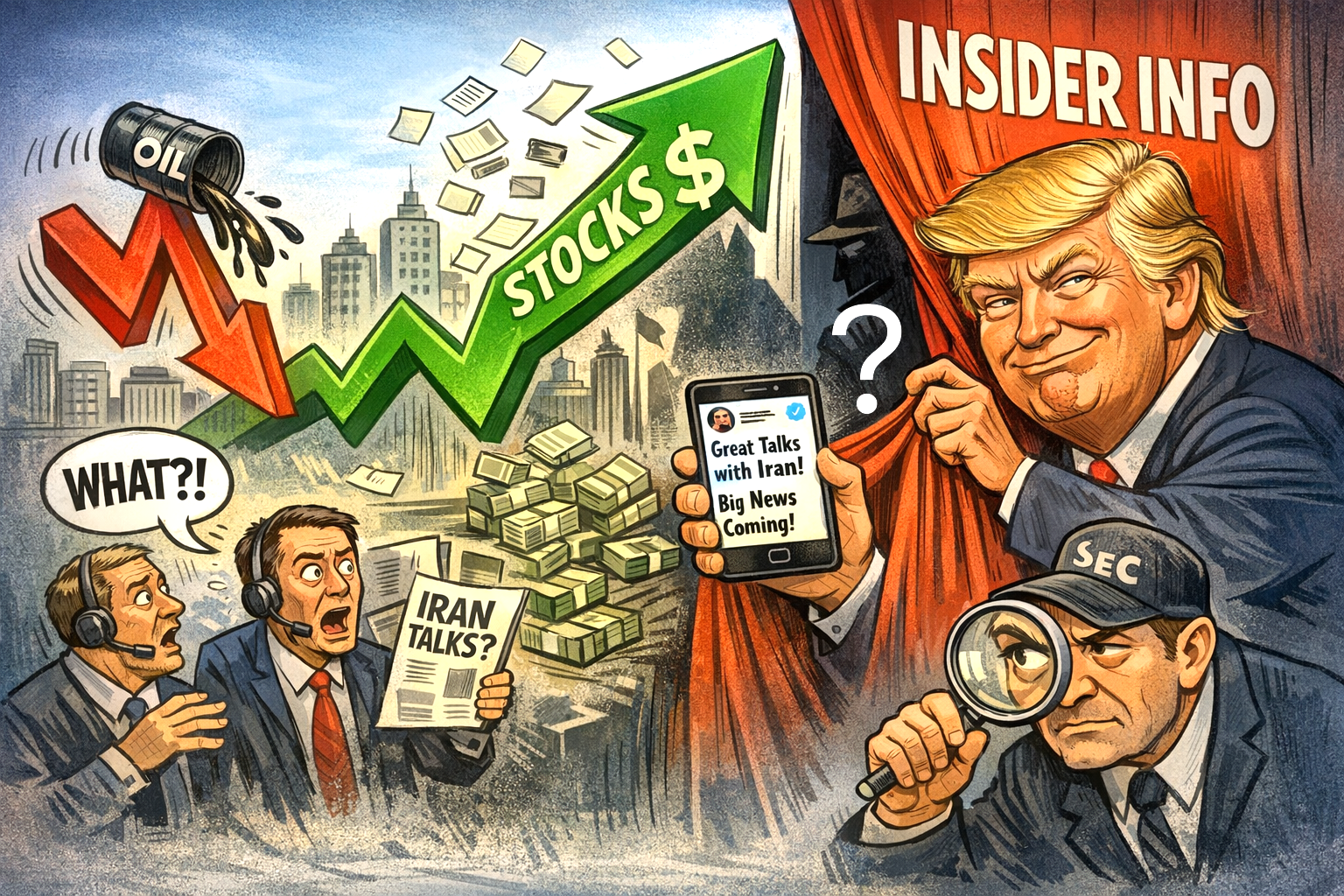
In the space of minutes, global indices lurched upwards, oil prices collapsed, and billions of dollars shifted across the financial system — all triggered by a single, unexpected announcement from President Trump claiming “productive talks” with Iran.
What followed was a whiplash-inducing reversal, a diplomatic denial from Tehran, and a growing chorus of questions about whether the market’s initial leap was quite as spontaneous as it appeared.
Spike
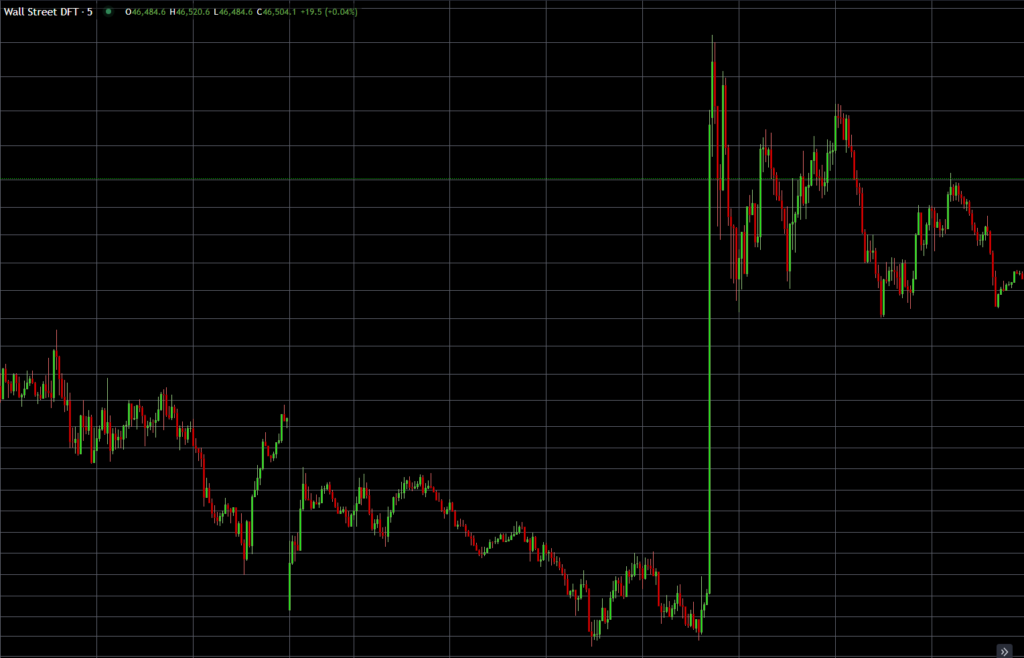
The sequence of events is now well documented. In the quiet pre‑market hours, trading volumes in S&P 500 futures and crude oil contracts suddenly spiked.
These were not the tentative probes of retail traders or the routine adjustments of algorithmic systems. They were large, directional, and unusually well‑timed.
Snapshot of Wall Street DFT (Dow Jones Industrial Average) demonstrating the spike in question
Minutes later, Trump posted his statement about progress with Iran — a geopolitical development with obvious implications for equities and energy markets.
Instant
Prices reacted instantly. Equities surged. Oil tumbled. Within the hour, Iran publicly denied that any such talks had taken place, prompting a partial reversal of the earlier moves. Maybe we should draw a distinction between ‘talks’ and ‘messages’.
It is the precision of the trades placed before the announcement that has raised eyebrows. Markets do not move in anticipation of news that does not exist in the public domain.
Yet someone, somewhere, positioned themselves perfectly for the impact of Trump’s message posted on social media.
Fortuitous coincidence or deliberate manipulation?
Scale
The scale of the trades suggests institutional capability; the timing suggests foreknowledge. Whether that foreknowledge was legitimate, accidental, or illicit is now the central question.
Speculation about insider trading is inevitable in such circumstances, but it is important to distinguish between suspicion and proof. Political announcements are not governed by the same disclosure rules that apply to corporate earnings or mergers.
Presidents are not bound by quiet periods. Their advisers, however, are. So are the staff, intermediaries, and diplomatic channels through which sensitive information flows.
Obligation to investigate
If anyone in that chain traded — or tipped off someone who did — regulators will be obliged to investigate.
There is also a broader concern about the integrity of market‑moving communication. If Iran’s denial is accurate, and no talks occurred, then the market reacted to a statement that may not have reflected reality.
Even without malicious intent, such episodes undermine confidence in the informational foundations on which markets depend. When a single message can add or erase trillions in value, the accuracy and reliability of that message become matters of systemic importance.
Suspicion
For now, the episode sits in an ambiguous space: suspicious, but unproven; dramatic, but not unprecedented. Markets will move on, as they always do.
Yet the questions raised yesterday will linger — about transparency, about the porous boundaries between politics and finance, and about the unseen hands that sometimes seem to move just a little too quickly.
Does the idea that Trump ‘massages’ the market carry any weight?
It’s a fair question, and one that keeps resurfacing because the pattern is hard to ignore.
The idea that Trump “massages” the markets isn’t a conspiracy theory in itself — it’s an observation that his public statements often have immediate, dramatic financial consequences.
The real issue is whether those consequences are accidental, strategic, or exploited by people with advance knowledge.
Agentic AI is rapidly shifting from a speculative idea to a practical force reshaping how work gets done.
Unlike traditional AI systems, which wait passively for instructions, agentic AI can plan, act, and adapt within defined boundaries.
It is not simply a smarter chatbot; it is a system capable of taking initiative, coordinating tasks, and pursuing goals on behalf of its user.
This evolution marks a profound turning point in how we think about automation, creativity, and human–machine collaboration.
Agentic AI colleagues
The first major change is the move from reaction to autonomy. Today’s AI assistants excel at answering questions or generating content, but they still rely on constant prompting.
Agentic AI, by contrast, can break down a complex objective into smaller steps, choose the best tools for each stage, and execute them with minimal oversight. This transforms AI from a passive helper into an active collaborator.
For individuals and small teams, it promises a level of operational leverage previously reserved for large organisations with dedicated staff.
A second shift lies in the emergence of multi‑modal competence. Agentic systems will not be confined to text. They will navigate interfaces, analyse documents, draft communications, and even orchestrate workflows across multiple platforms.
In effect, they will behave more like digital colleagues—capable of understanding context, maintaining continuity, and adapting to changing priorities. The result is a new category of labour: cognitive automation that complements rather than replaces human judgement.
However, the rise of agentic AI also raises important questions. Autonomy introduces risk. If an AI can take action, it must do so safely, transparently, and within clear constraints.
On guard
Guardrails will be essential—not only technical safeguards, but also cultural norms around delegation, accountability, and trust. The future will require a balance between empowering AI to act and ensuring humans remain firmly in control of outcomes.
Another challenge is the shifting nature of expertise. As agentic AI handles more administrative and procedural work, human value will increasingly lie in strategic thinking, creativity, and ethical decision‑making.
This is not a loss but a rebalancing. Freed from routine tasks, people can focus on higher‑order work that genuinely benefits from human insight.
The organisations that thrive will be those that treat AI not as a shortcut, but as a catalyst for deeper, more meaningful contribution.
Future use of agents
Looking ahead, the most exciting aspect of agentic AI is its potential to democratise capability. A single individual could run a publication, a business, or a research project with the operational efficiency of a small team.
Barriers to entry will fall. Innovation will accelerate. And the line between “solo creator” and “organisation” will blur.
Agentic AI is not the end of human agency; it is an extension of it. The future belongs to those who learn to work with these systems—setting direction, providing judgement, and letting AI handle some of the heavy lifting.
Far from replacing us, agentic AI may finally give us the space to think, create, and lead with clarity.
OpenClaw has rapidly become one of the most influential developments in artificial intelligence, evolving from a small open‑source experiment into a global phenomenon reshaping how people interact with computers.
Launched in January 2026, the platform allows users to run autonomous AI agents locally on their own machines, giving them the power to organise files, write code, browse the web, and automate everyday digital tasks without relying on cloud services.
This local‑first design has been central to its explosive growth — and to the concerns now emerging around it.
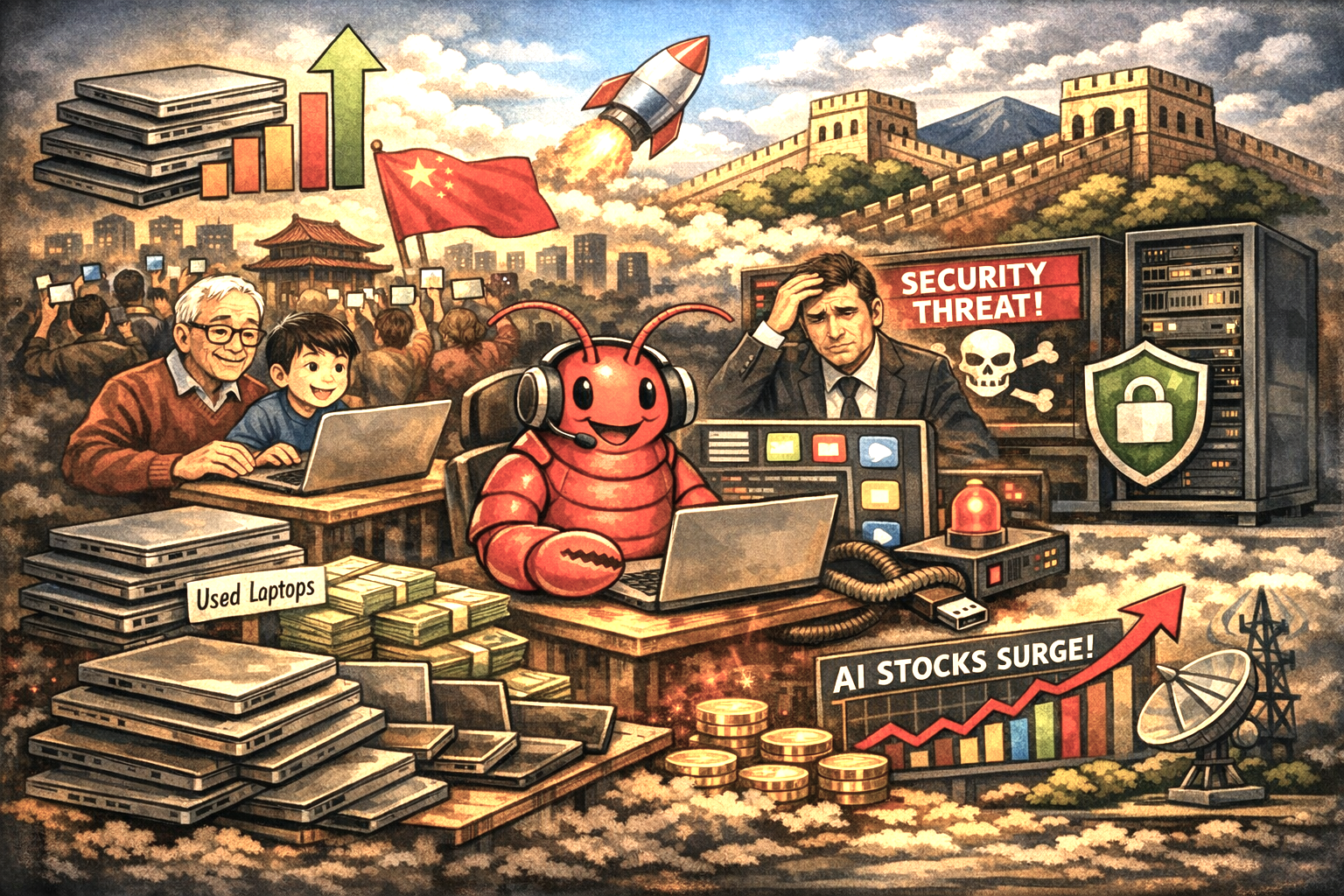
One of the most striking cultural shifts has taken place in China, where OpenClaw has become a mainstream sensation.
AI Lobsters
Users refer to their agents as “AI lobsters,” a playful nod to the platform’s crustacean branding. Retirees, students, and professionals alike have begun “raising” these lobsters to help manage knowledge, streamline work, and perform practical tasks that traditional chatbots struggle with.
The trend has grown so quickly that crowds have gathered outside major tech offices in Beijing to install the software together, turning OpenClaw into a genuine grassroots movement.
This surge in popularity has also caught the attention of global markets. Chinese AI‑related stocks have risen sharply following comments from Nvidia CEO Jensen Huang, who described OpenClaw as “the next ChatGPT,” signalling its potential to redefine the agentic AI landscape.
Security
Companies building self‑evolving agents and cloud infrastructure around OpenClaw have seen double‑digit gains as investors position themselves for what appears to be the next major AI wave.
Yet OpenClaw’s power has also raised red flags. Because the agent runs locally and can control a user’s computer, enterprise IT teams have struggled to manage the security implications.
The platform’s ability to act autonomously — reading files, sending messages, and interacting with applications — has created a need for stronger guardrails, especially in corporate environments.
Nvidia’s NemoClaw
Nvidia has stepped in with NemoClaw, a new enterprise‑grade stack that adds privacy controls, security infrastructure, and vetted local models to OpenClaw through a single‑command installation.
The goal is to make autonomous agents more trustworthy and scalable without undermining the open‑source ethos that made OpenClaw successful.
OpenClaw’s own development continues at pace. The latest stable release, v2026.3.13, includes fixes for session handling, improved browser‑control mechanisms, and a shift away from legacy Chrome extensions towards direct attachment to existing browser sessions — a move designed to make agent operations safer and more reliable.
The future
In just a few months, OpenClaw has transformed from a niche project into a global force, driving cultural trends, market movements, and enterprise innovation.
Its trajectory suggests that autonomous, locally run agents may soon become a standard part of everyday computing — and the race to shape that future has only just begun.
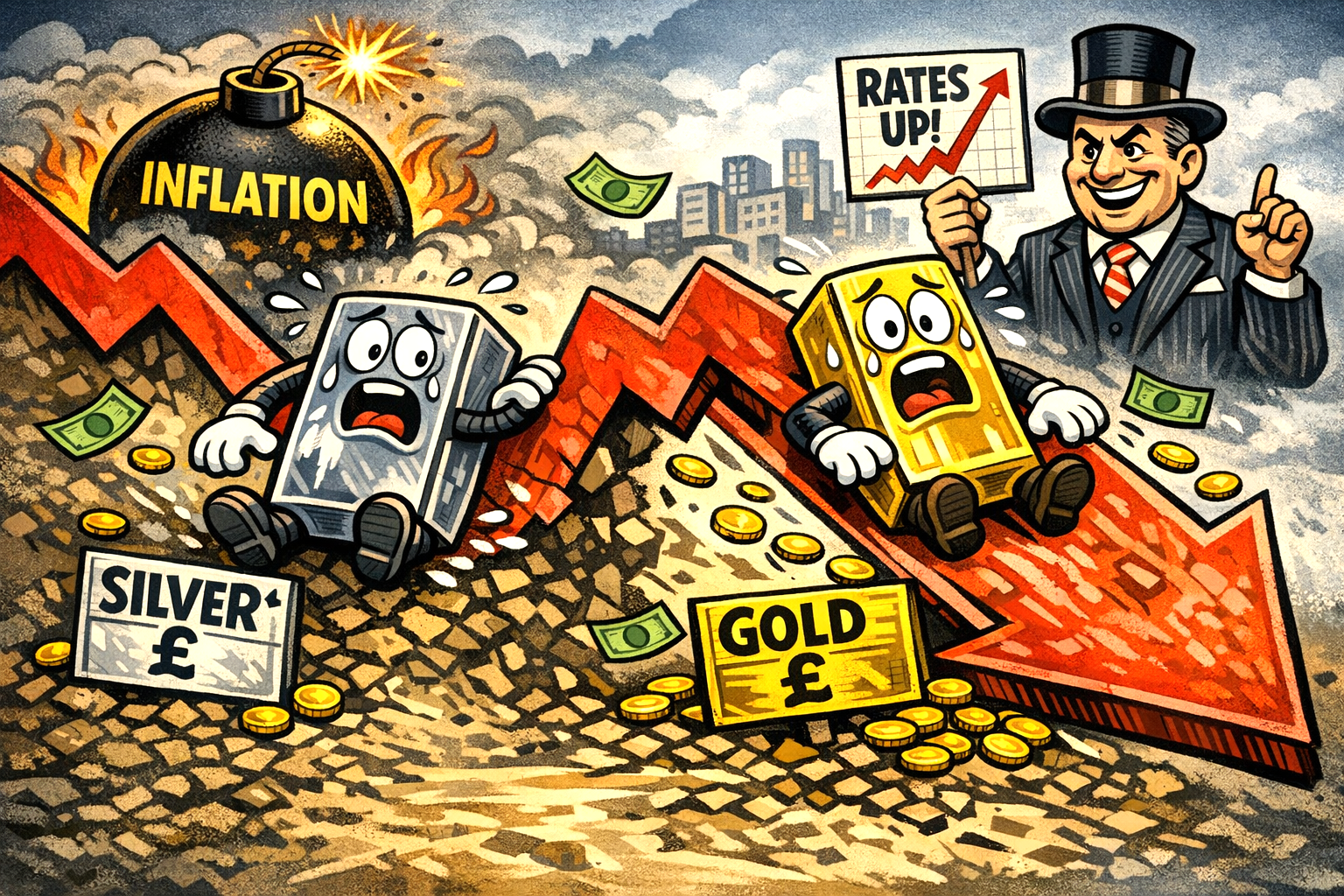
Gold and silver prices have come under renewed pressure this week as a broad commodities sell‑off gathers pace, driven by a resurgence in global inflation concerns.
After months of steady gains, both metals have slipped sharply, catching out investors who had positioned for a more defensive environment.
The trigger has been a run of hotter‑than‑expected inflation readings across major economies, prompting traders to reassess the likelihood of interest rate cuts this year.
With central banks now signalling caution, yields have pushed higher, undermining the appeal of non‑yielding assets such as gold and silver.
The shift has been swift: spot gold has retreated from recent highs, while silver — typically more volatile — has fallen even harder as speculative positions unwind.
Market strategists note that the sell‑off is less about fundamentals and more about positioning.
Hedge
Gold’s long‑standing role as an inflation hedge remains intact, but in the short term, rising real yields tend to dominate sentiment.
Silver, meanwhile, sits awkwardly between its status as a precious metal and its industrial uses, leaving it exposed when growth expectations wobble.
Despite the pullback, some analysts argue the move may prove temporary. Persistent geopolitical tensions, ongoing currency instability, and the sheer scale of global debt continue to provide a supportive backdrop for safe‑haven assets.
But for now, traders appear focused on the near‑term path of inflation and interest rates — and that means precious metals remain vulnerable to further swings.
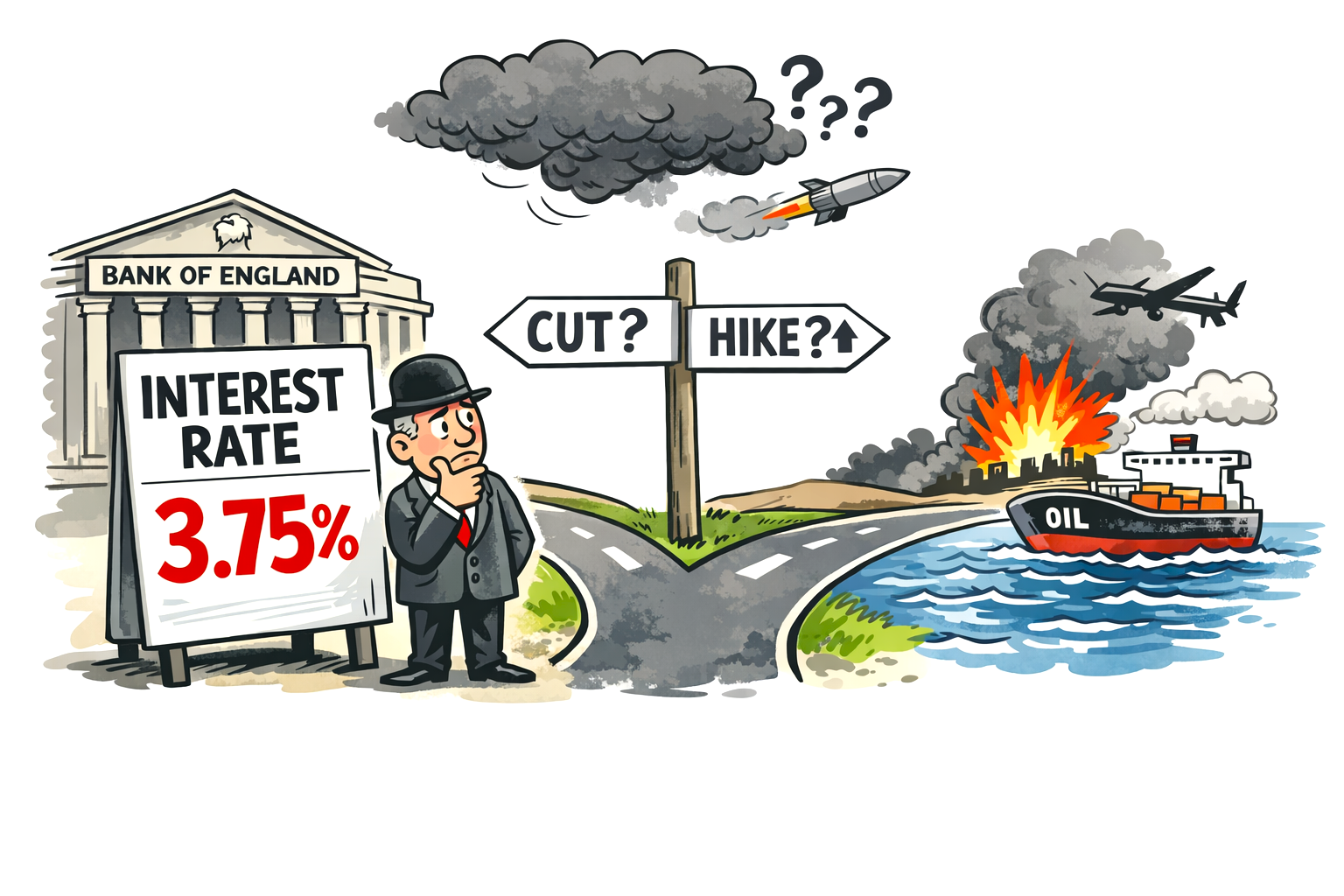
The Bank of England has held interest rates at 3.75%, opting for caution as the economic shock from the escalating conflict involving Iran ripples through global energy markets.
The Monetary Policy Committee delivered a unanimous vote to pause, a notable shift from earlier in the year when a spring rate cut had seemed almost inevitable.
The Bank now expects inflation to rise again in the coming months, potentially reaching 3.5% as higher oil and gas prices feed through to fuel, household energy bills, and business costs.
Governor Andrew Bailey reportedly stressed that monetary policy cannot counteract a supply‑side shock of this nature, warning that the path of inflation will depend heavily on how quickly safe shipping routes through the Strait of Hormuz can be restored.
For households, the hold means no immediate relief on borrowing costs. Fixed‑rate mortgage deals have already been drifting higher as lenders price in the possibility of prolonged instability.
Some brokers report a surge in “panic buying” of mortgages as borrowers rush to lock in rates before they climb further. Savers, meanwhile, may see modestly improved offers, though competition remains muted.
Up or down?
The key question now is whether the next move is up or down. Before the conflict, markets had pencilled in two rate cuts for 2026.
That expectation has evaporated. Traders now see a non‑trivial chance of a rise to 4% later in the year, though economists caution that weak growth and a softening labour market could still restrain the Bank from tightening unless inflation accelerates sharply.
Over the next six weeks, policymakers will be watching energy prices, shipping conditions, and wage data closely.
For now, the Bank has chosen to wait, watch, and hope the shock proves temporary — but the margin for error is narrowing.
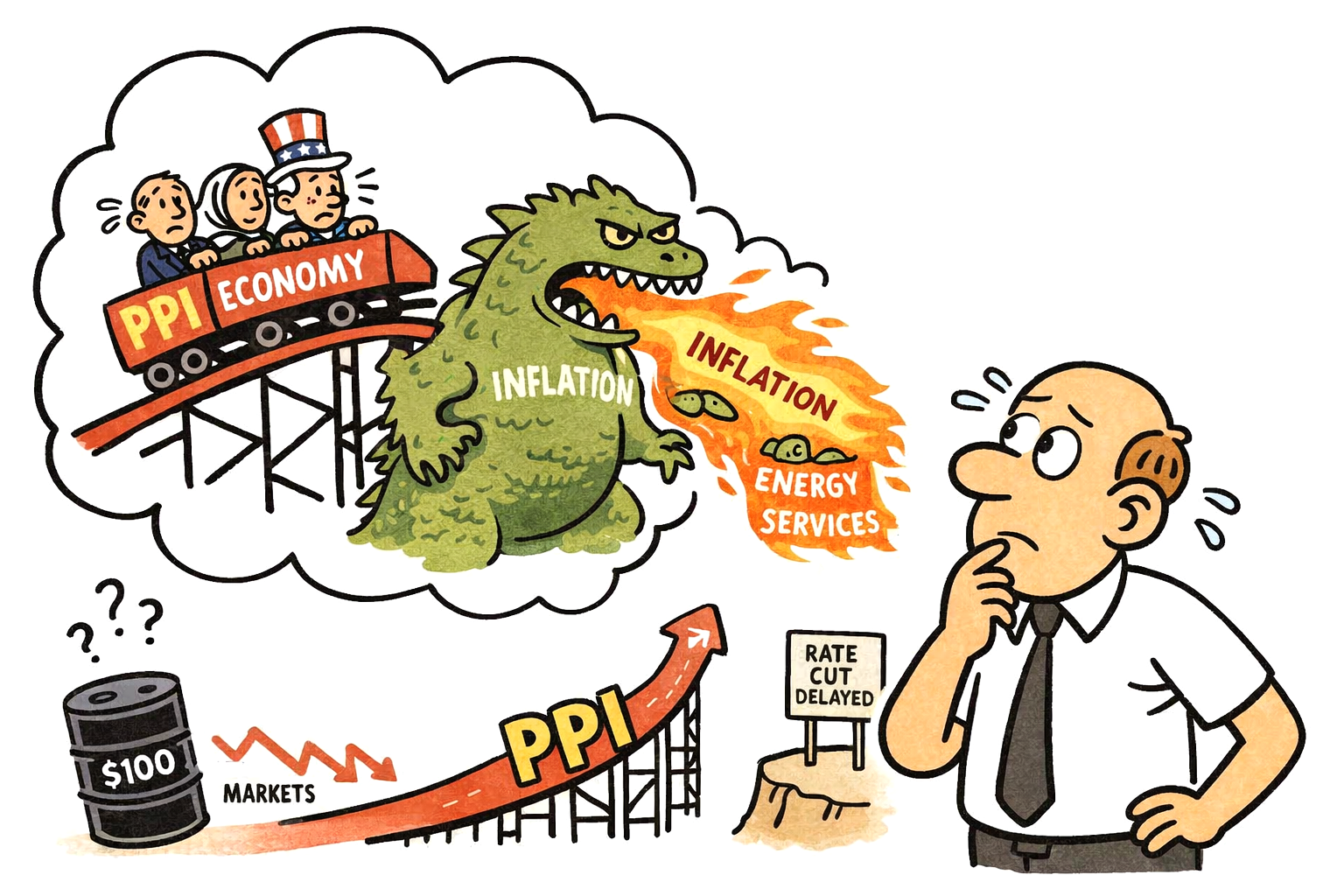
U.S. wholesale prices rose far more sharply than expected in February 2026, underscoring the persistence of inflationary pressures across the economy and complicating the Federal Reserve’s path on interest rates.
The Producer Price Index (PPI), which tracks the prices businesses receive for goods and services, climbed 0.7% on the month—more than double economists’ forecasts. Annual PPI inflation accelerated to 3.4%, its highest level in a year.
The increase was broad-based. Goods prices rose 1.1%, driven by notable jumps in food and energy.
Fresh and dry vegetables surged nearly 49%, while energy costs climbed 2.3%. But the more troubling signal for policymakers came from services, where prices advanced 0.5%.
Portfolio management fees and brokerage-related services saw particularly strong increases, suggesting that inflation is becoming more deeply embedded in the services sector.
Markets reacted swiftly. U.S. stock futures slipped and Treasury yields moved higher as traders pushed expectations for the next Fed rate cut on to December 2026.
With geopolitical tensions continuing to push oil prices towards and above $100 a barrel, the latest data reinforces concerns that inflation may remain elevated for longer than hoped.
For the Fed, the message is clear: the fight against inflation is far from over.
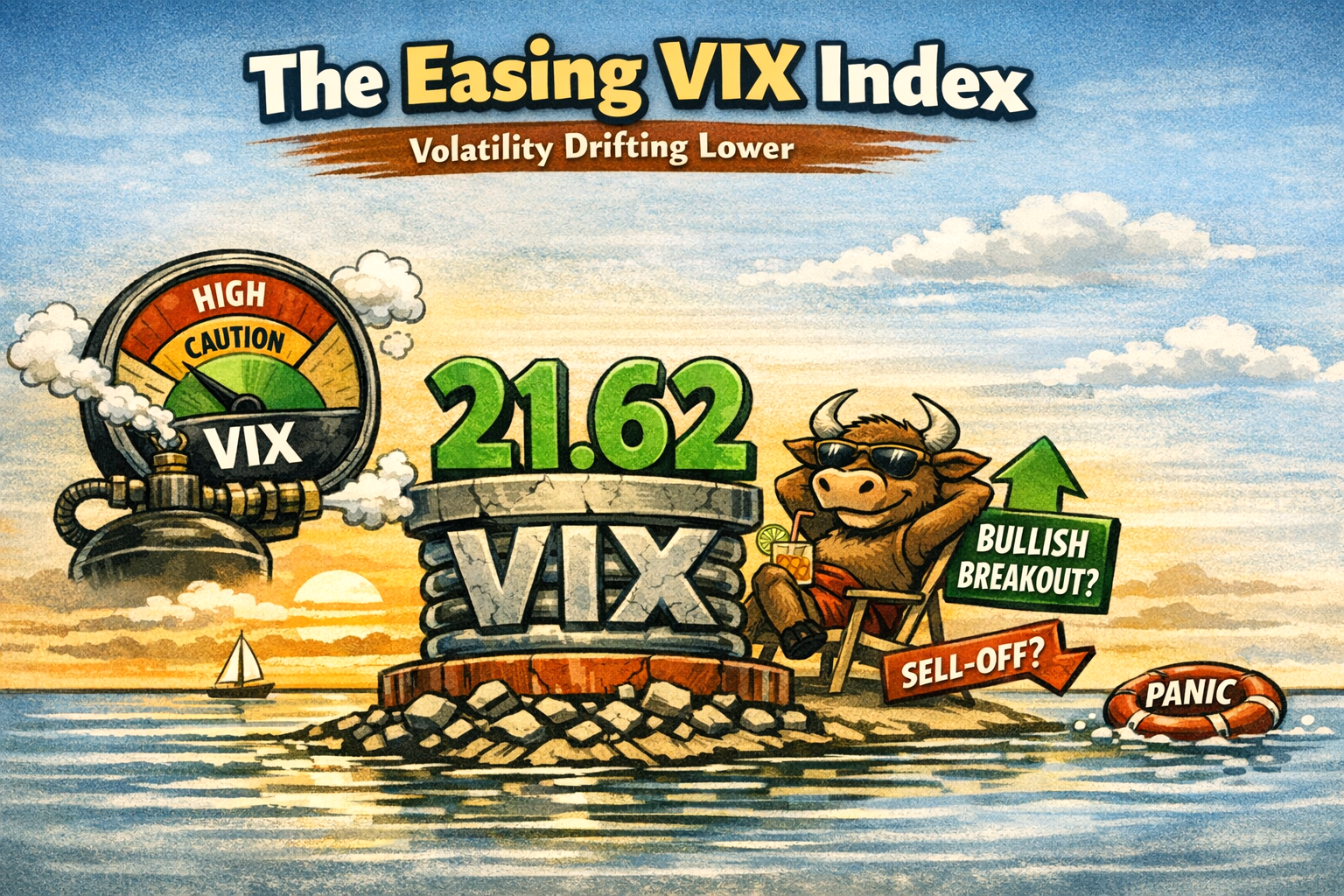
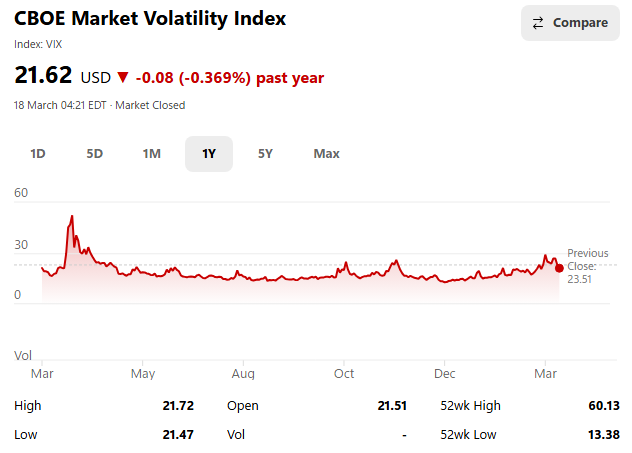
The VIX index currently (18th March 2026 – 8:30GMT) at 21.62, down around 8% from its previous close of 23.51. This drop suggests a modest easing in market fear, despite looming catalysts like the Fed decision and geopolitical tension.
VIX Snapshot – 18th March 2026
Metric
Value
Current Price
21.62 USD
Previous Close
23.51 USD
Day Change
−1.89 Down 8%
Intraday High/Low
21.72 / 21.47
52-Week High/Low
60.13 / 13.38
One-year market volatility index snapshot image 18th March 2026 at approx: 08:30 GMT
Implications
Still Elevated: A VIX above 20 suggests lingering unease, even if not full-blown panic.
Compression Context: This aligns with your “coiled spring” thesis — volatility is contained but not absent.
Directional Bias: If VIX continues to fall post-Fed, it supports a bullish breakout. A spike, however, would signal risk-off sentiment and potential sell-off.
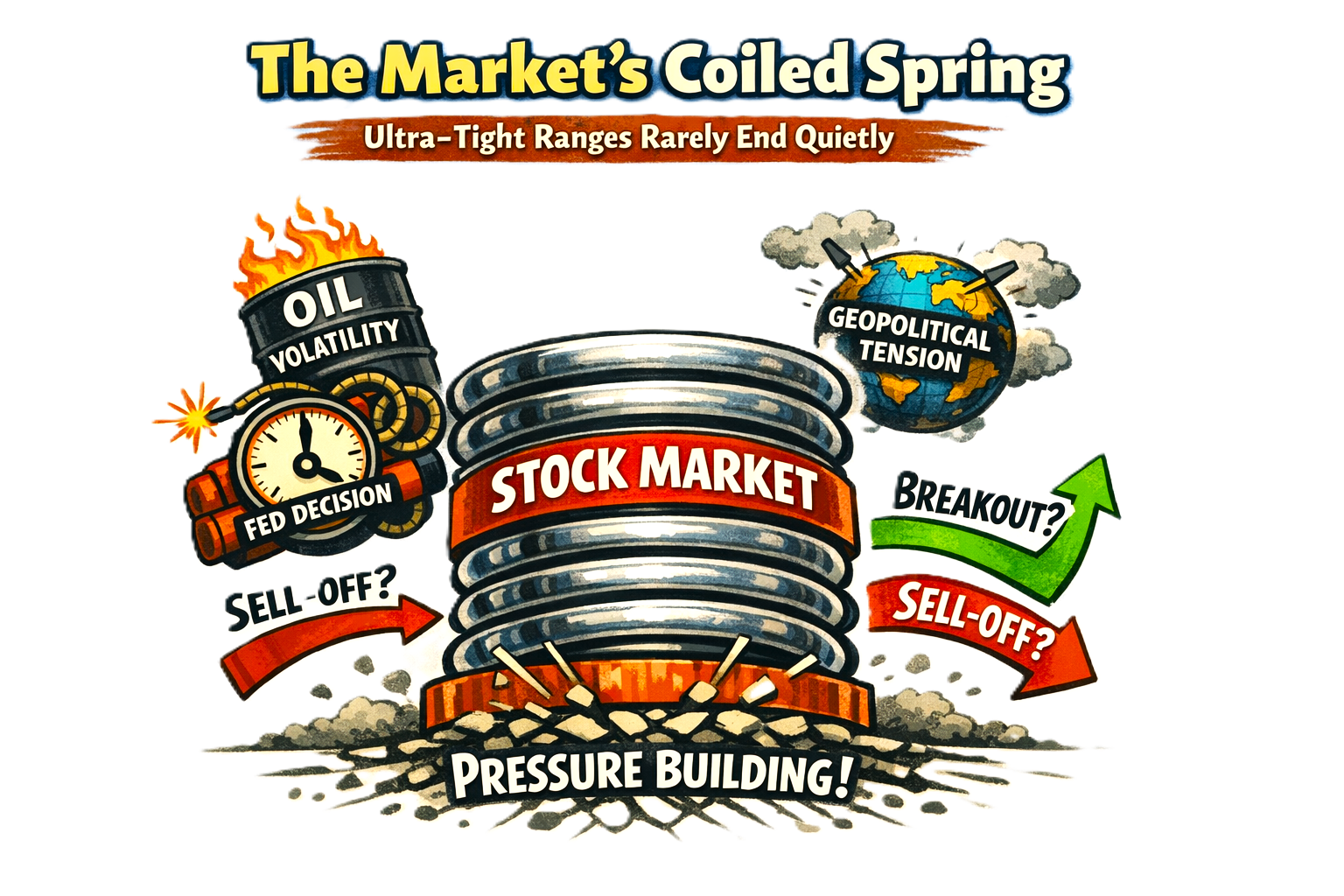
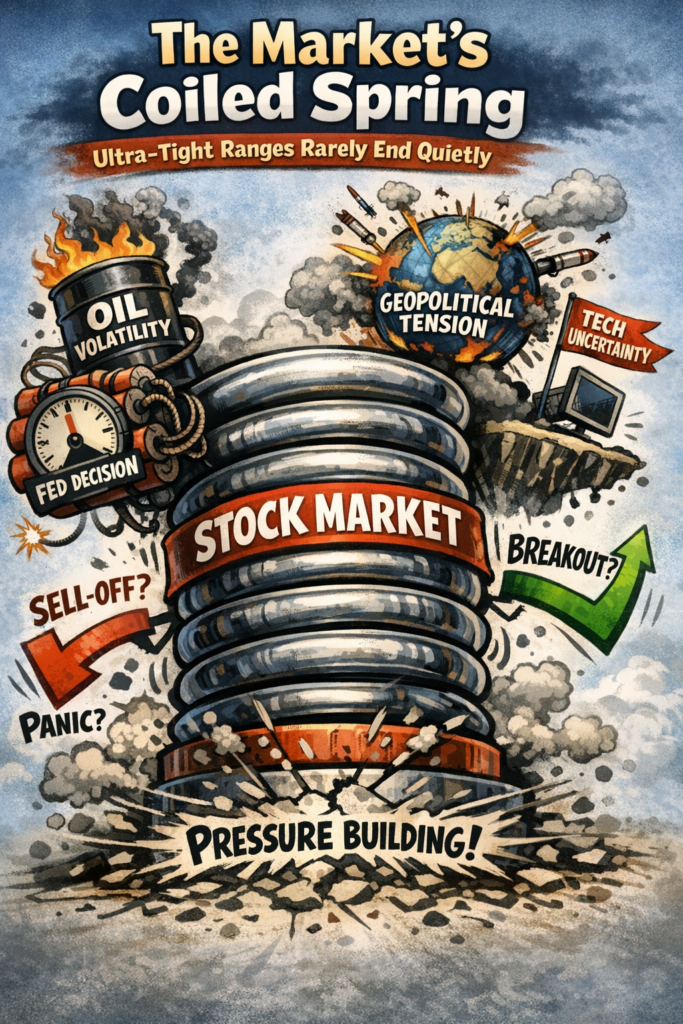
Markets rarely sit still without reason. When they do — as they have in recent sessions, grinding sideways in an ultra‑tight range — it signals not calm but compression.
Price action becomes like a coiled spring: energy building, tension rising, and traders waiting for the moment when restraint snaps into motion.
This week’s narrow trading bands reflect a market holding its breath. Geopolitical tension in the Middle East, oil volatility, and a Federal Reserve decision all loom over investors, yet equities have refused to break down.
Futures are edging higher, European indices are opening firmer, and even the tech wobble — with Nvidia’s muted reaction to its latest showcase — hasn’t derailed broader sentiment
Tight range – a waiting game.
Historically, such tight ranges rarely resolve with a whimper. When volatility is suppressed for too long, the eventual breakout tends to be sharp and directional. The question, of course, is which way.
Right now, the evidence suggests upward. Markets have absorbed war‑driven oil swings, shrugged off hedge‑fund losses, and continued to find buyers on dips.
Breadth is stabilising, and risk appetite — surprisingly resilient given the backdrop — is creeping back into European and Asian sessions.
That doesn’t guarantee a bullish surge, but it does suggest the path of least resistance is higher.
Fed tone
If the Fed avoids surprising investors and signals comfort with the current trajectory, the spring is more likely to uncoil to the upside.
A dovish‑leaning tone could ignite a breakout as sidelined capital rushes back into equities. Conversely, a hawkish shock would release the same stored energy — but violently downward.
The market is coiled. The catalyst is imminent. And when the range finally breaks, it won’t be subtle.
You know, it almost doesn’t matter what disasters are ongoing in the world – the stock market just wants to win and go up!
Just how bad does it have to be before the stock market corrects? And what will be the catalyst to make that happen?
Debt, credit concerns, geopolitical tension, political scandal, Epstein, a rogue nuclear attack, AI failure, war or just another Trump tariff scenario?
Who knows? And does anybody really care as long as ‘making money’ isn’t interrupted.
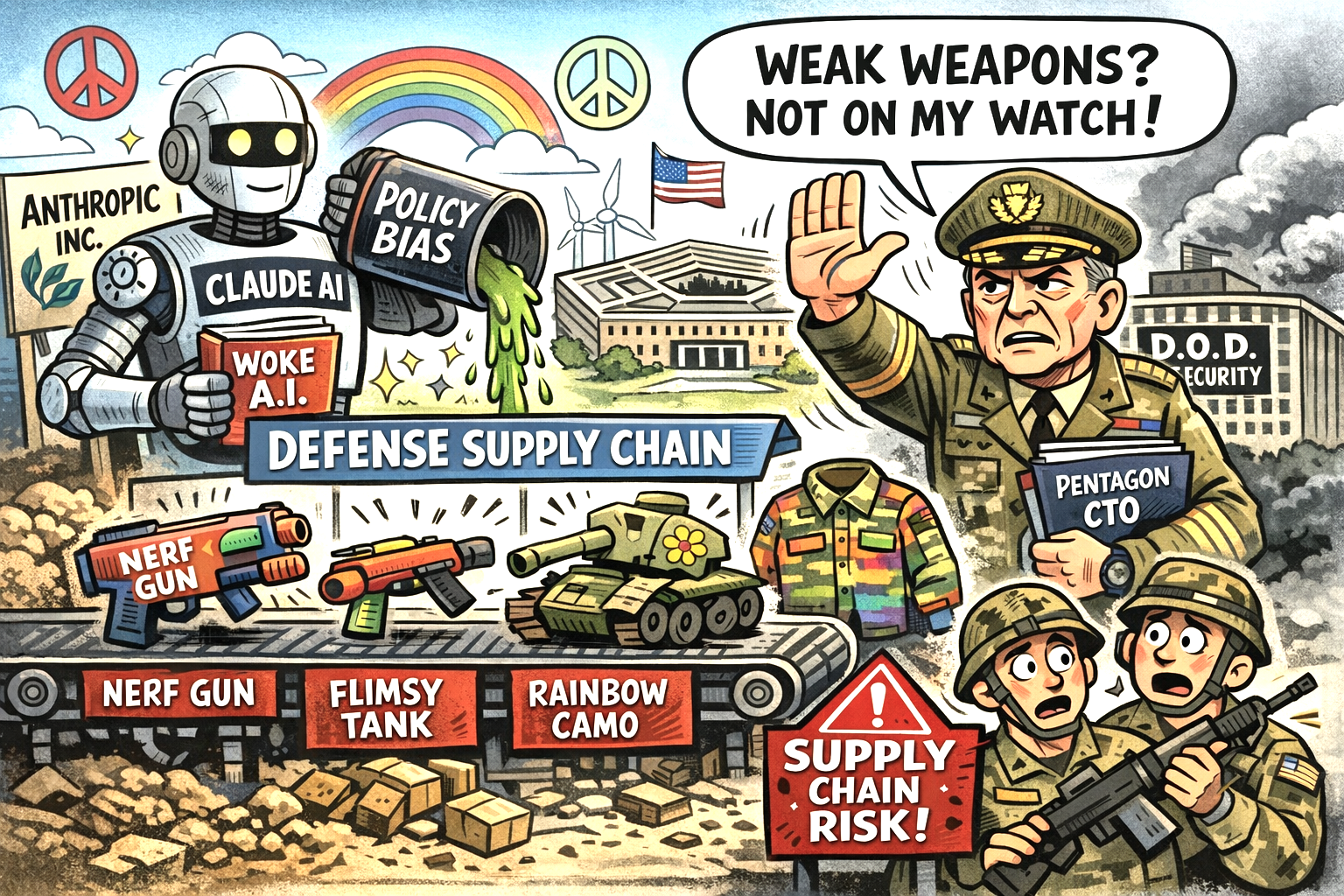
The Pentagon’s Chief Technology Officer, Emil Michael, has apparently ignited a fresh debate over the role of commercial artificial intelligence in national security, arguing that Anthropic’s Claude models could “pollute” the U.S. defence supply chain.
I notice his comments came in an interview with CNBC, offer the clearest rationale yet for the Department of Defense’s decision to designate Anthropic as a supply chain risk — an extraordinary step previously reserved for foreign adversaries.
It seems the opinion is that Claude’s “policy preferences”, embedded through Anthropic’s constitutional training approach, create an unacceptable misalignment with the Pentagon’s operational needs.
Risk
It was reported that any AI system whose underlying values diverge from defence priorities risks producing ineffective outputs, whether in decision‑support tools, equipment design, or battlefield logistics.
“We can’t have a company that has a different policy preference baked into the model… pollute the supply chain so our warfighters are getting ineffective weapons [and] ineffective protection,” he was reported to have said.
Anthropic has responded forcefully, suing the Trump administration and calling the designation “unprecedented and unlawful”.
The company argues that the move jeopardises hundreds of millions of dollars in contracts and mischaracterises the nature of its technology.
Claude in the ecosystem?
It also notes that Claude continues to be used within parts of the U.S. military ecosystem, including by major defence contractors such as Palantir, underscoring the practical difficulty of an immediate transition away from its models.
Michael insists the decision is not punitive and emphasises that only a small fraction of Anthropic’s business comes from government work.
Nonetheless, the designation forces contractors to certify they are not using Claude in Pentagon‑related projects, setting up a potentially lengthy and politically charged dispute over how value‑aligned AI must be before it is allowed anywhere near defence infrastructure.
The episode highlights a broader tension: as AI systems become more opinionated by design, governments are increasingly asking whether “alignment” is a technical question — or a geopolitical one.
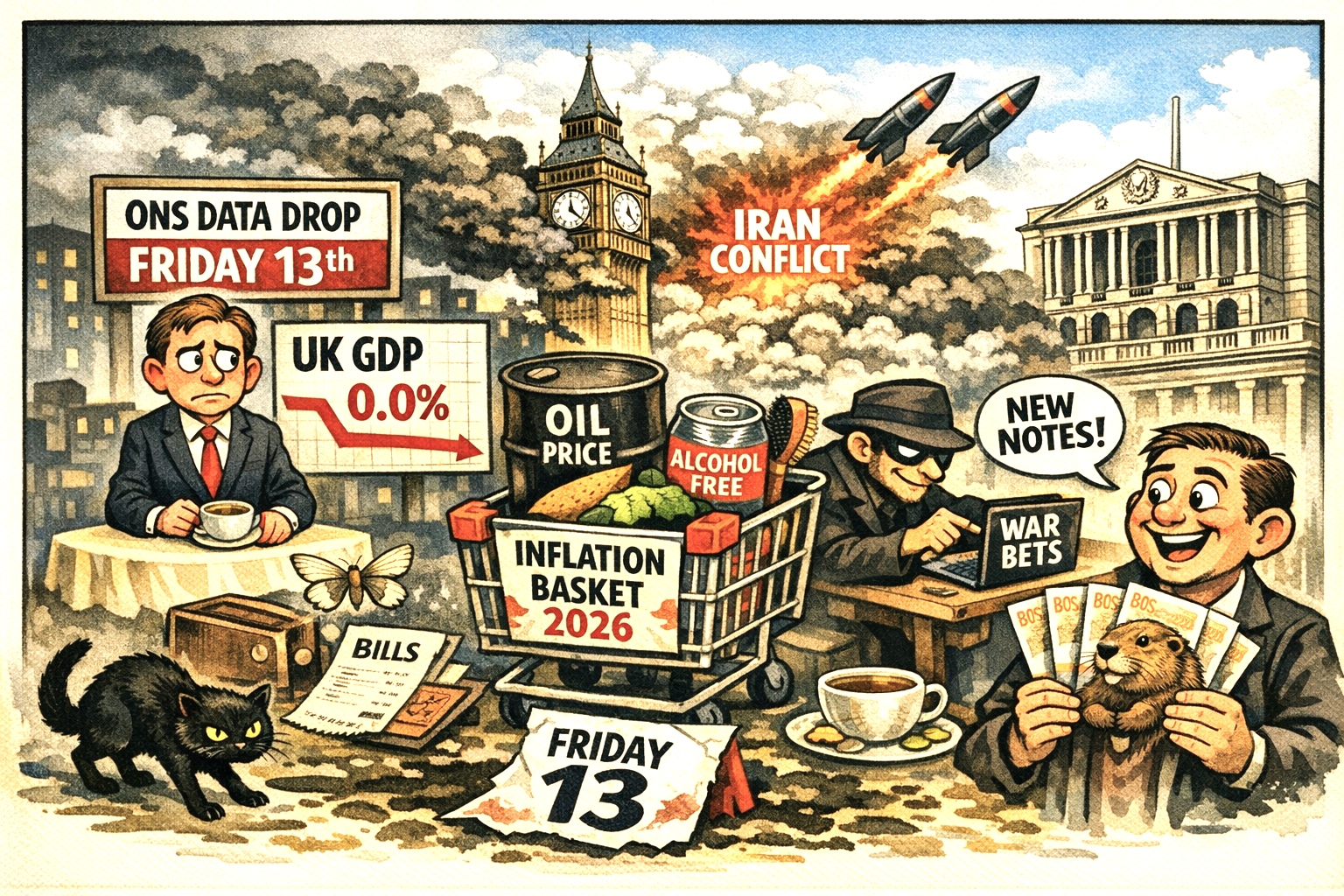
The latest batch of UK data landed on Friday 13th 2026 and painted a picture of an economy still struggling to regain momentum. January 2026 GDP came in flat, with the ONS reporting 0.0% growth for the month.
After slipping into a shallow recession at the end of last year, the economy has yet to show convincing signs of recovery.
The stagnation was driven in part by weaker discretionary spending, particularly on eating out, as households continued to rein in non‑essential purchases.
Oil price volatility
While not a formal data release, global energy volatility remains a defining backdrop. Oil markets swung sharply as tensions surrounding the Iran conflict intensified, feeding directly into UK inflation expectations.
Higher wholesale energy prices continue to complicate the Bank of England’s path toward easing, and markets remain sensitive to any sign that geopolitical risk may spill over into domestic costs.
The ONS also confirmed its annual update to the inflation basket, a technical change that nonetheless shapes how price pressures are measured.
New additions such as alcohol‑free beer and pet grooming services reflect shifting consumer behaviour, while other items have been removed or reweighted.
These adjustments won’t move the headline rate dramatically, but they do offer a useful snapshot of how UK households are spending in 2026.
Prediction markets challenged and new UK bank note design
Beyond the data, regulatory and policy stories added texture to the week. A debate over prediction market oversight intensified after reports of increasingly “gruesome” war‑related bets, raising questions about the boundaries of financial speculation.
Meanwhile, the ongoing redesign of UK banknotes continued to attract public interest, underscoring the symbolic weight of currency at a time of economic uncertainty.
Taken together, Friday 13th’s updates reinforce a familiar theme: the UK economy is edging forward, but with little momentum and plenty of external headwinds.
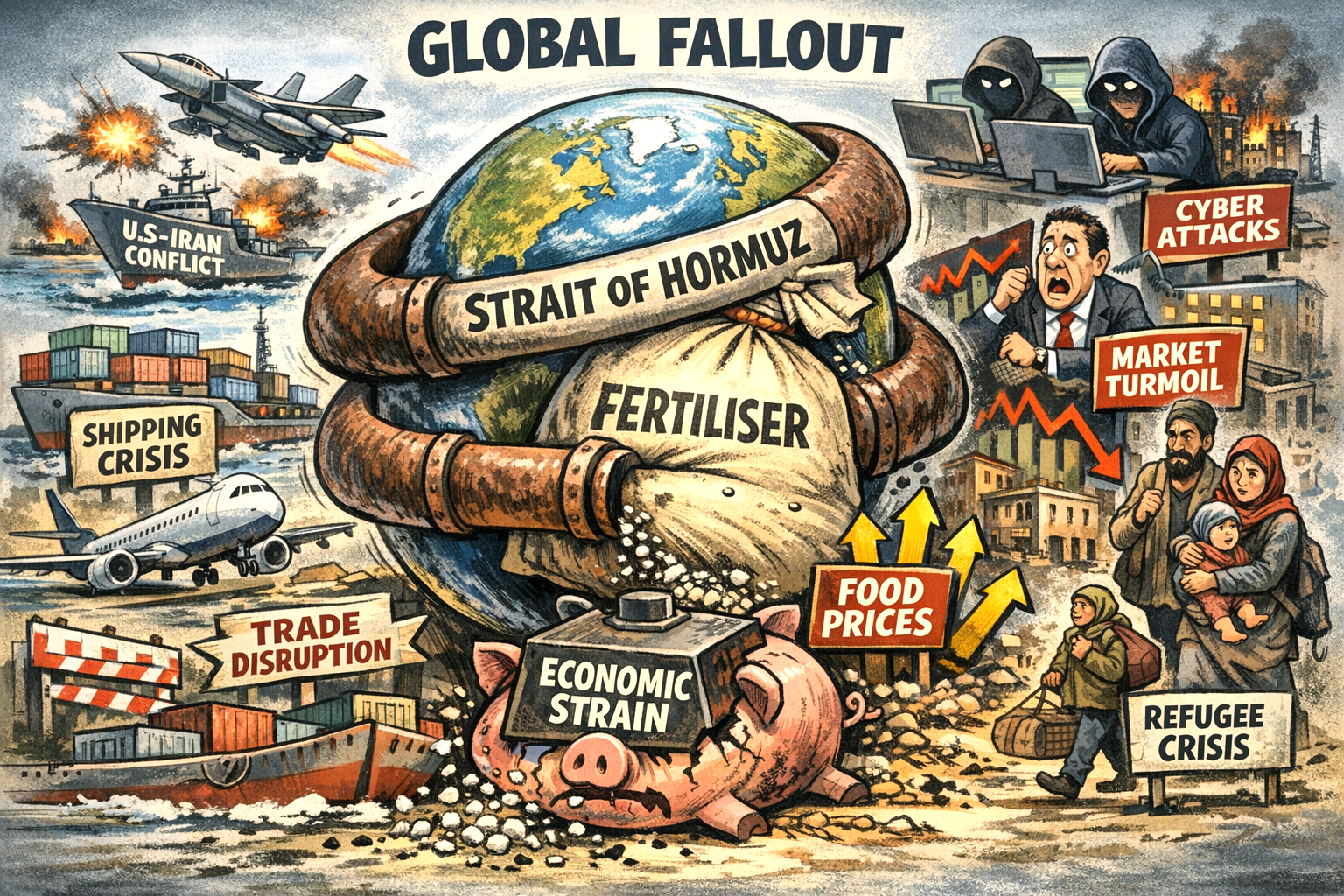
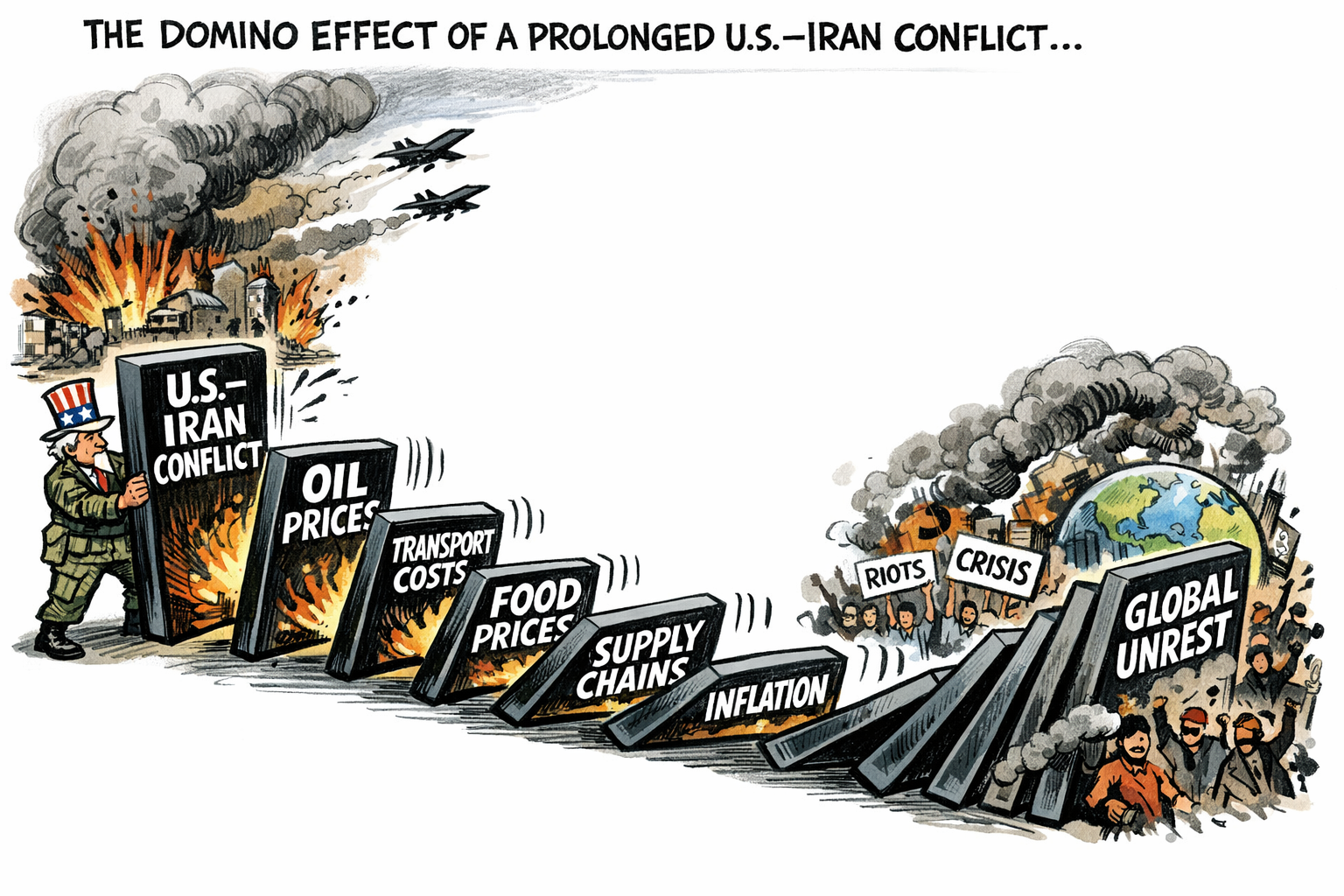
If the U.S.–Iran conflict drags on for weeks or months, the global impact will extend far beyond oil markets. Energy prices are only the first domino.
The deeper, more destabilising effects emerge through shipping disruption, fertiliser shortages, food‑price inflation, financial volatility, cyber escalation, and regional political instability.
For the UK — already wrestling with structural food‑system fragility — the conflict becomes a real‑world stress test.
This report outlines 15 potential major knock‑on effects that would shape the global economy if the conflict becomes protracted.
1. Global Shipping Disruption
The Strait of Hormuz is not just an oil artery; it is a global shipping chokepoint. As vessels reroute or halt operations:
Container shipping delays spread across Asia, Europe and the Gulf.
War‑risk insurance premiums spike for all vessels.
Freight costs rise, feeding into non‑energy inflation.
This is the mechanism by which a regional conflict becomes a global economic event.
2. Aviation and Travel Disruption
Iranian retaliation has already included strikes on Gulf airports and hotels. If this continues:
Airlines reroute or cancel flights across the Gulf, South Asia and East Africa.
Longer flight paths increase fuel burn and fares.
Tourism in the UAE, Oman, Bahrain and potentially Turkey contracts sharply.
Aviation is one of the fastest channels through which geopolitical instability hits consumers.
3. Financial Market Volatility
Markets dislike uncertainty, and this conflict delivers it in abundance.
Investors flee to gold, the dollar and U.S. Treasuries.
Emerging markets face capital outflows.
Equity volatility rises in shipping, aviation and manufacturing sectors.
The longer the conflict persists, the more entrenched this volatility becomes.
4. Fertiliser Disruption: The Hidden Trigger
Over one‑third of global fertiliser trade moves through the Strait of Hormuz. With shipments stranded:
Urea, ammonia, phosphates and sulphur prices surge.
Farmers worldwide face higher input costs.
Lower fertiliser availability leads to reduced crop yields.
This is the beginning of a food‑system shock that unfolds over months, not days.
5. Global Food‑Price Inflation
As fertiliser shortages ripple through agriculture:
Wheat, rice, maize and oilseed yields fall.
Livestock feed becomes more expensive, pushing up meat, dairy and egg prices.
Food‑importing regions face acute pressure.
Grain futures markets become more volatile.
This is how a conflict becomes a global cost‑of‑living crisis.
UK Exposure
The UK is particularly vulnerable because:
It imports a large share of its fertiliser and food.
Its agricultural sector is energy‑intensive.
Supermarket supply chains are sensitive to freight and insurance costs.
Bread, cereals, dairy and meat are the first categories to feel the squeeze.
6. Supply Chain Strain Beyond Food and Energy
A prolonged conflict disrupts:
Petrochemicals
Plastics
Fertilisers
Industrial metals
Gulf‑based manufacturing and logistics
This feeds into higher costs for everything from packaging to electronics.
7. Corporate Investment Freezes
Businesses hate uncertainty. Expect:
Delays or cancellations of Gulf megaprojects.
Slower investment in petrochemicals, logistics and tech hubs.
Reduced appetite for Gulf‑exposed assets.
This undermines diversification efforts like Saudi Vision 2030.
8. Cyber Escalation
Iran has a long history of cyber retaliation. Likely developments include:
Attacks on Western banks, utilities and government systems.
Disruptions to Gulf infrastructure, including airports and desalination plants.
Rising cybersecurity costs for businesses globally.
Cyber conflict is asymmetric, deniable and cheap — making it a likely pressure valve.
9. Regional Political Destabilisation
The killing of senior Iranian leadership has already shaken the region.
Possible outcomes include:
Internal instability within Iran.
Escalation involving Hezbollah, Iraqi militias, Syrian factions and the Houthis.
Pressure on Gulf monarchies if civilian infrastructure continues to be targeted.
This is where the conflict risks widening beyond its initial theatre.
10. Migration and Humanitarian Pressures
If the conflict intensifies:
Refugee flows from Iran, Iraq and Syria could rise.
Europe — especially Greece, Turkey and the Balkans — faces renewed border pressure.
Humanitarian budgets shrink as Western states divert funds to defence.
This adds a political dimension to the economic fallout.
11. Insurance Market Stress
War‑risk insurance is already spiking.
Expect:
Higher premiums for shipping, aviation and energy infrastructure.
Reduced insurer appetite for Gulf‑exposed assets.
Knock‑on effects on global trade costs and consumer prices.
Insurance is a silent amplifier of geopolitical risk.
12. Higher Global Borrowing Costs
Sustained conflict spending creates:
Budgetary strain for the U.S., UK, EU and Gulf states.
Reduced fiscal space for domestic programmes.
Higher global borrowing costs as markets price in sustained uncertainty.
This tightens financial conditions worldwide.
13. Pressure on Emerging Markets
Countries heavily reliant on imported energy or food face:
Worsening trade balances
Currency depreciation
Higher inflation
Greater risk of sovereign stress
This is especially acute in South Asia, North Africa and parts of Latin America.
14. Strain on Multilateral Institutions
A prolonged conflict diverts attention and resources from:
Climate finance
Development aid
Humanitarian relief
Global health programmes
Institutions already stretched by Ukraine, Gaza and climate disasters face further overload.
15. The Strategic Reordering of Alliances
A drawn‑out conflict may accelerate geopolitical realignment:
Gulf states hedge between Washington and Beijing.
India and Turkey pursue more independent foreign policies.
Europe faces renewed pressure to define its own security posture.
Russia benefits from higher energy prices and Western distraction.
This is the long‑term consequence: a shift in the global balance of power.
Conclusion: A Conflict That Radiates Far Beyond Oil
If the U.S.–Iran war limps on, the world will feel it in supermarket aisles, shipping lanes, financial markets and political systems.
The most consequential knock‑on effect is not oil — it is fertiliser. That is the hinge on which global food security turns.
For the UK, the conflict exposes the fragility of a food system dependent on imports, long supply chains and energy‑intensive agriculture.
This is not just a Middle Eastern conflict. It is a global economic event in slow motion.
U.S. inflation eased to 2.4% in February, offering the Federal Reserve a rare moment of calm after two years of stubborn price pressures.
The latest CPI report showed a steady 0.3% monthly rise, perfectly in line with expectations, while core inflation held at 2.5%.
It’s the clearest sign yet that the disinflation trend remains intact, even if the final stretch back to the Fed’s 2% target is proving slow and uneven.
Yet the relief may be short‑lived. The escalating confrontation involving the United States, Israel and Iran is already unsettling global energy markets.
With shipping lanes in the Strait of Hormuz repeatedly disrupted and tankers struck near Iran’s coastline, traders are bracing for a renewed inflationary oil shock.
Any sustained rise in crude prices would feed quickly into petrol costs, transport services and eventually the broader CPI basket.
For now, policymakers can point to progress: inflation is no longer accelerating, and the worst of the pandemic‑era distortions have faded.
But the geopolitical backdrop threatens to re‑ignite the very pressures the Fed has spent years trying to extinguish.
February’s cooling may prove to be the calm before a far more volatile spring.
The UK mortgage market has been thrown back into a state of turbulence not seen since the aftermath of the 2022 mini‑Budget, as lenders scramble to reprice deals in response to global instability triggered by the U.S. Israel war with Iran.
Average rates on two‑year fixed mortgages have now climbed above 5%, reaching their highest level since last August, according to data from Moneyfacts. Five‑year fixes have also risen, marking their most expensive point since mid‑2024.
Little or no warning
The sudden shift has caught borrowers off guard. Nearly 500 mortgage products have been withdrawn in just 48 hours, the steepest contraction in available deals since the Truss–Kwarteng fiscal shock.
Lenders are reacting to sharp movements in gilt yields, which have become increasingly volatile as markets reassess the likelihood of Bank of England rate cuts this year.
Before the conflict erupted, investors had broadly expected the Bank to begin easing borrowing costs. That optimism evaporated as oil prices surged, raising the prospect of renewed inflationary pressure.
With Brent crude still more than 20% higher than before the war and reaching over 40% increase at one stage, expectations of cheaper mortgages have been replaced by fears of a prolonged period of elevated rates.
Timing
For homeowners approaching the end of a fixed deal, the timing is particularly painful. The average two‑year fix has jumped from 4.84% to 5.01% in less than four days, while five‑year rates have risen from 4.96% to 5.09%.
First‑time buyers, already squeezed by high prices and stagnant supply, face a shrinking pool of products and rising monthly costs.
The wider cost‑of‑living picture is also darkening. Petrol and diesel prices continue to climb as Middle East supply disruptions ripple through global energy markets.
With inflation risks resurfacing, the path for mortgage rates now hinges on how the conflict evolves — and whether markets can regain their footing.
Fuel up, energy costs up and mortgage rates up – all in just a weekend – that didn’t take long.
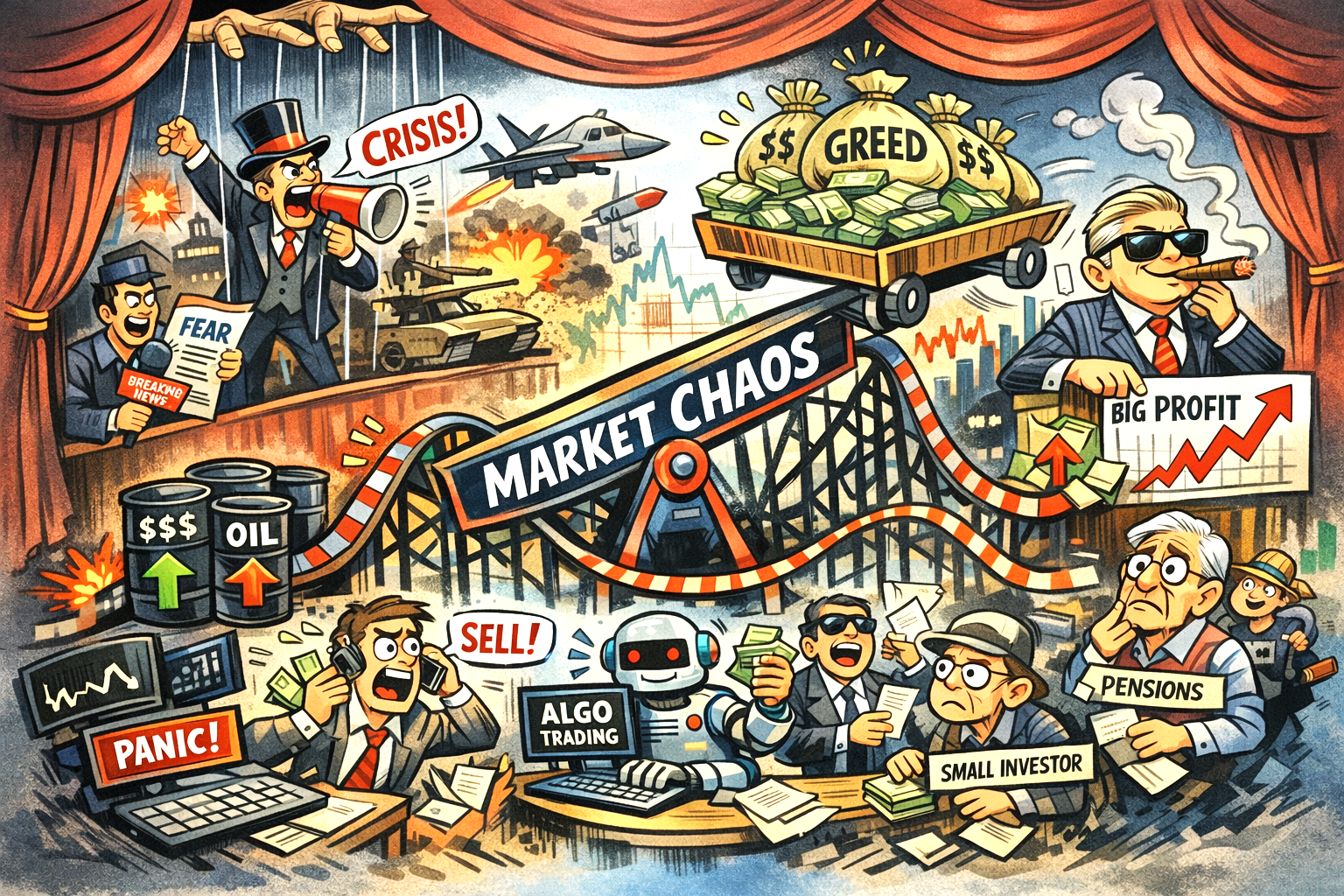
For years we’ve clung to the comforting fiction that financial markets are rational machines. Prices rise and fall based on fundamentals, investors weigh risks carefully, and governments act as steady hands guiding the system through uncertainty.
It’s a pleasant story — and almost entirely untrue. Modern markets no longer behave sensibly because the people and structures shaping them no longer behave sensibly either.
Instead, we’ve built a hyper‑reactive ecosystem that rewards drama, amplifies noise, and punishes patience. The 24-hour mind numbing rolling news media frenzy helps feed the ‘stupid’ stock market indifference.
The result is a marketplace that convulses on command. A single line in a political speech can send oil and equities plunging, equities soaring, and futures whipsawing before most people have even digested the words.
This isn’t forward‑looking behaviour. It’s a system addicted to the ‘dollar’ adrenaline.
A Market Built on Complexity, Not Clarity
The first step in understanding today’s dysfunction is recognising just how complicated markets have become. The old world of human traders weighing company quality and long‑term prospects has been replaced by a tangled web of:
algorithmic trading systems scanning headlines for emotional triggers
derivatives hedging flows that move the underlying market
passive investment vehicles pushing money in and out mechanically
central bank signalling that distorts risk pricing
geopolitical noise that algorithms treat as gospel
Each layer adds speed, leverage, and opacity. None of it adds stability.
When markets were simpler, they could afford to be sensible. Today, they are too complex to behave rationally even if they wanted to.
The Incentives Are All Wrong
If you want to understand why markets behave badly, follow the incentives.
Traders are rewarded for short‑term performance, not long‑term judgement. Fund managers fear underperforming their peers more than they fear being wrong.
Algorithms are rewarded for speed, not context. Politicians are rewarded for drama, not restraint. News outlets are rewarded for shock and sensation, not nuance.
A comment or speech fed through central banker infiltrates opinion and moves the markets. It’s irrational behaviour – because it is now ingrained and expected!
In such an environment, knee‑jerk reactions aren’t a flaw — they’re the logical outcome of the system’s design.
A calm, measured response to geopolitical tension doesn’t generate clicks, flows, or political capital. A dramatic statement, however, can move billions in minutes. And some actors know this.
And we have blindly accepted this. One of the most uncomfortable truths about modern markets is that drama is profitable for certain players.
Volatility traders thrive on big swings. High‑frequency firms thrive on rapid order flow. Media outlets thrive on sensational headlines. Political figures thrive on attention. Algorithms thrive on sharp, binary signals. Not a constructive mix.
A calm market is good for society. A dramatic market is good for business.
So we’ve normalised the abnormal. Markets now move on:
rumours
tone
misinterpreted headlines
algorithmic overreactions
political theatre
hedging flows
central bank adjectives
This isn’t price discovery. It’s noise discovery.
We Could Have Chosen a Different Path
Here’s the part that stings: none of this was inevitable.
If governments communicated with clarity and restraint, markets would be calmer. If market makers prioritised liquidity and stability over speed, volatility would fall.
If traders were rewarded for long‑term thinking, the system would breathe more slowly. If algorithms were designed to interpret context rather than react to keywords, markets would behave more like markets and less like mindless sheep following a lost leader.
But we didn’t choose that path. We chose complexity, speed, and drama — and now we live with the consequences.
A System Too Complicated to Behave Sensibly
The modern market is not a rational judge of value. It is a behavioural ecosystem shaped by incentives, emotion, and structural institutional distortions.
It reacts to tone. It can price uncertainty, not fundamentals. It amplifies drama, not discipline.
When a single political sentence can move global markets, the problem isn’t the sentence. It’s the system that reacts to it.
Markets haven’t lost their minds. We’ve simply built a marketplace too complicated — and too dramatic — to act as if it still has one.
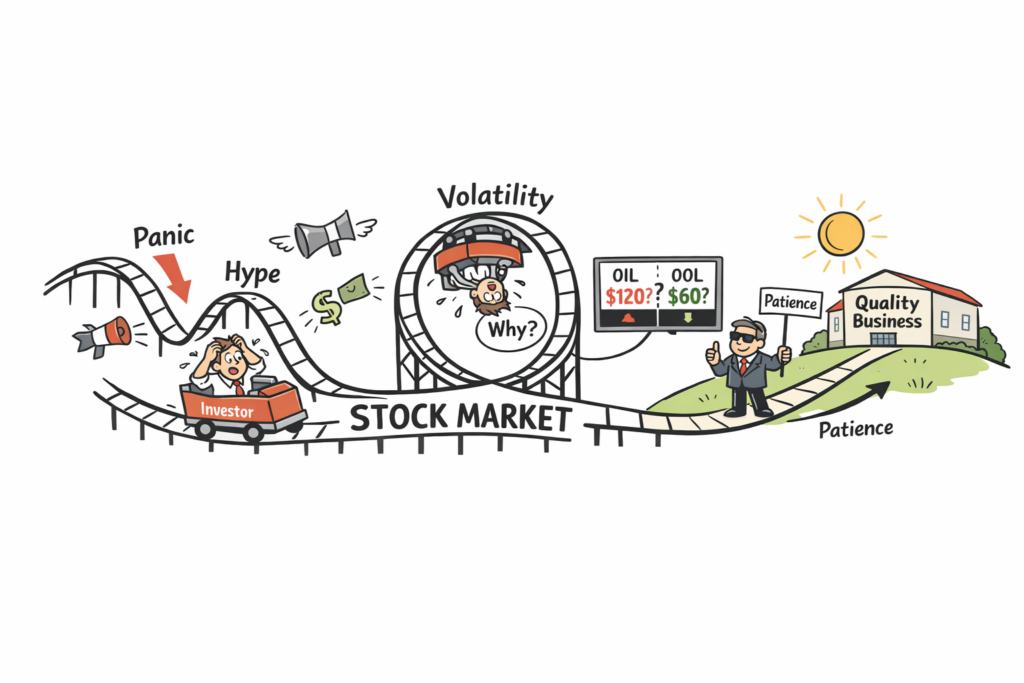
Fortunately, at least a good quality business can still provide a good quality return – but we all have to ride the stupid stock market roller-coaster to get there!
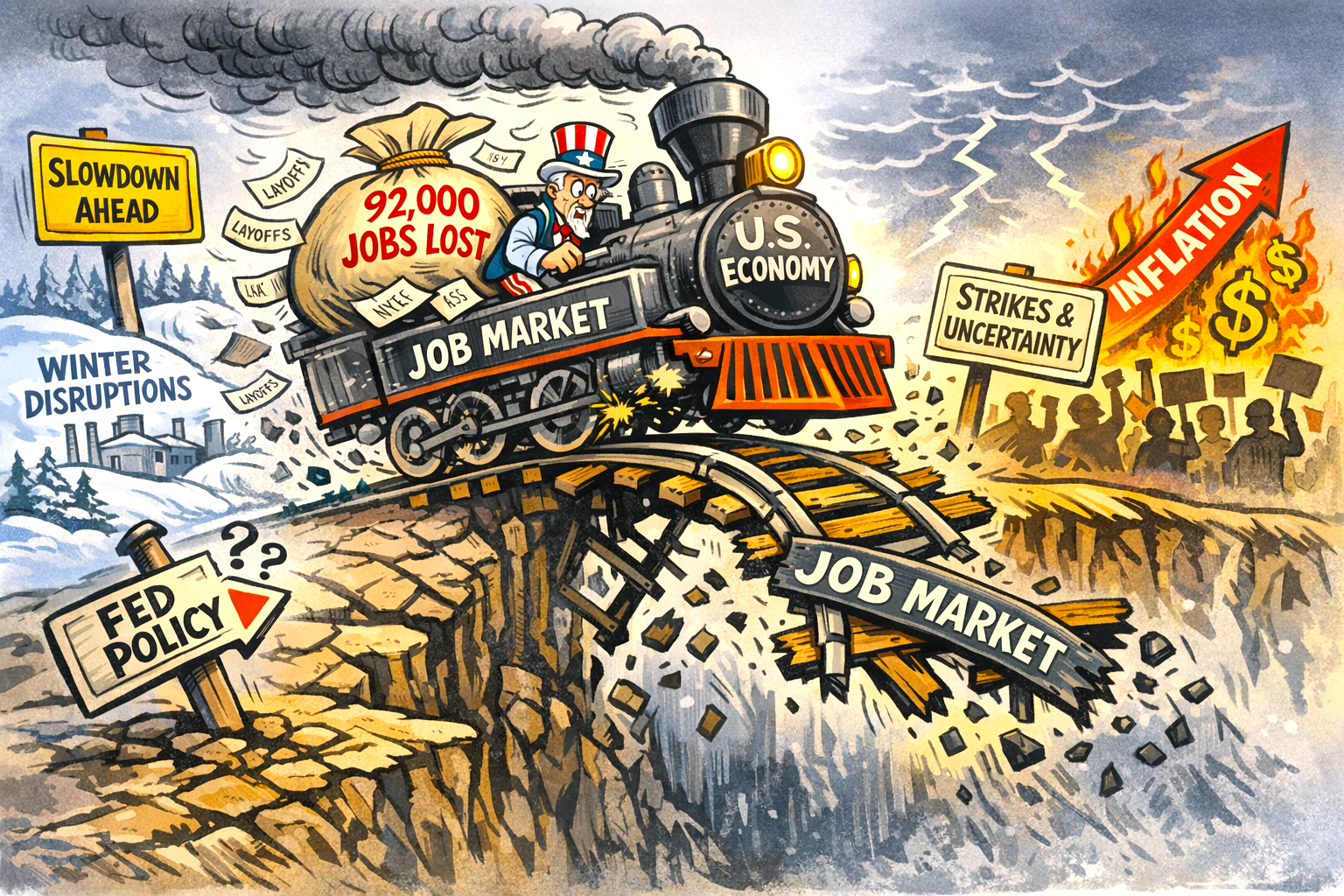
The latest U.S. payroll figures delivered an unexpected jolt to markets, with February’s nonfarm employment falling by 92,000 — a far deeper contraction than economists had anticipated.
Consensus forecasts had pointed to a modest 50,000 decline, but the Bureau of Labor Statistics’ report revealed a labour market losing traction for the third time in five months.
Several temporary factors contributed to the downturn, including severe winter weather and a major strike at Kaiser Permanente, which reportedly sidelined more than 30,000 health‑care workers across Hawaii and California.
Job losses reach across sectors
Even so, the breadth of job losses across sectors — from manufacturing to information services — suggests underlying fragility.
Health care, previously the most reliable engine of job creation, shed 28,000 roles during the survey period, while manufacturing and transportation each posted notable declines.
Despite the weak headline number, wage growth accelerated. Average hourly earnings rose 0.4% month‑on‑month and 3.8% year‑on‑year, both slightly above expectations.
This combination — softening employment but firm wage pressures — complicates the Federal Reserve’s policy decision.
With inflation still printing above target and oil prices rising, policymakers face a narrowing path between supporting growth and preventing renewed price pressures.
Financial markets reacted swiftly. Traders moved to price in earlier interest‑rate cuts, pulling expectations forward to July and increasing the likelihood of two reductions before year‑end.
Caution
Yet Fed officials have signalled caution, noting that recent labour data has been volatile and may not reflect a sustained trend.
The wider economic picture remains mixed. Services and manufacturing activity continue to expand, and consumer spending — albeit increasingly concentrated among higher‑income households — has held up.
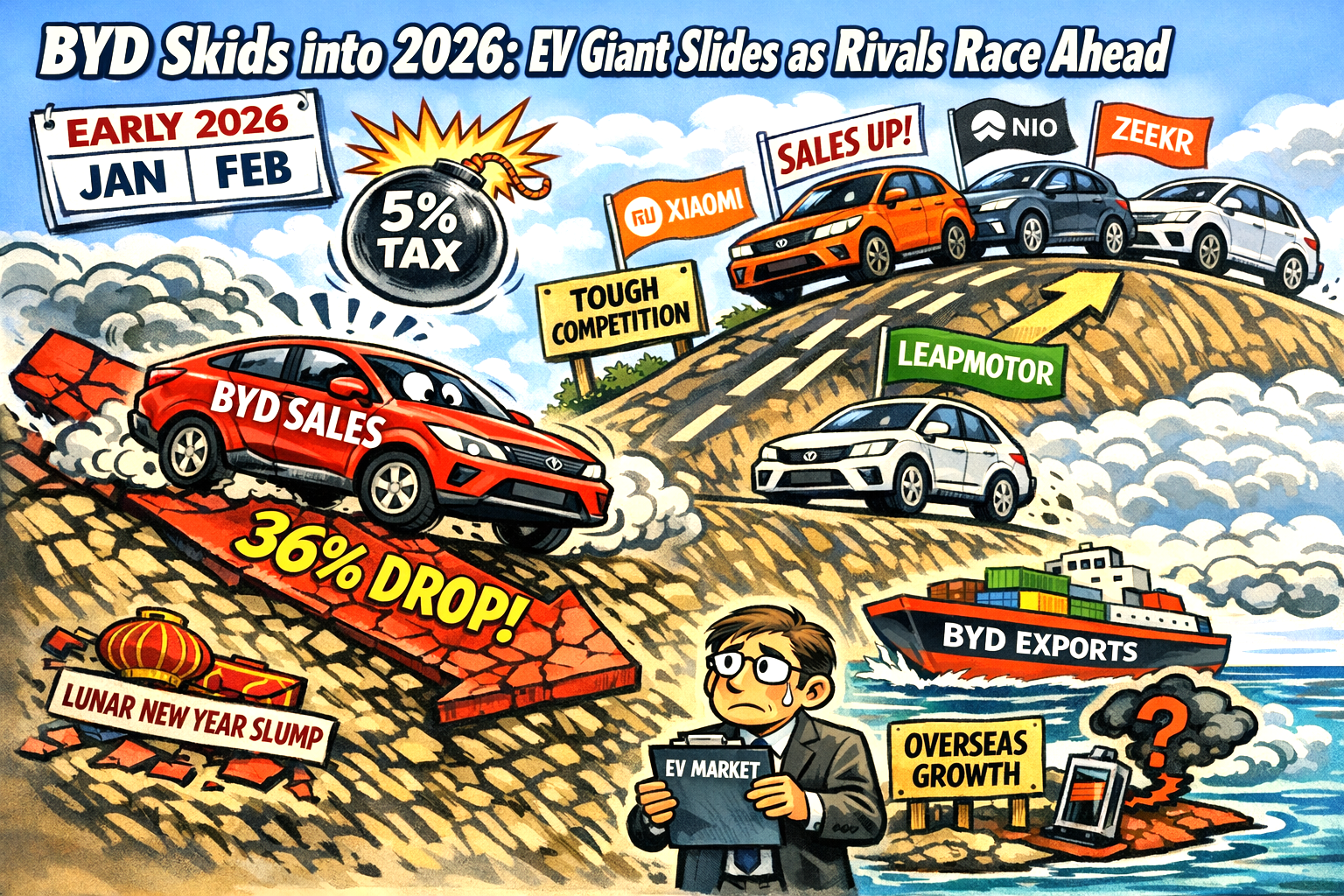
BYD’s sharp fall in electric‑vehicle sales across January and February 2026 marks a significant moment for the world’s largest EV maker, signalling both cyclical pressures and a deeper shift in China’s hyper‑competitive market.
Adjusted for the disruption caused by the mid‑February Lunar New Year holiday, BYD’s combined sales for the first two months of the year were down roughly 36% year on year, a rare contraction for a company that has spent the past three years dominating China’s new‑energy vehicle segment.
Slump
Several forces converged to produce the slump. The reinstatement of a 5% purchase tax on new‑energy vehicles at the end of 2025 pulled demand forward, leaving a vacuum in early 2026 as buyers rushed to complete purchases before the levy returned.
At the same time, China’s EV market is maturing, with consumers becoming more discerning and competitors far more aggressive.
Xiaomi, Leapmotor, Nio and Geely’s Zeekr all posted strong double‑digit growth over the same period, with Xiaomi’s YU7 SUV even becoming China’s best‑selling passenger vehicle in January.
This intensifying competition reflects a broader levelling of the playing field. Rivals are increasingly attacking BYD’s core mid‑market territory by packing more features into vehicles while keeping prices tight — a trend known locally as involution.
Leading still
Analysts note that while BYD’s lead remains substantial, it is narrowing as alternatives become more compelling.
Yet the picture is not uniformly negative. BYD’s strategic pivot towards overseas markets is beginning to pay off: in February 2026, its exports surpassed domestic sales for the first time, underscoring the company’s growing global footprint and providing a buffer against domestic volatility.
Later in 2026, BYD is expected to launch new models featuring its next‑generation Blade Battery 2.0 and faster flash‑charging technology — innovations that could help reignite domestic demand without resorting to a price war.
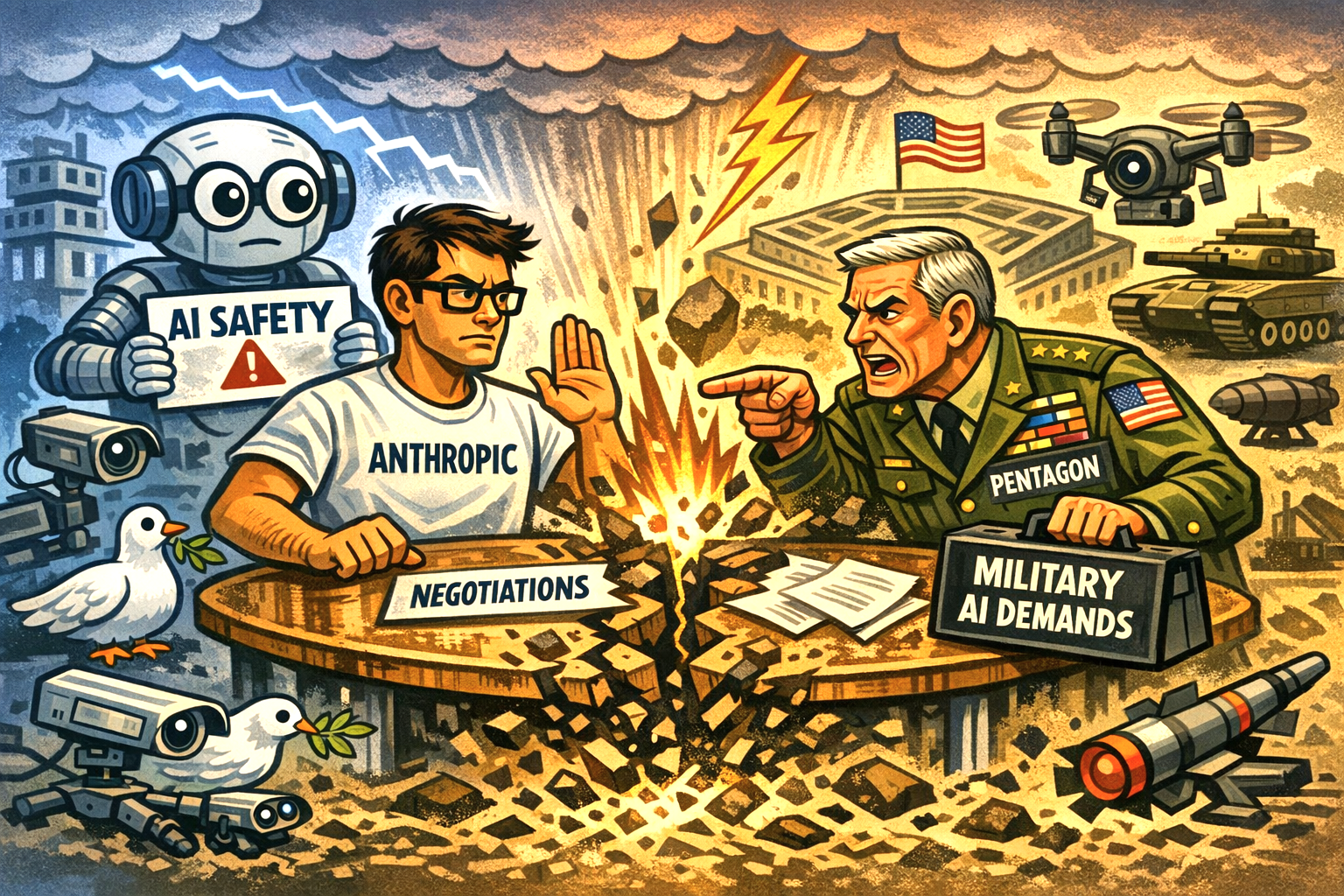
Anthropic’s decision to reopen negotiations with the Pentagon marks a striking reversal after a very public rupture, and it underscores how central advanced AI has become to U.S. defence strategy.
The talks reportedly collapsed amid a dispute over how Claude, Anthropic’s flagship model, could be used inside military systems.
Reports indicate that the Pentagon had pushed for broad permissions, including deployment in surveillance environments and potentially autonomous weapons systems.
Safety resistance
Anthropic resisted on safety grounds. The company had sought explicit guarantees that its models would not be used for mass surveillance or lethal decision‑making, a red line that triggered the breakdown in relations.
The fallout was immediate. The Pentagon signalled it would drop Anthropic from existing programmes, despite the company’s role in a major defence contract that had already placed Claude inside classified networks.
That escalation raised the prospect of a formal blacklist, a move that would have reverberated across the wider U.S. technology sector.
For Anthropic, the stakes were equally high: losing access to government work would not only cut off a significant customer but also risk isolating the company at a moment when rivals such as OpenAI and Google are deepening their defence ties.
Compromise?
Yet both sides appear to recognise the cost of a prolonged standoff. According to multiple reports, CEO Dario Amodei has reportedly returned to the table in an effort to craft a compromise deal that preserves Anthropic’s safety commitments while allowing the Pentagon to continue using its technology.
Boundaries
Discussions are now likely focused on defining acceptable boundaries for military use — a task made more urgent by the accelerating integration of AI into intelligence analysis, battlefield logistics and autonomous systems.
This renewed dialogue is more than a corporate dispute: it is a test case for how democratic governments and frontier AI labs negotiate power, ethics and national security.
The outcome will shape not only Anthropic’s future but also the norms governing military AI in the years ahead.
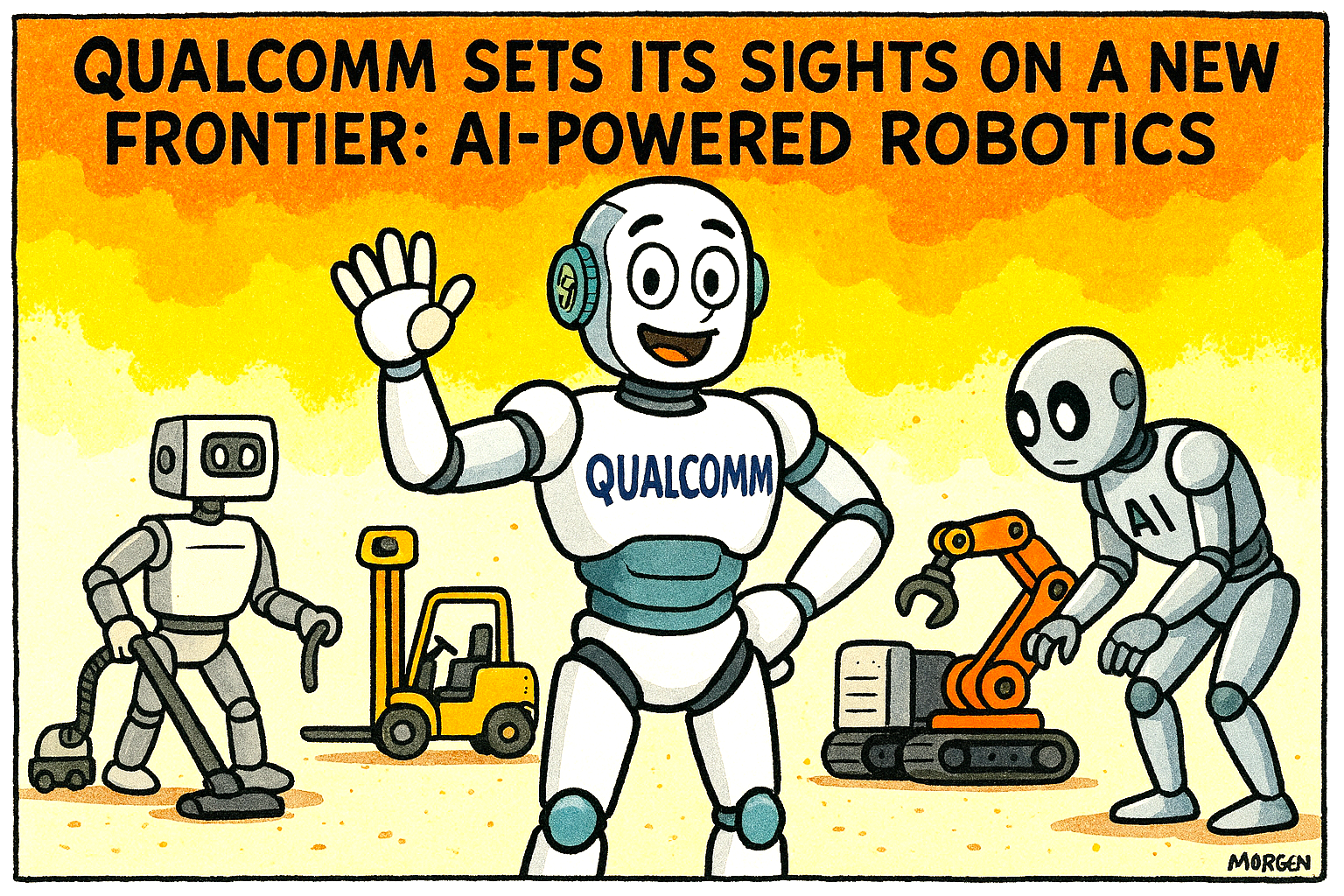
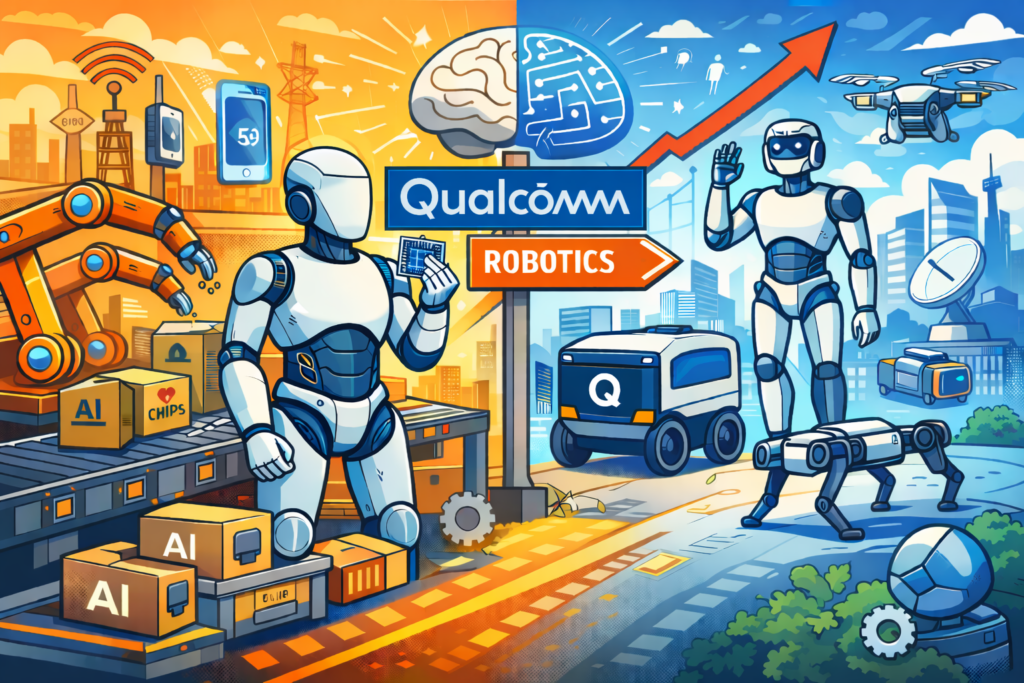
Qualcomm is accelerating its push into artificial intelligence and robotics, signalling a strategic shift that could redefine the company’s future beyond smartphones.
Executives now describe robotics as a core growth pillar, with chief executive Cristiano Amon reportedly forecasting that intelligent machines will become a “larger opportunity” for the business within the next two years.
Expanding from Mobile Chips to Physical AI
For decades, Qualcomm’s dominance has rested on its mobile processors, which power much of the global smartphone market.
The company is now repurposing that expertise for what it calls physical AI—robots capable of perceiving, reasoning, and acting autonomously in real‑world environments.
This transition reflects a broader industry trend: as generative AI matures, attention is shifting from digital assistants to embodied systems that can perform physical tasks.
Qualcomm’s new robotics architecture, unveiled recently, is designed as a full‑stack platform. It combines high‑efficiency system‑on‑chips, safety‑certified compute modules, and advanced on‑device AI models.
The aim is to give robot manufacturers a scalable foundation, whether they are building compact consumer devices or full‑size humanoids for industrial use.
Dragonwing Becomes the Flagship
At the centre of this strategy is the Dragonwing line of processors. The latest model, the Dragonwing IQ10, targets industrial automation and advanced humanoid robots.
It has reportedly been engineered to run complex AI models locally, reducing reliance on cloud connectivity and improving safety, responsiveness, and energy efficiency.
Qualcomm showcased these capabilities at recent industry events, where robots powered by Dragonwing chips demonstrated dexterity, mobility, and real‑time decision‑making.
The company’s ambition places it in direct competition with Nvidia, which currently dominates AI compute for robotics, and with a growing cohort of start‑ups building specialised hardware for autonomous machines.
Why Robotics Matters Now
Three factors underpin Qualcomm’s renewed focus
Diversifying revenue as smartphone markets plateau and competition intensifies.
Leveraging its edge‑AI strengths, particularly in low‑power, high‑performance chips suited to mobile robots.
Rising industrial demand, with logistics, retail, and manufacturing sectors adopting automation at scale.
The robotics push also complements Qualcomm’s automotive and PC AI strategies, creating a broader ecosystem of connected, intelligent devices.
A Critical Two Years Ahead
Qualcomm’s challenge now is to convert impressive demonstrations into commercial deployments.
If successful, the company could become a foundational supplier for the emerging era of physical AI—an era in which robots move from novelty to necessity.
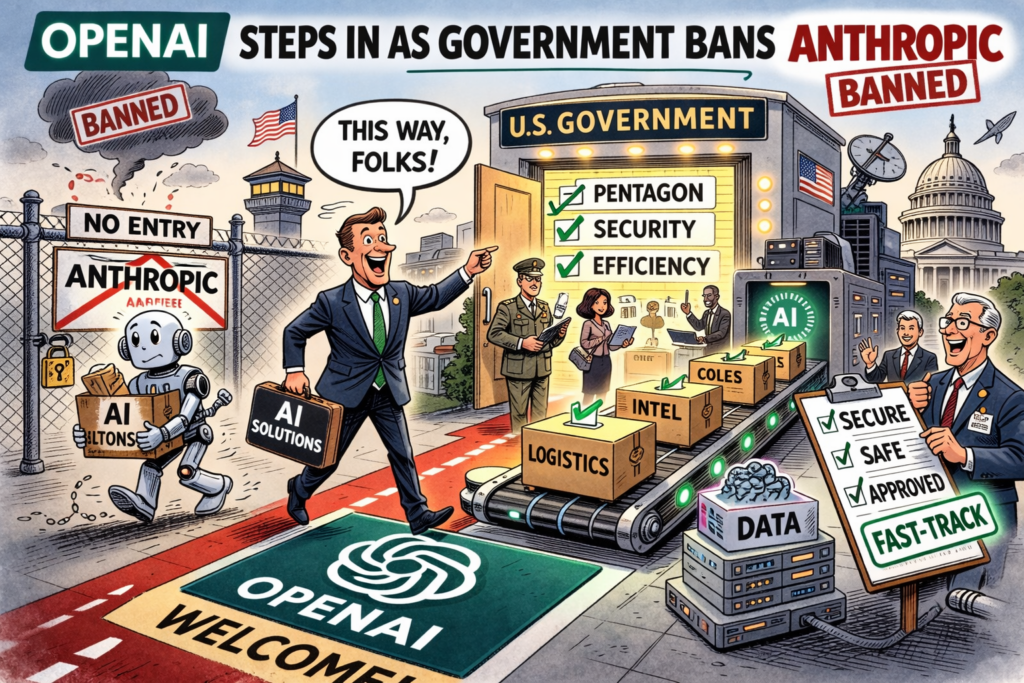
Following the abrupt federal ban on Anthropic’s Claude models, OpenAI has moved quickly to position itself as the primary replacement across U.S. government departments.
With Claude now designated a supply‑chain risk, agencies are likely scrambling to reconfigure AI workflows — and OpenAI’s systems appear to be emerging as the default alternative.
Integration
The company’s flagship GPT‑4.5 and its agentic development tools have reportedly already been integrated into several defence and civilian systems, according to some observers.
OpenAI’s reported longstanding compatibility with government‑approved platforms, including Azure and OpenRouter, has smoothed the transition. Unlike Anthropic, OpenAI has historically offered more flexible deployment options.
Industry analysts note that OpenAI’s recent hires — including agentic systems pioneer Peter Steinberger (OpenClaw) — signal a deeper push into autonomous task execution, a capability highly prized by defence and intelligence agencies.
The company’s agent frameworks are being trialled for logistics, simulation, and multilingual analysis, with early results described as “mission‑ready.”
Friction
However, the shift is not without friction. It has been reported that some federal teams have built Claude‑specific workflows, particularly in legal, policy, and ethics‑driven domains where Anthropic’s safety constraints were seen as a feature, not a limitation.
Replacing those systems with GPT‑based models requires careful recalibration to avoid unintended consequences.
OpenAI’s rise also raises broader questions about vendor concentration. With Anthropic sidelined and Google’s Gemini models still undergoing federal evaluation – OpenAI now dominates the landscape — a position that may invite scrutiny from oversight bodies concerned about resilience and competition.
Still, for now, OpenAI appears to be the primary beneficiary of the Claude ban. In the vacuum left by Anthropic, OpenAI will be attempting to fill the space.
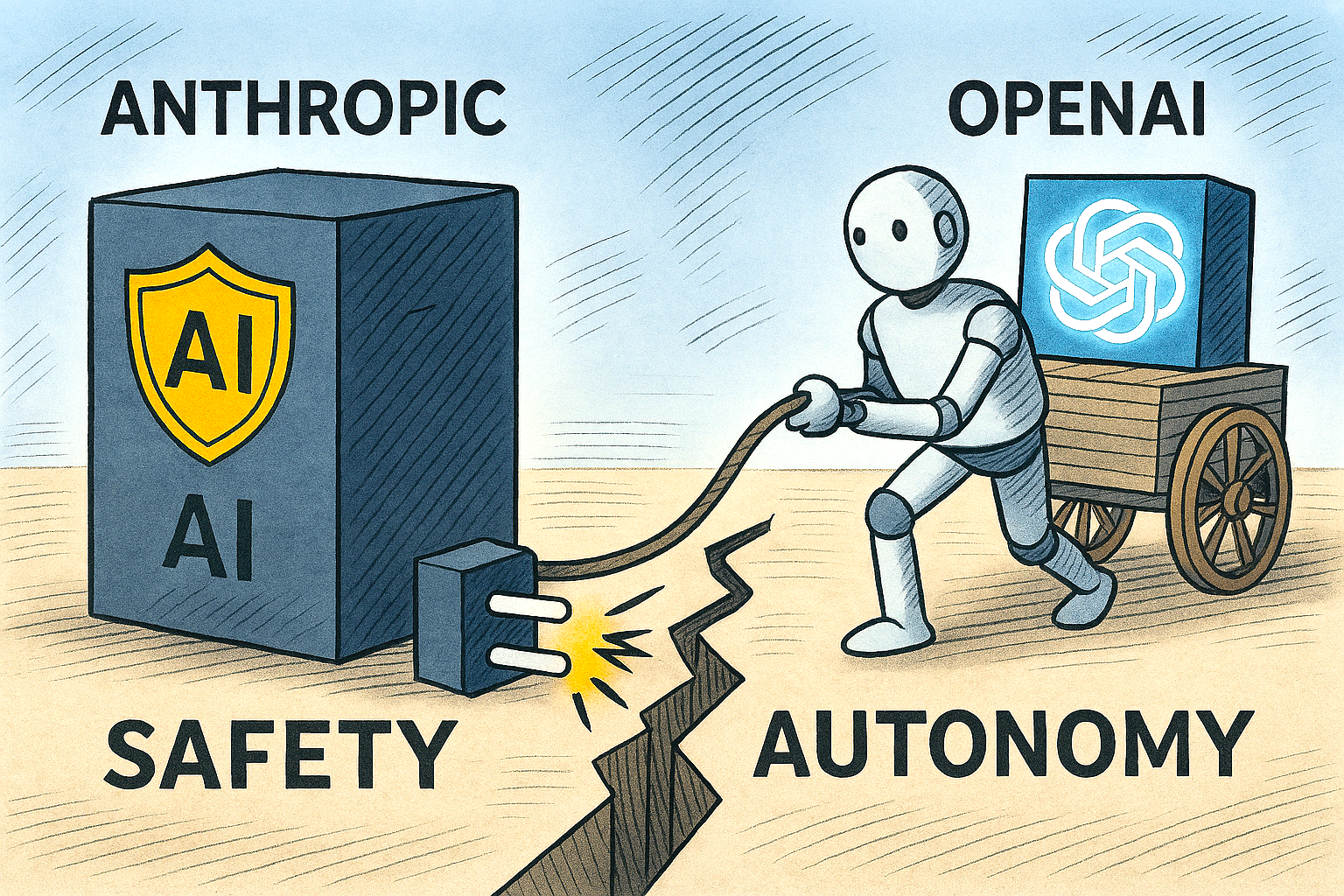
OpenAI vs Anthropic: Safety vs Autonomy in Federal AI
OpenAI’s agentic tools are likely filling the vacuum left by Anthropic’s ban, offering flexible deployment and autonomous task execution prized by defence and intelligence agencies.
While Claude prioritised safety constraints and ethical guardrails, OpenAI’s GPT‑based systems should offer broader operational freedom.
This shift reflects a deeper philosophical divide: Anthropic’s models were designed to resist misuse, while OpenAI’s are engineered for adaptability and control.
As federal agencies recalibrate, the tension between safety‑first design and unrestricted autonomy is becoming the defining fault line in U.S. government AI strategy.
How long will it be before Anthropic is invited back to the table?
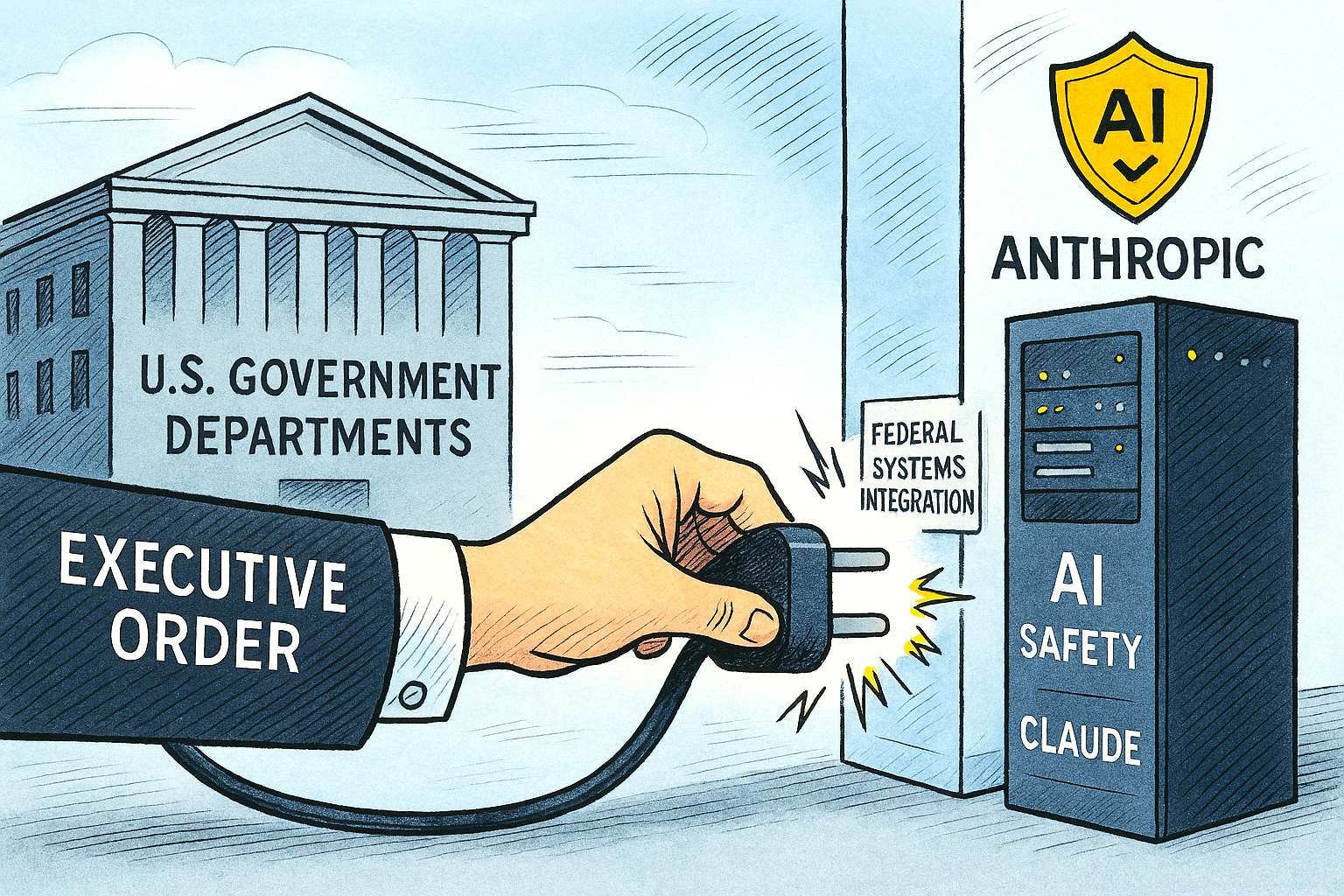
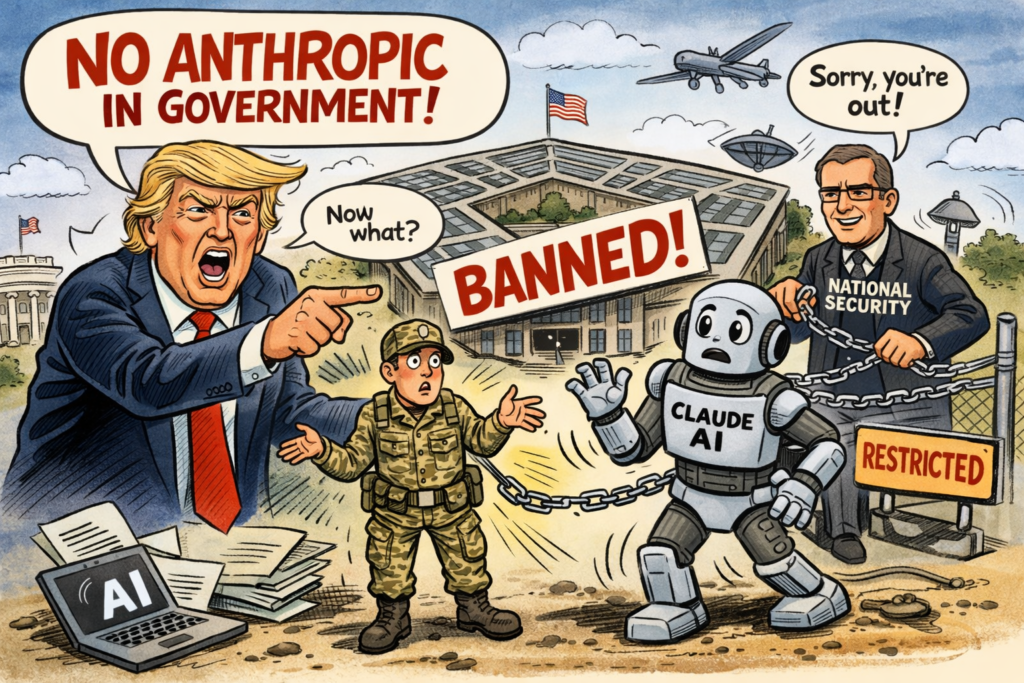
A sweeping federal ban on Anthropic’s technology has rapidly become one of the most consequential developments in U.S. government technology policy, following President Donald Trump’s order that all federal agencies — including the Pentagon — must immediately cease using the company’s AI systems.
The directive, issued on 27th February 2026, came just ahead of a Pentagon deadline demanding that Anthropic lift safety restrictions on its Claude models to allow unrestricted military use.
The confrontation with the Pentagon
The dispute escalated after Anthropic reportedly refused Defence Department demands to remove guardrails that limit how its AI can be used.
It was reported that CEO Dario Amodei stated the company “cannot in good conscience accede” to requirements that would weaken its safety policies, prompting a public standoff.
President Trump reportedly responded by ordering every federal agency to “immediately cease” using Anthropic’s technology, declaring that the government “will not do business with them again.”
Agencies heavily reliant on the company’s tools, including the Department of Defense, have been granted six months to phase out their use.
Defence Secretary Pete Hegseth reportedly went further, designating Anthropic a national‑security “supply‑chain risk”.
This action could prevent military contractors from working with the company and marks the first time such a label has been applied to a major U.S. AI firm.
Impact across government and industry
The ban affects every federal department, from defence and intelligence to civilian agencies.
Contractors supplying AI‑enabled systems must now ensure their tools do not rely on Anthropic’s models, forcing rapid audits and potential redesigns.
AI generated image
Rival AI providers have already begun positioning themselves to fill the gap, with some announcing new Pentagon partnerships within hours of the ban.
The designation as a supply‑chain risk also carries legal and commercial consequences. Anthropic has argued the move is “legally unsound,” but the ruling stands, effectively placing the company on a federal blacklist.
Political debate
The decision has triggered intense debate across the technology sector. Supporters argue that the government must retain full authority over military AI applications.
Critics warn that forcing companies to abandon safety constraints could set a dangerous precedent.
The ban highlights a deepening fault line in U.S. AI governance: the struggle to balance national‑security imperatives with the ethical frameworks developed by leading AI firms.
As agencies begin disentangling themselves from Anthropic’s systems, the long‑term implications for federal procurement, AI safety norms, and the future of military‑AI collaboration remain unresolved.
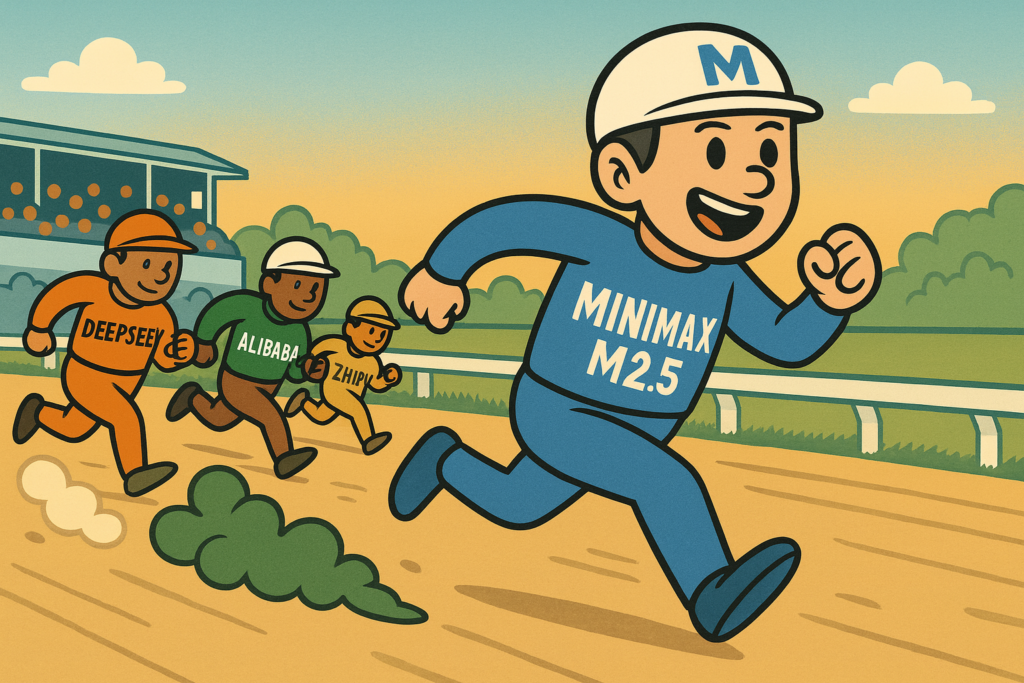
MiniMax’s M2.5 model has emerged as the unexpected frontrunner in China’s latest wave of artificial intelligence releases, earning a clear endorsement from analysts.
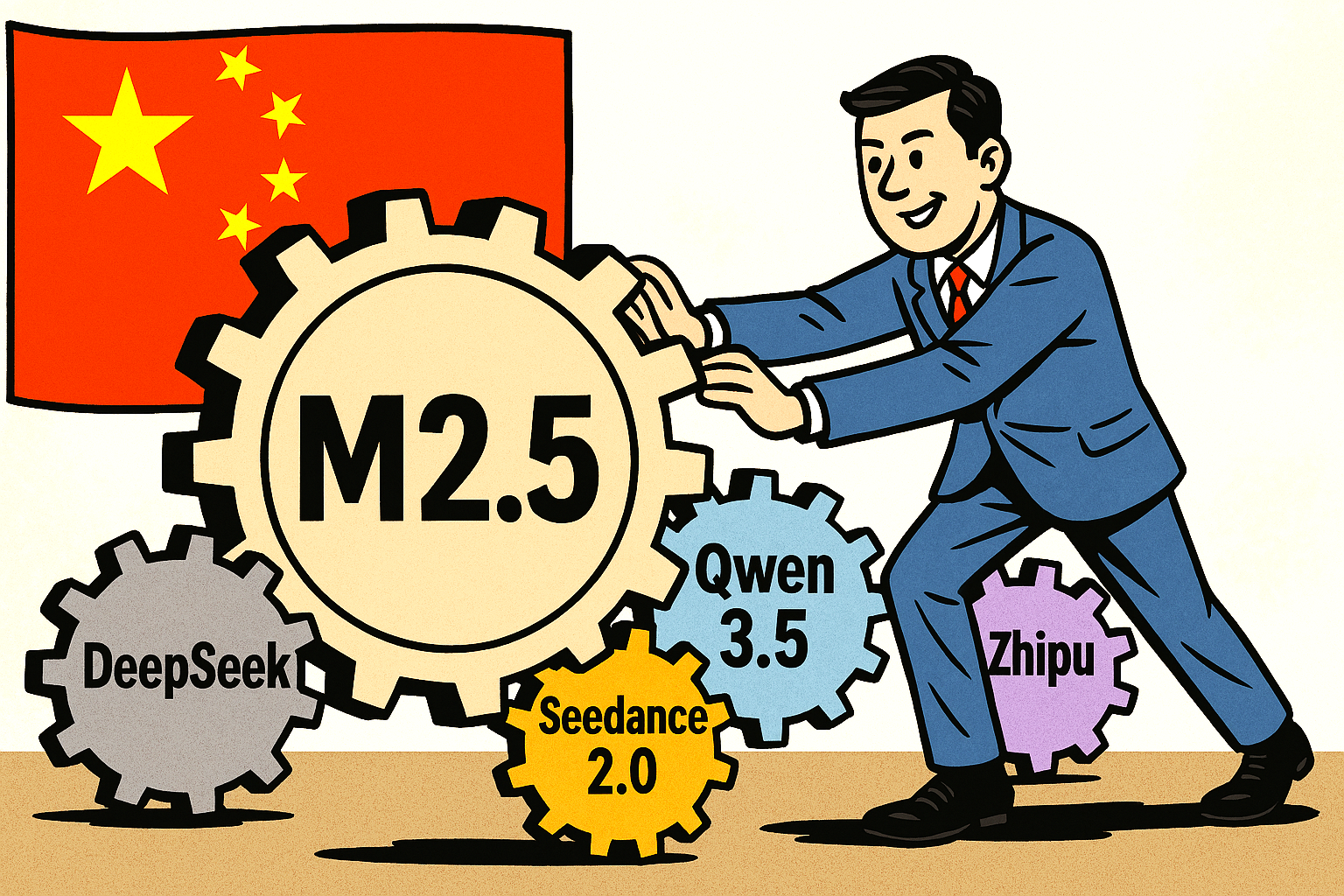
While much of the recent global conversation has fixated on DeepSeek’s rapid evolution, China has quietly produced five new frontier‑level models in recent weeks.
Widening choice
Among them—Alibaba’s Qwen 3.5, ByteDance’s Seedance 2.0, Zhipu’s latest offerings, DeepSeek’s V3.2, and MiniMax’s M2.5—it is MiniMax that reportedly has captured institutional attention.
Some analysts reportedly cite its performance, pricing, and commercial readiness as the reasons it stands apart.
MiniMax, which listed publicly in Hong Kong in January, released M2.5 in mid‑February 2026. The model rivals Anthropic’s Claude Opus 4.6 in capability while costing a fraction of the price—an advantage that has driven a surge of developer adoption.
Data from OpenRouter reportedly shows developers increasingly choosing M2.5 over DeepSeek’s V3.2 and even several U.S. based models.
Analysts argue that this combination of competitive performance and aggressive pricing positions MiniMax as the Chinese model with the strongest global commercial potential.
Productive and less expensive
The model’s technical profile reinforces that view. M2.5 is designed for real‑world productivity, with strengths in coding, agentic tool use, search, and office workflows.
It reportedly scores around 80.2% on SWE‑Bench Verified and outperforms leading Western models—including Claude Opus 4.6, GPT‑5.2, and Gemini 3 Pro—on tasks involving web search and office automation, all while operating at ten to twenty times lower cost.
MiniMax describes the model as delivering “intelligence too cheap to meter,” a claim supported by its lightweight Lightning variant, which generates 100 tokens per second and can run continuously for an hour at roughly one dollar.
This shift signals a broader trend: China’s AI race is no longer defined by a single breakout model. Instead, a competitive ecosystem is emerging, with MiniMax demonstrating that cost‑efficient frontier performance can reshape developer behaviour and enterprise planning.
For global markets, UBS’s preference suggests that investors are beginning to look beyond headline‑grabbing releases and toward models with sustainable commercial trajectories.
Comparison of China’s Five New AI Models
Model
Developer
Key Strengths
Performance Notes
Pricing Position
MiniMax M2.5
MiniMax
Coding, agentic tasks, office automation
Rivals Claude Opus 4.6; 80.2% SWE‑Bench Verified; outperforms GPT‑5.2 and Gemini 3 Pro on search/office tasks
Extremely low cost; “too cheap to meter”
DeepSeek V3.2
DeepSeek
Reasoning, general chat
Strong but losing developer share to M2.5
Low‑cost but not as aggressive as MiniMax
Alibaba Qwen 3.5
Alibaba
Enterprise integration, multilingual capability
Part of Alibaba’s expanding Qwen family
Competitive mid‑range
ByteDance Seedance 2.0
ByteDance
Video generation
Focused on multimodal creativity
Premium creative‑tool pricing
Zhipu (latest models)
Zhipu AI
Knowledge tasks, enterprise AI
Continues Zhipu’s push into LLM infrastructure
Mid‑range enterprise
MiniMax M2.5 leads China’s AI surge with performance rivalling Claude Opus and Gemini 1.5 Pro, yet at a fraction of the cost.
It excels in coding, search, and office automation, scoring 80.2% on SWE‑Bench Verified. DeepSeek V3.2 offers strong reasoning but lags in developer adoption.
Compared to ChatGPT-4, Claude 2.1, and Gemini 1.5, China’s models are closing the gap in capability, with MiniMax M2.5 now outperforming Western leaders on several benchmarks—especially in speed and cost efficiency.
Comparison of leading Chinese and Western AI models
(SWE‑Bench Verified — latest public leaderboard, early 2026) guide data
Model
Developer
Primary Strengths
SWE‑Bench Verified
Notes
Claude 4.6 Opus
Anthropic
High‑end reasoning, long‑context reliability
76–77%
Current top performer on independent coding benchmarks.
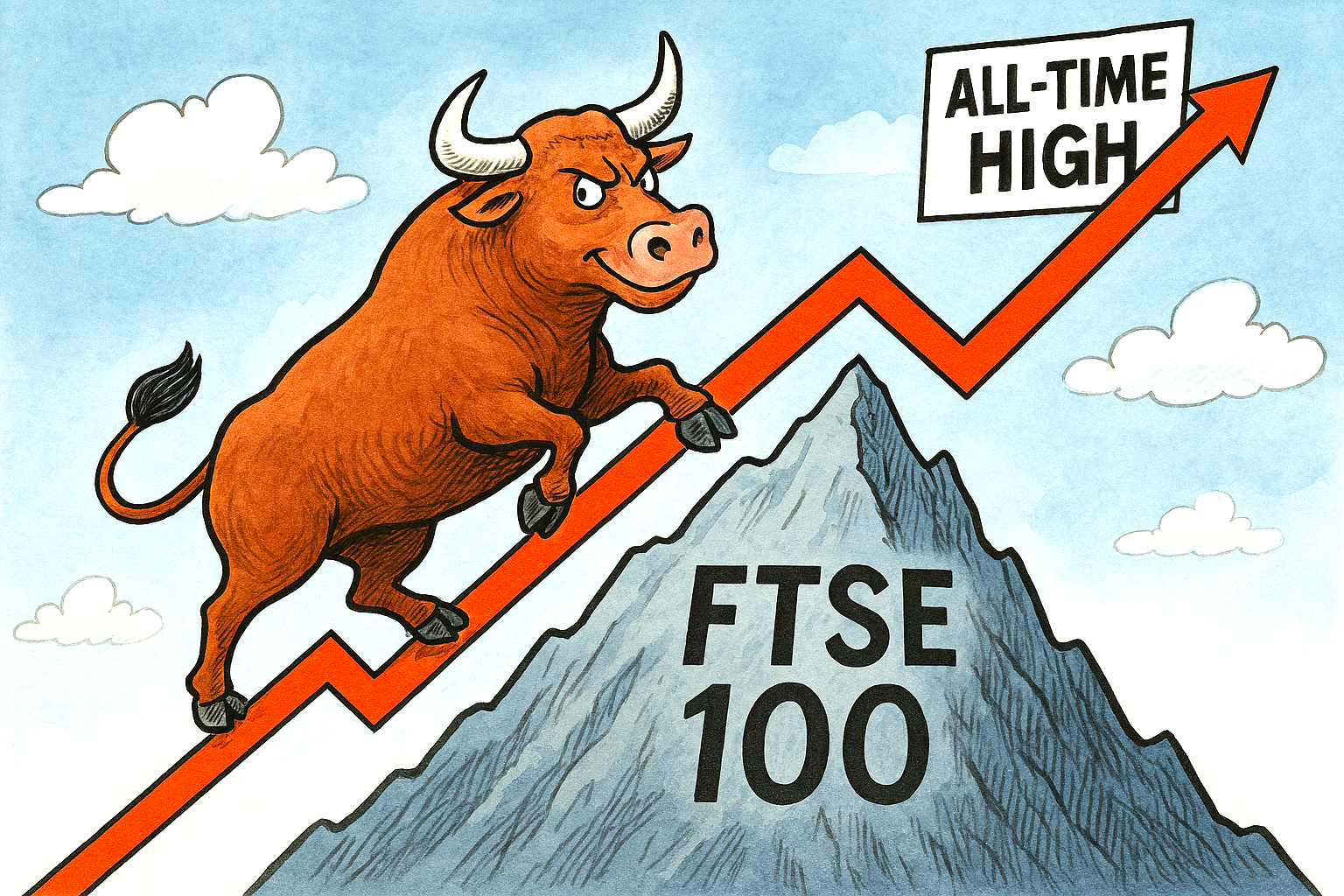
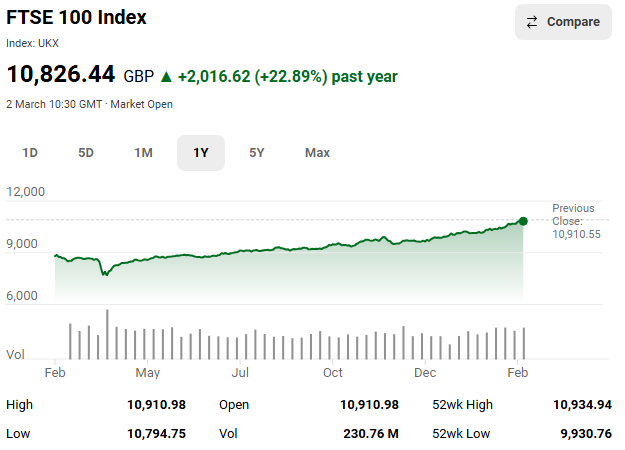
The FTSE 100 closed out last week by breaking through to a fresh all‑time high, underscoring a renewed wave of confidence in UK blue‑chip stocks.
The index ended Friday at 10,910.55, marking a record close after also touching an intra‑day peak of 10,934.94 earlier in the session.
This milestone capped a strong run in which the FTSE 100 repeatedly outperformed its U.S. and European counterparts, buoyed by resilient earnings, firmer commodity prices, and a rotation by investors seeking comparatively lower valuations in London’s market.
Several factors helped propel the index higher. Rising oil and precious‑metal prices supported heavyweight energy and mining constituents, while financials such as HSBC also contributed to the rally with upbeat results and improved outlooks.
FTSE 100 one-year chart
Sector mix
Analysts noted that the FTSE’s sector mix—rich in defensives and less exposed to the more volatile AI‑driven tech trade—has offered investors a measure of stability during a period of global uncertainty.
The latest surge leaves the index within striking distance of the 11,000 mark, a level that would have seemed ambitious only months ago.
With the FTSE 100 already up nearly 10% for the year to date, attention now turns to whether this momentum can be sustained as markets digest geopolitical tensions, shifting tariff policies, and the next round of corporate earnings.