

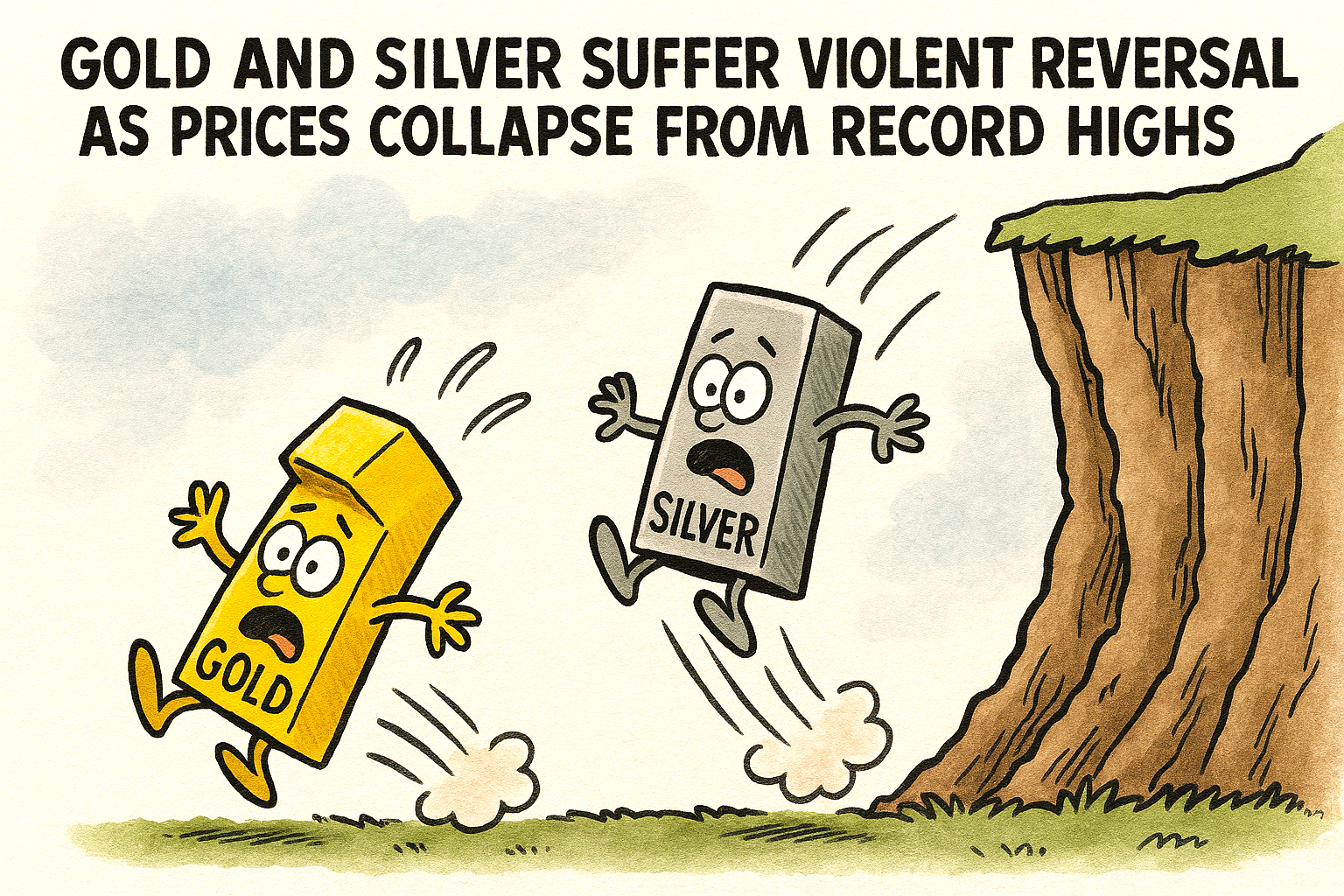
The precious metals market has endured one of its most dramatic reversals in modern trading history, with gold and silver plunging from last week’s extraordinary peaks to deep intraday lows.
Gold, which surged to an unprecedented $5,600 per ounce, fell back to around $4,500, while silver has retreated from highs near $120 per ounce to roughly $74 in intraday trading.
The scale and speed of the correction have rattled traders and forced a reassessment of what drove the rally — and what comes next.
Why the collapse happened
The initial surge in both metals was fuelled by a potent mix of safe‑haven demand, speculation, and expectations of looser U.S. monetary policy and new Federal Reserve chair.
As gold broke above $4,500 for the first time in late December, speculative interest intensified, pushing prices into what now looks like a classic blow‑off top.
But the reversal began when sentiment shifted abruptly. A stronger U.S. dollar, firmer Treasury yields, and a wave of profit‑taking created the first cracks.
Once prices started to slip, leveraged positions in futures markets were forced to unwind. This triggered cascading sell orders, accelerating the decline.
Silver, which had risen even more aggressively than gold, suffered one of its steepest percentage drops since 1980.
How the sell‑off unfolded
The correction was not a slow bleed but a violent, liquidity‑draining plunge. Gold fell more than $1,000 per ounce from peak to trough, while silver shed $40–$45.
These moves were amplified by algorithmic trading systems that flipped from buying momentum to selling weakness as volatility spiked.
The fact that gold briefly and recently traded below $4,800 and silver below $100 before extending losses to their intraday lows shows how thin market depth became during the heaviest selling.
Even long‑term holders, typically slow to react, contributed to the pressure as stop‑loss levels were triggered.
What happens next
Despite the severity of the drop, the fundamental drivers that supported the earlier rally have not disappeared.
Concerns over global debt levels, geopolitical instability, and central bank diversification into gold remain intact. However, the market must now digest the excesses of the speculative surge.
In the short term, volatility is likely to remain elevated. A stabilisation phase — potentially lasting weeks — may be needed before a clearer trend emerges.
If the dollar strengthens further or yields continue rising, metals could retest their recent lows. Conversely, any signs of economic softening or renewed policy easing could attract dip‑buyers back into the market.
For now, the message is clear: even in a bull market, precious metals can still deliver brutal corrections — and timing remains everything.
Note: Friday to Monday (30th January to 2nd February 2026)
And… watch for the rebound.