

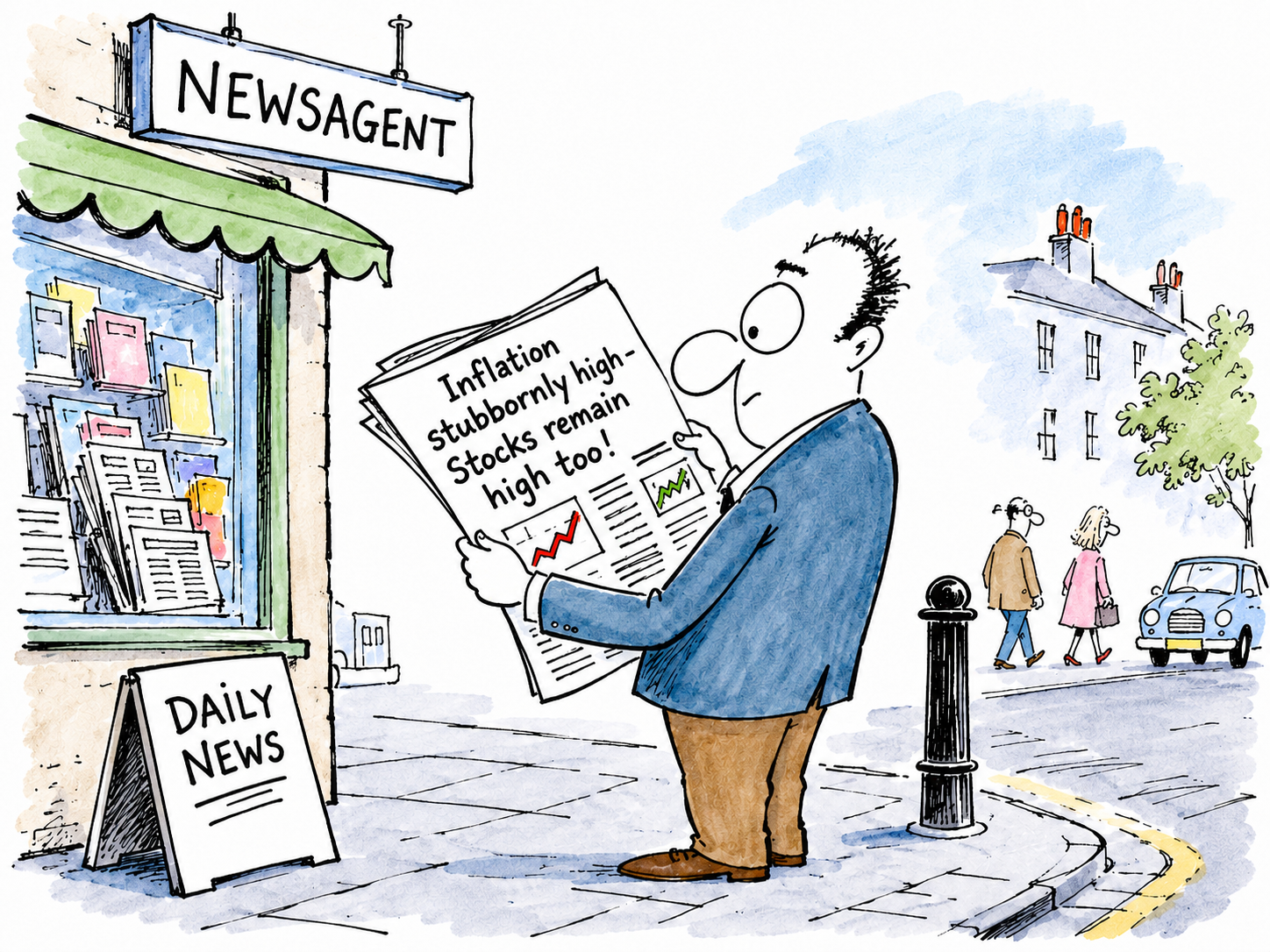
U.S. Inflation Remains Stubbornly High

U.S. inflation is sticky

Fresh U.S. inflation figures released on 26th August have delivered an unwelcome reminder that the battle against rising prices is far from over.

The Federal Reserve’s preferred measure, the Personal Consumption Expenditures (PCE) price index, rose 3.7% in July compared with a year earlier, unchanged from June 2026 and above economists’ 3.6% forecast.

Core PCE, which strips out volatile food and energy costs, also remained stubborn at 3.3%, while prices increased 0.2% during July.

Above target of 2%

The figures leave inflation well above the Fed’s 2% target and could complicate expectations for interest-rate cuts. Markets have even increased the possibility of another rate rise later this year.

There was some encouragement elsewhere: personal income increased 0.4% in July 2026, while real consumer spending was broadly flat.

For the Fed, however, the message is clear: inflation is proving sticky, and cutting rates too quickly could risk reigniting price pressures.
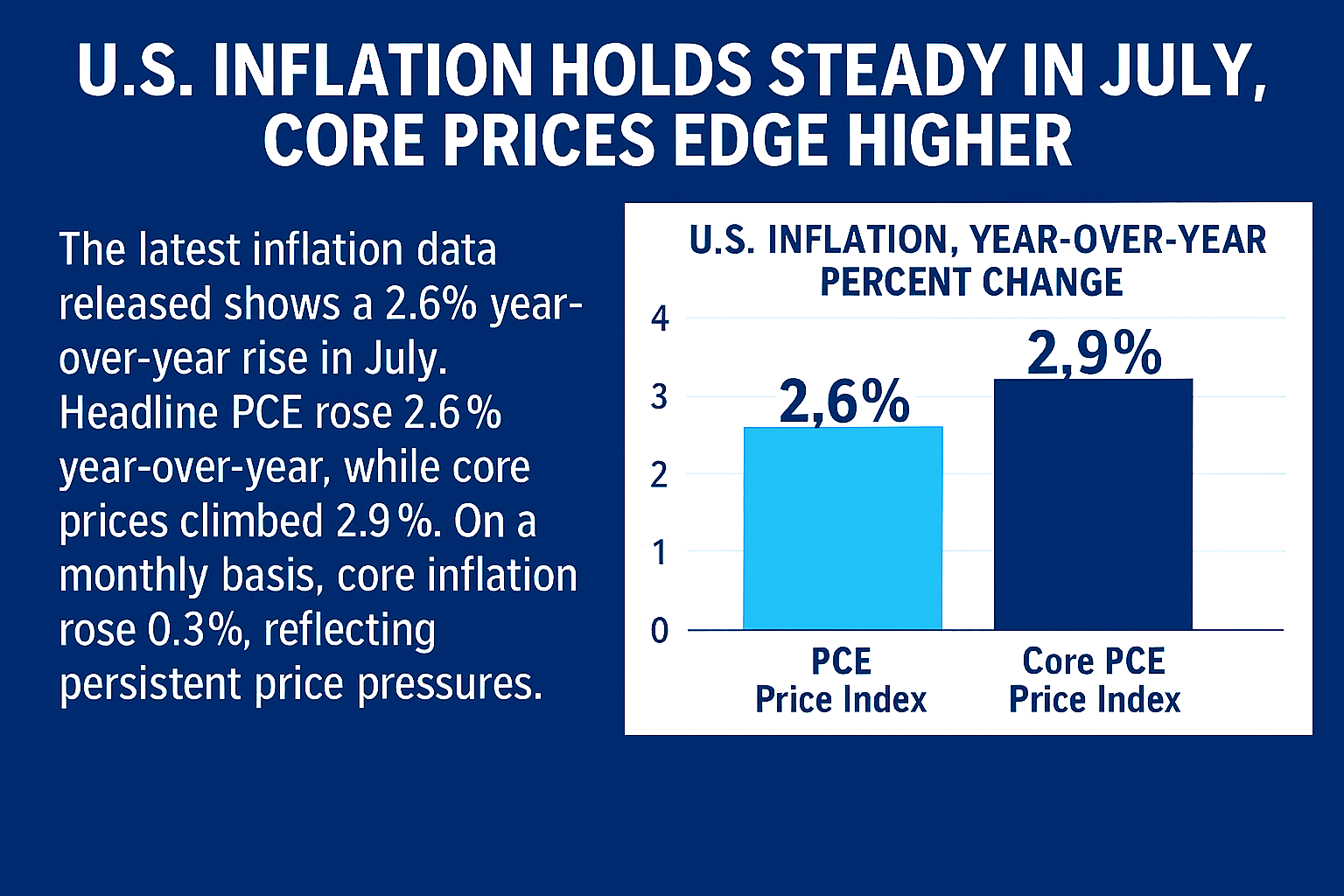
U.S. inflation holds steady in July 2025 but Core Inflation edges higher

U.S. Inflation data

The latest inflation data for the month of July 2025 shows a mixed picture for the U.S. economy, as price pressures remain persistent despite signs of cooling in some sectors.

According to the Bureau of Economic Analysis, the headline Personal Consumption Expenditures (PCE) Price Index rose 2.6% year-over-year, unchanged from June, while the core PCE index—which excludes volatile food and energy costs—ticked up to 2.9%, marking its highest annual rate since February.

On a monthly basis, core prices increased 0.3%, in line with expectations, while consumer spending rose 0.5%, suggesting households are still resilient despite elevated costs. Personal income also climbed 0.4%, reinforcing the narrative of steady wage growth.

The Federal Reserve, which uses the PCE index as its preferred inflation gauge, faces a delicate balancing act.

With inflation still above its 2% target and labor market data showing signs of softening, markets are increasingly betting on a rate cut at the Fed’s September meeting.

Fed Chair Jerome Powell, speaking at Jackson Hole, reportedly acknowledged the risks to employment but maintained a cautious tone on policy shifts.

Investors and traders alike now see an 80% chance of a quarter-point cut, keeping all eyes on upcoming jobs data.