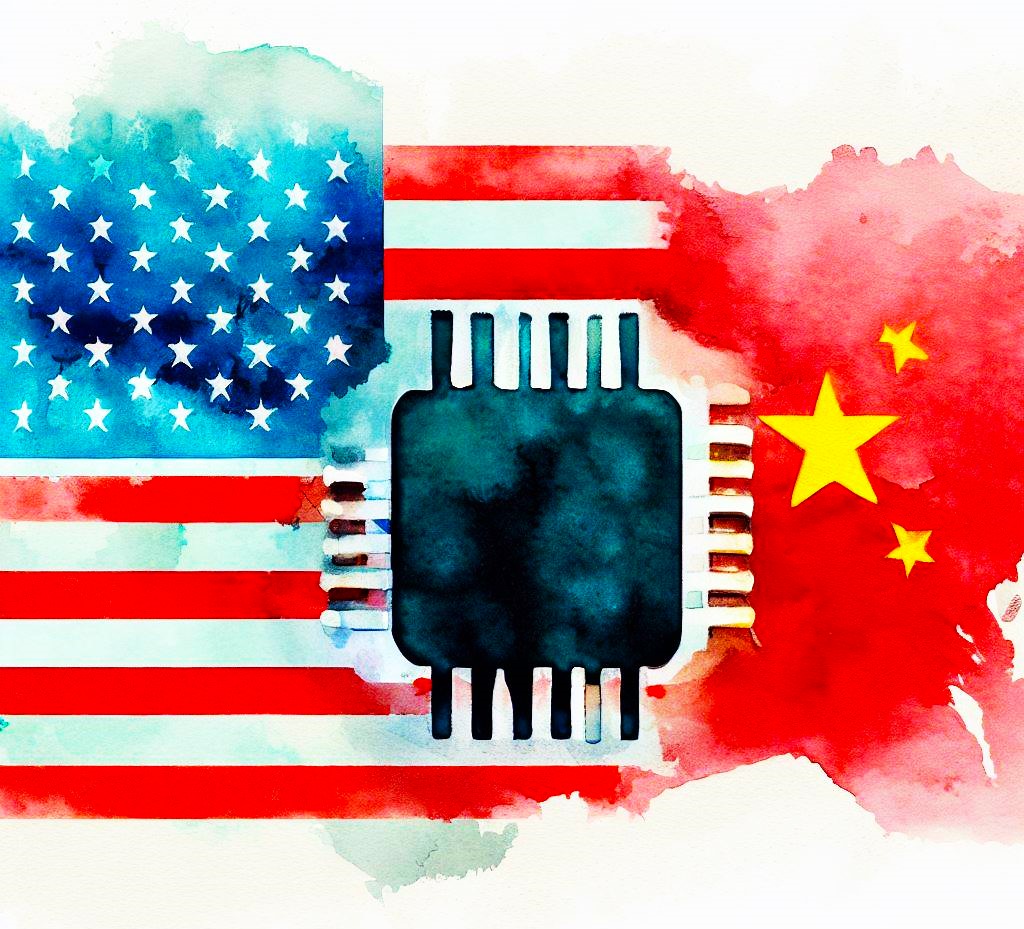
China has reportedly prohibited the use of U.S. processors from both AMD and Intel in government computers and servers. The directive is designed to encourage the use of domestic alternatives.
Chinese government agencies are now required to choose ‘safe and reliable’ domestic alternatives for these chips. The sanctioned list features processors from Huawei and the state supported firm Phytium, both of which face bans in the U.S.
In addition to processors, China is now also restricting Microsoft Windows on government devices, opting instead for domestically produced operating systems.
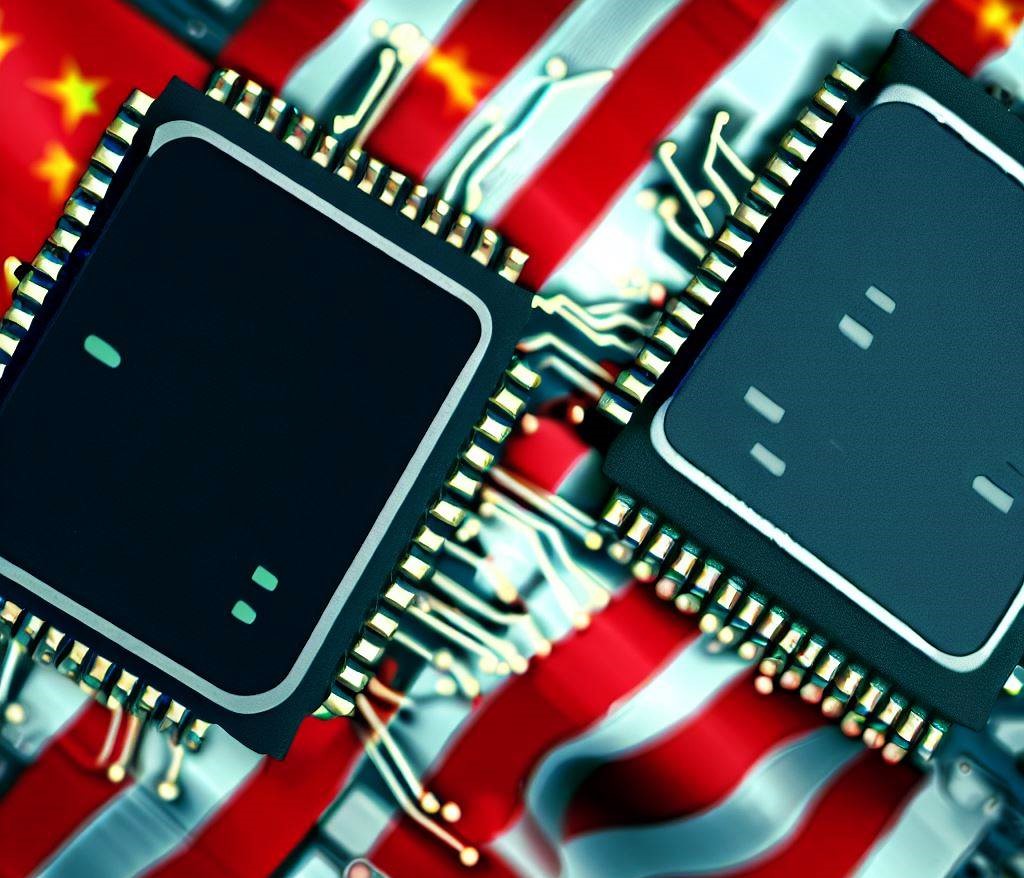
These guidelines are part of a broader tech trade battles between China and the U.S. While the impact on Intel and AMD remains to be seen, it’s clear that China is taking aggressive steps to reduce reliance on U.S. built technology.
The global tech landscape continues to evolve, and these decisions have far-reaching implications for both countries and the industry as a whole.
U.S. and China trade tensions are unlikely to recede anytime soon.
A U.S. company has gone to the moon – and creates a little piece of history
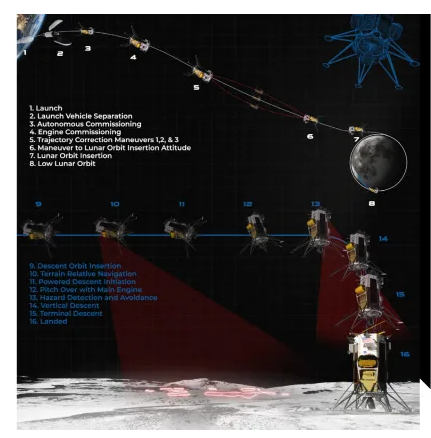
Intuitive Machines’ Nova-C cargo lander, named ‘Odysseus’ after the mythological Greek hero, is the first U.S. spacecraft to soft land on the lunar surface since 1972.
Japan, India and China have all had recent successful moon mission ahead of the U.S.
Intuitive Machines is the first company to pull off a moon landing – government agencies have carried out all previously successful missions.
The company’s stock surged in extended trading Thursday, after falling 11% in regular trading.
Lander visual
Hunt for water
The targeted landing site was a cratered terrain next to a 5km-high mountain complex known as Malapert. It’s the southernmost point on the Moon ever visited by a spacecraft.
It’s on the shortlist of locations where Nasa is considering sending astronauts later this decade as part of its Artemis programme.
It is reported that there are some deep craters in this region that never see any sunlight – they’re permanently in shadow – and scientists believe frozen water could be inside them.
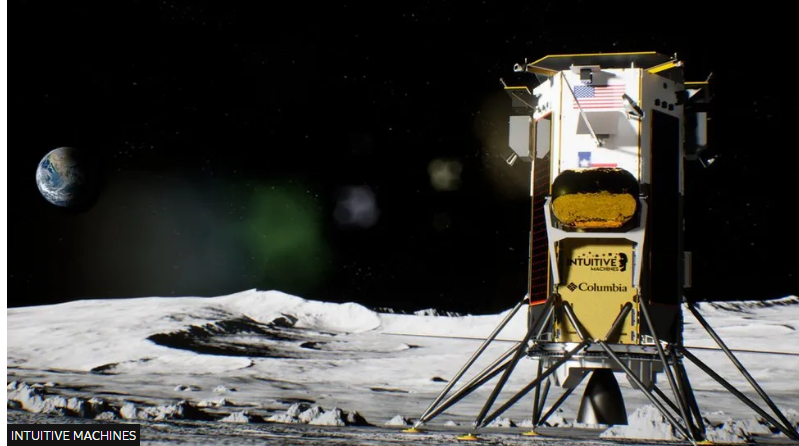
Art illustration on Intuitive Machines luna lander
Art illustration on Intuitive Machines luna lander
In 2023 Apple became the biggest smartphone vendor by shipments in China for the first time.
Last year, Honor, a spin-off from Chinese company Huawei, held the second spot with almost a 17% market share, followed by Vivo, Huawei and then Oppo.
One of the biggest changes in 2023 was Huawei’s return to the top five in China in the Q4. The iphone has been one of the world’s best-selling selling products of all time.
Since the introduction of the Appleiphone in 2007 by Steve Jobs, its inventor and company joint founder, it has gone on to sell 2.3 billion and has over 1.5 billion ‘active’ users. Not bad for a product that investors initially called ‘dead on arrival’ due to lack of interest and sales.
Nokia 3310
In 2007 the Nokia 3310 was the clear market leader and easily king of the mobile phone market. Nokia sold 7.4 million units in 2007 – Apple sold just 1.4 million. Nokia was the ‘go to product’. But not for long.
Oh my, how things have changed. Apple is the now the world’s best-selling product (not just the world’s best-selling phone) – with Nokia and many others left trailing in the dust.
Apple app store
It was the apps that done it; having a product that could be any number of different ‘products’ in one and held in your hand was a game changer – and that changed the world.
The rest is history.
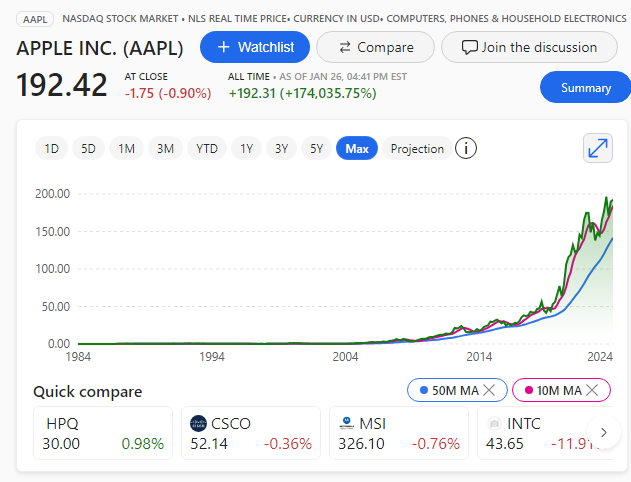
Apple share price chart from 1984 (the year the Apple Macintosh was introduced)
Apple share price chart from 1984 (the year the Apple mac was introduced)
China, which consumes over half of the global coal demand and produces over 4 billion tonnes of coal per year.
India, which consumes about 14% of the global coal demand and produces over 900 million tonnes of coal per year.
The United States, which consumes about 9% of the global coal demand and produces over 600 million tonnes of coal per year.
Japan, which consumes about 3% of the global coal demand but imports most of its coal.
These countries accounted for about 82% of the global coal production in 2021 according to 2021 data set. China alone produced more than half of the world’s coal, followed by India with nearly 10%.
Global coal use in 2023 hits few high
Global coal use in 2023 has hit a record high, surpassing 8.5 billion tons for the first time, on the back of strong demand in countries like India and China, said IEA. These countries are the world’s largest consumers of the dirtiest fossil fuel, and continued modernization puts their energy consumption on a rapid growth trajectory.
China
China and India’s growing economies will continue to fuel demand for coal even as they set ambitious renewable energy targets, according to experts.
While China is the world’s largest energy consumer, India is ranked third globally, and both countries are the top consumers of coal as they strive to fuel economic growth.
Global coal usage in 2023hit a record high, surpassing 8.5 billion tons for the first time, on the back of strong demand in emerging and developing countries such as India and China, IEA noted in a recent report.
China’s electricity sector has been in the throes of a clean revolution over the past few years, with an almost five-fold growth in wind and solar generation since 2015. As a result, the share of coal generation has fallen by 17 percentage points, from 78% in 2000 to 61% in 2022.
China has suffered from drought in recent years, which reduced hydroelectric power generation in its southern provinces. To maintain the necessary power output, the country had to turn to coal.
United States
By contrast, U.S., which is the world’s second largest consumer of coal, has seen a decrease in its usage of the fuel. According to the Institute for Energy Economics and Financial Analysis, the amount of coal that the superpower consumes each day recorded a 62% drop from 2.8 million to 1.1 million tons a day.
75% of India’s power is derived via coal-fired plants. Coal accounts for 61% of China’s power generation, even though the country is recognized as the indisputable leader in renewable energy expansion. It has been adding new projects to the grid almost as fast as the rest of the world combined in 2022 and has ambitions of becoming carbon neutral by 2060.
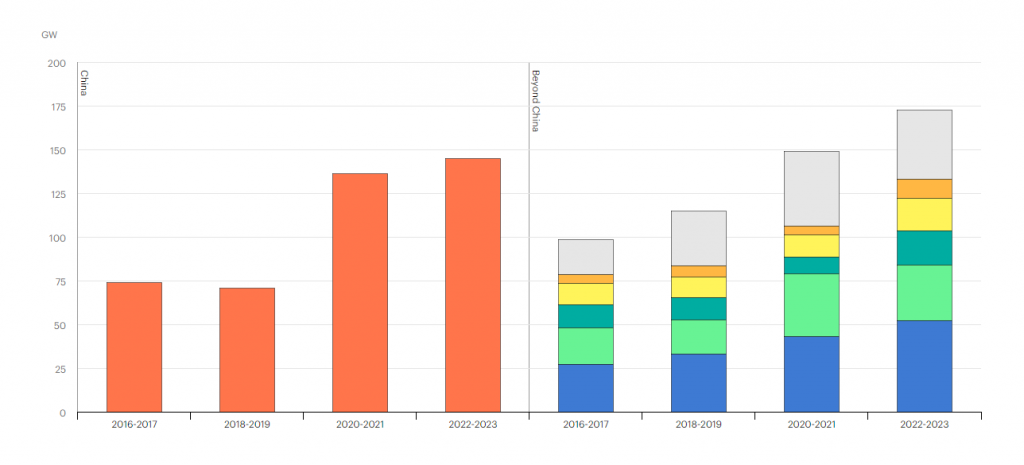
Annual average capacity additions by country and region, 2016-2023
India’s coal production rose to 893 million tons during the financial year ending March 2023, jumping nearly 15% from a year earlier. China’s raw coal production in 2023 went up by 2.9% compared with the same period in 2022.
There are no signs of a slowdown, with the IEA saying coal consumption in India and Southeast Asia is projected to grow significantly.
Coal won’t go!
But the lack of reliability of renewables means coal has still very much been a critical fallback option for the two countries.
Top five coal producing countries in the world
China: 4,126.0 million tonnes
India: 762.0 million tonnes
Indonesia: 614.0 million tonnes
United States: 523.8 million tonnes
Australia: 467.1 million tonnes
Five of the Greenest energy producers in the world
Sweden
Norway
Denmark
Finland
Switzerland
The greenest were based on these five criteria: carbon emissions, energy transition, green society, clean innovation, and climate policy.
Top countries by renewable energy production
China: 2,271.9 TWh (28.2% of total electricity)
United States: 804.8 TWh (20.5% of total electricity)
Brazil: 491.9 TWh (83.3% of total electricity)
Canada: 433.6 TWh (66.9% of total electricity)
India: 303.5 TWh (24.5% of total electricity)
Note: three of the world’s worst offenders of fossil fuel use are also in the top five for energy production by renewables – China, U.S. and India.
In a significant development that has raised concerns among investors and policymakers worldwide, China’s debt outlook has been downgraded as the country grapples with a slowing economy. This move reflects growing apprehensions about the sustainability of China’s economic growth and its ability to manage its burgeoning debt.
Moody’s issued the warning as it cut its outlook on the government’s debt to negative, from stable. China said it was disappointed by the move, calling the economy resilient. China also reported to have said it is unnecessary for Moody’s to worry about China’s economic growth prospects and fiscal sustainability.
Rapid Expansion
For years, China’s rapid economic expansion has been the engine of global growth, but recent trends indicate a deceleration. The once double-digit growth rates have now tapered, with projections suggesting a further slowdown in the coming years.
China exports
This deceleration is attributed to various factors, including trade tensions, demographic shifts, and a maturing economy.
Downgrade
The downgrade, announced by a prominent credit rating agency recently, underscores the risks associated with China’s increasing debt levels. The country’s total debt, which includes government, household, and corporate debt, has climbed to around 85%* of its GDP. This debt accumulation is partly due to the government’s efforts to stimulate the economy through infrastructure spending and lending to state-owned enterprises.
Property Sector
The property sector, a significant pillar of China’s economy, has also shown signs of strain. High-profile defaults and a cooling housing market have added to the concerns, prompting fears of a ripple effect across the economy. The government’s crackdown on excessive borrowing and speculative investments has further tightened liquidity, impacting developers and homeowners alike.
The burden of debt sits heavy in China’s property sector.
Response
In response to the downgrade, China’s finance ministry has expressed confidence in the country’s economic resilience. Officials argue that the fundamentals of the Chinese economy remain strong, with continued efforts towards high-quality development and structural reforms. They assert that the concerns raised by the credit agencies are overstated and that China’s fiscal position remains robust.
Warning signal
Nevertheless, the downgrade should serve as a warning signal. It highlights the need for careful fiscal management and policy adjustments to navigate the challenges ahead. As the global economy faces uncertainty, the world will be closely watching how China addresses its debt dilemma and maintains its trajectory of growth.
This situation presents a complex puzzle for China’s leadership, balancing the goals of economic stability and sustainable development. The outcome will have far-reaching implications, not just for China but for the entire global economy.
The world awaits to see how China will write the next chapter in its remarkable economic story. If this goes wrong – it will go wrong in a big way.
Update Friday 8th December 2023
China’s top decision-making body of the ruling Communist Party on Friday said that the country’s fiscal policy ‘must be moderately strengthened’ to stimulate economic recovery, according to state-run news outlet.
85%* debt to GDP ratio
China’s debt-to-GDP ratio was recorded at around 77% of the country’s Gross Domestic Product in 2022. This ratio is an important indicator of a country’s economic health, reflecting its ability to pay back its debts. This ratio has been on the rise in recent years, indicating an increase in national debt relative to the GDP. For instance, the ratio was around 23% in 2000 and grew to 34% in 2012, with a significant jump to the current level.
China’s projected debt to GDP ration
Forecasts suggest that China’s debt-to-GDP ratio could reach 104% by 2028
It’s important to note that such figures can vary and should be interpreted within the context of each country’s economic structure and policies.
China’s factory activity contracted for a second month in a row in November 2023.
Non-manufacturing activity hit yet another new low this year, signalling that the world’s second-largest economy was still not out of the woods and may require more policy support.
The official manufacturing purchasing managers’ index unexpectedly dropped slightly lower to 49.4 in November 2023 from 49.5 in October 2023, according to data from the National Bureau of Statistics released Thursday 30th November 2023.
Shares of Chinese electric vehicle manufacturers took a hit on Thursday 18th October 2023 after Tesla reported disappointing 3Q results on Wednesday 17th October 2023.
It was the first time Tesla, co-founded by Elon Musk, missed on both earnings and revenue since Q2 2019.
On Thursday morning, Hong Kong-listed shares of Chinese EV makers BYD and Xpeng fell approximately 2.18% and 8.76%. Li Auto slid 3.14%, while Nio and Geely dropped 8.36% and 3.97%.
Elon Musk reportedly cautioned that the Tesla Cybertruck, the electric full-size pickup truck model; would not deliver substantial positive cashflow for 12-18 months after production begins.
Musk reportedly said the company is working to bring down the prices of its cars amid high interest rates. ‘I’m worried about the high interest rate environment we’re in,’ he said, adding that it will be much harder for consumers to purchase cars if interest rates were to increase further.
Tesla shares down
Tesla shares closed 4.78% lower on Wednesday 17th October 2023. Other U.S. EV rivals Lucid and Rivian fell more than 9% on the same day. Lucid’s stock dropped a day earlier after it reported disappointing Q3 EV deliveries.
Tesla shares closed 4.78% lower on Wednesday 17th October 2023.
In the first six months of the year, BYD was the world’s top EV manufacturer, contributing 21% of global sales of EVs, according to research firm Canalys. Tesla trailed behind at second place with 15% market share while German carmaker Volkswagen held 7% market share in third place.
Price pressure
EV players are under pressure from a price war to gain market share amid intense competition.
Tesla introduced a number of price cuts over the last few months, especially in China – the world’s biggest EV market.
Rivals BYD, Nio, Li Auto and Xpeng have also joined Tesla in lowering the prices for some of their EV models.
Shares in BYD, (Build Your Dreams), jumped this week after it said it expected third-quarter profits to more than double compared with last year.
BYD is now ahead of Tesla in quarterly production – and second to the U.S. car maker in global sales.
The curbs are aimed at closing loopholes that became apparent after the U.S. announced export curbs on microchips in October 2022. The restrictions are designed to prevent China’s military from importing advanced semiconductors or equipment.
Nvidia has said in a filing that the new export restrictions will block sales of two high-end artificial intelligence chips it created for the Chinese market – A800 and H800. It said that one of its gaming chips will also be blocked.
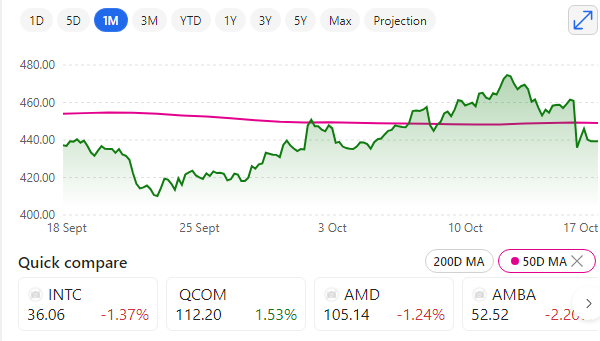
Nvidia Corp one month chart – closed at 439.38 17th October 2023
Although the curbs also affect other chip makers, analysts believe Nvidia will be hit the hardest because China accounts for up to 25% of its revenues from data centre chip sales. Nvidia’s shares, which are considered a star stock, fell by as much as 4.7% in the wake of the announcement.
Semiconductor Industry Association
The Semiconductor Industry Association, which represents 99% of the U.S. semiconductor industry by revenue, said in a statement that the new measures are ‘overly broad‘ and ‘risk harmingthe U.S. semiconductor structure without advancing national security as they encourage overseas customers to source elsewhere’.
China reacts
A spokesperson for the Chinese embassy also said that it ‘firmly opposes‘ the new restrictions, which also target Iran and Russia and go into effect in 30 days.
Nvidia stock falls after restrictions on AI chip exports from U.S. to China
Two months ago, China retaliated by restricting exports of two materials, gallium and germanium, which are key to the semiconductor industry.
The materials are ‘minor metals‘, meaning that they are not usually found on their own in nature, and are often the by-product of other processes. It’s not only the U.S., Japan and the Netherlands – which is home to key chip equipment maker ASML – have also imposed chip technology export restrictions on China.
Fallout
The constant ‘fall-out’ between the world’s two biggest economies has raised concerns over the rise of so-called ‘resource nationalism‘ – a practice where governments hoard critical materials to exert influence over other countries.
Baidu also announced that more than 6 million users have used an AI powered tool that sits inside its Google drive-like cloud product.
At the 4th September event, Baidu also demonstrated ‘displayed generative’ AI-based products that could assist with traffic management, financial research and coal mine logistics.
ChatGPT, from Microsoft-backed OpenAI, is not officially available in China, where Google and Facebook are blocked.
10 new AI products announced by Baidu
Chinese tech giant Baidu announced more than 10 new AI-based applications on 4th September 2023, just days after its ChatGPT-like Ernie bot was released for public use.
Among the products revealed was a generative AI-integrated word processing app called WPS AI, created by Shanghai-listed Kingsoft Office. It was reported the company built the tool using the AI model on which Baidu’s Ernie bot is based, as well as Baidu’s ‘Qianfan’ cloud platform for AI models.
‘This AI malarchy is progressing at quite a rate’.
Nearly 10,000 businesses are actively using Baidu’s Qianfan cloud platform each month, the company claimed.
AI assistant
Baidu also announced that more than 6 million users have used an AI-powered tool that sits inside its Google drive-like cloud product. The AI assistant can search documents, summarize and translate text and create content, the company claimed.
It wasn’t immediately clear to what extent those products were available for public use.
On 31st August 2023, Baidu released its Ernie bot to the public, signaling government approval of the AI-powered chatbot. Other Chinese companies also released similar AI products around the same time.
Ha Jiang, is a virtual online idol, and only exists online.
Ha Jiang signed a record deal with Whet Records, Warner Music Group’s pan-Asian dance label in China, in 2021. Ha Jiang is the first virtual idol to conduct a record deal with a major label. The virtual idol uses AI technology to create music and has become an online sensation in Asia.
Ha Jiang online music avatar. She is a virtual artist who uses artificial intelligence to create music
Virtual AI artist
Ha Jiang is a virtual artist who uses artificial intelligence to create music. She is the first virtual idol to sign a record deal with a major label, Whet Records, which is Warner Music Group’s pan-Asian dance label in China. My understanding is that the music was composed by humans, so not entirely AI generated then.
Would this also work in west – is it time to be concerned?
She already has more than 100,000 followers in China and is known for her sense of style and fashion. She is also a social influencer who has been hired by the city of Shanghai to promote safe driving. Ha Jiang is not a real person, but a computer-generated avatar who only exists online. She is part of a growing phenomenon of virtual idols in Asia, especially among Gen-Z fans.
Endel,is a sound startup company that uses artificial intelligence to create personalized audio tracks. Endel was the first to sign a record deal with Warner Music Group in 2019 to release 20 albums of ambient music.
China’s central bank has cut one of its key interest rates for the second time in three months as the world’s second-largest economy struggles to bounce back from the pandemic.
The country’s post-Covid recovery has been hit by a property crisis, falling exports and weak consumer spending. In contrast, other major economies have raised rates to tackle high inflation. Raising interest rates to tackle inflation is likely creating a econmic problem all of its own for many contries caught in the inflation trap.
The PBOC last cut its one-year rate, on which most of China’s household and business loans are based, in June 2023 – demonstrating China’s commitment to reviving the economy. Economists had also expected the bank to lower its five-year loan rate, which the country’s mortgages are pegged to. However, this was unchanged at 4.2%. In a surprise move mid-August 2023, short and medium-term rates were also cut.
More stimulus
China will need a much bigger stimulus package to boost confidence to drive up consumption and growth. Without it, the economy is risking faltering into deflation which will make it even harder to recover. More rate cuts could be announced in conjunction with government spending, as well as targeted measures to help the property market.
China struggling to shake off the effect of the 2020 pandemic
Beijing is trying to restore confidence, but officials will also be mindful of the long-term implications of the policies may create. China’s economy has struggled to overcome several major issues in the wake of the pandemic, which saw much of the world shut down.
Property problems
Concerns with China’s property market still remain and were highlighted again when ongoing crisis-hit real estate giant Evergrande filed for bankruptcy protection in the U.S in August. The heavily-indebted company is attempting to arrange a multi-billion dollar deal with creditors.
Also, earlier this month, another of the country’s biggest property developers, Country Garden, warned that it could see a loss of up to $7.6bn (£6bn) for the first six months of the year. At the same time data showed China had slipped into deflation for the first time in more than two years. That was as the official consumer price index, a measure of inflation, fell by 0.3% last in July 2023 from a year earlier.
Exports, imports and youth employment figures
Official figures indicated that China’s imports and exports fell sharply in July 2023 as weaker global demand threatened the country’s recovery prospects.
China exports and imports slow July 2023
Beijing has also stopped releasing youth unemployment figures, which were seen by some as a key indication of the country’s slowdown. In June 2023, China’s jobless rate for 16 to 24-year-olds in urban areas climbed to a record high of more than 20%.
There is a serious ongoing message here of concern and worry for global stock markets, and not just from China – do we need to act now?
The U.S. will ban American investment in some areas of China’s high-tech sector, including artificial intelligence, adding to strained relations between the two superpowers.
U.S. firms will also be invited to disclose what investments they make in China in high-tech sectors.The much-anticipated move gives the U.S. government new power to screen foreign dealings by private companies. The U.S. said the measure would be narrowly targeted. However, it is poised to further chill economic relations between the world’s two largest economies. China has reportedly said it was ‘very disappointed‘. The U.S. ‘has continuously escalated suppression and restrictions on China‘. He added that White House claims that the US was not seeking to hurt China’s economy or separate the two countries did not match its actions. ‘We urge the US side to honour its words‘.
Biden order
The order by U.S. President Biden formally kicks off the push to introduce rules to restrict, even prevent American businesses from investing in firms from ‘countries of concern‘ that are active in advanced semiconductors, quantum computing and certain areas of artificial intelligence.
The government will also require U.S. firms to notify the Treasury Department of investments in firms working on a wider range of artificial intelligence and semiconductor technology.
U.S. restriction on AI related tech knowledge to China
The rules are not expected to apply to ‘portfolio’ investments, in which firms invest passively in companies via the stock market, but are focused on active investments made by private equity and venture capital businesses. They will now enter a public ‘reflection’ period, which is expected to further clarify what kinds of investments are off-limits. The rules are not expected to go into effect for sometime yet. This new ‘order’ is quite a big deal.
In a briefing with reporters, senior administration officials said the measure was a ‘national security action, not an economic one‘. They said the U.S. remained committed to open investment.
Investment control
Controls on outbound investment are rare among advanced economies, currently present only in Japan and Korea, according to a 2022 report.
In the U.S., prior restrictions on China trade have relied on limiting sales of sensitive technology by U.S. firms and screening Chinese investments in American companies. The Trump administration had also barred investments in firms tied to China’s military.
The latest measure has widespread support in Washington, where it is seen as fixing a regulatory gap concerning financial flows that risks allowing American money and know-how to to flow into China.
International support
The U.S. has been trying to build international support for the investment curbs with some signs of success.
Prime Minister Rishi Sunak in May 2023 said the UK government would consider curbs on outbound investment; the European Commission put forward a proposal focused on investments in sensitive technologies earlier this summer. It is not clear how significantly the order would affect flows of investment.
China was the number two destination for foreign investment in 2022, behind the U.S., but many reports suggest money flowing into the country from the U.S. and elsewhere has dropped sharply as geopolitical relations sour. In the UK, a recent survey by the Institute of Directors found that one in five UK importers had already switched investments away from the country due to geopolitical tensions.
Gallium and Germanium considered critical elements required in the production of microchips
Treasury Secretary Janet Yellen, who visited China in July 2023 in an attempt to ease tensions, said last month she did not think the coming curbs would have a fundamental impact on the investment climate in the country.
Will these measures likely damage the U.S. in the future by escalating issues and restricting the U.S. from other shared advancements in technology – only time will tell.
Tech’ rivalry
U.S. and China are two of the world’s leading powers in artificial intelligence (AI) and semiconductors, which are essential components for many AI applications such as self-driving cars, smart phones, and cloud computing. However, the two countries have also been engaged in a fierce competition and rivalry over these technologies, as they seek to gain an edge in innovation, security, and economic growth. Some of the issues that have caused tensions between U.S. and China include trade disputes, intellectual property theft, cyberattacks, human rights violations, and military expansion.
AI chips
AI semiconductors are designed to perform complex calculations and tasks that require high levels of intelligence, such as natural language processing, computer vision, and machine learning.
These chips can be classified into two types: general-purpose chips that can run various AI algorithms, and specialized chips that are optimized for specific AI functions or domains.
China’s consumer price index (CPI) fell by 0.3% in August from a year ago, while the producer price index (PPI) fell by 4.4% last month. This is the first time since February 2021 that the CPI has fallen, and the 10th consecutive month that the PPI has contracted. This indicates that China is experiencing deflation pressure as demand in the world’s second-largest economy weakens.
Factors that contribute to the deflation risk
A prolonged property market slump, which reduces investment and consumption.
A plunging demand for exports, due to the global economic slowdown and trade tensions with the United States.
A subdued consumer spending, due to the coronavirus pandemic and rising unemployment.
Deflation can have negative effects on the economy
Lowering profits and incomes for businesses and households.
Increasing the real value of debt and making it harder to repay.
Reducing incentives for investment and innovation.
Creating a downward spiral of falling prices and demand.
The Chinese government and the central bank have taken some measures to stimulate the economy and prevent deflation.
Cutting interest rates and reserve requirement ratios for banks.
Increasing fiscal spending and issuing special bonds for infrastructure projects.
Providing tax relief and subsidies for businesses and consumers.
However, these measures have not been enough to offset the deflationary pressure, and some analysts expect more monetary easing and fiscal support in the coming months.
Deflation definition
Deflation is the opposite of inflation. It means that the prices of goods and services are going down over time. This may sound good for consumers, who can buy more with the same amount of money. But deflation can also have negative effects on the economy.
Deflation can be caused by a decrease in the supply of money and credit, a fall in demand, or an increase in productivity. To prevent or reverse deflation, the central bank and the government can use monetary and fiscal policies to stimulate the economy, much the same as we are now seeing to deal with ‘inflation’.
According to latest figures the country’s trade fell more sharply than expected in July 2023, as both global and domestic demand receded amid the pandemic and ongoing tensions with the United States.
China’s exports fell by 14.5% in July 2023 from a year ago, the biggest drop since February 2020, while imports dropped by 12.4%, according to Chinese data. This was much worse than the 5% decline in both exports and imports analysts were expecting.
Poor trade performance
Some of the reasons for the poor trade performance are the rising costs of raw materials, the global shortage of semiconductors, the Covid-19 outbreaks in some regions, and the U.S. sanctions on some Chinese companies.
China’s trade with the U.S., its largest trading partner, fell in the first seven months of the year. The trade slump has added pressure on China to provide more support for the economy, which has lost momentum after a strong recovery in late 2020 and early 2021.
China’s trade drop July 2023 more than expected
China’s trade situation is also closely watched by other countries, as it reflects the health of the global economy and demand for goods. Some analysts have warned that China’s trade slowdown could signal a broader weakening of consumer spending in developed economies, which could lead to recessions later this year. China’s trade data also has implications for inflation and monetary policy, as lower import prices could ease inflationary pressures and allow central banks to keep interest rates low.
China’s export to the U.S. and EU down
China’s exports to the U.S. plunged by 23.1% year-on-year in July 2023, while those to the European Union fell by 20.6%, CNBC analysis of customs data showed. Exports to the Association of Southeast Asian Nations fell by 21.4%, according to the data. Chinese imports of crude oil dropped by 20.8% in July from a year ago, while imports of integrated circuits fell by nearly 17%.
China’s imports from Russia fell by around 8% in July 2023 from a year ago, the data showed.
A slowdown in U.S. and other major economies’ growth has dragged down Chinese exports this year. Meanwhile, China’s domestic demand has remained subdued.
Growth areas
Among the few higher-value export categories that saw a significant increase in the first seven months of the year were: cars, refined oil, suitcases and bags. And for imports: paper pulp, coal products and edible vegetable oil were among the categories seeing significant growth in the January to July period from a year ago.
No, nor me – never heard of them, but they are extremely important elements needed in microchip manufacturing and China is the world’s largest producer.
Germanium and gallium are two elements that are used in the production of semiconductor chips, which are essential for various electronic devices and technologies. They have different properties and applications, and they are both considered critical materials.
Germanium
Germanium is a metalloid, which means it has properties of both metals and non-metals. It is a shiny, hard, gray-white element that is brittle and can be cut easily with a knife. It has a high melting point of 938°C and a low boiling point of 2830°C. It is mainly obtained as a by-product of zinc production, but it can also be extracted from coal.
Germanium is used in, solar cells, fibre optic cables, infrared lenses light-emitting diodes (LEDs), and transistors. It is also used in some alloys to improve their strength and hardness. Germanium is essential for the defence and renewable energy sectors, as well as for space technologies. It can resist cosmic radiation better than silicon, and it can enhance the performance and efficiency of some semiconductors.
Gallium
Gallium is a metal that has a very low melting point of 29.8°C, which means it can melt in your hand. It is a soft, silvery-white element that can be easily cut with a knife. It has a high boiling point of 2403°C. It is mainly obtained as a by-product of processing bauxite and zinc ores.
Gallium and Germanium considered critical elements required in the production of microchips
Gallium is used in the electronics industry to produce heat-resistant semiconductor wafers that can operate at higher frequencies than silicon-based ones. It is also used in LEDs, solar panels, microwave devices, sensors, and lasers. Gallium is important for the development of new technologies such as electric vehicles, high-end radio communications, and Blu-Ray players. It can also improve the power consumption and reliability of some semiconductors.
China the largest producer
China is the largest producer and exporter of both germanium and gallium, accounting for about 60% and 80% of the global supply. However, China has recently announced new export restrictions on these two elements, requiring special licences for exporters. This move is seen as a response to the western sanctions on China’s access to advanced microchip technology.
The export curbs could affect the global supply chain of semiconductor chips and have implications for various industries and markets
Baidu said its AI system called Ernie 3.5 outperformed OpenAI’s ChatGPT and GPT4 in several key areas.
The Chat Bot was revealed in March 2023 and has since been publicly testing it in China. The chatbot is based on Baidu’s foundational AI model called ERNIE.
Baidu’s advancements underscore the intense competition taking place in the area of generative AI with technology giants in the US and China rapidly advancing their AI models.
ERNIE – Enhanced Language RepresentatioN with Informative Entities
US and China AI Bots go head to head
Ernie was first introduced in 2019, and since then, Baidu has been improving and upgrading it with new versions. The latest version, Ernie 3.5, was announced in June 2023, and it claims to outperform OpenAI’s ChatGPT and GPT 4 in several key areas
Baidu’s Ernie is an artificial intelligence (AI) model that powers the company’s chatbot service, Ernie Bot. Ernie stands for Enhanced Language RepresentatioN with Informative Entities, and it is a natural language processing (NLP) deep-learning model that can understand and generate natural language.
Trained on large data sets
Ernie 3.5 is based on Baidu’s foundational AI model, which is trained on huge amounts of data from various domains, such as news, social media, encyclopedias, books, and more. Ernie 3.5 can handle various NLP tasks, such as question answering, dialogue generation, text summarization, sentiment analysis, and more.
According to a test by the China Science Daily journal, Ernie 3.5 surpassed ChatGPT and GPT 4 in general abilities and outperformed the more advanced GPT 4 on several Chinese-language capabilities.
ERNIE version 3.5 boosted its training and efficiency, making it faster and cheaper to upgrade to future versions. Baidu hopes that ERNIE Bot will become the next must-have app in China’s internet market, attracting users because of its natural and engaging conversations.
Intergration
Baidu has been integrating ERNIE Bot across multiple business applications, ranging from cloud computing to smart speakers.
AI Chatbot
ERNIE Bot is one of the examples of how Baidu is investing in AI technology and competing with other tech giants in the US and China. Baidu’s founder Robin Li, reportedly said that ‘foundation models are an engine driving global economic growth and represent a major strategic opportunity that cannot be missed‘.
The major BIG players, Alphabet (Google), Microsoft & META all have their own versions of AI. Hopefully it will be used ‘intelligently’.