

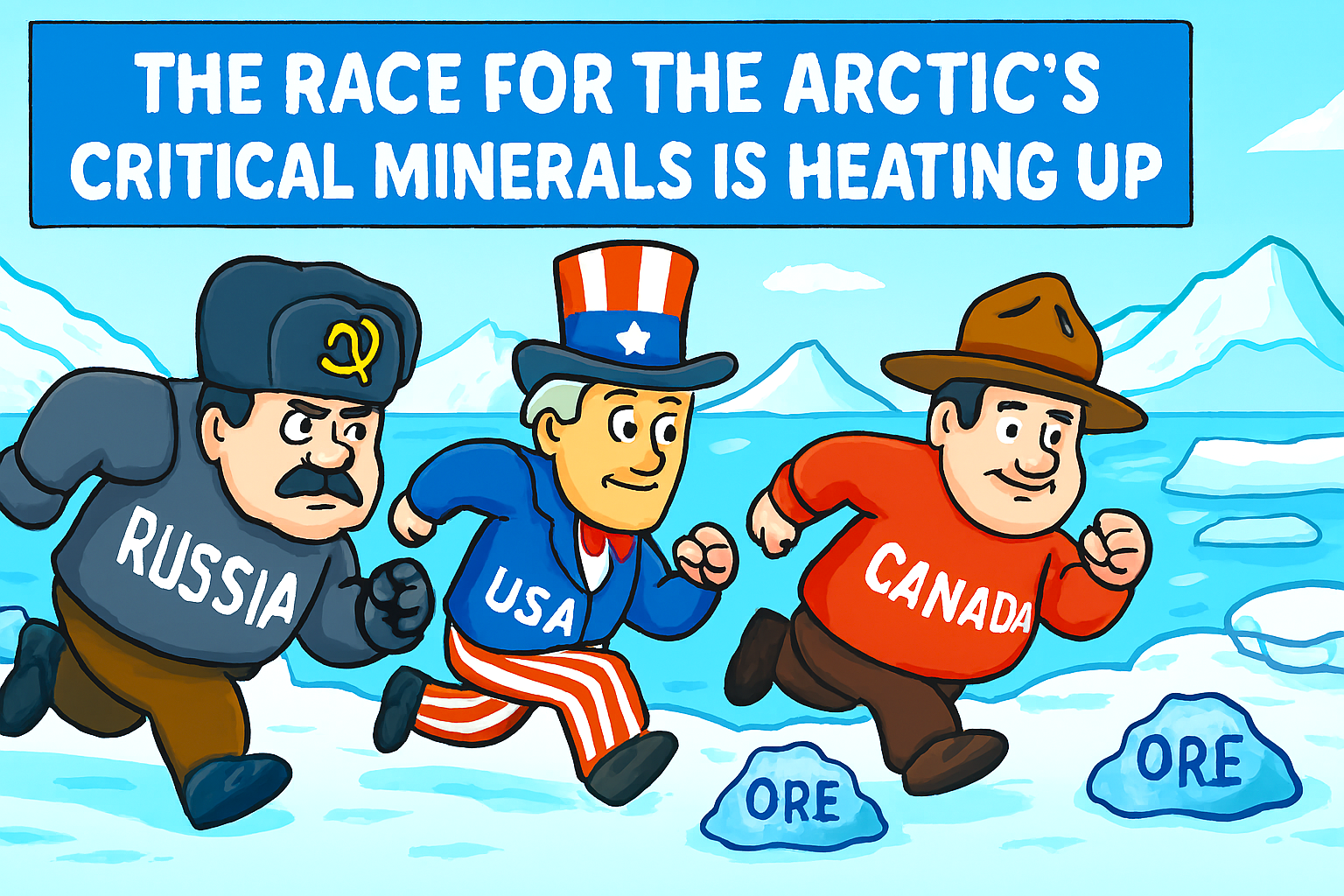
The Arctic is rapidly becoming the new frontier in the global scramble for critical minerals, with nations vying for influence and resources that could shape the future of energy and technology.
The Arctic, long viewed as a remote and inhospitable region, is now at the centre of a geopolitical and economic contest.
Beneath its icy landscapes lie vast reserves of rare earths, base metals, uranium, and precious minerals, all essential for renewable energy technologies, electric vehicles, and advanced defence systems.
As the world accelerates its transition away from fossil fuels, these resources are increasingly seen as strategic assets.
Countries including the United States, Canada, Russia, and Greenland are intensifying exploration and investment. Greenland, in particular, has emerged as a focal point, with experts noting its abundance of rare earths and uranium.
Canada’s northern territories are also being positioned as key suppliers, with government-backed initiatives to strengthen supply chains and reduce reliance on Chinese dominance in the sector.
Control
The race is not solely about economics. Control of Arctic resources carries profound geopolitical weight. As melting ice opens new shipping routes and makes extraction more feasible, competition is sharpening.
Russia has already expanded its Arctic infrastructure, while Western nations are seeking partnerships and technological innovations to ensure sustainable development.
The Oxford Institute for Energy Studies has highlighted that the Arctic could become a significant contributor to the global energy transition, though environmental risks remain a pressing concern.
Fragile
Critics warn that the pursuit of minerals in such fragile ecosystems could have devastating consequences. Mining operations threaten biodiversity, indigenous communities, and the delicate balance of Arctic environments.
Balancing economic opportunity with ecological responsibility will be one of the defining challenges of this new ‘cold gold rush’.
Ultimately, the Arctic’s mineral wealth represents both promise and peril. If managed responsibly, it could underpin the technologies needed to combat climate change and secure energy independence.
If exploited recklessly, it risks becoming another chapter in humanity’s history of resource-driven conflict and environmental degradation.
The ‘cold race’ is heating up!