Walt Whitman 1819 – 1892
Walt Whitman was an influential American poet, essayist, and journalist. His work significantly impacted American literature, and he is often referred to as the father of free verse.

Observe. Think. Chat. Do. Trade. Repeat…
Walt Whitman was an influential American poet, essayist, and journalist. His work significantly impacted American literature, and he is often referred to as the father of free verse.
The economic inactivity rate during the period from November 2023 to January 2024 stood at 21.8%, a slight increase compared to the previous year. This means that approximately 9.2 million people aged between 16 and 64 are neither employed nor actively searching for jobs. The total figure has risen by over 700,000 since before the onset of the coronavirus pandemic.
Long-Term Illness: Approximately one-third of the working-age population not participating in the labour force cite long-term illness as the primary reason for their inactivity. Health-related issues have kept a significant portion of the population away from work.
The pandemic: of 2020 caused work flight. 700,000 extra out of the workplace since the coronavirus pandemic Covid 19 hit the UK in 2020.
Students and Education: Students pursuing education are often classified as economically inactive. Their focus on studies and lack of job-seeking activity contribute to this category.
Care Responsibilities: Individuals who care for family members or manage household responsibilities fall into this bracket. Caring duties can be time-consuming and prevent active job hunting.
People with Disabilities: Those with disabilities may face barriers in accessing employment opportunities. Accommodations and inclusive policies are essential to address this issue.
Early Retirement: Some adults choose early retirement, and once retired, they rarely express a desire to return to work. This group contributes significantly to the inactive population.
Discouraged Workers: Individuals who have given up on job searches due to discouragement or lack of suitable opportunities are also part of this category.
Gender Gap: Historically, more women have been classified as economically inactive compared to men. However, this gap has narrowed over the years as more women have entered the workforce.
Age Trends: Recent data indicates that while the number of economically inactive individuals due to illness has decreased, there has been an increase among those aged 16 to 34. Mental health issues are believed to be a contributing factor in this age group.
The persistently high level of economic inactivity poses challenges for the UK economy. As the country emerges from the pandemic, addressing workforce shortages becomes crucial. Measures such as reducing National Insurance Contributions and extending free childcare services aim to encourage people to seek employment or increase their working hours.
More effort is needed to further incentivise workforce participation, if not, the UK economy will suffer for many more years than would otherwise be necessary.
In the video, futurist Raymond Kurzweil explored the future of artificial intelligence (AI), proposing that it might soon outstrip human intellect.
Elon Musk, noted for his candid opinions on AI, echoed Kurzweil’s forecast by stating, ‘AI will likely be more intelligent than any individual human by next year.’ Furthermore, he speculated that by 2029, AI could surpass the combined intelligence of all humanity.

Artificial General Intelligence (AGI), capable of outperforming human intelligence, has recently drawn widespread attention from technology leaders worldwide, especially with the advent of sophisticated AI systems such as ChatGPT, Bing AI, and Gemini. Despite its increasing prominence, a unified definition of AGI remains elusive. Typically, AGI is understood to be a phase in AI evolution where the system can undertake any human task, potentially excelling beyond human expertise in certain domains.”
In the realm of technology leadership, a broad range of views exists on the feasibility and consequences of Artificial General Intelligence (AGI). While some leaders speculate about the timeline for AGI’s realization, others doubt its eventual occurrence. Opinions also differ on whether AGI will lead to beneficial progress or present risks to human society. Comprehending the varied stances of tech leaders sheds light on the active debate regarding AGI and its prospective influence on society.
Musk’s choice to disseminate the podcast excerpt has intensified the discourse on AI advancement’s ramifications. His use of his platform to broadcast Kurzweil’s insights has sparked additional discussion and contemplation about artificial intelligence’s revolutionary capabilities.
His tweet has ignited wider conversations concerning the swift advancement of technology and its significant consequences for the future of humanity.
Raymond Kurzweil, born 1948, is an American computer scientist, author, inventor, and futurist renowned for his contributions to various fields, including optical character recognition (OCR), text-to-speech synthesis, speech recognition technology, and electronic keyboard instruments.
Through his comprehensive body of work, Kurzweil has researched a variety of subjects including health, artificial intelligence (AI), transhumanism, the technological singularity, and futurism.
Known as the Artificial Intelligence Act, this groundbreaking legislation is expected to serve as a global signpost for other governments grappling with how to regulate this fast-developing technology.
The AI Act takes a risk-based approach, categorizing AI applications based on their risk levels. It prohibits certain high-risk uses, emphasizes transparency, and aims to keep AI development human centric. This landmark regulation should help set a precedent for responsible AI deployment worldwide.
The regulation is expected to become enforceable in May 2024, after passing final checks and receiving endorsement from the European Council.
Oxford University, founded in the 12th century, stands as a beacon of scholarship and tradition. Its roots trace back to 1096 during William II’s reign. The university is approximately 230 years older than the Aztec Empire.
Teaching would have likely existed in some form within its hallowed halls. Imagine those early scholars, their minds ablaze with curiosity, gathering under the ancient spires.
Now, let’s compare this age to another remarkable entity: the Aztec civilization. The Aztecs flourished around the 14th century. Their vibrant culture, intricate temples, and awe-inspiring pyramids came some 230 years after the university was established.
Imagine the scene: while Oxford’s dons debated philosophy, the Aztecs were constructing Tenochtitlan, their magnificent capital. As Oxford’s colleges took shape, the Aztecs were creating intricate codices and performing sacred rituals.
Oxford University, with its nine centuries of continuous existence, predates the Aztec Empire by several lifetimes: a testament to the enduring quest for knowledge across civilizations.
Hopefully this means the UK is on its way out of recession.
The Office for National Statistics (ONS) said the services sector led the bounce back.
This is an early dataset, but demonstrates how the UK, which entered recession at the end of 2023, is faring.

The annual rate was marginally higher than expected. The monthly rate was slightly above the forecast of 0.3%. This may likely direct the Federal Reserve to hold off on an interest rate reduction, at least until the summer of 2024. What will Wall Street make of it?
The core Consumer Price Index increased by 0.4% monthly and recorded an annual rise of 3.8%. Both figures exceeded forecasts by one-tenth of a percentage point.
An increase of 2.3% in energy costs contributed to the rise in the overall inflation figure. Food prices remained mostly unchanged for the month, while housing expenses saw a further increase of 0.4%.


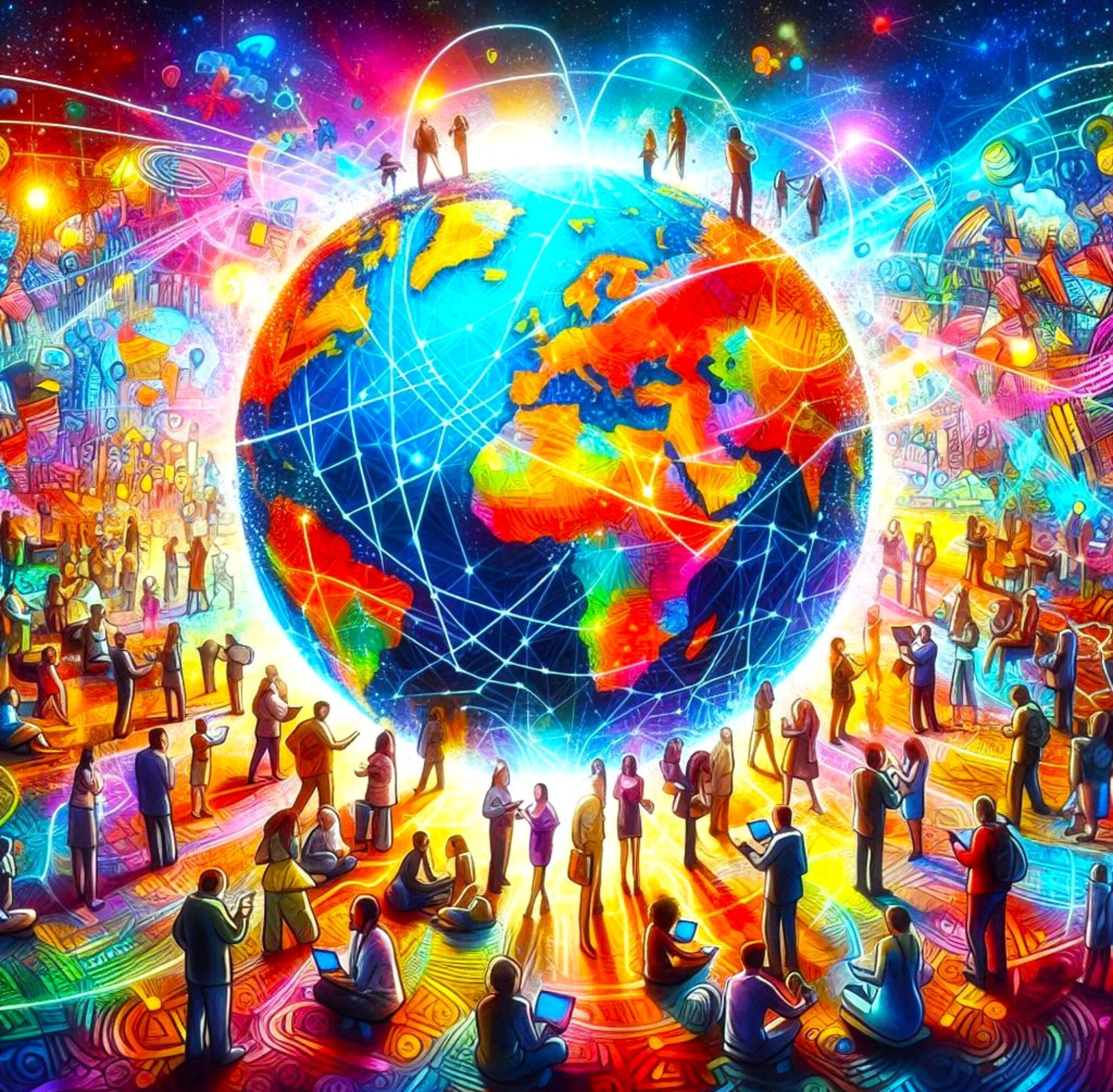
It is important to recognise that the Web and the Internet are two different entities; the Web is a service that functions via the Internet, a worldwide network of interconnected computer networks. Whereas the Internet is the system.
The first successful communication between a Hypertext Transfer Protocol (HTTP) client and server through the Internet took place in mid-November 1989.
The Web has since evolved significantly, with the release of the first web browser and server, and the development of HTML, CSS, and JavaScript, which have shaped the modern digital experience.
The inaugural website was launched at CERN and became accessible on 20th December 1990. Tim Berners-Lee developed this site to disseminate information about the World Wide Web project. In August 1991, it was made available to the public. Today, it is still possible visit this site, offering an intriguing look into the web’s nascent stages.
The internet, as we know it today, began to evolve in the mid-20th century. This era, known as the Information Age, Digital Age, or Computer Age, is characterised by a transition from traditional industry to an economy driven by information technology. This shift commenced in the 1940s and 1950s. The invention of the transistor in 1947 and the optical amplifier in 1957 were pivotal developments that propelled the advent of the internet.
The term ‘internet’ commonly denotes the worldwide system of interconnected computer networks that utilize the Internet protocol suite (TCP/IP) to connect devices globally. It is an extensive network comprising private, public, academic, business, and government networks of local to global systems.
Since the ARPANET’s inception, which is the internet’s precursor, the internet has been in existence for over 50 years. The ARPANET was conceived in the late 1960s and became operational in 1969. The internet is approximately 55 years old.

The ARPANET, also known as the Advanced Research Projects Agency Network, represented the first wide-area packet-switched network featuring distributed control and was among the earliest to adopt the TCP/IP protocol suite.
These innovations laid the groundwork for what would become the Internet. Initiated by the U.S. Department of Defence’s Advanced Research Projects Agency (ARPA), the primary goal of ARPANET was to connect computers at Pentagon-funded research institutions via telephone lines, facilitating resource sharing and communication across distant computers.
The project commenced in 1966, with the initial computers being connected in 1969. By 1971, the network was operational and underwent rapid expansion. ARPANET was instrumental in introducing several protocols pivotal in today’s Internet communication, including the Network Control Protocol (NCP) and subsequently, TCP/IP.
Following the advent of the wider Internet, which ARPANET played a crucial role in catalyzing, the network was officially decommissioned in 1990.
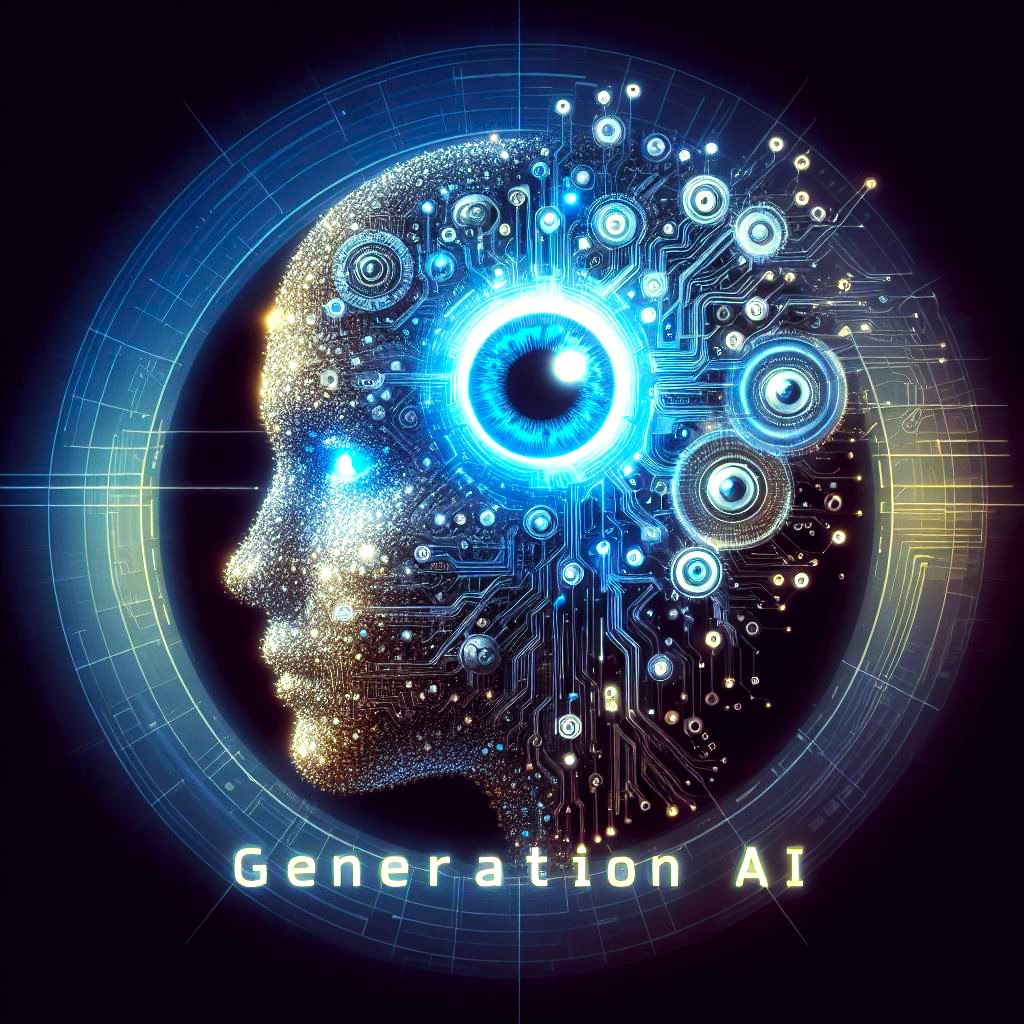
Let’s see how far artificial intelligence (AI) becomes embedded in the next generation of the World Wide Web and of further internet development. Will the big tech companies of today still be running the AI projects of tomorrow?
This surge is attributed to a growing demand for new spot exchange-traded funds (ETFs), which have been approved for listing in the U.S. by some of the world’s largest financial firms.
The market for these ETFs is expected to reach $62 billion in the next two or three years. The cryptocurrency keeps surprising everyone with its value, which has grown to an amazing $1.42 trillion and is still rising… again!
Bitcoin moved off its all-time record shortly after achieving it.

UK chancellor Jeremy Hunt revealed the British ISA as part of the Spring Budget 2024.
The British ISA aims to boost demand for UK businesses and encourage investment in UK-focused assets.
The British ISA provides a separate £5,000 annual allowance in addition to the existing £20,000 ISA allowance.
Like other ISAs, investors in the British ISA will not pay tax on capital gains or income.
While it’s not yet clear whether the new ISA will be exclusively for UK shares, it is expected to support UK-focused funds and investment trusts.
The inclusion of UK gilts or UK corporate bonds remains uncertain.
The consultation period for the British ISA runs until June 6, 2024.
The British ISA aims to revive interest in the UK stock market, which has faced challenges since the Brexit vote in 2016.
By providing tax-free savings opportunities, the ISA encourages investment in UK businesses.
Fund management firms, including Premier Miton, lobbied for the British ISA’s creation.
The British ISA draws parallels with its predecessor, the personal equity plan (PEP), which focused on UK shares and funds.
ISAs replaced PEPs in 1999.
In summary, the British ISA introduces an additional allowance for UK-focused investments, supporting savers and UK companies alike. Its impact on the stock market and investor sentiment remains to be seen, but it represents a step toward bolstering the UK’s economic landscape
By ensuring that companies are valued fairly, a stronger stock market will facilitate the capital raising process for companies that seek to grow and attract more listings. This will have a positive impact on the economy and employment and is ultimately in everyone’s interest.
According to this revision, the economy avoided a technical recession, which is usually defined as two successive quarters of negative growth.
On Monday 11th March 2024, Japan’s Cabinet Office released figures that indicated a 0.3% decline in private consumption for the quarter. Private consumption accounts for about 60% of the economy.
Nevertheless, the updated figures fell short of expectations, as some economists had predicted a higher revision in Q4.

Julius Henry ‘Groucho‘ Marx was an American comedian, actor, writer, and singer who performed in film and vaudeville and on television, radio, and stage. Considered one of the best comedians.
Apple faces stiff competition from local rivals in one of its biggest markets.
Meanwhile, Huawei, a Chinese company, saw its sales soar by 64% in its home market during the same period, the analysis demonstrated. But we do not have sales data of other countries for comparison.
The report also said that overall smartphone sales in China shrank by 7% in the same period.
Huawei, which suffered for years from US sanctions, boosted its sales after launching its Mate 60 series of 5G smartphones in August 2023.
Is this a worry for Apple, after all, the iPhone is Apple’s flagship product? Also, Apple recently junked its electric vehicle project and has been left behind in AI. Is the crown ever-so-slightly slipping?

An American novelist and journalist, Ernest Hemingway shaped 20th-century literature with his concise and subtle writing style.
Brett Adcock, a former software engineer and entrepreneur, founded the company in 2023. He envisioned a way to enhance the quality of life by integrating artificial intelligence (AI) and humanoid engineering.
Figure AI, a startup that has created a humanoid robot for commercial use, has secured $675 million in funding. Some of the investors include Jeff Bezos, Nvidia, Microsoft and OpenAI.
The company plans to use the funds to speed up the development of its general-purpose robot, named Figure 01. This robot resembles and behaves like a human.
Figure AI was founded in 2022 and has been working on creating a versatile robot that can perform multiple tasks.
Figure AI’s flagship product is a human-like robot called Figure 01. This robot can mimic human appearance and motion. It uses sophisticated AI techniques to acquire new skills, adjust to changing situations, and communicate with its surroundings.
Figure 01 can perform tasks that require dexterity, mobility, and intelligence, such as manufacturing, logistics, warehousing, and retail. The humanoid robot is designed to work safely and efficiently alongside humans, complementing their skills and capabilities.

Some of the world’s leading technology companies, such as Microsoft, OpenAI, Nvidia, and Amazon, have invested in Figure AI.
The company also collaborates with BMW, a major global automaker, to use Figure 01 in its production facilities. Figure AI aims to transform the automotive industry by introducing more flexibility, productivity, and innovation to the manufacturing process.
The vision is for the company to build a future where humans and humanoids can coexist and cooperate to accomplish more than ever before.
Figure AI is to create humanoids that can help humans address the urgent challenges of the 21st century. These tasks will likely include climate change, population growth and social inequality. The company’s goal is to develop a versatile humanoid that can be marketed and accessible for everyone.
To fight inflation, which reached a rate of 9% in the summer of 2022, the central bank has significantly increased interest rates in recent times. However, prices are still stubborn, especially for things like housing and groceries.
Due to the robust economic performance in early 2024, the expected reduction in interest rates has been postponed. Instead of taking place this month, the rate cuts are now more probable in May or June 2024.
Powell reportedly said: ‘The Committee does not expect that it will be appropriate to reduce the target range until it has gained greater confidence that inflation is moving sustainably toward 2 percent.’
He reiterated the pledge to lower inflation to the 2% target and keep long-term inflation expectations stable.
On Thursday 7th March 2024 Powell also said: the Fed is ‘not far’ from the point of cutting interest rates
Benjamin Franklin, a ‘polymath‘ and one of the Founding Fathers of the United States, made significant contributions in various fields.
Inventor and Scientist
Franklin is renowned for his experiments with electricity. His famous kite experiment demonstrated the connection between lightning and electricity.
He invented practical devices such as the lightning rod, bifocals, and the Franklin stove.
Statesman and Diplomat
Franklin played a crucial role in drafting the United States Constitution and the Declaration of Independence.
He served as the United States Ambassador to France during the American Revolutionary War, securing French support for the American cause.
Writer and Publisher
Franklin was a prolific writer and publisher. His “Poor Richard’s Almanack” contained witty proverbs and practical advice.
He founded the first public lending library in America and established the University of Pennsylvania.
Philanthropist and Civic Leader
Franklin was deeply committed to civic causes. He helped establish fire departments, hospitals, and educational institutions.
His philanthropic efforts extended to the creation of the Philadelphia Contributionship, one of the earliest insurance companies.
Legacy:
Benjamin Franklin’s legacy endures through his contributions to science, literature, and the foundation of the United States.
His wit, and wisdom continue to inspire generations.
A polymath is an individual whose knowledge spans over a substantial number of subjects. They are known to draw on complex bodies of knowledge to solve specific problems. The term comes from the Greek word ‘polymathēs,’ which means ‘having learned much.’
Polymaths excel in various fields, including science, technology, engineering, mathematics, and the arts. They embody the idea that humans are limitless in their capacity for development and should embrace all knowledge to develop their abilities fully.
Thank you Wikipedia.
U.S. debt permanently crossed over $34 trillion on 4th January 2024 according to data from the U.S. Department of the Treasury.
It reached $33 trillion on 15th September 2023, and $32 trillion on 15th June 2023. Before that, the $1 trillion move higher from $31 trillion took about eight months.
The U.S. national debt is the total amount of money that the federal government owes to its creditors. That can include, individuals, other countries and corporation. It is composed of two main components: federal debt held by the public and federal governmental debt.
The national debt has grown over time due to various factors, such as recessions, defense spending, and tax cuts. The debt-to-GDP ratio gives insight into whether the US has the ability to cover all of its debt. It also shows how it affects economic growth.

The national debt increased by 13.3% under President Biden. Up from $27.77 trillion as of 1st March 2020 to $31.46 trillion as of 1st March 2023. The debt also grew by $1.5 trillion, or 5.6%, between the end of 2020 and the end of 2021.
The gross domestic product (GDP) measures the annual economic output of the entire country. The national debt exceeds this amount, which is very high.
As of the end of February 2024, the U.S. debt is almost $34.4 billion. This is the money that the federal government has to borrow to pay for its operating expenses.
The World Bank found that if the debt-to-GDP ratio exceeded 77% for an extended period, it slowed economic growth.
Bitcoin jumped gain, edging ever closer to its all-time high after the rally took a breather over the weekend. Last week, Bitcoin surged $10,000 in the space of a couple of days.
It looks very much like the ETFs are kicking in during normal weekly trading moving Bitcoin other than just at weekends. The market also has an eye on the halving event due in April.

Analysts suggest that, adjusting for inflation, gold set an all-time high of approximately $3200 in 1980 and bodes well for big gold increases to come in the future.
The outlook for interest rates. The Federal Reserve is expected to cut rates in 2024 to further stimulate the economy as the inflation fight comes to an end. Lower interest rates make gold more attractive as an alternative asset that does not pay any income.
The geopolitical and economic uncertainty. The U.S.-China trade and political tensions, the conflicts in the Middle East, the Russia/Ukraine war, other conflicts around the world and the upcoming U.S. presidential election are all sources of risk and volatility for the global markets. Investors seek gold as a safe haven asset that can preserve wealth and hedge against inflation.
The supply and demand dynamics. The demand for gold has been rising from central banks, investors, and consumers, especially in China and India, the world’s largest gold consumers. The supply of gold, on the other hand, has been constrained by the pandemic-related disruptions, environmental regulations, and declining ore grades.

The above are some of the reasons why the price of gold is climbing to touch an all-time high. However, the future performance of gold may depend on how the economic and political situation evolves, as well as the market sentiment and expectations.
Gold is a complex and dynamic asset that can be influenced by many factors, both fundamental and psychological.
The gold futures contract for April 1974 was the first gold contract to be traded on the U.S. futures market, and it settled at $126.30 per ounce on its first day of trading. The contract was created after the U.S. ended the gold standard in 1971 and allowed the price of gold to fluctuate according to markets.
Remember: always do your research!
RESEARCH! REASEARCH! RESEARCH!
Bitcoin mining is the process of using computers to validate transactions and add them to the blockchain, a distributed ledger that records all Bitcoin activity. Miners compete to solve complex mathematical problems and the first one to find a valid solution gets the block reward, which is currently 6.25 Bitcoins per block.
The Bitcoin halving is coded into the Bitcoin protocol by its perceived creator, Satoshi Nakamoto, as a way to control the total supply of Bitcoin and make it scarcer and more valuable.
There can only be 21 million Bitcoins in existence, and the halving ensures that the last Bitcoin will be mined around the year 2140.
The Bitcoin halving has implications for the Bitcoin network and the price of Bitcoin. On one hand, the halving reduces the inflation rate of Bitcoin and increases its scarcity, which could lead to higher demand and upward pressure on the price.

On the other hand, the halving also reduces the profitability of mining and could cause some miners to exit the network, which could affect the security and stability of the network.
The Bitcoin halving is an important event for the Bitcoin community and the cryptocurrency industry, as it reflects the unique and innovative nature of Bitcoin as a digital and decentralized form of money.
Norway’s government wants to show the world it is possible to safely inject and store carbon waste under the seabed, saying the North Sea could soon become a ‘central storage camp’ for polluting industries across Europe.
Norway’s carbon management projects (Sleipner and Snøhvit) have been in operation since 1996 and 2008, respectively, and are often held up as proof of the technology’s viability. These facilities separate carbon from their respective produced gas, then compress and pipe the carbon and reinject it underground.
Offshore carbon capture and storage (CCS) refers to a range of technologies that seek to capture carbon from high-emitting activities, transport it to a storage site and ‘lock’ it away indefinitely under the seabed.
Norway is currently a leading pioneer in carbon capture and storage (CCS), a technology that aims to reduce greenhouse gas emissions by trapping carbon dioxide from industrial sources and injecting it into underground reservoirs. Norway has been operating CCS projects in the North Sea since 1996, using depleted oil and gas fields as storage sites.
Norway’s ambitious plan to expand CCS is called Project Longship, which involves building a full-scale CCS value system that can serve as a model for other countries and industries. The project consists of two parts: a capture facility in Brevik that will process emissions from a cement factory, and a transport and storage system that will ship the captured CO2 by ship to an offshore terminal and inject it into a permanent storage location in the North Sea.
Project Longship is expected to be completed by 2024, with a reported capacity to store 1.5 million tonnes of CO2 per year. The project has a total cost of 1.7 billion euros, of which the Norwegian government will cover 80%. The project is also supported by the European Union, which sees CCS as a key climate solution.
Norway’s current Energy minister (2004) reportedly said that the project will prove to the world that CCS is possible and necessary to meet the Paris Agreement goals. He also said that the North Sea could become a ‘central storage camp’ for CO2 from other countries and industries, as it has the potential to store up to 1.25 billion tonnes of CO2. That’s a real concern to me.
However, not everyone is convinced by Norway’s CCS vision. Some critics have raised concerns about the long-term safety and environmental impacts of storing CO2 under the seabed, as well as the ethical and moral implications of using the North Sea as a dumping site for carbon waste.
Norway’s CCS project is a controversial and complex undertaking that will test the feasibility and acceptability of this technology.
Whether it will succeed or fail remains to be seen, but it will certainly have a significant impact on the future of climate action.

Only time will tell?
Bertrand Russell was a British mathematician, philosopher and public intellectual. He had influence on mathematics, logic, set theory, and various areas of analytic philosophy. Wikipedia

Euro zone inflation eased to 2.6% in February figures showed on Friday 1st March 2024, but both the headline and core figures were higher than expected.
Core inflation, removing the volatile elements of energy, food, alcohol and tobacco was 3.1% above the 2.9% rate expected.
The February figures will be a headache for EU policymakers, as core inflation is still holding above 3% even as the headline rate moves toward the ECB’s 2% target.
Japan’s Nikkei 225 ended some 90 points shy of breaching the 40000 level, leading gains in Asia stocks on Friday 1st March 2024.

As tech giant Nvidia soars on hype around artificial intelligence (AI), and as global stock indexes claim record highs, debate has grown about whether the stock market has entered a ‘bubble.’
We are reminded of the dotcom bubble where investment was rife in anything tech – so, are we now potentially facing a new tech bubble – an AI bubble of boom?
That’s generally seen as a period in which asset prices inflate rapidly, potentially beyond their core value; and risk crashing just as fast.
Other AI stocks are chasing the dream too adding to the hype. However, some are in the slow lane playing catch-up and this may suggest there is much, much more to come.
The likes of AMD, Intel, Amazon, OpenAI, Arm and a myriad of other tech companies big and small have much more AI to bring to the tech table.
If we look at the valuation of Nvidia, justifiably it is actually very high, too high even – that’s the first sign of a potential problem, valuation. The second issue is investor positioning – whenever you have a market bubble, investors are very clustered or very concentrated, either in one market or in one sector as a whole.

It doesn’t matter which markets you look at – the U.S., Europe or Asia markets – the problem is the same. We now have an historic valuation between the tech sector, the AI sub-sector of the tech sector, and the rest of the market.
Investors are very clustered in this tech sector. However, some leading commentators say of tech that this is not hype – this is real. It most probably is, for now, and with much more to come from the smaller tech and AI companies that have yet to show their true AI value. But all bubbles burst in the end.
There is certainly plenty of room for AI to grow – it’s in its infancy – but the question is: ‘how and when will the bubble burst? Because, in my humble opinion, it most certainly will.
We may not see a dramatic market crash like 1999-2000 or 2007/2008, but an investor rotation out of areas of concentration into the broader market will likely happen.
If you look at the bubbles of 1999-2000, and then in 2007/2008, one key characteristic was investor leverage. And we had, whether it was retail investors or institutional investors, a very high level of leverage, and that was either through borrowings or it was through derivatives.
The AI tech boom has legs but there will almost inevitably be a rotation from AI to other sectors – that will then adjust the overvalued AI sector. And it could pullback quite hard.
Be ready!