

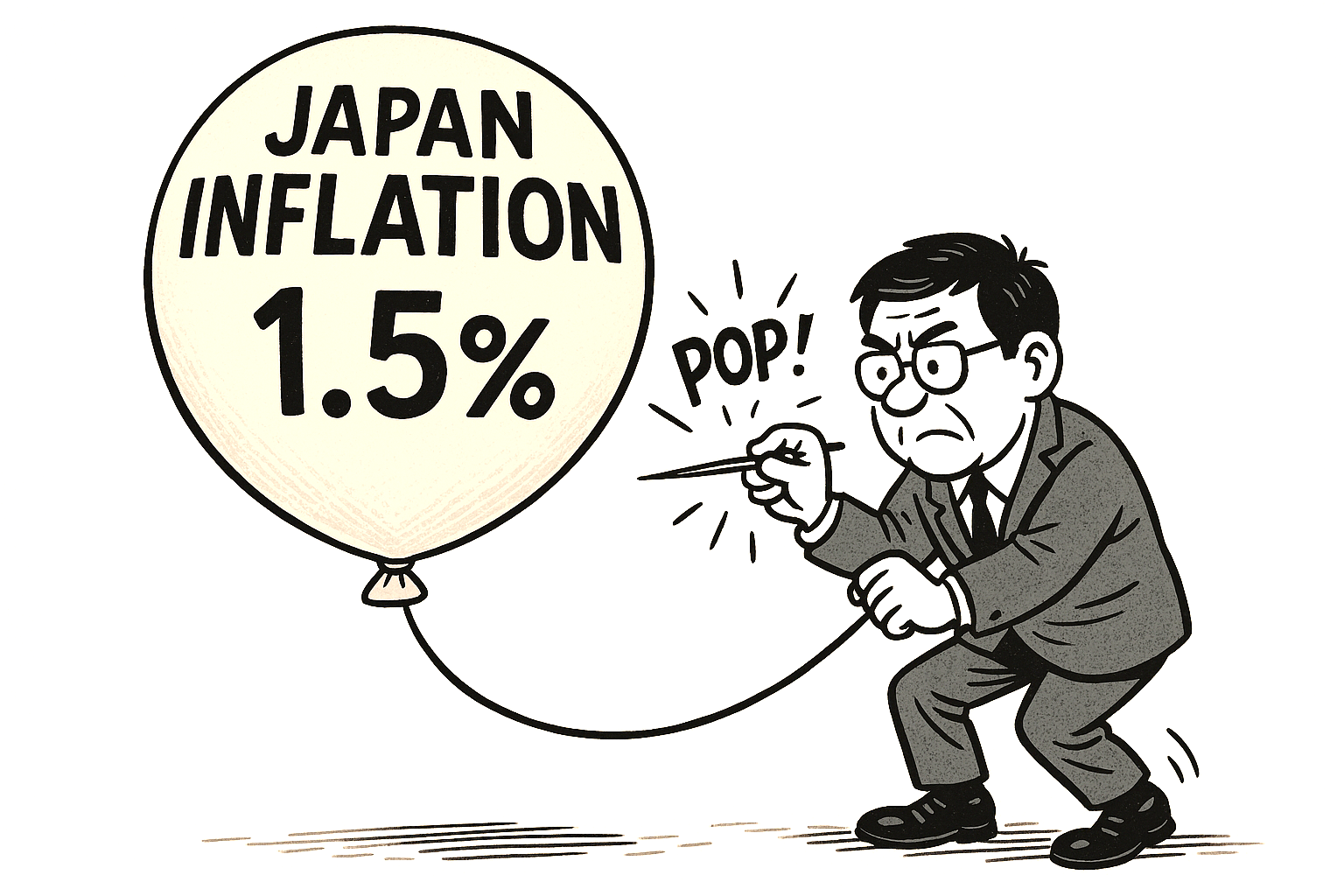
Japan’s inflation rate has dipped below the Bank of Japan’s long‑standing 2% target for the first time in almost four years, marking a notable turning point in the country’s post‑pandemic price cycle.
Official figures show headline inflation easing to 1.5% in January, ending a 45‑month stretch above the central bank’s benchmark.
Slowdown
The slowdown reflects a broad cooling in cost pressures that had dominated the Japanese economy since 2022. Food inflation has eased to a 15‑month low, while transport, healthcare, and household goods have all seen slower price growth.
Energy costs remain negative, helped by government subsidies that continue to cushion households from global fuel volatility.
Core inflation — which strips out volatile fresh food prices — has also softened, slipping to 2.0%, its weakest pace in two years.
Analysts attribute much of the deceleration to base effects following last year’s sharp price increases, suggesting that underlying demand‑driven inflation remains relatively stable.
For the Bank of Japan, the latest figures present a delicate policy challenge. While inflation is finally within the target range, underlying price pressures have not disappeared entirely.
Rate increases?
Some economists argue the BOJ may still lean toward gradual rate increases, particularly as wage negotiations progress and the government pushes for sustained real income growth.
Others caution that tightening too soon could risk undermining Japan’s still‑fragile consumption recovery.
What is clear is that Japan has entered a new phase of its inflation story — one defined less by imported cost shocks and more by the question of whether domestic demand can carry the momentum forward.