Sequoia Capital and Andreessen Horowitz, two of Silicon Valley’s most high-profile venture firms, are poised to take a massive hit on their investments in grocery delivery company Instacart, a deal that closed in 2021 as tech stocks were soaring.
In its latest IPO prospectus update, Instacart said it plans to sell shares at $28 – $30 a share, valuing the company at around $10 billion at the top of the range. That’s more than 75% below where Sequoia and Andreessen invested in early 2021. At that time, Instacart sold shares at $125 a pop valuing Instacart at $39 billion.
Valuation plunge
The reason for the valuation collapse is that the U.S. economy reopened after the pandemic, then inflation spiked and the Federal Reserve started raising interest rates, which were stuck near to zero throughout the Covid pandemic.
Borrowed money suddenly became expensive again, and quickly too. Tech’ companies in early stages of development, need access to research and development finance – interest rate increases restricted investment.
Instacart 75% plunge in valuation from original price of $125 per share
Then consumers started shopping again on foot, and with capital costs increasing, investors began demanding that companies find a strong path to profitability.
IPO
Instacart is trying to crack open an IPO market that’s been closed for venture-backed companies for nearly two years, so it won’t be easy. However, the ARM IPO recently may re-adjust that view.
Confidence in Bank of England (BoE) is a measure of how much the public trusts the central bank to control inflation, set interest rates and maintain economic stability.
According to the latest Inflation ‘Attitudes Survey‘ conducted by the Bank of England in August 2023, confidence in Bank of England has plummeted to an all-time low.
Survey
The survey found that only 19% of the respondents were satisfied with the way the Bank of England was doing its job to set interest rates to control inflation, while 40% were dissatisfied. The net satisfaction rate was -21%, which is the lowest since the survey began in 1999.
2% inflation please
The main reason for the low confidence is the high inflation rate that has been persisting in the UK for more than a year. Inflation reached a peak of 11.1% in December 2022, and was still at 6.8% in July 2023, well above the Bank of England’s target of 2%. The Bank of England has raised interest rates 14 times since the end of 2021, from 0.1% to 5.25%, to try to bring inflation down, but this has also increased the cost of borrowing and living for many households and businesses.
Slow
Some critics have argued that the Bank of England (BoE) acted too slowly and too cautiously to raise interest rates when inflation was rising, while others have warned that raising rates too high and too fast could harm the economic recovery from the Covid-19 pandemic.
The public’s expectations of future inflation are also high, with a median answer of 2.9% for inflation in five years’ time, almost one percentage point higher than the Bank’s target.
Credibility
Confidence in Bank of England (BoE) is important because it affects how people behave in terms of spending, saving, investing, and borrowing.
Bank of England hits all-time confidence low according to survey
Loss of faith
If people lose faith in the central bank’s ability to control inflation and maintain economic stability, they may act in ways that could worsen the situation, such as hoarding money, demanding higher wages, or taking on more debt.
Therefore, it is crucial for the Bank of England to communicate clearly and effectively with the public about its policies and actions, and to restore trust and confidence in its role as an independent and credible institution.
It is also useful to take notice of early warning signs, such as the economic red alert posed by inflation after the pandemic recovery started.
Flights at Gatwick Airport were cancelled, delayed or diverted at short notice on Thursday 14th September 2023 due to a shortage of air traffic controllers.
Gatwick confirmed some cancellations, while the website FlightRadar24 said hundreds of flights in and out of the airport were delayed.
The National Air Traffic Services (Nats) apologised for its staffing shortages.
Gatwick Airport said it expected a normal service on Friday, 15th September 2023.
EasyJet expressed frustration at Thursday’s delays and cancellations, while Ryanair boss Michael O’Leary called on Nats’ boss to resign.
Mr O’Leary reportedly said: ‘It is unacceptable that more flights and hundreds of passengers are suffering delays to/from Gatwick Airport due to Nats CEO, Martin Rolfe’s blatant failure to adequately staff UK ATC’.
‘Airlines are paying millions of pounds to Nats each and every year and should not have to see their passengers suffer avoidable delays due to UK ATC staff shortages’.
Update
Gatwick Airport said it was ‘operating as normal’ on Friday after a shortage of air traffic controllers caused disruption to flights overnight on Thursday, 14th September 2023.
Masayoshi Son says AI to surpass human intelligence and that SoftBank will ‘rule the world’. Oh dear…!
Main points in brief
Masayoshi Son reportedly said AI is capable of helping solve the world’s biggest problems and could potentially surpass the intelligence of humans.
He said he was a ‘big believer’ in AI and that Arm, a chip design company owned by Softbank, was a ‘core’ beneficiary of the AI revolution.
He said AI would supercharge human ability and that Softbank would ‘rule the world’ and win the latest generative-AI race thanks to its heavy investment in startups and its majority stake in Arm.
He also acknowledged that AI posed some threats to humanity if mishandled and that society should regulate it to protect humankind.
Masayoshi Son and SoftBank
The 66-year-old founded SoftBank, which still controls about 90% of Arm Holdings after the IPO, back in 1981 after graduating from the University of California, Berkeley. Forbes estimates his net worth at more than $24 billion, making him the world’s 69th richest person.
Son made his early reputation as an investor in Japan’s mobile phone industry, and went on to become one of the first backers of Yahoo as well as Alibaba. Son continues to serve as the chairman of Arm’s board of directors.
AI does pose some threats to humanity if mishandled, Son said, likening its potential misuse to the dangers of speeding, or drinking alcohol while driving a car. But, more positively, AI can also help solve key world problems like diseases or help mitigate or recover from natural disasters, he reportedly said.
‘AI, society should regulate to protect humankind’, Son said. ‘However, it has more merit than the demerits. So, I think I’m a believer. I’m optimistic that AI is going to solve the issues that mankind couldn’t solve in the past‘.
Eurozone interest rates have been hiked again to a record high by the European Central Bank (ECB).
The bank raised its key rate for the 10th time in a row, to 4% from 3.75%, as it warned inflation was expected to remain too high for too long.
The latest increase came after forecasts predicted inflation, which is the rate prices rise at, would be 5.6% on average in 2023. However, the ECB signalled that this latest hike could be the last for now.
‘The council considers that the key ECB interest rates have reached levels that, maintained for a sufficiently long duration, will make a substantial contribution to the timely return of inflation to the target’, the bank reportedly said. The central bank originally expected inflation to be ‘transitory’.
It added that it expected inflation in the 20-nation bloc to fall to around 2.9% next year and 2.2% in 2025.
As in other parts of the world, the eurozone has been hit by rising food and energy prices that have squeezed household budgets and from the Russia/Ukraine war. Central banks have been increasing interest rates in an attempt to tame inflation and slow rising prices.
More expensive to borrow
The theory behind increasing rates is that by making it more expensive for people to borrow money, the ‘consumer’ will then have less excess cash to spend, meaning households will buy fewer things and then price rises will ease. But it is a balancing act as raising rates too aggressively could cause a recession.
Interest rates in the UK are currently higher than in the eurozone at 5.25%, but UK inflation is also higher at 6.8%, and the Bank of England is expected to raise rates again next week.
NASA has recently released a report on Unidentified Anomalous Phenomena (UAP), which is another term for UFOs. The report is based on a yearlong study of hundreds of UAP sightings by scientists and data experts.
In brief
NASA found no evidence that aliens are behind the UAPs, but it also could not rule out the possibility. The report said that some of the objects must have travelled through our solar system to get here.
NASA said that the study of UAPs will require new scientific techniques, including advanced satellites and artificial intelligence. The agency also announced a new director of UAP research to establish a robust database and analysis process.
NASA said that UAPs are important for national security and air safety, as some of them pose potential threats to aircraft and military operations. The agency also said that it will share data and findings with more transparency and collaboration.
NASA said that many UAP sightings can be explained by natural phenomena, human-made objects, or sensor errors, but some remain unexplained and anomalous. The report estimated that only about 2% to 5% of the total database are thought to be truly anomalous.
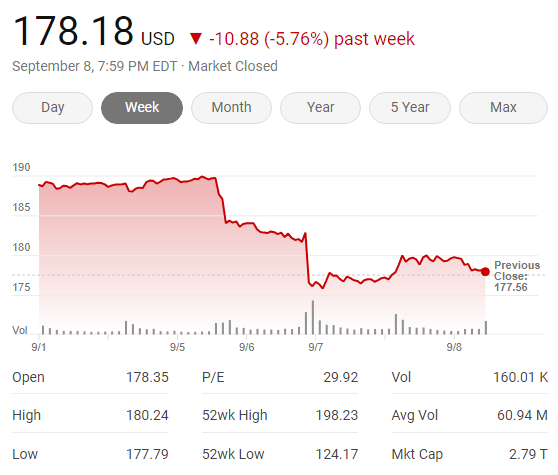
Investors gobbled up UK microchip designer Arm Holdings at its U.S. debut on the Nasdaq on 14th September 2023, sending its market value soaring to $60 billion (£48.3 billion).
The shares ended the day worth more than $63 each, after climbing by almost 25% from the high end start of $51 per share set by Arm.
The sale was the biggest initial public offering of the year, raising $4.87 billion for owner Softbank Group.
Despite some concerns surrounding the company’s exposure to risks in China and a potential AI slowdown – the shares soared.
British tech
A star of the British technology industry, Arm designs microchips for devices including smartphones and game consoles. It estimates that some 70% of the world’s population uses products that rely on its chips, including nearly all of the world’s smartphones. And with AI nestling in on the horizon, the future potential for Arm is massive.
Arm stock chart 14th September 2023
Arm said it expects the total market for its chip designs to be worth about $250 billion by 2025, including new growth areas such as data centres and cars.
Legacy
Many of Arm’s royalties come from products released decades ago. About half of the company’s royalty revenue of $1.68 billion in 2022, came from products released between 1990 and 2012.
Bright Future
The future looks bright for Arm but the company is trading at more than 25 times its most recent full year of revenue, and at more than 100 times profit.
And that could be where things get tricky for Arm in the not too distant future. Projections for future profits will be interesting, esecially if it’s to keep up with Nvidia for instance.
The value of UK mortgage arrears jumped by almost a third in April to June 2023 compared with the same period last year, according to the Bank of England (BoE).
Outstanding mortgage debt is now £16.9bn, the highest since 2016, it said.
Mortgage costs have risen for millions as the Bank has repeatedly hiked interest rates to slow soaring prices.
Some experts warn defaults will rise, but others say the number unable to repay remains relatively low.
According to the BoE, in April-June 16% of mortgages in arrears were new cases, which it said ‘was little changed compared to the previous quarter’.
It added that the proportion of mortgages in arrears was the highest since 2018.
According to news reports, France has banned the Apple iPhone 12 because it emits too much electromagnetic radiation, which could be harmful to human health.
The French watchdog (ANFR) said that the iPhone 12’s specific absorption rate (SAR), which measures the rate of radio frequency energy absorbed by the body, was above the legal limit of 4.0 watts per kilogram in tests simulating the phone being held in the hand or kept in a pocket.
Dispute
Apple disputed the tests and said that the iPhone 12 was certified by multiple international bodies and compliant with all global radiation standards. The French digital minister said that Apple had two weeks to respond and fix the issue, or else he would order a recall of all iPhone 12 devices sold in the country.
The minister also said that France would share its findings with other regulators in the European Union, which could lead to a wider ban of the phone.
France ban Apple iPhone 12 due to excessive radiation fears
What is electromagnetic radiation?
Radiation from mobile phones is a type of electromagnetic radiation that is emitted by cell phones and cordless phones when they send and receive signals. Electromagnetic radiation is a form of energy that travels in waves or particles through space.
It can be classified into two types: ionizing and non-ionizing radiation. Ionizing radiation has high energy and can damage DNA, which may increase the risk of cancer such as; x-rays, radon, and cosmic rays. Non-ionizing radiation has low energy and cannot damage DNA directly – such as; radio waves, microwaves, infrared, visible light, and ultraviolet light.
Cell phone radiation
Cell phones use radiofrequency (RF) waves, which are a type of non-ionizing radiation, to communicate with cell towers and other devices. RF waves have frequencies ranging from 0.7 to 80 GHz, depending on the generation of the cell phone (2G, 3G, 4G, or 5G). The human body can absorb some of the RF energy from cell phones, which may cause some heating to the area of the body where the phone is held (e.g., the ear and head). However, it is suggested this heating is not enough to raise the core body temperature or cause any harmful effects.
Research
There has been a lot of research on whether cell phone use can cause health problems, such as cancer, in humans. However, it has been reported that the evidence so far is not conclusive and does not show a clear link between cell phone use and cancer risk. There could be a link but we do not know 100%… yet?
Some studies have suggested that there may be a small increase in the risk of certain types of brain tumors (such as acoustic neuromas) for people who use cell phones for a long time or frequently. However, other studies have not found any consistent evidence to support this.
The incidence of brain and central nervous system cancers has not changed significantly during the time that cell phone use has increased dramatically. Therefore, more research is needed to understand the possible effects of cell phone use on human health.
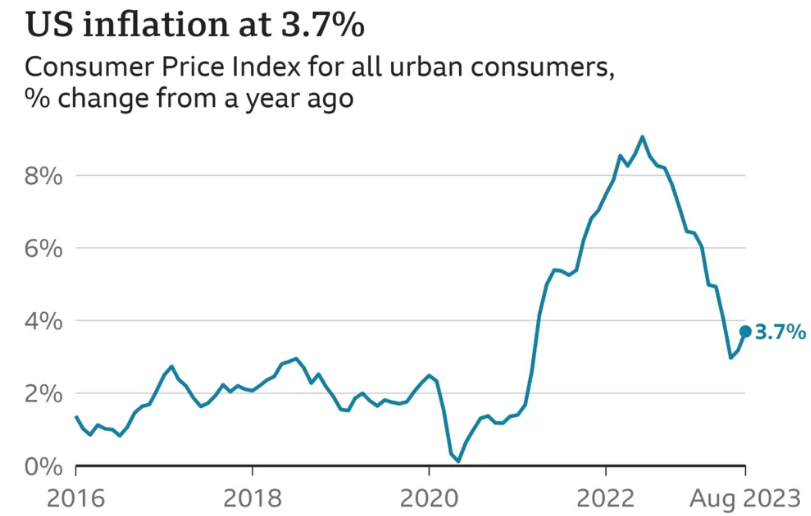
The latest inflation figures for the U.S. show that the annual inflation rate rose to 3.7% in August 2021, up from 3.2% in July 2021. This was mainly driven by a sharp increase in energy prices, which jumped up 10.5% over the last month. Gas (petrol) prices accounted for more than half of the increase in the overall inflation rate.
Core inflation
However, core inflation, which excludes the volatile food and energy sectors, slowed down to 4.3% in August 2021, down from 4.7% in July 2021. This suggests that the Federal Reserve’s ’11’ rate hikes are having some effect on cooling the inflationary pressures in the economy. Some sectors, such as used cars, medical care services and airfare, saw price decreases in August 2021.
Will the Fed keep interest rates unchanged at its next meeting on September 20, 2021, as we wait to see the full impact of its previous rate hikes on the economy?
However, the Fed may still raise interest rates later this year if inflation remains persistently above its target of 2%. Higher interest rates could introduce more volatility to the U.S. economy and potentially trigger a recession.
The upcoming IPO of Arm Holdings, the British chip designer that is owned by SoftBank Group is already oversubscribed by more than 10 times. Bankers plan to stop taking orders by the afternoon of 12th Deptember 2023.
This means that there is a massive demand for the shares and the company may raise more money than expected. The IPO could end up as much as 15 times oversubscribed by Wednesday 13th September 2023, which would indicate a very high valuation for Arm.
High end valuation $55 billion
Arm filed for its IPO at $47 to $51 a share, which could value the company at $54.5 billion at the high end of the range. However, Arm is still reportedly considering raising the price range of its IPO. This could easily make Arm one of the most valuable tech companies in the world.
ARM IPO over subscribed September 2023
Arm is a key part of the chip supply chain, designing semiconductors found in most of the world’s smartphones, as well as other devices and applications.
Arm is poised to become a bigger and more profitable business, as it shifts to high-margin chips and benefits from the boom in cloud computing and artificial intelligence (AI).
Arm’s CEO Rene Haas has been pitching investors on this pivot and the growth prospects of the company.
The Magnificent Seven is a term to describe seven tech’ stocks that have been surging in 2023.
Meta Platforms (formerly Facebook), the social media giant that also owns Instagram, WhatsApp, and Oculus.
Apple, the maker of the iPhone, iPad, Mac, Apple Watch, AirPods, and other popular devices and services including cloud and Apple TV streaming service.
Amazon, the e-commerce leader that also operates AWS, Prime Video, Alexa, and Whole Foods.
Alphabet, the parent company of Google, YouTube, Gmail, Google Cloud, and Waymo.
Microsoft, the software company that owns Windows, Office, Azure, LinkedIn, Xbox, and Teams.
Nvidia, the semiconductor company that produces graphics cards, gaming devices, data center solutions, and AI platforms.
Tesla, the electric vehicle maker that also develops solar panels, batteries, and autonomous driving technology.
Dominant
These seven stocks are considered to be dominant in their respective fields and have strong growth prospects driven by innovation and artificial intelligence (AI).
They have outperformed the broader market and attracted many investors who are looking for exposure to the tech’ sector. Some analysts believe that these stocks will continue to lead the market in the future, while others caution that they may face regulatory challenges, competition, or valuation issues.
Approximate combined market cap of the Magnificent Seven tech stocks
The approximate combined market cap value of the Magnificent Seven as of September 2023 is approximately $11.8 trillion.
Apple: $2.5 trillion
Microsoft: $2.3 trillion
Alphabet: $1.9 trillion
Amazon: $1.7 trillion
Nvidia: $0.8 trillion
Meta Platforms: $0.9 trillion
Tesla: $0.7 trillion
Note that these values will change over time as the stock prices fluctuate.
A way to trade the tech sector is through funds
There are many funds that can trade tech stocks, depending on your investment objectives, risk tolerance, and preferences.
Technology mutual funds: These are funds that invest in a diversified portfolio of technology companies across different industries, such as software, hardware, internet, cloud, biotech, and more. Technology mutual funds can offer exposure to the growth potential of the tech sector, as well as reduce the volatility and risk of investing in individual stocks.
Some examples of technology mutual funds are Fidelity Select Technology Portfolio (FSELX), Columbia Global Technology Growth Fund (CGTYX), and Schwab U.S. Large-Cap Growth Index Fund (SCHG).
Which tech fund to invest in?
Technology exchange-traded funds (ETFs): These are funds that track an index of technology stocks and trade on an exchange like a stock. Technology ETFs can offer low-cost and convenient access to the tech sector, as well as allow investors to choose from different themes, such as cybersecurity, artificial intelligence (AI), cloud computing and more.
Some examples of technology ETFs are Invesco QQQ Trust (QQQ), Technology Select Sector SPDR Fund (XLK), and VanEck Vectors Semiconductor ETF (SMH).
Technology index funds: These are funds that replicate the performance of a specific technology index, such as the Nasdaq 100, the S&P 500 Information Technology Index, or the Morningstar U.S. Technology Index. Technology index funds can offer broad and passive exposure to the tech sector, as well as low fees and high tax efficiency.
Some examples of technology index funds are Fidelity NASDAQ Composite Index Fund (FNCMX), Vanguard Information Technology Index Fund Admiral Shares (VITAX), and iShares Morningstar U.S. Technology ETF (IYW).
NOTE: These are not recommendations. Investments may go up or down. Your money is at risk!
Martin Luther was a German theologian and leader of the Protestant Reformation in the 16th century. He is known for his writings and teachings on topics such as justification by faith, the authority of Scripture, the priesthood of all believers, and the freedom of the Christian.
He also translated the Bible into German and wrote many hymns, catechisms, and commentaries.
He is widely regarded as one of the most influential figures in the history of Christianity.
‘Even if I knew that tomorrow the world would go to pieces, I would still plant my apple tree’.
Apple sells around 50 million iPhones in China annually. A sweeping ban is what investors fear and that spells trouble for Apple.
Apple stock drops after The Wall Street Journal reported a day earlier that Chinese authorities have curbed the use of the iPhone. Apple’s flagship product will no longer be legal to use by some central government officials.
The potential crackdown threatens to dissrupt Apple’s sales as China accounts for about 20% of Apple’s total revenue. Uncertainties about the news prompted investors to retreat from Apple postions, leading to a 6% drop in Apple shares in two days. More than $200bn of market cap was wiped out.
$200 market cap drop
Apple shares fall $200 billion in just days September 2023
The iPhone commeth
Adding to the concern, Apple is just days away from its key event. On the 12th september 2023, the company is expected to officially announce the launch of its newest smartphone – the iPhone 15.
Attracting seasonal workers remains a problem for some UK farmers, despite the UK government’s attempts to increase the number of visas available for people from overseas.
There is a shortage of short term farm labour in the UK to pick crops, especially potatoes. Some of the possible causes and consequences of this situation range from Brexit to the war in war Ukraine.
Problems
Brexit has reduced access to temporary workers coming from the EU, while war in Ukraine has disrupted the flow from a country that has provided a large proportion of the UK’s harvest workers in recent years.
The UK government has a seasonal workers pilot scheme that offers short-term visas to those helping with food production, but the farming industry says it needs more than the 38,000 visas that have been made available.
High employment levels in the UK and alternative work opportunities in other sectors such as warehouses and delivery have made it harder for farmers to recruit local workers.
The labour shortage has led to food waste of home-grown fruit and vegetables, as some crops are left to rot in the fields or are harvested less frequently.
Unharvested crops left to rot in a field due to worker shortage in the UK
Food waste and supply chain
The food supply chain is also affected by the lack of workers in slaughterhouses, dairy farms, and other processing facilities.
The food waste and supply disruption could have negative impacts on the environment, the economy, and the consumers’ access to fresh and affordable produce
And it can be especially challenging for farmers in very rural areas, where transport is more difficult and the pools of workers available are likely to be smaller.
Many economists stronly believe that India’s stellar economic trajectory alongside strong forecasts for some Southeast Asian countries will be important drivers for future global growth.
The next decade, could see Asia Pacific become the fastest growing region of the world economy. India, Indonesia, the Philippines and Vietnam will most likely be among the world’s fastest growing emerging markets over the next 10 years.
India’s economy grew 7.8% in the June quarter, marking the fastest pace of growth in a year.
The momentum in the Indian economy looks really strong at the moment, economists suggest. Some forecasts expect that India will surpass Japan to become the third largest economy by 2030, with the country’s GDP projected to rise from $3.5 trillion in 2022 to $7.3 trillion by 2030.
As a region, Asia-Pacific’s growth is expected to strengthen from 3.3% last year to 4.2% this year, according to economic projections.
Over the next decade, we expect that about 55% of the total increase in the world’s GDP will come from the Asia-Pacific region.
Where does this leave the U.S. and China?
Still, the U.S. will remain an important driver of the global economy, accounting for some 15% of the world’s growth over the next decade.
China will also still be pivotal in this growth story, contributing to about one-third of the total increase over the same period, analysts suggest. China’s recovery has been weaker than expected and the expected ‘growth momentum’ has wained.
China has been affected by a slew of economic data broadly missing expectations.
As a whole, analysts expect global growth to come in at 2.5% this year and next. But please bear in mind these are forecast and move regularly.
Ashoka Chakra – the Flag of India
The flag of India is a horizontal tricolour of saffron, white and green, with a navy blue wheel called the Ashoka Chakra in the centre. The flag was adopted on 22nd July 1947, after India gained independence from British rule.
It is based on the Swaraj flag, which was designed by Pingali Venkayya and modified by Mahatma Gandhi. The colours and symbols of the flag have different meanings and interpretations.
Saffron represents courage, sacrifice, Hinduism and Buddhism. White represents peace, truth, purity and other religions in India. Green represents faith, fertility, Islam and Sikhism.
The Ashoka Chakra represents the law of dharma, the cycle of life and death, and the ancient Indian emperor Ashoka who spread Buddhism across Asia.
India’s flag is also known as the Tiranga, which means ‘the tricolour’ in Hindi. The flag has a ratio of 2:3 and can only be made of khadi, a hand-spun cloth.
The flag code of India regulates the usage and display of the flag by the government and the public.
A unit trust is a type of investment fund that allows you to pool your money with other investors and invest in a variety of assets, such as shares, bonds, property, or cash.
A unit trust is managed by a professional fund manager who decides what to buy and sell according to the fund’s objectives and strategy. You can buy or sell units in a unit trust at any time, depending on the market price of the units. The price of each unit is calculated by dividing the total value of the fund’s assets by the number of units issued.
The more units you own, the more you benefit from the fund’s performance. A regular monthly purchase is the best way to buy as you evenly spread the cost and smooth out and the ‘up’s and ‘downs’ over time.
Some of the advantages of investing in a unit trust
You can access a diversified portfolio of assets with a relatively small amount of money.
You can benefit from the expertise and research of the fund manager who makes the investment decisions for you.
You can choose from a wide range of unit trusts that suit your risk appetite, investment goals, and preferences.
Some of the disadvantages of investing in a unit trust
The performance of the unit trust depends on the skill and judgment of the fund manager, who may not always make the best choices.
You have to pay fees and charges to the fund manager and other service providers, which can reduce your returns.
You may face market risks and volatility, which can affect the value of your units.
A unit trust is a good way to invest in the markets but beware, like any investment, markets go up and they go down! Be aware and be careful.
The G20 summit will be held in New Delhi on 9th and 10th September 2023. This is the first time that India has hosted such a prestigious event, which brings together the leaders of the world’s 20 major economies with the exception of Russia.
India has invited several other countries and organisations to attend the summit, to include Bangladesh, Egypt, Spain, Netherlands, Nigeria, Mauritius, Singapore, Oman, UAE, UN, IMF, WHO, WTO, ILO, OECD, ISA, CDRI and ADB.
Broad range of issues
The summit will cover a range of issues, such as global health and pandemic response, economic recovery and resilience, climate change and environment, digital transformation and innovation, and gender equality and women empowerment. India has also proposed three new agenda items for the summit: reformed multilateralism, physical and social infrastructure for rapid inclusive development, and media and entertainment.
Major global player
India hopes that the G20 summit will cement its role as a major global player and showcase its achievements and aspirations to the world. However, the summit also faces some challenges and uncertainties, such as the absence of China’s Xi Jinping and Russia’s Vladimir Putin, the possibility of failing to agree on a joint communique, and the criticism of India’s beautification efforts that have displaced many poor people and animals.
Significant growth expected for India
India’s economy is expected to grow significantly in the coming years. For example, some economists predict that India’s annual gross domestic product growth (GDP) will average 6.3% through 2030. Others estimate that India’s GDP is likely to more than double from current levels by 2031. The OECD also forecasts that India will grow by 6% in 2023–24 and by 7% in 2024–25.
Some of the factors that may contribute to India’s economic growth are its strong emphasis on physical infrastructure development, ease of doing business, improved global conditions, and increased public spending on health care. However, there are also some challenges and risks that India may face, such as inflationary pressures, global uncertainties, environmental issues, and the labour market.
What is the G20?
The G20 is a group of 20 major economies that meet annually to discuss global issues such as economic growth, trade, development, health, climate change and energy.
India plays host to the G20 (2023)
Members of the G20
Argentina
Australia
Brazil
Canada
China
France
Germany
India
Indonesia
Italy
Japan
Republic of Korea
Mexico
Russia
Saudi Arabia
South Africa
Turkey
United Kingdom
United States
European Union
The European Union is represented by the European Commission and the European Central Bank. The G20 accounts for around 80% of gross world product, 75% of international trade, two-thirds of the global population, and 60% of the world’s land area.
The G20 was founded in 1999 in response to several world economic crises and has become the primary venue for international economic and financial cooperation.
There is a possibility that the summit could be overshadowed by India and Modi, who has given the event ‘major’ attention.
Update
African Union made permanent member of G20 ‘family’ of countries at the India hosted summit 2023.
He was an anti-colonial nationalist, Indian lawyer and political ethicist who employed nonviolent methods to lead the successful campaign for India’s independence from British rule.
He inspired civil rights movements and freedom across the world
Gandhi, who led a major nonviolent protest against the British rule in India by marching to the sea to make salt. He was also known as Mahatma Gandhi, meaning ‘great soul’ in Sanskrit.
He inspired millions of Indians to join his campaign of civil disobedience, or satyagraha, which means ‘truth force’ or ‘soul force’ in Sanskrit.
He was arrested several times by the British authorities, but he never gave up his fight for India’s independence. He is widely regarded as the father of the Indian nation and a global symbol of peace and justice.
‘Be the change that you wish to see in the world’.
According to a report by Henley & Partners, a professional consultancy firm, there are 22 people who have crypto holdings worth at least $1 billion as of September 2023. Six of them hold their investments in Bitcoin, the first and largest cryptocurrency by market capitalization.
Six Bitcoin billionaires reported net worth
Micree Zhan, the co-founder of Bitmain, a leading manufacturer of Bitcoin mining hardware. He has a reported net worth of $3.2 billion as of January 2021.
Chris Larsen, the co-founder and executive chairman of Ripple, a blockchain platform that facilitates cross-border payments. He has a reported net worth of $2.9 billion as of January 2021.
Michael Saylor, the founder and CEO of MicroStrategy, a business intelligence company that has invested over $1 billion in Bitcoin since 2020. He has a reported net worth of $2.3 billion as of January 2021.
Bitcoin billionaire pile
Changpeng Zhao, the founder and CEO of Binance, the world’s largest cryptocurrency exchange by trading volume. He has a reported net worth of $1.9 billion as of January 2021.
Tim Draper, a venture capitalist and early investor in Bitcoin and other cryptocurrencies. He has a reported net worth of $1.5 billion as of January 2021.
Brian Armstrong, the co-founder and CEO of Coinbase, the largest cryptocurrency exchange in the U.S. He has a reported net worth of $1.3 billion as of January 2021.
Satoshi Nakamoto
There are also likely to be some anonymous Bitcoin billionaires who have not disclosed their identities or holdings to the public.
One of them could be Satoshi Nakamoto, the mysterious ‘likely’ creator of Bitcoin, who is estimated to have mined over one million Bitcoins in the early days of the network.
If he still owns them, his fortune would be worth over $40 billion at current prices. However, there is no conclusive evidence that he is still alive or in control of his bitcoins, or even that he was the originator of Bitcoin.
The UK superfund plan is a new initiative launched by the Prime Minister and the Technology Secretary on 6 March 2023, with the aim of making the UK a global science and technology superpower by 2030.
The plan outlines key actions that will involve every part of the government
Identifying and pursuing strategic advantage in the technologies that are most critical to achieving UK objectives
Showcasing the UK’s S&T strengths and ambitions at home and abroad to attract talent, investment and boost our global influence
Boosting private and public investment in research and development for economic growth and better productivity
Building on the UK’s already enviable talent and skills base
Financing innovative science and technology start-ups and companies
Capitalising on the UK government’s buying power to boost innovation and growth through public sector procurementSshaping the global science and tech landscape through strategic international engagement, diplomacy and partnerships
Ensuring researchers have access to the best physical and digital infrastructure for R&D that attracts talent, investment and discoveries.
Government funding
The plan is backed by over £370 million in new government funding to support infrastructure, investment and skills for the UK’s most exciting growing technologies, such as quantum and supercomputing, AI, biotechnology, clean energy, space and robotics. The plan is expected to create high-paid jobs of the future, grow the economy in cutting-edge industries, and improve people’s lives from better healthcare to security.
Government funding for Superfund
The funding sources for the UK superfund plan are mainly from the government’s budget allocation for science and technology, which has increased by 50% since 2020 to reach £22 billion per year by 2024/25. The government has also committed to increase public spending on R&D to 2.4% of GDP by 2027, which is expected to leverage additional private sector investment. Moreover, the government has established a new agency called Advanced Research & Invention Agency (ARIA), which will have a budget of £800 million over four years to fund high-risk, high-reward research projects that could lead to breakthroughs in science and technology.
Foreign investment
The UK superfund plan also aims to attract more foreign direct investment (FDI) into the UK’s science and technology sector, by promoting the UK as a leading destination for innovation and showcasing its world-class research facilities, talent pool, regulatory environment and market opportunities. The government has set a target of increasing FDI stock in R&D from £45 billion in 2018 to £67 billion by 2025.
The UK superfund plan is a separate initiative from the superfund consolidators for defined benefit (DB) pensions, which are a new innovation in the UK pension industry. Transferring a DB pension scheme to a superfund can improve the security of members’ benefits by replacing a weak employer covenant with a capital buffer. The Pensions Regulator (TPR) has published guidance for trustees and sponsoring employers of UK DB pension schemes considering transacting with a superfund.
GB Savings One Fund
The GB Savings One Fund is a proposal by the Tony Blair Institute (TBI) to create the country’s first superfund for pensions. According to the TBI, the superfund would be an expansion of the Pension Protection Fund (PPF), which is a statutory fund that provides compensation to members of eligible defined benefit (DB) pension schemes in the UK when their employers become insolvent.
The UK Superfund
The Tony Blair Institute suggests that sponsors of the smallest 4,500 UK DB schemes would be offered the voluntary option of transferring to the PPF on a benefit preserving basis, which would improve the security and efficiency of their pensions.
The institute also proposes that the PPF model should be replicated and rolled out throughout the UK in a series of regional, not-for-profit entities that sit within a master governance structure under the existing fund or participate in consolidation in parallel with and modelled on the original GB Savings.
The TBI argues that this approach would result in a modernised pension system that would generate better returns for pensioners, attract more investment and talent, and strengthen pensions for the entire generation stuck with inadequate provision since the closure of the DB funds over the past two decades.
GB Bank
The GB Savings One Fund is not related to GB Bank, which is a bank that offers competitive savings accounts that support residential and commercial developments in communities that need them most. GB Bank has a full UK banking licence and offers the same level of protection as the traditional high street banks.
When you save with GB Bank, your money is protected up to £85,000 by the Financial Services Compensation Scheme (FSCS).