The White House has announced what it is calling ‘the most significant actions ever taken by any government to advance the field of AI safety’.
Oh really! Coincidence or deliberate attempt to undermine the UK AI safety drive?
This news comes as the UK draws attention hosting a UK led AI summit. The U.S. wants to police and control the AI arena too as it does most other aspects of our life.
Biden order
An executive order from President Biden requires Artificial Intelligence AI developers to share safety results with the U.S. government. It is an attempt to place the U.S, at the centre of the global debate on AI governance.
However, this is a position the UK government has already engineered as the UK AI safety summit gets underway this week. The UK desires to place itself at the centre of AI governance.
U.S. executive order
The U.S. executive order from Biden suggests the U.S. fancies itself as the leader of global AI governance in terms of how to address such threats or does it simply want to stamp its authority in the AI world. It tried to do the same with cryptocurrencies but fundamentally failed.
U.S. measures include
Creating new safety and security standards for AI, including measures that require AI companies to share safety test results with the federal government.
Protecting consumer privacy, by creating guidelines that agencies can use to evaluate privacy techniques used in AI.
Helping to stop AI algorithms discriminate and creating best practices on the appropriate role of AI in the justice system.
Creating a program to evaluate potentially harmful AI related healthcare practices and creating resources on how educators can responsibly use AI tools
Working with international partners to implement AI standards around the world.
UK AI summit
The UK summit is referenced in the executive order. But it’s mentioned under the heading of ‘advancing American leadership abroad’ – indicating that the U.S. very clearly knows that it is the big player here alongside China.
The UK is determined to position itself as a global leader in the space of trying to minimise the risks posed by this powerful technology.
However, U.S. Vice President Kamala Harris and top executives from the U.S. tech giants are arriving in the UK this week to discuss AI safety at the UK government’s AI Summit, which it has billed as a ‘world first’.
The summit, hosted by UK Prime Minister Rishi Sunak, will focus on the growing fears about the implications of so-called frontier AI. President of the EU Commission Ursula von der Leyen and UN Secretary-General Antonio Guterres will also be in attendance.
The UK is determined to position itself as a global leader in the space of trying to minimise the risks posed by this powerful technology.
But the U.S. as usual, will want to be in control…
If the Israel-Hamas conflict further intensifies, the risks to the global economy are growing, economist Mohamed el-Erian reportedly said Monday 30th October 2023.
The impact on global markets was initially limited, as investors viewed the conflict as contained. However, the prospect of a regional spillover has added to a sense of unease.
‘The longer this conflict goes on, the more likely it will escalate. The higher the risk of escalation, the higher the risk of contagion to the rest of the world in terms of economics and finance’, el-Erian said.
The UK government said it intends to bring a number of crypto asset activities under the same regulations that govern banks and other financial services firms.
Regulating a broad suite of crypto activities, such as trading, lending, and custody services.
Strengthening rules for crypto trading platforms and requiring them to have admission and disclosure documents.
Introducing a crypto market abuse regime to prevent manipulation and fraud.
Enhancing oversight of stablecoins, which are digital tokens pegged to fiat currencies or other assets.
The government’s consultation paper is open for feedback until January 31, 2024.
The government said it is committed to embracing technological change and innovation, while mitigating the most significant risks posed by crypto-assets.
According to the latest data from the U.S. Bureau of Economic Analysis, the U.S. GDP grew at a 4.9% annual pace in Q3 of 2023, better than expected.
This was the fastest quarterly advance in nearly two years, driven by robust consumer spending, increased inventories, exports, residential investment and government spending.
Challenges
The U.S. economy faced several challenges in the third quarter, such as high interest rates, inflation pressures, and global headwinds, but still managed to overcome them and show strong growth.
However, some analysts expect a slowdown in the fourth quarter and in early 2024, especially if the Federal Reserve implements another interest rate hike and the housing market remains sluggish and if consumer spending shows signs of slowing.
GDP and Inflation
The GDP report also showed that inflation rose 3.7% in September 2023, down from 9.1% in June, but still above the Fed’s 2% target. The Fed is expected to keep its policy tight and may announce a tapering of its bond-buying program next week.
The Nasdaq is a stock market index that tracks the performance of over 3,000 companies, mostly in the technology sector.
Correction
A correction is a term used to describe a decline of 10% or more from a recent peak in the price of an asset. The Nasdaq entered correction territory on Wednesday 25th October 2023, as it closed at 12,922, which was 10% lower than its previous high of 14,358 on 19th July 2023.
The main reason for the Nasdaq’s correction is believed to be the rise in long-term Treasury yields, which increased the borrowing costs for companies and reduced the attractiveness of growth stocks. The 10-year Treasury yield rose to 4.95% on Wednesday 25th October 2023, the highest level since June 2021. Higher interest rates also make future earnings for tech companies much more difficult.
Disappointing Q3 results
Another factor that contributed to the Nasdaq’s correction was the disappointing third-quarter earnings reports from some of the biggest tech companies, such as Alphabet (Google), Amazon, and Meta (Facebook fame).
These companies reported lower-than-expected revenue growth, profit margins, and cloud computing performance, which weighed on their stock prices and dragged down the Nasdaq. Investors expect more, especially with AI – now the new kid-on-the-block.
Concerns
The Nasdaq’s correction has raised concerns among investors about the outlook for the tech sector and the broader stock market. However, some analysts have argued that the correction could be a healthy and temporary adjustment that creates buying opportunities for long-term investors.
They have pointed out that the Nasdaq is still up 22.5% year-to-date as of Wednesday 25th October 2023, and that the fundamentals of the tech industry remain strong despite the challenges posed by inflation, regulation, yields and competition.
The idea is simple – pick good companies and hold them for the long-term.
Every time you buy shares in a company, you have purchased a piece of that company. And as a share owner, you are entitled to a ‘share’ of the profits.
When it comes to investing, the goal is to find great companies, super companies. Buy shares in these companies at good prices. And then behave like owners of these companies and enjoy all of the successes.
Then… HOLD those shares for as long as possible – as if you own the company.
Ask yourself this question: ‘Would you buy the company?’
If the answer is yes – then go buy the shares.
Holding on as long as possible means that as long as you believe a company is still a great, you are more likely to keep the shares. But if something changes and it’s no longer a good choice, then it may be time to sell up.
The message here is to believe in a long-term investing strategy – because it works!
Short-Term versus Long-Term Investing
What you must not do is gamble on shares or any other high-risk activity or product. Share prices go up and they go down all the time. And in some cases, prices continue to move even after the stock market has closed!
Long term investing is a long-term winner!
Most people aren’t successful trying to ‘bet’ on when a share is going to go up or down especially short-term bets laced over minutes, hours, days or weeks. You can’t build wealth this way. In fact, there are plenty of traders out there with tragic stories to tell of failed ‘dumb money bets’. This is one of the fastest ways to lose your hard-earned cash; just don’t do it!
Platforms
There are many investing platforms available today that offer all sorts of trading solutions, from day trading, CFDs (contract for differences), spread betting, and more recently, cryptocurrencies. These instruments aren’t really designed to assist a long-term strategy but rather a short-term punt or bet. It’s an endless game where someone, somewhere is always left with nothing. These systems will happily take your money.
Please read the small print for these services. Do not be surprised to see disclosures that read something like, ‘75%+ of retail traders lose money’. It’s true, they do, and it could be you! Its far far easier to learn to become financially successful over the long term.
Long-Term Investing
Diversify
A hard truth about investing is that sometimes you’ll get it wrong, we all do.
The term for this is firm-specific risk (sometimes referred to as unsystematic risk). And every company in the world, even industry behemoths like Amazon, Apple or Microsoft get it wrong sometimes too. It’s unavoidable.
Fortunately, such risk can be mitigated through diversification. By owning a number of companies, the returns of one successful investment can easily offset the losses of several losers.
It is wise to aim to build a portfolio over time of around say 10 – 20 quality businesses that you believe in. If you would be prepared to ‘buy’ the company; buying shares in it is the next best option.
Have Patience
In the short term, the movements of the stock market are chaotic, unpredictable or volatile even. But over a longer period of time, a recurring pattern starts to emerge among quality businesses.
Select quality companies and hold them!
Companies can’t magically double their profits overnight. Building a massive multi-billion or even trillion-pound enterprise takes time. But the investors who have the patience and financial prudence to invest in quality businesses with such long-term potential can unlock enormous wealth.
Invest consistently
Getting started with investing is the first major step. The second is to keep investing over time. Little and often. It’s not easy to ‘free up’ cash but the more money you put to work by investing in stocks, the better your portfolio will do overall.
It is easy for me to suggest for you to go invest and spend your money, you most likely need the money spare to be able to go do this in the first place. So, a little invested spread over time will help open that ‘wealth’ door as time trickles by.
However, there is a caveat to this rule. You should only invest money you don’t need to live. Invest only what you have spare or can ‘free up’.
This is the way!
Long-term investing requires holding investments for years or even decades. This strategy works – this is the way! It’s easier said than done, but a little invested now will go a long way later. It’s also a matter of priorities and sacrifice to ‘free up’ some spare cash to invest instead of buying that new must have gadget (that you don’t really need).
Also, the last place you want to find yourself in is where you are forced to sell your investment before it’s had time to ‘climb’ because you’re short on cash. Or even worse, forced to sell your holding during a stock market crash when prices are extremely low. That’s an awful place to be – don’t go there if you can avoid it. However, buying after a crash is a different matter – but again, buy only good quality companies.
Select super good companies and hold them.
In short, invest consistently. But only the money you can afford. Don’t borrow, don’t use credit. Only invest what you can afford. It will work for you over time. But invest wisely in good high quality comapnies,
Don’t panic – volatility happens!
The stock market will crash; this is an inevitable fact of investing. Naive investors, who panic during these volatile times, often end up selling their shares that are either completely unaffected by the catalysts of the crash or perfectly capable of weathering the storm.
Just take a look at what happened with Applein 2008. The tech giant fell by over 50% in the space of 12 months despite having no exposure to the U.S. housing market – even Apple got caught up in the sub-prime lending fiasco. And while the subsequent recession did impact sales, recessions, just like stock market crashes, are temporary. Apple share price recovered, as did many other top-notch companies too.
As horrible a stock market crash is, this is actually one of the best times to buy shares, especially when investing for the long-term. And these opportunities only come around once a decade or so. So, don’t miss out on these incredible opportunities to buy fantastic businesses at major discounts if you have the cash spare.
Let your winners run
Portfolio management is something every investor has to do. Yet a common mistake, is to sell shares in thriving companies too soon. This is usually an error – bear in mind that winners have a tendency to keep winning! But I get that – I understand you may want to sell as you need the money or want some of your investment back. Try and hold if you can – but not at any odds. Keep a close eye on the market – sentiment will change and that will alter the markets direction.
Let the winners run!
Having said that, there is an exception. It’s perfectly possible for a company that was just 2% of your portfolio to grow to 20% or even higher. In these scenarios, it can be wise to sell a few shares to reduce the risk of being over-exposed to a single investment.
But otherwise, let your winners win. LET THE WINNERS RUN!
You can do it!
There is no such thing as risk-free investing, even with a long-term approach. But many of these risk factors can be mitigated through strategies like diversification. Try and manage your portfolio, add stop losses and follow your investments through the newswires.
Remember to always do your research! No short cuts!
The inflation rate in Argentina is extremely high and has surpassed 100% for the first time since the early 1990’s. The inflation rate for consumer prices in Argentina was 138.28% in September 2023, based on the CPI values for the last 12 months.
This means that the prices of many goods and services have more than doubled since 2022. The main factors that contributed to this increase were the rise in food prices, especially meat, due to adverse weather conditions and a drought, as well as the economic difficulties and policy divisions that have plagued the country for years.
Argentina has been receiving bailout funds from the International Monetary Fund (IMF), but it has not been able to contain inflation, which has eroded the purchasing power of many people and pushed them into poverty.
The inflation rate in Argentina is one of the highest in the world and has a negative impact on its economic growth and social stability.
Map of Argentina
Map of Argentina
Argentina is the second largest country in South America, the fourth largest in the Americas, and the eighth largest in the world.
Central banks, 18 months ago got it fundamentally wrong and they got it wrong on many other occasions too.
So why take any notice?
The Fed and other central banks insisted that inflation would be ‘transitory’ – it wasn’t. It reached 7%. That’s 5% above the target of 2%.
Along with the misdiagnosis on prices, Fed officials, according to projections released in March 2022, collectively saw the key interest rate rising to just 2.8% by the end of 2023. It is now 5.25%.
The Great Depression (1929–1939) was an economic bomb that affected countries across the world. It was a period of severe economic depression after a major fall in stock prices in the United States. It began around September 1929 and led to the Wall Street stock market crash on 24th October 1929 (Black Thursday). See Wikipedia article here.
It was the longest, deepest, and most widespread depression of the 20th century.
The Great Depression of 1929
The Great Inflation
The Fed pursued an overly expansionary monetary policy in the 1960s and 1970s, which fueled high inflation and eroded the value of the dollar. The Fed also underestimated the impact of oil shocks and other supply shocks on inflation and was slow to tighten monetary policy to restore price stability. The Fed eventually raised interest rates sharply in the late 1970s and early 1980s, which triggered a severe recession. And in1991 inflation surged to 8.5%.
The Great Recession
The Fed likely contributed to the build-up of financial imbalances and excessive risk-taking in the 2000s, (Dotcom bubble) – by keeping interest rates too low for too long and by failing to adequately supervise and regulate the financial system.
The Fed likely contributed to the build-up of financial imbalances and excessive risk-taking in the 2000s
The Fed also reacted too slowly to the emerging signs of distress in the housing market and the financial sector and was unprepared for the global financial crisis that erupted in 2008. Remember, ‘sub-prime’ lending. We can see signs of similar stress in the U.S. car loan market now.
The Fed and other central banks including the Bank of England initially underestimated the severity and duration of the pandemic and its impact on the economy. The Fed also overestimated the transitory nature of inflation, which surged to a 30-year high in 2021 due to supply chain disruptions, pent-up demand, fiscal stimulus, and base effects. The Fed maintained an ultra-accommodative monetary policy stance for too long, despite mounting evidence of overheating and inflationary pressures.
The Fed finally raised interest rates by 0.75% in December 2022, but faced criticism for being behind the curve and for communicating poorly with the markets.
Transitory inflation
The Fed said inflation would be transitory in 2021 and 2022. The Fed used this term to describe the higher-than-normal prices that emerged during the Covid-19 economic crisis, which were expected to be temporary and not part of a long-term trend. The Fed attributed the inflation surge to factors such as supply chain bottlenecks, pent-up demand, fiscal stimulus, and base effects.
The Fed also said that it would let inflation run above its 2% target for some time, to achieve an average inflation rate of 2% over time. However, as inflation remained high and persistent in 2021 and 2022, the Fed faced criticism for being behind the curve and for communicating poorly with the markets. The Fed eventually raised interest rates.
And now, much of the same. The Fed is again ‘tinkering’ with policy to manage ‘transitory’ inflation and will most probably engineer a recession as a result.
The amount of U.S. debt is a complex and controversial topic that has different perspectives, implications and opinion.
According to the U.S. Treasury Fiscal Data, the national debt of the United States was $33.52 trillion as of 23rd October 2023.
This includes both the debt held by the public, which is the amount the federal government owes to outside entities such as foreign governments, corporations, and individuals, and the debt held by federal government accounts, which is the amount the federal government owes to itself, such as trust funds and special funds.
Is U.S. debt a problem?
Some argue that the U.S. debt is a problem because it increases the risk of a fiscal crisis, reduces the government’s ability to respond to emergencies, imposes a burden on future generations, and lowers the nation’s creditworthiness.
Others contend that the U.S. debt is not a problem because the U.S. can always print more money, (isn’t this why there is so much debt already)? Borrow at low interest rates, (not easy in the current climate), stimulate economic growth, and benefit from its status as the world’s reserve currency.
So, is U.S. debt a problem or not? It depends on various factors such as the size, composition, and sustainability of the debt, as well as the economic and political context in which it operates.
Most analysts and policymakers agree that the U.S. debt is projected to grow faster than the economy in the long-term, which could pose significant challenges for fiscal policy and economic stability. Therefore, it is important to understand the causes and consequences of the U.S. debt and to find solutions that balance the trade-offs between spending and income.
Debt in relation to GDP
The U.S. debt of GDP was estimated to be around 120% to 130% in 2023.
The U.S. debt of GDP is the ratio of the total public debt of the United States to its gross domestic product (GDP), which measures the size of the economy.
Apple and generative AI technology is a topic that has been generating a lot of interest and speculation lately.
According to various reports, Apple is working on developing its own large language model and chatbot, which could potentially enhance its products and services with new features and capabilities. However, some analysts and experts have also raised questions about whether Apple has missed an opportunity to be a leader in the generative AI field, as it seems to be lagging behind its competitors such as Google, Microsoft, and OpenAI.
Apple uses AI in its products but hasn’t launched a generative AI product along the lines of OpenAI’s ChatGPT or Google Bard. Instead, Apple’s AI is used for improving photos and autocorrecting text.
$1 billion per year plan
Apple is on track to spend $1 billion per year on developing its generative artificial intelligence products, Bloomberg reported.
Apple is looking to use AI to improve Siri, Messages and Apple Music.
The spending comes as the company plays catch-up to some competitors who have already debuted new AI products and features, such as Google, Microsoft and Amazon.
Apple was caught flat-footed when ChatGPT and other AI tools took the technology industry by storm.
Generative AI
Generative AI is a subfield of artificial intelligence that focuses on creating content such as text, images, videos, music, and more, based on data and algorithms. One of the most popular examples of generative AI is ChatGPT, a chatbot that can respond to questions and other prompts in a natural and human-like way.
Watercolour artwork impression – ChatGPT was released by OpenAI in 2022, and since then, it has been widely used and improved by various companies and researchers.
ChatGPT was released by OpenAI in 2022, and since then, it has been widely used and improved by various companies and researchers.
Apple slow response
Apple, on the other hand, has been relatively quiet about its generative AI efforts, until recently. In October 2023, Bloomberg reported that Apple was internally testing a ‘ChatGPT-like’ chatbot nicknamed ‘Apple GPT’, but it had not devised a clear strategy for releasing generative AI tools to the public. Apple’s CEO Tim Cook also confirmed that the company was working on generative AI for years, but it was approaching it ‘really thoughtfully and think about it deeply’ because of the potential risks and challenges.
Potential challenges Apple faces in developing and deploying generative AI
Privacy
Apple has always been more cautious than its competitors in handling user data, and it has built its reputation on being a privacy-focused company. However, generative AI requires a lot of data to train and improve its models, which could pose a dilemma for Apple. How can it balance the need for data with the respect for user privacy? How can it ensure that its generative AI does not leak or misuse personal information?
Design
Apple is known for its elegant and intuitive design philosophy, which applies to both its hardware and software products. However, generative AI is a complex and unpredictable technology, which could challenge Apple’s design principles. How can it make its generative AI features easy to use and understand for its customers? How can it avoid confusing or misleading users with its generative AI outputs?
Ethics
Apple has always been mindful of the social and ethical implications of its products, and it has often taken a stance on issues such as human rights, environmental sustainability, and diversity. However, generative AI could raise new ethical concerns, such as bias, misinformation and manipulation. But then that is a common problem for all generative AI systems.
Generative AI could raise new ethical concerns, such as bias, misinformation and manipulation.
These are some of the questions that Apple needs to answer before it can launch its generative AI products to the public. It is possible that Apple is taking its time to address these issues carefully and thoroughly, as it has done in the past with other technologies such as Face ID or Apple Pay. However, it is also possible that Apple has missed an opportunity to be a pioneer in the generative AI field, as it has done in the past with other technologies such as smart speakers or cloud computing.
While Apple is working on its generative AI projects internally, its competitors are already offering generative AI.
Google
Google has integrated its large language model LaMDA into various products and services, such as Google Assistant, Google Photos, Google Docs, Google Translate etc. LaMDA can generate natural and conversational responses to any query or prompt, as well as create images and videos based on text descriptions.
Microsoft
Microsoft has acquired OpenAI’s ChatGPT technology and made it available through its Azure cloud platform. ChatGPT can be used by developers and businesses to create chatbots, voice assistants, content generators, and more. Microsoft has also integrated ChatGPT into some of its products such as Outlook, Teams, PowerPoint, and more.
Amazon
Amazon has launched Alexa Conversations, a feature that allows Alexa users to have more natural and engaging conversations with the voice assistant. Alexa Conversations can also leverage Amazon’s vast e-commerce data to provide personalized recommendations and suggestions to users.
These are just some examples of how generative AI is being used by Apple’s competitors.
Robot chatting to human chatbot online
Apple has missed an opportunity to be a leader in the generative AI field by being too slow or too cautious in developing and deploying its own generative AI products.
However, it is highly likely that Apple is waiting for the right moment to surprise everyone with its innovative and unique generative AI features that will set it apart from its competitors.
The price of Bitcoin breached the $34,000 level to hit its highest value since May 2022, encouraged by optimism around the possibility of a Bitcoin ETF.
Bitcoin was trading at one point on Tuesday morning, 23rd October 2023 touched $34,940 before pulling back.
Bitcoin one month chart October 2023
Anticipation of a Bitcoin ETF grew after the court sided with Grayscale over the U.S. SEC in its bid to turn its huge GBTC Bitcoin fund into an ETF.
The U.S. Treasury yields are the interest rates that the U.S. government pays to borrow money for different periods of time.
The 10-year Treasury yield is one of the most important indicators of the state of the economy and the expectations of inflation and growth. On 23rd October 2023, the 10-year Treasury yield rose above 5% for the first time since 2007, as investors increasingly accepted that interest rates will stay higher for longer and that the U.S. government will further increase its borrowing to cover its deficits.
Significant
This is a significant milestone, as it reflects the market’s view that the Federal Reserve will maintain elevated interest rates to control inflation and that the U.S. economy will remain resilient despite the challenges posed by the Covid-19 pandemic, geopolitical tensions and environmental issues.
The higher yield also means that the government will have to pay more to service its debt, which could affect its fiscal policy and spending priorities. The higher yield also affects other borrowing costs, such as mortgages, student loans, and corporate bonds, which could have implications for consumers and businesses.
10 Year Yield
The 10-year Treasury yield is influenced by many factors, such as supply and demand, inflation expectations, economic growth, monetary policy, and global events. The yield has been rising steadily since it hit a record low of 0.5% in March 2020, when the pandemic triggered a flight to safety and a massive stimulus from the Fed. Since then, the yield has been driven by the recovery of the economy, the surge in inflation, the reversal of the Fed’s bond-buying program, and the increase in the government’s borrowing needs.
Yield curve
The ten-year yield is closely watched by investors, analysts and policymakers as it provides a benchmark for valuing other assets and assessing the outlook for the economy. The yield is also used to calculate the yield curve, which is the difference between short-term and long-term Treasury yields.
The shape of the yield curve can indicate the market’s expectations of future interest rates and economic activity.
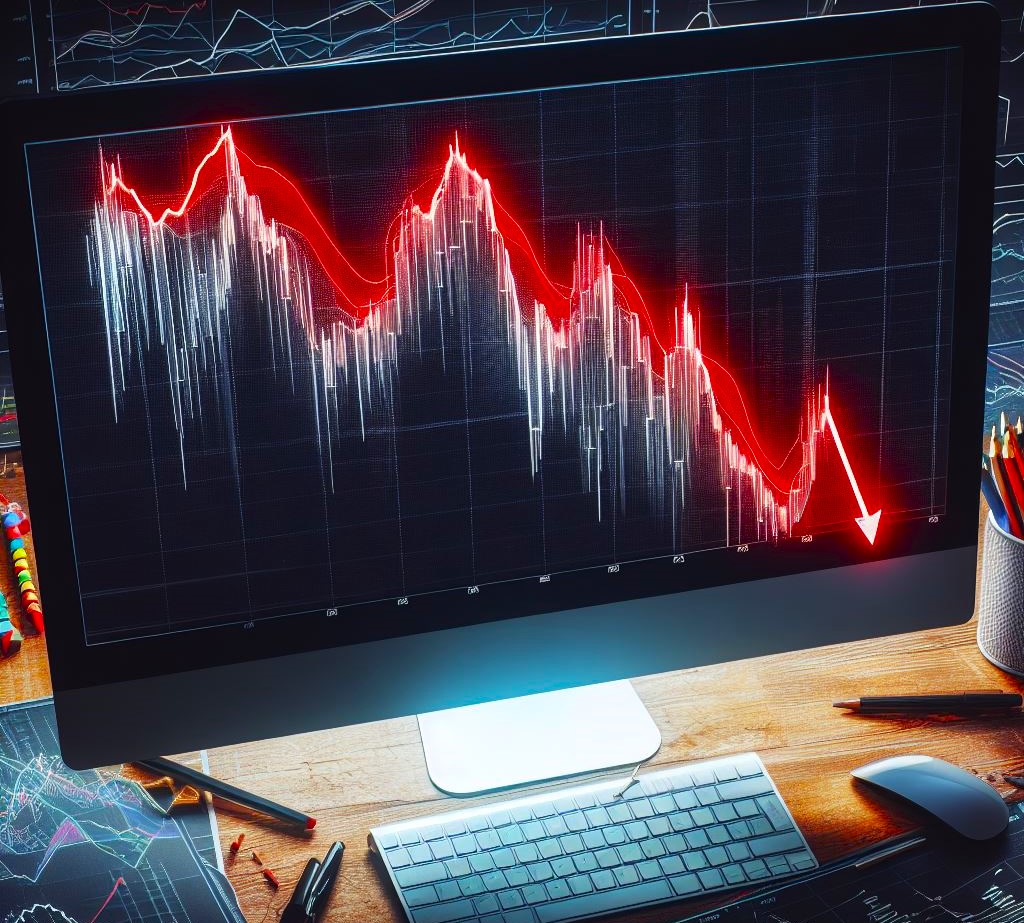
Artwork impression of computer screen: U.S. ten-year treasury yield breaches 5% for the first time since 2007
A steep yield curve means that long-term yields are much higher than short-term yields, which suggests that investors expect higher inflation and growth in the future. A flat or inverted yield curve means that long-term yields are lower than or equal to short-term yields, which implies that investors expect lower inflation and growth or even a recession.
The current yield curve is steepening, as long-term yields are rising faster than short-term yields. This indicates that investors are anticipating higher inflation and growth in the long run, but also that they are concerned about the sustainability of the government’s fiscal position and the impact of higher interest rates on the economy.
Indicators
The 10-year Treasury yield is an important indicator of the state of the economy and the expectations of inflation and growth. It has reached a level that has not been seen since before the global financial crisis of 2008-2009. This reflects the market’s view that interest rates will stay higher for longer and that the government will increase its borrowing to cover its deficits. The higher yield also affects other borrowing costs and asset prices, which could have implications for consumers and businesses.
The yield is influenced by many factors and is closely watched by investors, policymakers, and analysts. A 5% yield is a worry for the market, inflation, interest rates, geo-political risks and recession are the others, that’s enough!
Warren Edward Buffett is an American businessman, investor, and philanthropist. He is currently the chairman and CEO of Berkshire Hathaway. As a result of his immense investment success, Buffett is one of the best-known fundamental investors in the world.
As of October 2023, he possessed a net worth of $117 billion making him the seventh-richest person in the world.
An investor looking at paperwork before buying a stock. ‘Be fearful when the markets get greedy, be greedy when the markets get fearful’.
Warren Buffett is one of the most successful investors in the world, but he is also one of the most vocal critics of Bitcoin.
He believes Bitcoin is not a productive asset and does not produce anything tangible. He compares Bitcoin to farmland or apartment houses, which generate rent and food, while Bitcoin only relies on the demand and supply of the market.
He thinks Bitcoin is not a durable means of exchange and not a store of value. He argues that Bitcoin is too volatile, too unpredictable, and too susceptible to fraud and manipulation.
He says Bitcoin is bad for civilization and attracts charlatans. He believes that Bitcoin is used for illicit activities, such as money laundering and tax evasion, and that it lures people into scams and speculation.
Opinion not all agree
These are some of the opinions that Warren Buffett has expressed about Bitcoin over the years. However, not everyone agrees with him, and some people think that he is missing out on a revolutionary technology that could change the world.
What do you think? Is he right; or is it a revolutionary technology that is changing our world?
Watch out for the Bitcoin EV revolution that is about to take off!
The stock dropped more than 15% over the last few days after the company posted third-quarter earnings on Wednesday 20th October 2023.
The earnings report showed that Tesla missed analysts’ expectations on revenue and earnings per share. Tesla also announced a recall of 475,000 vehicles in the US due to a potential battery fire risk.
Additionally, Tesla faced regulatory challenges in China, where it was banned from selling its AI chips due to national security concerns. These factors contributed to the negative sentiment around Tesla stock and increased its volatility.
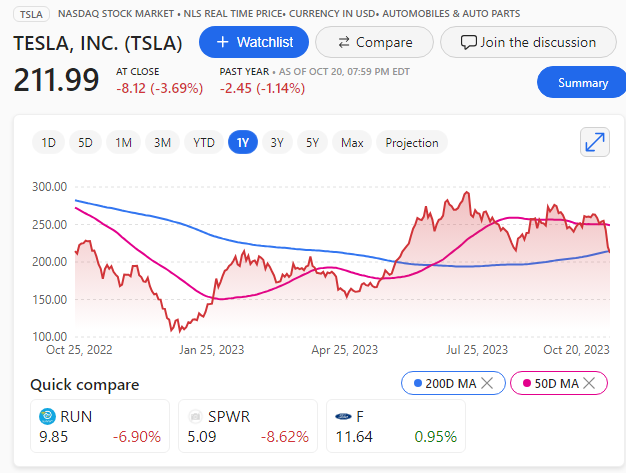
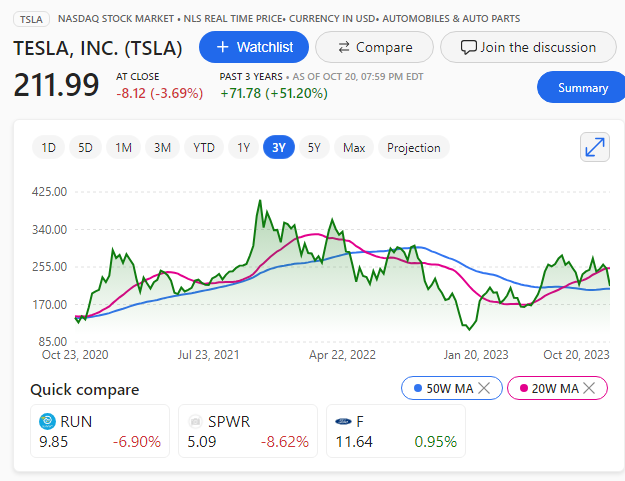
Tesla stock has fallen 73% from its record high in November 2021. The stock is down 69% in 2022, more than double the decline in the Nasdaq.
Tesla price crossed below 200 day moving average this is a bearish indicator.
Tesla price crossed below 200 day moving average this is a bearish indicator.
Among major carmakers, Ford is down 46% and General Motors has fallen 43%. Since its IPO in 2010, Tesla has only fallen in one other year, an 11% drop in 2016. Some analysts and investors are still optimistic about Tesla’s long-term prospects, citing its innovation, leadership, and loyal customer base.
However, others are sceptical about Tesla’s valuation, profitability, and competition. Tesla’s stock performance in the coming months will depend on how it can overcome its current challenges and deliver on growth.
Don’t underestimate Elon Musk, but bear in mind other big car manufacturers are now catching and moving ahead of Tesla in the EV race.
Moody’s is a credit rating agency that evaluates the creditworthiness of countries, companies, and other entities.
It recently upgraded the UK’s credit outlook from negative to stable, citing policy predictability, softer EU trade stance, and tax reversals.
This means that Moody’s expects the UK to have a lower risk of defaulting on its debts and to have a more stable economic outlook. Moody’s also noted some challenges for the UK, such as low growth prospects, high inflation, and the need for large investments in water and energy sectors.
It follows S&P, which dropped its negative outlook in April this year.
Stocks retreated Friday as a surge in the 10-year Treasury yield prompted broader concerns about the state of the economy.
The Dow Jones Industrial Average (DJIA) is one of the most widely followed stock market indices in the world. It tracks the performance of 30 large U.S. companies from various sectors, such as Boeing, Coca-Cola, Apple and Walmart.
The DJIA is often used as a proxy for the overall health of the U.S. economy and investor sentiment.
Market pressure
Lately, the DJIA has been under pressure as U.S. Treasury yields have climbed to their highest levels in over sixteen years.
Treasury yields are the interest rates that the U.S. government pays to borrow money by issuing bonds. When Treasury yields rise, it means that investors are demanding higher returns to lend money to the government, which reflects their expectations of higher inflation and economic growth.
Treasury yields
Higher Treasury yields can have a negative impact on the stock market for several reasons. Firstly, they increase the borrowing costs for companies and consumers, which can affect spending and profits.
Secondly, they make bonds more attractive as an alternative investment to stocks, which can reduce the demand for equities.
Thirdly, they can signal that the Federal Reserve may tighten its monetary policy sooner than expected, which can also dampen the stock market’s momentum.
The DJIA has fallen by more than 300 points in recent days as Treasury yields climbed above 5%, a level not seen since 2007. The rise in yields was driven by strong economic data, such as the September 2023 consumer price index (CPI), which showed that inflation remained elevated at 3.7% year-over-year. But only 1.7% off the Fed target of 2%.
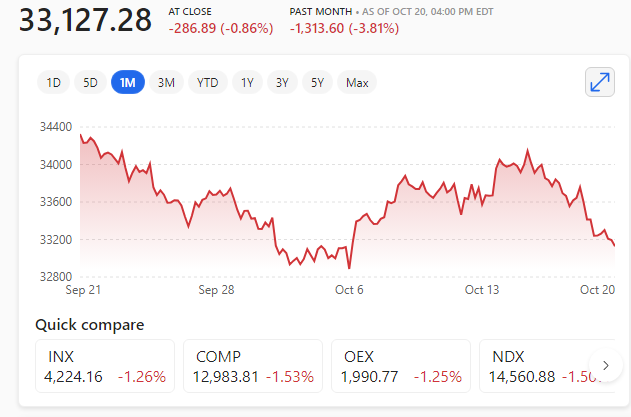
Dow Johns Industrial Average close 20th September 2023
U.S. 10-year Treasury yield hits 5% for the first time since 2007 – Dow closes down nearly 300 points
The S&P 500 lost 1.26% to 4,224. The Nasdaq dropped 1.53% to 12,984. The Dow Jones Industrial Average lost 287 points, or 0.86%, to end at 33,127.28.
The yield on the benchmark 10-year Treasury crossed 5% for the first time in 16 years on Thursday 19th October 2023, a level that could easily spread through the economy by raising rates on mortgages, credit cards, vehicle loans and more. It retreated slightly from this value on Friday 20th October 2023.
Not to mention, it offers investors an attractive alternative to stocks.
Nokia is planning to cut up to 14,000 jobs worldwide, or some16% of its workforce, as part of a cost-cutting plan following a 69% plunge in third-quarter profits.
The Finnish technology company said the planned measures are aimed at reducing its cost base by between €800 million and €1.2 billion by the end of 2026.
The cuts were announced as the company revealed a 20% drop in third-quarter sales, which fell to €4.98 billion from €6.24 billion a year earlier. The company’s biggest unit by revenue; the mobile networks business, declined 24% to €2.16 billion, driven mainly by weakness in the North American market.
Nokia’s CEO Pekka Lundmark said the company was taking decisive action on three levels: strategic, operational and cost. He also reportedly said he remained confident about the opportunities ahead of the company.
I guess there’s not much else he could have said really.
London has regained its status as Europe’s largest stock market from Paris, boosted by rising crude oil prices.
The combined market capitalization of primary listings in London but excluding ETFs and ADRs, is now $2,888.4 billion versus Paris’s $2,887.5 billion, as of 19th October, 2023.
London had lost its position as Europe’s biggest stock market in November 2022, extending a decline that started with Britain’s vote to leave the European Union in 2016.
London market
The London market, which has a large exposure to commodity stocks, such as Shell and BP, has outperformed recently due to the surge in oil prices, which reached a seven-year high this month.
Paris, on the other hand, has been weighed down by the slump in luxury stocks, such as LVMH and Kering, which have been hit by China’s crackdown on consumption and corruption.
The average rate on the U.S. 30-year fixed mortgage rate hit 8% on Wednesday 18th October 2023, according recently released data. That is the highest level since 2000.
The unwelcome milestone came as bond yields soared to levels not seen since 2007. Mortgage rates follow the yield of the 10-year U.S. Treasury.
Sharp rise
Rates climbed sharply in the last two weeks, as investors digested more economic data. On Wednesday 18th October 2023 it was housing starts, which rose in September 2023, although not as much as expected, according to the U.S. data.
Building permits, an indicator of future construction, fell but by a less than expected. Last week, retail sales came in far higher than expected, creating more uncertainty over the Federal Reserve’s long-term plan.
U.S. mortgage applications plummet
The higher rates have caused mortgage demand to plummet, as applications fell nearly 7% last week from the previous week.
The average rate on the 30-year fixed was as low as 3% just two years ago. To put it in perspective, a buyer purchasing a $400,000 home with a 20% cash deposit would have a payment increase of nearly $12,000 per year more than it would have been two years ago.
The price of Bitcoin is influenced by many factors, such as supply and demand, market sentiment, news events, regulations, and technical analysis.
One of the recent news events that affected the price of Bitcoin was the speculation about the approval of a Bitcoin ETF by the U.S. Securities and Exchange Commission (SEC). A spot Bitcoin ETF is an exchange-traded fund (ETF) that directly holds Bitcoin and tracks its price movements.
This would allow investors to gain exposure to Bitcoin without having to buy, store, or manage it themselves. A spot Bitcoin ETF would also increase the liquidity and legitimacy of the Bitcoin market, potentially attracting more institutional and retail investors.
Waiting approval
However, the SEC has not yet approved any Bitcoin ETF applications, despite receiving several from various financial firms, such as Blackrock and Fidelity. The SEC has expressed concerns about the risks of fraud, manipulation, and volatility in the Bitcoin market.
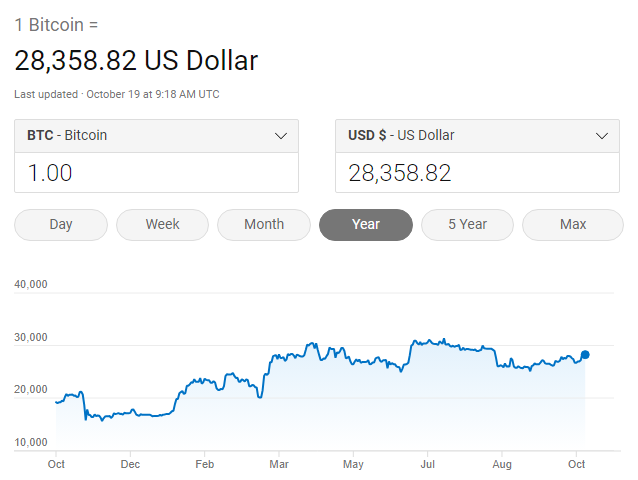
Bitcoin one year chart October 2022 – October 2023
The SEC has only approved one Bitcoin-related ETF so far, which is the ProShares Bitcoin Strategy ETF that tracks the price of Bitcoin futures contracts, not the actual Bitcoin. Bitcoin futures contracts are agreements to buy or sell Bitcoin at a predetermined price and date in the future. They are traded on regulated exchanges.
Rumour
On 16th October, 2023, a false rumour circulated on social media that the SEC had approved a Bitcoin ETF from Blackrock, the world’s largest asset manager. This rumour caused a surge in the demand and price of Bitcoin, which briefly breached the $30,000 mark.
However, this ‘news’ was quickly corrected by both Blackrock and the SEC, and the price of Bitcoin fell back to its previous levels. The rumour may have been fueled by the anticipation and excitement in the crypto community for a spot Bitcoin ETF approval, which many analysts believe would boost the price of Bitcoin significantly.
Crypto volatility
The false rumour about the Bitcoin ETF approval was one of the major factors that contributed to the 10% climb and subsequent drop of bitcoin on the 16th October, 2023.
Be careful
The price of Bitcoin is determined by the interaction of buyers and sellers in a global and decentralized market that operates 24/7. As such, it is subject to high volatility and unpredictability.
The price of Bitcoin is determined by the interaction of buyers and sellers in a global and decentralized market that operates 24/7. As such, it is subject to high volatility and unpredictability.
Investors should always do their own research and due diligence before investing in any cryptocurrency or any financial product.
Remember to always do your ownRESEARCH!RESEARCH!RESEARCH!
Definitions
ETF – Exchange Traded Fund is a type of investment fund that can be bought or sold on a stock exchange like a regular stock. An ETF usually holds a selection of securities, such as stocks, bonds, commodities, or currencies, that track a specific index, sector, or asset class.
Bitcoin is a type of digital currency that can be used for online transactions without the need for a central authority or intermediary. Bitcoin is based on a technology called blockchain, which is a distributed ledger that records and verifies all transactions in a network of computers. Bitcoin is created and rewarded to the participants who contribute their computing power to maintain and secure the network, a process known as mining. Bitcoin has a limited supply of 21 million units, which are divided into smaller units called satoshis.
Bitcoin is based on a technology called blockchain, which is a distributed ledger that records and verifies all transactions in a network of computers.
Bitcoin was invented in 2008 by an anonymous person or group using the name Satoshi Nakamoto, who published a white paper describing the concept and design of Bitcoin.
The first Bitcoin transaction was made in 2009, when Nakamoto sent 10 bitcoins to a computer programmer named Hal Finney. Since then, Bitcoin has grown in popularity and value, attracting millions of users and investors around the world.
Securities and Exchange Commission (SEC) is a U.S. government agency that regulates the securities markets and protects investors. The SEC was established by the passage of the U.S. Securities Act of 1933 and the Securities and Exchange Act of 1934, largely in response to the stock market crash of 1929 that led to the Great Depression.
The SEC has three main objectives: to ensure full public disclosure of information, to prevent fraud and manipulation in the market, and to facilitate capital formation for economic growth.
The SEC oversees various entities and activities in the securities markets, such as securities exchanges, brokers, dealers, investment advisers, mutual funds, corporate issuers, and securities transactions. The SEC enforces the federal securities laws by requiring companies to register their securities and disclose relevant information to the public through its electronic database called EDGAR.
The SEC also investigates and prosecutes violations of the securities laws, such as insider trading, market manipulation, accounting fraud, and disclosure fraud.
Shares of Chinese electric vehicle manufacturers took a hit on Thursday 18th October 2023 after Tesla reported disappointing 3Q results on Wednesday 17th October 2023.
It was the first time Tesla, co-founded by Elon Musk, missed on both earnings and revenue since Q2 2019.
On Thursday morning, Hong Kong-listed shares of Chinese EV makers BYD and Xpeng fell approximately 2.18% and 8.76%. Li Auto slid 3.14%, while Nio and Geely dropped 8.36% and 3.97%.
Elon Musk reportedly cautioned that the Tesla Cybertruck, the electric full-size pickup truck model; would not deliver substantial positive cashflow for 12-18 months after production begins.
Musk reportedly said the company is working to bring down the prices of its cars amid high interest rates. ‘I’m worried about the high interest rate environment we’re in,’ he said, adding that it will be much harder for consumers to purchase cars if interest rates were to increase further.
Tesla shares down
Tesla shares closed 4.78% lower on Wednesday 17th October 2023. Other U.S. EV rivals Lucid and Rivian fell more than 9% on the same day. Lucid’s stock dropped a day earlier after it reported disappointing Q3 EV deliveries.
Tesla shares closed 4.78% lower on Wednesday 17th October 2023.
In the first six months of the year, BYD was the world’s top EV manufacturer, contributing 21% of global sales of EVs, according to research firm Canalys. Tesla trailed behind at second place with 15% market share while German carmaker Volkswagen held 7% market share in third place.
Price pressure
EV players are under pressure from a price war to gain market share amid intense competition.
Tesla introduced a number of price cuts over the last few months, especially in China – the world’s biggest EV market.
Rivals BYD, Nio, Li Auto and Xpeng have also joined Tesla in lowering the prices for some of their EV models.
Shares in BYD, (Build Your Dreams), jumped this week after it said it expected third-quarter profits to more than double compared with last year.
BYD is now ahead of Tesla in quarterly production – and second to the U.S. car maker in global sales.
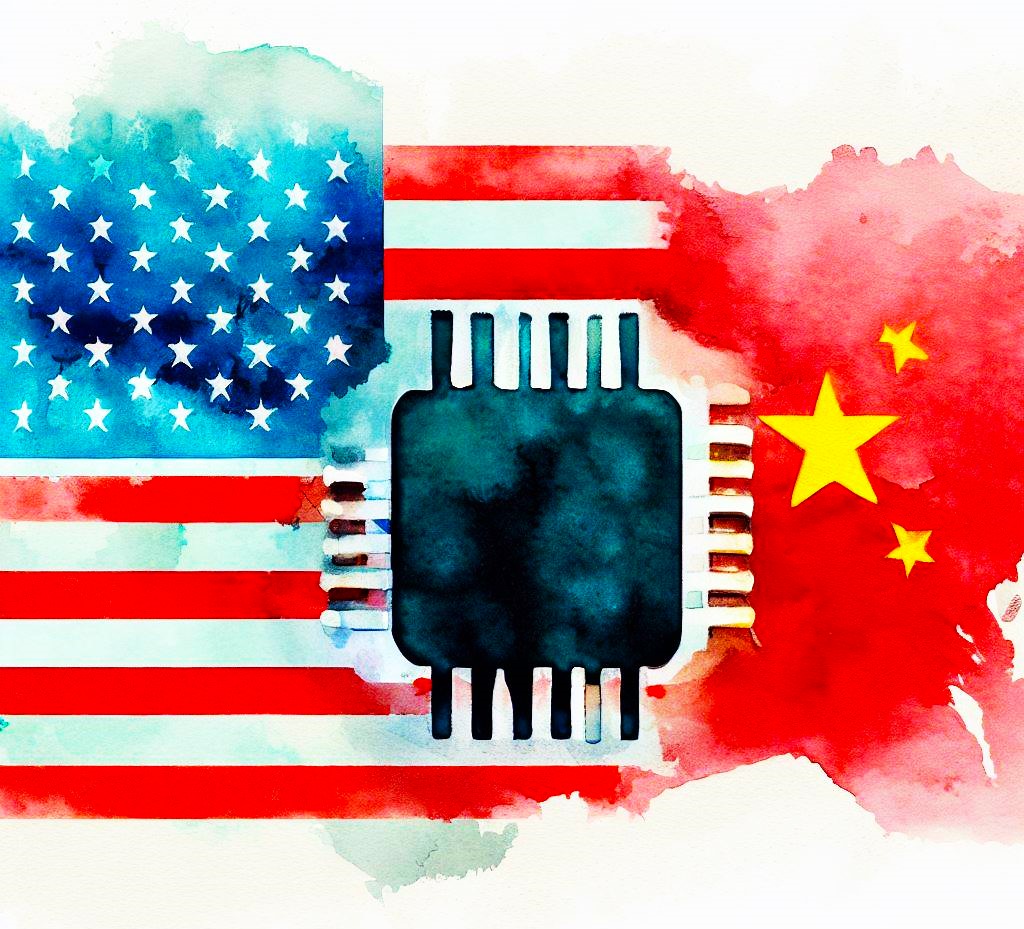
The curbs are aimed at closing loopholes that became apparent after the U.S. announced export curbs on microchips in October 2022. The restrictions are designed to prevent China’s military from importing advanced semiconductors or equipment.
Nvidia has said in a filing that the new export restrictions will block sales of two high-end artificial intelligence chips it created for the Chinese market – A800 and H800. It said that one of its gaming chips will also be blocked.
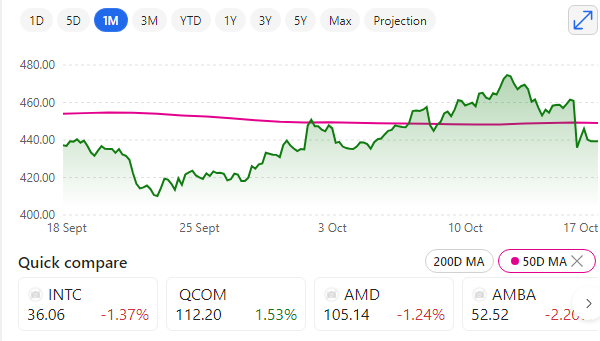
Nvidia Corp one month chart – closed at 439.38 17th October 2023
Although the curbs also affect other chip makers, analysts believe Nvidia will be hit the hardest because China accounts for up to 25% of its revenues from data centre chip sales. Nvidia’s shares, which are considered a star stock, fell by as much as 4.7% in the wake of the announcement.
Semiconductor Industry Association
The Semiconductor Industry Association, which represents 99% of the U.S. semiconductor industry by revenue, said in a statement that the new measures are ‘overly broad‘ and ‘risk harmingthe U.S. semiconductor structure without advancing national security as they encourage overseas customers to source elsewhere’.
China reacts
A spokesperson for the Chinese embassy also said that it ‘firmly opposes‘ the new restrictions, which also target Iran and Russia and go into effect in 30 days.
Nvidia stock falls after restrictions on AI chip exports from U.S. to China
Two months ago, China retaliated by restricting exports of two materials, gallium and germanium, which are key to the semiconductor industry.
The materials are ‘minor metals‘, meaning that they are not usually found on their own in nature, and are often the by-product of other processes. It’s not only the U.S., Japan and the Netherlands – which is home to key chip equipment maker ASML – have also imposed chip technology export restrictions on China.
Fallout
The constant ‘fall-out’ between the world’s two biggest economies has raised concerns over the rise of so-called ‘resource nationalism‘ – a practice where governments hoard critical materials to exert influence over other countries.
It means prices are still rising at the same rate as the previous month.
Petrol and diesel costs kept inflation up, the Office for National Statistics (ONS) says, but food and non-alcoholic drink prices fell for the first time since September 2021.
Food inflation falls the most
Milk, cheese and eggs are among the products that went down the most; the price of household appliances and airfares fell to.
In response to the latest figures, Chancellor Jeremy Hunt said, ‘inflation rarely falls in a straight line’. He pledged to stick to the government’s promise to get the main rate of inflation down to 5% by the end of the year.
Thank you for that enlightening comment, Mr Hunt. May I remind you that even if you hit the target the government set of 5% by the end of the year; inflation will still be a whopping 3% above the Bank of England (BoE) original target!
Targets! Targets! Targets!
Thank you for that enlightening comment, Mr Hunt. May I remind you that even if you hit the target the government set of 5% by the end of the year; inflation will still be a whopping 3% above the Bank of England (BoE) original target!
Come on – get your act together! You really should have prepared batter and seen this coming.