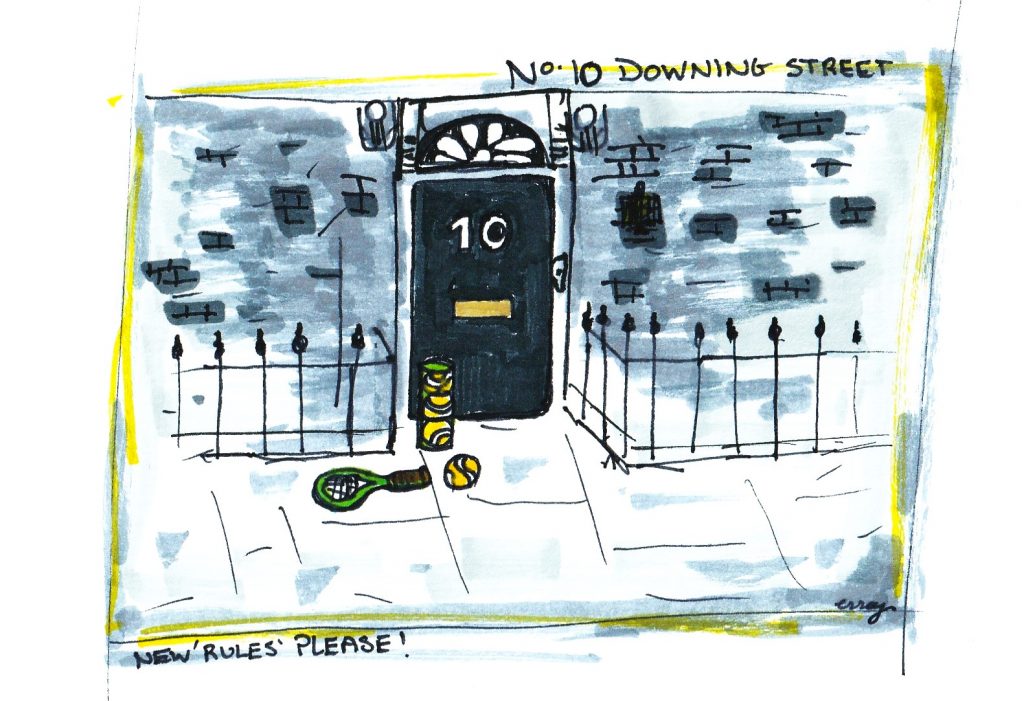
UK Border control take back control as passport e-gates fail, again!

UK Border Force

The Home Office eventually resolved a nationwide ‘issue’ that led to significant delays at passport e-gates.

UK airports such as Heathrow, Gatwick, Edinburgh, Birmingham, Bristol, Newcastle, and Manchester have all reported delays in arrivals late on Tuesday 7th May 2024 due to a Border Force issue.

E-gates, which are automated gates utilizing facial recognition technology to verify a person’s identity, allow entry into the country without the need for interaction with a Border Force officer.

According to the government’s website, there are over 270 e-gates installed at 15 air and rail ports across the UK, designed to facilitate faster entry into the country. However, this recent outage has necessitated manual processing of passengers by Border control staff.

The Home Office, responsible for the Border Force, announced in an early Wednesday 8th May 2024 statement: ‘eGates at UK airports resumed operation shortly after midnight.

A Home Office spokesperson reportedly attributed the disruptions to a ‘system network issue’ (whatever that means) – initially reported at approximately 19:50 BST, indicating the problems lasted over four hours. They assured that ‘border security was never jeopardized, and there is no evidence of any malicious cyber activity.’

Nothing new – it’s happened before and it’s a miserable experience!

Britain’s automated border gates system experienced a crash in May 2023, leading to extensive queues and delays for passengers lasting several hours.

Additionally, the country’s air traffic system suffered a meltdown in August 2023 due to a technical issue, disrupting the National Air Traffic Service for a prolonged period. The recurring nature of these incidents raises questions about the underlying causes.

Why does it KEEP happening?

FTSE 100 in record territory

The FTSE 100 soared past 8300, reaching a new record high amid busy trading as London markets reopened after the bank holiday.

A catch-up trading session is evident, with mainland-listed stocks having a robust session on Monday 7th May 2024 and continuing to rise. The FTSE reached around 8335 in intraday trading.

Wall Street also experienced another positive session, with the Dow Jones climbing for the fourth consecutive day following the Federal Reserve’s less aggressive stance, and the S&P 500 gaining too. Despite mixed results, earnings have bolstered risk appetite. The low U.S. job count has encouraged traders/investors to take heart that rate cuts will be on the agenda again soon, even if they are now late.

Bank of England

Attention will now turn to the Bank of England (BoE), which faces a decision on whether to guide the market towards a rate cut – the first in four years – or to exercise more patience. The consensus is that it’s premature for a cut this week, with August 2024 being the more likely date, although the Monetary Policy Committee’s (MPC) opinions vary.

Last month the Deputy Governor of the BoE, indicated his readiness to vote for a rate cut with little additional evidence of declining inflation, highlighting the ‘downside risks’ to the BoE’s February inflation forecast. In contrast, the Bank of England’s Chief Economist, expressed a more cautious stance in April regarding the initiation of rate cuts.

Inflation

Inflation is on a downward trajectory, expected to return to 2% in the next few months. CPI decreased from 3.4% to 3.2% between February and March 2024, and core inflation dropped from 4.5% to 4.2%. However, the BoE is likely to await April’s data before taking any decision.

Persistent wage growth of around 6% indicates continued strength in the labour market. Financial markets anticipate a Bank of England rate cut by August 2024, but it is believed the BoE may be prepared to act as early as June 2024, aligning with the anticipated policy move by the ECB.

Apple reportedly developing AI microchips for data centres

Apple

Apple, renowned for its innovative consumer electronics, is reported to be branching into artificial intelligence (AI).

Recent reports suggest the company is developing a project dubbed ‘Project ACDC,’ (Apple Chips in Data Centre) with the goal of creating specialized AI chips for data centres.

The AI race

AI applications are becoming ever more essential in our daily routines, prompting tech giants to vie for dominance in this arena. Apple, previously trailing behind its rivals in AI, is now channelling substantial investments to bridge the gap. Project ACDC marks Apple’s strategic endeavour to position itself as a key contender in AI processing.

The role of AI microchips

Traditionally, data centres have depended on general-purpose processors, like Intel Xeon or AMD EPYC, to manage diverse workloads. AI workloads, however, demand unique features such as extensive parallelism and high computational throughput. Specialized AI chips are crucial to meet these demands.

Apple’s AI chips, designed specifically for data centre servers, aim to efficiently expedite AI tasks. These chips will facilitate capabilities such as natural language processing, image recognition, and recommendation systems. With the development of its own AI chips, Apple seeks to secure a competitive edge in the AI technology race.

Collaborating with Taiwan Semiconductor Manufacturing Co.

Apple is said to be partnering with Taiwan Semiconductor Manufacturing Co. (TSMC) to design and produce AI chips. TSMC, a top semiconductor manufacturer, is recognized for its cutting-edge process technology. Although the release timeline for these chips is not specified, their development underscores Apple’s dedication to AI.

WWDC 2024 expectations

Rumors indicate that Apple may reveal AI-based features enabled by its new chips at the Worldwide Developers Conference (WWDC) in June 2024. Should this be accurate, it could mark a significant milestone for Apple’s AI initiatives.

In conclusion, Apple’s Project ACDC signifies an aggressive move towards AI supremacy. With ongoing investments in generative AI, we can anticipate significant advancements in the near future.

UK Ministry of Defence suffers hack and data breach

The breach involved a third-party payroll system used by the MoD

The compromised system contained names and bank details of both current and past members of the UK armed forces.

While the full extent and consequences of the breach are still under investigation, preliminary results reportedly indicate that no data was extracted during the incident.

It appears that a minimal number of addresses might have been compromised.

The Ministry of Defence (MoD) responded quickly by disconnecting the external network, which is managed by a contractor.

Affected service members will be informed as a precautionary measure and will be provided with expert advice.

Hacker’s ID not revealed

The hacker’s identity has not been revealed, but it is significant that in March, the UK and the U.S. charged China with conducting a worldwide campaign of “malicious” cyber-attacks.

These assaults targeted the Electoral Commission watchdog in 2021 and involved online “reconnaissance” of MPs’ and peers’ email accounts. The limited response to these events highlights the persistent cybersecurity challenges and the importance of constant alertness.

As the inquiry progresses, the MoD is expected to implement additional security measures to safeguard sensitive data, measures that ideally should have already been established.

U.S. job growth totalled 175000 in April 2024 – less than expected

Non-farm payroll U.S.

Non-farm payrolls rose by 175,000 in the month, falling short of the consensus estimate of 240,000.

The unemployment rate increased slightly to 3.9%, contrary to expectations that it would remain at 3.8%. Additionally, a broader measure of unemployment rose to 7.4%, marking the highest rate since November 2021.

In line with recent patterns, the health care sector led job gains with an increase of 56,000. Notable growth was also seen in social assistance (31,000), transportation and warehousing (22,000), and retail (20,000).

In response to the job data update, market traders now anticipate a strong chance of two interest rate reductions by the end of 2024.

Stock markets jumped higher on the news.

UK predicted to have slowest growth of richest nations in 2025

Slow growth in UK

Forecasts indicate that the UK economy will experience sluggish growth among the largest developed nations in 2025.

The Organisation for Economic Co-operation and Development (OECD) has projected a 1% increase in the UK’s gross domestic product (GDP) for 2025, which lags behind the growth rates of other G7 nations, including Canada, France, Germany, Italy, Japan and the US.

The OECD, a globally recognised think tank, has described the UK’s economic outlook as ‘sluggish‘ for the current year. The organization attributes the lackluster performance to the cumulative effects of consecutive interest rate hikes in the UK.

Additionally, the OECD has cautioned that persistent elements of high inflation and the uncertainty surrounding the Bank of England’s interest rate decisions may deter investment.

The latest forecast for the UK economy predicts a 0.4% growth for this year, a revision downward from the OECD’s earlier estimate of 0.7% growth. Consequently, Germany is the only G7 country projected to have slower growth than the UK this year.

Year on year economic growth predictions for G7 nations from the OECD

Year on year economic growth predictions for G7 nations from the OECD

Apple announces largest-ever $110 billion share buyback

Apple

Apple shares rose by 7% in after-hours trading on Thursday 2nd May 2024, following the company’s announcement of fiscal second-quarter earnings that exceeded expectations, coupled with the unveiling of an expanded stock repurchase program.

The tech giant disclosed that its board has approved a new $110 billion share buyback plan, marking a 22% increase from the previous year’s $90 billion authorization and setting a record as the largest buyback in history, significantly surpassing Apple’s prior repurchase initiatives.

Apple one day chart 2nd May 2024

Apple accounts data summary to 30th March 2024

Revenue: $90.75 billion vs. $90.01 billion estimated 

iPhone revenue: $45.96 billion vs. $46.00 billion estimated 

iPad revenue: $5.6 billion vs. $5.91billion estimated 

Mac revenue: $7.5 billion vs. $6.86 billion estimated 

Other Products revenue: $7.9 billion vs. $8.08 billion estimated 

Services revenue: $23.9 billion vs. $23.27 billion estimated 

EPS: $1.53 vs. $1.50 estimated 

Gross margin: 46.6% vs. 46.6% estimated 

According to Apple’s latest results, iPhone sales have declined in nearly every global market. The tech giant reported that the overall demand for its smartphones decreased by over 10% in the first quarter of the year, with sales diminishing in all geographic regions except Europe.

World’s largest cargo ship docks in UK port

Largest cargo ship

The world’s joint-largest cargo ship, the MSC Loreto, recently docked at Britain’s biggest and busiest container port.

  • Ship Name: MSC Loreto
  • Sister Vessel: The MSC Loreto shares the title of the world’s largest cargo ship with its sister vessel, the MSC Irina.
  • Length: 400 metres (approximately 1,312 feet)
  • Gross Tonnage: More than 238,000 tonnes.
  • Container Capacity: Capable of holding 24,346 standard containers, which is currently the record number.
  • Port of Arrival: The MSC Loreto arrived at the Port of Felixstowe in Suffolk from Le Havre, France.
  • Operator: The vessel is operated by the Swiss-headquartered Mediterranean Shipping Company (MSC).
  • Next Destination: The ship is due to set sail for the Algerian capital of Algiers on the country’s Mediterranean coast.

Image 400 metres for just a moment – that’s 4 trips for Usain Bolt up and down 100 metre athletics track or, about 40 double decker buses parked end to end.

Are U.S. banks at risk of failure?

Banks at risk?

The fragility of U.S. banks: A looming financial crisis or an event unlikely to unfold?

Amid escalating interest rates and economic instability, an alarming report has surfaced, suggesting that a considerable number of U.S. banks are on the verge of collapse. This potential looming crisis is attributed to various elements that have jeopardised stability.

Hundreds of small and regional banks across the U.S. are feeling stressed.

A recent publication on the Social Science Research Network indicates that up to 186 banks in the United States may be at risk of collapse or at least severe financial damage due to a significant amount of uninsured deposits and the effects of monetary tightening.

The Federal Reserve’s policy to raise interest rates has resulted in considerable asset reductions of these banks. The study emphasizes the susceptibility of banks that depend largely on uninsured depositors, who hold account balances above the FDIC‘s insurance limit of $250,000.

The precarious situation could worsen due to a potential domino effect. Should a substantial number of uninsured depositors suddenly withdraw their funds, it ‘might’ prompt a banking crisis, endangering even insured deposits. It is estimated that nearly $300 billion in insured deposits could be at risk in such an event. Remember the financial crises of 2008/2009 – it wasn’t that long ago.

Silicon Valley Bank

The collapse of Silicon Valley Bank, for example, highlights the risks associated with rising interest rates and significant withdrawals of uninsured deposits. The bank’s failure to fulfill its obligations resulted in its shutdown, which had an impact on the financial sector.

Although the number of FDIC insured institutions on the so-called ‘Problem Bank list‘ has decreased, the current economic climate has reignited concerns about the stability of smaller banks, particularly those with assets under $10 billion.

These banks face threats from commercial real estate loans and the repercussions of rising interest rates, which could lead to unrealised losses and strain their capital reserves.

As the situation unfolds, it becomes clear that without government intervention or strategic recapitalisation, the U.S. banking system could approach a crisis. This potential crisis could affect not only the banks but also the wider economy and the communities they serve.

Therefore, vigilant oversight and proactive measures are crucial to maintain the stability of the U.S. and the global financial system and protect depositors’ interests.

Fed foe inflation forces U.S. to hold rates and they will likely remain high for some time yet!

U.S. economic health

The Fed have deliberated over ‘transitory’ inflation – (they got that wrong). They have teased us about when rates will be cut (still waiting). And now we are told no rate cut but: ‘the next rate move is unlikely to be up!’

Probably better to say and do nothing at all? Are you a bit confused? I am.

The U.S. central bank has decided to maintain interest rates, reasoning a ‘lack of further progress’ in reducing inflation. This leaves the Federal Reserve’s key rate at its highest in over two decades, between 5.25% and 5.5%.

Sticky problem

By maintaining high borrowing costs, the Federal Reserve seeks to decelerate the economy and reduce inflationary pressures. However, this also increases the financial burden on businesses due to elevated borrowing expenses and on consumers through higher mortgage and loan payments.

However, as U.S. inflation remains more stubborn than anticipated (and that is being generous), the Fed is now being closely scrutinized over its forthcoming actions.

Analysts, who had predicted rate reductions early this year, have had to delay their projections, with some even suggesting a potential rate hike.

No rate cuts but ‘hike’ unlikely – that’s helpful then

Following the declaration, the Fed Chair reportedly expressed his belief that a rate hike is ‘unlikely,’ reiterating the need for more assurance of subsiding inflation before considering a reduction.

‘The decision will truly be data-dependent; it’s going to take longer to reach that point of comfort. I don’t know how long it will take’, he reportedly stated.

UK house prices fall as lenders raise mortgage rates

House lenders increase rates

House prices declined in April 2024, with affordability pressures persisting for potential buyers, as reported by Nationwide.

The UK’s largest building society reported a 0.4% decrease in house prices compared to the previous month. The average cost of a home now stands at £261,962, which is 4% lower than in the summer of 2022 peak.

According to the report, the increase in borrowing costs was a significant factor in the recent drop in prices.

In recent days a string of lenders raised rates on new fixed-rate mortgage deals.

The rise was driven by expectations that the Bank of England (BoE) would implement fewer and more gradual interest rate reductions.

Binance founder Changpeng Zhao sentenced to 4 months

Cryptocurrency trading

Changpeng Zhao (CZ), the founder of Binance, who admitted to money laundering offences in November 2023, received a four-month prison sentence on Tuesday 30th April 2024.

U.S. prosecutors had suggested a sentence of 36 months for Zhao. As part of his deal with the Justice Department, the cryptocurrency billionaire resigned from his position as CEO of Binance.

The billionaire is reportedly expected to see his massive crypto fortune remain intact. His wealth is likely to continue to climb even as he serves time in prison.

Amazon triples profits in pin-point customer led focus

Stock chart up

Amazon’s Q1 earnings and revenue exceeded expectations, emphasised by the expansion of its advertising and cloud computing sectors.

  • Earnings per share: 98 cents vs. 83 cents expected
  • Revenue: $143.3 billion vs. $142.5 billion expected

The operating income surged over 200% to $15.3 billion in the period, significantly exceeding revenue growth, indicating that the company’s cost-reduction strategies and efficiency improvements are enhancing its financial performance.

AWS contributed to 62% of the total operating profit. The net income also saw a more than threefold increase to $10.4 billion, or 98 cents per share, up from $3.17 billion, or 31 cents per share, in the previous year. There was a 13% rise in sales from $127.4 billion the previous year.

One year Amazon chart May 2023 – April 2024

One year Amazon chart May 2023 – April 2024

Amazon expects a continued rise in profitability for the Q2, albeit at a more consistent pace. The company projects its operating income to range from $10 billion to $14 billion, marking an increase from the previous year’s $7.7 billion.

It’s all about the customer

Amazon is dedicated to enhancing customer experiences daily through innovative and advanced products and services. This commitment extends to consumers, brands, sellers, enterprises, developers and content creators alike.

Euro zone inflation steady at 2.4%

Euro Zone Inflation

Inflation rates in the euro area remained constant at 2.4% in April 2024, and the economy experienced growth in the first quarter, as indicated by preliminary figures released on Tuesday.

Headline inflation at 2.4% aligned with economists’ forecasts, while monthly inflation registered at 0.6%. Core inflation, which excludes energy, food, alcohol, and tobacco, fell to 2.7% from March’s 2.9%.

Energy prices’ year-on-year decline softened to -0.6% from -1.8% in March. Meanwhile, the gross domestic product increased by 0.3% in the first quarter, slightly exceeding economists’ expectations.

However, the GDP for the fourth quarter of 2023 was revised from no growth to a contraction of 0.1%, indicating a technical recession in the euro zone for the latter half of the year.

There is growing anticipation that the European Central Bank (ECB) may reduce interest rates at the upcoming monetary policy meeting on 6th June 2024.

Bitcoin and Ether ETFs debut in Hong Kong – first in Asia

Bitcoin ETF in China

Cryptocurrency Exchange Traded Funds (ETFs) have been issued by three Chinese companies: Bosera Asset Management, China Asset Management and Harvest Global Investments, all on the Hong Kong exchange.

These are the first ETFs to be issued in Asia.

ETFs enable investors to gain exposure to the price movements of the underlying assets without direct ownership.

In January 2024, the U.S. Securities and Exchange Commission (SEC) approved the creation of Bitcoin ETFs in the U.S., although an ether ETF has not yet been approved.

Tesla’s stock jumps 15% after advanced driver-assistance tech test in China

Electric vehicle

Tesla’s shares surged on Monday 29th April 2024, marking their best performance since March 2021, following the company’s achievement in advancing its driver-assistance technology in China.

The stock closed 15% higher, buoyed by investor enthusiasm over Tesla CEO Elon Musk’s visit to China.

On Sunday 28th April 2024, Tesla announced that Chinese authorities had lifted restrictions on its vehicles after they met the nation’s data security standards.

This development has heightened anticipation for the imminent availability of Tesla’s Full Self-Driving (FSD) software in China, the world’s biggest market for electric vehicles.

Tesla share price closed at 194.05 after enjoying a 15% climb

Tesla share price closed at 194.05 after enjoying a 15% climb

BYD profits and sales fall

Electric vehicle

Chinese automotive giant BYD has experienced a decline in profits amid a slowdown in electric vehicle (EV) demand and a price war in the largest car market globally.

The company reported earnings of $630 million (£502 million) for the first quarter, a drop of over 47% from the previous quarter.

Competing with Elon Musk’s Tesla for the title of the world’s top EV seller, BYD recently fell behind as Tesla regained the lead earlier this month.

In the first quarter, BYD’s sales of battery-only vehicles fell to just over 300,000, a decrease from the last quarter of 2023’s record high of 526,000 units.

Intel shares fall after company provides weak forecast

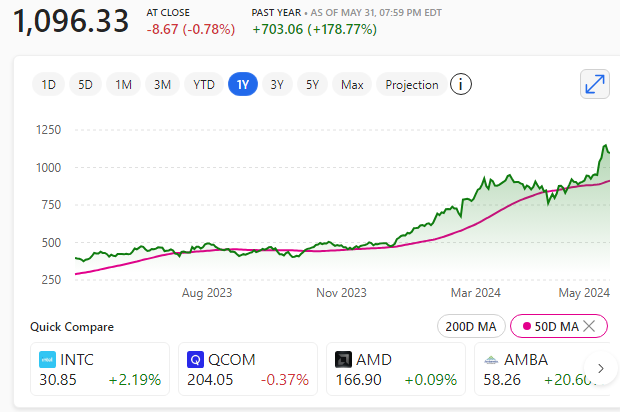
Microchip stock chart

Intel shares fall after company provides weak forecast for earnings, but disappoints with sales.

The stock fell 8% in extended trading.

Monthly stock price chart for Intel Corp. March to April 2024

Monthly stock price chart for Intel Corp. March to April 2024

Intel actual versus consensus expectations for the quarter ended in March 2024:

Earnings per share: 18 cents vs. 14 cents expected

Revenue: $12.72 billion vs. $12.78 billion expected

For the second quarter, Intel anticipates earnings of 10 cents per share with a projected revenue of $13 billion. This projection is in contrast to analysts’ expectations, which predict earnings of 25 cents per share on sales amounting to $13.57 billion.

In the first quarter, Intel disclosed a net loss of $400 million, equivalent to 9 cents per share, as opposed to the previous year’s net loss of $2.8 billion, 66 cents per share.

Revenue was $12.7 billion versus $11.7 billion a year ago, a 9% year-over-year increase.

WEF president warns about global debt levels

Global debt burden

Borge Brende, the president of the World Economic Forum (WEF), recently issued a stark warning about global debt levels.

Speaking at the ‘Special Meeting on Global Collaboration, Growth and Energy for Development‘ in Riyadh, Saudi Arabia, (see WEF website), he highlighted that global debt ratios are approaching levels not seen since the 1820s.

The WEF president also reportedly emphasized the risk of ‘stagflation‘ for advanced economies. He cautioned that without appropriate economic measures, the world could face a decade of low growth.

The current global growth estimate stands at around 3.2%, down from the 4% trend growth seen for decades. Brende urged governments to address the mounting debt situation and implement prudent fiscal measures to avoid triggering a global recession. 

He also noted the persistence of inflationary pressures and suggested that generative artificial intelligence could offer opportunities for developing nations. The International Monetary Fund (IMF) concurs with this concern, reporting that global public debt reached 93% of GDP last year, still 9% higher than pre-pandemic levels. 

The IMF projects that global public debt could approach 100% of GDP by the end of the decade.

Darktrace has been sold to a private equity firm

Deal

Private equity firm Thoma Bravo has agreed to acquire Darktrace in a $5.32 billion (£4.25 billion) cash acquisition.

This translates to roughly $7.75 (£6.20) per share, which is a 44% premium over the company’s average share price as calculated over the last three months.

Darktrace, headquartered in Cambridge, focuses on cybersecurity, employing self-learning AI to counteract and automate reactions to cyber threats via its Darktrace ActiveAI Security Platform. The company caters to approximately 9,400 clients globally.

Thoma Bravo’s acquisition of Darktrace adds to its cybersecurity portfolio, which is currently estimated at around $45 billion in value. 

The loss of Darktrace from the London Stock Exchange (LSE) was described as ‘disappointing news.’ There have been calls for greater pro-business reforms to help maintain London’s attractiveness for technology companies.

Darktrace was established in 2013 by Invoke Capital, an investment firm led by Autonomy’s founder Mike Lynch. He now holds a 3.9% stake in Darktrace, positioning him to gain just over $200 million from its sale. His wife holds an additional 2.9%.

Concurrently, Lynch is entangled in a fraud trial in San Francisco. He is reportedly facing accusations of being the ‘driving force’ behind significant fraud at Autonomy.

Autonomy was the software company he co-founded and eventually sold to Hewlett-Packard for $11 billion (£8.6bn) in 2011.

The acquisition represents a significant development in the cybersecurity industry.

Recent U.S. data is indicating inflation is proving stubborn and isn’t going away anytime soon

Inflation has become a persistent challenge for the Fed

The battle against inflation persists, gradually impacting the U.S. economy and presenting substantial challenges for the Federal Reserve.

Despite concerted efforts to control it, inflation remains stubbornly remains, leaving policymakers in a dilemma – to stimulate economic growth or to curb spiraling prices.

Let the data speak

Recent data presents a concerning scenario. Indexes from the Commerce Department, used by the Federal Reserve as indicators of inflation, reveal that prices are rising at a rate significantly exceeding the central bank’s annual target of 2%. Consumer spending persists, encouraged by the excessive amount of money circulating in the financial system.

However, this spending spree isn’t sustainable, and consumers are dipping into their savings to fund purchases. The personal savings rate has plummeted to its lowest level since October 2022. Borrowing is up and debt is far too high!

The Federal Reserve’s primary inflation gauge, the personal consumption expenditures price index, rose to 2.7% in March, encompassing all items. The crucial core index, excluding the more volatile food and energy prices, remained constant at 2.8%. These figures highlight the ongoing inflationary pressures.

Fed’s dilemma

The Federal Reserve is navigating a precarious inflation situation. Should it shift towards rate reductions prematurely, there’s a risk that inflation might surge back in 2024. Conversely, persistent inflation could compel central bankers to not only sustain the present rates but also ponder additional increases. The aspiration for a gentle economic descent is at stake.

Outlook

Forecasters anticipate inflation to dip below 2.5% in 2024, yet challenges persist. The Federal Reserve faces the difficult task of steering the economy towards stability and controlling inflation expectations. With the central bank’s policy meeting on the horizon, speculation abounds regarding their forthcoming strategy.

Will they maintain the current interest rates or implement more assertive measures? Their decision is set to influence the economic outlook for the foreseeable future.

Conclusion

U.S. inflation continues to be a persistent challenge, and the Federal Reserve’s efforts are ongoing. The path forward demands cautious steering, as policymakers must achieve a fine equilibrium to sustain economic stability while simultaneously curbing inflation.

And remember, the Fed said inflation was ‘transitory’.

Microsoft cloud growth accelerates thanks to AI

Microsoft AI

Microsoft’s Q3 results surpassed estimates for both revenue and earnings.

But the revenue forecast for Q4 was less than anticipated, with the company reportedly projecting $64 billion, which is below the consensus of $64.5 billion – (only just).

Revenue: $61.86 vs. $60.80 billion expected

Earnings per share: $2.94 vs. $2.82 expected

Additionally, Microsoft is reportedly boosting its capital expenditures to acquire Nvidia graphics processing units, which are essential for training and operating artificial intelligence (AI) models.

Microsoft one month share price chart 2024

Microsoft one month share price chart 2024

Alphabet shares climbed 15% after issuing first-ever dividend

Alphabet

Alphabet announced on Thursday 25th April 2024 that it is issuing its first-ever dividend of 20 cents per share and that its board has authorised a stock repurchase of up to $70 billion.

This announcement follows Meta’s board authorising its own inaugural dividend in February. As of 31st March 2024, Alphabet, the parent company of Google, had $108 billion in cash and marketable securities.

After the announcement, which coincided with the release of first-quarter earnings that surpassed expectations, shares surged by 15% in after-hours trading.

Alphabet trading chart 25th April 2024

Alphabet trading chart 25th April 2024

U.S. GDP slows to 1.6% significantly below expectations

U.S. GDP

The gross domestic product (GDP) from January to March 2024, grew at an annualised rate of 1.6%, significantly underperforming the projected 2.4%.

The personal consumption expenditures (PCE) price index, crucial for the Federal Reserve’s inflation assessments, climbed at an annualised rate of 3.4% for the quarter, marking the largest increase in a year.

Meanwhile, consumer spending rose by 2.5% during the quarter, a decrease from the 3.3% rise in the previous quarter and falling short of the 3% expectation.

U.S. GDP from Q1 2021 – Q1 2024

U.S. GDP from Q1 2021 – Q1 2024