

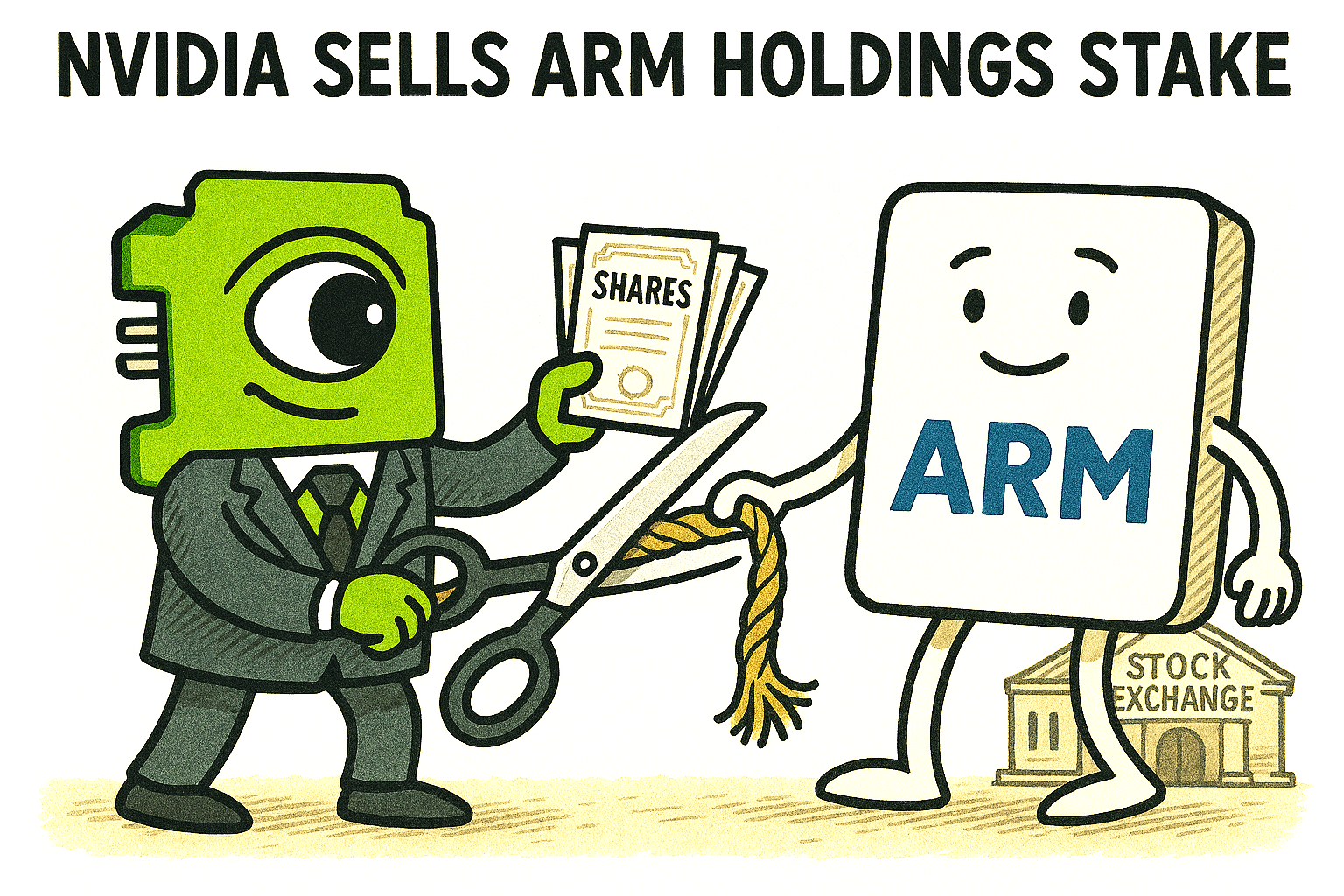
Nvidia has formally severed its financial ties with Arm Holdings, selling the final tranche of its shares and closing the book on one of the semiconductor industry’s most ambitious — and ultimately unsuccessful — takeover attempts.
Regulatory filings reportedly show the chipmaker disposed of roughly 1.1 million Arm shares during the fourth quarter, a holding valued at around $140 million based on Arm’s recent market price.
Sale of entire ARM stake
The move brings Nvidia’s ownership of the British chip‑architecture specialist to zero, marking a symbolic end to a saga that began in 2020 when Nvidia launched a bold $40 billion bid to acquire Arm.
That deal, which would have reshaped the global semiconductor landscape, collapsed under intense regulatory scrutiny and resistance from major industry players concerned about competition and neutrality.
Despite the divestment, the relationship between the two companies is far from over. Nvidia remains a major licensee of Arm’s instruction‑set technology, which underpins its current and next‑generation CPU designs.
Strategic move
Analysts note that the sale appears to be strategic housekeeping rather than a shift in technological direction, especially given Nvidia’s rapid expansion across data‑centre, AI, and edge‑computing markets.
Arm’s shares initially wobbled on news of the disposal but quickly stabilised, even edging higher as investors interpreted Nvidia’s exit as a clearing of legacy baggage rather than a signal of weakening confidence in Arm’s long‑term prospects.
The company, now primarily owned by SoftBank, continues to push ahead with its growth strategy following its public listing.
For Nvidia, the sale represents a clean break from a failed acquisition that once promised to redefine the industry.
For Arm, it marks another step in its evolution as an independent powerhouse at the centre of global chip design. The strategic paths of both companies however, remain intertwined