

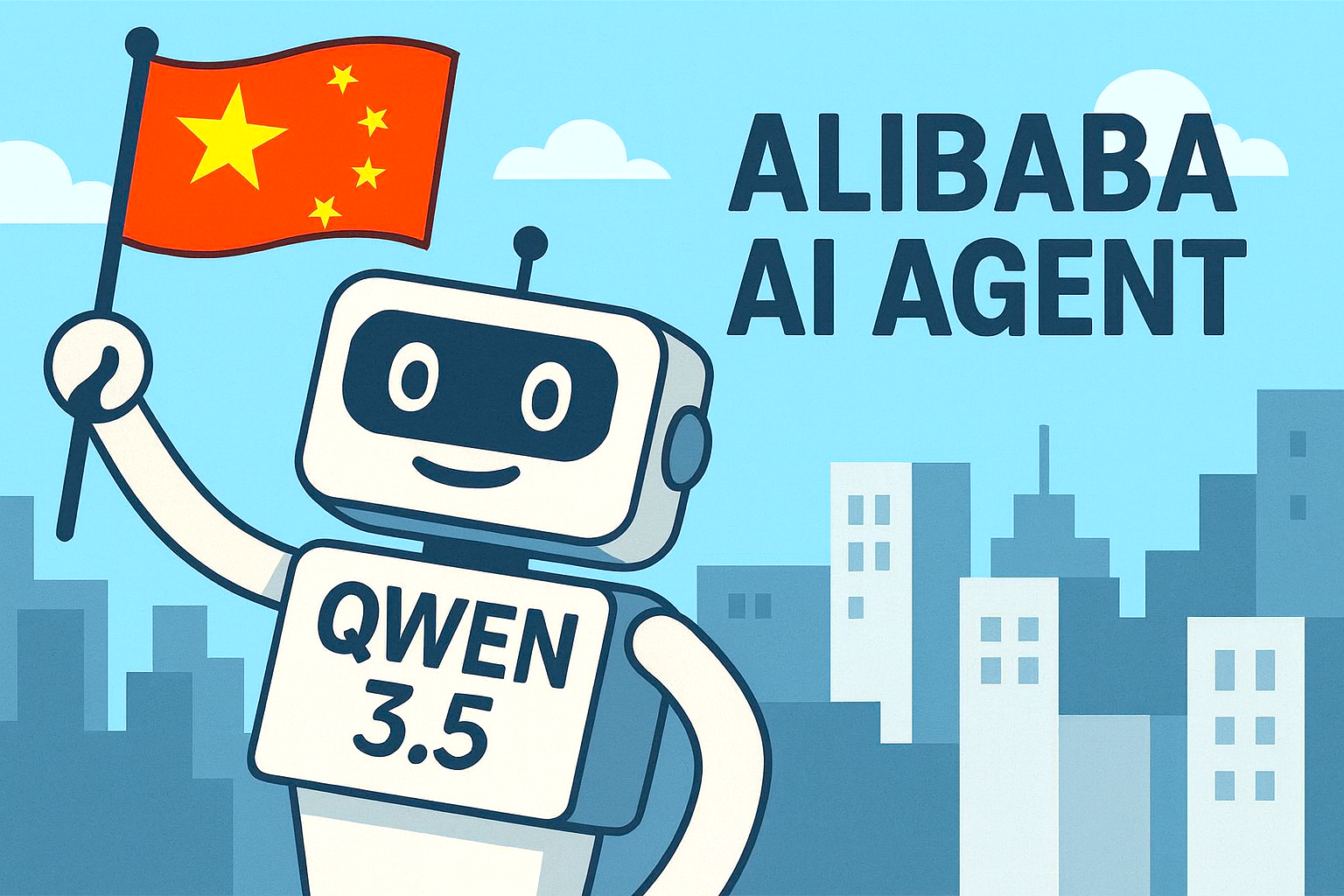
Alibaba has unveiled Qwen 3.5, its latest large language model series, signalling a decisive shift in China’s increasingly competitive AI landscape.
Released on the eve of the Chinese New Year, the new model arrives with both open‑weight and hosted versions, giving developers the option to run the system on their own infrastructure or through Alibaba’s cloud platform.
The company emphasises that Qwen 3.5 delivers improved performance and lower operating costs compared with earlier iterations, while introducing ‘native multimodal capabilities’ that allow it to process text, images, and video within a single system.
Ability
What sets Qwen 3.5 apart is its focus on agentic behaviour — the ability for AI systems to take actions, complete multi‑step tasks, and operate with minimal human supervision.
This trend has accelerated globally following recent releases from Anthropic and other U.S. based developers, prompting Chinese firms to respond rapidly.
Alibaba says Qwen 3.5 is compatible with popular open‑source agent frameworks such as OpenClaw, which has surged in adoption among developers seeking more autonomous AI tools.
Capable
The open‑weight version features 397 billion parameters, fewer than Alibaba’s previous flagship model, yet the company claims significant gains in reasoning and benchmark performance.
It also supports 201 languages and dialects — a notable expansion that reflects Alibaba’s ambition to position Qwen as a global‑ready platform rather than a purely domestic competitor.
With rivals like ByteDance and Zhipu AI launching their own upgraded models, Qwen 3.5 underscores how China’s AI race is evolving from chatbot development to full‑scale autonomous agents — a shift that could reshape software markets and business models worldwide.