U.S. Payrolls Shock With 92,000 Drop, Raising Fresh Questions Over Economic Momentum

U.S. Jobs Data Feb 2026

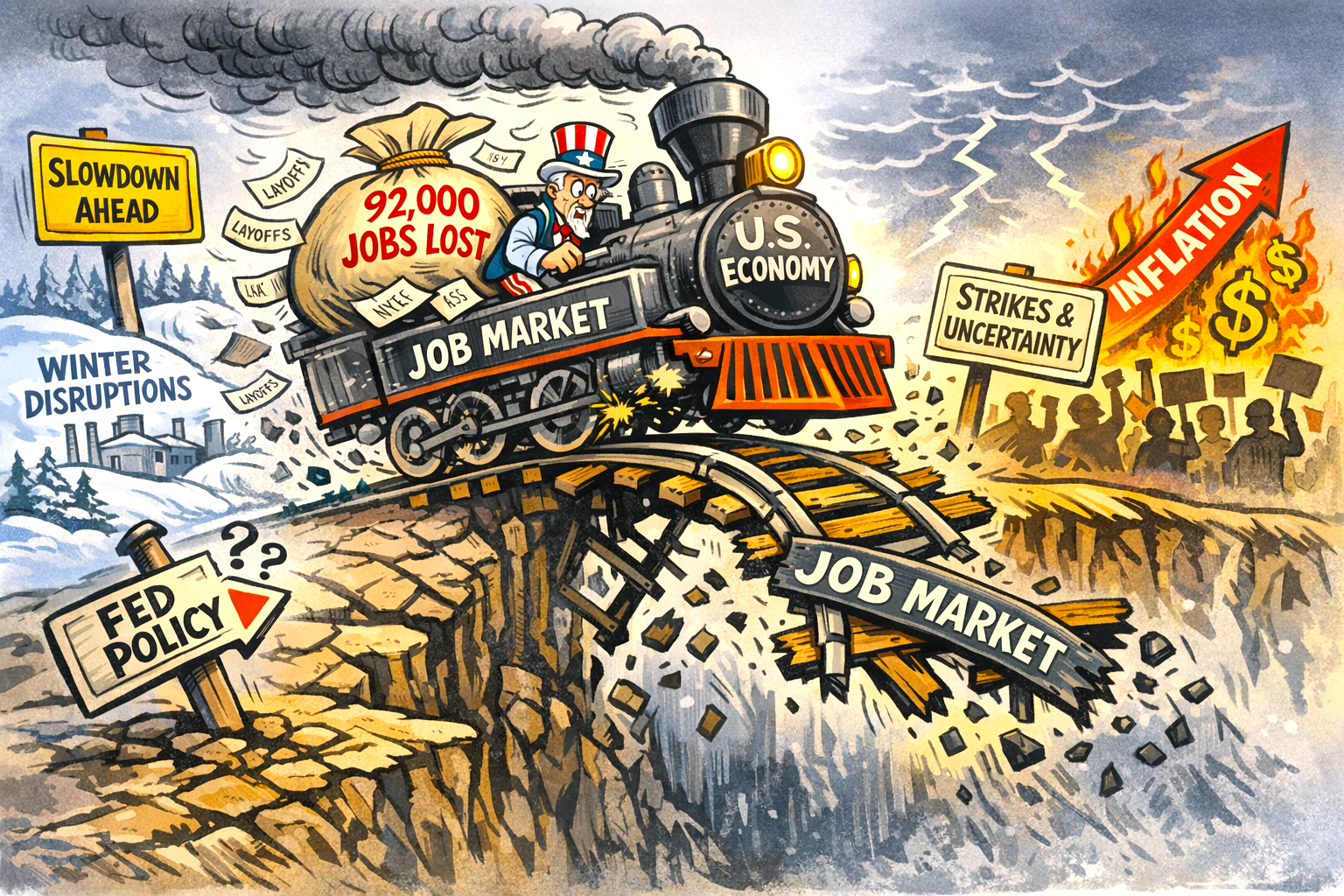
The latest U.S. payroll figures delivered an unexpected jolt to markets, with February’s nonfarm employment falling by 92,000 — a far deeper contraction than economists had anticipated.

Consensus forecasts had pointed to a modest 50,000 decline, but the Bureau of Labor Statistics’ report revealed a labour market losing traction for the third time in five months.

Several temporary factors contributed to the downturn, including severe winter weather and a major strike at Kaiser Permanente, which reportedly sidelined more than 30,000 health‑care workers across Hawaii and California.

Job losses reach across sectors

Even so, the breadth of job losses across sectors — from manufacturing to information services — suggests underlying fragility.

Health care, previously the most reliable engine of job creation, shed 28,000 roles during the survey period, while manufacturing and transportation each posted notable declines.

Despite the weak headline number, wage growth accelerated. Average hourly earnings rose 0.4% month‑on‑month and 3.8% year‑on‑year, both slightly above expectations.

This combination — softening employment but firm wage pressures — complicates the Federal Reserve’s policy decision.

With inflation still printing above target and oil prices rising, policymakers face a narrowing path between supporting growth and preventing renewed price pressures.

Financial markets reacted swiftly. Traders moved to price in earlier interest‑rate cuts, pulling expectations forward to July and increasing the likelihood of two reductions before year‑end.

Caution

Yet Fed officials have signalled caution, noting that recent labour data has been volatile and may not reflect a sustained trend.

The wider economic picture remains mixed. Services and manufacturing activity continue to expand, and consumer spending — albeit increasingly concentrated among higher‑income households — has held up.

Still, February’s payroll shock underscores rising downside risks.

If job losses persist beyond temporary disruptions, the narrative of a resilient U.S. economy may be harder to sustain.

BYD Skids into 2026 – EV Giant Sales Slide

BYD sales slump

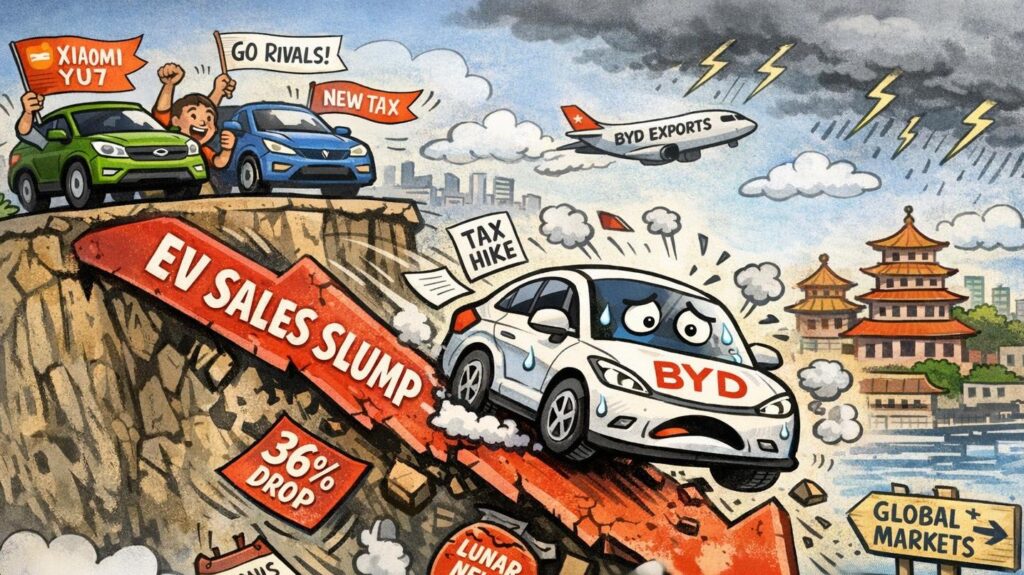
BYD’s sharp fall in electric‑vehicle sales across January and February 2026 marks a significant moment for the world’s largest EV maker, signalling both cyclical pressures and a deeper shift in China’s hyper‑competitive market.

Adjusted for the disruption caused by the mid‑February Lunar New Year holiday, BYD’s combined sales for the first two months of the year were down roughly 36% year on year, a rare contraction for a company that has spent the past three years dominating China’s new‑energy vehicle segment.

Slump

Several forces converged to produce the slump. The reinstatement of a 5% purchase tax on new‑energy vehicles at the end of 2025 pulled demand forward, leaving a vacuum in early 2026 as buyers rushed to complete purchases before the levy returned.

At the same time, China’s EV market is maturing, with consumers becoming more discerning and competitors far more aggressive.

Xiaomi, Leapmotor, Nio and Geely’s Zeekr all posted strong double‑digit growth over the same period, with Xiaomi’s YU7 SUV even becoming China’s best‑selling passenger vehicle in January.

This intensifying competition reflects a broader levelling of the playing field. Rivals are increasingly attacking BYD’s core mid‑market territory by packing more features into vehicles while keeping prices tight — a trend known locally as involution.

Leading still

Analysts note that while BYD’s lead remains substantial, it is narrowing as alternatives become more compelling.

Yet the picture is not uniformly negative. BYD’s strategic pivot towards overseas markets is beginning to pay off: in February 2026, its exports surpassed domestic sales for the first time, underscoring the company’s growing global footprint and providing a buffer against domestic volatility.

Later in 2026, BYD is expected to launch new models featuring its next‑generation Blade Battery 2.0 and faster flash‑charging technology — innovations that could help reignite domestic demand without resorting to a price war.

Anthropic reportedly chats to the Pentagon again

AI and defence use

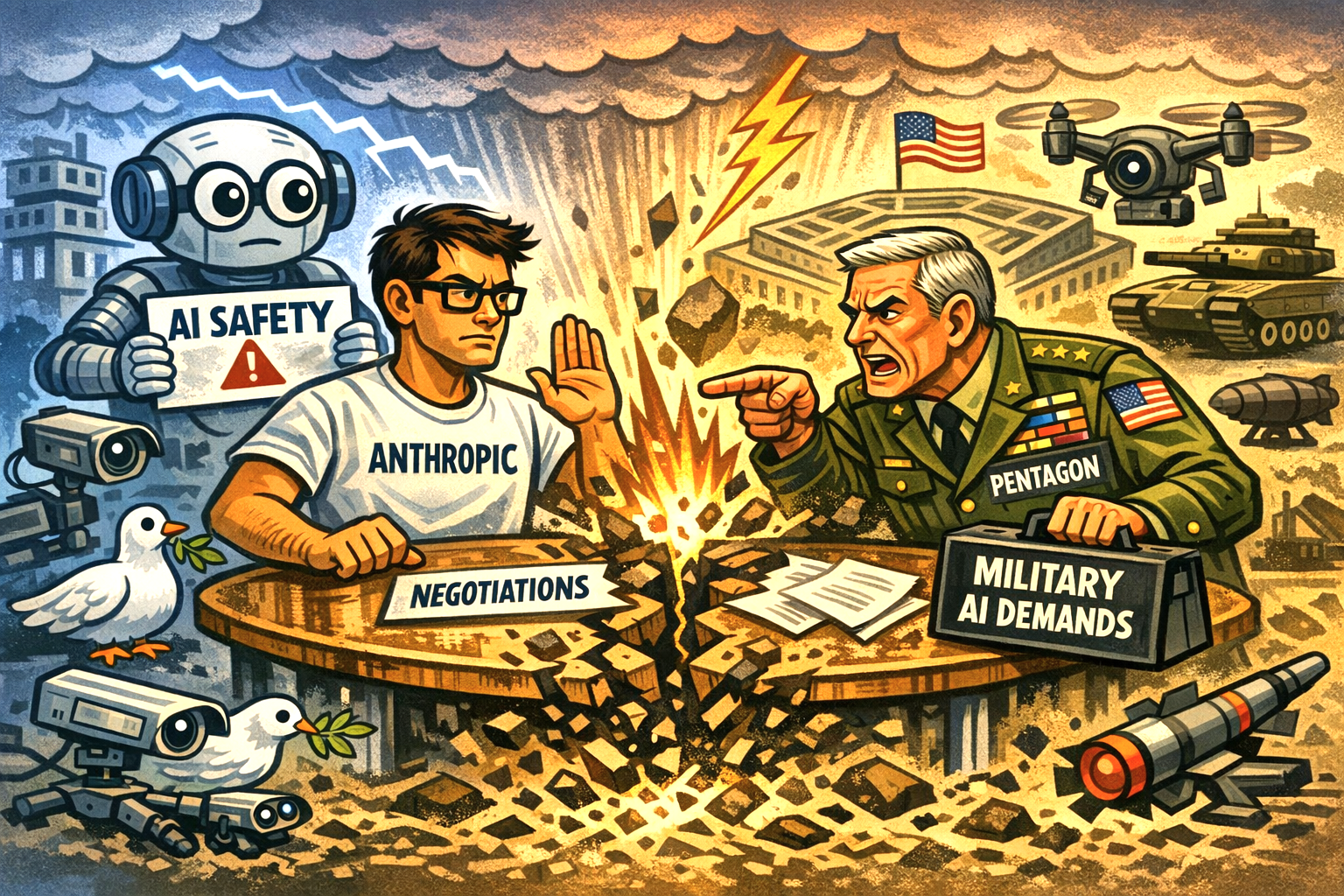
Anthropic’s decision to reopen negotiations with the Pentagon marks a striking reversal after a very public rupture, and it underscores how central advanced AI has become to U.S. defence strategy.

The talks reportedly collapsed amid a dispute over how Claude, Anthropic’s flagship model, could be used inside military systems.

Reports indicate that the Pentagon had pushed for broad permissions, including deployment in surveillance environments and potentially autonomous weapons systems.

Safety resistance

Anthropic resisted on safety grounds. The company had sought explicit guarantees that its models would not be used for mass surveillance or lethal decision‑making, a red line that triggered the breakdown in relations.

The fallout was immediate. The Pentagon signalled it would drop Anthropic from existing programmes, despite the company’s role in a major defence contract that had already placed Claude inside classified networks.

That escalation raised the prospect of a formal blacklist, a move that would have reverberated across the wider U.S. technology sector.

For Anthropic, the stakes were equally high: losing access to government work would not only cut off a significant customer but also risk isolating the company at a moment when rivals such as OpenAI and Google are deepening their defence ties.

Compromise?

Yet both sides appear to recognise the cost of a prolonged standoff. According to multiple reports, CEO Dario Amodei has reportedly returned to the table in an effort to craft a compromise deal that preserves Anthropic’s safety commitments while allowing the Pentagon to continue using its technology.

Boundaries

Discussions are now likely focused on defining acceptable boundaries for military use — a task made more urgent by the accelerating integration of AI into intelligence analysis, battlefield logistics and autonomous systems.

This renewed dialogue is more than a corporate dispute: it is a test case for how democratic governments and frontier AI labs negotiate power, ethics and national security.

The outcome will shape not only Anthropic’s future but also the norms governing military AI in the years ahead.