
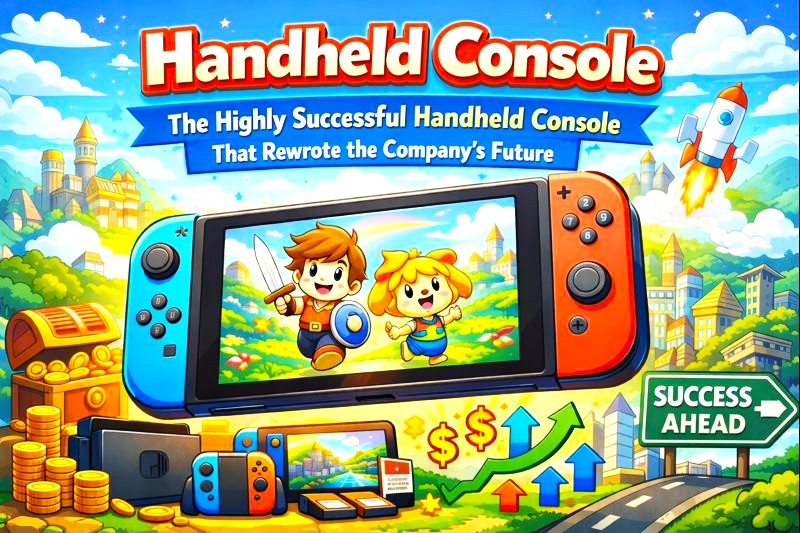
Nearly a decade after its launch, the Nintendo Switch has secured its place as the company’s most successful console, surpassing 155 million units sold and overtaking the long‑standing record held by the Nintendo DS.
It is a milestone that reflects not only commercial strength but a dramatic turnaround in Nintendo’s modern history.
Arrival of the Switch
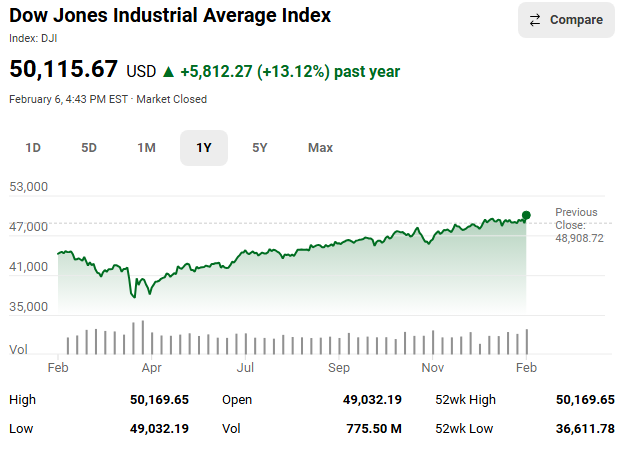
When the Switch arrived in 2017, Nintendo was emerging from the disappointment of the Wii U, a console hampered by confused messaging and fierce competition. Investor confidence had waned, and the company’s valuation had slipped.
The Switch needed to be more than a hit — it needed to redefine Nintendo’s trajectory. It did exactly that.
The hybrid design proved transformative. By merging handheld and home console experiences into a single device, Nintendo unified two previously separate audiences and simplified its hardware strategy.
Success
Analysts have long argued that this consolidation was central to the Switch’s runaway success, allowing Nintendo to focus its creative and commercial energy on one platform rather than splitting resources across two.
Software, as ever, played a decisive role. First‑party titles such as Mario Kart 8 Deluxe, Animal Crossing: New Horizons, and a steady stream of Mario, Zelda and Pokémon releases kept the console culturally relevant.
Movie
The pandemic years accelerated demand further, while the 2023 Super Mario Bros. film reignited interest in Nintendo’s characters and, by extension, the Switch itself.
Nintendo’s broader strategy — expanding its intellectual property into theme parks, films, merchandise and collaborations — created a feedback loop that continually pushed new audiences toward the console.
With the Switch 2 already breaking internal sales records, Nintendo appears intent on repeating the formula.
But the original Switch remains the system that rescued, redefined and ultimately revitalised one of gaming’s most iconic companies.