

For seasoned traders, geopolitical brinkmanship rarely arrives as a surprise. Over the past decade, markets have developed a reflexive understanding of how political theatre interacts with asset prices.
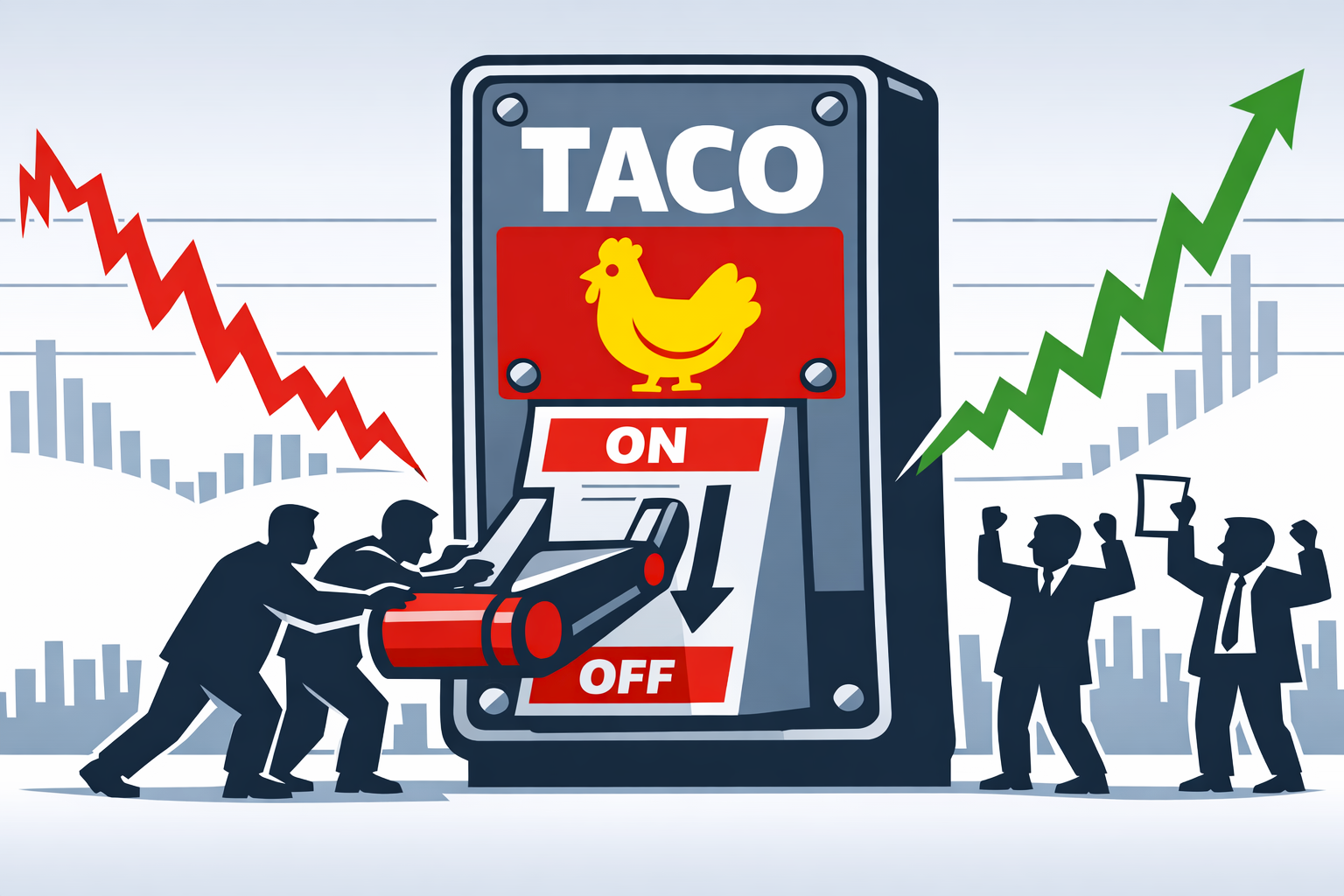
Nowhere is this more evident than in the so‑called TACO trade — shorthand on Wall Street for “Trump Always Chickens Out.”
Pattern
It is not a political judgement, but a market pattern: a repeated cycle in which aggressive rhetoric triggers short‑term volatility before ultimately giving way to de‑escalation.
The latest Iran crisis has revived this playbook. As President Trump reaffirmed his deadline for Iran to reopen the Strait of Hormuz and threatened strikes on power plants and bridges, global markets initially reacted in predictable fashion.
Oil prices swung sharply, Treasury yields dipped, and investors sought safety as the deadline approached.
Positioning
Headlines on various news outlets captured the tension: warnings of higher energy prices, unsettled European markets, and futures trading nervously ahead of each new statement.
Yet beneath the surface, traders were already positioning for the familiar TACO outcome. The pattern is simple: price in the threat early, then fade it.
Hedge funds bought oil and volatility on the initial sabre‑rattling, but quietly prepared to unwind those positions as soon as signs of negotiation emerged.
When reports surfaced that Iran had submitted a ceasefire proposal — dismissed publicly as “not good enough” but nonetheless signalling movement — markets began to relax.
Oil turned mixed, futures rose, and Treasury yields reversed higher as safe‑haven demand faded.
Behaviour
This behaviour reflects a deeper truth about modern markets: headline risk decays quickly when investors believe the political actor prefers brinkmanship to actual escalation.
Trump’s negotiating style, built on maximalist threats followed by last‑minute recalibration, has become sufficiently familiar that traders now model it. The TACO trade is simply the codification of that expectation.
What makes this episode notable is how efficiently markets anticipated the pivot. Even as rhetoric hardened, the S&P 500 futures market edged higher, suggesting investors were already discounting the likelihood of military action.
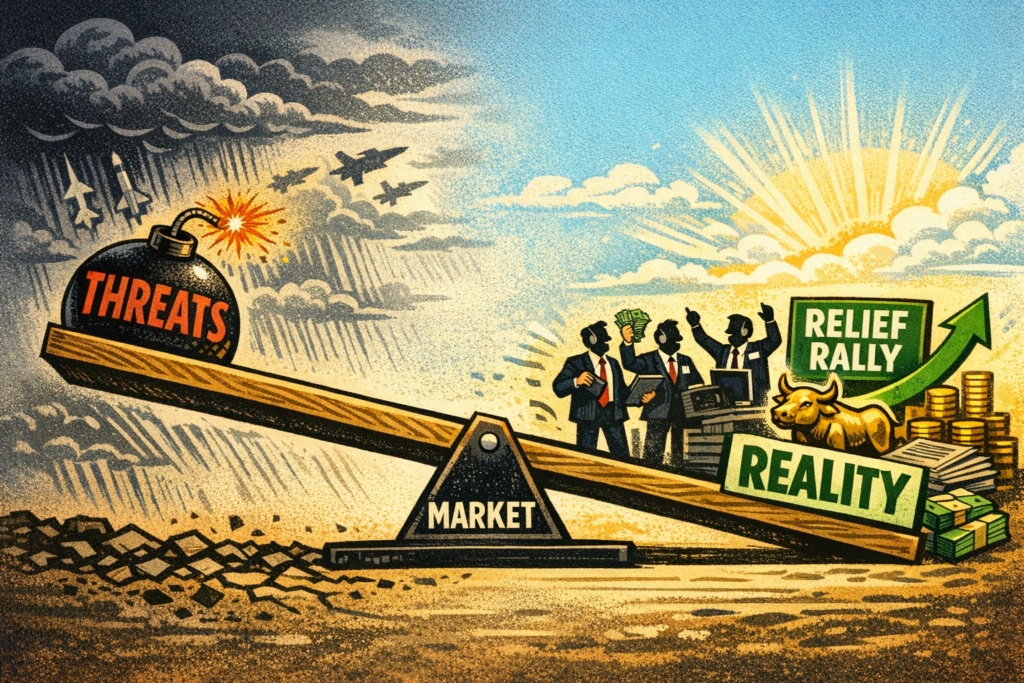
Analysts warned that markets might be “completely wrong” about the risk of war, yet price action told a different story: traders were betting on de‑escalation before it arrived.
Whether the TACO trade remains reliable is another question. Markets adapt, and geopolitical actors can surprise.
But in this latest Iran standoff, Wall Street’s instincts proved consistent: fade the fear, wait for the climb‑down, and trade the relief rally when it comes.
Is it “playing with the markets”?
From a trader’s perspective, what you’re seeing isn’t so much deliberate market manipulation as a predictable feedback loop between political communication and investor psychology.
Markets react to signals, not intentions
When a political leader issues threats, deadlines or ultimatums, markets price the risk of escalation. When those threats repeatedly end in de‑escalation, markets begin to price the pattern instead of the words.
That’s how the TACO trade emerged: investors noticed the pattern and traded accordingly.
The pattern becomes self‑reinforcing
If traders expect a climb‑down, they position for it. If enough traders position for it, the market moves in that direction. This makes the pattern appear even stronger.
It’s not “playing with the markets” in the sense of intentional manipulation — it’s more that political brinkmanship creates volatility, and markets learn to anticipate the likely outcome.
Markets hate uncertainty but love repetition
If a leader consistently escalates rhetorically but de‑escalates in practice, markets adapt. They stop reacting to the drama and start trading the expected resolution.
That’s what happened around the Iran ceasefire discussions:
- Oil spiked on the threats
- Traders anticipated a softening
- Oil fell sharply when negotiations appeared
- Equity futures rose as the risk premium evaporated
This is classic pattern‑recognition, not evidence of someone intentionally moving markets.
Why it feels like market‑playing
Because the cycle is dramatic:
- Threat → volatility
- Deadline → fear trades
- Climb‑down → relief rally
To an outside observer, it can look like the political actor is pulling the market up and down. But from a market‑structure perspective, it’s simply headline‑driven trading meeting predictable political choreography.
The real issue is transparency, not intent
Markets can handle tough talk. What they struggle with is ambiguity — when the gap between rhetoric and action becomes wide enough that traders start pricing the gap rather than the policy.
That’s why the TACO trade exists: it’s a market response to inconsistency, not a claim of manipulation.
Is it a form of manipulation or planned market reaction.
You decide…
Thieves in the night.