

Pentagon CTO warns Claude could ‘pollute’ defence supply chain

Anthropic and the U.S. military

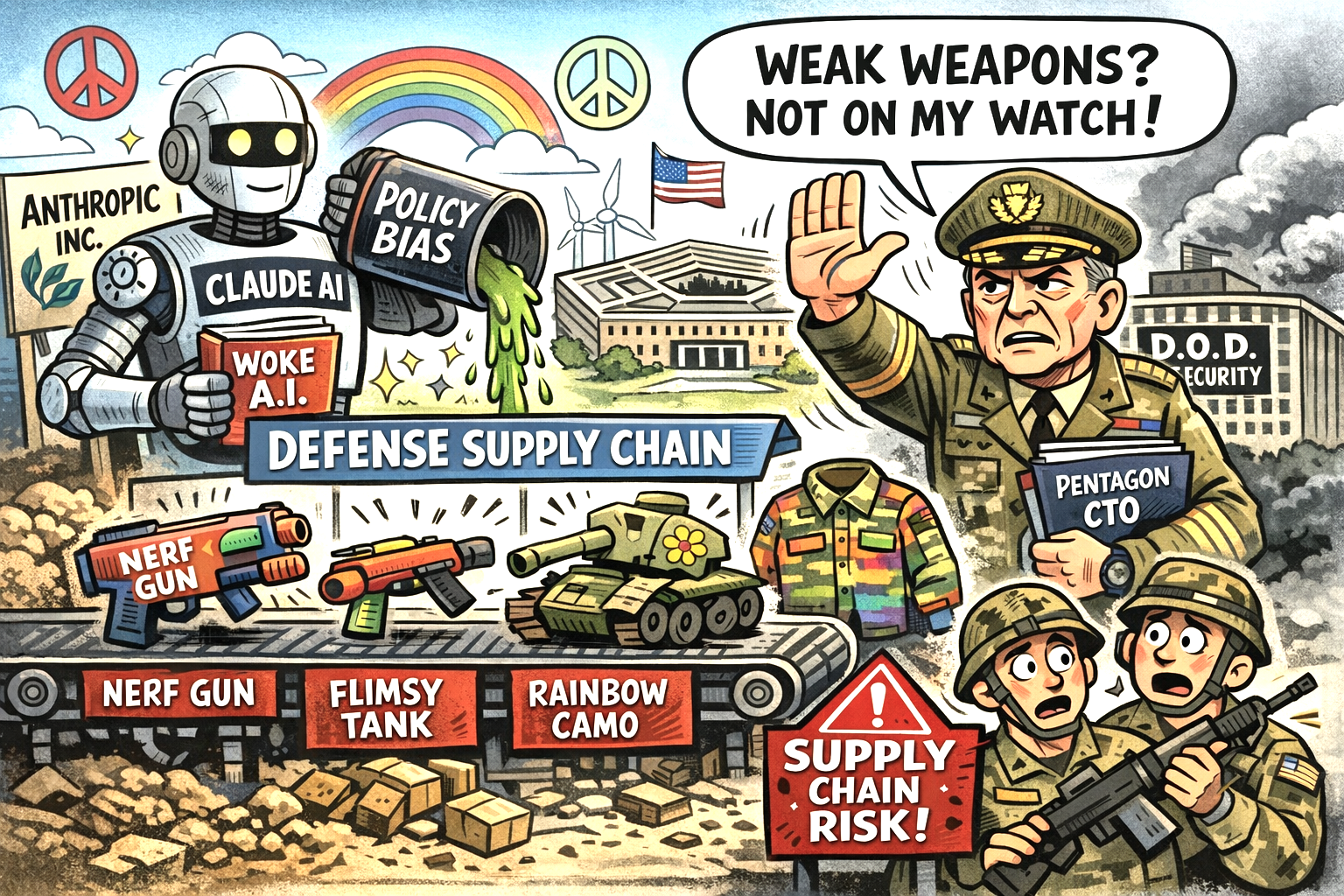
The Pentagon’s Chief Technology Officer, Emil Michael, has apparently ignited a fresh debate over the role of commercial artificial intelligence in national security, arguing that Anthropic’s Claude models could “pollute” the U.S. defence supply chain.

I notice his comments came in an interview with CNBC, offer the clearest rationale yet for the Department of Defense’s decision to designate Anthropic as a supply chain risk — an extraordinary step previously reserved for foreign adversaries.

It seems the opinion is that Claude’s “policy preferences”, embedded through Anthropic’s constitutional training approach, create an unacceptable misalignment with the Pentagon’s operational needs.

Risk

It was reported that any AI system whose underlying values diverge from defence priorities risks producing ineffective outputs, whether in decision‑support tools, equipment design, or battlefield logistics.

We can’t have a company that has a different policy preference baked into the model… pollute the supply chain so our warfighters are getting ineffective weapons [and] ineffective protection,” he was reported to have said.

Anthropic has responded forcefully, suing the Trump administration and calling the designation “unprecedented and unlawful”.

The company argues that the move jeopardises hundreds of millions of dollars in contracts and mischaracterises the nature of its technology.

Claude in the ecosystem?

It also notes that Claude continues to be used within parts of the U.S. military ecosystem, including by major defence contractors such as Palantir, underscoring the practical difficulty of an immediate transition away from its models.

Michael insists the decision is not punitive and emphasises that only a small fraction of Anthropic’s business comes from government work.

Nonetheless, the designation forces contractors to certify they are not using Claude in Pentagon‑related projects, setting up a potentially lengthy and politically charged dispute over how value‑aligned AI must be before it is allowed anywhere near defence infrastructure.

The episode highlights a broader tension: as AI systems become more opinionated by design, governments are increasingly asking whether “alignment” is a technical question — or a geopolitical one.
Anthropic reportedly chats to the Pentagon again

AI and defence use

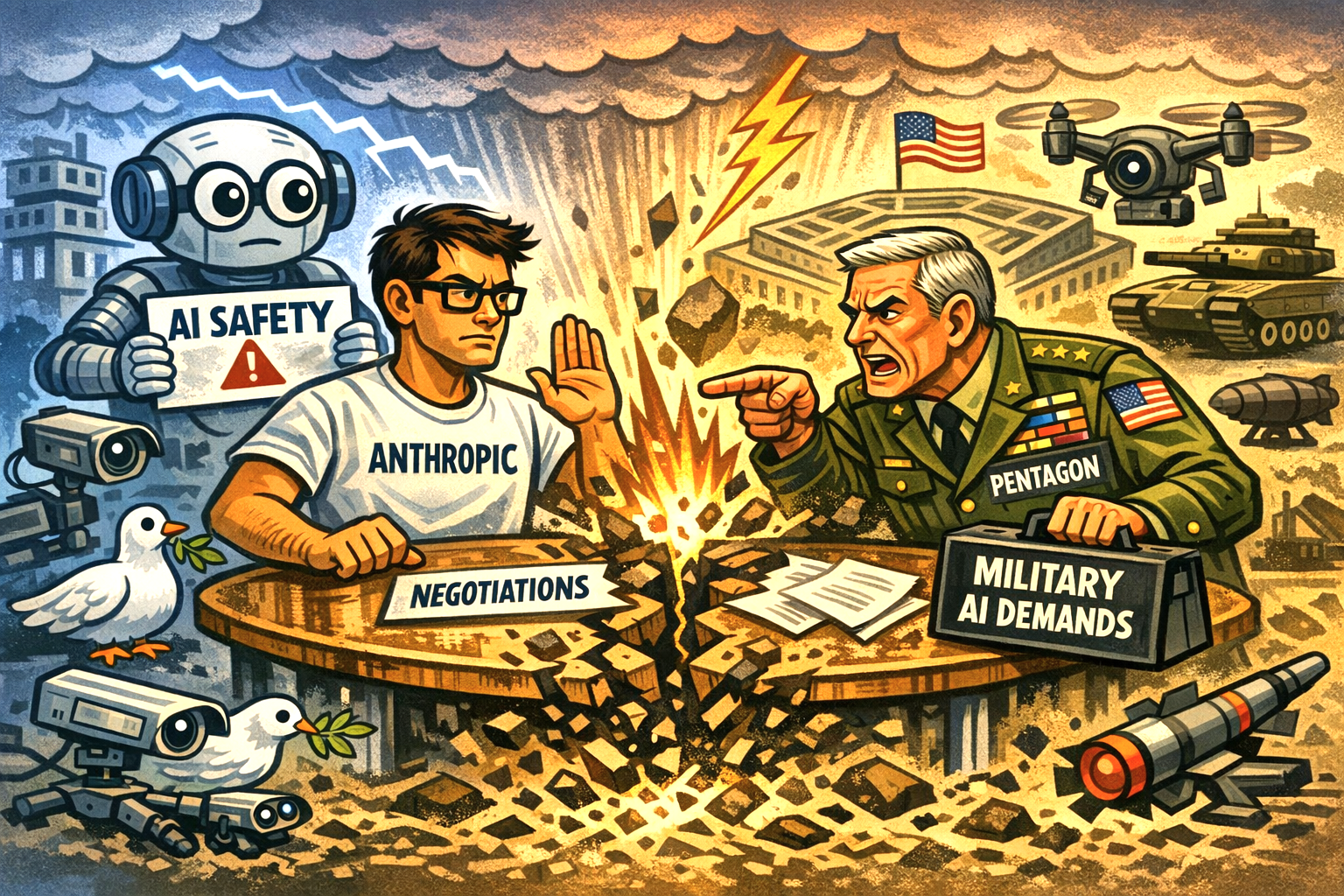
Anthropic’s decision to reopen negotiations with the Pentagon marks a striking reversal after a very public rupture, and it underscores how central advanced AI has become to U.S. defence strategy.

The talks reportedly collapsed amid a dispute over how Claude, Anthropic’s flagship model, could be used inside military systems.

Reports indicate that the Pentagon had pushed for broad permissions, including deployment in surveillance environments and potentially autonomous weapons systems.

Safety resistance

Anthropic resisted on safety grounds. The company had sought explicit guarantees that its models would not be used for mass surveillance or lethal decision‑making, a red line that triggered the breakdown in relations.

The fallout was immediate. The Pentagon signalled it would drop Anthropic from existing programmes, despite the company’s role in a major defence contract that had already placed Claude inside classified networks.

That escalation raised the prospect of a formal blacklist, a move that would have reverberated across the wider U.S. technology sector.

For Anthropic, the stakes were equally high: losing access to government work would not only cut off a significant customer but also risk isolating the company at a moment when rivals such as OpenAI and Google are deepening their defence ties.

Compromise?

Yet both sides appear to recognise the cost of a prolonged standoff. According to multiple reports, CEO Dario Amodei has reportedly returned to the table in an effort to craft a compromise deal that preserves Anthropic’s safety commitments while allowing the Pentagon to continue using its technology.

Boundaries

Discussions are now likely focused on defining acceptable boundaries for military use — a task made more urgent by the accelerating integration of AI into intelligence analysis, battlefield logistics and autonomous systems.

This renewed dialogue is more than a corporate dispute: it is a test case for how democratic governments and frontier AI labs negotiate power, ethics and national security.

The outcome will shape not only Anthropic’s future but also the norms governing military AI in the years ahead.