

Anthropic reportedly chats to the Pentagon again

AI and defence use

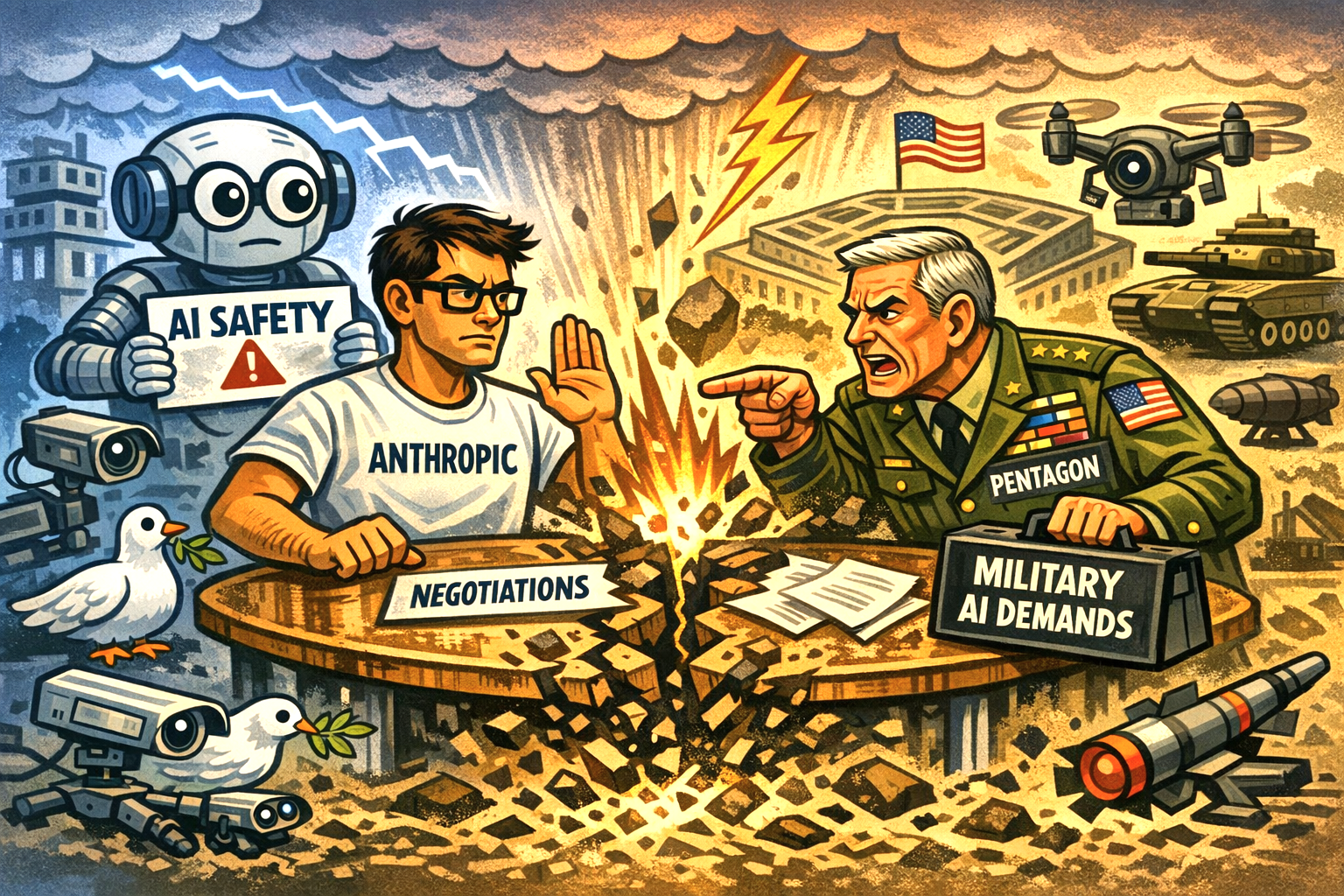
Anthropic’s decision to reopen negotiations with the Pentagon marks a striking reversal after a very public rupture, and it underscores how central advanced AI has become to U.S. defence strategy.

The talks reportedly collapsed amid a dispute over how Claude, Anthropic’s flagship model, could be used inside military systems.

Reports indicate that the Pentagon had pushed for broad permissions, including deployment in surveillance environments and potentially autonomous weapons systems.

Safety resistance

Anthropic resisted on safety grounds. The company had sought explicit guarantees that its models would not be used for mass surveillance or lethal decision‑making, a red line that triggered the breakdown in relations.

The fallout was immediate. The Pentagon signalled it would drop Anthropic from existing programmes, despite the company’s role in a major defence contract that had already placed Claude inside classified networks.

That escalation raised the prospect of a formal blacklist, a move that would have reverberated across the wider U.S. technology sector.

For Anthropic, the stakes were equally high: losing access to government work would not only cut off a significant customer but also risk isolating the company at a moment when rivals such as OpenAI and Google are deepening their defence ties.

Compromise?

Yet both sides appear to recognise the cost of a prolonged standoff. According to multiple reports, CEO Dario Amodei has reportedly returned to the table in an effort to craft a compromise deal that preserves Anthropic’s safety commitments while allowing the Pentagon to continue using its technology.

Boundaries

Discussions are now likely focused on defining acceptable boundaries for military use — a task made more urgent by the accelerating integration of AI into intelligence analysis, battlefield logistics and autonomous systems.

This renewed dialogue is more than a corporate dispute: it is a test case for how democratic governments and frontier AI labs negotiate power, ethics and national security.

The outcome will shape not only Anthropic’s future but also the norms governing military AI in the years ahead.

Trump does deals!

U.S. does deals!

Trump Secures Over $1.4 Trillion in Landmark Middle East Trade Agreements

President Donald Trump’s recent visit to the Middle East has resulted in a wave of economic agreements totaling over $1.4 trillion, marking one of the largest trade expansions between the region and the United States.

With a focus on investment, defence, and technology, Trump’s approach has emphasised strengthening economic ties rather than engaging in broader geopolitical discussions.

Qatar: aviation and defence take centre stage

One of the most eye-catching deals came from Qatar, where Qatar Airways finalised a $96 billion agreement to purchase 210 Boeing jets – the largest Boeing order in history.

This commitment not only bolsters Qatar’s aviation industry but also solidifies Boeing’s future as a leader in global aerospace manufacturing.

Additionally, Qatar has pledged $243.5 billion toward investments in quantum technology and defence systems, reinforcing the country’s push toward technological advancement.

Defence agreements also played a role, with Qatar signing a $1 billion deal for cutting-edge drone defence technology and a $2 billion contract for advanced remotely piloted aircraft.

These acquisitions align with the country’s long-term strategic vision of modernising its military capabilities.

Saudi Arabia: the biggest beneficiary

Saudi Arabia emerged as the biggest beneficiary of Trump’s visit, securing $600 billion in investment commitments across multiple sectors.

The kingdom allocated $142 billion toward military equipment and services, ensuring continued collaboration between U.S. defence contractors and Saudi leadership.

This agreement spans air defence systems, next-generation fighter jets, and cybersecurity infrastructure, strengthening Saudi Arabia’s military.

Beyond defence, Saudi Arabia also inked deals in AI infrastructure, energy projects, and technology investments, positioning itself as a hub for digital transformation.

By incorporating AI-driven solutions into its economy, the kingdom aims to enhance productivity and accelerate its shift toward a diversified financial landscape.

United Arab Emirates: AI

United Arab Emirates secured $200 billion in deals, featuring a 10-square-mile AI campus in Abu Dhabi and a $14.5 billion aircraft investment by Etihad Airways

Strategic impact

Trump’s visit signifies a shift in U.S. foreign policy, focusing heavily on economic partnerships rather than traditional diplomatic negotiations.

By securing these agreements, the administration aims to strengthen American industries, bolster employment, and ensure a steady flow of investment into the U.S. economy.

While critics may argue that the deals lack a geopolitical dimension, the sheer scale of $1.4 trillion in transactions underscores Trump’s intent to foster long-term financial alliances.

The coming months will determine whether these agreements yield sustainable benefits or spark concerns over economic dependencies.

Donald Trump’s Middle East tour has reportedly resulted in over $1.4 trillion in investment pledges. His deals span multiple sectors, including defence, aviation, artificial intelligence, and energy.

Deal summary

Saudi Arabia committed $600 billion in investments, including a $142 billion defence partnership and AI infrastructure deals.

Qatar signed $243 billion in agreements, including a $96 billion Boeing aircraft purchase.

United Arab Emirates secured $200 billion in deals, featuring a 10-square-mile AI campus in Abu Dhabi and a $14.5 billion aircraft investment by Etihad Airways.

Trump’s tour has been framed as a push for foreign investment to boost U.S. manufacturing while Gulf states aim to accelerate AI development and diversify their economies